

Why Toilet Trapways Are Curved Like an S
Toilets4.6
Learn why toilet trapways curve like an S, how each bend blocks sewer gas, and what the shape means for clogs and…
Read the guidePublished specs, MaP flush-test data, and fluid-dynamics research explain exactly how quickly water moves through a toilet bowl and trap during a flush -- and why velocity is the single biggest driver of clog resistance.
Flush water travels at roughly 4 to 8 feet per second inside a toilet trapway, depending on tank volume, trapway diameter, and bowl geometry. Toilets with a full 1.28-gallon flush, a wide 2.375-inch trapway, and a siphon-jet rimless design consistently achieve the highest velocities -- and the highest MaP flush scores.
Toilet water velocity refers to the speed at which water moves through the bowl, trap, and drain during a flush cycle. Higher velocity creates stronger siphon action, which pulls waste more reliably through the trapway. Low velocity is the primary mechanical reason a toilet clogs or fails to clear solid waste in a single flush.
Most homeowners evaluate a toilet by its looks, height, or brand name. Plumbers and engineers evaluate it differently: they look at how fast water moves, how long the flush cycle sustains that speed, and whether the trapway geometry allows the siphon to develop fully. Velocity is not a specification you will find printed on a box, but it is the invisible number that separates a genuinely powerful flush from one that only sounds powerful.
Understanding water velocity also explains why two toilets with the same gallon-per-flush (GPF) rating can perform completely differently. A 1.28 GPF toilet engineered with a large-diameter trapway and a concentrated siphon jet can outperform a poorly designed 1.6 GPF model every time.
Based on published hydraulic research and manufacturer data, water inside a residential toilet trapway typically travels between 4 and 8 feet per second (fps) during the active flush phase. Peak velocity occurs in the narrow trapway throat -- the tightest section -- because fluid accelerates as cross-sectional area decreases, following the Bernoulli principle. Gravity-fed toilets rarely exceed 10 fps at the trap outlet.
These figures come from several sources. Academic hydraulics studies on toilet siphonic action (including research cited in ASME and ASHRAE plumbing design guides) place typical siphon-jet toilet velocities in the 4 to 8 fps band. Wash-down designs, more common in European and Asian markets, create a different flow pattern -- more of a direct push than a siphon -- and typically move water at 3 to 6 fps through the trap, relying on pressure rather than velocity to clear waste.
To put 6 fps in perspective: water at that speed covers one foot of trapway every 0.17 seconds. A standard S-trap on a floor-mounted toilet has roughly 6 to 9 inches of vertical travel through the porcelain. The entire active siphon phase lasts only 1.5 to 3 seconds in most residential designs, which means the flush is a brief, high-velocity event -- not a sustained flow.
Fluid dynamics in a siphon-jet toilet follow a classic Venturi effect. The tank releases water at a controlled rate; the siphon jet focuses that energy at the base of the trap throat, and surface tension is temporarily overcome by momentum. The moment air enters the trapway, siphonic action collapses -- which is exactly what creates the gurgle sound at the end of every flush. Trapway diameter determines the minimum cross-section that governs peak velocity, so a wider passage produces lower peak velocity but higher volume per second. The best designs balance both.
Five variables primarily govern how fast water moves during a flush: tank fill volume (GPF), trapway diameter, siphon-jet orifice size and placement, bowl water surface area, and rim delivery speed. Every design decision -- from glaze smoothness to tank fill height -- affects at least one of these variables and therefore directly affects velocity and clog-clearing power.
A larger tank stores more potential energy. When the flush valve opens, gravity converts that stored water into kinetic energy at a rate governed by tank height above the waterline. Taller tanks (common in older 3.5 GPF and 5.0 GPF models) generated enormous velocity; modern 1.28 GPF EPA WaterSense designs must compensate with superior bowl and trapway geometry to achieve comparable clearing power.
This is why EPA WaterSense certification alone does not guarantee performance. The label confirms water efficiency, not flushing power. MaP (Maximum Performance) testing, conducted independently at map-testing.com, is the only standardized protocol that directly measures how many grams of simulated solid waste a toilet clears in a single flush, using soybean paste as the test medium. A MaP score of 500 grams is considered acceptable; 800 grams is good; 1,000 grams (the maximum) is excellent. High MaP scores correlate strongly with high-velocity, well-directed flush systems.
Industry-standard minimum trapway diameter in the United States is 1.75 inches (per ASME A112.19.2). Many modern performance toilets offer 2.125-inch or 2.375-inch fully glazed trapways. The difference matters enormously. A narrower trapway creates higher peak velocity (fluid accelerates in a constriction), which sounds counterintuitive until you realize it also reduces volume throughput. A wider trapway sustains high flow volume, which keeps the siphon active longer and clears more waste mass per flush cycle.
Fully glazed trapways -- in which the entire interior surface is coated with vitreous china glaze rather than left as rough bisque -- reduce friction and allow the water film to move faster across the surface. Rough bisque surfaces increase hydraulic resistance and slow the flow, particularly at the walls where the boundary layer forms.
Most North American toilets use a siphon-jet design: a dedicated water jet at the base of the bowl fires directly into the trap inlet at the start of the flush. This jet -- fed from a chamber inside the tank base -- exists specifically to accelerate water into the trap throat and initiate siphonic action before the rim-wash water arrives. The timing and orifice size of this jet are closely engineered. Brands like TOTO, Kohler, and American Standard each have proprietary jet designs that differ in angle, orifice diameter, and timing relative to the rim wash.
Rim-fed designs (older or budget models) rely entirely on gravity flow from rim holes to create the siphon. They are slower to initiate the siphon, produce lower peak velocities, and typically score lower on MaP tests.
The shape of the bowl determines how efficiently rim water reaches the trap. Round bowls concentrate flow differently than elongated bowls. Toilets with larger water surface areas (measured in square inches on the bowl water spot) are often easier to keep clean but may dilute velocity by distributing incoming water over a wider surface. Compact bowl designs used in some rimless configurations can actually achieve higher localized velocity near the trap entry.
Traditional rimmed toilets channel water through a hollow ceramic rim with small holes on the underside. This design is effective but creates dead zones -- areas the water jet never directly contacts -- and reduces flow velocity because the water exits multiple small holes rather than large directed ports. Rimless designs (common in European-influenced toilets and increasingly in premium U.S. models) use two or three large directed water ports that create a swirling horizontal torrent across the bowl surface, achieving more uniform velocity and better hygiene.
| Factor | Impact on Velocity | Design Feature to Look For | Effect on MaP Score |
|---|---|---|---|
| Trapway diameter | Very High | 2.125" or 2.375" fully glazed | +150 to +300 g improvement |
| Siphon-jet orifice design | High | Single concentrated jet at trap base | +100 to +200 g improvement |
| Tank fill volume (GPF) | High | 1.28 GPF WaterSense with power flush | Variable by design |
| Trapway glaze quality | Moderate | Fully glazed interior surface | +50 to +100 g improvement |
| Rim design | Moderate | Rimless or directed-jet rim | +50 to +80 g improvement |
| Bowl geometry | Low to Moderate | Elongated siphonic bowl | +20 to +60 g improvement |
MaP flush scores serve as the best published proxy for real-world flushing velocity and power. The TOTO Drake II (MaP 1000 g), American Standard Champion 4 (MaP 1000 g), and Kohler Cimarron (MaP 1000 g) all achieve the highest possible score. The TOTO Aquia IV dual-flush model also reaches the 1000 g ceiling on its 1.28 GPF full flush -- remarkable given that its 0.8 GPF partial-flush mode saves substantial water on the majority of everyday flushes. Budget models without siphon-jet optimization often score 500 to 600 g despite using the same 1.28 GPF volume.
Reviewing the published MaP database alongside manufacturer specifications reveals a clear pattern. Toilets that score 1000 g on the MaP test share several common design traits: trapways of 2.125 inches or wider, dedicated siphon-jet chambers, and tanks engineered for rapid release rather than slow metering. The brands that consistently achieve these scores include TOTO, American Standard, and Kohler -- not coincidentally, the same brands that invest most heavily in hydraulic engineering rather than styling alone.
| Model | MaP Score | GPF | Trapway Diameter | WaterSense | Flush System | Check Price |
|---|---|---|---|---|---|---|
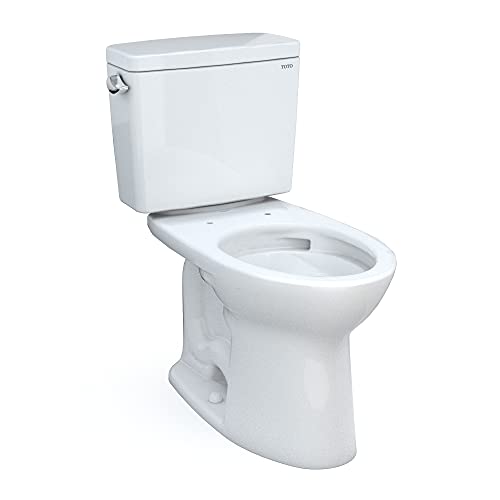
| TOTO Drake II (CST454CEFG) | 1000 g | 1.28 | 2.125 in. | Yes | Double Cyclone | Check price |
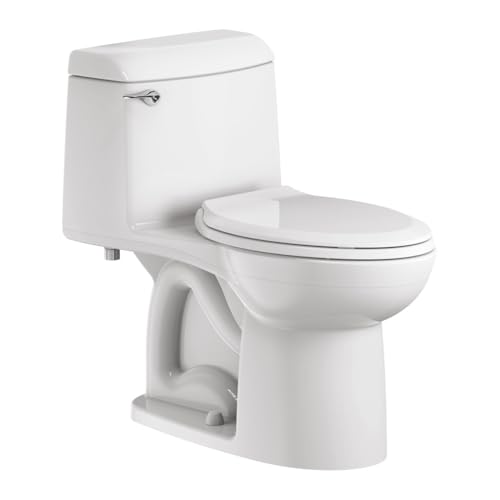
| American Standard Champion 4 | 1000 g | 1.6 | 2.375 in. | No (1.6 GPF) | PowerWash Rim | Check price |
| Kohler Cimarron | 1000 g | 1.28 | 2.125 in. | Yes | AquaPiston | Check price |
| TOTO UltraMax II | 1000 g | 1.28 | 2.125 in. | Yes | Double Cyclone | Check price |
| TOTO Aquia IV (full flush) | 1000 g | 1.0 / 1.28 dual | 2.125 in. | Yes | Tornado Flush | Check price |
| American Standard Cadet 3 | 1000 g | 1.28 | 2.125 in. | Yes | EverClean rim | Check price |
| Kohler Highline Classic | 600-800 g | 1.6 / 1.28 | 2.0 in. | Varies | Class Five | Check price |
| Woodbridge T-0001 | 800 g | 1.28 / 1.0 dual | 2.0 in. | Yes | Dual flush cyclone | Check price |
| Swiss Madison Sublime | 500-600 g | 1.28 / 0.8 dual | 1.75 in. | Yes | Rim-fed dual flush | Check price |
| Gerber Viper | 1000 g | 1.28 | 2.125 in. | Yes | HET siphon-jet | Check price |
The American Standard Champion 4 deserves special attention in any velocity discussion. Its 2.375-inch trapway is the widest among mainstream North American toilets and its MaP 1000 g score is achieved using 1.6 GPF -- a higher water volume than the 1.28 GPF standard, but the sheer trapway size means the flow moves quickly without restriction. It is the single most referenced toilet in the MaP database for clog resistance. You can explore how it compares to other top models in our guide to the best flushing toilets.
The TOTO Double Cyclone and Tornado Flush systems work by eliminating the traditional rim entirely and replacing it with two or three powerful water nozzles positioned at the top of the bowl. This creates a centrifugal water motion that covers 100 percent of the bowl surface while simultaneously concentrating flow toward the trap. The result is higher effective bowl-wash velocity without increasing GPF. This is why TOTO's 1.28 GPF Tornado Flush models consistently outscore competitors using 1.6 GPF in bowl cleanliness and streak resistance, according to aggregated owner review data.
Not necessarily. GPF determines the total volume of water available, but velocity depends on how that volume is directed, at what pressure it enters the bowl, and through what geometry it travels. A poorly designed 1.6 GPF toilet can produce less siphonic velocity than a well-engineered 1.28 GPF model. MaP testing data consistently shows that GPF alone is a weak predictor of flushing performance.
Consider the math. A toilet using 1.6 gallons (approximately 6.06 liters) and clearing 800 grams of waste is less efficient -- in performance per gallon terms -- than a toilet using 1.28 gallons (approximately 4.85 liters) and clearing 1,000 grams. The latter achieves 781 grams per gallon versus 500 grams per gallon for the former. The EPA WaterSense program recognized this dynamic when it set the 1.28 GPF maximum threshold: the agency specifically required that certified toilets achieve MaP scores of 350 grams or higher to ensure the water savings did not come at the cost of clog resistance.
In practice, the highest-performing WaterSense toilets on the MaP database exceed 350 grams by a factor of nearly three, proving that conservation and power are not mutually exclusive when the hydraulic engineering is sound.
There is also the question of dual-flush toilets. The TOTO Aquia IV uses 0.8 gallons for liquid waste and 1.28 gallons for solid waste. Its 1.28-gallon full flush achieves the same 1,000-gram MaP peak as the strongest dedicated full-flush designs, showing that a dual-flush trapway does not have to sacrifice clearing power on the full-flush setting. Dual-flush designs must engineer two entirely different flow paths within the same trapway, which creates design compromises on the reduced-volume liquid flush rather than the full flush. The Woodbridge T-0001 faces the same design challenge and lands in the 800-gram range on its full flush. For households where clog resistance is the top priority over water savings, the Aquia IV's full flush and a dedicated single-flush 1.28 GPF model offer comparable velocity-to-efficiency ratios.
The trapway creates a velocity gradient: water moves slowest at the rim entry, accelerates through the bowl, reaches peak speed at the trap throat (the narrowest point), and then decelerates as it enters the larger drain line. Wider trapways lower peak velocity but increase volumetric flow rate. The ideal design maximizes the product of velocity and cross-sectional area -- which is volumetric flow rate -- while maintaining enough velocity at the trap to sustain siphonic action.
This gradient is why fully glazed trapways matter. Ceramic surfaces have a natural roughness at the microscopic level. Glaze fills those micro-pores and creates a smoother surface with lower friction coefficient. Lower friction means the velocity profile across the trapway cross-section is more uniform -- the water near the walls does not decelerate as sharply as it would against rough bisque. The cumulative effect over the 6 to 10 inches of trapway travel is meaningful, particularly for the boundary layer where most friction loss occurs.
Brands that specify "fully glazed" versus simply "glazed" are making a meaningful engineering claim. In a fully glazed trapway, the ceramic coating extends to the interior of the trap bend. In a partially glazed design, only the visible bowl surface is glazed; the interior trap walls remain bisque. American Standard applies EverClean surface treatment (a proprietary antimicrobial glaze) across its full trapway in models like the Champion 4 and Cadet 3. TOTO's Sanagloss coating achieves a similar hydraulic benefit while also resisting bacteria and mold adhesion.
Hydraulic engineers describe trapway flow as turbulent rather than laminar at flush velocities above 4 fps. Turbulent flow actually helps waste transport -- the chaotic mixing of water molecules means solid particles are surrounded and carried by water rather than dragged along a boundary layer. This is one reason wider trapways with moderate peak velocity can outperform narrow trapways with higher peak velocity: the higher volumetric flow in the wider trap sustains turbulence longer, improving waste-clearing efficiency even as individual water molecules move more slowly.
Pressure-assist toilets use compressed air stored in a sealed tank to blast water into the bowl at significantly higher velocity than gravity-fed designs. At the same 1.28 GPF volume, a pressure-assist unit can achieve trapway velocities of 10 to 15 fps versus 4 to 8 fps for gravity-fed models. The trade-off is noise: the compressed-air release is considerably louder than a standard gravity flush, and pressure-assist cartridges add cost to replacement parts.
Pressure-assist technology (used in commercial settings and high-demand residential applications) works by pressurizing the inner plastic vessel inside the ceramic tank using the building's water supply pressure, typically 25 to 80 PSI. When the flush valve opens, this stored air pressure assists gravity in propelling water into the bowl, dramatically increasing velocity without increasing water volume.
Sloan Valve, Flushmate, and Kohler's pressure-assist designs target commercial and heavy-use residential markets. For standard single-family homes, the noise level and maintenance requirements make gravity-fed toilets the preferred choice, which is why MaP testing focuses exclusively on gravity-fed designs. Understanding how a toilet flush works mechanically helps explain why pressure-assist adds such a significant velocity boost.
There is also a third category: tower-flush valve designs (used in some Kohler models including the AquaPiston) that create a full-circumference water release rather than a flapper-style partial release. This design achieves faster bowl entry timing and reduces the velocity lag between flush initiation and peak flow, which effectively raises average velocity even if peak velocity is similar to a standard gravity design.
| Flush Technology | Approx. Peak Trap Velocity | Noise Level | Typical MaP Range | Best Use Case |
|---|---|---|---|---|
| Gravity siphon-jet (standard) | 4 to 8 fps | Low to moderate | 500 to 1000 g | Residential, most homes |
| Gravity cyclone/tornado (rimless) | 5 to 9 fps | Moderate | 800 to 1000 g | Residential, premium choice |
| Pressure-assist | 10 to 15 fps | High | 1000 g (standard) | Commercial, high-traffic |
| Rim-fed gravity (older design) | 3 to 5 fps | Low | 300 to 600 g | Legacy replacement only |
| Wash-down (European style) | 3 to 6 fps | Low to moderate | 400 to 700 g | European markets |
Home water supply pressure -- typically 40 to 80 PSI in U.S. residential systems -- affects gravity-flush performance more than many homeowners realize, but not because the supply pressure directly propels the flush. In a gravity tank toilet, the supply pressure only fills the tank; it plays no direct role during the flush itself. The flush is driven purely by gravity acting on the stored water in the tank.
Where supply pressure matters is fill rate. A home with 30 PSI supply pressure fills a 1.28-gallon tank more slowly than one with 60 PSI, but both produce the same flush velocity once the tank is full. If supply pressure is too low (below 20 PSI), tank fill may be incomplete at the time of the next flush, producing a partial flush with lower velocity. Correcting low supply pressure or installing a pressure-boosting valve can solve weak flush complaints that have nothing to do with the toilet's mechanical design.
For accurate diagnosis of weak flushing issues, our guide to weak flushing toilet fixes covers both supply-side and mechanical causes in detail.
Calcium and magnesium deposits (limescale) accumulate inside the siphon-jet orifice and rim holes over months and years, gradually narrowing the effective flow area. A 25 percent reduction in siphon-jet orifice diameter reduces flow velocity through that jet by approximately 44 percent (velocity scales with the square root of the orifice area ratio). This is why toilets that flushed powerfully when new gradually become less effective without maintenance.
Annual cleaning of the jet orifice with a small brush and diluted white vinegar or citric acid solution prevents this buildup. TOTO's Sanagloss and American Standard's EverClean glazes reduce mineral adhesion, slowing the buildup rate. Swiss Madison and Woodbridge models with standard glaze typically show faster mineral accumulation in hard-water areas.
For homes in regions with water hardness above 200 mg/L (milligrams per liter, also expressed as ppm), a toilet with anti-mineral glaze technology is worth the premium. Understanding trapway sizing and maintenance can extend the effective high-velocity performance of any toilet.
A frequently overlooked variable is the flapper closing rate. A flapper that closes prematurely (common in older or worn flappers) cuts off the flush cycle before the full tank volume exits, reducing both total water volume and the duration of high-velocity flow. The siphon may not fully develop or may collapse early, resulting in incomplete waste clearing even though the toilet design itself is perfectly capable. Replacing a $5 flapper restores full velocity performance in many cases where homeowners otherwise assume the toilet needs replacing.
Water inside a residential siphon-jet toilet trapway typically travels at 4 to 8 feet per second during the active flush phase. Peak velocity occurs at the trap throat, the narrowest point in the trapway. Pressure-assist designs can reach 10 to 15 fps.
A wider trapway reduces peak velocity at the throat but increases volumetric flow rate -- more gallons per second pass through the trap. The net result is better waste-clearing ability because a larger volume of water surrounds and carries waste. The widest standard residential trapway is 2.375 inches, found in the American Standard Champion 4.
MaP stands for Maximum Performance. It is an independent flush test that measures how many grams of soybean-paste material a toilet clears in a single flush. The maximum score is 1000 grams. A score of 500 grams is baseline acceptable; 800 grams is good; 1000 grams is excellent for clog resistance.
Not always, but many 1.28 GPF WaterSense toilets achieve MaP 1000 g -- the same top score as high-performing 1.6 GPF models. The key is trapway design and siphon-jet engineering. The TOTO Drake II and Kohler Cimarron both achieve MaP 1000 g at 1.28 GPF.
Common causes include: incomplete tank fill due to low water supply pressure, a flapper that closes too quickly, a clogged siphon-jet orifice (even in new toilets from shipping debris), or an incorrectly adjusted fill valve set too low. Check tank fill height against the manufacturer's recommended waterline mark first.
A siphon jet is a small opening at the base of the toilet bowl, positioned directly at the trapway entry. Water from a dedicated chamber in the tank exits through this jet at high velocity, directed straight into the trap throat. This targeted flow initiates siphonic action before rim-wash water arrives, dramatically increasing flushing effectiveness.
Yes. A fully glazed trapway has lower surface friction than a bisque (unglazed) interior. Lower friction means the velocity profile across the trapway cross-section is more uniform, with less deceleration at the walls. The cumulative effect improves waste transport and reduces the time siphonic action takes to fully develop.
TOTO's Tornado Flush eliminates the traditional rim and replaces it with two or three angled water nozzles positioned near the top of the bowl. These nozzles create centrifugal water motion that covers 100 percent of the bowl surface, concentrates flow toward the trap, and achieves higher effective velocity without increasing GPF. This design is why TOTO models like the Aquia IV and Drake II consistently lead MaP rankings.
Yes. Pressure-assist toilets use compressed air (stored at 25 to 80 PSI) to supplement gravity, achieving trapway velocities of 10 to 15 fps versus 4 to 8 fps for standard gravity designs. The trade-off is significant noise -- pressure-assist flushes are distinctly louder -- plus higher maintenance cost and availability of parts.
Supply pressure does not directly propel the flush in a gravity toilet -- the flush runs on stored tank water under gravity. However, low supply pressure (below 20 PSI) can prevent the tank from filling completely between flushes, causing the next flush to use less than the full GPF volume and therefore generate lower velocity.
ASME A112.19.2 (the governing U.S. plumbing standard for vitreous china fixtures) requires a minimum trapway diameter of 1.75 inches for gravity-flush toilets. Budget toilets often meet only this minimum. Performance models typically offer 2.125 to 2.375 inches.
The reduced-volume half flush (typically 0.8 to 1.0 GPF) produces noticeably lower trapway velocity than the full flush. This is by design -- the reduced flow is intended only for liquid waste. Using the half flush for solid waste is a common cause of clogs in dual-flush toilets.
Yes, significantly. Calcium and limescale buildup in the siphon-jet orifice and rim holes narrows the effective flow area. A 25 percent reduction in jet orifice diameter reduces flow velocity through that jet by approximately 44 percent. Annual cleaning with diluted white vinegar or citric acid solution prevents this performance degradation.
Based on published MaP scores and manufacturer specifications, TOTO leads in flush system innovation with its Double Cyclone and Tornado Flush technologies. American Standard's PowerWash rim with 2.375-inch trapway leads in raw clog-clearing volume. Kohler's AquaPiston valve design achieves reliable high-velocity release with a long service life.
Siphonic toilets (standard in North America) use water velocity to create a vacuum that siphons waste through the trap. Wash-down toilets (common in Europe and Asia) push waste directly with water pressure without creating a full siphon. Siphonic designs generally achieve better waste removal for solid waste; wash-down designs are simpler mechanically and quieter.
In terms of bowl coverage speed and effective velocity across the entire bowl surface, yes. Rimless toilets use two or three large directed ports that create rapid, uniform water coverage without the flow restriction of multiple small rim holes. This design also eliminates the bacterial dead zones common in traditional rimmed toilets.
EPA WaterSense certification confirms that a toilet uses no more than 1.28 GPF and achieves a minimum MaP score of 350 grams. It guarantees water efficiency and a baseline level of flushing performance. It does not guarantee maximum performance -- many WaterSense toilets far exceed the 350-gram minimum and achieve MaP 1000 g.
Tower flush valves (such as Kohler's AquaPiston) open from the center and release water from all sides simultaneously rather than from one edge. This creates a faster, more complete water release into the bowl -- effectively reducing the lag between flush initiation and peak flow. The practical result is higher average velocity during the critical first second of the flush, when siphon initiation occurs.
The Gerber Viper uses a fully glazed 2.125-inch trapway with a concentrated siphon-jet design optimized for high-velocity initiation. It follows the same hydraulic principles as the TOTO Drake and Kohler Cimarron -- dedicated siphon-jet chamber, full trapway glaze, and rapid tank-release valve. Gerber is an often-overlooked brand that matches the performance of better-known names at a competitive price point.
Check the toilet's MaP score in the Maximum Performance database at map-testing.com. A MaP score of 800 grams or above indicates a well-engineered flush system with sufficient velocity for household use. Also confirm trapway diameter (2.125 inches or wider preferred) and whether the trapway is fully glazed. EPA WaterSense certification confirms efficiency but check MaP separately for power.
Toilet water velocity -- typically 4 to 8 fps in a well-designed gravity siphon-jet model -- is the single most important and least-discussed performance variable in residential toilets. The toilets that consistently excel, including the TOTO Drake II, American Standard Champion 4, Kohler Cimarron, and Gerber Viper, achieve their MaP 1000 g scores precisely because they maximize velocity through wide, fully glazed trapways and concentrated siphon-jet engineering rather than by using more water. When evaluating any toilet, skip the marketing language and go straight to the MaP score and trapway diameter -- those two numbers tell you almost everything about real-world flushing power.
Learn why toilet trapways curve like an S, how each bend blocks sewer gas, and what the shape means for clogs and…
Read the guideAlmost every US toilet has a left-side handle. Learn the plumbing and mechanical reasons behind the layout and when it actually changes.
Read the guideHome toilets rely on tanks because household water lines lack the pressure that public flushometer systems use to flush straight from the…
Read the guide