Toilet Smells Like Urine: Causes and How to Fix It
A methodical guide to every real source of urine smell around a toilet, from soaked hinge caps and failed caulk to a cracked bowl and a compromised wax ring, with the correct fix for each cause, the products that work and the toilet design features that make the problem easier to prevent in the first place.
Quick Answer
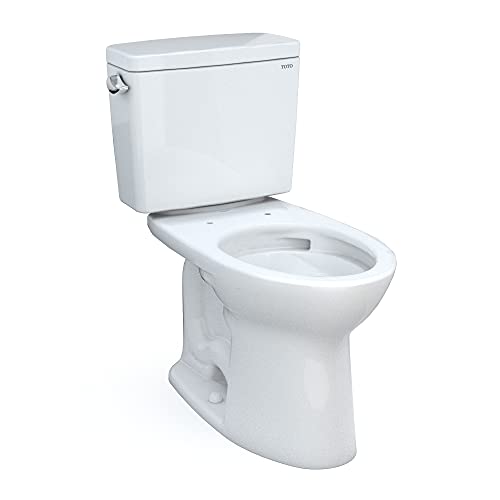
A toilet that smells like urine after cleaning almost always has uric acid crystals soaked into the seat hinge caps, the caulk bead at the base, or the floor grout around it. Remove the seat, clean the hinge area thoroughly, re-caulk the base, and use an enzyme cleaner on the floor. If the bowl glaze is pitted and holds residue no matter how hard you scrub, the TOTO Drake II's CeFiONtect glaze and skirted base make it the most durable fix.
A toilet that smells like urine even right after cleaning is one of the most persistent bathroom problems a household faces, and the reason most attempts fail is simple: people clean the places they can see while the actual odor sources hide in spots almost no one ever reaches. The seat hinge caps, the caulk bead at the floor, the gap under the toilet base and the grout lines radiating outward from the bowl accumulate urine splash on every use. Urine dries into uric acid crystals that bond to porous surfaces and keep releasing ammonia indefinitely. A quick wipe of the bowl does nothing to those deposits.
This guide is organized around causes, not symptoms. Each section names a specific source, explains the chemistry of why it holds odor, tells you how to confirm it is the problem, and gives you the fix that actually addresses it rather than masking it. For the broadest rankings of high-flushing, easy-to-clean fixtures, the pillar guide to the best flushing toilets goes wider. This page has one job: explain every reason a toilet smells like urine and how to stop it for good.
How we research this topic
We do not test toilets in a lab. We compare manufacturer specifications, published MaP (Maximum Performance) flush-test gram scores, trapway diameter and glazing, flush-valve design, EPA WaterSense listings and aggregated owner ratings across major retailers. For odor diagnosis we rely on the known chemistry of uric acid decomposition, the documented failure patterns of caulk and hinge designs, and the surface-energy science behind anti-adhesion glazes like TOTO's CeFiONtect. Where a fix is inexpensive and straightforward, we say so plainly rather than pushing a new toilet first.
Quick reference
Urine smell causes and fixes at a glance
Before working through each cause in detail, this table maps the odor type to the most likely source and the primary fix so you can prioritize where to start.
Scrub under rim, clear jet holes, vinegar in overflow tube
Yes
Common
Cracked bowl or base
Urine, worsens after flushing
Visible crack, damp at crack line
Replace toilet
No
Less common
Why does my toilet smell like urine even after cleaning?
A toilet that smells like urine right after cleaning almost always has uric acid crystals trapped in spots a standard clean never reaches: inside the seat hinge caps, in the caulk bead at the base, in floor grout near the bowl and under the rim in the jet holes. Uric acid bonds to porous surfaces and continues releasing ammonia even when surrounding areas look clean. Enzyme cleaners that break down uric acid molecules are the most effective treatment on porous surfaces like grout and caulk, while a disinfecting spray handles smooth porcelain and plastic surfaces.
The chemistry behind persistent urine smell is specific. Urine contains uric acid, urea and other organic compounds. When urine dries, the water evaporates but the uric acid crystals remain. Those crystals are almost insoluble in plain water and resistant to many common cleaners, including bleach, which can oxidize the surrounding surface while leaving the uric acid itself intact. Every time moisture, warmth or another cleaning attempt rehydrates those crystals, they release ammonia again. The smell is not the fault of insufficient scrubbing of the bowl. It is the fault of cleaning the wrong surface. Finding and treating the actual deposit sites is the entire solution.
Toilet aerosol is a larger contributor than most people realize. Every flush generates fine droplets that land on the seat, the rim, the exterior of the bowl, the wall behind the toilet and the floor in a radius of several feet. If the toilet lid is left open, the aerosol is substantial. The floor around the base, especially in the gap between the bowl and the flooring material, absorbs those droplets and accumulates uric acid over time. This is not a hygiene failure specific to any household. It is a basic physics outcome of how water moves during a flush, and it happens in every bathroom regardless of how careful people are.
Cause 1
Seat hinge caps: the most common hidden source
The single most overlooked source of urine smell in a bathroom. Urine drips and flush aerosol run under the hinge caps and pool inside them where no wiping reaches.
Most toilet seats attach to the bowl with two plastic hinge bolts, each covered by a snap-on or screw-on cap. These caps create a small enclosed cavity at the back of the bowl where the seat meets the rim. Urine splash and aerosol land near the hinges on every use, wick under the caps and accumulate inside. The cavity stays dark and damp, creating ideal conditions for uric acid deposits to build up over months. The smell emanates from the back of the bowl and can seem to come from the area between the seat and the wall, making it difficult to locate without removing the seat.
The fix is straightforward but often skipped because most cleaning routines wipe around the seat rather than removing it. Modern seats from American Standard, Kohler and TOTO include a quick-release button or lever that lets you unclip the entire seat from the bowl in seconds. Once removed, spray a disinfecting cleaner or enzyme cleaner directly into the hinge bolt wells on the bowl, let it dwell for five minutes, scrub with a small brush, wipe down the underside of the seat and the hinge plastic, and reinstall. Doing this monthly is the single most effective step for a bathroom with a persistent urine smell. If the hinge caps on an older seat have cracked or yellowed to the point where residue has penetrated the plastic itself, replacing the seat removes the irreparably contaminated source.
Tip: use a toothbrush inside the hinge wells
After spraying enzyme cleaner into the hinge bolt wells on the bowl, work a dedicated old toothbrush into each well to scrub the sides where uric acid crystals accumulate. These wells are cylindrical and about 1 cm in diameter, sized almost perfectly for a toothbrush head. Scrub the hinge plastic of the seat the same way. The deposits visible after the first time you do this will show why the odor survives regular cleaning: the inside of each well can be coated with a concentrated, yellowish film that has never been touched by a cleaning product.
Cause 2
The caulk bead at the base and the surrounding floor
The second most common cause, and the one that makes the smell seem to come from the whole room rather than the toilet specifically. Urine soaks into cracked caulk and floor grout and does not come out with surface cleaning.
Toilets are caulked at the base where the porcelain meets the floor for a reason: without that seal, flush water and condensation seep underneath the bowl and soak into the subfloor. Over years, though, the caulk bead cracks, discolors and sometimes pulls away from the porcelain or the floor tile. Once that happens, urine splash and aerosol find a path under the bowl where they soak into the grout, the caulk material and the flooring without any possibility of being cleaned by wiping the visible surface. The smell rises from this soaked zone continuously. A darkened, cracked or missing caulk bead in a bathroom with a persistent urine smell is a near-certain cause, and no amount of bowl cleaning will address it.
The repair sequence is: score and remove the entire old caulk bead with a utility knife and caulk remover tool, spray an enzyme cleaner on the exposed flooring around the base and let it soak for ten minutes, scrub and wipe it up, allow the surface to dry completely, then apply a fresh bead of mold-resistant silicone or latex caulk around the base in a continuous run. Press it smooth with a wet finger and allow the full cure time before using the bathroom. This job costs very little and takes under an hour, and it removes a source that can hold urine odor for years. On tile floors, re-sealing the grout lines within a few feet of the bowl with a penetrating grout sealer after cleaning prevents future absorption.
For the floor itself, an enzyme-based cleaner is the most effective chemistry for urine soaked into grout or porous tile. Bleach oxidizes the surface and removes color but does not break down the uric acid crystals underneath it. Enzyme cleaners contain protease and urease enzymes that hydrolyze the uric acid molecules into smaller compounds that can then be rinsed away. Apply liberally, cover the area with a damp cloth to prevent the enzyme solution from drying before it can work, and let it sit at least fifteen to twenty minutes. Rinse, let dry, and assess whether the odor has cleared before re-caulking.
Cause 3
Rim jets, siphon jet and the underside of the rim
The third major contributor. The jets and the underside of the rim hold a mixed biofilm of bacteria and dried urine residue that produces both a musty and a urine-like smell continuously.
Every toilet bowl has a ring of small holes, the rim jets, drilled into the underside of the rim that direct flush water around the bowl on each flush. Between flushes these holes stay dark, wet and warm. Urine splash hits the bowl walls on every use, and a fraction of it reaches the underside of the rim and the jet openings. The combination of urine residue and general biofilm in this hidden location is among the most concentrated odor sources in any toilet. It is also the place almost no cleaning routine reaches because the jets are tucked under a ledge that you cannot see without a mirror.
The approach here matches the physical access problem. Hold a small handheld mirror under the rim with a flashlight shining on it and look at the jet holes and the rim surface around them. The film and scale you see is the source. Apply a clinging toilet bowl gel under the entire rim and let it dwell at least ten minutes so the cleaner has time to penetrate the film rather than just coating it. Work a curved-head stiff toilet brush firmly up under the rim all the way around. Use a dental pick, a wire or an old toothbrush to clear each jet hole individually and break up the scale that restricts them. Pour one cup of white vinegar down the overflow tube in the tank and let it sit five minutes before flushing. This runs the vinegar through the hidden rinse channel into the jets from the inside, treating a path the bowl brush cannot enter. The siphon jet at the base of the bowl needs the same attention. For a related look at what keeps the whole flush system working correctly, our guide on how to improve toilet flush power covers the jet and valve maintenance that also directly affects how clean the bowl stays.
Editorial Take
Three separate cleaning zones each contribute to a urine smell, and a cleaning routine that covers only one or two of them will seem to fail for no apparent reason. The visible bowl is zone one and the easiest to clean. The seat hinge area is zone two and the most commonly skipped. The floor grout, caulk bead and surrounding tile are zone three and the most likely to need an enzyme cleaner rather than a standard disinfectant. Run through all three zones once with the right products and a systematic approach, and most households clear the smell in a single afternoon without any additional equipment or fixtures.
Cause 4
A pitted, crazed or degraded bowl glaze
On older toilets, the porcelain glaze can degrade to a rough, porous surface that traps urine and biofilm too deeply for scrubbing to reach. When every other fix has been tried, the glaze itself is the bottleneck.
Standard toilet porcelain is fired at high temperature and has a smooth glaze layer that resists staining and absorption. Over ten to twenty years, though, repeated cleaning with abrasive products, accidental scratching and general wear can create micro-abrasions that roughen the surface. A phenomenon called crazing, a fine network of surface cracks in the glaze, can also develop from thermal stress and aging. A crazed or roughened glaze has orders of magnitude more surface area than smooth porcelain, and that surface holds urine residue, biofilm and mineral scale far more tenaciously. Scrubbing with more force makes micro-abrasions worse without removing the deposits seated in the cracks.
The diagnostic question is whether the bowl looks and feels rough when you run a gloved finger inside it, whether you can see a fine crack pattern in the glaze under strong light, or whether the bowl has visible discoloration in the porcelain itself rather than in removable staining on top of it. If any of those are true on a toilet that has already had the seat, caulk, floor and jets cleaned thoroughly, the glaze is the remaining source. This is the one cause that a cleaning product cannot remedy permanently. The durable fix is replacement.
When selecting a replacement for a bowl where glaze degradation was the problem, the key feature to look for is a factory anti-adhesion glaze applied to the entire water path including the trapway. TOTO's CeFiONtect is the benchmark in this category: it is an ion-barrier coating applied during manufacturing to the bowl interior, the trapway and the skirted base surfaces of equipped models. The surface energy of CeFiONtect-glazed porcelain is significantly lower than standard glazed porcelain, which means less urine residue, biofilm and scale adheres to it between cleanings. Kohler's PureClean and American Standard's EverClean surface coating address the same mechanism through different formulations. For a complete ranked look at the design features that most improve long-term cleanliness, our guide on what to do when a toilet is not flushing properly also covers the glaze and jet-hole maintenance that directly affects residue accumulation.
Cause 5
A failed wax ring with urine and moisture at the base
A failing wax ring lets both water and odors escape at the floor level. When urine smell is accompanied by moisture, staining or a rocking bowl, the floor seal is the suspect.
The wax ring between the toilet base and the floor drain flange serves two purposes: it seals the water connection so flush water does not escape into the subfloor, and it seals the gas connection so sewer gas does not rise around the outside of the joint. When the ring fails from age, hardening or a toilet that rocks on an uneven floor, both seals break simultaneously. The result can be a combination of a urine smell at floor level (from the damp subfloor absorbing years of slow seepage) and a sewer-gas smell (from the broken gas seal). The floor around the base feels soft or shows discoloration, and the toilet may rock slightly when you press on the bowl.
Replacing the wax ring requires removing the toilet, scraping the old wax from both the flange and the toilet horn, pressing a new ring in place, lowering the toilet straight down onto the flange bolts and snugging the nuts evenly. If the subfloor has absorbed moisture and urine over time, treat the exposed area with an enzyme cleaner before reseating the toilet, and allow it to dry fully. Re-caulk the base after the toilet is set. For a rocking toilet specifically, our guide on why your toilet keeps clogging and how to fix it explains how a compromised wax seal also affects drainage and can create secondary problems.
Cause 6
A hairline crack in the bowl or base
Less common but conclusive when present. A crack in the porcelain lets water and urine seep into the surrounding structure where no cleaning can reach it. Replacement is the only fix.
Porcelain is hard but brittle. A sharp impact or a slow stress crack can create a hairline fracture in the bowl or at the base that is barely visible until you look closely under strong light. Flush water seeps through the crack on every flush, carrying urine and waste into the surrounding material. The urine smell associated with a crack is typically located at a specific point on the bowl rather than diffusely around it, and it may be accompanied by a damp spot on the exterior of the bowl or a minute amount of water weeping from the crack after flushing. Run your hand along the outside of the bowl and base after a flush; moisture at any point that is not condensation is a crack indicator.
There is no durable repair for a cracked toilet bowl. Epoxy and sealant patches on a surface under continuous water pressure, humidity and thermal cycling fail within months. The practical answer is replacement. On the positive side, a toilet that has developed a stress crack after years of service is also likely to have a degraded glaze and a worn wax ring, making replacement a cleaner solution than continued repair.
Step by step
How to eliminate toilet urine smell: the full cleaning sequence
Work through these steps in order. Most households clear the odor by step three. No household should need all six steps unless the toilet itself is the problem.
Step 1. Remove the seat and deep-clean the hinge area
This is almost always the highest-impact step for a urine smell. Release the seat using the quick-release mechanism if the seat has one, or unscrew the hinge bolt caps and remove the bolts. Set the seat aside. Spray a disinfecting bathroom cleaner or enzyme cleaner directly into the hinge bolt wells on the bowl and let it dwell for five minutes. Use a small brush or toothbrush to scrub the inside of each well thoroughly. Scrub the underside of the seat along the hinge plastic where residue accumulates in the recesses around the bolts. Wipe everything dry before reinstalling. If the seat has a visible crack, a yellowed hinge body or any damage that makes it impossible to fully clean, replace the seat. Many current models from Kohler, American Standard and TOTO have seats with quick-release hinges that make this five-minute job into a three-minute one.
Step 2. Clean under the rim and clear the jet holes
Apply a clinging gel under the entire rim and let it dwell ten minutes. Hold a mirror under the rim with a flashlight and locate each jet hole. Scrub firmly under the entire rim with a stiff-bristled toilet brush, then clear each jet individually with a wire, dental pick or toothbrush. Scrub the siphon jet at the bowl base. Pour one cup of white vinegar down the overflow tube in the tank and let it sit five minutes, then flush. This combination treats the jet holes from both sides and removes the biofilm-plus-urine residue that fuels the musty component of the odor.
Step 3. Treat the floor, grout and caulk bead
Apply enzyme cleaner to the floor around the base of the toilet in a two-foot radius. Cover treated areas with a damp cloth to prevent the enzyme solution from drying before it can react. Let it work for fifteen to twenty minutes, then scrub and rinse. Inspect the caulk bead at the base. If it is cracked, darkened, pulling away or absent, remove it entirely with a utility knife and caulk remover, treat the exposed floor, dry thoroughly, and apply fresh mold-resistant silicone caulk in a continuous bead. Seal grout lines in the surrounding floor area with a penetrating grout sealer once dry to prevent future absorption.
Step 4. Disinfect all exterior surfaces
Spray disinfecting bathroom cleaner on the entire exterior of the toilet: the tank sides and top, the bowl exterior, the back of the bowl toward the wall, and the floor on all sides. Wipe the wall behind the toilet if flush aerosol reaches it. Pay particular attention to the underside of the seat rim and the ledge at the back of the bowl where the seat rests. These surfaces receive urine and aerosol on every flush and are easy to overlook in a standard clean because they look clean even when they are not.
Step 5. Restore the trap seal if a sewer-gas component is present
If the odor has any sulfuric or rotten-egg component alongside the urine smell, the wax ring may have failed. Press on the bowl to check for rocking. Examine the floor at the base for discoloration, soft spots or moisture. A rocking toilet with a mixed urine-and-sewer smell needs the toilet removed and a new wax ring set. For toilet drain-related odor that comes alongside clogging or slow drainage, the guide on weak toilet flush fixes and their causes explains the venting and trapway checks that complete the diagnosis.
Step 6. Maintain to keep the smell cleared
Remove and clean the seat with enzyme cleaner monthly. Scrub under the rim and clear the jets every two to three weeks. Re-clean the floor and base area with enzyme cleaner monthly. Check the caulk bead every six months and re-caulk if it shows cracking or darkening. Flush the toilet with the lid closed to reduce aerosol dispersal. Keep a bottle of enzyme cleaner under the sink as the default cleaning product for the floor and seat area, not just for odor events but as the standard maintenance tool. Most households that follow this schedule find that the persistent urine smell that plagued them for years simply stops being a problem.
Editorial Take
Two cleaning products do most of the work in a urine-smell fix: an enzyme cleaner for any porous surface (grout, caulk, the subfloor, the underside of the seat) and a disinfecting bathroom spray for non-porous surfaces (porcelain, plastic, the tank exterior). The reason most cleaning attempts fail is using a disinfecting spray on porous surfaces where the uric acid is bonded into the substrate rather than sitting on top of it. Enzyme cleaners are the only chemistry that breaks down uric acid to the point where it can be rinsed away, and they are freely available in the cleaning aisle. Switching to an enzyme cleaner for the floor and seat areas, and doing the hinge well and caulk bead work once, is the single biggest shift most households need to make.
What is the best product to eliminate toilet urine smell?
An enzyme cleaner containing protease and urease enzymes is the most effective product for persistent toilet urine smell on porous surfaces, because it hydrolyzes uric acid crystals into simpler compounds that can be rinsed away, rather than merely oxidizing the surface the way bleach does. White vinegar applied to the rim jets and overflow tube is the most effective home remedy for the rim-area component. A standard disinfecting bathroom spray handles smooth porcelain and plastic surfaces. Bleach is useful for whitening the bowl but does not break down uric acid and is not the right tool for grout or caulk.
The product mismatch is the core reason most households struggle with this problem. Bleach-based cleaners kill bacteria and whiten the visible bowl surface effectively, and most people reach for them first. But bleach cannot dissolve or break down uric acid crystals that have bonded into a porous surface. Enzyme cleaners contain biological catalysts specifically engineered to hydrolyze the organic compounds in urine, breaking uric acid down into ammonia and carbon dioxide that dissipate on rinsing. On grout, caulk, the subfloor and the textured underside of seat hinges, an enzyme cleaner will eliminate odor that bleach treatment leaves completely unchanged.
For the toilet bowl itself, the cleaning-product hierarchy is: a clinging disinfecting gel applied under the rim and given adequate dwell time, then a scrub and flush. Vinegar poured down the overflow tube treats the rim jets from the inside and dissolves mineral scale that roughens the jet surfaces and holds biofilm. Neither bleach nor vinegar is an enzyme cleaner, so they are not the first choice for the floor area. Use the right product in the right zone and the treatment works the first time rather than improving things slightly on repeated attempts.
Top recommendations
Three toilets that resist urine odor by design
When an old or rough-glazed toilet is the genuine bottleneck, these three models offer the glaze quality, flush completeness and exterior design that directly reduce urine residue accumulation between cleanings.
Best Overall
TOTO Drake II (Skirted)
Easiest clean, glazed trapway
4.8
A fully skirted base eliminates all the exposed trapway curves where residue accumulates on standard two-piece designs, the CeFiONtect ion-barrier glaze on the bowl and trapway interior lowers the surface energy so urine and biofilm adhere far less tenaciously, and a 1,000 gram MaP flush ensures the bowl clears completely on every use.
Kohler's canister flush valve opens 90 percent of the valve seat for a more complete flush that leaves less residue in the bowl between cleanings, paired with a comfort-height elongated bowl and available with Kohler's AquaPiston technology for a consistent full-bowl rinse that reduces the partial-flush residue that feeds urine odor.
A skirted one-piece design with a fully concealed trapway removes the exposed S-curve where urine residue collects on traditional designs, and the smooth continuous base is far simpler to wipe down than an exposed-trapway two-piece, making routine cleaning faster and more complete at a price point below TOTO and Kohler equivalents.
What toilet design features reduce urine smell the most?
The three design features that most reduce urine smell are an anti-adhesion factory glaze on the bowl and trapway interior (TOTO CeFiONtect, Kohler PureClean, American Standard EverClean), a fully skirted or enclosed trapway that eliminates exposed rough surfaces at the base, and a strong flush rated at 800 grams or higher on the MaP test that clears the bowl completely on every flush. A quick-release toilet seat is a practical design feature that makes the monthly hinge-area cleaning fast enough to actually happen on a consistent schedule.
The MaP (Maximum Performance) flush-test score measures the grams of solid waste a toilet removes in a single flush. The EPA WaterSense program requires a minimum score of 350 grams at the 1.28 GPF certification threshold. Most well-reviewed fixtures score 600 to 800 grams in independent testing, and the best-performing models, including the TOTO Drake, Drake II, UltraMax II and Aquia IV, the Kohler Cimarron and the American Standard Champion 4, reach 1,000 grams. A toilet that reliably leaves residue in the bowl because of a weak or partial flush is a toilet that breeds odor faster regardless of how good the glaze is, because the residue never fully cleared is the biofilm and uric acid substrate that accumulates between cleanings.
Trapway design matters for a reason specific to urine smell. On a standard two-piece toilet with an exposed trapway, the S-curve of porcelain at the back of the base has rough or unglazed exterior surfaces. Urine aerosol settles on these surfaces and into the ledges and curves, where it is hard to wipe and even harder to notice accumulating. A fully skirted design, where a smooth panel conceals the trapway to the floor, has no such surfaces. The floor at the base is then just a flat plane, simpler to wipe and to re-caulk cleanly. The TOTO Drake II, Woodbridge T-0001, Woodbridge T-0019, Swiss Madison St. Tropez and Gerber Viper all use enclosed or skirted designs that eliminate this specific accumulation zone. For a comparative look at how these models rank across all flushing criteria, our guide on toilet not flushing properly and how to fix it covers the flush-path design that directly determines how much residue a bowl accumulates.
Does flushing with the lid up make urine smell worse?
Yes. Flushing with the lid open disperses a fine aerosol of water droplets containing urine and waste particles onto surrounding surfaces including the seat, the floor and the wall behind the toilet. A 2012 study published in Applied and Environmental Microbiology confirmed aerosol dispersal up to 6 inches above the bowl rim after flushing, with smaller droplets capable of traveling further before settling. Closing the lid before flushing meaningfully reduces the aerosol load that reaches the surrounding floor, grout and seat area, directly reducing the urine residue that accumulates to produce persistent odor.
This is a behavioral fix that costs nothing and requires no products. The habit of closing the lid before flushing reduces the rate of urine residue accumulation on every surrounding surface, which means the cleaning interval for the floor and seat area can be less frequent before the odor threshold is reached. It does not eliminate the need to clean those surfaces, but it slows the rate at which they require attention. In a bathroom where multiple people use the toilet without this habit, the floor grout and caulk bead around the base accumulate residue significantly faster, which is why the same cleaning routine that works for one household produces faster odor return in another.
Can a toilet itself be the source of a urine smell, not the surrounding surfaces?
Yes, in two specific scenarios. A bowl with a degraded or crazed glaze holds urine residue in the micro-cracks and rough surfaces far more tenaciously than smooth porcelain, making odor hard to eliminate regardless of cleaning effort. A hairline crack in the bowl or base lets water and urine seep into the surrounding structure with every flush, where no cleaning product can reach. In both cases, cleaning products extend the result of each cleaning but do not provide a permanent fix. Replacement with a glazed enclosed-trapway model is the correct response to a genuinely degraded or cracked bowl.
Editorial Take
The biggest mistake in diagnosing a toilet urine smell is assuming that a bowl that looks clean is clean. The real accumulation zones, the hinge wells, the caulk bead, the floor grout and the jet holes, are all invisible during a normal cleaning because they are enclosed, recessed or under surfaces the eye naturally skips. The cleaning products typically used, disinfecting sprays and bleach-based bowl gels, are wrong for the porous surfaces where uric acid is bonded in. Switch to enzyme cleaner for the floor and seat zones, do the hinge and caulk work once, and maintain on the correct interval. If the bowl glaze is the genuine bottleneck after all that, the TOTO Drake II is the replacement that solves the problem permanently rather than requiring higher maintenance effort forever.
Manufacturer published specifications (TOTO, Kohler, American Standard)
FAQ
Toilet urine smell questions answered
? Why does my toilet smell like urine even though it looks clean?
The most common cause is uric acid crystals trapped inside the seat hinge caps, in the caulk bead at the base or in the grout lines around the toilet. These areas are not reached by standard bowl cleaning, and uric acid bonds to porous surfaces and continuously releases ammonia regardless of how clean the bowl looks. Remove the seat and clean the hinge wells with enzyme cleaner, inspect and re-caulk the base, and treat the surrounding floor with enzyme cleaner. That combination addresses the actual sources rather than the visible bowl.
? What is the best cleaner for toilet urine smell?
An enzyme cleaner is the most effective product for persistent urine smell on porous surfaces like grout, caulk and the underside of the seat. Enzyme cleaners contain protease and urease enzymes that break down uric acid molecules into compounds that can be rinsed away, rather than simply oxidizing or masking the surface the way bleach or air fresheners do. For smooth bowl surfaces, a clinging disinfecting gel with adequate dwell time works well. The combination of enzyme cleaner for porous zones and disinfecting gel for the bowl covers all the odor sources.
? How do I clean toilet seat hinges to remove urine smell?
Remove the seat using the quick-release mechanism or by unscrewing the hinge bolt caps. Spray enzyme cleaner directly into the hinge bolt wells on the bowl and let it dwell five minutes, then scrub each well with a toothbrush. Clean the underside of the seat along the hinge plastic and the bolt recesses, which collect residue in areas no wiping reaches. Reinstall the seat and repeat this process monthly. If the hinge plastic is cracked or permanently discolored, replace the seat because the residue has penetrated into the material itself.
? Should I re-caulk my toilet to stop urine smell?
If the caulk bead at the base is cracked, darkened, pulling away or absent, yes. A failed caulk bead lets urine and flush aerosol seep under the bowl base and into the subfloor, where it is impossible to clean and keeps producing odor indefinitely. Score and remove the old caulk with a utility knife, treat the exposed area with enzyme cleaner and let it dry fully, then apply fresh mold-resistant silicone caulk in a continuous bead. This job takes less than an hour and removes a source that may have been fueling the odor for years.
? Why does my bathroom smell like urine even after cleaning the toilet?
If the smell persists after cleaning the toilet bowl and seat, the source is most likely on the surrounding surfaces: the floor grout, the caulk at the base, the wall behind the toilet or the floor mat if the bathroom has one. Urine aerosol from each flush settles on these surfaces over time, and uric acid bonds into porous materials in a way that disinfecting sprays cannot fully remove. Apply enzyme cleaner to all these surfaces, let it dwell adequately, scrub and rinse. Removing fabric bath mats near the toilet or washing them with enzyme laundry treatment is also often necessary.
? Does bleach get rid of urine smell in a toilet?
Bleach disinfects and removes the bacteria that metabolize urine residue, but it does not break down uric acid crystals that have bonded into porous surfaces like grout or caulk. This is why a bleach treatment can appear to work initially but the smell returns within a day or two: the bacteria are killed but the uric acid substrate remains for them to re-colonize. Enzyme cleaners break down the uric acid molecules themselves, removing the substrate entirely. Use bleach for the bowl and smooth surfaces; use enzyme cleaner for porous zones.
? Why does my toilet smell like urine right after I clean it?
This pattern almost always means the source is outside the bowl. If you just scrubbed the bowl and the smell is still there, the remaining sources are the seat hinges, the caulk at the base, the floor grout, or a cracked or crazed bowl glaze. Check each in that order. The bowl glaze is the source only after the first three have been properly cleaned, because it is the least common bottleneck but the hardest to fix without replacement.
? Can the toilet tank smell like urine?
A urine smell from the tank is uncommon because urine does not typically enter the tank water. A musty or mildew smell from the tank is more likely and comes from mold or bacteria growing on the tank interior walls and flush-valve assembly. If opening the tank lid releases a strong smell, clean the interior with diluted white vinegar, scrub and refill. Bleach-based in-tank tablets can degrade rubber parts over time and are not the recommended maintenance approach.
? What toilet is easiest to keep clean and odor-free?
One-piece or skirted two-piece toilets with an enclosed trapway, an anti-adhesion factory glaze and a quick-release seat are the easiest to keep clean and odor-free. TOTO Drake II with CeFiONtect, Kohler Cimarron and Woodbridge T-0001 represent the three main price tiers for this combination. A smooth continuous exterior with no exposed trapway curves, a 1,000 gram MaP flush that clears the bowl fully, and a deep elongated water seal reduce every mechanism that produces urine-related odor.
? What is a good MaP score for avoiding toilet odor?
A MaP score of 800 grams or higher is the practical threshold for a complete flush that reliably clears the bowl in one pass. The EPA WaterSense minimum is 350 grams, which is adequate for most liquid waste but borderline for solid-waste clearing. Scores of 1,000 grams, achieved by models including the TOTO Drake series, UltraMax II, Aquia IV and the American Standard Champion 4, represent the strongest-performing tier. A toilet that regularly leaves residue in the bowl creates the biofilm substrate that amplifies odor, so flush performance directly affects how often the bowl requires scrubbing.
? How often should I clean the area around the toilet base?
At minimum, wipe the floor around the toilet base and the toilet exterior with a disinfecting cleaner or enzyme spray weekly. Apply enzyme cleaner to the floor grout and the caulk bead area monthly. In a bathroom shared by multiple people, or one where children or men who stand to use the toilet are frequent users, increase to weekly enzyme treatment of the floor area. The caulk bead should be inspected every six months and replaced if cracking or darkening is visible.
? Does a quick-release toilet seat make a difference for odor control?
Significantly, because it removes the primary barrier to regular hinge cleaning. On a seat with non-removable hinges, the hinge caps are difficult to clean thoroughly and almost never removed for cleaning, allowing uric acid to accumulate indefinitely. A quick-release seat can be unclipped in under ten seconds, cleaned completely on both sides in five minutes, and reinstalled. The difference between cleaning around a fixed hinge and cleaning a removed seat is the difference between surface wiping and actually reaching the odor source. If your current seat has fixed hinges and a persistent urine smell at the back of the bowl, a seat with quick-release hinges is one of the most cost-effective upgrades you can make.
? Why does my toilet smell worse in warm weather?
Uric acid decomposition and bacterial activity both increase with temperature, so the same level of residue produces more odor in summer than in winter. Warmer bathroom air also holds more moisture, which keeps uric acid crystals in the hydrated state where they are most actively off-gassing ammonia. This means the cleaning interval that keeps a bathroom acceptable in winter may need to be shortened in summer. An exhaust fan running after each use reduces humidity and slows both evaporation-driven aerosol spread and the odor from residue already present.
? Will a toilet spray or deodorizer fix a urine smell permanently?
No. Toilet deodorizers and sprays mask the smell by introducing a fragrance or a layer of oil on the bowl water, but they do not remove the uric acid deposits that are producing the odor. The smell returns as soon as the product dissipates. Deodorizers are useful for short-term odor management but are not a substitute for cleaning the actual source. The only permanent fix is removing the uric acid deposits through enzyme cleaning of the affected surfaces and eliminating the conditions that allow them to accumulate.
? Can a clogged drain cause a toilet to smell like urine?
A partial clog can keep waste in the trapway longer, increasing the decomposition products that contribute to odor from the bowl. However, a clog does not typically produce a urine-specific smell; it more often produces a sewer or waste odor. If the toilet drains slowly alongside a urine smell, clearing the clog is part of the fix but the urine smell itself still needs the surface-cleaning approach described above. For drain-specific odor alongside a slow flush, our guide to why your toilet keeps clogging covers the blockage diagnosis and clearance methods.
? Is the urine smell from a toilet ever a health concern?
At the levels typical of a home bathroom, a urine smell from accumulated residue is not a direct health hazard, but it is a signal that surfaces are harboring bacteria at levels above what a standard clean has removed. The bacteria responsible for breaking down urine and producing ammonia include Proteus mirabilis and other species that can cause urinary tract infections if they colonize catheter or wound sites, though casual bathroom contact is not a documented infection route for healthy people. Addressing the odor with enzyme cleaner and thorough surface cleaning is the correct response from both a hygiene and a comfort standpoint.
? How do I stop a toilet from smelling like urine between cleanings?
Three habits maintain the result of a proper clean. Close the lid before flushing to reduce aerosol dispersal onto surrounding surfaces. Run the bathroom exhaust fan during and after use to remove moisture that keeps uric acid crystals active. Apply a light spray of enzyme cleaner to the seat area and the floor around the base as part of the weekly bathroom wipe rather than only during dedicated cleaning sessions. These habits slow the rate of uric acid accumulation rather than eliminating it, but they are enough to keep a properly cleaned bathroom below the odor threshold between full monthly cleaning sessions.
? What CeFiONtect actually means for urine smell prevention
CeFiONtect is TOTO's proprietary ion-barrier glaze applied during manufacturing to the entire bowl interior and trapway of equipped models. The glaze lowers the surface energy of the porcelain, which means waste, urine residue, biofilm and the mineral scale that provides a roughened surface for biofilm to colonize all adhere less strongly. In practice this means the deposits that do form come off more easily with less scrubbing force, and the interval before the bowl reaches an odor threshold is longer. It is one of the most meaningful single differences between a TOTO fixture and a standard glazed bowl in terms of how much maintenance effort the toilet requires to stay odor-free.
? When should I replace the toilet to fix a persistent urine smell?
Replacement is the right call only after the hinge-area, caulk, floor grout, rim jets and wax ring have been properly addressed and the smell persists. If all external and sealing causes are ruled out and the bowl has visible crazing, a rough feel inside or is more than fifteen to twenty years old, the glaze is likely the bottleneck and a replacement with a CeFiONtect or equivalent anti-adhesion glazed model is the durable solution. For a broad look at the current options across price points and design types, the guide to the best flushing toilets covers the full field with flush-performance and design data.
Our Verdict
A toilet that smells like urine after cleaning almost certainly has its real odor source in the seat hinge wells, the caulk bead at the base, or the floor grout around the bowl. None of these respond to standard bowl cleaning. The fix is enzyme cleaner on every porous surface, a thorough monthly removal and scrub of the seat, and fresh mold-resistant caulk at the base if the old bead has cracked or darkened. Where a pitted or crazed bowl glaze is the final bottleneck, the TOTO Drake II with CeFiONtect delivers the lowest-maintenance surface available in a two-piece format, with the Woodbridge T-0001 as a strong skirted alternative at a lower price. Diagnose the specific source first, apply the matching fix in one session, and maintain on the right schedule. Most households clear a smell they have lived with for years in a single afternoon.
Derek researches plumbing specifications, installation requirements and parts availability, cross-checking manufacturer claims against owner-reported reliability. Rankings are based on documented data and real owner reports, never paid placement.
Updated August 2026 · Plumbing
Keep reading
Related guides
Best Toilet Flush Valve: How to Choose the Right One
Plumbing
4.6
Which is the best toilet flush valve? Compare 2-inch, 3-inch, adjustable, and canister flush valves by fit and flush power, plus how…