

Why Toilet Trapways Are Curved Like an S
Toilets4.6
Learn why toilet trapways curve like an S, how each bend blocks sewer gas, and what the shape means for clogs and…
Read the guideA complete breakdown of what you will actually spend replacing a toilet in 2026 -- toilet purchase, labor, disposal, and the hidden extras that catch most homeowners off guard.
Most homeowners spend between $275 and $900 to replace a toilet in 2026, including the toilet unit and professional installation. Budget fixtures with basic labor run closer to $275 to $400; mid-range models with a licensed plumber typically land at $450 to $700; high-efficiency or smart toilets with full swap-out cost $800 to $2,000 or more.
A full toilet replacement in 2026 costs between $275 and $2,000 depending on the toilet tier and labor market. The toilet unit itself runs $90 to $1,500, while plumber labor averages $150 to $400 for a straightforward swap on an existing rough-in. Complex jobs -- cracked flanges, non-standard rough-in distances, or permit requirements -- add $100 to $300 more.
Breaking that down into parts makes the number less intimidating. There are three distinct buckets of spending: the fixture cost, the installation labor, and the incidental materials that nobody budgets for until the plumber is already in your bathroom.
| Tier | Example Models | Fixture Cost | GPF | MaP Score | Check Price |
|---|---|---|---|---|---|
| Budget | American Standard Cadet 3, Glacier Bay Elongated | $90 to $200 | 1.28 | 600 to 800 g | Check price |
| Mid-Range (Best Value) | TOTO Drake II, Kohler Highline, American Standard Champion 4 | $200 to $500 | 1.0 to 1.28 | 800 to 1,000 g | Check price |
| Upper-Mid | TOTO UltraMax II, Kohler Cimarron, Gerber Avalanche | $400 to $750 | 1.0 to 1.28 | 1,000 g | Check price |
| Premium / Dual-Flush | TOTO Aquia IV, Woodbridge T-0001, Swiss Madison Clarence | $350 to $900 | 0.8 / 1.28 | 600 to 1,000 g | Check price |
| Smart / Luxury | TOTO Neorest, Kohler Veil Intelligent | $900 to $5,000+ | 0.8 to 1.0 | 800 to 1,000 g | Check price |
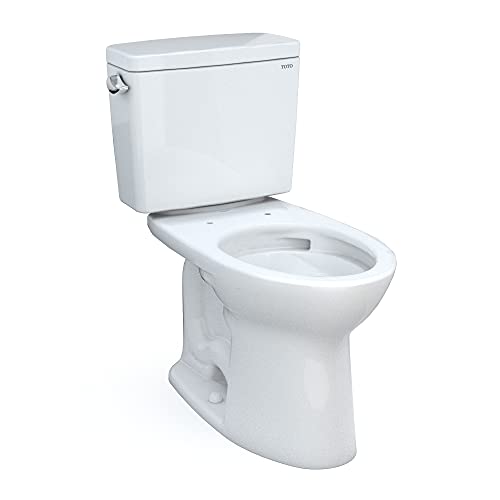
The mid-range tier consistently delivers the best cost-per-performance ratio. The TOTO Drake II and best flushing toilets like the American Standard Champion 4 regularly achieve 1,000-gram MaP scores -- the highest possible rating -- at a fraction of what luxury models cost.
Plumbers consistently report that mid-range two-piece toilets with standard 12-inch rough-ins take the least time to install and have the widest parts availability. One-piece models and skirted designs take 20 to 40 minutes longer per job, which adds $50 to $120 to labor charges. If budget is the priority, a standard two-piece at a well-tested MaP score beats a skirted unit at the same price point every time.
A licensed plumber typically charges $150 to $350 for a standard toilet replacement on an existing 12-inch rough-in, with the job taking 1 to 2 hours. In higher cost-of-living markets like San Francisco, New York, or Seattle, that labor rate rises to $250 to $450 or more. Emergency or same-day service adds a 20 to 50 percent surcharge on top of standard rates.
Labor is often the variable most homeowners underestimate. Plumber hourly rates in 2026 range from $85 to $175 per hour depending on region, license level, and whether the contractor is independent or from a national service company. Most toilet replacements are flat-rate jobs billed at 1.5 to 2 hours of labor regardless of actual time on site.
| Job Type | What It Involves | Estimated Labor |
|---|---|---|
| Standard Swap | Remove old toilet, set new toilet on existing intact flange, 12-inch rough-in | $150 to $280 |
| Flange Repair | Cracked or corroded flange needs repair or replacement before setting toilet | $280 to $450 |
| Non-Standard Rough-In | 10-inch or 14-inch rough-in requires specific model or offset flange adapter | $200 to $380 |
| Old Build with Lead Closet Bend | Homes pre-1960 may have lead or cast iron pipes requiring extra care or adapters | $300 to $600 |
| Smart Toilet / Bidet Combo | Electrical outlet required, GFCI installation, water supply connections | $350 to $700 |
Labor costs vary widely by metro area. These are approximate midpoints for a standard toilet swap based on aggregated contractor data:
Getting three quotes is worthwhile on any toilet replacement that involves more than a standard swap. Flange repairs especially have wide pricing variance -- a repair that costs $180 from one plumber may be quoted at $450 from another who recommends full closet bend replacement. Ask each plumber specifically whether they will repair or replace the flange and what is included in the estimate.
Beyond the toilet and labor, homeowners commonly encounter costs for a new wax ring ($5 to $25), toilet supply line ($8 to $30), shut-off valve replacement ($25 to $80), toilet seat if not included ($20 to $150), and disposal of the old unit ($25 to $75 if not bundled). Total incidentals typically run $80 to $300 on top of fixture and labor costs.
Plumbers rarely advertise these add-ons upfront. A good contractor replaces the wax ring and supply line as a matter of practice -- but not all of them include those parts in their base quote. Always confirm the following before signing off on a job estimate.
| Item | Why It Is Needed | Typical Cost |
|---|---|---|
| Wax ring | Always replaced at toilet removal -- never reuse the old one | $5 to $25 |
| Toilet supply line | Old braided lines crack or corrode; replace proactively | $8 to $30 |
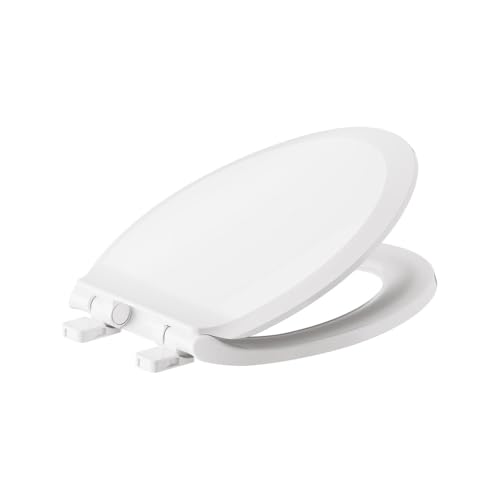
| Toilet seat | Many toilets ship without a seat; some include a basic option only | $20 to $150 |
| Shut-off valve | Old angle stops often seize or weep; wise to replace at same time | $25 to $80 |
| Toilet bolts (closet bolts) | Corroded bolts should not be reused; sold as a set | $5 to $15 |
| Flooring patch | Old toilet footprint may expose worn or stained flooring | $0 to $500+ |
| Old toilet disposal | Hauling away and disposing of the old unit | $25 to $75 |
| Flange extender | New flooring raises the floor level above the existing flange | $10 to $40 |
Shut-off valves deserve special attention. Many homes built before 1990 have compression-style angle stops that have not been turned in decades. When a plumber turns off the water and the valve fails to fully seal -- or seizes -- it becomes an emergency repair mid-job. Budgeting $40 to $80 to replace the angle stop at the same time as the toilet is inexpensive insurance.
DIY toilet replacement is genuinely achievable for most homeowners on a standard 12-inch rough-in with an intact flange, and it saves $150 to $350 in labor. The main risks are improper wax ring seating (which causes slow leaks under the floor), overtightening closet bolts (which cracks the toilet base), and not catching a compromised flange before setting the new unit. If the flange is damaged or the water shutoff is unreliable, hiring a plumber is the safer call.
A DIY toilet swap on a clean, standard rough-in takes most homeowners 60 to 90 minutes. The tools needed are minimal: an adjustable wrench, a putty knife or scraper, rubber gloves, and a bucket. Many plumbing supply retailers also rent or loan drain snake tools if a blockage is suspected at time of removal.
| Scenario | DIY Total Cost | Plumber Total Cost | DIY Savings |
|---|---|---|---|
| Budget toilet, standard swap | $130 to $240 | $310 to $490 | $170 to $250 |
| Mid-range toilet, standard swap | $250 to $560 | $430 to $830 | $180 to $270 |
| Premium toilet, standard swap | $450 to $950 | $650 to $1,250 | $200 to $300 |
| Any toilet, damaged flange | Not recommended | $430 to $750 | N/A |
One area where DIY rarely makes sense is the initial toilet installation guide for smart or bidet combo units. These require a GFCI electrical outlet within 6 feet of the toilet -- a code requirement in most jurisdictions. Installing that outlet yourself without an electrical permit is a code violation that can complicate homeowner insurance claims and home sales.
The most common DIY mistake during toilet replacement is not fully tightening the closet bolts evenly. Hand-tightening both sides alternately, then adding one full turn with a wrench on each side, is the correct method. Over-tightening cracks the porcelain base -- a $300 toilet becomes unusable instantly. Under-tightening allows the toilet to rock, which eventually breaks the wax seal and causes subfloor water damage costing thousands.
Replacing an older 3.5 GPF or 1.6 GPF toilet with an EPA WaterSense-certified 1.28 GPF model costs $200 to $700 total including installation, and can reduce toilet water use by 20 to 60 percent depending on the age of the unit being replaced. Many utility companies offer rebates of $50 to $200 for WaterSense-qualified installations, effectively lowering the net cost of the new toilet.
The EPA WaterSense program certifies toilets that use no more than 1.28 gallons per flush while meeting a minimum MaP performance threshold. Every major brand now offers WaterSense models: the TOTO Drake II and TOTO Aquia IV, Kohler Highline and Cimarron, American Standard Cadet 3 and Champion 4, Gerber Avalanche, and the Woodbridge T-0001 all carry WaterSense certification.
Toilets manufactured before 1994 used 3.5 to 7 gallons per flush. At a national average water cost of approximately $0.005 per gallon in 2026:
At those savings rates, a $350 mid-range toilet with $250 installation pays itself off in approximately 3 to 6 years, not counting any utility rebates received at purchase.
Several states and municipalities offer meaningful rebates. California, Colorado, Texas, Washington, and New York all have active programs through local water districts. Check the toilet rebate guide for 2026 to see what is available in your area before purchasing.
The MaP testing program, run independently at map-testing.com, measures how many grams of solid waste a toilet can flush in a single cycle. Any toilet scoring 800 grams or above is considered strong. Toilets at 1,000 grams -- the maximum tested -- include the TOTO Drake, Drake II, UltraMax II, and American Standard Champion 4. Choosing a high-MaP toilet alongside WaterSense certification ensures you are not trading flush power for water savings -- both are achievable together.
A toilet typically warrants replacement rather than repair when repair costs exceed 50 percent of a new unit's price, when the porcelain is cracked (especially at the base or tank), when it was manufactured before 1994 and uses 3.5 or more gallons per flush, or when recurring clogs and weak flushing persist despite replacing internal tank parts. A toilet in good structural condition can often be restored with a $25 to $60 rebuild kit.
Most toilet mechanical failures are not reasons to replace the unit. A running toilet, ghost flushing, slow fill, or weak flush are almost always flapper, fill valve, or float issues that cost under $30 in parts and 20 minutes to fix. The calculus changes when the problems are structural or when the fixture is consuming far more water than modern alternatives.
| Symptom | Likely Cause | Repair Cost | Replace? |
|---|---|---|---|
| Running constantly | Worn flapper or fill valve | $8 to $30 DIY | No |
| Weak flush | Clogged rim jets or fill valve issue | $10 to $40 DIY | No (unless pre-1994) |
| Slow fill | Fill valve worn or sediment buildup | $15 to $35 DIY | No |
| Cracked tank | Porcelain fatigue or impact | $80 to $200 (tank only) | Often yes -- replacement tank is hard to find |
| Cracked base | Over-tightened bolts or impact | Not repairable | Yes -- always replace |
| Leaks at base | Failed wax ring | $40 to $120 labor + wax ring | Not if toilet is otherwise sound |
| Frequent clogs (monthly+) | Undersized trapway or low MaP score | Recurring plumber calls | Yes -- often cheaper long-term |
| Pre-1994 toilet, 3.5+ GPF | Outdated technology | Ongoing water waste | Yes -- ROI is strong |
A toilet with a cracked base is never a candidate for repair. Water wicks under the porcelain, into the wax seal, and down to the subfloor with every flush. That moisture damage is hidden until it causes significant structural rot. See the toilet repair vs. replace cost guide for a deeper analysis of this decision.
For budget replacements under $300 total, the American Standard Cadet 3 and Kohler Highline consistently rate among the most reliable options with MaP scores of 600 to 800 grams and WaterSense certification at 1.28 GPF. In the $300 to $600 total range, the TOTO Drake II at 1,000-gram MaP and the American Standard Champion 4 deliver professional-grade flush power at approachable prices. Both are also among the most plumber-preferred models, which can reduce installation time and labor cost.
| Brand | Entry Model | Fixture Range | MaP Score | WaterSense | Warranty | Check Price |
|---|---|---|---|---|---|---|
| TOTO | Drake, Entrada | $180 to $1,500+ | 800 to 1,000 g | Yes (most models) | 1 year limited | Check price |
| Kohler | Highline, Wellworth | $130 to $1,200+ | 600 to 1,000 g | Yes (most models) | 1 year limited | Check price |
| American Standard | Cadet 3, Champion 4 | $120 to $900 | 600 to 1,000 g | Yes (most models) | Limited lifetime | Check price |
| Gerber | Viper, Maxwell | $140 to $700 | 800 to 1,000 g | Yes | 1 year limited | Check price |
| Woodbridge | T-0001 | $250 to $600 | 800 to 1,000 g | Yes | 1 year limited | Check price |
| Swiss Madison | Clarence, Ivy | $180 to $500 | 600 to 800 g | Yes | 1 year limited | Check price |
American Standard stands out for offering a limited lifetime warranty on the vitreous china on several models -- the Champion 4 being the most prominent example. TOTO's CeFiONtect glaze is a factory-applied ion barrier coating that resists particle adhesion, which reduces cleaning frequency and long-term maintenance costs beyond the initial purchase.
Woodbridge and Swiss Madison have gained traction as value-forward one-piece alternatives to TOTO and Kohler. They offer competitive GPF ratings and clean skirted designs at lower price points, though independent long-term durability data is thinner than for the legacy brands. For rental properties or secondary bathrooms where aesthetics matter more than two decades of reliability data, they are a reasonable choice.
| Budget Level | Fixture | Labor | Materials | Total Range |
|---|---|---|---|---|
| DIY Budget | $90 to $200 | $0 | $30 to $60 | $120 to $260 |
| Hired Budget | $90 to $200 | $150 to $280 | $30 to $80 | $270 to $560 |
| Mid-Range (Best Value) | $200 to $500 | $180 to $320 | $40 to $120 | $420 to $940 |
| Upper-Mid | $400 to $750 | $200 to $380 | $50 to $140 | $650 to $1,270 |
| Smart / Luxury | $900 to $5,000+ | $350 to $700 | $80 to $200 | $1,330 to $5,900+ |
To get competitive quotes, provide plumbers with three pieces of information before they arrive: the rough-in distance (measure from the wall behind the toilet to the center of the floor bolts), the toilet model you have already purchased or plan to purchase, and the age and material of your existing shut-off valve. Contractors who receive this information in advance give far more accurate estimates than those quoting blind.
Avoid scheduling toilet replacements during periods when plumbers are in high demand -- immediately after hard freezes, in late spring during remodel season, or around major holidays. Off-peak scheduling (mid-week, January through March outside of freeze events) often yields 10 to 20 percent lower quotes from independent contractors.
A licensed plumber can complete a standard toilet replacement in 1 to 1.5 hours on a clean, accessible job. DIY homeowners typically take 1.5 to 3 hours on their first replacement. Add 30 to 60 minutes for flange repairs, an additional 30 minutes if the shut-off valve needs replacement, and up to 2 hours extra for smart toilet installations requiring electrical work.
In most jurisdictions, a like-for-like toilet replacement on an existing rough-in does not require a permit. Permits are typically required when you are moving plumbing, adding new supply lines, installing electrical for a smart toilet, or replacing fixtures as part of a larger remodel. Check with your local building department if you are unsure -- the fee is usually $50 to $150 and a plumber can often pull it for you.
The vitreous china bowl and tank on a well-maintained toilet can last 50 or more years without structural failure. The internal mechanical components -- flapper, fill valve, flush valve -- typically need replacement every 5 to 10 years. Most toilets are replaced not because they fail structurally but because they become water-inefficient, aesthetically dated, or because a bathroom remodel prompts a full fixture update.
Rough-in distance is the main constraint. The vast majority of homes have a 12-inch rough-in (center of floor bolts to finished wall). Some older homes have 10-inch rough-ins, and some homes have 14-inch rough-ins. Purchasing a toilet without confirming this measurement is the single most common installation mistake. Measure before purchasing. Most brands offer models in all three sizes, though 12-inch models have the widest selection.
Yes, moderately. One-piece toilets are heavier (often 80 to 120 pounds versus 50 to 80 pounds for two-piece models), which requires two people to carry safely. Some plumbers charge a one-person surcharge if they arrive alone for a one-piece install. Skirted one-piece models also take longer to set because the bolt access points are covered, adding 20 to 40 minutes of labor in some cases.
Measure from the finished wall behind the toilet (not from baseboard trim) to the center of the toilet floor bolts. If the toilet is already in place, you can measure from the wall to the center of the bolt caps on either side of the toilet base. If you only see one bolt on a side, that is the closet bolt center -- your rough-in distance. Most homes will measure at 12 inches plus or minus half an inch.
A wax ring is the compressible gasket that seals the toilet base to the floor flange, preventing sewer gases and water from leaking at the connection point. Once a toilet is lifted off the flange, the wax ring is deformed and cannot create a reliable seal if reused. A new wax ring costs $5 to $25 and is non-negotiable at every toilet removal. Some plumbers now prefer wax-free rubber gaskets, which are also acceptable and slightly more adjustable for off-level flanges.
No. Gallons per flush is a performance specification that does not affect installation complexity or labor cost. A 1.6 GPF toilet and a 1.0 GPF toilet on the same rough-in take identical labor to install. The fixture cost may differ -- some high-efficiency models carry a modest premium -- but the installation process and total labor time are the same.
A flange that sits below the finished floor level cannot create a reliable wax ring seal at standard wax ring thickness. The fix is a flange extender ring ($10 to $40 in parts) that brings the flange surface flush with or slightly above the finished floor. This is a common issue in renovations where new tile or vinyl flooring has been installed without also raising the flange. A plumber can add a flange extender in 15 to 30 minutes.
Yes, on both the fixture cost and the installation cost. Smart toilets and bidet-integrated toilets range from $900 to over $5,000 for the fixture. Installation adds $350 to $700 or more because a GFCI electrical outlet is required within reach of the unit, the water supply connection may be different from a standard toilet, and the unit's control functions require testing post-installation. If no electrical outlet exists near the toilet, adding one costs an additional $150 to $350.
Yes. Habitat for Humanity ReStores accept working used toilets in good condition. Some water utilities run rebate programs that accept old toilets in exchange for a credit -- particularly in drought-prone regions. If the toilet is cracked or non-functional, most municipalities accept porcelain at a transfer station or heavy-material drop-off, sometimes for free and sometimes for a nominal fee. Curbside pickup varies by city.
Landlords replacing toilets in rental units typically target the $200 to $450 total range, using durable mid-tier models like the American Standard Cadet 3, Kohler Highline, or Gerber Viper. These models have proven long-term reliability, widely available replacement parts, and WaterSense certification that can support rebate applications. Avoiding high-design or technology-forward fixtures in rentals reduces maintenance liability.
Yes, many utility companies and water districts offer rebates of $50 to $200 for replacing pre-1994 or other high-volume toilets with EPA WaterSense certified models using 1.28 GPF or less. California, Colorado, Texas, Washington, New York, and Arizona all have active rebate programs through local water agencies. Check the EPA WaterSense rebate finder at epa.gov/watersense or contact your water utility directly before purchasing to confirm eligibility requirements.
The MaP testing program at map-testing.com rates toilets by how many grams of solid waste they can reliably clear in a single flush. A score of 500 grams is the minimum for certification; 800 grams is considered good; 1,000 grams is the maximum and indicates the highest flush performance available. For households with heavy use, hard water, or a history of clogs, targeting a 1,000-gram model from brands like TOTO, Kohler, or American Standard is strongly advisable.
The financial case is moderate, not strong. Switching from 1.6 GPF to 1.28 GPF saves roughly 0.32 gallons per flush -- meaningful for high-use households but less dramatic than replacing a pre-1994 3.5 GPF fixture. A three-person household might save 1,750 gallons per year at that delta, which equates to $8 to $18 annually at average water rates. The payoff period at that savings rate is long unless you are pursuing a WaterSense rebate or replacing the toilet for other reasons anyway.
Not if the angle stop (shut-off valve) behind the toilet functions properly. Close the angle stop, flush the toilet to drain the tank, and disconnect the supply line. If the angle stop does not fully close or leaks when turned, you will need to turn off the main water supply valve to the home before proceeding. This is one reason experienced plumbers recommend inspecting and often replacing the angle stop at the same time as the toilet.
Bowl shape does not meaningfully affect installation labor. Elongated bowls extend roughly 2 inches further from the wall than round bowls -- confirm clearance in small bathrooms, but installation time is identical. One-piece vs. two-piece has a modest labor impact (one-piece is heavier, potentially requiring two people) and a significant fixture cost impact -- quality one-piece models typically cost $100 to $300 more than comparable two-piece options. See the one-piece vs. two-piece toilet comparison for a full breakdown.
For most homeowners in 2026, budgeting $450 to $750 for a mid-range toilet and professional installation covers the job comfortably, including incidental materials. If budget is tight, a DIY swap using a well-reviewed model with a MaP score of 800 grams or above and EPA WaterSense certification brings total cost under $300 while delivering real performance and long-term water savings. Confirm your rough-in measurement before purchasing, replace the angle stop and supply line as a matter of course, and get at least two labor quotes for any job that involves flange repair or non-standard plumbing conditions.
Learn why toilet trapways curve like an S, how each bend blocks sewer gas, and what the shape means for clogs and…
Read the guideAlmost every US toilet has a left-side handle. Learn the plumbing and mechanical reasons behind the layout and when it actually changes.
Read the guideHome toilets rely on tanks because household water lines lack the pressure that public flushometer systems use to flush straight from the…
Read the guide