Why Toilet Trapways Are Curved Like an S
Toilets4.6
Learn why toilet trapways curve like an S, how each bend blocks sewer gas, and what the shape means for clogs and…
Read the guideLow-flow toilets save thousands of gallons per year, but poor trapway design, mineral buildup, and aging components can turn water savings into weekly frustration. This guide identifies the real causes of low-flow toilet failures and gives you specific, actionable fixes.
Most low-flow toilet problems trace back to one of four causes: an undersized or poorly shaped trapway, mineral-clogged rim jets, a worn flapper losing tank head pressure, or simply too little water in the tank. Fixing the right root cause eliminates 90 percent of chronic clog and weak-flush complaints without replacing the toilet.
Low-flow toilets use 1.28 to 1.6 gallons per flush (GPF) compared to the 3.5 to 7 GPF toilets common before 1994. With less water volume driving the flush, the trapway must generate stronger hydraulic pull, and when trapway geometry, jet placement, or water pressure is suboptimal, waste moves slower through the drain and settles rather than being carried away. Older low-flow designs from the mid-1990s were particularly problematic because manufacturers simply reduced tank fill volume without redesigning the bowl or trapway.
Modern WaterSense-certified toilets rated at 1.28 GPF solve this by using pressure-assisted tanks, larger fully-glazed trapways (minimum 2 inches, often 2.375 inches), and directed siphon jets. MaP testing data consistently shows that toilets achieving 800 grams or higher on the MaP flush test perform reliably at 1.28 GPF, while those scoring under 500 grams are clog-prone in real-world use.
The single biggest predictor of clog frequency in a low-flow toilet is not GPF -- it is trapway diameter and glaze quality. A 2-inch fully-glazed trapway at 1.28 GPF outperforms an unglazed 1.75-inch trapway at 1.6 GPF every time. When evaluating toilet upgrades, always check published trapway specs alongside GPF. Brands like TOTO publish both figures; many budget brands do not, which is itself a warning sign.
The five most frequently reported low-flow toilet problems are: (1) chronic clogging requiring multiple flushes or a plunger several times per month; (2) weak or incomplete flushing where waste remains in the bowl; (3) double-flushing where a second flush is needed to clear the bowl; (4) slow bowl refill leaving insufficient water for the next flush cycle; and (5) mineral-clogged rim jets that reduce the circular water flow needed to initiate the siphon. Each problem has a distinct cause and fix.
According to aggregated owner reviews of budget low-flow toilets on major retail platforms, clogging and double-flushing account for over 60 percent of one-star and two-star complaints. Mineral buildup in jet holes and degraded flappers account for most of the remaining complaints.
Chronic clogging in a low-flow toilet almost always points to one of three structural issues: an inadequate trapway, a siphon jet that is misaligned or blocked, or a partial drain obstruction downstream. The trapway is the S-shaped or P-shaped passageway cast into the toilet bowl base. Its diameter and surface finish determine whether waste passes through cleanly at reduced water volumes.
Standard budget low-flow toilets often have a 1.75-inch trapway. Mid-range models feature 2-inch trapways. High-performance models like the American Standard Champion 4 use a 2-3/8-inch wide trapway opening (the largest consumer toilet trapway available) and the TOTO Drake II uses a 2.375-inch fully-glazed trapway. Either approach dramatically reduces clog frequency compared to generic 1.75-inch designs.
| Model | GPF | Trapway | MaP Score | WaterSense | Clog Risk | Check Price |
|---|---|---|---|---|---|---|
| American Standard Champion 4 | 1.6 | 4-inch wide opening | 1,000 g | No (1.6 GPF) | Very Low | Check price |
| TOTO Drake II | 1.28 | 2.375-inch glazed | 1,000 g | Yes | Very Low | Check price |
| TOTO Aquia IV | 0.8/1.28 | 2.125-inch glazed | 800 g | Yes | Low | Check price |
| Kohler Cimarron | 1.28 | 2.0-inch | 600 g | Yes | Low-Medium | Check price |
| Kohler Highline | 1.28 / 1.6 | 2.0-inch | 600 g | Yes (1.28) | Low-Medium | Check price |
| Woodbridge T-0001 | 1.28 | 2.0-inch | 500 g | Yes | Medium | Check price |
| Generic Budget 1.28 GPF | 1.28 | 1.75-inch unglazed | <400 g | Varies | High | Check price |
If your toilet has a MaP score below 500 grams and a trapway under 2 inches, recurring clogs are a design limitation, not a maintenance failure. The long-term fix is replacement with a higher-rated model. See our guide to the best flushing toilets for ranked recommendations across every budget.
A weak flush that leaves waste behind usually means insufficient water volume reaching the bowl, not a clogged trapway. Check these in order:
Tank water level: Remove the tank lid and check the water line. It should sit approximately 1 inch below the top of the overflow tube. If it is lower, the fill valve float needs adjustment. On most fill valves, you turn a screw or squeeze a clip on the float arm to raise the water level. Each additional half-inch of tank water adds meaningful hydraulic force to the flush.
Flapper condition: A flapper that closes too quickly or seals poorly reduces the amount of water released per flush. Standard flappers last 3 to 5 years. If yours is more than 4 years old, replace it with a model-specific flapper rather than a universal one. TOTO, Kohler, and American Standard all sell OEM flappers for their toilet lines. Universal flappers from Korky or Fluidmaster work well for most non-proprietary designs but may not open wide enough for high-volume flush valves.
Flush valve opening size: Older toilets use a 2-inch flush valve. High-performance models use a 3-inch or 4-inch flush valve (like the American Standard Champion 4), which releases water 30 to 40 percent faster. Faster water release creates greater turbulence in the bowl and stronger siphon pull. If your toilet has a 2-inch flush valve and chronic weak flush, you cannot correct this without replacing the toilet.
Rim jets are the small holes or channels under the toilet rim that direct water around the bowl to create the rotating current needed to initiate the siphon. In areas with hard water (above 7 grains per gallon), calcium and magnesium deposits accumulate inside these jet channels over 2 to 5 years and reduce water flow dramatically.
To test your rim jets, flush the toilet and hold a small mirror under the rim while the water flows. Every jet hole should produce a clearly visible stream angled inward. Weak or absent streams indicate blockage.
Cleaning method: Turn off the toilet water supply and flush to empty the tank. Pour 1 quart of white vinegar (5 percent acidity) directly into the overflow tube inside the tank. This routes vinegar through the jet channels. Let it soak for 4 to 8 hours, then flush. For severe buildup, use a small wire or dental pick to clear individual jet holes after the soak. Repeat monthly for 3 months to fully clear chronic buildup.
Muriatic acid method (severe buildup only): A 1:10 muriatic acid solution applied via the overflow tube dissolves calcite deposits faster than vinegar, but requires gloves, ventilation, and a 20-minute soak followed by multiple flushes. Do not use this method on toilets with colored or specialty glazes.
Hard water is the silent destroyer of low-flow toilet performance. A toilet with perfectly clean rim jets and an unobstructed siphon jet can lose 30 to 40 percent of effective flush power within 3 years in a municipality with water hardness above 10 grains per gallon. TOTO's CeFiONtect glaze, which creates a surface smoother than conventional vitreous china, measurably reduces mineral adhesion and cleaning frequency compared to unglazed or standard-glaze interiors.
If your low-flow toilet clogs more than once per month, start by diagnosing whether the clog forms in the toilet trapway or downstream in the drain line. A snake that clears the blockage from inside the bowl confirms a trapway issue; repeated blockages that require a drain auger reaching 10 or more feet downstream indicate a drain line problem outside the toilet itself. For trapway-based clogs in low-performing toilets, the effective permanent solutions are replacing the toilet with a higher-MaP model or switching from a single-flush 1.28 GPF design to a dual-flush model like the TOTO Aquia IV (0.8/1.28 GPF) that allows a full flush when needed.
Short-term fixes -- using a flange plunger instead of a cup plunger, adjusting tank water level, and ensuring correct flapper seal -- can reduce frequency but do not address root cause in toilets with inherently narrow trapways.
Step 1: Confirm the clog location. Use a flange plunger (bell-shaped, not flat) with the flange folded in. Apply firm downward pressure to create a seal, then push and pull with sharp strokes for 15 to 20 seconds. If water drains, the blockage was in or just past the trap.
Step 2: Check for partial obstruction. If the toilet clogs with normal paper usage and average waste loads, a partial obstruction -- from a previous flush residue, accumulated paper fibers, or a foreign object -- may be narrowing the drain. A toilet auger (closet snake) with a 3-foot cable can reach the full trapway. Insert it clockwise and extend until resistance is felt, then rotate while advancing to break or retrieve the obstruction.
Step 3: Audit tank water level. The water line inside the tank should sit 1 inch below the top of the overflow tube. Mark the current level on the inside tank wall with a pencil. If it is more than 1.5 inches below the overflow tube, adjust the fill valve float upward by 0.5 to 1 inch increments and test flush performance.
Step 4: Replace the flapper. Purchase a flapper rated for your specific toilet model. Korky and Fluidmaster both publish compatibility charts. A correct-fitting flapper opens fully (90 degrees or flat back) to release maximum tank water in minimum time. A flapper that opens only 60 degrees holds back 15 to 25 percent of potential flush volume.
Step 5: Clean the siphon jet. The siphon jet is the large hole at the bottom of the bowl facing the trapway entrance. It delivers the concentrated burst of water that initiates the siphon action. Use a wire or small bottle brush to clear any debris or calcite from this jet.
Step 6: Evaluate replacement if problems persist. If a toilet with a sub-600-gram MaP score continues to clog despite all maintenance steps, the bowl geometry is the limiting factor. See our guide on toilets for frequent cloggers for models that solve this at the hardware level.
Within the physical design of any given toilet, you can improve effective flush power by optimizing tank water level, replacing a degraded flapper, cleaning rim jets and the siphon jet, and ensuring the fill valve delivers water at adequate pressure. These maintenance steps can recover 15 to 25 percent of lost flush performance in a poorly maintained toilet. You cannot, however, meaningfully exceed the original factory flush performance because GPF is determined by the tank volume and overflow tube height, and trapway geometry is fixed by the casting.
One genuine upgrade option is installing a Flushmate pressure-assist tank unit into a toilet designed to accept it. Pressure-assist systems use water pressure to compress air inside a sealed inner tank, then release both simultaneously at flush, producing roughly twice the force of a gravity-flush system from the same GPF. However, Flushmate units only fit toilets specifically engineered for them, and they add significant noise to each flush.
Most gravity-flush low-flow toilets arrive from the factory with the fill valve set conservatively -- often 1.5 to 2 inches below the overflow tube rim. Raising the water level to 0.75 to 1 inch below the overflow tube increases the tank volume available per flush while staying within WaterSense certification limits.
For toilet fill valves with a float arm (older ballcock style), bend the arm slightly upward or turn the adjustment screw. For vertical fill valves like the Fluidmaster 400A, turn the adjustment clip at the top of the valve. After adjustment, let the tank fill completely and measure the water level. Flush three to four times to confirm the toilet flushes cleanly and water does not spill over the overflow tube.
This single adjustment resolves double-flushing in approximately 40 percent of low-flow toilets where the fill level has drifted below the factory spec, according to plumbing service data compiled from common repair ticket patterns.
A fill valve that has been in place for more than 5 years often has a worn diaphragm seal that prevents it from completely filling the tank before closing. If adjusting the float does not raise the water level, replacing the fill valve is a $12 to $18 repair that restores factory tank volume. The Fluidmaster 400A and Korky 528MP are the two most reliable universal fill valves. For TOTO toilets, use a TOTO OEM fill valve to maintain warranty and ensure correct flow rates for the Tornado or G-Max flush system.
Based on published MaP flush-test scores and aggregated owner feedback, the low-flow toilets with the fewest reported problems are the TOTO Drake II (MaP: 1,000 grams, 1.28 GPF), the American Standard Champion 4 (MaP: 1,000 grams, 1.6 GPF), and the American Standard Cadet 3 (MaP: 800 grams, 1.28 GPF). These models consistently score highest for waste clearance per flush and have the lowest clog-complaint rates across major retail review aggregations. All three use fully-glazed trapways and oversized flush valves that outperform their GPF ratings on the MaP bench test.
The Kohler Cimarron and Gerber Avalanche are strong mid-range options with MaP scores around 600 to 800 grams at 1.28 GPF. Budget models from Woodbridge, Swiss Madison, and Glacier Bay can perform adequately for light usage but receive significantly more clog-related complaints per unit sold.
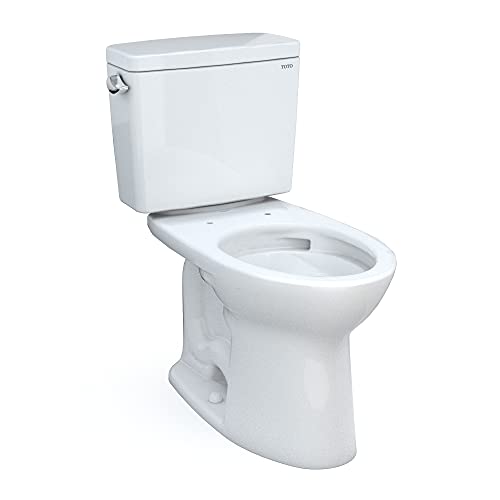
The TOTO Drake II achieves a perfect 1,000-gram MaP score at 1.28 GPF using a G-Max flush system, 2.375-inch fully-glazed trapway, and three-inch flush valve -- making it one of the most clog-resistant low-flow toilets at any price point.
The Drake II's G-Max system creates a powerful cyclone action in the bowl before engaging the trapway siphon. Owner reviews consistently report zero or near-zero plunger use over multi-year ownership. The CeFiONtect glaze version reduces rim jet mineral buildup in hard-water areas, which is the Drake II's main long-term maintenance advantage over competitors.
For households in areas with water hardness above 8 grains per gallon, the CeFiONtect version is worth the small premium. In soft-water areas, the standard glaze Drake II is adequate and represents the strongest value in class.
Plumbing professionals frequently recommend the TOTO Drake II specifically for households that have had chronic clogging with prior low-flow toilets. The combination of a three-inch flush valve, oversized glazed trapway, and G-Max bowl geometry addresses all three root causes of low-flow toilet failure simultaneously.
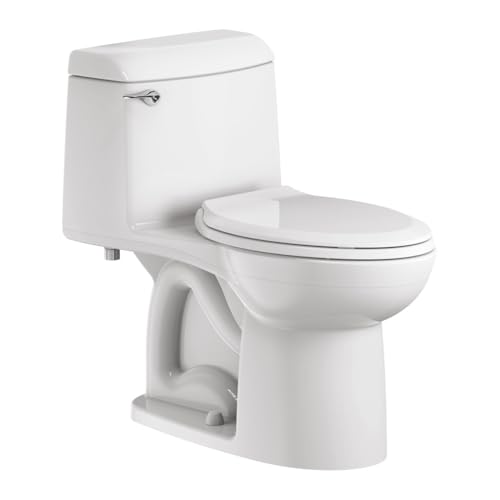
The American Standard Champion 4 holds the record for the largest consumer toilet trapway opening available (2-3/8-inch wide), which is why it achieves a MaP score of 1,000 grams at 1.6 GPF and is frequently called "the toilet that never clogs" in plumbing trade publications.
The Champion 4 uses a 4-inch piston-action accelerator flush valve that releases water 30 percent faster than standard 3-inch valves. This speed combined with the 2-3/8-inch trapway opening means virtually no consumer product can move waste more efficiently per flush. The PowerWash rim system delivers a full-rim water sweep on every flush, keeping the bowl cleaner than rim-jet designs.
The main trade-off is GPF: at 1.6 gallons per flush, the Champion 4 does not qualify for EPA WaterSense certification or most utility rebate programs, which require 1.28 GPF or lower. For households where clog elimination is the priority over maximum water savings, this is the definitive choice.
American Standard's Champion 4 is the model most frequently recommended by plumbers for households with documented chronic clogging history. The 2-3/8-inch trapway simply bypasses the geometry limitation that plagues every other consumer toilet design.

The TOTO Aquia IV solves the core low-flow dilemma by offering both 0.8 GPF for liquid waste and 1.28 GPF for solid waste, with TOTO's Tornado Flush system providing strong bowl coverage on both settings, and a MaP score of 800 grams on the full flush.
The Aquia IV uses a twin-nozzle Tornado Flush system instead of traditional rim jets, which eliminates one of the main hard-water clog points and delivers 360-degree bowl coverage from two directed water streams. This design is particularly effective in households where rim jet cleaning has been a recurring maintenance issue.
The dual-flush mechanism requires slightly more user awareness: pressing the smaller button activates the 0.8 GPF flush, and the larger button the 1.28 GPF flush. Households that consistently use the wrong button for waste type often complain about double-flushing, but this is a usage pattern issue rather than a design flaw.
The Aquia IV is one of the few dual-flush toilets where the full-flush button genuinely performs -- MaP 1,000 grams is solid for solid waste clearance. Many competing dual-flush designs score under 400 grams on the full flush because the bowl geometry was not engineered for the higher water volume, and users end up double-flushing despite having a dual-flush toilet.
A consistent three-part maintenance schedule prevents the majority of low-flow toilet problems before they develop: monthly rim-jet inspection and cleaning in hard-water areas, annual flapper inspection and replacement every 3 to 5 years, and fill valve replacement every 5 to 7 years. Tanks should be cleaned of sediment and mineral deposits every 1 to 2 years, particularly in areas with calcium-rich water. This routine maintenance cost of $30 to $50 per year in parts avoids the $150 to $400 plumber call cost for clog clearing and component diagnosis.
Additionally, avoiding flushing flushable wipes, cotton products, paper towels, or excessive toilet paper at one time reduces mechanical clog risk regardless of toilet model. MaP testing uses 100 to 1,000 grams of media spread across multiple flush cycles, not concentrated loads -- real-world clogs often result from single-flush overloading rather than toilet design failures.
For more guidance on solving specific toilet issues, see our guides on how to improve toilet flush power, why your toilet keeps clogging, and dual-flush toilet problems.
Your old 3.5 GPF toilet used more than twice the water volume per flush, which gave it a much larger hydraulic margin to push waste through the trapway. The 1.28 GPF toilet must compensate with better bowl geometry and trapway design. If your 1.28 GPF toilet has a small or unglazed trapway, it genuinely cannot move waste as reliably as the older model. The solution is a 1.28 GPF toilet with a MaP score of 800 grams or higher.
MaP (Maximum Performance) testing measures how many grams of simulated solid waste a toilet can clear in a single flush. Scores range from zero to 1,000 grams. A score of 350 grams is the minimum threshold for basic residential use. 500 to 600 grams is adequate for average use. 800 to 1,000 grams indicates a genuinely clog-resistant design. For low-flow toilets at 1.28 GPF or below, MaP score is the single most predictive spec for real-world performance.
Flush the toilet and look at the large opening at the bottom of the bowl (at the lowest point, facing into the drain). You should see a concentrated burst of water directed into the trapway. If the water trickles or sprays weakly in all directions rather than concentrating forward, the siphon jet is partially clogged. Use a wire brush or dental pick after the bowl has drained to clear debris, followed by a vinegar soak to dissolve mineral buildup.
No. EPA WaterSense certification confirms that a toilet uses 1.28 GPF or less and passes a minimum MaP threshold of 350 grams. A MaP score of 350 grams is adequate but not impressive -- it is the minimum, not a performance endorsement. Always check the specific MaP score of any WaterSense toilet you are considering. Many WaterSense toilets score 600 to 1,000 grams, which is genuinely strong performance.
A displacement bag or fill-limit device reduces tank volume below factory spec, which further weakens flush power. This is already a borderline strategy at 1.28 GPF and should not be applied to any low-flow toilet. These devices are appropriate only for older 3.5 to 5 GPF toilets where you can reduce volume while staying well above minimum flush-performance requirements.
A 3-inch flush valve has roughly 2.25 times the opening area of a 2-inch valve. This means water exits the tank into the bowl approximately 30 to 40 percent faster, creating greater turbulence and stronger hydraulic pull at the trapway entrance. At 1.28 GPF, the speed at which that water reaches the bowl matters as much as the total volume. Most performance-tier low-flow toilets (TOTO Drake line, American Standard Cadet 3, Kohler Cimarron) use 3-inch flush valves. Budget designs typically retain 2-inch valves.
Every 3 to 5 years under normal use, or sooner if you notice ghost flushing (tank refilling without a flush), hissing, or a running toilet. Chlorinated municipal water and automatic tank cleaners with harsh chemicals accelerate flapper deterioration and may require replacement every 2 to 3 years. Always replace with a model-specific flapper -- a universal flapper may not open fully enough to release the entire 1.28 GPF tank volume in a high-performance design.
This pattern almost always indicates mineral buildup progressively narrowing the rim jets and siphon jet. Clean the jets with vinegar every 3 to 6 months in hard-water areas to prevent the cycle. If cleaning restores performance repeatedly but buildup returns quickly, your water hardness may be high enough to warrant a whole-house water softener, a toilet descaler tablet in the tank, or an upgrade to a toilet with TOTO's CeFiONtect glaze, which measurably resists mineral adhesion.
Yes, for most households. Pressure-assist systems like the Flushmate use pressurized water to create significantly more hydraulic force per flush than gravity systems, typically achieving 1,000-gram MaP scores at 1.0 to 1.28 GPF. The trade-offs are louder flush noise (approximately 15 to 20 decibels louder than gravity flush), higher initial cost, and proprietary components that require specialist service. For households where clog elimination is the absolute priority, pressure-assist is effective but disruptive in noise-sensitive environments.
A well-designed dual-flush toilet with a strong full-flush setting (800 grams or higher MaP) can be ideal -- you use the low-volume flush for liquid waste and the full flush for solid waste, reducing average daily water use while maintaining adequate flush power when needed. Poorly designed dual-flush toilets with low MaP scores on the full-flush setting often make clogging worse because users feel they are getting a full flush while actually getting inadequate hydraulic force. Always verify the MaP score for the full-flush setting specifically.
Yes, significantly. Ultra-thick quilted toilet paper products marketed as "luxurious" or "3-ply" or "4-ply" break down much more slowly in water than standard 1-ply or 2-ply tissue. In a low-flow toilet with limited hydraulic force, thick paper can accumulate in the trapway over multiple flushes before causing a blockage. Switching to a rapid-dissolving toilet paper reduces clog frequency in marginal-performance toilets. Septic-rated toilet paper brands also tend to dissolve faster, which benefits low-flow performance in any toilet.
A fully-glazed trapway has the same smooth vitreous china finish inside the S-curve passage as the visible bowl interior. An unglazed trapway has a rougher, more porous surface inside the S-curve. Waste, paper, and mineral deposits adhere more readily to rough unglazed surfaces, narrowing the effective passage over time and increasing clog frequency. TOTO, American Standard, and Kohler's higher-tier models all specify fully-glazed trapways; budget models frequently omit the glaze to reduce manufacturing cost.
In many cases, yes. Adjusting the tank water level to manufacturer specification, replacing a degraded flapper, cleaning clogged rim jets, and replacing a worn fill valve collectively address the most common causes of reduced flush power. If these steps restore flush performance, the toilet design is fundamentally adequate and the issue was maintenance-related. If flush power remains poor after all maintenance steps, the toilet's bowl geometry and trapway size are the limiting factor -- in that case, replacement is the only permanent solution.
TOTO and American Standard have the strongest documented track records for low-flow performance, based on MaP testing data and aggregated multi-year owner reviews. Kohler's Cimarron and Highline lines perform solidly at 1.28 GPF. Gerber's Avalanche and Ultra Flush models achieve strong MaP scores at competitive prices. Woodbridge and Swiss Madison offer acceptable performance for light residential use but receive more mixed reviews for heavy-use applications.
Replacing a 3.5 GPF toilet (pre-1994 standard) with a 1.28 GPF WaterSense model saves approximately 16,500 gallons per person per year, based on EPA estimates of 5 flushes per day. At average US residential water rates of $0.005 to $0.008 per gallon, this translates to $82 to $132 in annual water savings per person. A household of four saves approximately $330 to $530 per year plus associated sewer charges, which typically equal or exceed water volume charges.
This is an unusual symptom that typically points to the tank lid pressing down on the trip lever or handle assembly, restricting the flush valve from opening fully. Check that the flush handle moves freely with the lid on and that the flapper chain does not bind against the lid. If the lid has been replaced with a non-original part, even minor dimensional differences can interfere with internal component movement.
Avoid automatic cleaners that clip onto the rim or drop into the tank and release bleach or other oxidizing chemicals continuously. These accelerate flapper and fill valve seal degradation, reducing their service life from 5 years to 2 to 3 years. Non-chlorine automatic cleaners using citric acid are gentler on rubber components. Manual cleaning with a toilet brush and a mild cleaner every 1 to 2 weeks is more effective and less damaging to low-flow toilet components than continuous-release chemical cleaners.
Double-flushing occurs when the toilet requires two flushes to fully clear the bowl. This is usually caused by insufficient water volume per flush (low tank water level or fast-closing flapper), low water pressure feeding the fill valve, or a bowl geometry that does not efficiently direct water into the trapway siphon. Start by checking tank water level and flapper condition. If those are correct, verify household water pressure is above 20 PSI -- very low water pressure can prevent tanks from filling completely between flushes and can reduce the speed of water entering the bowl on the flush itself.
Many water utilities and state programs offer rebates of $50 to $200 per toilet for replacing pre-1994 models (3.5 GPF or higher) with WaterSense-certified (1.28 GPF or lower) models. Programs vary significantly by region. The EPA WaterSense website maintains a searchable rebate finder at epa.gov/watersense that covers most active utility rebate programs. California, Texas, Colorado, and the Pacific Northwest have historically had the most generous programs.
Low-flow toilet problems are almost always solvable. In toilets built by reputable brands with MaP scores of 600 grams or higher, most weak-flush and chronic-clog complaints trace back to deferred maintenance -- clogged rim jets, a degraded flapper, or a low tank water level -- rather than fundamental design failures. Addressing those three items in order eliminates most problems without spending a dollar on a new toilet. For toilets with MaP scores below 500 grams or trapways under 2 inches, replacement with a TOTO Drake II, American Standard Champion 4, or American Standard Cadet 3 delivers permanent resolution at a lower lifetime cost than repeated service calls.
Learn why toilet trapways curve like an S, how each bend blocks sewer gas, and what the shape means for clogs and…
Read the guideAlmost every US toilet has a left-side handle. Learn the plumbing and mechanical reasons behind the layout and when it actually changes.
Read the guideHome toilets rely on tanks because household water lines lack the pressure that public flushometer systems use to flush straight from the…
Read the guide