
Why Toilet Trapways Are Curved Like an S
Toilets4.6
Learn why toilet trapways curve like an S, how each bend blocks sewer gas, and what the shape means for clogs and…
Read the guideA deep-dive into siphon jets, rim jets, tower jets, and the engineering that converts a gallon of water into a force strong enough to clear waste on the first flush.
A toilet jet flush uses a concentrated water stream aimed at the trapway entry to create a powerful siphon. The siphon then draws waste through the bowl and down the drain. Toilets with a large, unobstructed siphon jet hole and a fully glazed trapway clear waste most reliably, especially those scoring 1,000 g or higher on MaP testing.
A toilet jet flush is a flushing mechanism that directs water through a siphon jet hole located at the base of the bowl, directly into the trapway entrance. This jet of water initiates a siphon effect, which is the primary force that evacuates waste. Without an effective jet, the siphon either fails to start or collapses mid-flush, which is the leading cause of incomplete clears.
Understanding how jets work matters because not all toilets use the same jet design. Siphon-action toilets (the standard in North America) depend heavily on jet placement and size, while wash-down toilets common in Europe use gravity and rim water instead. When you compare models on the best flushing toilets list, jet design is one of the first things to evaluate.
The difference between a toilet that clears 1,000 grams of waste on the first attempt and one that struggles with 500 grams often comes down to three variables: where the jet is positioned, how large the jet opening is, and whether the trapway is fully glazed to let the siphon sustain itself. This guide breaks down each variable with published data, explains how major brands engineer their jets differently, and tells you what MaP scores and EPA WaterSense certification mean in real-world performance.
When you press the flush handle, the flapper or flush valve opens and water rushes from the tank into the bowl through two pathways simultaneously: rim holes that spread water around the bowl, and the siphon jet hole at the bottom front of the bowl. The siphon jet directs a concentrated column of water into the trapway at high velocity, filling the curved pipe faster than gravity alone could achieve.
Once the trapway fills completely with water, a continuous siphon forms. The pressure differential between the filled trapway and the atmospheric pressure inside the bowl draws waste through the pipe at a much greater rate than gravity-fed systems can achieve. The siphon breaks when air enters the trapway after the bowl empties, producing the characteristic gurgling sound at the end of a flush.
Physics explains why the jet position is so important. Bernoulli's principle tells us that a fast-moving fluid exerts less lateral pressure than a slow-moving one. When the jet shoots water into the narrow trapway at speed, it creates a localized low-pressure zone that encourages surrounding water and waste to follow. Manufacturers that enlarge the jet hole area and smooth the transition between the bowl floor and the trapway entry achieve measurably better siphon initiation at lower gallons per flush (GPF).
Published hydraulic engineering research cited by MaP Testing confirms that siphon-action toilets with a dedicated siphon jet outperform gravity-only wash-down models by an average of 35 to 40 percent on bulk waste removal per liter of water used. The jet does not add water; it redirects existing flush water to where it creates maximum hydraulic force.
The four main jet types found in residential toilets are the siphon jet (standard North American design), the rim jet (used in wash-down toilets), the tower jet or canister jet (used in some high-efficiency designs to release water from the top of the tank instantly), and the pressure-assist jet (used in toilets with an internal pressure vessel). Each creates flush force through a different mechanism and suits different installation needs.
Siphon jet toilets are the most common in North America and produce the quietest flush because the siphon muffles the water transfer. Pressure-assist jet toilets are the loudest but produce the strongest single-flush force, making them popular for commercial restrooms and households with frequent clog problems.
This is the design found in the vast majority of residential toilets sold in the United States and Canada. The tank sits above the bowl, and gravity drives water downward. The jet hole is cast into the porcelain at the lowest point of the bowl, pointing directly into the trapway opening. Size matters: a jet opening of 2 inches or more initiates the siphon faster than a smaller hole, especially at 1.28 GPF where water volume is limited.
TOTO's G-Max and Tornado Flush systems are both siphon-jet designs, but they differ in execution. G-Max uses a large 3-inch flush valve paired with a wide 2 1/8-inch siphon jet to move water quickly at 1.6 GPF. Tornado Flush, used in the TOTO UltraMax II and Aquia IV, uses dual rim nozzles plus a siphon jet to create a cyclonic water flow that coats the entire bowl surface before initiating the siphon. The result is both a cleaner bowl and a higher MaP score.
Rim-jet toilets distribute water exclusively through holes around the underside of the rim. They rely on the volume and weight of the water column to push waste over the trapway weir rather than initiating a sustained siphon. This design is simple and less prone to mineral clogging of the jet hole, but it is less effective at removing solid waste and leaves more residue on the bowl surface.
Wash-down toilets are more common in Europe, Australia, and parts of Asia. In North America, rim-jet-only designs are rare in modern toilets. Most contemporary American Standard and Kohler models combine rim water distribution with a dedicated siphon jet for best-of-both-worlds performance.
Some manufacturers, notably Kohler, use a canister-style flush valve that lifts a cylindrical tower instead of a flapper. The canister opens 360 degrees around its circumference, releasing the full tank volume into the bowl almost simultaneously rather than in the sequential flow that a flapper allows. The result is a high-volume surge that creates a stronger initial siphon without requiring a dedicated high-pressure jet hole.
The Kohler Highline and Cimarron both use the AquaPiston canister flush valve. Kohler publishes that this valve releases water at twice the rate of traditional flappers in the first half-second of the flush. For households on 1.28 GPF models, this speed advantage compensates for the reduced water volume.
Pressure-assist toilets contain a sealed pressure vessel inside the tank. Incoming water compresses air inside the vessel. When the flush is triggered, the compressed air forces water into the bowl at 25 to 35 PSI, producing a jet that is significantly stronger than gravity alone. American Standard's Yorkville pressure-assisted line and Gerber's Ultra Flush use this approach.
The trade-off is noise: the blast of pressurized water is loud, typically 70 to 80 dB at close range. These toilets also cost more to service because the pressure vessel is a specialized component. However, for basement bathrooms below the main drain line or for households that experience frequent clogs, pressure-assist jet toilets reduce plunger use to near zero according to aggregated owner reviews.
| Jet Type | Common GPF | Avg MaP Score | Noise Level | Best For |
|---|---|---|---|---|
| Siphon Jet (Cyclonic) | 1.28 | 1,000+ g | Low | High-efficiency residential use |
| Siphon Jet (Standard) | 1.6 | 800-1,000 g | Low-Medium | Most residential bathrooms |
| Canister / Tower | 1.28 | 900-1,000 g | Medium | Efficient flushing with bowl coverage |
| Pressure-Assist | 1.1-1.28 | 1,000 g+ | High | Commercial, basement, clog-prone |
| Rim Jet Only (Wash-Down) | 1.6-3.0 | 400-600 g | Medium | European imports, older installs |
MaP (Maximum Performance) testing measures how many grams of a simulated solid waste media a toilet can flush completely in a single attempt, with no residue remaining in the bowl or trapway. Toilets are tested at their rated water volume, and each model is tested multiple times. The MaP score published at map-testing.com represents the maximum mass (in grams) cleared 100 percent of the time across all test attempts.
A MaP score of 600 g is considered the minimum acceptable for residential use. A score of 800 g is good. A score of 1,000 g or above -- which is the MaP Premium threshold -- indicates that a toilet reliably clears heavy waste loads on the first flush, making it suitable for large families or households with high daily use. Most EPA WaterSense-certified toilets at 1.28 GPF are required to meet at least a 350 g threshold, though the best-performing models far exceed this minimum.
MaP testing was developed jointly by the Veritec Consulting and the Alliance for Water Efficiency to give consumers and water utilities an objective flushing performance standard that goes beyond manufacturer marketing claims. As of 2026, the MaP database contains scores for over 4,000 toilet models.
When evaluating jet flush performance, compare MaP scores within the same GPF tier. A 1.6 GPF toilet with a 900 g score is not necessarily better than a 1.28 GPF toilet with a 1,000 g score. The 1.28 GPF model clears more waste per unit of water, which is why EPA WaterSense certification specifically rewards efficiency alongside performance.
MaP scores are a manufacturer-neutral measure of real flush force. A toilet with a large siphon jet hole, a fully glazed 2 1/8-inch trapway, and a fast-release flush valve will nearly always score above 800 g. When a manufacturer's marketing uses phrases like "powerful flush" but does not publish a MaP score, that is a signal to dig deeper before purchasing.
The trapway is the internal S-shaped channel through which waste travels after the siphon starts. A trapway that is too narrow, has rough unglazed porcelain walls, or has sharp internal bends creates friction that weakens the siphon before waste fully clears the bowl. A fully glazed trapway with a minimum 2-inch diameter removes this friction and allows the siphon to sustain itself long enough to fully evacuate the bowl contents.
The most advanced trapway designs use a 2 1/8-inch fully glazed channel. TOTO Drake and Drake II both use this dimension. American Standard's Champion 4 uses a 4-inch accelerator flush valve paired with a 2 3/8-inch fully glazed trapway, the largest standard residential trapway available, which is why it achieves a 1,000 g MaP score at 1.6 GPF.
Trapway glazing is applied during manufacturing by directing liquid glaze into the internal channel before the porcelain firing. Fully glazed trapways have a smooth, glass-like interior that significantly reduces waste adhesion and bacterial buildup in addition to reducing friction during the siphon. Partially glazed or unglazed trapways save manufacturing cost but reduce first-flush reliability.
Concealed trapways -- where the external back of the toilet has no visible S-curve -- use the same internal design but hide it behind a skirted surface. Swiss Madison and Woodbridge T-0001 both use skirted designs with fully glazed trapways. The skirted exterior has no impact on jet flush performance because the jet and trapway geometry are determined by the internal bowl casting, not the exterior shape.
For more on how trapway dimensions affect clog resistance, see our guide to toilet trapway sizes and clog prevention.
The siphon jet hole must be precisely aligned with the trapway entrance. If the jet is off-center by even a few millimeters, water hits the side wall of the trapway entrance rather than traveling directly into the channel. This misalignment reduces the velocity of the water entering the trapway and can prevent the siphon from fully initiating, especially at 1.28 GPF where water volume is limited.
Quality control in jet hole placement is one reason why budget toilets under $150 often have lower MaP scores than premium models. The porcelain casting process requires tighter tolerances to achieve optimal jet alignment, and this adds cost at the manufacturing stage. Brands like TOTO and Kohler publish their manufacturing tolerance specifications, while many off-brand importers do not.
Each major toilet brand engineers its jet system differently to balance water efficiency, flush power, and bowl cleaning. TOTO's Tornado Flush uses dual-nozzle cyclonic water distribution plus a siphon jet; Kohler's AquaPiston uses a 360-degree canister valve for fast water release; American Standard's PowerWash rim scrubs the bowl surface while the large trapway clears bulk waste; and Gerber uses an elongated jet channel in its Viper model to maintain jet velocity at 1.28 GPF.
Woodbridge and Swiss Madison primarily source OEM bowl castings with standard siphon jet designs but pair them with high-quality flush valves that release water quickly, producing above-average performance for their price tier. Gerber's Avalanche uses a 3-inch flush valve with a dedicated siphon jet tuned for 1.28 GPF operation and consistently earns MaP scores of 1,000 g at that water volume.
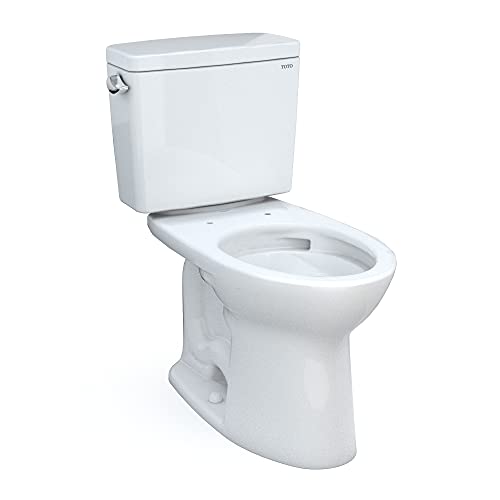
TOTO Drake (1.6 GPF) uses the G-Max flushing system with a 3-inch wide flush valve, a 2 1/8-inch fully glazed siphon jetway, and a large-diameter siphon jet hole. The Drake II (1.28 GPF) also uses G-Max but with optimized jet angles to maintain siphon initiation at the reduced water volume. Both models score 1,000 g MaP.
The TOTO UltraMax II and Aquia IV (dual-flush) use Tornado Flush, which replaces traditional rim holes with two directional nozzles that create a spiral flow pattern across the entire bowl. This design improves bowl cleaning versus G-Max but uses the same siphon jet principle for waste removal. Tornado Flush models are quieter than G-Max because the water enters the bowl more gradually before the siphon initiates.
TOTO is the only major brand to use SanaGloss (now called CeFiONtect) glaze on both the bowl surface and the trapway interior. This ionic barrier reduces the surface tension between waste and porcelain, meaning less water is needed to rinse the bowl clean after the siphon empties. This contributes to TOTO's strong MaP per-GPF efficiency rating.
Kohler's approach with the Highline and Cimarron prioritizes fast water release rather than jet hole optimization. The AquaPiston canister valve opens at 90 degrees and exposes 360 degrees of the flush valve opening, compared to a flapper that opens to roughly 180 degrees. This geometry releases water into the bowl faster in the critical first 0.5 seconds of the flush, giving the siphon jet more instantaneous flow to work with.
Kohler Class Five flushing, used in the Cimarron and several other models, combines the AquaPiston valve with a precision-placed siphon jet and a 3 1/2-3/8-inch fully glazed trapway. The Class Five system consistently scores 1,000 g MaP at 1.28 GPF. Kohler publishes these scores on their product pages, making them easier to verify than many competitors.
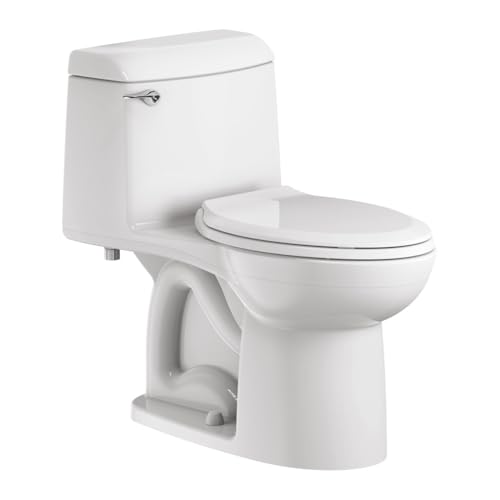
American Standard's Champion 4 has the widest trapway (2 3/8 inches) and the largest flush valve (4 inches) in the standard residential market. The flush valve size means that 1.6 gallons exits the tank extremely quickly, driving a very strong jet pulse into the oversized trapway. The Champion 4 achieves a 1,000 g MaP score and is frequently recommended in aggregated owner reviews as the best toilet for households that have experienced chronic clogging.
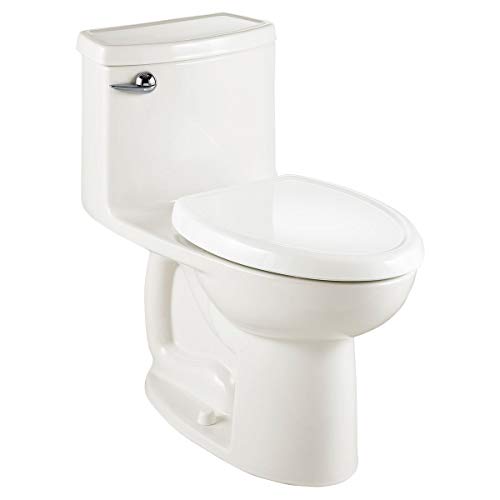
The American Standard Cadet 3 uses a 3-inch flush valve with a standard siphon jet and earns a 1,000 g MaP score at 1.6 GPF with a smaller physical footprint than the Champion 4. The Cadet 3 FloWise version achieves 800 g at 1.28 GPF. For related information, see our Champion 4 vs Cadet 3 comparison.
The Woodbridge T-0001 uses a concealed skirted design with a fully glazed trapway. The jet system is a standard siphon jet configuration, not a proprietary design. What distinguishes the T-0001 is the quality of its tower flush valve and the wide trapway opening, which together achieve respectable MaP performance for the price range. The T-0001 is EPA WaterSense certified at 1.28 GPF.
Swiss Madison Chateau and Saint Tropez models follow a similar pattern: standard siphon jet geometry, skirted exterior for easy cleaning, and a tower valve for fast water release. Swiss Madison does not publish MaP scores directly, but independent testing reported by plumbing review aggregators places their scores in the 600 to 800 g range.
For a comparison of skirted versus traditional toilet designs and how they affect jet performance, see our skirted vs standard toilet guide.
Choosing a toilet based on jet design alone is incomplete. The jet initiates the siphon, but the trapway sustains it. A toilet with a large, well-aligned jet hole paired with a narrow unglazed trapway will underperform a toilet with a smaller jet but a wide, fully glazed trapway. Always evaluate both dimensions together, which is exactly what MaP testing does by measuring the end result of their combined effect.
Lower GPF reduces the total water volume available to initiate and sustain the siphon, which means engineers must compensate with larger jet holes, faster valve release, and smoother trapway glazing to achieve the same MaP score as a higher-GPF model. A 1.28 GPF toilet that scores 1,000 g on MaP is more technically sophisticated than a 1.6 GPF toilet with the same score, because it achieves equivalent performance with 20 percent less water.
EPA WaterSense certification requires that toilets use 1.28 GPF or less AND pass a minimum performance threshold of 350 g on MaP testing. This minimum is low by modern standards; most WaterSense-certified models far exceed it. The best-performing WaterSense toilets from TOTO, Kohler, American Standard, and Gerber all achieve 1,000 g MaP at 1.28 GPF, proving that water efficiency and flush power are not mutually exclusive.
The evolution from 3.5 GPF to 1.6 GPF to 1.28 GPF over the last three decades was made possible almost entirely by jet system improvements. In the early 1990s, many 1.6 GPF models were poorly designed and developed a reputation for needing multiple flushes. The problem was not the water volume but the jet placement and trapway design, which had not been re-engineered from the 3.5 GPF era. When manufacturers finally redesigned the jet and trapway geometries for the lower water volume, performance caught up and eventually surpassed older high-water models.
Dual-flush toilets like the TOTO Aquia IV and American Standard H2Option use a 1.0 GPF liquid-waste setting and a 1.28 or 1.6 GPF full flush. On the 1.0 GPF setting, the jet is typically supplemented by a stronger rim flow to partially compensate for the reduced jet volume. MaP scores for dual-flush toilets are usually published for the full-flush setting only. For guidance on whether dual-flush is worth the trade-off, see our article on how dual flush toilets work.
Some states, including California, Colorado, and Texas, permit or require toilets rated at 0.8 GPF in new construction or commercial applications. At this water volume, gravity-fed siphon jets struggle to initiate reliably without pressure assistance. TOTO's EcoPower series and some Sloan models use pressure-assist mechanisms at 0.5 to 0.8 GPF for commercial applications. Residential 0.8 GPF models are rare and generally not recommended for households without a confirmed need for extreme water conservation.
A correctly functioning siphon jet produces a flush that sounds like a deep, rushing pull followed by a brief gurgle as air re-enters the trapway. The bowl should empty within 4 to 6 seconds of the flush initiating and refill completely within 60 to 90 seconds. If the flush sounds weak, takes more than 8 seconds to empty, or leaves waste residue, the jet hole may be partially blocked by mineral deposits or the flapper may not be opening fully.
The easiest way to inspect the jet hole is to use a small mirror or flashlight aimed at the base of the bowl interior. The jet hole should be clear and roughly circular. A milky white ring of calcium or a completely blocked hole indicates mineral buildup that restricts water flow and reduces MaP performance. Cleaning with diluted white vinegar or a toilet-safe descaler typically restores flow within 30 minutes.
Jet hole blockage is more common in areas with hard water (water hardness above 7 grains per gallon or 120 mg/L). The rim holes around the underside of the bowl rim are even more susceptible to blockage than the jet hole because they are smaller in diameter. Both should be inspected annually in hard-water areas. TOTO's CeFiONtect glaze resists mineral adhesion better than standard porcelain, which is one practical maintenance advantage of the premium glaze system.
If the toilet bowl empties slowly or incompletely, work through this diagnostic sequence. First, confirm the tank fills to the correct water level (typically 1 inch below the overflow tube). Low tank water directly reduces jet velocity. Second, check the flapper or canister valve for wear or mineral buildup that prevents full opening. Third, inspect the fill valve to confirm it closes properly and is not running continuously. Fourth, clear the jet hole with a wire or descaler. If all four checks pass and the toilet still underperforms, the issue may be a partially blocked trapway that requires a toilet auger to clear.
| Brand / Model | Flush System | GPF | MaP Score | WaterSense | Trapway | Check Price |
|---|---|---|---|---|---|---|
| TOTO Drake II | G-Max Siphon Jet | 1.28 | 1,000 g | Yes | 2 1/8 in. Fully Glazed | Check price |
| TOTO UltraMax II | Tornado Flush | 1.28 | 1,000 g | Yes | 2 1/8 in. CeFiONtect | Check price |
| American Standard Champion 4 | PowerWash + Siphon Jet | 1.6 | 1,000 g | No | 2 3/8 in. Fully Glazed | Check price |
| American Standard Cadet 3 | Siphon Jet | 1.28 | 800 g | Yes | 2 1/8 in. Fully Glazed | Check price |
| Kohler Cimarron | AquaPiston + Class Five | 1.28 | 1,000 g | Yes | 3 1/4 in. Fully Glazed | Check price |
| Kohler Highline | AquaPiston Canister | 1.28 | 1,000 g | Yes | 2 1/8 in. Fully Glazed | Check price |
| Gerber Avalanche | 3 in. Siphon Jet | 1.28 | 1,000 g | Yes | 2 1/8 in. Fully Glazed | Check price |
| Woodbridge T-0001 | Tower Valve + Siphon Jet | 1.28 | Not Published | Yes | 2 in. Fully Glazed | Check price |
| TOTO Aquia IV (Dual) | Tornado Flush | 1.0 / 1.28 | 1,000 g (full) | Yes | 2 1/8 in. CeFiONtect | Check price |
A properly engineered siphon jet toilet should never require a second flush to clear solid waste when operating within its rated MaP score. If a household regularly needs to double-flush, it indicates one of three problems: the toilet was purchased without checking MaP scores, a partially blocked jet or trapway has degraded performance since installation, or the household's waste load regularly exceeds the toilet's MaP score.
Double-flushing a 1.6 GPF toilet consumes 3.2 gallons per event, making it less efficient than a single-flush 1.28 GPF model that clears on the first attempt. EPA WaterSense certification specifically addresses this paradox by requiring performance verification alongside water volume limits.
The siphon jet hole is an opening cast into the porcelain at the base of the toilet bowl, positioned directly above the trapway entrance. It directs a concentrated stream of water into the trapway at the start of a flush to rapidly initiate the siphon effect that pulls waste through the drain.
A well-engineered residential toilet has a siphon jet opening of at least 1.5 to 2 inches in diameter. Larger openings (2 inches and above) release more water into the trapway in the critical first second of the flush, which leads to stronger and more reliable siphon initiation. Budget models often use smaller openings to reduce manufacturing cost.
The most common causes are a blocked siphon jet hole from mineral deposits, a tank water level that is too low, a partially opened flapper that restricts water flow, or a worn flush valve that cannot open fully. Hard water areas see jet blockage most frequently. Descaling the jet hole with white vinegar often resolves the issue.
Yes. Turn off the water supply to the toilet, flush to empty the tank, then use a wire bent into a hook or a small bottle brush dipped in white vinegar to clear the jet hole from inside the bowl. Allow the vinegar to soak for 30 to 60 minutes for heavy calcium buildup, then scrub and flush. Commercial toilet descaler products accelerate the process.
MaP stands for Maximum Performance. The score, measured in grams, represents the maximum solid waste load a toilet clears 100 percent of the time in standardized testing. MaP scores are published at map-testing.com. A higher score reflects the combined effectiveness of the jet hole, flush valve, trapway diameter, and glazing -- all the factors that determine real flush power.
A MaP score of 800 g is the practical minimum for a household of four with heavy daily use. A score of 1,000 g (MaP Premium) is recommended. Most EPA WaterSense-certified toilets from TOTO, Kohler, and American Standard achieve 1,000 g at 1.28 GPF, meaning you do not have to sacrifice water efficiency to get a reliable high-performance flush.
Not necessarily. Manufacturers of WaterSense-certified 1.28 GPF toilets redesign the jet hole, trapway geometry, and flush valve to compensate for the reduced water volume. Many 1.28 GPF models achieve 1,000 g MaP scores that match or exceed 1.6 GPF models. The TOTO Drake II and Kohler Cimarron are both 1.28 GPF with 1,000 g MaP scores.
TOTO Tornado Flush replaces traditional rim holes with two angled nozzles that create a cyclonic spiral of water across the entire bowl surface before the siphon jet activates. This improves bowl cleaning compared to a standard rim-jet system. The siphon jet still initiates waste removal, but the spiral water flow removes bowl residue more thoroughly during each flush.
A fully glazed trapway has a smooth glass-like interior coating applied during manufacturing. This reduces friction between the waste and the trapway walls, which allows the siphon to sustain itself long enough to fully evacuate the bowl. Unglazed or partially glazed trapways increase friction, which can cause the siphon to collapse before waste clears, requiring multiple flushes.
Pressure-assist produces stronger jet force than gravity-fed siphon jets, typically clearing 1,000 g or more at 1.1 to 1.28 GPF. However, pressure-assist toilets are significantly louder (70 to 80 dB), cost more to service, and are not necessary for most residential households. They are best suited for commercial restrooms, basement bathrooms, or households with chronic clog problems.
The bowl shape (elongated vs. round) affects seating comfort and bowl surface area but does not directly affect jet flush power. Jet performance is determined by the jet hole size, flush valve speed, and trapway diameter -- all internal components that are independent of the external bowl shape. Both elongated and round versions of the same toilet model typically have identical jet systems.
All siphon-action toilets use a jet flush mechanism regardless of whether they are single-flush or dual-flush. Dual-flush toilets use the jet flush on both settings, but the full-flush button releases more water (typically 1.28 or 1.6 GPF) for solid waste, while the half-flush button releases less (0.8 to 1.0 GPF) for liquid waste. The siphon jet initiates both flush modes.
EPA WaterSense certified toilets carry the WaterSense label on their packaging and product listing. You can also search the EPA's WaterSense product list at epa.gov/watersense to verify a specific model. Certification requires 1.28 GPF or less and a minimum MaP performance threshold. Most major brands offer WaterSense-certified versions of their top models.
Modern toilet jet systems are engineered specifically for 1.28 GPF and use larger jet holes, faster flush valves, and wider fully glazed trapways compared to older designs that were adapted from 3.5 GPF originals. The redesign for lower water volumes often produces better siphon initiation and more reliable waste clearance than old models even though they use 20 to 60 percent less water per flush.
A standard siphon jet primarily removes waste by initiating the siphon. Bowl cleaning (removing residue from the bowl surface above the waterline) is handled by rim jets or nozzles that distribute water around the bowl interior. Toilets like the TOTO UltraMax II with Tornado Flush combine both functions more effectively than models that rely solely on rim holes for bowl cleaning.
No. The siphon jet hole is cast into the porcelain bowl itself and cannot be enlarged or repositioned after manufacturing. You can improve performance by cleaning the existing jet hole, replacing a worn flapper with a performance flapper, and adjusting the tank water level to the correct fill line, but the fundamental jet geometry is fixed at the manufacturing stage.
The AquaPiston canister opens 360 degrees around its circumference, releasing the full tank water volume into the bowl approximately twice as fast as a standard flapper in the first half-second of the flush. This surge of water arrives at the siphon jet hole faster, increasing the instantaneous flow into the trapway and producing a stronger initial siphon pulse even without changing the jet hole dimensions.
The Champion 4 uses a 4-inch flush valve (larger than the standard 3-inch) paired with a 2 3/8-inch fully glazed trapway. The oversized flush valve releases 1.6 gallons very quickly, driving a large water pulse into the widest standard residential trapway available. This combination produces consistent 1,000 g MaP performance and makes the Champion 4 one of the most clog-resistant residential toilets on the market.
Yes. A skirted exterior is a cosmetic design choice that hides the external trapway curve behind a smooth panel. It does not change the internal bowl casting, jet hole size, or trapway geometry. The Woodbridge T-0001 uses a standard siphon jet with a fully glazed trapway and a tower flush valve, the same internal components found in many non-skirted models at the same price point.
In areas with soft water (below 7 grains per gallon), annual inspection is sufficient. In hard water areas (above 10 grains per gallon), cleaning every 3 to 6 months prevents buildup from reducing jet flow. Signs of partial blockage include a noticeably weaker flush, a longer bowl-clearing time, or a swirling-only flush that fails to initiate a strong siphon.
The jet flush is the core engineering mechanism that separates reliable first-flush performance from frustrating double-flush habits. A large, precisely aligned siphon jet hole paired with a fast-release flush valve and a fully glazed trapway of at least 2 1/8 inches consistently achieves 1,000 g MaP scores, which is the standard that high-use households should target. Among siphon-jet designs, TOTO's G-Max and Tornado Flush systems, Kohler's AquaPiston with Class Five, and American Standard's Champion 4 represent the best-engineered jet systems available in 2026. EPA WaterSense-certified models from these brands prove that 1.28 GPF and 1,000 g MaP are simultaneously achievable -- water efficiency and flush power are not a trade-off when the jet is engineered correctly.
Learn why toilet trapways curve like an S, how each bend blocks sewer gas, and what the shape means for clogs and…
Read the guideAlmost every US toilet has a left-side handle. Learn the plumbing and mechanical reasons behind the layout and when it actually changes.
Read the guideHome toilets rely on tanks because household water lines lack the pressure that public flushometer systems use to flush straight from the…
Read the guide