The flush handle is the start of a short mechanical chain: pushing it rotates the lever inside the tank, which lifts a chain that raises the flapper and dumps the tank water into the bowl. When the handle stops working, one link has failed, and the whole assembly costs only a few dollars and is checkable in seconds once the lid is off.
Start here. Take the tank lid off, set it flat on the floor so it cannot fall, and push the handle while you watch inside. A working handle rotates the lever arm down on the outside and lifts the chain and flapper up on the inside. Note exactly what fails: does the handle spin freely, flop loose, stick down, or move the lever but not lift the flapper? That single observation points you straight to the right fix below.
Why is my toilet handle not working?
A toilet handle stops working for one of four reasons: the lift chain has come unhooked or is too slack to raise the flapper, the plastic lever arm inside the tank has cracked or snapped, the mounting nut behind the tank wall has loosened or corroded, or the handle itself has broken. The lift chain is by far the most common cause and is free to fix by simply reattaching it.
Understanding those four points tells you where to look. The handle and its mounting nut are the input, the lever arm is the link that reaches into the tank, the chain connects that arm to the flapper, and the flapper is the seal that releases the water. When you push the handle and nothing flushes, the failure is somewhere along that line, and you can find it in under a minute by watching the parts move. Work through the causes below in order and you will fix the large majority of dead handles for free or a few dollars.
The common causes and how to fix each one
These are listed from free to cheap, which is also roughly the order of how often each one is the real cause. Most non-working handles are solved by the time you reach cause three.
Cause 1: The lift chain is disconnected or too slack
This is the single most common reason a handle stops flushing. The lift chain hooks from the flush lever arm down to the flapper, and if it has popped off its hook or stretched and gone slack, pushing the handle simply moves the lever while the flapper stays sealed shut. You get full handle motion and no flush.
Look inside the tank and follow the chain from the end of the lever arm down to the flapper. If it is dangling unhooked, reattach it to a hole in the lever arm so that there is about a half inch of slack when the flapper is closed. Too much slack and the handle cannot lift the flapper far enough; too little and the flapper never seals fully, which causes a running toilet. If the chain has rusted or tangled, replace it; a universal lift chain is one of the cheapest plumbing parts sold. Test by flushing and watching the flapper lift cleanly and drop back to seal.
Tip. If the chain keeps unhooking on its own, the lever arm is probably bouncing because the chain is on a hole too far from the pivot. Move the chain to a hole closer to the tank wall so the lift is more direct, and add a small clip or move it up one link to take out the extra slack.
Cause 2: The flush lever arm is cracked or broken
The lever arm is the long plastic or metal rod that extends from the handle into the tank and holds the chain. On many modern toilets this arm is molded plastic, and after years of flexing it cracks at the base or snaps off entirely. When that happens the handle spins or flops but the chain is no longer being lifted, so nothing flushes even though the chain and flapper are fine.
Reach in and wiggle the lever arm where it meets the handle shaft. If it is cracked, loose, or hanging at an odd angle, it has failed and needs replacing. The handle and lever arm are usually sold as a single universal assembly, so replacing a broken arm means swapping the whole handle, which is still a ten-minute job. Metal arms last far longer than plastic, so if your toilet sees heavy daily use, choose a metal replacement handle for durability.
Avoid this mistake. Do not try to glue a cracked plastic lever arm back together. It sits in water under repeated stress and any repair will fail again quickly, often when you least expect it. A universal handle and arm assembly costs only a few dollars and ends the problem properly.
Cause 3: The mounting nut is loose or corroded
The handle is held to the tank by a single large nut on the inside of the tank wall, directly behind the handle. This nut is reverse-threaded on most toilets, meaning it tightens counterclockwise, which surprises a lot of people. If it has worked loose, the handle wobbles, sits crooked, or spins without engaging the lever. If it has corroded, the handle may feel gritty, stick, or refuse to return after a push.
To tighten a loose handle, hold the handle straight on the outside and turn the nut counterclockwise (the reverse-thread direction) until snug. Do not overtighten plastic nuts or they crack. If the nut is heavily corroded or seized, it is cleaner to replace the entire handle assembly rather than fight the old hardware. A light coat of plumber-safe lubricant on a new metal nut helps it stay free in hard-water homes.
Cause 4: The handle is stuck down or sticky
A handle that sticks in the down position keeps the flapper open, so the toilet runs continuously and wastes water. The usual culprits are mineral scale and corrosion building up around the handle shaft where it passes through the tank wall, or a lever arm catching on the inside of the tank lid or the overflow tube. Less often, the handle return relies on the weight of the flapper and chain, and a tangled chain prevents the handle from springing back up.
First clear the chain and make sure nothing is binding. Then unscrew the handle, clean the shaft and the nut with white vinegar to dissolve scale, wipe off corrosion, and reinstall. If the metal is pitted and rough, replace the handle, since a corroded shaft will keep sticking no matter how well you clean it. While you are in the tank, confirm the lever arm is not hitting the overflow tube or the underside of the lid through its full swing.
Cause 5: The flapper or flush valve is the real problem
Sometimes the handle and chain are fine but the flush still fails, which means the problem is past the handle. A flapper that has warped, stiffened, or become waterlogged will not lift cleanly even when the chain pulls it, or it falls closed too early and only releases a weak partial flush. A flapper that no longer seals lets the tank drain slowly so there is too little water for the next flush. In these cases the handle is a red herring and the fix is a fresh flapper, which is a tool-free, low-cost swap. For a flush that feels soft even with a working handle, our guide on how to improve toilet flush power walks through the full diagnostic.
Cause 6: Replace the whole flush handle assembly
If the handle, lever arm, and nut are all worn, the cleanest fix is a complete universal flush handle assembly. These cost only a few dollars, install in about ten minutes, and come in standard front-mount and side-mount versions to match nearly any tank. Choose a metal handle and arm over plastic for longevity, confirm the mount location (front, side, or angle) matches your tank, and remember the nut threads in reverse. A new assembly resolves a loose, broken, spinning, or sticking handle in one step and is the part most worth keeping on hand.
Cause 7: Replace the toilet with a high-MaP model
A broken handle by itself never justifies a new toilet, but if the handle is just the latest failure on an old, weak-flushing, frequently clogging toilet, the math changes. An older 3.5 GPF or first-generation 1.6 GPF model with a narrow trapway and a low MaP score was never a strong performer, and you may be repairing it repeatedly. The lasting fix is a modern high-MaP toilet that flushes harder while using less water. The spec that predicts flush strength is the MaP score, which independently measures how many grams of solid waste a toilet clears in one flush. Aim for 800 grams or higher, a wide glazed trapway, and a WaterSense 1.28 GPF rating. Our full ranked list is in the roundup of the best flushing toilets.
Editorial Take
The fix people overlook most is the lift chain, and it is the one that is free. We see handle complaints over and over where the owner has already bought a new handle, yet the toilet still will not flush because the chain popped off its hook or has too much slack to lift the flapper. Before you spend a dollar, push the handle with the lid off and watch the chain. If the chain is not raising the flapper, no new handle in the world will help. Set the slack to about a half inch and most dead handles come right back to life.
A quick fix-it order to follow
Working in the right order saves time and avoids replacing parts you did not need. Here is the sequence that resolves the large majority of non-working handles, from free to replacement.
If the handle and chain check out but the flush is still weak, the problem has moved downstream. Our guide on how to fix a toilet that is not flushing properly covers the full chain of causes, and if the flush is soft rather than absent, the weak toilet flush fix guide takes each cause in order.
How do you fix a toilet handle that flushes but the toilet does not?
When the handle moves freely but the toilet will not flush, the lift chain has almost always come unhooked or gone too slack to raise the flapper. Open the tank, reattach the chain to the lever arm with about a half inch of slack, and the flush returns. If the chain is intact, check that the lever arm has not cracked where it meets the handle.
This is the most common version of the complaint, and it is reassuring because it is usually the cheapest to fix. A handle that turns with no resistance and no flush has lost its connection to the flapper. Lift the lid, watch the chain as you push the handle, and you will see immediately whether the chain is lifting the flapper or hanging loose. Reattaching or shortening the chain solves it for free in most cases. If the chain is fine but the arm flexes without pulling, the plastic lever arm has cracked and the handle assembly needs replacing.
Why is my toilet handle loose and spinning?
A loose, spinning toilet handle is caused by a mounting nut that has worked loose behind the tank wall or a lever arm that has snapped off the handle shaft. Tighten the nut by turning it counterclockwise, since toilet handle nuts are reverse-threaded. If the handle still spins freely, the lever arm has broken and the handle assembly should be replaced.
The reverse thread trips up almost everyone, so it is worth repeating: to tighten a toilet handle nut you turn it counterclockwise, the opposite of normal hardware. Hold the handle level on the outside, snug the nut from inside the tank, and the wobble usually disappears. If tightening does nothing and the handle still spins, the connection between the handle and the lever arm has failed inside, which means the arm cracked off. That calls for a new handle assembly rather than further tightening.
What kind of replacement handle do I need?
Most toilets use a universal flush handle that fits standard front-mount tanks, and a universal handle works for the majority of TOTO, Kohler, American Standard, Woodbridge, and Gerber models. Confirm the mount position (front, side, or angled), choose metal over plastic for durability, and remember the mounting nut threads in reverse. Smart and dual-flush toilets may need a brand-specific button or trip lever instead.
For a standard gravity toilet, a universal metal handle is the safe choice. The exceptions are worth knowing: dual-flush toilets like the TOTO Aquia IV use a top button rather than a side handle, and pressure-assist or smart toilets often require the manufacturer's own trip lever. If you are buying parts because the whole toilet is aging and clogging, it can be more economical to upgrade, and our list of the best toilets for frequent clogs ranks models on clearing power.
How toilet upgrade options compare
If a broken handle is the final straw on a tired toilet, the table below compares the leading high-power replacements on the specs that actually predict performance and reliability. The TOTO Drake is marked as the overall winner for flush power and value together.
Top replacement toilets if yours has aged out
If a dead handle is the latest in a string of repairs on an old toilet, these three models pair high independent MaP scores with efficient water use and deep, positive owner track records, which makes them safe upgrades. Each one addresses a different priority.
Strongest Flush
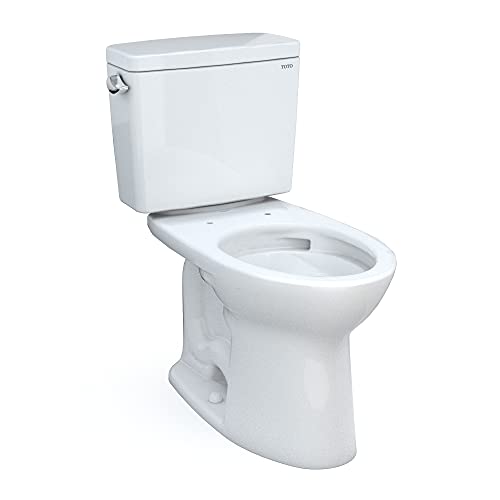
TOTO Drake
High MaP score and wide trapway for daily use
A top-tier 1,000 gram MaP score, a 3-inch flush valve and a fully glazed trapway make the Drake a powerful, reliable upgrade with an easy-to-source parts ecosystem at 1.28 GPF.
Check price on Amazon
Best Clog Resistance
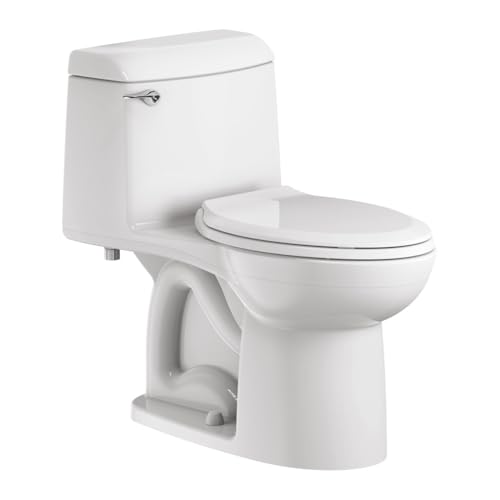
American Standard Champion 4
Oversized valve and trapway that resist clogs
An oversized flush valve and a wide trapway move a lot of water fast, which makes the Champion 4 a strong pick when a worn-out toilet has also been clogging frequently.
Check price on Amazon
Best Value Upgrade
Kohler Cimarron
Strong Class Five flush at an accessible price
Kohler's Class Five flush engine moves water with real force at 1.28 GPF, and the Cimarron pairs that clearing power with a clean comfort-height bowl that suits most family bathrooms.
Check price on Amazon
Can a broken toilet handle cause the toilet to keep running?
Yes. A handle that sticks down holds the flapper open, so water runs continuously into the bowl. A tangled or too-tight chain can also keep the flapper from sealing after a flush. Free the chain, clean any scale off the handle shaft, and set the chain to about a half inch of slack so the flapper drops and seals fully.
A running toilet is wasteful and the handle is a frequent cause. Anything that keeps the flapper from seating sends water down the overflow nonstop: a sticking handle, a chain caught under the flapper, or too little chain slack. Watch the flapper after a flush, and if it does not drop and seal cleanly, trace the cause back to the handle and chain. For a related issue, our guide on why your toilet keeps clogging and how to fix it covers the downstream problems a poor flush can create.
Editorial Take
Our honest advice on parts is to spend the extra dollar or two on a metal handle and lever arm rather than the cheapest plastic one. The single most common failure we see is a molded plastic lever arm snapping at the base after a few years of daily flexing, and the plastic version simply does not last in a wet, repeatedly stressed location. A solid brass or stainless handle and arm will likely outlive several plastic ones, and the price difference is trivial. Keep one universal metal assembly in the bathroom cabinet and you can fix any dead handle in ten minutes whenever it happens.
Putting it all together
Fixing a non-working toilet handle is a quick process of elimination, and the order matters. Take the lid off and watch the parts move: reattach the lift chain with a half inch of slack, replace a cracked lever arm, tighten the reverse-thread mounting nut, clean or swap a sticking handle, and check the flapper if the chain pulls but the flush is weak. Those steps fix most dead handles for free or a few dollars. If the handle is the latest failure on an old, weak, clog-prone toilet, a modern high-MaP model from TOTO, Kohler, American Standard, Woodbridge, Swiss Madison, or Gerber is the lasting upgrade.
Keep reading
Related guides
FAQ
Frequently asked questions
? Why does my toilet handle move but nothing flushes?
The lift chain has almost certainly come unhooked or gone too slack to raise the flapper. Open the tank, follow the chain from the lever arm to the flapper, and reattach it so there is about a half inch of slack when the flapper is closed. If the chain is intact and still does not lift, the plastic lever arm has likely cracked and the handle assembly needs replacing.
? How do I fix a loose toilet handle?
Tighten the mounting nut on the inside of the tank wall behind the handle. Remember that toilet handle nuts are reverse-threaded, so you turn them counterclockwise to tighten. Hold the handle straight on the outside and snug the nut until the wobble is gone. Do not overtighten a plastic nut or it can crack.
? Which way does a toilet handle nut turn?
Counterclockwise. Toilet handle mounting nuts are reverse-threaded on most models, which is the opposite of standard hardware. To tighten, turn the nut counterclockwise; to remove it, turn clockwise. This catches a lot of people, so if a nut seems to loosen when you expect it to tighten, you are simply turning it the normal way and need to reverse direction.
? Why is my toilet handle stuck down?
A handle that sticks down is usually corroded or scaled around the shaft where it passes through the tank, or the lever arm and chain are catching on something inside the tank. Clean the shaft and nut with white vinegar to remove scale, free any tangled chain, and confirm the arm swings without hitting the overflow tube or lid. If the metal is badly pitted, replace the handle.
? How much slack should a toilet flush chain have?
About a half inch of slack when the flapper is closed. Too much slack and the handle cannot lift the flapper far enough to flush; too little and the flapper never seals fully, which makes the toilet run. Adjust by moving the chain hook up or down a link, or to a different hole on the lever arm, until you get that half inch.
? Can I replace a toilet handle myself?
Yes, it is one of the easiest plumbing repairs and takes about ten minutes with no special tools. Remove the tank lid, unhook the chain, unscrew the reverse-threaded nut, pull the old handle out, slide the new one in, retighten the nut counterclockwise, and reattach the chain with a half inch of slack. A universal handle assembly fits most standard toilets.
? Are toilet handles universal?
Most standard front-mount toilet handles are universal and fit the majority of TOTO, Kohler, American Standard, Woodbridge, and Gerber gravity toilets. The exceptions are side-mount and angled tanks, dual-flush toilets that use a top button like the TOTO Aquia IV, and pressure-assist or smart toilets that need a brand-specific trip lever. Match the mount location and the brand when those apply.
? Should I buy a metal or plastic toilet handle?
Metal. A solid brass or stainless handle and lever arm lasts far longer than molded plastic, which tends to crack at the base after a few years of daily flexing in a wet environment. The price difference is small, and a metal assembly will likely outlast several plastic ones, so it is the better value over the life of the toilet.
? Why does my toilet handle have to be held down to flush?
If the toilet only flushes while you hold the handle down, the lift chain has too much slack, so the flapper drops and seals before the tank finishes emptying. Shorten the chain by hooking it a link or two higher, or move it to a hole on the lever arm closer to the tank wall, until a normal push gives a full flush on its own.
? Can a broken handle make the toilet run constantly?
Yes. A handle stuck in the down position holds the flapper open and lets water run nonstop. A tangled or too-tight chain can also stop the flapper from sealing after a flush. Free the chain, clean any corrosion off the handle shaft, and set the chain to about a half inch of slack so the flapper drops and seals fully.
? Why did my toilet handle suddenly stop working?
A sudden failure is almost always a chain that popped off its hook or a lever arm that cracked through after a long-running stress fracture. Both happen without warning. Lift the lid and watch as you push the handle; you will see immediately whether the chain has detached or the arm is flexing without pulling. Both are fast, inexpensive fixes.
? Is a chrome toilet handle better than a plastic one?
A chrome-plated metal handle is more durable and more attractive than plastic, and the metal lever arm behind it is far less likely to crack. Chrome and brushed finishes also resist corrosion well in humid bathrooms. For heavy daily use, a chrome metal handle with a metal arm is the more reliable choice and the one most worth buying.
? What tools do I need to replace a toilet handle?
Usually none, or at most a pair of adjustable pliers. Most handle nuts can be loosened by hand, and the chain hooks on and off without tools. Pliers help if a nut is tight or corroded, but be gentle with plastic nuts so they do not crack. The whole job is hand-friendly and takes about ten minutes.
? Why is my dual-flush toilet button not working?
Dual-flush toilets like the TOTO Aquia IV use a top-mounted button mechanism rather than a side handle, and the button connects to twin flush valves or a cable system instead of a chain. If a dual-flush button stops working, check the cable or actuator and the seals, and use the manufacturer's replacement part rather than a universal handle, since the mechanism is brand-specific.
? How long does a toilet handle last?
A quality metal handle and arm can last well over a decade, while inexpensive plastic versions often crack within a few years of daily use. The chain and flapper around it tend to wear faster than a metal handle itself. Choosing metal and keeping the chain properly adjusted gives the assembly the longest life.
? Does a non-working handle mean I need a new toilet?
No. A broken handle is a small, cheap repair and is never a reason on its own to replace the toilet. Consider a new toilet only if the handle is the latest in a string of failures on an old, weak-flushing, frequently clogging model. In that case upgrade to a high-MaP 1.28 GPF toilet rather than keep repairing a tired bowl.
? Can hard water damage a toilet handle?
Yes. Mineral scale and corrosion build up around the handle shaft and the mounting nut in hard-water homes, which makes the handle stick, feel gritty, or refuse to spring back. A periodic white vinegar cleaning of the shaft and nut prevents most of this, and choosing a corrosion-resistant chrome or stainless handle helps it last in hard water.
? Why does my toilet handle feel mushy or have no resistance?
A handle with no resistance has lost its connection to the lever arm, which usually means the arm has cracked off the handle shaft inside the tank. A mushy feel can also come from a badly stretched or tangled chain offering no tension. Open the tank, check whether the arm moves the chain when you push, and replace the assembly if the arm is broken.
Sources
- EPA WaterSense, epa.gov/watersense
- MaP (Maximum Performance) flush testing, map-testing.com
- Manufacturer published specifications (TOTO, Kohler, American Standard)
Our Verdict
A non-working toilet handle is one of the cheapest and fastest repairs in the house. Take the lid off and watch the parts: reattach the lift chain with a half inch of slack, replace a cracked lever arm, tighten the reverse-thread nut, and clean or swap a sticking handle. Most fixes are free or a few dollars and take ten minutes, and a metal handle outlasts plastic. If the handle is the latest failure on a tired, weak-flushing toilet, upgrade to a high-MaP model like the TOTO Drake at 1,000 grams and 1.28 GPF, and confirm the rough-in matches yours before you order.