Toilet Gurgling When the Shower Runs: Causes and Fixes
A clear, plumbing-driven walkthrough of why your toilet bubbles and gurgles the moment the shower drains, from a blocked vent stack and a partial drain clog to a failing sewer line, with the exact checks to run in order, the fixes that actually stop the noise, and the rare cases where the toilet itself is part of the problem.
Quick Answer
A toilet that gurgles when the shower runs is almost always a venting or drainage problem, not a toilet fault. Draining shower water pulls air through the shared drain line, and a blocked vent stack or a partial clog forces that air up through the toilet trap as bubbles. Clear the vent and drain first; replace the fixture only if a weak siphon makes the trap easy to disturb.
A toilet that bubbles, glugs or gurgles every time the shower drains is unsettling, but the noise is rarely a sign that the toilet is broken. It is a symptom of how air is moving, or failing to move, through your home's drain and vent system. When the shower empties a few gallons, that water needs air behind it. If the air cannot get in where it should, the draining water pulls a vacuum on the shared waste line and grabs replacement air straight up through the standing water in your toilet bowl. The result is the telltale gurgle.
This guide is organized the way a careful plumber works the problem: start with the cheapest, most common and most fixable causes, confirm whether the noise is isolated to one bathroom or affects the whole house, and treat a sewer-line failure or a fixture replacement only after the simpler causes are ruled out. For the broadest cross-brand ranking of high-power fixtures, the pillar guide to the best flushing toilets goes wider. This page has one job: explain why your toilet gurgles when the shower runs and how to stop it.
How we research and rank
We do not test toilets in a lab. We compare manufacturer specifications, published MaP (Maximum Performance) flush-test gram scores, trapway diameter and glazing, flush-valve size, EPA WaterSense listings and aggregated owner ratings across major retailers. For diagnosing drainage noise we lean on the physics of how water and air move through traps, vents and shared waste lines, plus the failure patterns plumbers report most often. Where a fix is cheap and likely, we say so plainly rather than pushing a new toilet first.
First principles
Why does a toilet gurgle when the shower runs?
The gurgle is the sound of air being pulled through the toilet's water-filled trap. Understanding where that air comes from, and why it is taking the wrong path, names the cause and points to the fix.
A toilet gurgles when the shower runs because draining shower water creates negative pressure in the shared drain line, and a blocked or undersized vent cannot supply replacement air fast enough. The drain instead pulls air up through the toilet's water seal, producing bubbles and a glugging sound. The most common single cause is a partially blocked vent stack on the roof.
Every fixture connects to drain pipes that carry waste away and a parallel network of vent pipes that let air in. The vent pipes run up through the roof as the vent stack, and their job is to equalize air pressure so draining water flows smoothly and each fixture's trap seal stays intact. That trap, the U-shaped bend of standing water under your toilet and behind your shower drain, blocks sewer gas from entering your home.
When the shower drains, several gallons rush down the pipe in seconds and act like a piston, dragging air behind them. Normally that air is replaced instantly through the vent stack. If the vent is blocked, undersized or absent, the rushing water has nowhere to draw air except backward through the nearest trap, usually the toilet, because it holds the largest pool of water. Air bubbles up through that pool and you hear the gurgle. The same physics explains why a toilet can bubble when a washing machine or sink drains.
Cause 1
A blocked or restricted vent stack
The single most common cause. When the roof vent is clogged or partly obstructed, the drain cannot pull air from above, so it pulls air up through the toilet trap instead.
The vent stack is the vertical pipe that exits through your roof, and it is the system's lungs. Over time it can be blocked by leaves, a bird or rodent nest, debris, or ice in cold climates. A fully blocked vent produces strong, consistent gurgling whenever any fixture drains, often with a slow-draining toilet and sewer odor. A partial restriction produces intermittent gurgling that is worse when a large volume drains quickly, which is exactly what a shower does.
Diagnosing the vent involves roof access, so treat safety first. Shining a flashlight down the pipe or running a garden hose into it reveals a blockage when water backs up instead of flowing away. Clearing it with a plumber's auger from the roof, or a hose, restores airflow and usually silences the gurgle immediately. If you are not comfortable on a roof, this is a quick job for a plumber, and it is the first thing to check because it solves the largest share of cases.
Tip: listen to when the gurgle happens
The timing of the noise is your best free clue. A gurgle that happens only while the shower is actively draining, and stops the moment the water clears, points squarely at venting or a partial restriction in the shared line. A gurgle during a toilet flush too, or alongside slow drains across several fixtures, points to a deeper main-line problem. Note which fixtures trigger it before you touch a tool.
Cause 2
A partial clog in the shared drain line
When the toilet and shower share a branch drain, a partial blockage downstream of both narrows the pipe, so draining water surges and forces air back through the toilet trap.
In most bathrooms the toilet and the shower or tub feed into the same branch drain before it joins the main line. When a partial clog forms downstream of where the two connect, from accumulated hair, soap scum, grease or paper, the pipe's effective diameter shrinks. Shower water that used to flow away now backs up against the restriction, momentarily filling the pipe and forcing trapped air up through the toilet's water seal. This produces gurgling tightly linked to shower draining, often with a shower or tub that drains more slowly than it used to.
The distinguishing sign of a shared-drain clog versus a vent problem is drain speed. If the shower or tub drains sluggishly and the toilet gurgles as it does, the restriction is in the shared waste line. Clearing it usually means augering the branch drain through the tub or shower drain or a cleanout, while a blockage farther toward the main line may need a longer powered auger. Our guide on what to do when your toilet is not flushing properly and how to fix it covers these downstream checks in detail.
Cause 3
A developing main sewer line blockage
When gurgling spreads beyond one bathroom, the cause is often deeper. A partial main-line blockage backs pressure up the whole system, and the toilet is where it shows.
The main sewer line carries everything from the house to the municipal sewer or septic tank. When it begins to clog, from tree roots invading a joint, a collapsed section, a grease mass or years of debris, the entire drain system loses its ability to flow freely. Running the shower, flushing the toilet, draining the washer or emptying a sink can all trigger gurgling, slow drainage and sometimes backups into the lowest fixtures.
The tells are distinctive and worth taking seriously. Gurgling from multiple toilets or drains, water rising in a tub when the toilet flushes, sewage odor, or a lowest-floor fixture backing up all point to the main line rather than a single vent or branch. Tree-root intrusion is the most common culprit in older clay or cast-iron lines and recurs as roots regrow, so clearing a main-line blockage usually calls for a professional with a powered auger or hydro-jet, and a camera inspection if it returns.
Is a gurgling toilet a sign of a sewer problem?
A gurgling toilet can signal a sewer problem when the noise affects more than one fixture, comes with slow drains across the house, sewage odor, or water backing up into a tub or shower. Isolated gurgling tied only to the shower is usually a vent or branch-drain issue. Whole-house symptoms point to a main sewer line blockage that needs professional attention.
Cause 4
An improperly vented or S-trap configuration
Some homes gurgle because the plumbing was never vented correctly. A missing, undersized or distant vent leaves fixtures fighting each other for air on every drain cycle.
Not every gurgling problem is a new blockage. In older homes, additions, and any bathroom plumbed without a permit, the venting may simply be inadequate. A fixture too far from the vent, a shared vent that is too small, or an outdated self-siphoning S-trap can all produce chronic gurgling that has been there since the plumbing was installed. The clue is that the noise has always happened rather than starting suddenly, and no amount of drain clearing fixes it for long.
The modern fix for many of these layouts is an air admittance valve, a one-way mechanical vent installed under a sink that lets air into the drain when negative pressure builds, then seals shut. It cannot replace a true vent stack everywhere, and local code dictates where it is allowed, but it solves many self-siphoning and under-vented situations without opening the roof. Correcting an undersized or missing vent, or re-piping an S-trap to a vented P-trap, is best sized by a licensed plumber. If your gurgle has existed since day one, this is the likely category.
Tip: confirm it is the plumbing, not the toilet, before you buy a fixture
The most expensive mistake is replacing a toilet when the real problem is a vent or drain. Run this quick test: drain the shower and listen, then flush the toilet alone. If the gurgle happens only when the shower drains, the cause is in the shared drain or vent and a new toilet will not silence it. A fixture upgrade only helps when a weak siphon makes the trap unusually easy to disturb.
Cause 5
A weak toilet trap seal or low-volume flush
The one place the fixture itself matters. A shallow or easily disturbed trap seal gurgles more readily than a deep, well-engineered one under the same drainage stress.
The toilet's trap is the pool of standing water that seals the bowl against the drain. A deep, generous trap seal resists being pulled out of place by passing air, while a shallow seal or a low standing water level is disturbed more easily. If the underlying vent and drain are marginal, a toilet with a weak siphon and a low trap seal will gurgle where a stronger design stays quiet. This is not the cause of the gurgle, but it can be why one toilet gurgles while another on a similar drain does not.
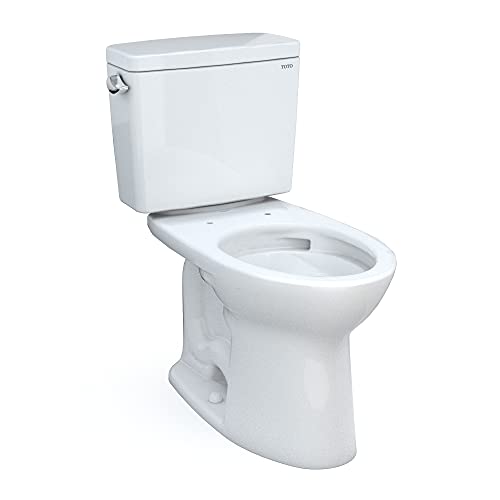
This is also the only situation where a toilet upgrade meaningfully helps. A modern fixture with a strong, fully glazed trapway and a robust siphon, such as the TOTO Drake or Drake II, holds a deeper, more stable trap seal and resists the air-pull that triggers gurgling. With the plumbing corrected first, replacing a marginal old toilet can be the finishing fix. Our guide on the weak toilet flush fix and its causes covers the fixture-side checks in order.
Will a new toilet stop the gurgling?
A new toilet rarely stops gurgling on its own, because the cause is almost always a blocked vent or drain rather than the fixture. Replacing the toilet helps only in the narrow case where a weak, shallow trap seal makes the bowl easy to disturb and the venting is already marginal. Clear the vent and drain first; treat a stronger fixture as a finishing step, not the primary fix.
At a glance
Gurgling causes and fixes compared
A side-by-side summary of the five causes, ranked roughly from most common to hardest. Start at the top and stop when the noise stops. The tinted row explains the largest share of shower-triggered gurgling and is the first thing a plumber checks.
Cause
Best For (who it explains)
Typical fix
Cost
DIY?
Likelihood
Blocked vent stack
Gurgle only when shower drains, odor
Clear roof vent with auger or hose
Free to low
If roof-safe
Very common
Partial shared-drain clog
Shower drains slow plus toilet gurgles
Auger the branch drain or cleanout
Low
Often
Common
Main sewer line blockage
Multiple fixtures gurgle, backups, odor
Powered auger or hydro-jet, pro
High
No
Moderate
Improper or missing vent
Gurgled since the plumbing was installed
Air admittance valve or re-vent
Varies
Partly
Moderate
Weak toilet trap seal
One marginal toilet gurgles, others quiet
Upgrade to a strong-trap toilet
High
Partly
Less common
Editorial Take
If we had to name the single most overlooked cause, it is a partially blocked vent stack. Homeowners hear the toilet gurgle and assume the toilet or shower drain is at fault, when the real problem is air that cannot get in through the roof. Before spending anything, note when the gurgle happens and which fixtures trigger it, then check the vent. A roof vent cleared with a garden hose silences a surprising share of these cases and rules out the most common culprit before you call anyone.
The diagnostic routine
How do I find what is causing the gurgle?
Run these checks in order. Each is quick, and stopping at the first that explains the symptom saves money and effort. This is the same logic a methodical plumber follows.
To find the cause, first note whether the gurgle happens only when the shower drains or across multiple fixtures, then check whether the shower itself drains slowly. Isolated gurgling with normal drainage points to the vent stack; slow shower drainage points to a shared-drain clog; whole-house symptoms point to the main sewer line. Check the vent first because it is the most common cause.
1. Map exactly when the gurgle happens
Drain the shower and listen, then flush the toilet on its own. A gurgle tied only to shower draining narrows the cause to the shared vent or branch drain. A gurgle on the toilet's own flush, or across several fixtures, points deeper toward the main line.
2. Check the shower and tub drain speed
If the shower or tub drains noticeably slower than it used to and the toilet gurgles as it does, a partial clog in the shared branch drain is the likely cause. If the shower drains at full speed but the toilet still gurgles, the problem is more likely venting than a clog.
3. Inspect the roof vent stack
If it is safe to access the roof, look down the vent for nests, leaves or debris and run a garden hose into it. Water that backs up confirms a blockage; clearing it with a hose or a plumber's auger from the roof restores airflow. If the roof is not safe, hand this step to a plumber.
4. Auger the branch drain if the shower drains slow
When the shower drains sluggishly, run a drain auger through the shower or tub drain, or a nearby cleanout, to clear hair, soap and debris from the shared branch line. Restoring full drainage usually ends both the slow drain and the gurgle together.
5. Look for whole-house symptoms, then the fixture last
Check whether other toilets gurgle, water rises in a tub when a toilet flushes, or sewage odor appears. Any of these points to a main sewer line blockage that needs a professional. Only after the vent and drain are confirmed good is it worth asking whether a weak old toilet with a shallow trap seal is the remaining culprit.
Editorial Take
Resist the urge to jump straight to a new toilet or to dump chemical drain cleaner down the bowl. The order that solves the most gurgling for the least money is to map the symptom, check the vent, clear the branch drain, and only then look at the main line or the fixture. Chemical cleaners rarely touch a vent blockage and can damage older pipes. When the diagnosis does point to a marginal toilet, a model with a strong glazed trapway and a deep, stable trap seal resists air-pull far better than a worn low-power fixture.
When the toilet is part of it
What is a good MaP score and trap seal for resisting gurgle?
If the venting and drain are corrected and a marginal old toilet still bubbles, the spec sheet predicts which replacement holds its seal best. The most useful number is the MaP flush-test score, read alongside trapway design.
MaP, short for Maximum Performance, is an independent test that measures how many grams of solid waste a toilet clears in one flush, and a strong flush reseats the trap seal cleanly. A score of 350 grams meets the minimum certification, 600 grams handles a typical home, 800 grams is strong, and 1,000 grams is the practical ceiling. A toilet that pairs a high MaP score with a deep, fully glazed trapway holds a more stable water seal that resists being pulled out of place by air moving through a marginal drain.
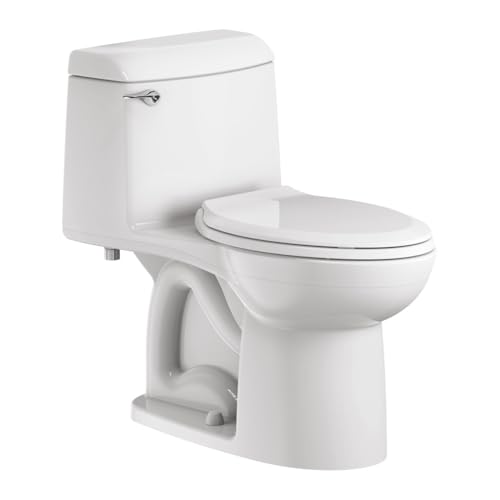
Across the brands the pattern holds. TOTO leads on trapway glazing with the Drake, Drake II and UltraMax II, Kohler counters with the Highline and Cimarron, American Standard offers the Cadet 3 and extra-wide Champion 4, and Woodbridge, Swiss Madison and Gerber add modern styling and pressure-assist options. The three picks below hold a strong, stable trap seal.
Which toilet best resists gurgling on a marginal drain?
A toilet with a deep, fully glazed trapway, a strong siphon and a high MaP flush score resists gurgling best because it holds a stable water seal that air cannot easily pull out of place. The TOTO Drake is the everyday default for this. The vent and drain still must be corrected first, since no toilet fixes a blocked vent or a clogged line.
Top recommendations
Three toilets with a strong, stable trap seal
If the venting and drain are sound and a weak old toilet is the remaining culprit, these three models hold a deep, stable water seal and pair a high MaP score with a strong siphon, each suited to a different situation.
Best Overall
TOTO Drake
Everyday strong-seal default
4.8
A fully glazed 2.125 inch trapway, a 3 inch valve and a full 1,000 gram MaP flush give the Drake a deep, stable trap seal that resists air-pull, all at an efficient 1.28 gallons with a deep parts ecosystem.
A wide 2.125 inch glazed trapway, a 4 inch flush valve and a strong MaP score deliver a decisive flush and a stable seal at a friendlier price than premium brands, a dependable everyday replacement.
Compressed air drives water through the bowl and reseats the trap seal forcefully, useful in high-traffic bathrooms once venting is sound. Louder than gravity, but the seal recovers decisively after every flush.
Whichever path your diagnosis takes, the rule is the same. The gurgle is the system telling you air is taking the wrong route. Restore proper venting and clear the shared drain, and the noise disappears in the great majority of homes without touching the toilet. When a marginal fixture is the last piece, our guide on how to improve toilet flush power with seven proven fixes covers the upgrades worth trying.
The bottom line
Silencing the gurgle for good
A toilet that gurgles when the shower runs is sending a signal about airflow, not a verdict on your toilet. The cause is almost always specific and findable: a blocked vent stack, a partial clog in the shared branch drain, a developing main-line blockage, or inadequate venting. Most households solve it without replacing anything, and only when a weak old fixture is the last culprit does a high-MaP, deep-trap model help.
Our Verdict
Diagnose before you spend. Map when the gurgle happens, check the roof vent, then clear the shared branch drain, in that order, and watch for whole-house symptoms that point to the main sewer line. Most shower-triggered gurgling ends there for free or close to it. Only when a marginal old toilet is the remaining culprit does a fixture upgrade help, and the deep-trap, high-MaP TOTO Drake is the default for that case.
Manufacturer published specifications (TOTO, Kohler, American Standard)
FAQ
Gurgling toilet questions answered
? Why does my toilet gurgle every time I take a shower?
The shower drains several gallons quickly, and that rushing water needs replacement air behind it. When the vent stack is blocked or the shared drain is partly clogged, the water cannot draw air from the vent, so it pulls air up through the toilet's water seal instead. Check the roof vent first, then the shower drain speed.
? Is a gurgling toilet dangerous?
The gurgle itself is harmless noise, but it is a warning sign. It usually means a vent or drain problem, and if left unaddressed a partial blockage can grow into a full backup or let sewer gas in through a disturbed trap seal. It is rarely an emergency, but it should be diagnosed rather than ignored, especially if odor or slow drains appear with it.
? How do I know if the gurgle is the vent or the drain?
Watch the shower drain speed. If the shower drains at normal speed but the toilet still gurgles, the problem is more likely a blocked vent that cannot supply air. If the shower drains slowly and the toilet gurgles as it does, a partial clog in the shared branch drain is the likelier cause.
? Can I fix a gurgling toilet myself?
Often yes. Clearing a roof vent with a hose or auger, and augering a slow shower or tub drain, are within reach for a confident homeowner. Leave to a professional anything involving the main sewer line, recurring tree-root intrusion, or correcting an undersized or missing vent, since those need powered equipment, a camera inspection or code-compliant re-piping.
? What is a vent stack and why does it matter?
The vent stack is the vertical pipe that runs up through your roof and lets air into the drain system. Its job is to equalize air pressure so water drains smoothly and trap seals stay intact. When it is blocked by leaves, a nest or debris, draining water cannot pull air from above and instead pulls it through the nearest trap, usually the toilet.
? Why does my toilet gurgle but the shower drains fine?
When the shower drains at full speed yet the toilet still bubbles, the shared drain is clear and the problem is venting. The shower water creates negative pressure that a blocked or undersized vent cannot relieve, so air is drawn up through the toilet's water seal. Clear the roof vent, and if the gurgle has always been there, ask a plumber about an air admittance valve.
? Does a blocked vent cause sewer smell too?
Yes, it can. A blocked vent disturbs trap seals across the home, and a trap that loses its seal lets sewer gas drift back into the room. A gurgling toilet paired with an occasional sewer odor strongly points to a vent problem rather than a simple drain clog, and clearing the vent usually resolves both at once.
? Could tree roots be causing my toilet to gurgle?
In older homes with clay or cast-iron sewer lines, yes. Roots invade pipe joints and slowly restrict the main line, producing gurgling across multiple fixtures, slow drains and recurring backups. Because roots regrow, a one-time clearing rarely lasts; a camera inspection identifies it, and a permanent fix may mean spot repair or relining.
? Will a plunger or drain cleaner stop the gurgling?
Usually not. They act on a clog inside the trap or immediate drain, but most gurgling comes from a blocked vent or a clog farther down the shared line, where neither reaches. Chemical cleaners can also damage older pipes. Diagnose the cause first rather than targeting the wrong location.
? What is an air admittance valve and will it help?
It is a one-way mechanical vent installed under a sink that opens to let air into the drain when negative pressure builds, then seals shut. It solves many under-vented and self-siphoning situations without opening the roof. It cannot replace a full vent stack everywhere, and local code dictates where it is allowed, so confirm with a plumber.
? Why does only one of my toilets gurgle?
A gurgle confined to one toilet usually means that fixture sits on the most affected branch or has the shallowest, easiest-to-disturb trap seal. If the venting or drain is marginal, a weak old toilet bubbles where a strong-seal model stays quiet. If several toilets gurgle together, the cause is shared and points toward the main line.
? Does the toilet's MaP score matter for gurgling?
Indirectly, yes. A high MaP score reflects a strong flush and robust siphon, which reseats the trap seal cleanly and helps it hold against air-pull. It does not fix a blocked vent or clogged line. Read MaP as a tiebreaker when choosing a replacement after the plumbing is corrected, not as a cure for the gurgle.
? When should I call a plumber for a gurgling toilet?
Call a plumber when more than one fixture gurgles or drains slowly, when water backs up into a tub or shower, when there is sewage odor, or when clearing the vent and branch drain has not fixed it. Those patterns point to a main-line blockage or a venting design problem that needs powered equipment, a camera inspection or code-compliant re-piping.
? Why did my toilet suddenly start gurgling when it never did before?
A sudden start points to a new blockage rather than a design flaw, most likely a vent blocked by a nest, leaves or ice, or a partial clog in the shared drain or main line that has just reached the point of restricting flow. Note when it began and which fixtures trigger it, check the vent first, then clear the drain.
? Should I buy a new toilet to fix the gurgling?
Not as the first move. A new toilet rarely stops gurgling because the cause is almost always a blocked vent or drain, not the fixture. Clear the vent and shared drain first. A replacement helps only when the plumbing is sound and a weak old toilet with a shallow trap seal is the last culprit, where a deep-trap, high-MaP model like the TOTO Drake is the right finishing fix.
Derek researches plumbing specifications, installation requirements and parts availability, cross-checking manufacturer claims against owner-reported reliability. Rankings are based on documented data and real owner reports, never paid placement.
Updated August 2026 · Toilets
Keep reading
Related guides
Why Toilet Trapways Are Curved Like an S
Toilets
4.6
Learn why toilet trapways curve like an S, how each bend blocks sewer gas, and what the shape means for clogs and…