A flush button or handle that sticks is one of those problems that feels alarming and turns out to be trivial more often than not. The mechanism is simple: when you press the button or push the handle, a small arm lifts a chain or a pair of plastic rods, that linkage raises a flapper or canister seal at the bottom of the tank, the tank dumps its measured water fast, and the seal drops back to reset. When the button stays pressed in, the handle hangs down, or the lever spins uselessly, one part of that linkage has bound up, gone slack, snapped, or scaled over. The whole job is identifying which part, and the cheapest fixes solve the problem far more often than the expensive ones.
This guide is built the way we research everything on this site. We do not physically install toilets or run flush tests in a lab. Instead we compare manufacturer flush specifications, independent MaP (Maximum Performance) flush-test scores that measure how many grams of waste a toilet clears in one flush, EPA WaterSense water-efficiency standards, and the repair patterns that show up consistently across thousands of verified owner reviews. That combination lets us put these fixes in a reliable order, beginning with the no-cost checks that resolve the majority of stuck-button cases and ending with the point at which replacing a part or the whole toilet genuinely is the smarter call.
Before you touch anything. Lift the tank lid and look down while a helper presses the button or handle, then watch one full reset. A button toilet usually has a removable lid with the button mounted in it, so unscrew the button collar first to free the lid. Note whether the linkage actually lifts the seal, whether the chain or rods bind, and whether the button springs back. Ninety seconds of watching tells you exactly which fix below to start with.
Why is my toilet flush button or handle stuck?
A stuck toilet flush button or handle is almost always a mechanical fault inside the tank, not a failed toilet. The most common causes are a slack or tangled lift chain, mineral scale binding a dual-flush button cartridge, a corroded or over-tight handle mounting nut, or a worn flush valve that no longer resets. Removing the tank lid and freeing or replacing the bound part fixes the large majority of cases for little or no money.
Stuck covers several distinct symptoms, and each one points to a different cause. A push button that stays pressed in usually means the button cartridge is scaled with hard-water minerals or the internal spring has worn out. A handle that hangs down and will not spring back is typically a slack chain caught under the flapper or a corroded trip lever. A handle that spins freely without flushing is a disconnected chain or a stripped lever. And a button or handle that physically will not move at all is usually heavy mineral binding or a seized fill mechanism. Matching your exact symptom to the right section below is the fastest path to a fix.
How do I diagnose a stuck flush button or handle?
Remove the tank lid and operate the flush by hand while watching the mechanism. On a button toilet, unscrew the plastic collar around the button to lift the lid off, then press the button rods directly. Confirm whether the linkage moves freely, whether the chain has correct slack, and whether the button or lever springs back on its own. If lifting the seal by hand flushes the toilet normally, the fault is purely in the button or handle linkage, not the flush valve.
Diagnosis is two quick checks. The first is the hand-operate test described above, which reveals binding, slack and spring failures in seconds and confirms the tank water and flush valve are healthy. The second is the slow-button or slow-handle observation: press the button or handle and watch whether it returns smoothly. A button that returns sluggishly or sticks halfway points to scale or a tired spring, while a handle that drops and stays down points to a chain caught under the flapper or a seized lever. These two observations narrow the field dramatically before you remove a single part. If lifting the seal by hand will not flush the bowl either, you also have a flush-power problem to address, covered in our guide on how to improve toilet flush power.
Fix 1: Free a stuck dual-flush push button
Push-button toilets, common on dual-flush models from TOTO, Kohler, Woodbridge, Swiss Madison and many others, use a button cartridge mounted in the tank lid rather than a side handle. The button presses down on a pair of plastic actuator rods that push the flush valve open. The single most common reason these buttons stick is hard-water mineral scale building up around the button frame and the rods, which makes the button bind and stay depressed instead of springing back up.
To fix it, first lift the lid and set it on a towel. Unscrew the plastic locking collar around the underside of the button to release the button assembly from the lid. Inspect the button mechanism for white or green mineral crust and for any cracked or fatigued spring. Soak the button assembly in warm white vinegar for an hour to dissolve the scale, then work the button a few dozen times to free the action and rinse it clean. Reassemble, and the button should spring back crisply. If the internal spring is broken or the plastic is cracked, replace the button cartridge, which is an inexpensive universal or model-matched part rather than a reason to replace the toilet. Avoid forcing or prying a seized button, since the plastic frames crack easily.
Tip. When you reseat a dual-flush button, make sure both actuator rods sit squarely on the flush valve and are adjusted to equal length per the maker's instructions. A button that sticks down after reassembly is usually a rod set too long, holding the valve open. Back the rod off a turn or two until the button rests flush and springs back cleanly.
Fix 2: Re-tension or reattach the lift chain
On a lever-handle toilet, the handle connects to a metal or plastic arm called the flush rod or trip lever, and a small chain runs from the end of that rod down to the flapper. When you push the handle, the rod lifts the chain, the chain lifts the flapper, and the flush begins. The handle that hangs down and will not spring back, or that flushes endlessly, is most often a chain problem.
The chain should have only a tiny amount of slack at rest, just enough to let the flapper seat fully, with no extra loops. If it is too long, it can slip under the flapper and prop it open, which holds the handle down, keeps the toilet running and never lets the tank refill. If it is too short, it holds the flapper slightly open or makes the handle stick in the up position. Shorten an over-long chain by moving the hook a link or two up the rod, and remove any stray loops that could catch. If the chain has come unhooked or snapped, reattach or replace it, since chains are inexpensive and mostly universal. A correctly tensioned chain lets the handle return on its own and the flapper reseat cleanly, which resolves most stuck-handle cases on the spot.
Tip. A chain that constantly tangles or catches under the flapper is often a sign of a too-long chain or a flimsy beaded chain that kinks. Swap a kink-prone chain for a fresh one and leave just two or three links of slack. The handle should drop back to its resting angle the instant you release it.
Fix 3: Tighten or replace a loose, corroded handle
A handle that feels loose, floppy or spins without flushing usually means the mounting nut behind the tank wall has backed off or corroded, or the trip lever has cracked. The handle nut is reverse-threaded on most toilets, so it tightens counterclockwise. A loose nut lets the handle wobble and spin without lifting the rod, while a fully corroded nut can seize the handle so it will not move at all.
Shut off the supply valve and flush to empty the tank so you can work dry. Reach behind the tank wall and tighten the mounting nut counterclockwise until the handle is firm but still moves freely. If the nut is heavily corroded or the metal trip lever is cracked, replace the whole handle and lever assembly, which is a cheap universal part that swaps out in a few minutes. Choose a metal trip lever over plastic if you want it to last, since the plastic ones are the part that breaks most often. After replacing, reattach the chain to the correct hole on the new lever so the slack stays right.
Fix 4: Clean mineral scale binding the mechanism
This is the most underrated fix in hard-water homes and the cause people most often miss. Mineral scale does not only clog the rim jets in the bowl; it also builds up on the button cartridge, the trip lever pivot, the flush valve and the flapper hinge, gradually stiffening every moving part until the button or handle binds. A mechanism that has slowly grown harder to press over months is almost always scaling up rather than wearing out.
To clear it, remove the bound part, button assembly, trip lever or flapper, and soak it in warm white vinegar for an hour or two to dissolve the scale, then scrub the pivots and contact points with an old toothbrush. For scale on the flush valve and tank interior, pour a few cups of warm vinegar into the tank, let it sit overnight, then flush it through. While you are in there, clean the rim jets too, since the same mineral buildup that binds the button also weakens the flush. A descaled mechanism moves freely again and the button springs back the way it did when new, often saving an unnecessary parts purchase.
Fix 5: Replace a worn flush valve or canister mechanism
If cleaning and re-tensioning do not free the action, the flush mechanism itself may be worn out. Over years of use, plastic flush valves develop cracked towers, fatigued springs and worn pivot points, and canister-style valves can stick in the open or closed position when the seal hardens. A handle or button that resets sluggishly even after a thorough cleaning, or that worked perfectly until it suddenly seized, often has a failed internal part rather than scale.
For a flapper-style toilet, the flush valve and flapper are inexpensive and the flapper alone swaps in two minutes with the water shut off. For a canister flush, such as Kohler's AquaPiston design, the canister seal is a model-matched part that lifts out and replaces without removing the tank on most models. For a dual-flush button toilet, the full flush valve and button kit is a single inexpensive assembly. Replacing a worn mechanism restores a crisp, free button or handle and a full flush, and it costs a small fraction of a new toilet. Match the replacement to your brand and model, since flush valves are less universal than flappers and chains.
Editorial TakeThe order matters more than any single fix. We see people buy a whole new toilet because a dual-flush button stuck down, when the real culprit was vinegar-soluble scale on the button rods that took an hour to dissolve. Always remove the lid, hand-operate the flush, and clean before you replace. Those free checks correctly identify the cause in the large majority of stuck-button and stuck-handle cases, and they stop you from spending money on the wrong part.
Why does my toilet keep flushing or running after I press the button?
A toilet that keeps running after the button or handle returns has a flush valve held open, usually by a chain slipped under the flapper, a button rod set too long, or a flush valve seal that no longer seats. Lift the lid, free the chain or shorten the actuator rod, and confirm the seal drops fully. If the valve is warped or scaled, clean or replace it so it reseals and the tank stops running.
A continuous run is the flip side of a stuck mechanism: instead of the linkage failing to lift the seal, it is failing to let the seal drop. The water you hear is the tank refilling endlessly through the overflow tube because the flush valve never closes. On a handle toilet, check that the chain is not caught under the flapper and that the flapper itself seals cleanly on its seat. On a button toilet, confirm the actuator rods are not holding the valve open. A flapper or canister seal that is hard, warped or mineral-crusted will not reseal and should be replaced. Stopping the run also restores a full tank so the next flush is strong.
Should I repair or replace a toilet with a stuck flush button?
Repair it. A stuck flush button or handle is a low-cost mechanical fix, and cleaning or swapping the chain, handle, button cartridge or flush valve solves nearly every case for little money. Replace the whole toilet only when the mechanism works freely yet the bowl still clears weakly after diagnosing flush power, which means the bowl design is the limit. At that point choose a model with a MaP score of 800 grams or higher and EPA WaterSense certification.
The deciding factor is whether the problem is the mechanism or the bowl. Buttons, handles, chains, flappers and flush valves wear out and are cheap and quick to swap, so they are almost always worth fixing before replacing the whole fixture. The replacement decision comes only when the button and handle operate freely, the chain and seal are correct, the mechanism is clean, and the flush is still weak. That pattern, common with older 3.5 GPF or first-generation low-flow toilets, means the bowl geometry cannot build a strong siphon and no mechanism fix will overcome it. For the full diagnostic on a chronically weak flush, our weak toilet flush fix guide walks through every cause, and our guide to a toilet not flushing properly covers the broader symptom set. If clogs are the underlying driver, see why your toilet keeps clogging.
If the answer is a new toilet, choose for flush power
When the diagnosis points to the toilet itself rather than the button mechanism, the upgrade pays off immediately, and you should choose specifically for clearing power and a reliable flush mechanism. Look for a high MaP score (aim for 800 grams or higher), a large trapway (2 inches or more), EPA WaterSense certification, and a flush mechanism known for parts availability so a future stuck button is a quick swap. The three models below are consistent strong performers across published specifications and aggregated owner feedback, and they cover the most common needs. For the full ranked list, see our roundup of the best flushing toilets.
Best Overall Flush
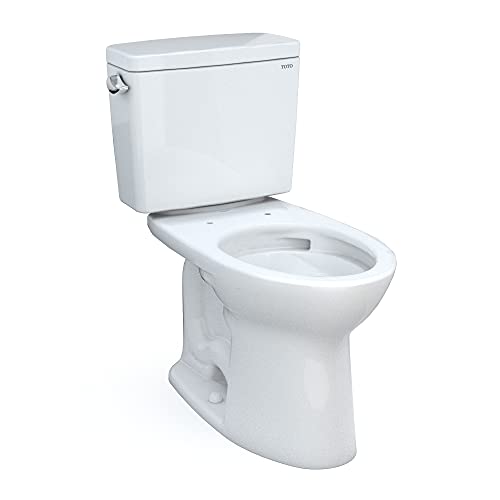
TOTO Drake II
Powerful single-flush clearing for daily use
The Drake II pairs a top-tier MaP score with TOTO's Double Cyclone flush and a simple, durable left-hand trip lever, so the mechanism is easy to service and the flush clears forcefully at 1.28 GPF.
Check price on Amazon
Strongest Power
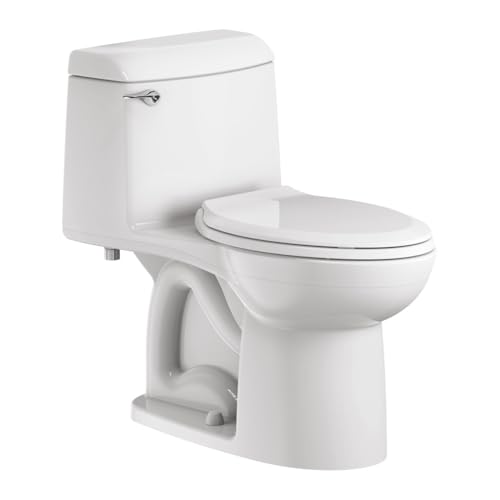
American Standard Champion 4
High-traffic bathrooms that fight clogs
A wide 2-3/8 inch trapway and a large flush valve give the Champion 4 a forceful, clog-resistant flush, with a tower-style flush valve that resets cleanly and resists sticking.
Check price on Amazon
Best Value Upgrade
Kohler Cimarron
A reliable, efficient replacement on a budget
Kohler's AquaPiston canister flush moves a fast, full volume at 1.28 GPF, and the canister seal lifts out for service without removing the tank, making future maintenance simple.
Check price on Amazon
Other proven options worth a look include the one-piece TOTO UltraMax II for a seamless easy-clean body, the dual-flush TOTO Aquia IV if you want a button toilet with a serviceable mechanism, the Kohler Highline and Kohler Santa Rosa for wide parts support, and value-focused Woodbridge T-0001, Woodbridge T-0019, Swiss Madison St. Tropez and Gerber Avalanche models that pair strong flush specs with simple, replaceable button or lever hardware. Whatever you choose, confirm the rough-in distance matches your existing toilet before ordering.
Editorial TakeIf you are replacing because of a recurring stuck button, favor a model with a service-friendly flush mechanism and good parts availability over the cheapest dual-flush bargain. A TOTO or Kohler flush valve is easy to source and swap years later, while some no-name dual-flush kits are hard to match when a button cartridge finally wears out. Pair that serviceability with a MaP score of 800 grams or higher and you get a toilet that both clears strongly and stays easy to maintain for the next decade.
How to keep a flush button or handle from sticking again
Once the mechanism moves freely again, a little maintenance keeps it that way, especially in hard-water areas where mineral buildup is the slow enemy of any moving part in the tank.
Descale the mechanism on a schedule
The button cartridge, trip lever pivot and flush valve are the first parts to scale up again. Pouring a few cups of white vinegar into the tank every month or two, letting it sit, then flushing it through keeps the moving parts free and the seals soft. In very hard-water homes this single habit prevents the gradual stiffening that makes a button stick in the first place.
Replace wear parts before they fail
Chains, flappers, button springs and trip levers are wear items. A flapper or button cartridge that is a few years old and starting to stiffen is cheap insurance to swap on a quiet weekend rather than during an emergency. A fresh seal and a correctly tensioned chain keep the flush full and the button springing back crisply.
Operate the flush gently
Slamming a handle or jabbing a button hard accelerates wear on the lever pivot and the plastic button frame. A normal, firm press is all the mechanism needs. Treating the button and handle gently, and never forcing a stuck one before cleaning it, keeps the linkage intact and avoids the cracked frames that turn a cheap clean into a parts replacement.
Keep reading
Related guides
FAQ
Frequently asked questions
? Why is my toilet flush button stuck down?
A flush button that stays pressed in is almost always a dual-flush button cartridge bound by hard-water mineral scale or a worn internal spring, or an actuator rod set too long that holds the flush valve open. Lift the lid, unscrew the button collar, and soak the cartridge in warm white vinegar for an hour to free it. If the spring is broken, replace the inexpensive button kit rather than the whole toilet.
? How do I fix a toilet handle that stays down and will not come back up?
A handle that hangs down usually has a slack lift chain caught under the flapper or a corroded trip lever pivot. Lift the tank lid, free the chain, and shorten it so it has only two or three links of slack with no stray loops. If the lever pivot is seized with corrosion, soak or replace the inexpensive trip lever so the handle springs back on its own.
? Why does my toilet handle spin without flushing?
A handle that spins freely without flushing has lost its connection to the flapper, usually a chain that has come unhooked or snapped, or a stripped trip lever. Lift the lid and reattach or replace the chain, leaving slight slack. If the lever itself spins on its mount, the mounting nut has backed off or the lever has stripped, so tighten the reverse-threaded nut or swap the cheap handle assembly.
? How do I remove a tank lid with a flush button to fix it?
On a button toilet, the button is mounted in the lid, so you cannot simply lift the lid off. Reach under the lid and unscrew the plastic locking collar that holds the button assembly in place. Once the collar is off, the button drops free and the lid lifts away. Work over a towel, since the lid is heavy ceramic and the button parts are small.
? Can hard water cause a flush button to stick?
Yes, and it is one of the most common causes. Mineral scale from hard water builds up on the button cartridge, the actuator rods, the trip lever pivot and the flush valve, gradually stiffening every moving part until the button or handle binds. Soaking the affected part in warm white vinegar dissolves the scale and restores free movement, and a monthly vinegar treatment in the tank prevents it from returning.
? My dual-flush button keeps the toilet running, how do I stop it?
A dual-flush button that keeps the toilet running usually has an actuator rod set too long, holding the flush valve open, or a flush valve seal that no longer seats. Lift the lid, check that both rods rest with the button springing back fully, and back off any rod that holds the valve open. If the canister or flapper seal is warped or scaled, clean or replace it so it reseals.
? Why is my toilet handle hard to push down?
A handle that is stiff to push has a corroded or scaled trip lever pivot, a kinked chain, or a flush valve that is binding. Lift the lid and check whether the chain moves freely and the lever pivots smoothly. Soak a scaled lever in vinegar or replace it, and confirm the flush valve opens cleanly by hand. A handle should move with light, firm pressure, not force.
? Should I use force to free a stuck flush button?
No. Forcing or prying a seized button cracks the plastic button frame and turns a one-hour vinegar clean into a parts replacement. Remove the button assembly and soak it in warm white vinegar to dissolve the binding scale, then work it gently dozens of times until it moves freely. Only replace the cartridge if cleaning fails or the internal spring is broken.
? How much does it cost to fix a stuck flush button or handle?
Most fixes are inexpensive because the culprits are cheap parts: a lift chain, flapper, trip lever or dual-flush button cartridge each install in minutes with basic tools, and a vinegar soak costs almost nothing. A full flush valve kit is still a small fraction of a new toilet. The only costly outcome is replacing the whole toilet, which is reserved for the rare case where the bowl design itself is the limit.
? How do I tighten a loose toilet handle?
Shut off the supply, flush to empty the tank, and reach behind the tank wall to the mounting nut behind the handle. That nut is reverse-threaded on most toilets, so it tightens counterclockwise. Snug it until the handle is firm but still moves freely. If the nut or metal lever is heavily corroded, replace the inexpensive handle assembly and reattach the chain to keep the slack correct.
? Why did my flush button suddenly stop working completely?
A button that suddenly fails entirely usually has a snapped internal spring, a cracked actuator rod, or a chain or seal that has come loose so the linkage no longer lifts the valve. Lift the lid and operate the flush by hand to confirm the valve still works, then inspect the button cartridge and rods. A broken button kit is an inexpensive, model-matched part that swaps out in minutes.
? Can I replace a dual-flush button with a different one?
Sometimes, but button kits are less universal than flappers, so match the replacement to your toilet brand and flush valve where possible. Many manufacturers such as TOTO, Kohler, Woodbridge and Swiss Madison sell model-specific button and flush valve kits. Measure the lid hole diameter and the flush valve tower, and confirm the new button rods align with the valve before buying a generic replacement.
? What is the difference between a stuck handle and a stuck flush valve?
A stuck handle is a fault in the actuation, the button, lever or chain, while a stuck flush valve is a fault in the seal that controls the water. Test by lifting the flapper or canister seal by hand. If that flushes the toilet normally, the handle or button linkage is the problem. If the seal itself will not open or close cleanly, the flush valve needs cleaning or replacement.
? Will fixing the button restore a weak flush?
Only if the button was the cause of the weakness, such as a rod holding the valve partly open or a chain not lifting the flapper fully. Once the mechanism operates freely and the valve opens completely, check the tank water level and rim jets. If the flush is still weak with a healthy mechanism, the bowl design is the limit and a higher-MaP model is the lasting fix.
? What is a good MaP score for a strong flush?
MaP (Maximum Performance) testing reports how many grams of solid waste a toilet clears in a single flush. A score of 600 grams handles an average household, 800 grams is strong, and 1000 grams is the maximum for a residential gravity toilet. For a primary or high-traffic bathroom, aim for 800 grams or higher to avoid double flushes.
? Does a dual-flush button toilet flush as well as a lever toilet?
Yes. Flush power comes from the bowl, trapway and flush valve design, not from whether you press a button or a lever. Strong dual-flush models like the TOTO Aquia IV clear waste forcefully on the full-flush setting while saving water on the half-flush. Judge any toilet by its MaP score and EPA WaterSense certification rather than the actuator style.
? How often should I service the flush mechanism?
A quick visual check and a vinegar tank treatment every month or two is enough in hard-water areas, and once or twice a year elsewhere. Watch a flush from above, confirm the chain slack and button spring are correct, and descale any stiffening parts before they bind. Replacing a flapper or button cartridge proactively every few years is cheap insurance against a sudden stuck button.
? Which brands are most reliable when I replace a toilet?
TOTO, Kohler and American Standard lead for flush performance, parts availability and warranty support, which is why they appear most across strong aggregated owner reviews and make future button or lever swaps easy. Woodbridge, Swiss Madison and Gerber offer competitive flush specs at lower positions if value is the priority. For any brand, prioritize a MaP score of 800 grams or higher and EPA WaterSense certification.
Sources
- EPA WaterSense, epa.gov/watersense
- MaP (Maximum Performance) flush testing, map-testing.com
- Manufacturer published specifications (TOTO, Kohler, American Standard)
Our Verdict
A stuck flush button or handle is almost always a quick, cheap fix rather than a dead toilet. Lift the lid and work in order: free a scaled dual-flush button, re-tension or reattach the lift chain, tighten or swap a loose handle, descale every binding part with white vinegar, and replace a worn flush valve only if cleaning fails. That sequence resolves the large majority of cases for little or no money. Only when the mechanism operates freely and the bowl still clears weakly does the toilet itself become the limit, and that is when a high-MaP, WaterSense-certified model like the TOTO Drake II, American Standard Champion 4 or Kohler Cimarron is the lasting answer. Diagnose and clean before you replace, and your money goes to the real problem.