

Why Toilet Trapways Are Curved Like an S
Toilets4.6
Learn why toilet trapways curve like an S, how each bend blocks sewer gas, and what the shape means for clogs and…
Read the guideUnderstanding why your low-flow toilet requires a double flush and how to fix it without replacing the toilet.
Low-flow toilets (1.28 GPF or less) often double flush because they lack the water volume to clear waste in one push. Common causes include a weak flush valve, incorrect water level, or a clogged trapway. Adjusting the water level, cleaning the rim jets, or replacing the flapper can often restore single-flush performance without buying a new toilet.
Low-flow toilets use less water per flush (1.28 GPF or 1.0 GPF) compared to older 1.6 GPF models. When the flush valve, bowl design, or water level isn't optimized, the reduced water volume fails to create enough siphonic action to clear the bowl, leading to a second flush being needed.
Low-flow toilets are designed to save water, but that water savings can come at the cost of flushing performance. The most common reason a low-flow toilet needs a double flush is that the toilet simply doesn't have enough water to push waste through the trapway in one go. This is especially true for older low-flow models that use gravity-fed flushing systems without pressure assist.
Another frequent cause is a clogged or partially blocked trapway. Over time, mineral deposits, hard water scale, or even small objects can narrow the trapway, reducing the flow of water and waste. When the water level in the tank is set too low, the flush lacks the necessary force to clear the bowl. Similarly, a worn flapper that doesn't stay open long enough can cut the flush short, leaving waste behind.
MaP flush testing shows that many low-flow toilets achieve scores above 800 grams (the industry standard for a good flush) when properly installed and adjusted. However, even a high-scoring toilet can require a double flush if the water level is 1/4 inch below the manufacturer's recommended fill line. Always check the water level first before assuming the toilet is defective.
Start by checking the water level in the tank; it should be about 1/2 inch below the overflow tube. Adjust the float to raise the water level. Next, clean the rim jets under the bowl rim with a small brush or wire to remove mineral buildup. Finally, inspect the flapper; if it's worn or doesn't seal properly, replace it with a universal flapper designed for low-flow toilets.
Fixing a low-flow toilet that needs a double flush often requires no tools and takes less than 10 minutes. The most effective fix is adjusting the water level. Locate the float (either a ball float or a float cup) and bend the float arm or adjust the adjustment screw to raise the water level. The water should be about 1/2 inch below the top of the overflow tube. A higher water level means more water enters the bowl during the flush, increasing flushing power.
If the water level is correct, the next step is cleaning the rim jets. These small holes under the bowl rim direct water into the bowl to create a swirling action. If they're clogged with hard water deposits, water flow is reduced. Use a small wire or a toothbrush to gently clean each jet. A vinegar soak can also help dissolve mineral buildup. If the toilet still double flushes, check the flapper. A flapper that doesn't seal properly can cause a weak flush. Replace it with a flapper that is specifically designed for low-flow toilets, as these have a larger opening to allow more water to pass.
If adjusting the water level and cleaning the jets doesn't work, the issue may be the flush valve itself. On many low-flow toilets, the flush valve is 2 inches or larger. If your toilet has a 2-inch flush valve, upgrading to a 3-inch flush valve can dramatically improve flush performance. However, this requires replacing the entire flush valve assembly, which is a more involved repair.
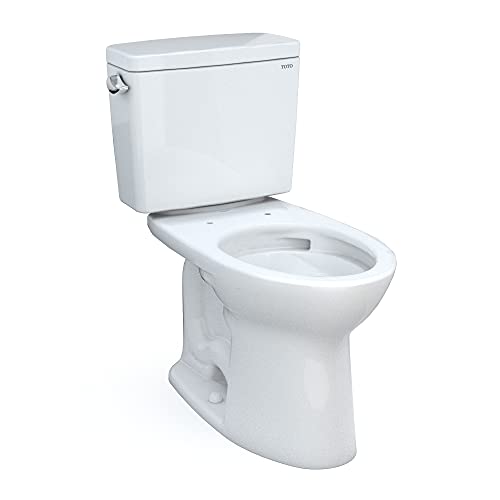
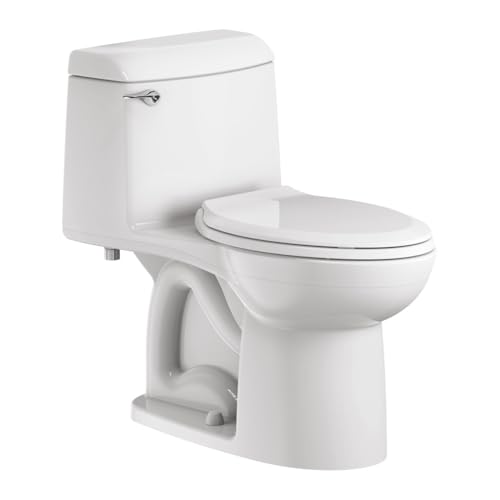
Toilets with larger trapways (2 1/8 inches or wider) and high MaP scores (800+ grams) are least likely to require a double flush. Models like the TOTO Drake II, American Standard Champion 4, and Kohler Highline are known for single-flush reliability even at 1.28 GPF.
When shopping for a low-flow toilet that won't need a double flush, look for models that have been independently tested for flush performance. The MaP (Maximum Performance) test is the industry standard, measuring how many grams of waste a toilet can clear in a single flush. A score of 800 grams is considered good, but many top-performing toilets score over 1,000 grams. The trapway diameter is also critical; a larger trapway (2 1/8 inches or more) allows waste to pass more easily, reducing the chance of clogs that lead to double flushing.
| Model | MaP Score | GPF | Flush Type | Trapway | Height | Best For | Check Price |
|---|---|---|---|---|---|---|---|
| TOTO Drake II | 1,000g | 1.28 | Gravity | 2-1/8" | 16-1/8" | Overall reliability | Check price |
| American Standard Champion 4 | 1,000g | 1.28 | Gravity | 2-3/8" | 16-1/2" | Clog resistance | Check price |
| Kohler Highline | 900g | 1.28 | Gravity | 2" | 16-1/2" | Value | Check price |
| TOTO UltraMax II | 1,000g | 1.28 | Gravity | 2-1/8" | 16-1/8" | Quiet operation | Check price |
| Woodbridge T-0001 | 900g | 1.28 | Gravity | 2" | 16-1/2" | Modern design | Check price |
The American Standard Champion 4 is a standout because of its 2-3/8 inch trapway, which is one of the largest in the industry. This extra width significantly reduces the chance of clogs that cause double flushing. The TOTO Drake II uses a 3-inch flush valve and a large trapway, providing a powerful flush with only 1.28 GPF. Owner reviews consistently report that these models rarely require a second flush, even with heavy waste loads.
If you're replacing a toilet specifically to avoid double flushing, the American Standard Champion 4 is the best choice due to its oversized trapway. However, the TOTO Drake II is a close second and is often preferred for its quieter operation. Both models have MaP scores of 1,000 grams, meaning they can clear a full pound of waste in a single flush.
Yes, pressure-assisted low-flow toilets (like the TOTO Aquia IV or Kohler Wellworth Pressure Lite) use compressed air to force water into the bowl at high velocity, eliminating the need for a double flush. However, they are louder and more expensive than gravity-fed models.
Pressure-assisted toilets use a sealed tank that traps air. When you flush, the compressed air pushes water into the bowl with much more force than gravity alone can provide. This allows them to clear waste effectively with just 1.0 or 1.28 GPF. Owner reviews consistently report that pressure-assisted toilets rarely, if ever, require a second flush. The TOTO Aquia IV is a popular model that uses a pressure-assisted flush system and has a MaP score of 1,000 grams.
The trade-off is noise. Pressure-assisted toilets are significantly louder than gravity-fed models, often producing a loud "whoosh" sound. They also have a higher upfront cost and more complex internal components that can be more expensive to repair. For many homeowners, the noise is a dealbreaker, especially in master bathrooms or guest bathrooms where quiet operation is valued.
If you live in a home with low water pressure (below 40 PSI), a pressure-assisted toilet may not perform as well. Gravity-fed toilets are generally more forgiving of low water pressure. For most homes, a well-designed gravity-fed toilet like the TOTO Drake II or American Standard Champion 4 will eliminate the need for a double flush without the noise of a pressure-assisted model.
Dual-flush toilets (like the American Standard H2Option or TOTO Aquia IV) offer a half-flush for liquid waste and a full flush for solid waste. The full flush typically uses 1.6 GPF, which is more water than a standard 1.28 GPF low-flow toilet, reducing the chance of needing a second flush for solid waste.
Dual-flush toilets are designed to save water by using a smaller flush for liquid waste (usually 0.8 to 1.1 GPF) and a larger flush for solid waste (usually 1.6 GPF). The larger full flush provides more water volume, which can help clear the bowl in one go. This is especially helpful if your current low-flow toilet struggles with solid waste. The American Standard H2Option is a popular dual-flush model that uses a 1.6 GPF full flush and has a MaP score of 1,000 grams.
However, dual-flush toilets are not a magic solution. Some owners report that the half-flush is too weak and requires a double flush for anything other than urine. The mechanism can also be more prone to leaks and requires more maintenance than a standard single-flush toilet. If you're considering a dual-flush toilet to solve a double flush problem, make sure the full flush is strong enough for your needs.
Dual-flush toilets are best for households that want to maximize water savings and are willing to accept the occasional double flush on the half-flush setting. If your primary goal is to eliminate double flushing entirely, a single-flush 1.28 GPF toilet with a high MaP score is a more reliable choice.
Low-flow toilets use less water per flush, so if the water level is too low, the rim jets are clogged, or the flapper is worn, the flush may lack the force to clear the bowl. A double flush is often a sign of an adjustment or maintenance issue.
Yes. Adjust the float (ball float or float cup) to raise the water level. The water should be about 1/2 inch below the top of the overflow tube. This increases the amount of water entering the bowl during the flush.
No. Many 1.28 GPF toilets, like the TOTO Drake II and American Standard Champion 4, are designed to clear waste in a single flush. Proper installation and maintenance are key to avoiding double flushing.
Use a small wire, toothpick, or a specialized rim jet cleaning tool to gently remove mineral deposits. You can also pour a cup of white vinegar into the overflow tube to help dissolve buildup.
The American Standard Champion 4 and TOTO Drake II are the most recommended models. Both have MaP scores of 1,000 grams and large trapways that reduce clogs and double flushing.
Yes. Pressure-assisted toilets use compressed air to force water into the bowl, providing a very powerful flush that rarely requires a second flush. They are louder and more expensive than gravity-fed models.
Yes. A worn or improperly sealing flapper can cause the flush to be weak or cut short. Replace it with a flapper designed for low-flow toilets, which usually has a larger opening.
MaP (Maximum Performance) score measures how many grams of waste a toilet can clear in one flush. A score of 800 grams or higher is considered good. Higher scores mean less chance of needing a double flush.
The full flush on a dual-flush toilet (usually 1.6 GPF) is stronger than a standard 1.28 GPF flush, which can help. However, the half-flush may still require a double flush for solid waste.
Yes. Hard water mineral deposits can clog rim jets and narrow the trapway, reducing water flow and flushing power. Regular cleaning with vinegar can prevent this.
Not necessarily. Try adjusting the water level, cleaning the rim jets, and replacing the flapper first. If those steps don't work, then consider replacing the toilet with a higher-performing model.
1.28 GPF toilets use 20% less water per flush than 1.6 GPF models. However, 1.6 GPF toilets have more water volume, which can make them less prone to double flushing. Both can perform well with proper design.
No. The GPF is determined by the toilet's design and flush valve. You cannot increase the GPF without replacing the toilet. However, you can adjust the water level to maximize the available water.
At least once a year, or more often if you have hard water. Regular cleaning prevents mineral buildup that can cause weak flushes and double flushing.
A low-flow toilet that requires a double flush is usually fixable with simple adjustments. Check the water level first, then clean the rim jets and replace the flapper if needed. If the toilet is older or has a poor MaP score, consider replacing it with a model like the American Standard Champion 4 or TOTO Drake II, which are designed to flush effectively with 1.28 GPF. Pressure-assisted toilets are an option for those who prioritize flush power over noise. For most homeowners, a well-maintained gravity-fed low-flow toilet with a high MaP score will eliminate the need for a double flush while saving water.
Learn why toilet trapways curve like an S, how each bend blocks sewer gas, and what the shape means for clogs and…
Read the guideAlmost every US toilet has a left-side handle. Learn the plumbing and mechanical reasons behind the layout and when it actually changes.
Read the guideHome toilets rely on tanks because household water lines lack the pressure that public flushometer systems use to flush straight from the…
Read the guide