Best Toilet Flush Valve: How to Choose the Right One
Plumbing4.6
Which is the best toilet flush valve? Compare 2-inch, 3-inch, adjustable, and canister flush valves by fit and flush power, plus how…
Read the guideA hairline crack on the outside of the tank lid costs nothing and can be ignored. A crack running down the inside of the bowl below the waterline means the toilet is leaking or about to, and replacement is almost always the right call. Knowing which kind of crack you have, and what to do about it, keeps a small problem from turning into a flooded bathroom and a rotted subfloor. This guide covers every location a toilet can crack, what each crack type means structurally, when repair is safe, and which models handle high-use households best after a replacement.
Most external hairline cracks on a tank or bowl exterior can be sealed with two-part porcelain epoxy and monitored, but any crack below the waterline, on the bowl base, or at the trapway outlet signals replacement. The TOTO Drake II is the top pick for its 1,000-gram MaP score, vitreous china build rated to last 50-plus years, and a $150-200 street price that makes replacement a clear win over a leaking repair.
Porcelain is dense and hard, but it is also brittle. Drop a tank lid, tighten a bolt too aggressively, or run temperature-stressed water through a toilet that sat unheated over winter, and the vitreous china can develop cracks ranging from invisible stress fractures to visible splits that leak from flush one. Not every crack is an emergency, and not every crack demands a replacement. The decision comes down to where the crack is, whether it penetrates through the porcelain, and whether water is already escaping or about to.
This guide follows the same spec-driven, research-based approach we use across the site. We compare engineering, published data, and aggregated owner repair reports rather than testing toilets in a private lab. Understanding toilet crack types, their structural implications, and the repair materials available will let you make a confident repair-or-replace call within the first ten minutes of inspection. For a broader look at which toilets are built to last, see our guide to the best flushing toilets and the brands that consistently earn high long-term reliability ratings.
Each location tells a different story about cause and consequence. Understanding the map of crack locations is the first step toward an accurate repair-or-replace decision.
The tank holds between 1.28 and 1.6 gallons of standing water, depending on the toilet model. A crack in the outer wall of the tank above the waterline is cosmetic and can be epoxy-patched successfully. A crack at or below the waterline, or at the point where the tank bolts to the bowl, is actively leaking or will begin to shortly. Owner repair reports consistently show that tank-base cracks worsen with the vibration of each flush and that epoxy patches at this location rarely hold longer than a few weeks before the joint opens again and water escapes onto the floor. When a tank crack is at or below the water level, replacing the tank is the minimum fix. Many toilets from TOTO, Kohler, and American Standard sell replacement tanks individually, which can be a practical option if the bowl is otherwise in good condition.
Tank lids are not structural. A cracked or chipped lid holds no water under pressure and poses no risk of floor damage. Many homeowners leave a cracked lid in place for years without consequence. If the crack is sharp enough to cut a hand when removing the lid, covering the edge with epoxy or replacing the lid is sensible. Kohler, American Standard, and TOTO all sell OEM replacement lids for major models. The Kohler Highline and Cimarron lines have particularly good lid availability. This is the one crack category where repair is always the answer.
A crack on the outer surface of the bowl above the waterline, typically on the front, sides, or back of the bowl exterior, is structurally marginal. The bowl does not hold standing water above the waterline in its wall, so an external crack in that zone cannot cause a water leak under normal conditions. However, the bowl walls do flex slightly with each flush and with the weight of a seated person. A crack that extends more than an inch, or that you can feel your fingernail drop into (indicating it penetrates rather than just scratching the glaze), should be epoxy-sealed to prevent it from propagating down toward the base. Monitor it with a dry-paper test after every flush for the following two weeks.
This is the highest-risk crack location. The bowl holds a standing pool of water at all times, and the waterline sits roughly four to eight inches above the outlet at the base. A crack in the interior porcelain surface below the waterline is either already leaking into the walls of the vitreous china or will begin seeping once the crack deepens. Epoxy repair compounds rated for submersion can sometimes seal a hairline crack temporarily, but ceramic epoxy is not engineered to handle the cyclic stress of continuous water pressure combined with flush dynamics. Plumbing professionals and manufacturers consistently advise against relying on any patch below the waterline for more than a few days while a replacement is sourced. If a dry-paper test around the base shows any moisture after patching, replacement is the only reliable fix.
A crack at or near the base of the bowl, where the porcelain meets the floor, is a replacement situation without exception. The base supports the full weight of the toilet and, when occupied, a seated adult. Structural integrity at the base is non-negotiable, and the stress concentration at this location means a crack propagates faster here than anywhere else on the toilet. Beyond structural risk, a base crack almost always communicates with the drain outlet, meaning sewage-contaminated water escapes with every flush. This is a health hazard in addition to a property damage risk. Do not attempt to repair a cracked bowl base; remove and replace the toilet.
The only repair compound with a meaningful track record on external toilet cracks is a two-part epoxy rated for plumbing or porcelain. The two-part formulation creates a chemical bond rather than a mechanical adhesion, which matters because the crack faces vibration from flushing and thermal cycling from cold supply water entering a room-temperature tank. Single-part ceramic adhesive sold for tile and decorative use does not hold up in this environment; owner feedback on repair forums shows consistent failure within weeks. Two-part plumbing epoxy, such as Loctite Repair Putty or J-B Weld WaterWeld, has a better success rate on external cracks when the surface is properly prepared.
Surface preparation is more important than the product choice. The crack must be completely dry, which means shutting off the water supply, emptying and drying the tank or bowl, and allowing the porcelain to air dry for a minimum of 12 hours, preferably 24. Any trace of moisture inside the crack prevents the epoxy from bonding to the porcelain walls of the fracture. Sanding lightly along each side of the crack with 220-grit paper roughs the glaze surface and improves adhesion. Mix the two-part compound exactly as specified and press it firmly into the crack rather than spreading it across the surface; the bond happens at depth, not at the surface layer.
External cracks on the tank body above the water level, external cracks on the bowl above the waterline, and minor cracks on the tank lid are candidates for a durable epoxy repair if the crack is narrower than a credit card's thickness and shorter than two inches. Beyond those dimensions, the structural integrity of the patch is questionable under flush-cycle stress. A crack you can separate with your thumbs, even slightly, is too wide for epoxy alone; the material will bridge the gap but cannot replace the structural strength of continuous porcelain. In practice, a successful epoxy repair on an exterior crack above the waterline is genuinely long-lasting on toilets from brands that use high-fire vitreous china, because the surrounding material remains structurally sound. TOTO's SanaGloss ceramic surface and Kohler's vitreous china both take epoxy adhesion well due to their dense, low-porosity composition.
Four situations make repair the wrong answer regardless of the product used. First, any crack below the waterline, interior or exterior. Second, any crack at the bowl base or at the trapway outlet. Third, a crack longer than two to three inches or wide enough that the edges separate under hand pressure. Fourth, any crack accompanied by a persistent leak that reappears within 48 hours of an attempted patch. In these situations, the cost of repeated patch materials, water damage risk, and potential subfloor rot always exceeds the cost of a replacement toilet within a short time horizon. A new toilet from Gerber or American Standard in the entry-level bracket carries a one-year warranty, and models like the TOTO Entrada carry a one-year limited warranty on workmanship and a longer coverage on specific components.
Dropping the tank lid is the single most common cause of toilet cracks in residential settings. A vitreous china lid weighs between two and four pounds and, when dropped onto the tank, strikes the rim with a concentrated force that exceeds the tensile strength of glazed porcelain at the impact point. The resulting crack typically radiates from the point of impact along the grain of the fired clay. Even if the lid lands and appears intact, check the tank rim carefully for a hairline fracture before assuming there was no damage. A crack that is almost invisible dry often becomes a seep within weeks as the glaze weathers at the fracture site.
The instructions for every major toilet brand, including TOTO, Kohler, American Standard, and Woodbridge, specify tightening the closet bolts to finger-tight plus a quarter turn, and tightening the tank-to-bowl bolts until the tank stops moving. Porcelain has high compressive strength but low tensile strength, meaning it handles weight well but cracks when pulled apart or stressed unevenly. Overtightening creates a tensile stress at the bolt hole that propagates outward as a radial crack. The crack may not appear immediately; it can develop over days or weeks as the joint continues to compress. This is one of the leading causes of crack-related toilet replacement in the first two years after installation, particularly in DIY installs where instructions are not followed precisely. If you are reinstalling a toilet after a repair, stop tightening the moment the toilet feels solid, not at the point where the wrench stops moving freely. For guidance on correct install technique, see our step-by-step toilet flush power improvement guide, which covers setting the tank-to-bowl joint as part of system optimization.
Porcelain is a fired ceramic that expands and contracts with temperature change. Introducing very hot water, such as boiling water poured into the bowl to clear a clog, creates a rapid temperature differential across the bowl walls that can exceed the material's thermal shock resistance. The outer surface stays cool while the inner surface heats suddenly, creating a tension gradient that produces cracks parallel to the water flow. The same effect can happen in reverse when a toilet that has sat unheated in a cold space is suddenly connected to a warm water supply. This is a genuinely common failure mode for vacation homes in northern climates where the water was not shut off and the toilet was not winterized. If you are dealing with a toilet that may have frozen, inspect the bowl and tank interior closely under a flashlight before running water through it.
Water expands approximately 9 percent when it freezes. Standing water left in an unheated toilet's tank and bowl during a hard freeze exerts an outward pressure against the porcelain walls that easily exceeds the material's tensile strength. Freeze cracks tend to run vertically or diagonally from the waterline rather than from a stress point, which is a distinguishing feature that helps identify the cause. If you are opening a seasonal property and find freeze cracks, the toilet almost certainly needs replacement; the same freeze event that cracked the porcelain may also have damaged the fill valve, flapper, and supply line connections. Our guide on toilet not flushing properly covers a full inspection sequence for toilets that have sat unused.
The structural risk of a cracked toilet base is easy to underestimate. Vitreous china under a seated adult bears a dynamic load that cycles with every shift in position. A base crack that started as a hairline can propagate to a through-fracture under that load, causing the toilet to shift or tip suddenly. Beyond injury risk, a toilet that shifts on a cracked base will typically break the wax ring seal in the same moment, creating an open connection between the bathroom floor and the sewage drain. This is not a repair scenario; it is an emergency replacement. If the base of the toilet is cracked and the toilet is still in use, place it out of service immediately, run the water shutoff valve clockwise until it stops, and schedule replacement. A temporary fix during the hours before replacement is to lay a heavy, absorbent towel at the base and check it after each flush to prevent water from reaching the subfloor.
If you notice a crack accompanied by persistent clogging or a weak flush, both symptoms can indicate that the crack has altered the bowl geometry enough to change water flow dynamics. A bowl that has shifted even a fraction of an inch off the drain center will flush with less force and trap waste more readily. This compound failure mode is another reason that base cracks belong in the immediate-replacement category rather than the watch-and-wait category.
The decision rule that resolves 90 percent of toilet crack questions is simple: if water touches the crack during normal use, replace the toilet. If water never touches the crack during normal use, a two-part epoxy patch is a reasonable and often durable repair. The gray area is a tank crack at or just above the internal water level, where the waterline rises slightly during filling. In that case, treat it as a below-waterline crack and plan for replacement, because the fill cycle will wet the crack twice with every flush and no epoxy bond survives that indefinitely. A new toilet costs less than two rounds of water damage remediation.
The toilet that cracked is likely between 15 and 30 years old, which means it is also likely using 1.6 GPF or more and may not have a trapway or flush system that meets modern performance standards. A replacement is an opportunity to upgrade flush performance, water efficiency, and long-term reliability in a single step. The picks below are the models that consistently lead MaP testing, carry EPA WaterSense certification, and earn the highest long-term durability ratings from aggregated owner reviews. Each one uses a fully glazed trapway and either gravity-fed siphon or cyclone-assisted flush technology.
| Toilet | Best For | MaP Score | GPF | Bowl Height | Rating | Check Price |
|---|---|---|---|---|---|---|
| TOTO Drake II | Overall best replacement | 1,000 g | 1.28 | Comfort (17.25") | 4.8 | Check price |
| American Standard Champion 4 | Clog resistance | 1,000 g | 1.6 | Comfort (16.5") | 4.7 | Check price |
| Kohler Cimarron | Best value two-piece | 1,000 g | 1.28 | Comfort (16.5") | 4.7 | Check price |
| TOTO UltraMax II | One-piece low-profile | 1,000 g | 1.28 | Comfort (17.25") | 4.8 | Check price |
| Gerber Viper | Budget replacement | 800 g | 1.28 | Standard (15") | 4.5 | Check price |
| Woodbridge T-0001 | Modern one-piece design | 800 g | 1.28 | Comfort (16.5") | 4.5 | Check price |
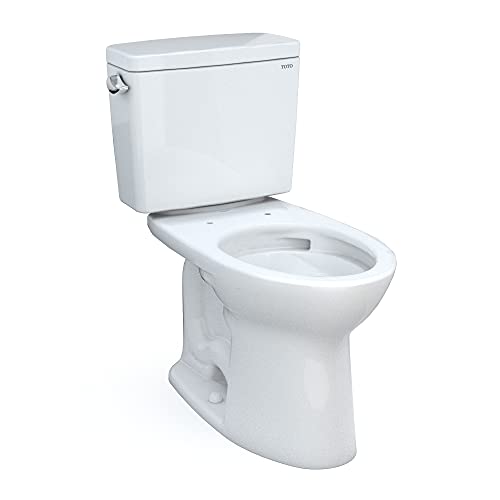
The TOTO Drake II earns the top replacement pick for its combination of a perfect 1,000-gram MaP score, water-efficient 1.28 GPF, and a double cyclone flush system that clears the bowl with less water than any previous Drake generation.
The Drake II uses TOTO's double cyclone flush system, which replaces the conventional rim holes with two nozzles that send water spinning around the bowl in a centrifugal pattern. This concentrates flush energy at the trapway exit rather than dispersing it around the rim, which is why the Drake II consistently scores 1,000 grams on MaP testing despite using only 1.28 GPF. The fully glazed 2-1/8-inch trapway resists waste adhesion, which is a direct factor in long-term clog prevention.
Owner reviews aggregated across major retail platforms consistently highlight the Drake II's quiet refill cycle and the ease of the two-piece design for self-installation. The 3-inch flush valve, larger than the 2-inch valve found on older toilets, produces a fast, complete flush that empties the bowl in under four seconds. TOTO's SanaGloss ion-barrier glaze also reduces the surface area where mineral deposits can accumulate, a practical advantage in homes with hard water.
The TOTO Drake II is the model we would install in a rental property, a primary bathroom, or a high-use family bathroom without hesitation. Its MaP score of 1,000 grams means it handles the heaviest waste loads in testing without a second flush, and its WaterSense certification at 1.28 GPF means it saves roughly 3,700 gallons per year compared to a 1.6 GPF toilet in a four-person household. That water savings alone offsets a meaningful portion of the replacement cost over a few years in municipalities with tiered water pricing.
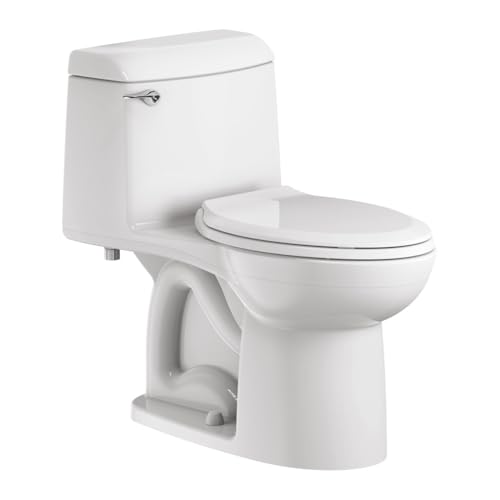
The American Standard Champion 4 is built around a 4-inch flush valve and a 2-3/8-inch fully glazed trapway, the widest combination in residential gravity-flush toilets, making it the strongest single-flush clog resistance performer available without moving to pressure-assist technology.
The Champion 4's defining feature is its 4-inch flush valve, which is a full inch wider than the standard 3-inch valve found on most gravity toilets. A wider valve releases more water faster, which creates a stronger hydraulic surge at the trapway. The 2-3/8-inch trapway opening is wide enough to pass waste that would clog narrower designs. American Standard published internal data showing the Champion 4 can flush 70 percent more waste per flush than the industry average, and independent MaP testing confirms the 1,000-gram rating.
The 10-year limited warranty on the Champion 4 is one of the most generous in the mid-range segment, covering functional defects longer than almost any competing model at this price point. Owner reviews consistently praise the flush power and note that the Champion 4 requires significantly fewer double-flushes than the 1.6 GPF toilet it typically replaces. The one practical tradeoff is water use; at 1.6 GPF, the Champion 4 uses more per flush than WaterSense-certified models, which matters in areas with drought restrictions or tiered water pricing.
If the household that cracked the old toilet also dealt with frequent clogging, the Champion 4 is the correct replacement, full stop. The wider valve and trapway address the root cause of clogging more directly than any other gravity-flush toilet at this price. The 1.6 GPF is a real tradeoff versus 1.28 GPF models, but for families where clogs mean plunger use twice a month, eliminating that problem is worth the marginal water cost.

The Kohler Cimarron delivers a 1,000-gram MaP score and EPA WaterSense certification at a price that undercuts the TOTO Drake II, making it the most cost-efficient replacement path for a cracked toilet when budget is a primary consideration.
Kohler's AquaPiston canister valve is the technology that distinguishes the Cimarron from older Kohler designs. Where a traditional flapper valve creates a one-directional water flow that loses momentum early in the flush cycle, the canister valve allows water to enter the bowl from all 360 degrees simultaneously, producing a more uniform flush pressure throughout the cycle. This is why the Cimarron achieves 1,000 grams on MaP testing despite using only 1.28 GPF.
The Cimarron's vitreous china construction carries Kohler's standard warranty, and the two-piece design means the tank and bowl can be transported and installed individually, which matters for a solo DIY replacement after removing a cracked toilet. Kohler's wide parts availability means fill valves, flush valves, and flappers are stocked at major home improvement stores nationwide, reducing long-term maintenance friction. Owner reviews frequently compare the Cimarron favorably to the Highline and note its quieter fill cycle as a practical day-to-day advantage.
The Kohler Cimarron is the toilet we recommend when a household's primary concern is replacement cost without sacrificing flush performance. At 1,000 grams MaP and 1.28 GPF with WaterSense certification, it matches the TOTO Drake II on the metrics that matter most for daily use and long-term reliability, at a price that often fits within a tight emergency-replacement budget. For a rental property manager replacing a cracked toilet quickly, the Cimarron is the straightforward choice.

The TOTO UltraMax II brings the double cyclone flush system of the Drake II into a seamless one-piece body that eliminates the tank-to-bowl joint, which is itself a potential leak point, making it the most structurally unified toilet replacement option in the TOTO lineup.
The UltraMax II's one-piece construction means the bowl and tank are fired as a single unit, eliminating the rubber gasket and bolts at the tank-to-bowl joint that are a known potential failure point on two-piece toilets. This matters specifically in the context of crack-related replacements, because many homeowners replacing a cracked toilet are also replacing a toilet that had a leaking tank-to-bowl joint; moving to a one-piece eliminates that concern entirely. The double cyclone flush system delivers the same 1,000-gram MaP score as the Drake II.
Weight is the practical tradeoff. One-piece toilets are heavy, and the UltraMax II requires a helper or a professional installer for safe placement on the wax ring. Once set, the unit is stable and the absence of the tank-to-bowl joint makes cleaning faster and more thorough. TOTO's SanaGloss glaze on the UltraMax II is rated to reduce bacterial and mold adhesion to the bowl surface, which contributes to longer cleaning intervals in practice.
The TOTO UltraMax II is the one to choose if the budget allows and the bathroom is a high-visibility space. It has no seams, no joint that can leak, and no gap between tank and bowl where dirt accumulates. For the homeowner who just dealt with a cracked toilet and floor damage and does not want any future leak risk from the toilet itself, removing the tank-to-bowl joint from the equation is a meaningful structural advantage, not just an aesthetic preference.

The Gerber Viper is a reliable entry-level replacement option with an 800-gram MaP score, 1.28 GPF WaterSense certification, and a lower price point that makes it the practical choice when a cracked toilet requires fast, inexpensive replacement without sacrificing basic performance standards.
Gerber is a professional-channel plumbing brand that sells predominantly through plumbing supply houses and contractors rather than big-box retail. The Viper line is Gerber's standard residential offering, and it reflects the brand's contractor-focused priorities: simple, reliable mechanics, standard replacement parts, and construction quality that holds up to professional installation and regular maintenance cycles. The 800-gram MaP score is lower than the top-tier picks above but is well above the 500-gram threshold that separates adequate residential performance from marginal performance.
The Viper's standard-height bowl is a tradeoff worth noting before purchasing. At 15 inches from floor to rim, it does not meet the ADA-compliant comfort height standard of 17 to 19 inches that TOTO, Kohler, and American Standard emphasize in their primary lines. For younger households or those without mobility concerns, the standard height is perfectly comfortable; for seniors or users with knee or hip issues, a comfort-height model is the better long-term choice even at a higher upfront cost.
The Gerber Viper is what a professional plumber installs when the job requires a fast, reliable, budget-conscious replacement and performance expectations are moderate. It is not the toilet we would choose for a primary bathroom used daily by four people, but for a rarely-used basement bath or a vacation rental unit where the cracked toilet needs to be replaced before the next guest arrives, the Viper is a sound, honest choice that will not disappoint under normal use.
Removing a cracked toilet requires more care than a standard toilet removal, because a crack that has not yet fully propagated can fail completely during the lift. The base of the bowl is under the most stress during removal, and a crack at the base can cause the bowl to fracture and separate, which is both a safety hazard and a potential injury from sharp porcelain edges.
Shut off the water supply at the wall valve, flush to empty the tank and bowl, and sponge out remaining water from both the tank and the bowl trap. Wear heavy work gloves throughout this job. If the crack is at the bowl base, do not attempt to rock the toilet to break the wax seal by pushing sideways; instead, use a utility knife to cut along the caulk line at the base and break the wax seal by lifting straight up, not rocking. A cracked base can separate under sideways force and the sharp porcelain edges can cause serious lacerations.
For a two-piece toilet with a cracked tank, remove the tank first by disconnecting the supply line, unbolting the two tank-to-bowl bolts from inside the tank, and lifting the tank straight up. This reduces the weight of the bowl for removal and eliminates the risk of the tank shifting during transport and driving the crack further. Set both the tank and bowl directly into a contractor trash bag or onto cardboard to contain any remaining water and porcelain fragments, and transport it carefully to avoid further breakage. Dispose of the unit through your local solid waste program; most municipalities accept vitreous china toilets as construction debris.
Replacing a cracked toilet is a better outcome than it appears when you are standing in a wet bathroom. A toilet that cracked is typically a 15-to-30-year-old unit using 1.6 GPF or more, which means the replacement will use less water, flush more powerfully, and carry better warranty terms than what you are removing. The following criteria cover the factors that predict long-term satisfaction with a replacement toilet.
MaP (Maximum Performance) testing, conducted by independent testing labs, measures how many grams of waste a toilet can flush in a single flush without a clog or double flush. The test uses a standardized soybean paste medium and reports results in grams. A score of 500 grams is the minimum considered acceptable for residential use. A score of 800 grams is good. A score of 1,000 grams, the maximum in the test protocol, means the toilet cleared the maximum test load without a second flush. TOTO Drake II, TOTO UltraMax II, Kohler Cimarron, and American Standard Champion 4 all score 1,000 grams. The Gerber Viper and Woodbridge T-0001 score 800 grams. Published MaP scores are available at the MaP testing database at map-testing.com.
EPA WaterSense certification requires a maximum of 1.28 GPF. All of the replacement picks above except the American Standard Champion 4 (1.6 GPF) carry WaterSense certification. In a household of four people flushing an average of five times per day each, switching from a 1.6 GPF toilet to a 1.28 GPF WaterSense model saves approximately 3,700 gallons per year. Many water utilities offer rebates of $50 to $200 for WaterSense-certified toilet replacements; check your local utility's conservation program before purchasing.
Rough-in is the distance from the wall behind the toilet to the center of the floor drain. The standard is 12 inches, which all five picks above are designed for. Older homes occasionally have 10-inch or 14-inch rough-ins, which require specific models. TOTO makes Drake versions in 10-inch and 14-inch rough-in configurations; Kohler offers the Highline in 10-inch and 14-inch rough-in. Measure from the wall (not the baseboard) to the center of the two floor bolts before ordering a replacement. Getting the rough-in wrong means the new toilet will not sit flush against the wall. For measuring technique, see our guide on diagnosing toilet installation issues.
Comfort height toilets measure 17 to 19 inches from floor to rim, approximately the height of a standard chair. Standard height toilets measure 14 to 15 inches. Comfort height is now the default in new construction and in every premium toilet model from TOTO, Kohler, and American Standard, because it is easier for most adults to use without the knee angle stress of a lower seat. For households with elderly members, people with hip or knee replacements, or tall adults, comfort height is a meaningful upgrade from whatever standard-height toilet was cracked. The only population for whom standard height is actively preferred is young children, for whom a toilet step stool is the practical solution rather than purchasing a lower toilet.
One-piece toilets, like the TOTO UltraMax II and the Woodbridge T-0001, have the tank and bowl fused into a single vitreous china unit. They are easier to clean, lower-profile, and eliminate the tank-to-bowl joint that can become a future leak point. They are heavier and more expensive. Two-piece toilets, like the TOTO Drake II and Kohler Cimarron, have a separate tank and bowl that are bolted together during installation. They are lighter, easier to transport, and lower in cost. For most DIY replacements after a cracked toilet, a two-piece is the practical choice because the tank and bowl can be carried separately by one person. For a master bathroom where aesthetics and cleaning ease matter more than installation convenience, a one-piece is the upgrade worth considering.
The single most useful thing to do before purchasing a replacement toilet is to look up the MaP score for the model you are considering at map-testing.com. The database is free, searchable by brand and model, and gives you an objective performance number that advertising copy cannot match. A toilet with a published 1,000-gram MaP score is objectively better at its primary job than a toilet with a 500-gram score, regardless of what the box says about "powerful flush technology." Use the database, check the GPF against WaterSense requirements, measure your rough-in, and buy accordingly. Every other consideration is secondary.
You can repair a crack on the outside of the toilet bowl above the waterline using a two-part waterproof porcelain epoxy. Clean the surface, let it dry completely for 24 hours, apply the epoxy, and cure before use. You cannot reliably repair a crack on the bowl interior below the waterline, at the bowl base, or anywhere the crack penetrates through the full thickness of the porcelain wall. Those cracks require toilet replacement.
A hairline crack above the water level on the outside of the tank is cosmetic and poses no immediate leak risk. Monitor it for spreading and seal it with epoxy if it extends further. A hairline crack at or below the internal water level is a slow leak or an imminent one; the vibration of each flush cycle stresses the crack further. In that location, replacing the tank is the correct fix rather than epoxy patching.
A cracked toilet becomes dangerous in two specific ways. A crack at the bowl base can cause the toilet to fracture under the weight of a seated person, creating a sudden failure and a risk of injury from sharp porcelain edges. A crack below the waterline allows sewage-contaminated water to escape onto the floor and into the subfloor, creating a health hazard from bacterial exposure and a property hazard from structural rot. An external crack above the waterline on a solid, non-leaking toilet poses no immediate danger but should be monitored.
Use the dry-paper test: wipe the entire toilet and floor completely dry, place paper towels around the base and near the crack, then flush three times and wait two minutes. Any wet spot on the paper towels indicates an active leak. A sewer odor at the crack location is a secondary sign that the crack penetrates through to the drain channel. If the paper stays dry after multiple flushes, the crack is not yet leaking.
Yes, if the crack is below the waterline or at the bowl base and the toilet is actively leaking. A slow seep from a toilet crack can waste dozens of gallons per day, which will appear as an unexplained water bill increase before visible floor damage is obvious. If your water bill has risen without explanation and the dry-paper test shows moisture at the toilet base, the toilet is the likely source.
On an external crack above the waterline on a toilet with solid surrounding porcelain, a correctly applied two-part epoxy repair can last several years. The bond deteriorates faster when exposed to water cycling, thermal shock, or structural movement. Below the waterline, epoxy rarely lasts more than a few weeks to months under the combination of constant water contact and flush-cycle stress. No epoxy manufacturer warrants their product for underwater plumbing applications long-term.
The TOTO Drake II is the best overall replacement: it scores 1,000 grams on MaP testing, uses 1.28 GPF with EPA WaterSense certification, and has a double cyclone flush system that outperforms gravity siphon designs from the same era as most cracked toilets being replaced. The Kohler Cimarron is the best value alternative at the same 1,000-gram MaP score, and the American Standard Champion 4 is the top choice for households with a documented clogging problem.
The most common causes of a base crack are overtightening the closet bolts during installation, impact damage from a heavy object dropped on or against the base, freeze damage in an unheated space, and age-related porcelain fatigue in toilets older than 25 years. A rocking toilet that was never properly shimmed can also develop a stress fracture at the base from the cyclic flex of each use. Base cracks warrant immediate replacement, not repair.
Diagnosing a toilet crack and applying epoxy to an external above-waterline crack are straightforward DIY tasks that do not require a plumber. Removing and replacing a cracked toilet is also within DIY reach for most homeowners with basic tools and a helper for the lift. Call a plumber if the toilet base has cracked and the floor shows signs of structural damage (soft spots, discoloration, odor from subfloor rot), if the closet flange is cracked or damaged, or if you are not comfortable working with shutoff valves and wax ring installation.
A MaP score of 600 grams is the minimum considered adequate for a primary bathroom. A score of 800 grams is a solid baseline for most households. A score of 1,000 grams, the maximum in MaP testing, means the toilet handles the heaviest test loads without a second flush. For households replacing a cracked toilet and wanting a genuinely better flush experience than the old unit provided, targeting a 1,000-gram model is the straightforward recommendation. TOTO, Kohler, and American Standard all offer 1,000-gram models at various price points.
Standard homeowner's insurance policies typically do not cover the cracked toilet itself, since the toilet is a fixture that wears out and can be damaged through normal use. However, if the cracked toilet caused water damage to floors, subfloor, or ceiling below, that secondary damage is often covered under the dwelling coverage section of a policy, subject to deductible. File a claim for the water damage, not for the toilet itself. Document the crack location and the resulting water damage with photographs before beginning any repairs.
The main preventable causes of toilet cracks are: overtightening closet bolts and tank-to-bowl bolts during installation (stop at snug, not maximum torque), dropping the tank lid (store it safely when accessing the tank), pouring boiling water into the bowl (use warm water at most for clearing clogs), and failing to winterize an unheated property. Inspecting the tank and bowl exterior annually under a good light catches developing cracks before they reach the waterline or base.
Yes. A crack that penetrates through the porcelain of the bowl or the bowl base can create an opening between the drain channel and the bathroom air. The drain channel is exposed to sewer gas, and once a crack opens a path from the drain side to the room, the odor will enter the bathroom between flushes. This is particularly noticeable when the toilet has not been used for several hours and no water is blocking the crack from below. A sewage smell in a bathroom with no other obvious source, combined with a visible crack, is a strong indicator of a through-crack requiring immediate replacement.
The toilet fixture itself ranges from roughly $100 for an entry-level Gerber Viper or American Standard Cadet 3 to $400 or more for a TOTO UltraMax II. Add a new wax ring ($8 to $15), closet bolts ($5 to $10), and a new supply line ($8 to $15) for a complete replacement. DIY labor is a few hours. Professional installation by a licensed plumber adds $150 to $300 in labor in most markets, depending on whether any subfloor repair is needed due to water damage from the cracked toilet.
Crazing is a network of tiny superficial cracks in the glaze layer of the porcelain, which appear as a spider-web pattern on the surface. Crazing does not penetrate through the porcelain itself and poses no structural or leak risk; it is purely cosmetic and commonly appears on older toilets, particularly those exposed to harsh cleaning chemicals over many years. A true crack penetrates through the glaze into or through the porcelain body and can be felt as a raised edge with a fingernail. Crazing is harmless; a crack may not be.
A cracked toilet needs immediate replacement in three situations: the crack is at the bowl base, the crack is below the waterline and actively leaking, or the crack is wide enough that the edges can be separated by hand pressure. Any of these conditions means the toilet is either a health hazard, a property damage risk, or a structural safety concern. An external crack above the waterline that passes the dry-paper test can be monitored and repaired with epoxy while a replacement is researched, without urgency.
Yes, for most major models. TOTO, Kohler, American Standard, and Gerber all sell replacement tanks for their major lines as separate parts, and plumbing supply houses and some big-box retailers stock OEM tanks. This is a practical option when the bowl is undamaged and the crack is isolated to the tank. Confirm the tank model number from the toilet's documentation or the stamp inside the tank before ordering. Aftermarket tanks are also available but can have fitment issues; OEM is strongly preferred for this repair.
TOTO uses a high-fire vitreous china process and SanaGloss ion-barrier glaze that results in a denser, harder surface with lower porosity than many competitors, making the porcelain more resistant to surface crazing and thermal shock. Kohler's vitreous china is similarly high-quality. American Standard's vitreous china is industry-standard and durable. The distinction is less about brand and more about manufacturing quality: thick-wall vitreous china from any established brand resists cracking better than thin-wall economy construction. Avoid unmarked or no-name brands, which may use a lower-temperature firing process that leaves a more porous, brittle body.
Most toilet cracks on the exterior above the waterline are fixable with two-part porcelain epoxy; every crack at the base, below the waterline, or wider than a hairline is a replacement signal, not a repair project. When replacement is the call, the TOTO Drake II wins on MaP score, water efficiency, and long-term reliability. The Kohler Cimarron is the best-value alternative, and the American Standard Champion 4 is the right pick for clog-prone households. Whichever model you choose, verify its MaP score at map-testing.com and confirm the rough-in measurement before ordering to ensure a clean, straightforward installation.
Which is the best toilet flush valve? Compare 2-inch, 3-inch, adjustable, and canister flush valves by fit and flush power, plus how…
Read the guideYes, flushing a toilet can make your shower go cold, hot, or lose pressure. Learn why it happens, how to diagnose it,…
Read the guideWhen you flush one toilet and another gurgles or bubbles, it usually means a venting or drain problem. Here are the causes,…
Read the guide