A spec-driven walkthrough of why a toilet bubbles and gurgles, from a blocked vent stack and a partial drain clog to a failing flapper and even a far-off sewer line, with the exact checks to run in order, the fixes that actually stop the airlock, and the signs that tell you when to stop plunging and call a professional.
Quick Answer
A toilet bubbles when trapped air is forced back up through the bowl, almost always from a blocked vent stack, a partial drain clog or a developing sewer-line problem. Check whether other drains gurgle too: if they do, the blockage is downstream and needs an auger or a pro. A single bubbling toilet often clears with a flange plunger and a vent check.
A toilet that bubbles is unsettling in a way that a slow drain is not. Water rises and falls on its own, you hear glugging from the bowl while a sink empties down the hall, and the surface ripples for no reason you can see. It feels like the plumbing has a mind of its own. The reassuring truth is that bubbling is not random and not mysterious. It is the visible result of one simple physical event happening out of sight: air that should be moving freely through your drain system is trapped, compressed, and then pushed back up through the only open path it can find, the water seal in your toilet bowl.
Once you understand that, the diagnosis becomes orderly. Bubbling traces back to a short list of causes, and naming the right one tells you whether the fix is a two minute job with a plunger or a call to a drain professional. This guide explains what is physically happening, walks through the causes in the order a methodical plumber would check them, and shows you the tells that separate a harmless local hiccup from an early warning of a main sewer-line backup. For the broadest cross-brand ranking of high-power fixtures, the pillar guide to the best flushing toilets goes wider. This page has one job: explain why your toilet bubbles and how to stop it.
How we research and rank
We do not test toilets in a lab. We compare manufacturer specifications, published MaP (Maximum Performance) flush-test gram scores, trapway diameter and glazing, flush-valve size, EPA WaterSense listings and aggregated owner ratings across major retailers. For diagnosing bubbling we lean on the physics of how air and water move through a vented drain system, plus the failure patterns owners and plumbers report most often. Where a fix is cheap and likely, we say so plainly rather than pushing a new toilet first.
First principles
What actually makes a toilet bubble
Bubbling is an airlock made visible. Your drain system is designed to keep air and water moving in balance, and when that balance breaks, trapped air escapes through the path of least resistance: the water in your toilet bowl.
Every drain in your home connects to two networks that work together. The first is the drain line that carries waste down and out to the sewer or septic system. The second is the vent system, a set of pipes that run up through the roof and let outside air in behind the moving water. That air is not optional. As a slug of water rushes down a pipe, it needs air to follow in behind it, otherwise it pulls a vacuum that fights the flow, just as holding your thumb over a straw keeps the liquid from draining. The vent supplies that air so water moves smoothly and the curved water seals in each fixture, including your toilet trap, stay full and undisturbed.
Bubbling happens when that air supply is interrupted. If the vent is blocked or a drain is partly clogged, the moving water cannot pull air in from the roof, so it pulls it from the next available source instead: the water sitting in your toilet bowl. The drain sucks air backward through the toilet trap, the trapped air bubbles up through the standing water, and you see and hear the result as gurgling, glugging or a bowl level that rises and drops on its own. The bubble is harmless on its own. What matters is the blockage causing it, and the sections below take each likely cause in turn, in the order you should check them.
Cause 1
A blocked or restricted vent stack
The most common cause of a toilet that bubbles without any drainage problem. When the vent is choked, the drain steals its air from the bowl instead of the roof.
The vent stack is the pipe that rises from your drain system up through the roof. Its only job is to let air in behind draining water and to release sewer gases harmlessly above the house. Over time that opening can be blocked at the roof by a bird or rodent nest, a build of leaves, a tennis ball, ice in cold climates, or even a dead animal that crawled in and could not get out. When the vent is choked, water draining anywhere in the house cannot pull air from above, so it pulls a partial vacuum that drags air backward through the toilet trap, and the bowl bubbles.
The signature of a vent problem is bubbling without slow drainage. Water still flushes and drains at a normal speed, but the toilet gurgles when a tub, washing machine or nearby sink empties, and the bowl level may rise and fall on its own. Sometimes you also notice a faint sewer smell, because a starved vent can siphon water out of fixture traps and break the seal that normally blocks odor. Clearing the vent usually means going onto the roof and flushing the stack with a garden hose, or running a plumber's auger down it. If the bubbling started after a storm, a roofing job or a hard freeze, a blocked vent is the leading suspect.
Tip: listen for the gurgle that gives a vent away
Run a different fixture and watch the toilet. Fill a bathtub and pull the plug, or run a full load down a washing machine, then listen and look at the bowl. If the toilet gurgles or its water rocks every time another fixture drains, but the toilet itself flushes and drains normally, you are almost certainly looking at a vent restriction rather than a clog in the toilet. That one observation saves you from plunging a toilet that is not actually clogged.
Cause 2
A partial clog in the toilet trapway or branch drain
A blockage that is not complete still narrows the pipe enough to disturb the air balance, so the toilet drains slowly and bubbles as it struggles.
A partial clog is a stoppage that lets some water through but chokes the rest. It can sit inside the toilet's own trapway, the curved internal channel that carries waste out of the bowl, or just downstream in the branch drain that connects the toilet to the main line. As water tries to squeeze past the obstruction, it cannot move in a smooth column, so air gets trapped on the wrong side and bubbles back up through the bowl. The difference from a vent problem is that here the toilet itself drains slowly: the bowl empties sluggishly after a flush, the water rises higher than normal before it goes down, and you see bubbles as it finally clears.
The usual culprits are the same ones behind any clog: too much paper, so-called flushable wipes that do not break down, or a foreign object that lodges in the trapway. A flange plunger, the type with an extended rubber sleeve that seals into the bowl outlet, is the right first tool, since it works the blockage directly with water pressure rather than air alone. If a plunger does not clear it, a toilet auger, also called a closet auger, reaches around the trap to break up or retrieve the obstruction. A toilet that both drains slowly and bubbles, while other fixtures behave normally, points squarely at a partial clog local to that toilet. For the full diagnostic on a toilet that will not clear, our guide on what to do when your toilet is not flushing properly and how to fix it walks through every check.
Cause 3
A partial blockage in the main sewer line
The most serious cause, and the one that turns bubbling into an early warning. When the main line narrows, the whole house feels it, and the lowest toilet bubbles first.
Everything in your home drains into one main sewer line that carries waste to the municipal sewer or septic tank. When that line develops a partial blockage, from accumulated grease, flushed wipes, collapsed pipe, or the most common cause in older homes, tree roots that have grown in through pipe joints, the entire system backs up behind it. Water draining from upper fixtures has nowhere to go quickly, so it forces air back up through the lowest open fixture, which is usually a ground-floor or basement toilet. That toilet bubbles, its water level surges, and in a worsening blockage it can back up entirely.
The tell that separates a main-line problem from a local one is breadth. If running a washing machine makes a toilet bubble, if flushing one toilet sends gurgling or rising water into a tub or a second toilet, or if multiple fixtures on the lowest floor are slow and bubbling together, the blockage is in the main line, not in any single fixture. This is not a plunger job. A main-line clog calls for a long drain auger, sometimes from a cleanout access point, and root intrusion or a collapsed pipe may need a camera inspection and professional clearing. Treat main-line bubbling as an early warning: clearing it now is far cheaper than cleaning up a full sewage backup later.
Tip: the washing-machine test tells you how deep the problem is
Run a full wash cycle and pay attention to your lowest toilet during the drain. A washing machine dumps a large volume of water fast, which stresses the main line more than a sink ever will. If the lowest toilet bubbles, gurgles or backs up specifically when the washer drains, the blockage is in the main line or a shared branch, not in the toilet. If only one toilet reacts and nothing else does, the problem is local and far easier to fix.
Why is my toilet bubbling when nothing has changed?
A toilet that suddenly starts bubbling without any change in use almost always has a developing blockage somewhere in the drain or vent system. A vent restriction causes bubbling with normal drainage, a partial toilet or branch clog causes bubbling with slow drainage, and a main sewer-line blockage causes bubbling across several fixtures at once. Check whether other drains gurgle to tell which one it is.
Cause 4
A faulty fill valve, flapper or weak flush
Less common than a blockage, but a tank fault can mimic bubbling by disturbing the bowl water and the trap seal. This is the cause to rule out when the drains are clear.
Not every bubble comes from the drain. Inside the tank, a fill valve that fails to shut off cleanly can dribble water into the bowl in a way that disturbs the surface and the trap seal, and a worn flapper that lets water seep past can slowly siphon the bowl down and pull air through the trap, producing intermittent gurgles even when nothing is draining elsewhere. These tank faults are easy to confuse with a drain problem, but the pattern is different: the bubbling is tied to the tank refilling or to water seeping between flushes, not to another fixture draining.
A weak or short flush from a worn flapper or scaled rim jets can also leave the bowl unable to reseal its trap fully, which lets small amounts of air escape. The fixes here are the same inexpensive parts that solve most tank problems: replace an aging flapper, confirm the fill valve shuts off crisply and the tank fills to its molded fill line, and descale clogged rim and siphon jets. If the bubbling persists only when the tank is refilling or between flushes, and no other fixture is involved, the tank is the place to look. Our guide on the weak toilet flush fix and its causes covers each tank fault in order.
Cause 5
Septic system problems
For homes on septic rather than municipal sewer, a full or failing tank produces whole-house bubbling that no drain-cleaning will fix. The cause is outside the house entirely.
If your home is on a septic system, the tank and its drain field add another possible cause. When the septic tank fills beyond its capacity, or the drain field becomes saturated or clogged, waste and water cannot leave the house at the normal rate. The whole drain system slows, air balance breaks, and toilets across the house bubble and drain sluggishly. Heavy rain that floods a drain field, a tank overdue for pumping, or roots in the septic lines all produce the same symptom: bubbling that affects multiple fixtures and does not respond to augering the indoor drains.
The tells are similar to a main-line clog, with extra clues outside. Look for standing water, lush green patches or foul odor over the drain field, slow drains throughout the house, and bubbling that worsens after heavy water use or rain. A septic tank that has not been pumped in three to five years is overdue and a prime suspect. This is firmly a professional matter: a septic service can pump the tank, inspect the drain field and diagnose whether the problem is a simple overfill or a failing field. No indoor fix changes a septic backup.
Cause 6
Low pressure events and municipal work
Occasionally the bubbling comes from outside your property entirely, from changes in the municipal system that ripple back into your fixtures.
Now and then a toilet bubbles for reasons that have nothing to do with your plumbing at all. Municipal sewer maintenance, a backup or pressure change in the public main, or a neighbor's heavy drain use on a shared line can briefly disturb the air pressure in the system you connect to, sending a gurgle or two up through your lowest toilet. These episodes are usually short-lived, do not come with slow drainage, and resolve on their own once the outside condition clears. If your bubbling is brief, occasional and unaccompanied by any drainage problem, an external cause is plausible and there may be nothing to fix.
The way to tell an external event from a real problem in your home is persistence. A one-time gurgle during a storm or a known municipal project is not a cause for concern. Bubbling that returns regularly, worsens over days, or comes with slow drains and odor is a real blockage in your system that needs attention. When in doubt, run the simple in-house tests first, since the vast majority of persistent bubbling traces to a vent restriction, a local clog or a main-line problem you can actually act on.
How do I stop my toilet from bubbling?
Work through the causes in order: confirm whether other drains gurgle, check and clear the roof vent, then plunge with a flange plunger and auger the toilet for a local clog. If several fixtures bubble together, clear the main sewer line, usually a professional job. Tank faults and septic problems are the last checks when the drains themselves run clear.
At a glance
Toilet bubbling causes and fixes compared
A side-by-side summary of the six causes, ranked roughly from most common and easiest to the most serious. Start at the top and stop when the bubbling stops. The tinted row is the cause most owners miss, the vent stack, which produces bubbling without any slow drainage at all.
Cause
Best For (who it explains)
Typical fix
Cost
DIY?
Likelihood
Blocked vent stack
Bubbles but drains at normal speed
Clear vent from roof with hose or auger
Free
Sometimes
Very common
Partial toilet / branch clog
Bubbles and drains slowly, one toilet only
Flange plunger, then closet auger
Free
Yes
Common
Main sewer-line blockage
Multiple fixtures gurgle or back up
Main-line auger or pro drain cleaning
Varies
Rarely
Moderate
Faulty flapper / fill valve
Gurgles when tank refills or between flushes
Replace flapper, adjust fill valve
Low
Yes
Less common
Septic tank / drain field
Whole-house bubbling, odor outside
Pump tank, inspect drain field
High
No
Situational
External / municipal event
Brief, occasional, no slow drainage
Usually resolves on its own
Free
N/A
Uncommon
Editorial Take
If we had to name the single most useful first move, it is the cross-fixture test, not the plunger. Before you touch the bubbling toilet, run a tub or a washing machine and watch whether the gurgle spreads. A toilet that bubbles but drains normally is almost always a vent problem, and plunging it does nothing. A toilet that drains slowly and bubbles is a local clog you can plunge. A toilet that bubbles whenever any other fixture drains is a main-line warning that deserves a pro before it becomes a backup. Five minutes of observation tells you which of three very different jobs you are actually facing.
When the toilet is the cause
What is a good MaP score for a toilet that resists bubbling and clogs?
Bubbling is usually a drain or vent issue, not the fixture itself. But when a weak, easily clogged toilet is part of the problem, the spec sheet predicts which replacement holds its trap seal and clears loads cleanly. The most useful number is the MaP flush-test score.
MaP, short for Maximum Performance, is an independent test that measures how many grams of solid waste a toilet clears in a single flush. It is the best available predictor of raw flush strength and a strong proxy for how well a toilet resists the partial clogs that contribute to bubbling. A score of 350 grams meets the minimum certification, 600 grams handles a typical home comfortably, 800 grams is strong, and 1,000 grams is the practical testing ceiling. A toilet that flushes decisively and reseals its trap fully is less likely to develop the slow-draining partial clogs that pull air back through the bowl.
Read MaP alongside trapway width and flush-valve size. A high MaP score gives the flush the force to clear waste in one pass, a wide glazed trapway of 2.125 inches or more gives that waste a clear path so it does not snag and accumulate, and a 3 inch or larger flush valve delivers a strong, complete flush that refills the trap cleanly. A toilet that pairs all three is, in practical terms, resistant to the local clogs that cause bubbling. The three picks below all hit that combination and cover the common situations: an everyday default, a value option, and a pressure-assisted choice for the toughest bathrooms.
What is the best toilet for a bathroom that keeps having drainage trouble?
The best toilet for a drainage-prone bathroom pairs a 1,000 gram MaP flush score with a wide, glazed trapway of at least 2.125 inches and a 3 inch or larger flush valve, so it clears loads in one pass and reseals its trap cleanly. The TOTO Drake is the everyday default. The American Standard Cadet 3 is the value pick, and a pressure-assisted Gerber Ultra Flush suits the toughest cases.
Top recommendations
Three strong-flushing toilets for trouble-prone bathrooms
If a weak, clog-prone fixture is part of your bubbling problem, these three models pair a high MaP score with a wide trapway and a strong valve so the bowl clears cleanly and holds its trap seal. Each suits a different situation, from an everyday upgrade to the toughest case.
Best Overall
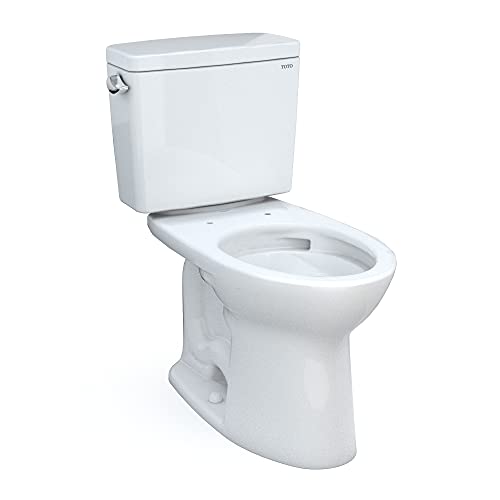
TOTO Drake
Everyday strong-flush default
4.8
A fully glazed 2.125 inch trapway, a 3 inch valve and a full 1,000 gram MaP flush make the Drake clear loads in one pass and reseal its trap cleanly, all at an efficient 1.28 gallons with a deep parts ecosystem.
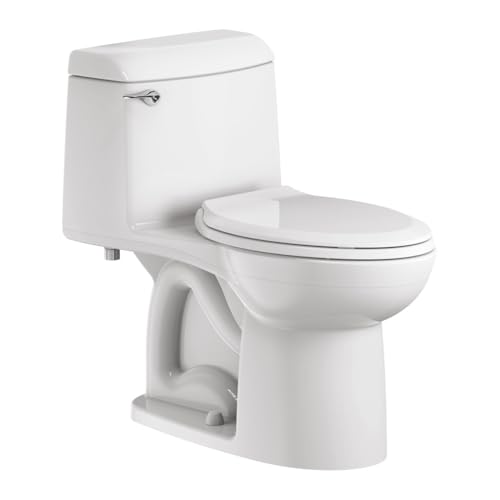
A 4 inch flush valve, an EverClean glazed trapway and roughly 1,000 gram MaP performance give the Cadet 3 a strong, complete flush that resists the partial clogs behind most bubbling, at a friendly everyday position.
Compressed air drives water through the bowl for the most forceful flush you can install in a home, clearing loads that leave gravity toilets draining slowly. Louder, but it leaves little behind to cause partial clogs.
Run these checks in order. Each one is quick, and stopping at the first that solves the problem saves you time and money. This is the same logic a methodical plumber follows when a toilet gurgles.
1. Watch the toilet while another fixture drains
Before touching the toilet, fill a tub or run a washing machine and watch the bowl. If the toilet gurgles or its water rocks every time another fixture empties, the air balance is disturbed somewhere shared, which points to a vent or main-line issue rather than a clog inside the toilet. If only this toilet is involved, the cause is local.
2. Judge how the toilet itself drains
Flush and watch the speed. A toilet that bubbles but drains at full speed almost always has a vent restriction. A toilet that drains slowly, rises high, then bubbles as it clears has a partial clog in its own trapway or branch drain. This single distinction separates the two most common causes.
3. Plunge with a flange plunger
For a slow-draining, bubbling toilet, use a flange plunger that seals into the bowl outlet, not a flat cup plunger meant for sinks. Several firm strokes with a good seal clear most local partial clogs. If the bowl then drains fast and quiet, you are done.
4. Auger the toilet if plunging fails
If a plunger does not clear it, run a closet auger, which is shaped to reach around the trap without scratching the bowl. The auger breaks up or retrieves an obstruction lodged in the trapway. A toilet that clears after augering had a local clog, and no further work is needed.
5. Check the roof vent
If the toilet drains normally but still bubbles when other fixtures run, inspect the vent opening on the roof. Look for a nest, leaves or debris, and flush the stack with a garden hose or run a plumber's auger down it. Clearing the vent restores the air supply so the drain stops pulling air through the bowl.
6. Suspect the main line or septic if the whole house reacts
If multiple fixtures gurgle, back up or drain slowly together, or if a washing machine sets off the lowest toilet, the blockage is in the main sewer line or, on septic homes, the tank or drain field. This is a professional job: a main-line auger, a camera inspection or a septic pumping, depending on what the symptoms point to.
Editorial Take
Resist the urge to attack a bubbling toilet with a plunger before you have diagnosed it. In the field, the most wasted effort we see is homeowners plunging a toilet that drains perfectly well, when the real problem is a bird nest in the vent stack on the roof. The order that solves the most cases for the least effort is observe, then judge drain speed, then plunge or auger a local clog, and only escalate to the main line or vent when the symptoms spread. And take whole-house bubbling seriously: a main-line warning caught early is an auger job, while the same blockage ignored becomes a sewage backup that costs many times more to clean up.
Is a bubbling toilet an emergency?
A bubbling toilet is not usually an emergency on its own, but it can be an early warning of one. A single toilet that bubbles from a local clog or a vent restriction is a routine fix. Bubbling across multiple fixtures, or a toilet that bubbles and backs up whenever the washing machine drains, signals a main sewer-line blockage that should be cleared promptly before it becomes a full backup.
Across the major brands, the same fixture principles apply when a weak toilet is part of the problem. TOTO leads on trapway glazing and flush engineering with the Drake, Drake II and UltraMax II. Kohler counters with the canister-valve Highline and Cimarron and the one-piece Santa Rosa. American Standard offers the strong-flushing Champion 4 and the value-priced Cadet 3, while Woodbridge, Swiss Madison and Gerber bring modern styling and pressure-assist options. Whichever brand you choose, demand a high MaP score, a wide glazed trapway and a 3 inch or larger flush valve, and the fixture itself will rarely be the cause of bubbling. For more on building flush strength, our guide on how to improve toilet flush power with seven proven fixes covers the upgrades worth trying.
One last word on prevention, since the cheapest bubbling problem is the one that never starts. The behaviors that prevent bubbling are the same that prevent clogs: send only toilet paper and human waste down the bowl, keep wipes and hygiene products in a covered bin, and split very large paper loads across two flushes. On the structural side, have your main line camera-inspected if you live among mature trees, keep the roof vent clear of nests and debris, and pump a septic tank on schedule. If your toilet keeps backing up alongside the bubbling, the companion guide on why your toilet keeps clogging and how to fix it covers the fixture side in depth.
The bottom line
Stopping the bubbling for good
A toilet that bubbles is reporting an airlock, not casting a spell. The cause is almost always specific and findable: a blocked vent stealing air through the bowl, a partial clog in the toilet or its branch drain, a developing main-line or septic backup, or occasionally a tank fault or an outside event. The cross-fixture test sorts these in minutes. A toilet that bubbles but drains normally points to the vent, a toilet that drains slowly and bubbles points to a local clog, and a toilet that bubbles whenever the rest of the house drains points to the main line. Diagnose first, fix the cheap and local causes yourself, and call a professional the moment the symptoms spread, since a main-line warning caught early is far cheaper than the backup it becomes if ignored.
Our Verdict
Diagnose before you plunge. Run the cross-fixture test first: a toilet that bubbles but drains fast is a vent problem, one that drains slowly is a local clog for a flange plunger and closet auger, and one that bubbles whenever any fixture drains is a main-line warning for a professional. Most single-toilet bubbling clears for free. When a weak fixture is part of the trouble, a strong-flushing TOTO Drake with its 1,000 gram MaP flush keeps the bowl clearing cleanly.
Manufacturer published specifications (TOTO, Kohler, American Standard)
FAQ
Toilet bubbling questions answered
? Why does my toilet bubble when I am not using it?
Bubbling with no one using the toilet means another part of the system is draining and pulling air through the bowl. A washing machine, a tub, a dishwasher or a neighbor's drain on a shared line can all force air back up through your toilet trap if the vent is restricted or a drain is partly clogged. The bubble is a symptom of disturbed air balance elsewhere, not of the toilet itself.
? Why does my toilet gurgle when I run the sink or shower?
That cross-fixture gurgle is the classic sign of a vent restriction or a shared partial clog. When the sink or shower drains, it needs air to follow the water down, and if the vent is blocked it pulls that air through your toilet trap instead, making the bowl gurgle. If the toilet itself still drains at normal speed, suspect the vent stack on the roof first.
? Is a bubbling toilet dangerous or just annoying?
A single bubbling toilet from a local clog or vent restriction is harmless beyond the nuisance, and you can usually fix it yourself. The concern is bubbling that spreads across multiple fixtures or comes with backups, which warns of a main sewer-line blockage. Caught early that is a routine auger job, but left alone it can lead to sewage backing up into the lowest fixtures, so widespread bubbling deserves prompt attention.
? How do I know if it is the vent or a clog?
Judge how the toilet itself drains. If it bubbles but flushes and drains at normal speed, the vent is almost certainly the cause, because the toilet is not blocked, it is only being robbed of air. If the toilet drains slowly, rises high and then bubbles as it finally clears, it has a partial clog in its own trapway or branch drain that a flange plunger or closet auger can clear.
? Can a blocked vent really make my toilet bubble?
Yes, and it is one of the most common causes. The vent stack supplies the air that lets draining water flow smoothly. If a nest, leaves, ice or debris blocks the vent at the roof, draining water cannot pull air from above, so it pulls a vacuum that drags air backward through the toilet trap and bubbles the bowl. The tell is bubbling with completely normal drainage speed.
? Will a plunger fix a bubbling toilet?
Only if the bubbling comes from a partial clog in that toilet, which shows up as slow drainage along with the bubbles. Use a flange plunger that seals into the bowl outlet, not a flat sink plunger, and work it with several firm strokes. A plunger does nothing for a vent restriction or a main-line clog, so confirm the toilet actually drains slowly before you reach for one.
? Why does my toilet bubble when the washing machine drains?
A washing machine dumps a large volume of water quickly, which stresses the main drain line more than any sink. If your lowest toilet bubbles, gurgles or backs up specifically when the washer drains, the main line or a shared branch is partly blocked and cannot handle the surge, so air forces back up through the bowl. That pattern points to the main line and usually calls for a professional.
? What does it mean if multiple toilets bubble at once?
Bubbling across several fixtures together points firmly to the shared part of the system, the main sewer line or, on septic homes, the tank and drain field. A blockage there backs up the whole house and pushes air up through the lowest open fixtures. This is not a plunger job. It needs a main-line auger from a cleanout, a camera inspection for roots or collapse, or a septic pumping, depending on the cause.
? Can tree roots cause my toilet to bubble?
Yes, and roots are the most common main-line culprit in older homes. Tree roots seek water and grow in through small gaps at pipe joints, gradually narrowing the main sewer line and catching paper and waste. As the line restricts, the whole house drains slower and the lowest toilet bubbles and backs up. Clearing roots usually requires a powered auger or hydro-jetting, and a camera inspection confirms the extent.
? Why does my toilet bubble only when it rains?
Rain-linked bubbling usually points to one of two outdoor causes. On a septic system, heavy rain saturates the drain field so waste cannot leave the house, slowing every drain. On municipal sewer, storm water infiltrating the system can raise pressure in the main and send gurgles back up the lowest toilet. Persistent rain-triggered bubbling deserves a look at the septic field or a call to the utility.
? Can a faulty flapper or fill valve cause bubbling?
It can, though it is less common than a drain cause. A fill valve that fails to shut off cleanly or a worn flapper that lets water seep into the bowl can disturb the surface and slowly siphon the trap, producing intermittent gurgles tied to the tank refilling rather than to other fixtures draining. Replacing the flapper and confirming the fill valve shuts off crisply resolves this type of bubbling.
? How do I clear a blocked vent stack myself?
Access the vent opening on the roof, where it rises through the shingles, and look for a nest, leaves or other debris in the pipe. Remove what you can reach by hand, then flush the stack with a garden hose. If water backs up at the opening, a clog sits lower and you can run a plumber's auger down the vent. If the roof is steep or unsafe, this is a job to leave to a professional.
? Why does my toilet bubble after I flush?
A gurgle right after a flush, with the water rising before it drains, usually signals a partial clog in the toilet trapway or the branch drain just downstream. The flush water cannot move in a clean column past the obstruction, so air is trapped and burps back up as the bowl clears. A flange plunger and, if needed, a closet auger clear this kind of local blockage.
? Does a bubbling toilet mean a sewer backup is coming?
Not always, but it can be the earliest warning. Bubbling confined to one toilet from a local clog or a vent issue is no cause for alarm. Bubbling that spreads across fixtures, worsens over days, or pairs with slow drains and odor is the front edge of a main-line or septic backup. Acting on those whole-house symptoms early, while it is still an auger job, prevents a far messier and costlier backup later.
? Can hard water contribute to a bubbling toilet?
Indirectly, yes. Hard water deposits mineral scale inside the rim jets, the siphon jet and the trapway over time. A scaled trapway narrows the channel and a weak, scaled flush can fail to clear loads fully, both of which encourage the partial clogs that lead to slow drainage and bubbling. Periodic descaling with vinegar or a commercial product, and a glazed trapway like TOTO's CeFiONtect, both help in hard-water homes.
? Should I pour chemicals down a bubbling toilet?
Chemical drain cleaners are a poor choice for a toilet. They are harsh on pipes and seals, often ineffective against the paper, wipes or roots that cause real blockages, and they create a hazard if you later need to plunge or auger. A flange plunger and a closet auger are safer and more effective for a local clog. For a main-line or vent problem, mechanical clearing by a professional is the right tool, not chemicals.
? Why does only my basement or ground-floor toilet bubble?
The lowest toilet bubbles first because it sits closest to the main line, so it is the path of least resistance when air is forced back up by a downstream blockage. If your basement or ground-floor toilet bubbles while upstairs fixtures seem fine, suspect a main sewer-line restriction starting to back the system up. The lowest fixture is the early warning point, and the whole line should be checked.
? Will replacing my toilet stop the bubbling?
Usually not, because bubbling is almost always a drain or vent problem rather than a fault in the fixture. A new toilet does nothing for a blocked vent, a main-line clog or a septic backup. Replacement only helps when a weak, easily clogged toilet was contributing local partial clogs, in which case a strong-flushing, wide-trapway, high-MaP model clears loads cleanly. Diagnose the drain and vent first before spending on a fixture.
? When should I call a plumber for a bubbling toilet?
Handle the local checks yourself first: the cross-fixture test, a flange plunger and a closet auger for a slow-draining toilet, and a vent inspection if it drains normally. Call a plumber when multiple fixtures gurgle or back up together, when the lowest toilet reacts to the washing machine, when you suspect tree roots or a main-line clog, or when a septic system shows odor or standing water outside. Those point to work beyond the fixture.
Derek researches plumbing specifications, installation requirements and parts availability, cross-checking manufacturer claims against owner-reported reliability. Rankings are based on documented data and real owner reports, never paid placement.
Updated August 2026 · Toilets
Keep reading
Related guides
Why Toilet Trapways Are Curved Like an S
Toilets
4.6
Learn why toilet trapways curve like an S, how each bend blocks sewer gas, and what the shape means for clogs and…