When you flush and the bowl water rises, lingers, then crawls down instead of dropping with a firm gulp, the toilet is telling you that the siphon never fully formed. A slow-emptying bowl is one of the most common and most fixable toilet faults, and the cause is almost always a partial blockage, a clogged jet, or a venting problem rather than a worn-out toilet. This guide diagnoses each cause in the order a plumber checks them, using the same spec-driven research approach we apply across the site rather than guesswork.
Quick Answer
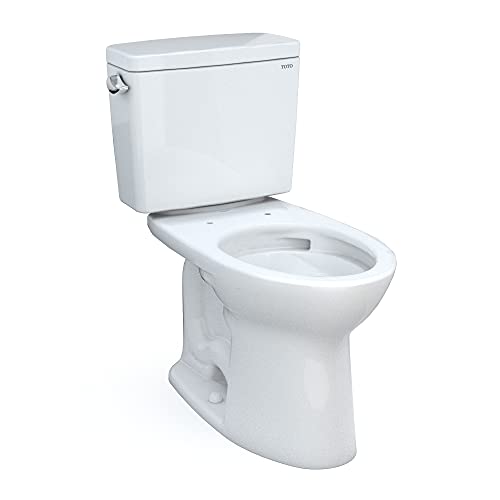
A toilet bowl that empties slowly almost always has a partial clog in the trapway or drain line, or scaled-over siphon jets that starve the flush of speed. Clear it with a flange plunger and a closet auger first. If the bowl design is the real limit, upgrade to the TOTO Drake, which clears 1,000 grams on MaP testing at 1.28 GPF through a wide, fully glazed trapway.
A flush is a controlled siphon. When you press the handle, the tank dumps water into the bowl fast enough that the trapway fills completely, air is pushed out, and the falling column of water on the far side of the trap pulls the bowl contents through in one decisive pull. When the bowl empties slowly, that siphon either never fully formed or it broke early. Water still leaves the bowl, but by gravity drainage instead of suction, which is why it lingers and creeps down rather than vanishing with a gulp.
That distinction matters because it points you straight at the cause. A slow-emptying bowl is rarely a sign that the toilet is finished. Far more often it is a restriction that throttles the flow, a jet that no longer delivers water fast enough to trigger the siphon, or a vent that cannot let air in so the siphon can sustain itself. This guide follows the way we research everything on this site. Rather than tearing toilets apart in a lab, we compare how they are engineered, the published specs that predict drainage strength, independent MaP (Maximum Performance) flush-test data, and the repair patterns that show up consistently across aggregated owner reviews and plumbing resources. We start with the free checks, move to cheap fixes, and finish with the upgrade path for when the bowl itself is the limit.
Start here. Take the tank lid off and flush while you watch the bowl. A healthy flush sees the bowl water rise briefly, then drop hard with an audible gulp as the siphon grabs, followed by a clean refill. A slow-emptying bowl rises, holds, and drains lazily with no gulp, sometimes gurgling. Note whether the tank itself emptied with force: if the tank dumped strongly but the bowl still drained slow, the problem is downstream in the bowl, trap, or drain rather than in the tank.
What causes a toilet bowl to empty slowly?
A toilet bowl empties slowly when the flush cannot form or sustain a full siphon. The most common causes are a partial clog in the trapway or drain line, mineral scale blocking the rim jets and siphon jet, a low tank water level, or a blocked vent stack that prevents air from entering the drain. A genuinely weak bowl design is the least common cause and the last to suspect.
There are five realistic causes, and they fall in a clear order of likelihood. First is a partial clog: a soft obstruction in the trapway or the drain line beyond it that lets water seep past but not rush through. Second is mineral buildup in the rim jets and siphon jet, which slows the water entering the bowl so the siphon never gets the speed it needs to grab. Third is a low tank water level, which delivers too little volume to drive a full siphon. Fourth is a blocked or restricted vent, which prevents air from entering the drain so the siphon stalls and the bowl glugs down slowly. Fifth, and least common, is a bowl and trapway design that was always weak. Work through them in this order and you fix the large majority of slow-draining toilets without replacing anything.
The fixes to stop a toilet bowl draining slowly
These are listed from free to cheap to replacement, which is also the order of how often each is the real cause. Most slow-emptying bowls are solved by the time you reach fix three. Work them in sequence and stop when the bowl drops with a firm gulp again.
Fix 1: Clear a partial clog with a plunger and auger
A partial clog is by far the most common reason a bowl empties slowly. Unlike a full clog that backs the bowl up, a partial obstruction in the trapway or the drain line just downstream lets water seep past while choking the rush of water that forms the siphon. Common culprits are wads of toilet paper, flushed wipes that do not break down, hardened waste, or small objects lodged in the trap.
Start with a flange plunger, the type with an extended rubber sleeve that seals the bowl outlet, not the flat cup style meant for sinks. Seat it firmly over the hole at the bottom of the bowl, make sure there is enough water to cover the cup, and push and pull with firm, sealed strokes. The goal is to move water back and forth through the trap to dislodge the blockage, so the first pull is as important as the push. If plunging does not fully clear it, use a closet auger, a flexible cable with a protective sleeve that reaches around the trap without scratching the porcelain. Feed it in, crank to engage the obstruction, and retract. For a bowl that clogs and drains slowly again and again, the underlying pattern is worth reading our guide on why your toilet keeps clogging and how to fix it.
Tip. If the water level in the bowl is high, bail some out before plunging so you do not splash. If it is low, add water from a bucket until the plunger cup is submerged. The plunger works on water, not air, so a sealed, water-filled cup transmits far more force to the clog.
Fix 2: Clear the clogged rim jets and siphon jet
If the drain is clear but the bowl still empties slowly, the water entering the bowl may be too slow to trigger a full siphon. Water enters through a ring of small holes under the rim (the rim jets) and through one larger hole at the bottom front of the bowl (the siphon jet). In hard-water homes, mineral scale narrows or blocks these openings over months and years, so even with a full tank the water dribbles in instead of rushing, and the siphon never builds the speed it needs.
The tell is a flush where the tank empties with force but the bowl water just swirls weakly or runs down only one side, then drains lazily. Turn off the water, flush to empty, and use a small mirror to inspect the rim holes. Warm white vinegar and pour it down the overflow tube so it runs through the rim channel, then let it sit several hours or overnight. Use a stiff wire or small Allen key to ream out each rim hole and the siphon jet, breaking up the softened deposits. Turn the water back on and flush a few times to clear the debris. A bowl that has drained slowly for years can return to near-new strength with this one cleaning. For a fuller walkthrough of restoring force, see our guide on how to improve toilet flush power.
Avoid this mistake. Do not pour strong acid drain cleaner into the rim channel or trapway to clear scale. It can damage the glaze and the internal porcelain over time and does a worse job than vinegar plus mechanical poking at the actual blocked holes. Patience with vinegar and a wire beats harsh chemicals here.
Fix 3: Raise a low tank water level
The siphon is powered by the volume and weight of water dumping out of the tank. If the tank is not filling to its designed level, every flush delivers a fraction of the intended water, which is often too little to drive a complete siphon, so the bowl drains slowly by gravity instead. This is quick to check and free to correct.
Lift the tank lid and look at the water line relative to the overflow tube, the open vertical pipe in the center of the tank. The water should sit roughly one inch below the top of that tube, and most tanks also have a molded fill line on the back interior wall. If the water is sitting an inch or two low, raise it by adjusting the fill valve: on a modern column valve, pinch the clip and slide the float cup up, or turn the top screw clockwise; on an older ballcock with a float on an arm, gently bend the arm up. Adjust in small steps, flush, and recheck until the water settles about an inch below the overflow. A correctly filled tank often restores the gulp on its own.
Fix 4: Clear a blocked or restricted vent stack
This is the cause people overlook most often, and it produces a textbook slow-draining bowl. Every drain system has a vent stack running up through the roof that lets air into the pipes so a siphon can form and sustain itself. If that vent is blocked by leaves, a bird nest, ice, or debris, the flush cannot pull air in behind it. The siphon stalls, the bowl glugs and gurgles, and the water creeps down slowly even though nothing is clogged inside the toilet.
The clearest clue is several fixtures draining sluggishly at once, or a gurgling sound from the toilet or a nearby drain when you flush or empty a sink. If you are comfortable on a roof, you can inspect the vent opening and clear it, or run a garden hose down it to flush debris through. If multiple drains in the house are slow, suspect the vent strongly rather than the toilet, because a single blocked vent can throttle the whole system. When the toilet will not flush at all rather than just draining slowly, our guide on how to fix a toilet that is not flushing properly covers the full diagnostic path.
Fix 5: Check the flapper and flush valve timing
A flapper that closes too early cuts the flush short, releasing only part of the tank, which can starve the siphon and leave the bowl draining slowly. As flappers age they warp, stiffen, or become waterlogged and fall shut a moment too soon. Watch a flush with the lid off: if the flapper drops before the tank finishes draining, it is closing early. Check that the chain has about a half inch of slack so the handle lifts it fully, and replace the flapper if its edge is chalky, stiff, or warped. It is an inexpensive, tool-free part. On some toilets the flush valve opening is simply narrow, and a wider 3-inch valve dumps the tank faster to build a stronger siphon, though that is a larger job that belongs after the simpler checks.
Fix 6: Replace the toilet with a high-MaP model
If you have worked every fix above, cleared the drain, cleaned the jets, confirmed the tank level, ruled out the vent, and checked the flapper, and the bowl still drains slowly, the bowl and trapway design is the limit. An older 3.5 GPF or first-generation 1.6 GPF model with a narrow, unglazed trapway and a low MaP score never formed a strong siphon, and no repair turns a poorly engineered bowl into a fast-draining one. The lasting fix is a modern high-MaP toilet with a wide glazed trapway, and a good one uses less water while draining far harder. Aim for a MaP score of 800 grams or higher, a trapway of 2 inches or larger, and a WaterSense 1.28 GPF rating. Our full ranked list is in the roundup of the best flushing toilets.
Editorial Take
The fix people skip most often on a slow-draining bowl is the vent stack, because it lives on the roof and feels disconnected from the toilet. We see this pattern repeatedly: an owner plunges, augers, swaps the flapper, even replaces the fill valve, and the bowl still glugs down slowly because air cannot get into the drain. If two or more fixtures drain slowly at the same time, check the vent before you touch anything inside the toilet. It is the single most under-diagnosed cause of a lazy bowl, and clearing it often restores the gulp instantly.
A quick fix-it order to follow
Working in the right order saves time and avoids replacing parts you did not need. Here is the sequence that resolves the large majority of slow-draining bowls, from free to replacement.
Step
Fix
Best For
Cost
1
Plunge and auger the trapway and drain line
Sudden slow drain after a clog
Free
2
Clear rim jets and siphon jet with vinegar and wire
Gradual fade, hard water
Free
3
Raise tank water level to one inch below overflow
Soft flush, no gulp
Free
4
Clear or inspect the roof vent stack
Several fixtures slow, gurgling
Free to low
5
Replace or adjust the flapper and chain
Short, early-cut flush
Low cost part
6
Replace with a high-MaP toilet
Old low-MaP narrow trapway
Replacement
If the bowl is still slow after step four and the toilet is an older low-flow design, jump to the upgrade. For a structured comparison of repair tactics before you decide, our companion guide on the weak toilet flush fix covers each cause in order, and if the flush itself is feeble rather than just the drainage, how to improve toilet flush power goes deeper on restoring force.
Which toilet drains the fastest and resists slow flushing?
The TOTO Drake drains among the fastest of any gravity toilet, clearing a full 1,000 grams on independent MaP testing at just 1.28 GPF. Its 3-inch flush valve dumps the tank quickly and its wide, fully glazed trapway lets waste accelerate through cleanly, which is why it is a default upgrade for anyone whose old toilet empties slowly.
If repairs do not restore your drainage, these three models pair high independent MaP scores with efficient water use and deep, positive owner track records, which makes them safe upgrades from a slow-emptying toilet. Each one addresses a different priority.
Fastest Drain
TOTO Drake
Wide glazed trapway and fast valve for daily use
4.7
A top-tier 1,000 gram MaP score, a 3-inch flush valve and a fully glazed trapway make the Drake drain fast and clean, with an easy-to-source parts ecosystem at 1.28 GPF.
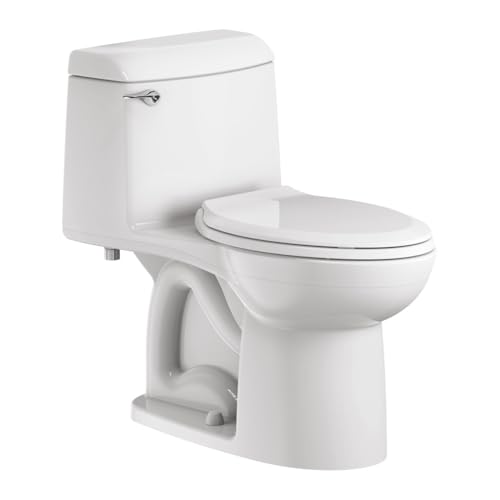
An oversized flush valve and a wide trapway move a lot of water fast, which makes the Champion 4 a strong pick when slow draining has been paired with frequent clogs.
Kohler's Class Five flush engine moves water with real force at 1.28 GPF, and the Cimarron pairs that draining power with a clean comfort-height bowl that suits most family bathrooms.
If you are choosing a replacement specifically to fix a slow-emptying bowl, the table below compares the leading high-power options on the specs that actually predict draining strength. The Drake is marked as the overall winner for drainage speed and value together.
A good MaP score for fast, complete draining is 800 grams or higher, with 1,000 grams being the top of the scale and the target for busy family bathrooms. Scores below about 350 grams indicate a weak flush with a slow drain and rising clog risk. MaP independently measures how many grams of solid waste a toilet clears in a single flush.
MaP testing, run by the Maximum Performance program, is the most reliable public indicator of real draining strength because it uses a standardized waste-clearing test rather than marketing claims. When you shop, treat the MaP number the way you would treat a horsepower figure: it is the closest thing to an objective performance rating, and a high score reliably predicts a bowl that empties fast and completely. A 1.28 GPF toilet that scores 1,000 grams clears as much as the best older 1.6 GPF models while using a fifth less water per flush. For a deeper look at how those numbers translate into real performance, our guide on the best toilet for frequent clogs ranks models specifically on clearing power.
Why does my toilet bowl drain slowly but not clog?
A toilet that drains slowly without fully clogging usually has a partial obstruction, scaled-over jets, or a venting issue rather than a complete blockage. Water still seeps past the restriction, so the bowl empties by gravity instead of a fast siphon. Clearing the trapway, cleaning the jets, and checking the vent restores the firm draining gulp in most cases.
The slow-but-not-clogged pattern is the classic sign of a partial restriction or a starved siphon rather than an emergency blockage. It is good news because it is almost always cheaper and easier to fix than a full clog: the water is moving, so you are simply restoring its speed rather than digging out a solid wall of material. Work the trapway with a plunger and auger first, since a soft partial clog is the most common cause, then clean the jets and check the vent. If your toilet drains slowly mainly after flushing paper, our guide on why your toilet keeps clogging covers the trapway and paper factors in detail.
Can you fix a slow-draining toilet without replacing it?
Yes, in most cases. A slow-draining toilet can usually be fixed by plunging and augering the trapway, cleaning the rim and siphon jets, raising the tank water level, and clearing the vent stack. These restore the toilet to its designed performance. They cannot exceed the bowl's original engineering, so a genuinely weak low-MaP design still needs replacement.
The key distinction is between a toilet that has drifted below its own design and one that was never powerful to begin with. The fixes in this guide bring a toilet back up to how it left the factory, and for the large majority of slow-draining bowls that is enough. If that factory performance was already weak, which is common with first-generation 1.6 GPF toilets from the 1990s, the ceiling is low and an upgrade is the only real answer. A quick way to tell: look up the model's MaP score. If it tested under 500 grams when new, no amount of cleaning makes it drain fast. For the full diagnostic on a persistently soft flush, our weak toilet flush fix guide covers each cause in order.
Editorial Take
Our honest advice on the upgrade decision is to weigh the age and MaP score of your current toilet against the cost of repeated repairs. If your toilet is a pre-2000 low-flow model with a narrow trapway and you find yourself plunging it every week to keep it draining, you are spending time and money to nurse along a fundamentally weak bowl. At that point the smarter move is a high-MaP 1.28 GPF replacement like the Drake or UltraMax II, which costs more once but ends the slow-drain problem permanently and lowers your water bill at the same time.
Putting it all together
Fixing a slow-emptying toilet bowl is a process of elimination, and the order matters. Plunge and auger the trapway and drain line, clean the rim and siphon jets with vinegar and a wire, confirm the tank fills to an inch below the overflow, clear or inspect the roof vent, and check the flapper and chain. Those steps restore the large majority of slow-draining bowls for free or a few dollars. If the bowl still empties slowly after all of that, the bowl design is the limit, and a modern high-MaP toilet from TOTO, Kohler, American Standard, Woodbridge, Swiss Madison, or Gerber is the lasting fix.
A slow-emptying bowl means the flush is not forming a full siphon. The most common cause is a partial clog in the trapway or drain line that lets water seep past but chokes the rush that drives the siphon. Scaled-over rim and siphon jets, a low tank water level, and a blocked vent stack are the next most likely causes. Work them in that order and the bowl usually drains with a firm gulp again.
? How do I fix a toilet that drains slowly?
Start with a flange plunger using firm, sealed strokes, then a closet auger to reach around the trap. If the drain is clear, clean the rim jets and siphon jet with white vinegar and a wire, confirm the tank fills to an inch below the overflow tube, and check the roof vent for blockage. These steps fix the large majority of slow-draining toilets for free or a few dollars.
? Why does my toilet drain slowly but not clog?
That pattern points to a partial restriction or a starved siphon rather than a full blockage. Water still seeps past, so the bowl empties by gravity instead of fast suction. Common causes are a soft partial clog in the trapway, mineral scale narrowing the jets, or a vent that cannot let air into the drain. Clearing the trapway and jets and checking the vent usually restores the gulp.
? Can a clogged vent pipe cause a toilet to drain slowly?
Yes, and it is one of the most overlooked causes. The vent stack through the roof lets air into the drain so a siphon can form and sustain itself. If it is blocked by leaves, a nest, or ice, the flush gurgles and the bowl empties slowly even when nothing is clogged inside the toilet. A clue is several fixtures draining slowly at once or a glugging sound. Clearing the vent restores normal flow.
? What kind of plunger works best on a slow-draining toilet?
Use a flange plunger, the type with an extended rubber sleeve that folds out to seal the bowl outlet, not the flat cup style meant for sinks. The flange seats into the trap opening and transmits far more force. Make sure enough water covers the cup before you start, because the plunger works on water, not air, and push and pull with firm, sealed strokes.
? Will cleaning the rim jets help a slow-draining bowl?
Often, yes. If the drain is clear but the bowl still empties slowly, the water entering through the rim jets and siphon jet may be too slow to trigger a full siphon. Mineral scale narrows these openings over time, especially in hard-water homes. Soaking the rim channel with warm white vinegar and reaming each hole with a wire restores the flow and the draining force.
? Can a low tank water level make the bowl drain slowly?
Yes. The siphon is powered by the volume and weight of water dumping from the tank, so a tank filling an inch or two low delivers too little water to drive a complete siphon, and the bowl drains slowly by gravity. The water should sit about an inch below the top of the overflow tube. Raise it by adjusting the float on the fill valve and recheck.
? Is a slow-draining toilet a sign of a sewer problem?
It can be if several drains in the house slow down at the same time, or if the toilet gurgles when you run a sink or washing machine. Those signs point to a main drain or sewer line restriction rather than the toilet itself. If only the one toilet is slow, the cause is almost always local to that fixture, such as a partial clog, scaled jets, or a low tank level.
? How do I use a closet auger on a slow toilet?
A closet auger is a flexible cable inside a protective sleeve that reaches around the trap without scratching the porcelain. Feed the cable into the bowl outlet, crank the handle to extend it through the trap, and turn it to engage the obstruction. Pull back slowly to retract whatever is caught. Flush afterward to confirm the bowl now drains with a firm gulp.
? Why does my toilet drain slowly after I flush toilet paper?
Too much paper, thick or quilted paper, or non-dissolving wipes can lodge partway through the trapway and throttle the flow without fully blocking it. A flange plunger and a closet auger clear most of these. Going forward, flush smaller amounts of paper, avoid flushing wipes labeled as flushable, and consider a high-MaP toilet with a wide glazed trapway if it keeps recurring.
? Can hard water cause a toilet to drain slowly?
Yes, indirectly. Hard water deposits mineral scale in the rim jets and siphon jet over months and years, narrowing the openings so water dribbles into the bowl instead of rushing in. That slow entry fails to trigger a strong siphon, and the bowl drains lazily. A vinegar soak and mechanical cleaning of the jets reverses it in most cases.
? Does a slow-draining bowl mean I need a new toilet?
Usually not. The large majority of slow-draining bowls trace to a partial clog, scaled jets, a low tank level, or a blocked vent, all of which are repairable. Only replace the toilet when you have cleared the drain, cleaned the jets, confirmed the tank level, ruled out the vent, and checked the flapper, and the bowl still empties slowly. That points to a weak low-MaP design.
? What MaP score should I look for to fix slow draining?
Aim for at least 800 grams, with 1,000 grams being the top of the scale and the target for a busy family bathroom. MaP testing independently measures grams of waste cleared per flush, so it is the most reliable public indicator of real draining strength. A 1.28 GPF model scoring 1,000 grams clears as much as the best older 1.6 GPF toilets while saving water.
? Does a wider trapway help a toilet drain faster?
Yes. A wider trapway, ideally 2 inches or larger and fully glazed, lets waste and water accelerate through with less friction, which forms a faster, more complete siphon and resists clogs. Many of the fastest-draining toilets, including the TOTO Drake, pair a wide glazed trapway with a 3-inch flush valve so the tank dumps quickly into a low-resistance path.
? Can a bad flapper make the bowl drain slowly?
Yes. A flapper that warps or stiffens with age can fall closed before the tank finishes draining, releasing only part of the water and starving the siphon, which leaves the bowl emptying slowly. Watch a flush with the lid off, and if the flapper drops early, check the chain for about a half inch of slack and replace the flapper if its edge is chalky or stiff. It is a cheap, tool-free part.
? Should I use chemical drain cleaner on a slow toilet?
Avoid it. Strong acid or caustic drain cleaners can damage the bowl glaze and the internal porcelain over time, and they do a poor job on the soft partial clogs that usually cause slow draining. A flange plunger and a closet auger clear the trapway far more effectively and safely. Reserve any chemical treatment for the jets, and use white vinegar rather than harsh acids there too.
? Why does my toilet drain slowly only sometimes?
Intermittent slow draining often points to a partial clog that shifts position, a vent that is sometimes restricted by debris or moisture, or a fill valve that does not always refill the tank fully between flushes. Confirm a fast, full tank refill, plunge and auger the trapway to dislodge any loose obstruction, and check the vent. Consistent draining returns once the variable cause is removed.
? Which brands make toilets that drain fast and resist slow flushing?
TOTO leads on independent MaP scores, with the Drake, Drake II, and UltraMax II all reaching 1,000 grams through wide glazed trapways. American Standard's Champion 4 and Kohler's Class Five models also drain powerfully, while Woodbridge, Swiss Madison, and Gerber offer strong 1.28 GPF options at more accessible prices. Compare the published MaP score and trapway width within any brand rather than assuming the name guarantees fast draining.
Manufacturer published specifications (TOTO, Kohler, American Standard)
Our Verdict
A toilet bowl that empties slowly is almost always fixable in under an hour and rarely needs replacing. Work the causes in order: plunge and auger the trapway, clean the rim and siphon jets, raise the tank water level, clear the roof vent, and check the flapper. Those steps restore the firm draining gulp on most toilets for free or a few dollars. If the bowl design is the real limit, a high-MaP upgrade like the TOTO Drake at 1,000 grams and 1.28 GPF ends the problem permanently while cutting water use. Confirm the rough-in matches yours and check the current price on Amazon before you order.
D
Researched by Derek Whitman
Derek researches plumbing specifications, installation requirements and parts availability, cross-checking manufacturer claims against owner-reported reliability. Rankings are based on documented data and real owner reports, never paid placement.
Updated August 2026 · Toilets
Keep reading
Related guides
Why Toilet Trapways Are Curved Like an S
Toilets
4.6
Learn why toilet trapways curve like an S, how each bend blocks sewer gas, and what the shape means for clogs and…