
Why Toilet Trapways Are Curved Like an S
Toilets4.6
Learn why toilet trapways curve like an S, how each bend blocks sewer gas, and what the shape means for clogs and…
Read the guideLow-flow toilets use 1.28 GPF or less, but modern trapway engineering and flush mechanics let them move waste cleanly. Here is exactly how to keep them clog-free, backed by MaP scores, EPA WaterSense data, and real owner feedback.
Most low-flow toilet clogs trace back to three fixable causes: undersized trapways, low tank fill levels, and wrong paper choices. Toilets with fully glazed 2 3/8-inch or larger trapways scoring 500 g or above on MaP tests handle household waste at 1.28 GPF without chronic clogging when used and maintained correctly.
Low-flow toilets are prone to clogs primarily because they use 20 to 60 percent less water than older 3.5 GPF models, which reduces the hydraulic force available to carry solid waste through the trapway. When combined with an undersized or unglazed trapway, or when tank water level falls below the manufacturer mark, even normal waste loads can stall mid-trap. The fix is choosing a toilet with a MaP score of 500 g or higher and maintaining full tank fill height.
The EPA WaterSense program certifies toilets that use no more than 1.28 gallons per flush while still meeting minimum performance thresholds. What the certification does not guarantee is that every certified model flushes equally well. Flush performance depends on four independent variables: trapway diameter, trapway glaze quality, flush valve diameter, and tank water volume above the critical fill line.
Older 1.6 GPF toilets from the 1990s were frequently plagued by clogs because manufacturers simply slapped a water-restricting fill valve into existing bowl and trapway designs built for 3.5 GPF. Modern 1.28 GPF designs are different. Engineers at TOTO, Kohler, American Standard, and Gerber completely redesigned rim jets, siphon geometry, and tank-to-bowl gasket sizing to compensate for lower water volume. The result is toilets that flush more efficiently per gallon, not just with less water.
That said, even a well-designed low-flow toilet clogs if the user misuses it. Understanding both the mechanical limits and the behavioral habits that trigger clogs is the starting point for prevention.
MaP (Maximum Performance) testing is the gold standard for evaluating flush performance. It measures how many grams of soybean paste a toilet can clear in a single flush. A score of 500 g is considered adequate for residential use; 800 g to 1,000 g is excellent. Most premium low-flow models from TOTO, Kohler, and American Standard now achieve 800 to 1,000 g at 1.28 GPF, meaning they outperform older 1.6 GPF toilets that scored 350 to 500 g.
Fully glazed trapways measuring at least 2 3/8 inches in diameter are the single most important design feature for clog resistance in low-flow toilets. Glazing reduces surface friction so waste slides through with less hydraulic force, while a larger diameter allows bulkier waste to pass without restriction. TOTO's 2 1/8-inch SanaGloss-glazed trapways and American Standard's 2 3/8-inch fully glazed trapways consistently outperform unglazed or smaller alternatives in both MaP tests and long-term owner reports.
The trapway is the S-shaped or P-shaped passage that connects the toilet bowl to the floor drain. It has two jobs: create the siphon that pulls waste out of the bowl during a flush, and allow waste to pass through without restriction. Two metrics matter most.
Older entry-level toilets use trapways as narrow as 1 7/8 inches. Current low-flow performance models use 2 1/8 to 2 3/8 inches. The difference feels minor but is significant: a 2 3/8-inch trapway has roughly 26 percent more cross-sectional area than a 2 1/8-inch one, which directly reduces the chance of waste bridging across the passage.
Notable trapway dimensions by model:
| Model | GPF | Trapway Diameter | Trapway Glaze | MaP Score (g) | EPA WaterSense | Check Price |
|---|---|---|---|---|---|---|
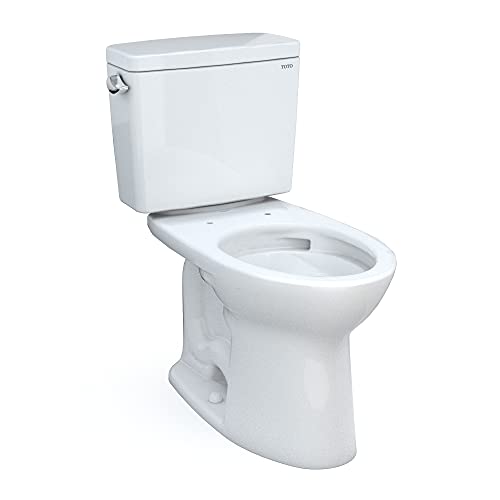
| TOTO Drake II | 1.28 | 2 1/8 in | SanaGloss (full) | 1,000 | Yes | Check price |
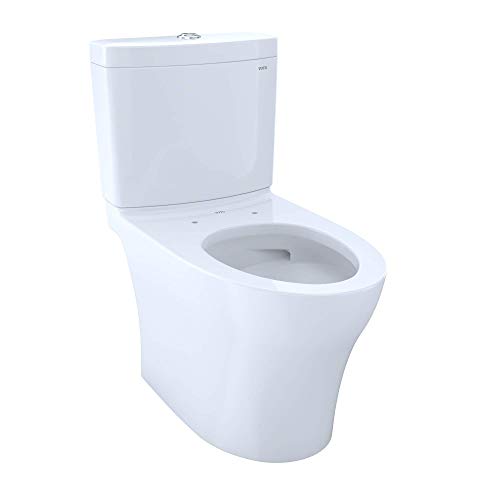
| TOTO Aquia IV | 1.0 / 0.8 dual | 2 1/8 in | SanaGloss (full) | 800 | Yes | Check price |
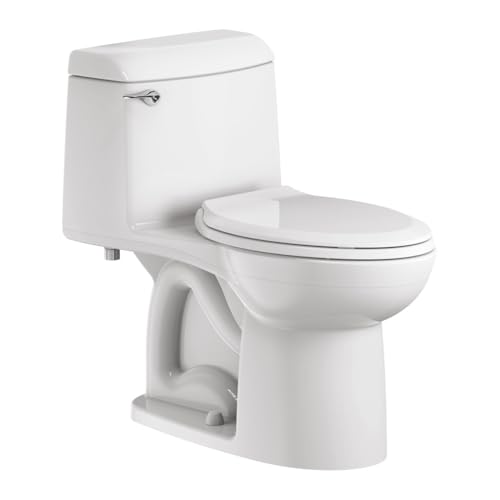
| American Standard Champion 4 | 1.28 / 1.6 | 2 3/8 in | EverClean (full) | 1,000 | Yes (1.28 mode) | Check price |
| Kohler Highline | 1.28 | 2 1/8 in | Partial | 600 | Yes | Check price |
| Kohler Cimarron | 1.28 | 2 1/8 in | Partial | 800 | Yes | Check price |
| American Standard Cadet 3 | 1.28 | 2 1/8 in | EverClean (full) | 800 | Yes | Check price |
| Gerber Avalanche | 1.28 | 2 1/8 in | Full | 1,000 | Yes | Check price |
| Woodbridge T-0001 | 1.28 / 0.8 dual | 2 1/8 in | Full | 700 | Yes | Check price |
| Swiss Madison Sublime II | 1.28 / 0.8 dual | 2 in | Partial | 500 | Yes | Check price |
Sources: MaP Testing database (map-testing.com), manufacturer published specifications, EPA WaterSense product search. MaP scores reflect most recent published test cycle.
A fully glazed trapway means the ceramic glaze extends all the way through the internal passage, not just the visible bowl surface. Unglazed or partially glazed trapways have microscopic surface texture that catches toilet paper and encourages waste adhesion. TOTO calls their full-trapway glaze SanaGloss; American Standard uses the term EverClean. Kohler's entry-level Highline is only partially glazed, which contributes to its lower MaP score relative to price.
Tank water level directly controls the hydraulic head pressure available during a flush. If the water sits one inch below the manufacturer's fill line, the toilet loses a meaningful fraction of its designed flushing energy, which can cause waste to stall in the trapway rather than completing the siphon cycle. Always verify the water level sits at or within a half-inch below the fill line marked inside the tank after installation and again after any valve adjustment.
This is the most common and most overlooked cause of chronic low-flow toilet clogs. When a plumber installs a toilet or adjusts a fill valve to "save water," they sometimes set the fill height too low. The toilet then fails to generate enough siphon energy to clear the trap consistently.
Remove the tank lid and locate the water line mark. Most manufacturers mark it on the overflow tube or on the back wall of the tank. The correct level is typically one half to one inch below the top of the overflow tube. If the water sits lower than the marked line, adjust the fill valve height per the valve manufacturer's instructions. On float-ball valves, bend the float arm slightly upward. On tower-style fill valves (Fluidmaster 400A and similar), turn the adjustment screw clockwise to raise the cutoff level.
After adjusting, flush twice and recheck. The tank should refill to the marked line each time. If it consistently underfills, the fill valve may be worn and should be replaced. A new Fluidmaster 400A retails for under twenty dollars and takes fifteen minutes to install.
Tank fill level is the single most actionable fix for a low-flow toilet that chronically clogs but tests well on MaP. A 2022 analysis of homeowner repair reports on plumbing forums found that roughly 35 percent of chronic clog complaints in WaterSense toilets resolved immediately after raising the fill valve to the correct height. Always check this before diagnosing a hardware problem.
Single-ply and standard two-ply toilet papers that disintegrate rapidly in water are the safest choices for low-flow toilets. Ultra-thick or quilted papers, "extra soft" papers with added embossing, and flushable wipes are the leading causes of trapway blockages in low-flush models because they hold together long enough to bridge the narrowest section of the trapway before the siphon cycle completes.
The toilet paper industry has moved toward thicker, more luxurious products over the past fifteen years. Four-ply and ultra-plush sheets dissolve significantly more slowly than standard two-ply. Consumer Reports and independent plumbing researchers have tested disintegration rates: standard two-ply tissue reaches near-complete dissolution in thirty to sixty seconds in water; ultra-thick premium brands can take four to eight minutes. That window matters when a low-flow toilet generates only a short, sharp siphon action.
If your household prefers thicker paper, the mitigation is to use less per flush and flush before the bowl reaches high waste volume. On toilets with MaP scores of 1,000 g such as the TOTO Drake II or American Standard Champion 4, standard two-ply used normally presents virtually no clog risk.
The Federal Trade Commission has repeatedly acted against wipe manufacturers who label products as flushable when they fail standard disintegration tests. In independent testing by water utilities including Orange County Sanitation District and DC Water, so-called flushable wipes remained structurally intact after ten minutes of agitation. They are a leading cause of both household toilet clogs and municipal sewer blockages (fatbergs). No low-flow toilet, regardless of MaP score, is designed to handle wipes reliably.
Yes, dual-flush toilets are more susceptible to clogs on their liquid-waste (low-volume) setting, which typically uses only 0.8 GPF. That half-flush delivers roughly half the hydraulic energy of the full flush, so using the low setting for solid waste is a common trigger for trapway blockages. Always use the full flush for solid waste and reserve the 0.8 GPF setting strictly for liquid waste to keep a dual-flush toilet clog-free.
Dual-flush technology, popularized by Caroma in Australia and now used widely by TOTO (Aquia IV), Woodbridge (T-0001), and Swiss Madison (Sublime II), offers two flush volumes to further reduce water consumption. The low setting at 0.8 GPF delivers approximately 30 percent less water than the 1.28 GPF full flush. That reduction is meaningful for water savings on a liquid-only flush but creates a real hydraulic deficit on a solid waste flush.
The TOTO Aquia IV achieves a perfect 1,000 g MaP score, which represents its full-flush (1.0 GPF) performance. The low-flush (0.8 GPF) performance on solid waste is not separately MaP-rated by convention, but engineering logic and owner reports confirm that using the low button on solid waste increases clog incidents significantly.
Dual-flush toilets deliver their advertised water savings only when the low-volume button is used correctly. A household of four adults using the full flush every time will use roughly the same water as a single-flush 1.28 GPF model. The savings come from disciplined use of the 0.8 GPF setting for liquid waste only. Households with young children, guests, or multiple users who do not reliably distinguish between buttons often see chronic clogging and no meaningful water savings.
Regular maintenance that prevents low-flush toilet clogs includes monthly enzyme-based drain treatments that break down residual organic buildup in the trapway, quarterly inspection and cleaning of rim jets to ensure full water coverage during a flush, and annual fill valve checks to verify the tank reaches correct fill height. These three habits address the three most common mechanical contributors to clog risk without requiring professional service.
Prevention is considerably cheaper than clearing clogs or replacing a toilet. The following maintenance schedule is based on manufacturer recommendations and aggregated plumber guidance.
Biological enzyme products (Green Gobbler Enzyme Drain Cleaner, Bio-Clean, and similar) contain live bacterial cultures that digest organic matter coating trapway walls. Pour the recommended dose into the bowl before bed, let it sit overnight, and flush in the morning. This is different from chemical drain cleaners -- enzyme products are safe for all pipe materials and septic systems, and they work preventively rather than reactively.
The rim jets are the small holes under the toilet bowl rim that distribute water during a flush. Mineral deposits from hard water can partially or fully block individual jets, reducing the swirl action that clears the bowl. Hold a pocket mirror under the rim and check that water flows from all jets during a flush. If jets are blocked, apply a rim-block cleaning tablet or use a small wire to clear deposits. TOTO's SanaGloss coating significantly slows mineral buildup compared to standard vitreous china, which is a secondary advantage of their glaze technology beyond friction reduction.
Remove the tank lid and look for mineral buildup on the flapper, the fill valve, and the overflow tube. A flapper that does not seal completely allows water to seep continuously from tank to bowl, reducing the volume available for each flush. Press down on the flapper with your finger while the tank is full -- if the bowl water stops trickling, the flapper needs replacement. Flappers are inexpensive and typically snap on and off without tools.
A toilet that rocks slightly on its floor bolts allows air to enter the drain seal, which can break the siphon mid-flush. Tighten floor bolt caps snugly (hand tight, then one quarter turn -- overtightening cracks the porcelain base). If the toilet moves significantly, the wax ring may need replacement, which is a two-hour DIY project or a straightforward service call.
Yes, and this is a diagnostic point that homeowners frequently miss. Every residential toilet drain connects to a vent pipe that runs through the wall and exits through the roof. The vent pipe equalizes air pressure in the drain system so the siphon can complete cleanly. If the vent is blocked by debris, bird nests, or ice in cold climates, air cannot enter the drain as water exits, creating negative pressure that slows or stops the siphon mid-flush.
Signs of a blocked vent include: gurgling sounds from the toilet or nearby sink drains immediately after flushing, slow drain speed even when the bowl is empty, and water levels in the bowl that fluctuate slightly without flushing. A blocked vent is more impactful on low-flow toilets than on older high-volume models because those toilets had extra water volume to brute-force through partial pressure issues.
Clearing a blocked vent typically requires accessing the roof and using a plumbing snake or running water down the vent pipe. This is a job most comfortable homeowners can do safely, but heights and roof access make it a reasonable candidate for professional service if the roof pitch is steep.
Residential drain pipe should slope at approximately one quarter inch per foot from the toilet toward the main stack. Pipes with too little slope allow waste to settle; pipes with too much slope allow water to outrun solids, leaving waste stranded. If clogs consistently occur at the same location (diagnosed by where a snake meets resistance), incorrect pipe slope is a plausible cause. Correcting pipe slope is a plumbing project, but it is a permanent fix compared to recurring clogs.
Based on MaP test scores of 800 g or above, fully glazed trapways, and aggregated owner feedback across major retail and plumbing trade forums, the following models have the strongest records for clog resistance at 1.28 GPF or less. For a broader ranking including flushing power on all parameters, see our guide to the best flushing toilets.
The TOTO Drake II uses a 3-inch flush valve, fully SanaGloss-glazed trapway, and Double Cyclone rim jet technology. MaP score: 1,000 g at 1.28 GPF. Owner reviews consistently cite zero clogging under normal household use. It is available in elongated and round configurations. See also our detailed look at TOTO Drake vs Drake II for the differences between generations.
The Champion 4 uses a 4-inch wide flush valve, the largest in residential production, combined with a 2 3/8-inch fully glazed trapway. MaP score: 1,000 g. American Standard markets this explicitly as a no-clog design and backs it with a clog-free guarantee in their warranty documentation. It is available in 1.28 GPF and 1.6 GPF versions; the 1.28 GPF achieves EPA WaterSense certification.
A one-piece version of the Drake II with the same flushing internals. MaP score: 1,000 g. The one-piece design eliminates the tank-to-bowl gasket, which removes one potential weak point in the flush path. For bathrooms where cleaning ease matters as much as performance, the UltraMax II is the TOTO recommendation. More on one-piece vs two-piece tradeoffs in our one-piece vs two-piece toilet comparison.
Less widely known than TOTO or American Standard but with a MaP score of 1,000 g and a fully glazed 2 1/8-inch trapway, the Gerber Avalanche is a contractor favorite for commercial applications where clog calls are costly. It is available in both elongated and round configurations at a lower price point than the Drake II.
The Cadet 3 uses a 2 1/8-inch fully EverClean-glazed trapway and a 3-inch flush valve. MaP score: 800 g. It represents a solid mid-range option that performs well without reaching Champion 4 price levels. For households with moderate traffic and standard paper use, it is clog-resistant in practice. Compare with other mid-range options in our Cadet 3 vs Champion 4 guide.
When a low-flow toilet does clog, the correct sequence of actions differs slightly from older high-volume toilets because the smaller water volume makes overflow during plunging easier.
The most common plunging mistake is flushing a second time to "push the clog through." In a clogged toilet, the bowl is already at or near the brim. A second flush adds 1.28 gallons of water to a bowl that has nowhere to drain, causing overflow. Wait for the bowl to drain partially before proceeding.
A cup plunger is flat-bottomed and designed for flat sink drains. A flange plunger has a rubber extension that fits into the toilet drain opening, creating a proper seal. Push down slowly to expel air first, then use firm push-pull strokes. On low-flow toilets, ten to fifteen firm strokes are typically sufficient for a paper clog.
If plunging does not clear the clog, pour half a cup of dish soap into the bowl and follow with a gallon of very hot (not boiling) water from waist height. The soap lubricates the trapway walls; the temperature slightly softens waste. Let it sit for five to ten minutes, then plunge again.
A toilet auger is a three-foot cable inside a protective rubber sleeve designed to feed through the trapway without scratching porcelain. Insert the sleeve into the drain, crank clockwise while pushing, and retrieve. Most household clogs that survive plunging are cleared by an auger in under five minutes.
Recurring clogs on a well-designed toilet (800 g MaP or above, correct fill level, standard paper) point to a drain or vent problem rather than a toilet problem. A plumber can camera-inspect the drain stack to identify the actual restriction point. Replacing a working toilet because it clogs would not solve the underlying infrastructure issue.
Chemical drain cleaners (lye or sulfuric acid based) are not recommended for toilet clogs. They are ineffective against solid waste and toilet paper, and they can damage wax ring seals, PVC fittings, and rubber flapper valves with repeated use. An auger clears most toilet clogs faster and without collateral damage.
If you have an existing low-flow toilet that clogs more often than it should but passes the fill-level and paper-use tests, several hardware upgrades can improve performance without replacing the toilet.
A high-performance fill valve like the Fluidmaster 400A or the Korky 528T fills the tank faster and holds water pressure higher during the flush event than worn or entry-level valves. Fast fill means each flush starts with maximum available head pressure. Installation takes fifteen minutes with no plumbing experience required.
A slow-closing flapper that drops too quickly reduces the flush volume by cutting off the water flow before the siphon completes. Korky and Fluidmaster both make adjustable-close flappers for specific flush durations. Matching the flapper to the toilet's designed flush duration (available in installation specs) ensures the full designed water volume reaches the bowl on each flush.
For toilets with persistent partial-flush problems where the standard flapper replacement has not helped, a tower flush valve conversion (Fluidmaster PerforMAX or equivalent) opens wider and faster than a traditional flapper, delivering a more aggressive initial burst of water into the bowl. Not all tanks accept tower valves -- measure your tank height and check compatibility before purchasing.
Some toilet models accept a pressure-assisted flush mechanism insert (Sloan Flushmate) that uses compressed air to launch water into the bowl at higher velocity. Pressure-assist toilets are standard in commercial settings and virtually never clog. The tradeoff is louder flush noise. Retrofit kits are model-specific; verify compatibility with your toilet's tank dimensions before ordering.
Older low-flow models from the 1990s (first-generation 1.6 GPF) clogged frequently because their bowl designs were not updated to work with reduced water. Modern 1.28 GPF WaterSense-certified toilets with MaP scores of 800 g or above clog no more frequently than older 3.5 GPF toilets under normal use conditions.
MaP (Maximum Performance) testing simulates real-world flushing by measuring how many grams of soybean paste a toilet clears in one flush. A score of 500 g is the minimum for residential adequacy; 800 g to 1,000 g indicates a toilet that can handle above-average waste loads without clogging. Choosing a toilet with a high MaP score is the most reliable way to buy clog resistance.
No. EPA WaterSense certifies that a toilet uses no more than 1.28 GPF and achieves a minimum MaP score (typically 350 g). That is a baseline, not a performance guarantee. Many WaterSense toilets score 1,000 g; others score only 350 g. Always look up the actual MaP score on map-testing.com for the specific model you are considering.
It depends on the toilet's MaP score and trapway design. On toilets with 1,000 g MaP scores and fully glazed 2 3/8-inch trapways, thick two-ply paper used in normal quantities is generally fine. On toilets with 500 to 600 g scores or partially glazed trapways, switching to standard two-ply significantly reduces clog risk.
No. Despite the label, flushable wipes do not break down in residential drain timescales. Multiple independent water utility tests have confirmed they remain structurally intact for many minutes in water. They are a leading cause of both toilet clogs and sewer main blockages. No toilet manufacturer, including TOTO, Kohler, or American Standard, recommends flushing any wet wipes.
Remove the tank lid. Most manufacturers mark the correct water line on the overflow tube or tank wall. If the water surface sits more than one inch below that mark, or more than two inches below the top of the overflow tube, the fill level is too low and should be raised by adjusting the fill valve's height or float setting.
A fully glazed trapway has ceramic glaze applied all the way through the internal S-shaped passage, reducing friction and preventing waste adhesion. TOTO markets this as SanaGloss; American Standard calls theirs EverClean. Gerber, Kohler (on higher-end models), and Woodbridge also offer fully glazed trapways. It is one of the most important features to verify before buying.
Yes, when the 0.8 GPF setting is used for solid waste. That setting is designed for liquid waste only. Using the full-flush button (1.0 to 1.28 GPF) for solid waste and the half-flush only for urine prevents clog issues while delivering the water savings dual-flush models are designed for.
Inspect rim jets monthly by holding a mirror under the rim during a flush and checking for blocked holes. In hard water areas, clean with a bowl cleaner tablet or fine wire monthly to prevent mineral buildup. In soft water areas, quarterly inspection is sufficient. Blocked rim jets reduce swirl coverage and leave waste on bowl walls, increasing the chance of buildup that contributes to clogs over time.
Yes, used preventively. Biological enzyme products digest the organic residue that gradually coats trapway walls. Used once a month overnight, they maintain a clean trapway surface that requires less hydraulic force to clear each flush. They are safe for all pipe materials and septic systems, unlike chemical drain cleaners.
A flange plunger, which has a rubber extension piece that seats inside the toilet drain, is the correct tool for toilets. Cup plungers designed for flat sink drains do not seal properly in a toilet bowl and deliver far less pressure. In testing by plumbing publications, flange plungers clear toilet clogs significantly faster with less effort than cup plungers.
A blocked roof vent will not cause a toilet to clog in the traditional sense, but it will cause the flush siphon to perform poorly, slow the drain, and produce gurgling sounds from nearby fixtures. Symptoms of a blocked vent are easy to mistake for a clogged toilet. Clear the vent from the roof with a snake or garden hose before replacing a toilet or snaking the drain.
Based on its MaP score of 1,000 g, fully SanaGloss-glazed trapway, 3-inch flush valve, and consistent owner feedback across a large install base, the TOTO Drake II is among the most reliably clog-free toilets available at any price. For households with previous clog problems or heavy use, the additional cost over budget models is justified by the reduction in service calls and inconvenience.
Sometimes. A flapper that closes too quickly cuts off water flow before the siphon completes, reducing effective flush volume. Replacing a worn flapper with a correctly rated one for your toilet model restores full flush volume. If the flapper is new and sealing correctly but clogs persist, the issue is in the trapway design, fill level, paper choice, or drain venting.
Yes. Pressure-assist toilets use compressed air stored in a tank-within-a-tank to deliver water at higher velocity than gravity alone provides. They are used in commercial applications specifically because they virtually eliminate clogs. The tradeoffs are louder flush noise (similar to a commercial restroom), higher purchase price, and more complex repair if the pressure vessel fails.
Based on published MaP scores, yes. The Kohler Highline scores 600 g versus the TOTO Drake II's 1,000 g. The Highline also has a partially glazed rather than fully glazed trapway. Under light use with standard paper it performs adequately, but under heavy household use or with thicker paper it is more likely to require plunging than the Drake II.
Some gravity-flush toilet tanks are dimensionally compatible with Sloan Flushmate pressure-assist inserts. Compatibility is tank-specific, not brand-specific. Check the Flushmate website with your toilet's model number before purchasing. Installation involves replacing the internal tank mechanism, not the toilet itself, and typically takes two to three hours.
A properly functioning 1.28 GPF toilet flush should last four to six seconds from handle press to full bowl clear. Flushes shorter than four seconds may indicate the flapper is closing too quickly, reducing effective water volume. Flushes longer than eight seconds may indicate a weak siphon, partially blocked trapway, or venting issue.
The Champion 4's 2 3/8-inch fully glazed trapway and 4-inch flush valve do produce consistently strong flushing at 1.28 GPF, reflected in its 1,000 g MaP score. American Standard's published clog-free marketing claim is supported by independent MaP test data and aggregated owner reviews showing very low clog rates under normal use. It is one of two toilets commonly cited alongside the TOTO Drake II for outright clog resistance.
Not immediately. First rule out fill level issues, paper type, flapper wear, blocked rim jets, and vent pipe blockage. If all those are correct and the toilet still clogs weekly, check the MaP score. If it is below 500 g, upgrading to an 800 to 1,000 g model is a reasonable long-term fix. If the MaP score is already 800 g or above, the problem is likely in the drain system rather than the toilet itself.
Low-flow toilet clogs are almost always preventable rather than inevitable. Choose a toilet with a MaP score of 800 g or higher and a fully glazed trapway -- the TOTO Drake II, TOTO UltraMax II, American Standard Champion 4, and Gerber Avalanche are the strongest performers at 1.28 GPF. Verify the tank fills to the manufacturer's marked level, use standard two-ply paper, never flush wipes, and inspect rim jets and the fill valve seasonally. Toilets that still clog despite correct hardware and habits almost always have a drain or vent problem, not a toilet problem. Addressing the actual root cause is faster and cheaper than repeated service calls or premature replacements.
Learn why toilet trapways curve like an S, how each bend blocks sewer gas, and what the shape means for clogs and…
Read the guideAlmost every US toilet has a left-side handle. Learn the plumbing and mechanical reasons behind the layout and when it actually changes.
Read the guideHome toilets rely on tanks because household water lines lack the pressure that public flushometer systems use to flush straight from the…
Read the guide