Toilet odor is almost always fixable without a plumber and often without new products. The problem is that most people clean the wrong places. This guide identifies the four real odor sources, walks through the exact cleaning steps for each, covers the design features that make a toilet resist smell by design, and gives you a maintenance plan so the fix holds.
Quick Answer
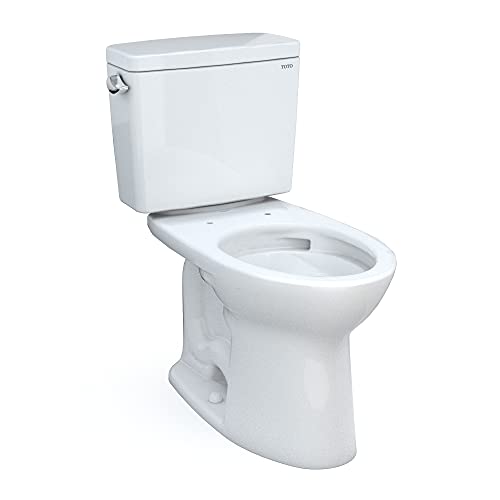
Scrub firmly up under the rim and clear each rim-jet hole, because biofilm hiding in those spots causes most toilet odor that survives a normal clean. Pour white vinegar down the overflow tube to flush the hidden rinse channel, then check the trap seal for sewer-gas smell and the seat hinges for urine residue. A TOTO Drake with its glazed CeFiONtect trapway and 1,000 gram MaP flush is the fixture upgrade when an old or rough-glazed bowl keeps fueling the problem.
A toilet that smells is one of the most common bathroom complaints, and the fix is almost always an afternoon of focused cleaning rather than a plumber or a new fixture. The reason most attempts fail is that people clean what they can see while the real biofilm hides in the jet holes under the rim, in the overflow tube and rinse channel, and in the siphon jet at the bottom of the bowl. These spots sit in warm, damp darkness every hour of the day, and they grow a persistent film of bacteria that releases odor no matter how often you wipe the visible bowl.
Beyond biofilm, three other causes account for nearly all toilet odors: sewer gas leaking past a broken seal, urine residue soaked into the floor and seat hinges, and mineral scale that creates rough surfaces where bacteria grip. Each cause has a different tell and a different fix, and spending five minutes on the right diagnosis avoids hours of scrubbing the wrong thing. This guide works the four causes in order from the most common to the least, gives you the step-by-step fix for each, and identifies the toilet design features that make the problem less likely to return. For a cross-brand look at the best flushing toilets overall, the pillar guide goes wider. This page has one job: explain how to get rid of toilet smell and keep it gone.
Odor Source
Smell Type
Tell-Tale Sign
Primary Fix
DIY?
How Common
Biofilm under rim and jets
Musty, stale, sour
Smell returns right after cleaning
Scrub rim, clear jet holes, vinegar in overflow tube
Yes
Very common
Tank and overflow growth
Musty odor from tank
Mildew odor when lid is lifted
Clean tank interior, vinegar down overflow tube
Yes
Common
Dried or siphoned trap seal
Rotten egg, septic
Sharp odor, rarely used toilet
Flush or pour water to refill trap
Yes
Common
Failed wax ring at base
Sewer gas, worse after flush
Rocking bowl, damp stained floor
Reseat toilet with new wax ring
Partly
Moderate
Urine residue on surfaces
Faint ammonia, urine
Odor near base and seat hinges
Disinfect floor, base, hinge caps
Yes
Common
Why does my toilet still smell after I clean it?
A toilet that smells right after cleaning almost always has biofilm hiding in spots a normal clean never reaches: up under the rim, inside the rim jet holes and in the siphon jet at the bottom of the bowl. These areas stay warm and damp every hour of the day, making them ideal for bacterial growth. Scrubbing firmly under the rim with a stiff brush, clearing each jet hole with a wire or toothbrush, and pouring white vinegar down the overflow tube removes the hidden biofilm that is the true source of most persistent toilet odor.
The mechanics of why this happens are straightforward. The underside of the toilet rim has a ring of small holes, the rim jets, that channel flush water around the bowl on every flush. Between flushes they stay dark, wet and warm, which is a perfect environment for Serratia marcescens, Pseudomonas aeruginosa and other bacteria that produce musty, sour or sewage-like volatile compounds. Because the jets are tucked under a ledge you cannot see without a mirror, even conscientious cleaners almost never reach them. The biofilm builds up flush after flush, releasing odor continuously, and a quick wipe of the visible bowl does nothing to the source.
The fix matches the cause: get behind the rim with a stiff brush, clear each jet hole mechanically, and use a cleaner or vinegar with enough dwell time to break down the film rather than just spreading it. A mirror held under the rim with a flashlight will show a dark, slimy ring and crusty scale around the holes on almost every toilet that smells. Five minutes here ends the problem for most households.
Use a mirror to find what your cleaning is missing. Hold a small mirror under the rim and shine a flashlight on the jet holes. The slime ring and mineral scale you see is the odor source most cleaners never reach. The OXO Good Grips Toilet Brush has a curved head designed to reach up under the rim, and the best toilet brushes of 2026 guide compares the reach, bristle density and handle designs that make this job practical.
What causes a sewer smell from a toilet?
A rotten-egg or septic sewer smell from a toilet means sewer gas is bypassing a broken seal, not that the bowl is dirty. The three most common causes are a dried trap on a rarely used toilet, a failed wax ring where the toilet meets the floor, and a blocked plumbing vent that siphons the trap water out. Flushing or pouring water into the bowl refills a dried trap immediately. A persistent sewer smell that returns within a day or two after refilling points to the wax ring or vent rather than a cleaning problem.
The physics behind a trap seal is simple but important. The standing water in the bowl and the curved trapway behind it forms a water plug that physically blocks sewer gas from rising up the drain pipe into the room. Every flush refreshes that plug, so on a regularly used toilet the seal is essentially permanent. On a guest bathroom, basement toilet or vacation home fixture that sits unused for a week or more, the bowl water slowly evaporates until the seal level drops below the trap weir and sewer gas can pass freely. The first fix is always free: flush the toilet, or pour a half-gallon of water slowly into the bowl so it settles into the trapway without splashing out, then leave the room for ten minutes and re-assess the smell.
If the sewer smell comes back within a day or two after the trap is refilled, or if it is concentrated at floor level and is clearly worse right after a flush, the wax ring has likely failed. The wax ring is a thick, doughnut-shaped gasket between the toilet base and the floor flange that compresses when the toilet is bolted down to create an airtight seal. Over years it can harden, crack or shift, especially if the toilet rocks on an uneven floor or the closet bolts have loosened. Press on the bowl to check for movement, and inspect the floor around the base for discoloration, moisture or a soft spot. A rocking toilet with a sewer smell needs the toilet removed and a new wax ring set before the smell will clear.
Editorial Take
The diagnostic split between a cleaning problem and a plumbing problem is the one question that determines everything else. A musty, stale or urine odor is almost always cleaning, specifically the rim, jets and surrounding surfaces. A sharp rotten-egg smell is almost always sewer gas, meaning a broken seal that scrubbing cannot fix. The test is fast: refill the trap, leave the room, come back in ten minutes. If the sharp smell is gone, you had a dry trap. If it comes back in a day, suspect the wax ring. Do the diagnosis before reaching for any product.
What is the best home remedy to get rid of toilet smell fast?
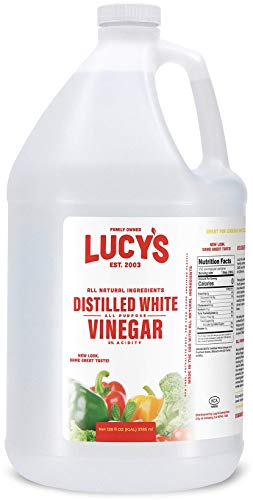
White vinegar is the most effective and widely available home remedy for toilet smell. Pour a cup of vinegar down the overflow tube in the tank and let it sit while you scrub the bowl and under the rim with a stiff brush, then flush. Vinegar is mildly acidic enough to dissolve mineral scale that roughens the porcelain surface, and it disrupts the biofilm bacteria need to colonize. Baking soda adds mechanical abrasion under the rim when scrubbed in as a paste, and the combination of the two clears the most common odor sources without any harsh chemicals.
The overflow tube is the key delivery mechanism most home remedies ignore. It is the vertical standpipe in the center of the tank whose top rim caps the maximum water level and whose body feeds water to the bowl rim on every flush. Pouring vinegar down it puts the cleaner directly into the hidden rinse channel and the jet holes from the inside out, treating a path a bowl brush cannot physically reach. Let it sit for five to ten minutes so the acid has time to dissolve scale at the jet openings, then flush to rinse it through. This single step treats the number-one odor source from a direction your brush never approaches.
For a more aggressive treatment on a bowl that has not been deep-cleaned in months, apply a clinging toilet bowl cleaner under the rim first, let it dwell the full label time while you clean the outside surfaces and tank, then scrub the rim and jets thoroughly before flushing. The right product depends on the stain type behind the buildup. Our guide to the best toilet bowl cleaners of 2026 ranks the formulas that cut biofilm and mineral scale fastest without damaging porcelain or septic systems.
What toilet design best prevents odor?
The best odor-resistant toilet combines three features: a glazed, fully enclosed trapway that leaves fewer rough surfaces for biofilm and scale to colonize; a strong, complete flush with a MaP score of at least 800 grams that clears the bowl every time; and a deep water seal that maintains the gas barrier and resists the staining ring at the waterline. TOTO's CeFiONtect ion-barrier glaze on the Drake and Drake II is the benchmark for smooth trapway surfaces, while the Kohler Cimarron's canister flush valve and the American Standard Champion 4's wide 4-inch flush valve deliver the complete rinse that keeps a bowl cleaner between scrubs.
MaP, the Maximum Performance flush test, measures the grams of solid waste a toilet clears in a single flush. The threshold for EPA WaterSense certification is 350 grams, but 600 grams suits most homes, 800 grams is strong, and 1,000 grams is the practical ceiling that the best-performing models achieve. A toilet that regularly leaves residue in the bowl because its flush is weak or incomplete is a toilet that breeds odor faster, regardless of how good the glaze is. A 1,000 gram MaP score paired with a glazed enclosed trapway is the combination that does the most to keep a bowl fresh between cleanings.
Trapway design matters separately. An exposed trapway, the S-curve of porcelain visible at the back of a traditional two-piece toilet, has unglazed or rough-glazed exterior surfaces where mineral deposits and residue collect. A fully skirted or enclosed trapway, where the base covers the trapway in a smooth, continuous panel, eliminates those rough exterior surfaces and also simplifies the cleaning pass because there are no ledges or curves to work around. The TOTO Drake II, the Woodbridge T-0001, the Swiss Madison St. Tropez and the Gerber Viper all use enclosed or skirted designs that directly reduce the surface area where odor-causing buildup clings.
Top recommendations
Three toilets that stay fresh between cleanings
If an old, rough-glazed or heavily scaled fixture is the weak link in your odor control, these three models combine the glazed enclosed trapway, strong MaP flush and deep water seal that make a toilet genuinely easier to keep fresh.
Best Overall
TOTO Drake (Two-Piece)
Everyday clean-flushing default
4.8
A CeFiONtect ion-barrier glaze on the trapway, a 1,000 gram MaP flush at 1.28 GPF and a deep elongated water seal keep the bowl clean and the gas barrier intact, with decades of parts availability and verified EPA WaterSense certification.
A fully skirted base removes all the exposed trapway curves where residue collects, and the Tornado dual-nozzle wash rinses the entire bowl wall in a single swirl, leaving fewer rough spots for the biofilm that breeds smell.
A canister flush valve opens 90 percent of the flush-valve seat to release the full tank in one clean rinse, preventing the partial-flush residue that feeds odor, and a comfort-height elongated bowl holds a generous water seal.
Which cleaning products work best for toilet smell?
White vinegar is the most versatile product for toilet smell because it dissolves the mineral scale that roughens surfaces for biofilm while also disrupting bacteria, and it is safe for porcelain, rubber seals and septic systems. A clinging toilet bowl cleaner gel applied under the rim and left to dwell five to ten minutes removes the organic biofilm that causes most musty odors. For a urine smell on surrounding surfaces, a disinfecting cleaner or bathroom spray neutralizes ammonia rather than masking it. An enzyme cleaner is the strongest option for heavy urine odor soaked into grout or the floor around the base.
The product selection question is really a stain-type question. Organic biofilm, the musty film in the rim jets and on the bowl walls, responds to bleach-based or disinfecting gels that kill bacteria and whiten the residue. Mineral scale, the chalky or orange-brown deposits in the jets and at the waterline, needs an acid cleaner because bleach cannot dissolve a calcium or iron deposit. A urine odor on porous surfaces like grout needs an enzyme cleaner that breaks down the uric acid crystals that bleach and ammonia leave behind. Getting the chemistry right matters more than scrubbing harder. For a ranked comparison of the formulas that work on each stain type, our guide to the best bathroom cleaners of 2026 covers the full category with active-ingredient analysis.
Editorial Take
Most households need at most three products for toilet odor: a clinging bowl gel with enough dwell time to break down biofilm under the rim, white vinegar poured down the overflow tube to reach the hidden rinse channel, and a disinfecting surface spray for the seat, base and floor. An acid cleaner like Lime-A-Way belongs in the cabinet only if you have hard water that leaves mineral rings, and an enzyme cleaner is the right choice only for heavy urine odor in grout or at the floor base. Reach for more products only when the simpler three have not worked.
Step-by-step: how to get rid of toilet smell for good
Work through these steps in order. Each takes five to fifteen minutes, and most households find the odor is gone after the first two steps. Stopping at the step that clears the smell saves effort; no household will need all six.
Step 1. Deep clean under the rim and clear the jet holes
Apply a clinging toilet bowl cleaner or a thick paste of baking soda under the rim and let it sit at least five minutes, ideally ten. While it dwells, hold a mirror under the rim with a flashlight to locate each jet hole and the biofilm ring around them. Use a stiff-bristled toilet brush to scrub firmly up under the rim all the way around the bowl, then a thin wire, an old toothbrush or a dental pick to clear each jet hole of the crusty scale blocking it. Scrub the siphon jet at the bottom front of the bowl. Flush while the brush is still in the bowl to rinse it clean. This single step ends the smell for most toilets because it removes the hidden source most cleanings leave untouched. A brush designed to reach under the rim matters here; the best toilet brushes of 2026 guide identifies the curved-head designs that make this practical.
Step 2. Treat the tank and overflow tube
Lift the tank lid and look at the interior walls, the underside of the lid and the flush-valve assembly. Black, pink or orange streaks mean mold, Serratia bacteria or mineral deposits growing in the tank, and each flush carries some of that growth into the bowl, seeding the odor downstream. Shut off the water supply at the wall valve, flush to empty the tank, and scrub the interior with a brush and a solution of one cup of white vinegar in a gallon of water, avoiding harsh chemicals around the rubber flapper and gaskets. Refill and flush twice to clear residue. Before the second flush, pour one cup of undiluted white vinegar down the overflow tube, the vertical standpipe at the center of the tank, and let it sit for five minutes before flushing. This runs the vinegar through the hidden rim-rinse channel and out through the jet holes, treating the path your bowl brush cannot enter from below.
Step 3. Restore the trap seal if the smell is sewer gas
If the odor is a sharp rotten-egg or sulfur smell rather than a stale or musty one, the cause is sewer gas rather than biofilm, and cleaning will not fix it. Flush the toilet or slowly pour a half-gallon of water into the bowl to refill the trap, then leave the room and re-smell after ten to fifteen minutes. On a rarely used toilet, this often clears the smell entirely because the cause was simple evaporation of the trap water over days or weeks. Keep a note of when you refilled it, and if the sewer smell returns within a day or two, the wax ring or the plumbing vent is the next suspect. Adding a tablespoon of mineral oil to the bowl of a rarely used toilet after refilling slows re-evaporation significantly by floating a film over the water surface.
Step 4. Inspect the wax ring and base seal
Press gently on the sides of the bowl and see if it rocks at all. Any movement means the toilet is not sitting flat on the floor flange, which breaks the wax seal between the toilet horn and the drain pipe and lets sewer gas escape. Look at the floor around the base for discoloration, a soft spot, moisture or lifting of the flooring material, all of which indicate a slow water leak alongside the gas. A sewer smell that is noticeably worse immediately after flushing points at the wax ring because the flush briefly pressurizes the system and pushes gas out through whatever path is available. Reseating the toilet with a new wax ring is an inexpensive job when the flange is sound: shut off the water, sponge the tank dry, disconnect the supply line, unbolt the toilet from the floor, rock it free, scrape the old wax off both the horn and the flange, press a new ring onto the flange (or horn), lower the toilet straight down and snug the bolts evenly front-to-back alternating sides until the bowl sits flat.
Step 5. Disinfect the seat hinges, base and floor
Urine splash and flush aerosol land on the floor around the base, the back of the bowl, and the wall behind the toilet on every use. The seat hinge caps are a particularly concentrated source: urine and residue collects under and inside them where it never gets wiped, and the smell seems to come from nowhere because the bowl itself looks clean. Spray a disinfecting bathroom cleaner on all exterior surfaces of the toilet, including the base where it meets the floor. Remove or flip the seat to expose the hinge area and clean it thoroughly. Re-caulk the base bead if it has darkened, cracked or pulled away from the floor, because residue soaks into and under a failing caulk bead and holds odor indefinitely. This step clears the most common explanation for a faint but persistent urine smell with an otherwise clean-looking toilet.
Step 6. Maintain to keep the smell gone
The under-rim jets and siphon jet need attention on a schedule rather than only when a smell returns. For a typically used bathroom, a thorough rim and jet scrub every two to four weeks prevents buildup from reaching the odor threshold. In a hard-water home, periodic descaling with vinegar or an acid cleaner keeps the jet holes open and removes the mineral roughness that amplifies biofilm growth. Flush or add water to any rarely used toilet at least once a week to maintain the trap seal, or add mineral oil after each refill. Keep the base caulk bead intact and the closet bolts snug so the wax ring seal holds. A toilet maintained this way should not produce noticeable odor between deep cleans. For the drain-side treatment of a slow-emptying bowl that holds waste longer and breeds more odor, the best drain cleaners of 2026 guide covers the enzyme and chemical options that clear organic buildup in the drain line without harming the wax ring or the porcelain.
Editorial Take
The entire six-step sequence sounds like a lot, but in practice most households clear the smell in steps one and two. Scrubbing under the rim and clearing the jets, then pouring vinegar down the overflow tube, removes the source behind 70 to 80 percent of persistent toilet odors. Steps three through five matter when the smell is clearly sewer gas or urine on surrounding surfaces rather than biofilm. Step six is what keeps any of the fixes permanent. Diagnose the smell type first, apply the matching step, and you will spend about ten minutes rather than all afternoon.
How do you stop a toilet from smelling like urine?
A urine smell that persists despite a clean bowl almost always comes from residue on the surfaces around the toilet rather than the bowl itself. Urine splash and toilet aerosol settle on the floor at the base, the back of the bowl, the wall behind the toilet and inside the seat hinge caps, where they dry into uric acid crystals that keep releasing ammonia. Disinfecting those surfaces with a bathroom spray or enzyme cleaner, removing the seat to reach the hinge area, and re-caulking the base bead if it has absorbed residue clears the source. An enzyme cleaner is the strongest option for odor already soaked into grout or a floor gap around the base.
The seat hinges are the single most overlooked spot in this category. Most seat designs have plastic hinge caps that snap over the bolt area, creating a small enclosed space at the back of the bowl. Drips and splash land on the rim near the hinges, run under the caps and collect inside them where they are protected from any wiping. After weeks of buildup the residue off-gases continuously and the smell seems to float from nowhere near the toilet rather than the toilet itself. Many modern seats, including models from American Standard and Kohler, have a quick-release button or lever that lets you unclip the seat entirely from the bowl in seconds for cleaning. Remove it, clean the hinge area and the bowl surface underneath, wipe the hinge fittings themselves, then re-clip. This takes three minutes and removes a source that can persist for months.
Does a new toilet help with smell?
Replacing the toilet is the right call only after confirming that cleaning and sealing issues are not the actual cause. An old bowl with rough, pitted or degraded glaze does hold more biofilm than a smooth modern surface and can be the genuine bottleneck when every other fix has been tried. The design features to look for are a fully glazed enclosed trapway, a 1,000 gram MaP flush to ensure complete bowl clearing every time, a deep water surface that maintains the gas barrier and resists the staining ring at the waterline, and a skirted or smooth exterior that eliminates the ledges and curves where residue accumulates on exposed trapway designs.
TOTO leads the field on glazed trapways with CeFiONtect, an ion-barrier glaze applied to the entire water path including the trapway interior, reducing the surface energy so waste and biofilm find far less to grip. The TOTO UltraMax II and Aquia IV apply the same glaze at 1.28 GPF and 1.0/0.8 GPF dual-flush respectively, both EPA WaterSense certified. Kohler addresses the flush-completeness side with the canister valve used in the Cimarron, Highline and Santa Rosa: it opens 90 percent of the full valve seat instead of the 30 to 60 percent a typical flapper opens, releasing a more complete flush that leaves less residue in the bowl. American Standard counters with the wide 4-inch flush valve in the Champion 4, which moves a higher water volume per flush than most standard 2-inch or 3-inch designs. Woodbridge, Swiss Madison and Gerber bring fully skirted bases at lower price points, with the Woodbridge T-0001, the Swiss Madison St. Tropez and the Gerber Viper and Avalanche all offering the smooth exterior that simplifies cleaning and reduces the horizontal surfaces where residue builds up. If the goal is a bowl that stays fresh between cleanings, any of those model families is a meaningful upgrade over a rough-glazed 15-year-old standard design.
Manufacturer published specifications (TOTO, Kohler, American Standard)
FAQ
Toilet smell questions answered
? Why does my toilet smell even right after I clean it?
Biofilm hiding under the rim and in the rim jet holes is the most common cause. These spots stay warm and damp between cleanings, allowing bacteria to grow continuously while the visible bowl looks spotless. Scrub firmly up under the rim with a stiff brush, clear each jet hole with a wire or toothbrush, and pour vinegar down the overflow tube. That combination reaches the actual source most cleaning routines skip entirely.
? What is the best home remedy for toilet smell?
White vinegar is the most effective single home remedy. Pour a cup down the overflow tube in the tank, then scrub under the rim and flush. Vinegar dissolves mineral scale that roughens the porcelain for bacterial colonization, and the overflow tube delivery route reaches the hidden rim-rinse channel from the inside out. Baking soda applied under the rim adds abrasive scrub power when worked in as a paste before scrubbing and flushing.
? Why does my toilet smell like rotten eggs?
A rotten-egg smell is sewer gas, not dirt, and scrubbing will not fix it. The three likely causes are a dried trap on a rarely used toilet, a failed wax ring at the base, or a blocked plumbing vent that siphons the trap water down. Start by flushing or pouring water into the bowl to refill the trap. If the sharp smell returns within a day or two, the wax ring or vent is the next thing to check.
? How do I clean under the toilet rim?
Hold a mirror under the rim with a flashlight to locate the row of jet holes and the biofilm ring that forms around them. Apply a clinging cleaner or thick baking-soda paste and let it sit for five to ten minutes. Then work a stiff curved-head toilet brush firmly up under the rim all the way around, and clear each jet hole individually with a wire, old toothbrush or dental pick. Scrub the siphon jet at the bottom of the bowl as well, then flush while the brush is still in the bowl to rinse it clean.
? Can the toilet tank cause a bad smell?
Yes. The tank holds standing water in a dark, humid space where mold, mildew and bacteria grow on the walls, flush valve and the underside of the lid. Each flush carries some of that growth into the bowl. A musty smell when you lift the tank lid, or black, pink or rust-colored streaks on the interior walls, are the tells. Empty and scrub the tank with vinegar or diluted bleach, then pour vinegar down the overflow tube before refilling to treat the rinse channel.
? How do I stop a toilet from smelling like urine?
A persistent urine smell with a clean bowl usually comes from residue soaked into the surfaces around the toilet rather than the bowl. Wipe the floor at the base, the back of the bowl and especially inside the seat hinge caps with a disinfecting cleaner. Remove or flip the seat to reach the hinge area properly, and re-caulk the base bead if it has absorbed residue. For odor already soaked into grout, use an enzyme cleaner that breaks down uric acid crystals rather than just masking them.
? Does pouring vinegar down the overflow tube actually help?
Yes, and it is one of the most underused odor fixes. The overflow tube feeds the hidden rim-rinse channel that carries water to the jet holes on every flush, so pouring vinegar down it runs the cleaner through that path from the inside out. A bowl brush cannot reach the interior of the rinse channel from the bowl side. Let the vinegar sit for five to ten minutes, then flush to carry it through the jets. This treats the prime odor source from a direction you cannot reach any other way.
? Can bleach get rid of toilet smell for good?
Bleach disinfects and removes organic biofilm effectively, so it helps with the most common type of toilet odor. However it will not dissolve mineral scale, which roughens the jet holes and amplifies bacterial growth, and it can degrade rubber gaskets and the flapper if used heavily in the tank. For the fastest and safest odor fix, use a clinging bleach or disinfecting gel under the rim, let it dwell, scrub, and add vinegar for the mineral side. Never mix bleach with any acid cleaner.
? Why does my toilet smell worse in the morning?
A smell that is strongest in the morning, before the toilet has been used, usually means either a barely sufficient trap seal that lets small amounts of sewer gas seep in overnight, or that the rim jets and bowl have had hours to off-gas biofilm undisturbed by flushing. On a rarely used toilet it can also mean the trap water level is just at the threshold of the weir. Refilling the trap and deep-cleaning the rim and jets addresses both scenarios.
? How often should I deep clean a toilet to prevent smell?
A thorough under-rim and jet scrub every two to four weeks prevents biofilm from reaching the odor threshold in a typical bathroom. A quick surface clean of the visible bowl and surrounding surfaces can be weekly or more. In a hard-water home or a heavily used bathroom, lean toward the shorter interval since scale and biofilm rebuild faster. The tank and overflow tube need attention every one to two months to keep growth from accumulating and seeding the bowl.
? Can hard water make a toilet smell worse?
Indirectly, yes. Hard water leaves calcium and lime deposits in the rim jet holes, the siphon jet and the trapway, and that rough, porous mineral surface gives bacteria far more surface area to colonize than smooth glazed porcelain. The biofilm that grows on the scale produces the same musty or sewage-like odor as biofilm on any surface, but the scale underneath makes it much harder to clean completely. Regular descaling with vinegar or a commercial acid cleaner, and choosing a toilet with a glazed enclosed trapway, directly addresses this mechanism.
? Why does my toilet smell only when I flush it?
A smell that appears specifically right after flushing usually points to a failed wax ring or a blocked plumbing vent. Flushing briefly increases pressure in the drain system and pushes sewer gas out through the weakest seal, most often the wax ring gasket at the base. Check whether the toilet rocks, and look for moisture or staining at the floor around the base. A rocking toilet with a flush-triggered sewer smell is a strong indicator that the toilet needs to be reseated with a new wax ring.
? Are toilet tank tablets a good idea for odor control?
Bleach-based in-tank tablets are often counterproductive: they sit in the tank water and slowly concentrate, degrading the rubber flapper and gaskets over time, which eventually creates leaks and a different set of problems. Baking soda or enzyme-based drop-in products are gentler and help maintain freshness between deep cleans. None of these replace scrubbing the rim and jets where biofilm grows. Use a drop-in product as a maintenance aid between proper cleanings, not as a substitute for them.
? Can a clog or slow drain cause toilet smell?
Yes. Waste trapped in a partial clog or sitting longer in a slow-draining trapway decomposes and releases odor. A partial clog also disturbs the drainage pattern that refreshes the trap seal, which can allow gas to drift upward between flushes. Clearing the blockage usually clears the associated smell. For buildup in the drain line beyond the trap, our guide to the best drain cleaners of 2026 covers the enzyme and chemical options safe for porcelain and wax rings.
? Will an air freshener fix a smelly toilet?
No. An air freshener masks the smell while the source keeps producing it, which means you will need the air freshener permanently rather than fixing the problem once. Worse, it can mask a slow sewer-gas leak or a wax-ring failure that should be addressed. Diagnose which of the four causes applies, apply the matching fix, and a toilet that has been properly cleaned and sealed needs no ongoing air freshener to stay acceptable.
? What is CeFiONtect and does it help with toilet odor?
CeFiONtect is TOTO's proprietary ion-barrier glaze applied to the entire water path, including the interior of the trapway. The glaze has lower surface energy than standard porcelain, which means waste, biofilm and the scale that hosts biofilm are all less likely to adhere. The practical effect is that a CeFiONtect-glazed toilet stays cleaner between scrubs, requires less force to clean what does adhere, and hosts less biofilm overall, which directly reduces the persistent odor that biofilm produces. It is one of the most substantive single design differences between a TOTO fixture and a standard glazed trapway.
? Does replacing the toilet seat help with toilet smell?
Sometimes, if the existing seat has cracked, yellowed or degraded hinges where residue has become impossible to remove. A cracked seat can harbor bacteria in the crack that no cleaning reaches. A modern seat with a quick-release hinge makes the deep-cleaning task far easier, which helps prevent the hinge-area odor from accumulating. If the seat itself is intact, removing and cleaning it thoroughly is usually enough without replacing it.
? How do I keep a toilet from smelling when it is not used often?
The main risk is trap evaporation. Flush the toilet at least once a week to refill the seal, or pour a half-gallon of water into the bowl if you are not running the water regularly. Adding a tablespoon of mineral oil after refilling floats a film over the trap water that dramatically slows evaporation between visits. Keeping the toilet lid closed when not in use also slows evaporation slightly and prevents dust and debris from entering the bowl.
? Should I replace my toilet if it keeps smelling despite cleaning?
Only after ruling out cleaning and seal issues as the cause, which covers the vast majority of cases. A toilet that still smells after deep cleaning the rim and jets, treating the tank, restoring the trap, checking the wax ring and disinfecting the surrounding surfaces may genuinely have a rough or pitted glaze that holds biofilm beyond cleaning. In that case, a modern fixture with a glazed enclosed trapway, a strong MaP score and a deep water seal is the durable fix. The TOTO Drake, Drake II or Kohler Cimarron are the starting points for that conversation.
? What does it mean if my toilet smells like ammonia?
Ammonia is the primary volatile compound in urine, and an ammonia smell from the toilet area almost always means urine residue on surfaces around the toilet rather than inside the bowl. The most concentrated deposits are usually under the seat hinge caps, on the floor at the base and in the grout lines or caulk bead around the base. A disinfecting bathroom cleaner neutralizes mild residue, while an enzyme cleaner is the stronger choice for residue soaked into porous surfaces like grout. The bowl and trap are almost never the source of a pure ammonia smell.
Our Verdict
Most toilet smell is biofilm hidden under the rim and in the jet holes, and the fix is a stiff brush, five minutes of dwell time from a clinging cleaner, and white vinegar poured down the overflow tube to reach the hidden rinse channel. A sharp rotten-egg smell is sewer gas from a dried trap or failed wax ring, not a cleaning problem. A faint urine smell with a clean bowl is residue in the seat hinges, the floor and the caulk bead around the base. When an old or heavily scaled toilet is the genuine bottleneck, the TOTO Drake with its CeFiONtect glaze and 1,000 gram MaP flush is the durable upgrade, with the fully skirted Drake II for the easiest cleaning and the Kohler Cimarron as a strong value alternative. Diagnose the smell type first, apply the matching fix, and almost every household clears the odor in an afternoon.
Derek researches plumbing specifications, installation requirements and parts availability, cross-checking manufacturer claims against owner-reported reliability. Rankings are based on documented data and real owner reports, never paid placement.
Updated August 2026 · Cleaning & Maintenance
Keep reading
Related guides
How Often Should You Clean a Toilet?
Cleaning & Maintenance
4.6
Clean a toilet fully once a week, wipe the handle and seat with a disinfecting cloth two to three times between weekly…