

Why Toilet Trapways Are Curved Like an S
Toilets4.6
Learn why toilet trapways curve like an S, how each bend blocks sewer gas, and what the shape means for clogs and…
Read the guideMore water per flush does not equal a stronger flush. Here is why toilet engineering -- not gallon count -- decides whether waste clears on the first try, every time.
Flush power is determined by bowl geometry, trapway diameter, and rim delivery -- not GPF alone. A well-engineered 1.28 GPF toilet routinely outperforms a poorly designed 1.6 GPF model on the standardized MaP flush test, proving that engineering beats volume every time.
The spec sheet at any plumbing showroom will tell you gallons per flush. Walk out thinking more gallons equals more power and you will likely be disappointed. Flush volume and flush power are related -- but not the same thing, and conflating them is one of the most common mistakes homeowners make when shopping for a toilet.
The US federal standard caps residential toilets at 1.6 GPF. EPA WaterSense-certified models use no more than 1.28 GPF. Yet MaP (Maximum Performance) testing routinely shows 1.28 GPF toilets beating 1.6 GPF competitors at clearing solid waste -- the score gap can be enormous, with some 1.6 GPF toilets scoring 500 grams while some 1.28 GPF models hit 1,000 grams consistently. This guide explains why, which engineering factors actually drive flushing power, and which models from TOTO, Kohler, American Standard, Gerber, Woodbridge, and Swiss Madison deliver the best performance at every GPF level. If you are researching the best flushing toilets, this distinction is the foundation of a smart decision.
Flush volume is the quantity of water released per cycle, measured in gallons per flush (GPF). Flush power is the ability of that water to move waste through the trapway and into the drain -- a function of hydraulic pressure, bowl shape, trapway diameter, and flush valve design, not volume alone. A toilet can use less water and deliver more cleaning force if its engineering converts water energy into momentum more efficiently.
Think of it like a garden hose. A large-diameter hose running at low pressure releases a lot of water but may not have the force to spray across a yard. A narrow nozzle on the same hose concentrates flow and shoots it much farther. Toilet engineers use a similar principle: rim jets, siphon jets, and tower valves all channel water differently to maximize the energy transfer from tank to bowl.
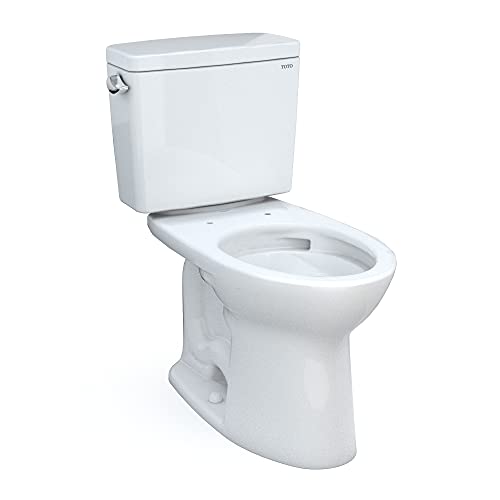
Two toilets using identical GPF can produce wildly different results. TOTO's 1.28 GPF Drake II uses a Double Cyclone system with two directed nozzle streams. American Standard's 1.6 GPF Champion 4 uses a 4-inch flush valve with a wide glazed trapway. Both achieve 1,000 grams on MaP -- through entirely different mechanical strategies, not by dumping more water.
Plumbing engineers refer to the concept of "hydraulic head" -- the pressure created by the height difference between tank water level and the outlet. Taller tanks inherently build more head pressure. Manufacturers who optimize tank geometry alongside flush valve design extract maximum force from every gallon, which is why brand engineering matters as much as the spec sheet GPF number.
MaP (Maximum Performance) testing uses standardized soybean paste media in precise gram weights to simulate solid waste, flushing repeatedly to find the maximum load a toilet clears 100% of the time with a single flush. Scores range from 250 grams (marginal) to 1,000 grams (the highest rating). The test controls for water pressure at 45 psi to create consistent, comparable results across all toilet models and brands.
MaP testing was developed with water utilities in the US and Canada to objectively evaluate whether low-flow toilets could replace 3.5 GPF models without increasing clog-related service calls. Scores of 800 grams or higher are considered excellent for household use; 600 grams is the minimum most utilities recommend. Many 1.28 GPF WaterSense models score 1,000 grams while some older 1.6 GPF designs score as low as 300 to 400 grams -- the clearest available proof that volume is not power.
Note what MaP does NOT measure: drain-line carry, rim cleaning thoroughness, noise, or bowl surface cleanliness post-flush. For a complete picture, pair the MaP score with trapway design data and aggregated owner reviews.
Water utilities in California, Texas, and Ontario have used MaP data for rebate programs, only certifying high-efficiency toilets that clear 800+ grams. That real-world adoption by municipal buyers -- not just consumer marketing -- validates MaP as a trustworthy performance metric. Look up any toilet model at map-testing.com before purchasing.
The table below pulls published GPF ratings against publicly available MaP flush test scores for well-known models. Notice the pattern: GPF and MaP score do not move in lockstep.
| Toilet Model | GPF | MaP Score (g) | WaterSense | Trapway (in) | Flush Type | Check Price |
|---|---|---|---|---|---|---|
| TOTO Drake II (CST454CEFG) | 1.28 | 1,000 | Yes | 2.125 | E-Max Siphon Jet | Check price |
| TOTO UltraMax II (MS604114CEFG) | 1.28 | 1,000 | Yes | 2.125 | Double Cyclone | Check price |
| American Standard Champion 4 (2034.014) | 1.6 | 1,000 | No | 2.375 | 4" Flush Valve | Check price |
| American Standard Cadet 3 (2383.128) | 1.28 | 1,000 | Yes | 2.125 | Siphon Action | Check price |
| Kohler Highline Classic (K-3493) | 1.6 | 600 | No | 2.0 | Class Five | Check price |
| Kohler Cimarron (K-3589) | 1.28 | 800 | Yes | 2.125 | AquaPiston | Check price |
| TOTO Aquia IV (CWT447247MFG) | 1.0 / 0.8 | 800 | Yes | 2.125 | Dual Flush Tornado | Check price |
| Gerber Viper (21-018) | 1.28 | 1,000 | Yes | 2.0 | Pressure-Assisted | Check price |
| Woodbridge T-0001 | 1.28 | 800 | Yes | 2.125 | Dual Flush Siphon | Check price |
| Swiss Madison Sublime II (SM-1T803) | 1.28 / 0.8 | 800 | Yes | 2.0 | Dual Flush | Check price |
MaP scores from published map-testing.com data. Best row highlighted. Winner: TOTO Drake II -- top MaP score at lowest standard GPF with WaterSense certification.
The four primary engineering factors that determine flush power are: flush valve size and design (controlling the rate at which water enters the bowl), trapway diameter and glaze quality (controlling how quickly waste exits), bowl shape and water surface area (controlling the hydraulic siphon strength), and rim/jet configuration (controlling how water enters the bowl to create rotation or directed force). GPF sets a ceiling but these four factors determine how efficiently that ceiling is used.
The flush valve is the opening at the bottom of the tank that releases water into the bowl. Standard toilets use a 2-inch valve; the American Standard Champion 4 uses a 4-inch valve with four times the opening area. A larger valve dumps water faster, creating a stronger hydraulic surge at the same total volume -- which is why the Champion 4 achieves 1,000 grams MaP at 1.6 GPF. Kohler's AquaPiston canister valve opens 360 degrees (vs. a hinge-mounted flapper) for a more symmetrical, powerful surge at any GPF setting.
The trapway is the S-shaped passage waste travels through to reach the drain. A 2.375-inch diameter trapway resists partial blockage far better than a 2.0-inch passage. But diameter alone is not enough: a fully glazed trapway interior is dramatically smoother, reducing friction and preventing the mineral buildup that gradually narrows the passage over years of use. American Standard's EverClean surface and TOTO's CeFiONtect glaze both create surfaces resistant enough that waste and bacteria cannot easily adhere -- maintaining near-original flush performance for years longer than unglazed alternatives.
Traditional toilets distribute water through holes around the underside of the rim. This creates a washing action that cleans the bowl surface but does not generate maximum hydraulic pressure at the trap. Modern high-performance designs have moved toward more directed water delivery:
A larger water surface (called the "water spot") is associated with better siphon initiation and more thorough rinsing. Elongated bowls tend to have larger water spots than round bowls. A deeper pre-flush water level creates more initial hydraulic momentum when the flush valve opens -- one reason elongated models generally score higher on MaP tests than their round-front equivalents from the same product line.
When comparing toilet specs, focus on these four factors in this order: MaP score first (the actual performance outcome), trapway diameter and glaze second (long-term reliability), flush valve size third (surge power), and GPF last. A toilet that scores 1,000 grams on MaP at 1.28 GPF is almost always the better choice over one scoring 700 grams at 1.6 GPF -- you get more flush, less water, and a lower utility bill over decades of use.
Yes -- a 1.28 GPF toilet with a MaP score of 800 grams or higher is powerful enough for virtually all residential household use, including homes with children, elderly occupants, and users with medical conditions that produce above-average waste volume. The EPA WaterSense program certifies 1.28 GPF toilets specifically because performance at that volume has been verified to meet household needs while reducing water consumption by 20% versus the 1.6 GPF standard.
The concern that 1.28 GPF toilets clog more is a legacy of first-generation 1990s low-flow models -- essentially 3.5 GPF bowls with restricted fill valves, not redesigned flush systems. Modern 1.28 GPF toilets are engineered from the bowl up for efficient flushing. The TOTO Drake II consistently achieves 1,000 grams on MaP testing at 1.28 GPF and earns 4.7 to 4.8 out of 5 stars across thousands of verified owner reviews. The American Standard Cadet 3 and Kohler Cimarron achieve similar results. Even the dual-flush TOTO Aquia IV, using only 1.0 GPF on the full cycle, scores 1,000 grams MaP -- the maximum rating, and well beyond adequate for all standard household use.
Where 1.6 GPF or higher may still make sense: homes with very long horizontal drain runs, older sewer systems with reduced pitch, or commercial settings with extreme daily usage. In those cases, additional volume aids drain-line carry. See our guide on drain-line carry and sewer distance for more detail.
If your home has clogging problems with a 1.6 GPF toilet, replacing it with a higher-GPF model will likely not solve the issue. The problem is almost always trapway design, flush valve performance, or drain-line slope -- not volume. Upgrading to a 1.28 GPF toilet with a 1,000-gram MaP score and a fully glazed 2.125-inch trapway will almost certainly perform better while also cutting your water bill.
Switching from a 1.6 GPF toilet to a 1.28 GPF WaterSense-certified model saves approximately 0.32 gallons per flush. For a household of four people flushing an average of 5 times per person per day, that is 6.4 gallons saved per day, roughly 2,336 gallons per year, per toilet. The EPA estimates that replacing one old 3.5 GPF toilet with a WaterSense model saves approximately 13,000 gallons per year.
WaterSense rebate programs -- offered by hundreds of municipal utilities -- provide $25 to $200 per qualifying replacement. In water-stressed regions like California, Texas, and Arizona, rebates can cover a mid-range toilet's full cost.
The lifetime savings are real: at a national average of roughly $0.006 per gallon, a household of four saves approximately $14 per year per toilet switching from 1.6 to 1.28 GPF -- roughly $350 over 25 years before accounting for energy savings. For dual-flush models like the TOTO Aquia IV or Woodbridge T-0001, real-world average consumption can drop to 0.9 to 1.0 effective GPF when most flushes are liquid-only. Learn more about dual-flush toilet performance and water savings.
The WaterSense label certifies that a toilet achieves both efficiency and performance -- every certified model must pass third-party flush testing, not just meet the GPF limit. A WaterSense label plus a 1,000-gram MaP score is the gold standard, and that combination is now available across multiple price points from every major brand.
TOTO is the consensus leader for combining high MaP scores with low GPF, with multiple models achieving 1,000 grams at 1.28 GPF using proprietary Double Cyclone and Tornado Flush technology. American Standard's Cadet 3 and Champion 4 lines also achieve 1,000 grams with well-engineered valve and trapway systems. Kohler's AquaPiston technology provides consistent 800-gram performance at 1.28 GPF. Gerber offers strong pressure-assisted options for demanding applications.
TOTO's Tornado Flush system (siphon jet with optimized rim channels) first achieved 1,000 grams at 1.28 GPF on the Drake II. The Double Cyclone system on the UltraMax II replaced rim holes with two directed nozzles, reducing mineral buildup while sustaining maximum flush force. The Tornado Flush on the Aquia IV delivers three-directional spiral flushing at dual-flush volumes. All mid-range and premium TOTO models include CeFiONtect ceramic glaze -- an ion-barrier coating that keeps bowl and trapway surfaces cleaner between flushes and maintains near-original trapway diameter over years of use.
American Standard's Champion 4 uses a 4-inch flush valve -- the widest in any residential consumer toilet -- paired with an EverClean-coated 2.375-inch fully glazed trapway, achieving 1,000-gram MaP at 1.6 GPF. The Cadet 3 matches that MaP score with a 2.125-inch trapway at WaterSense-certified 1.28 GPF. See our full breakdown of American Standard Champion 4 performance specs.
Kohler's AquaPiston canister valve opens 360 degrees for a symmetrical, fast water surge compared to a standard flapper. The Cimarron and Highline Arc use this system with 1.28 GPF WaterSense ratings, with the Cimarron reaching a 1,000-gram MaP score and the Highline Arc scoring a consistent 800 grams.
Gerber's Viper and Avalanche lines offer pressure-assisted options that achieve 1,000-gram MaP with a sealed air-compression vessel inside the tank. The tradeoff is noise (80 to 90 dB per flush) and slightly higher unit cost -- excellent for commercial or drain-challenged installations where gravity flushing has proven insufficient.
These value-oriented brands achieve 800-gram MaP scores at 1.28 GPF with modern one-piece designs and skirted trapways. The Woodbridge T-0001 and Swiss Madison Sublime II offer strong aesthetics and decent flush performance at lower price points than premium brands. Owner reviews average 4.3 to 4.5 stars, though some users report softer partial-flush performance on the low-flush cycle. See our toilet brand reliability comparison for a full breakdown.
Gravity-fed flushing relies on the height of tank water above the bowl to create hydraulic pressure. Pressure-assisted toilets supplement this with compressed air, effectively doubling or tripling hydraulic force. Scenarios where pressure-assisted offers a real advantage include:
Gerber's Viper line and American Standard's Pressure-Assist Cadet are the most widely available consumer options, both achieving 1,000-gram MaP scores. Noise is a genuine tradeoff: pressure-assisted toilets can reach 80 to 90 dB per flush cycle. Acceptable in commercial settings; potentially intrusive in a master bathroom.
Pressure-assist is a specific solution to a specific drain-geometry or heavy-use problem -- not a universal upgrade. If a 1,000-gram MaP gravity toilet meets your needs, skip the added noise and maintenance complexity. Reserve pressure-assist for drain runs or usage volumes where gravity flushing has demonstrably failed.
Shopping for a toilet based on flush performance -- rather than looks or price alone -- requires checking a short sequence of specs in the right order.
Search the model number at map-testing.com. Target 800 grams minimum; 1,000 grams is ideal. No published MaP score -- and a brand unable to supply one -- is a red flag.
WaterSense at epa.gov/watersense confirms the toilet meets the 1.28 GPF limit AND has passed third-party flush performance testing. Certified models also qualify for utility rebates in most service areas.
Minimum 2.0-inch trapway for standard use; 2.125 inches preferred; 2.375 inches for heavy use. Fully glazed is essential -- unglazed passages accumulate buildup that narrows effective diameter over years of use.
Standard drain runs under 10 feet with correct pitch: any 1.28 GPF model with 1,000-gram MaP works reliably. Long runs or reduced pitch: consider 1.6 GPF or pressure-assisted. Maximum water savings: dual-flush at 1.0/0.8 GPF.
Larger flush valves (3-inch or 4-inch) create a faster water surge. If two models have identical MaP scores, the wider valve clears faster. Then filter Amazon and Home Depot reviews by "verified purchase" and focus on mentions of clogging or flush performance -- not just aesthetics. See our guide on how to read toilet reviews effectively.
No. GPF is the total volume of water used per flush cycle. Flush power depends on how efficiently that volume is converted to hydraulic force through valve design, bowl geometry, and trapway dimensions. Many 1.28 GPF toilets outperform 1.6 GPF models on standardized MaP flush tests.
The Energy Policy Act of 1992 set the federal maximum at 1.6 GPF for residential toilets. The EPA WaterSense voluntary program certifies models at 1.28 GPF or less. Some states and municipalities have additional requirements; California, for example, mandates 1.28 GPF maximum in new construction.
A MaP score of 800 grams is considered excellent and exceeds the needs of most households. A score of 1,000 grams is the maximum achievable rating and indicates the toilet can clear significantly more than the typical human waste volume in a single flush. Anything below 500 grams should be avoided for regular household use.
In most cases, yes -- and often more so. WaterSense certification requires third-party performance testing, not just a GPF measurement. Many WaterSense 1.28 GPF models achieve higher MaP scores than non-certified 1.6 GPF competitors. The EPA would not certify models that perform inadequately for household use.
The trapway is the S-shaped passage connecting bowl to drain. A wider diameter (2.125 to 2.375 inches) reduces clog risk. A fully glazed interior resists mineral buildup that gradually narrows the passage. Look for wide AND glazed -- both matter independently.
A rim flush distributes water through holes around the underside of the bowl rim, creating a washing action that cleans surfaces but provides less concentrated hydraulic force. A siphon jet directs a concentrated stream of water into the trapway to initiate the siphon action rapidly. Most modern high-performance toilets use a combination or prioritize the siphon jet for flush power.
For buyers who prioritize flush performance and long-term reliability, yes. The Drake II consistently achieves 1,000 grams on MaP testing at 1.28 GPF, carries WaterSense certification, and uses CeFiONtect glaze that owners report keeps the bowl cleaner with less maintenance. It is one of the most reviewed and highest-rated toilets on major retail platforms across multiple years.
The Champion 4 was designed around maximum clog resistance using a large-diameter 4-inch flush valve and wide trapway, optimized for the 1.6 GPF volume to create maximum surge force. American Standard has not released a 1.28 GPF version of the Champion 4; the Cadet 3 is their primary WaterSense-certified high-performance option at 1.28 GPF.
Federal law prohibits selling toilets over 1.6 GPF in the US. Using an existing pre-1994 toilet is legal, but any replacement must comply with the 1.6 GPF federal maximum. New 3.5 GPF units cannot legally be sold or installed.
The same ceramic glaze covering the bowl surface is also applied to the interior of the trapway passage. This creates a smooth, non-porous surface that resists waste adhesion and mineral buildup. An unglazed trapway accumulates deposits over time, narrowing the effective passage and degrading flush performance gradually.
Pressure-assisted toilets generate 80 to 90 dB per flush -- similar to a garbage disposal, and noticeably louder than gravity-fed models (60 to 75 dB). The noise is a real consideration in quiet bedrooms but generally acceptable in commercial or high-use settings where flush power is the priority.
Not necessarily. A 4-inch valve creates a faster water surge, but the result also depends on bowl geometry and trapway design. Some 2-inch valve toilets with optimized bowls outperform 4-inch valve models with less efficient designs. Check the MaP score first -- valve size is a contributing factor, not the verdict.
Modern dual-flush toilets have improved significantly. Models like the TOTO Aquia IV achieve 1,000 grams on MaP at the full flush cycle (1.0 GPF), the maximum possible rating. The partial flush cycle (0.8 GPF) is designed for liquid waste and is not intended for solid waste clearance. When evaluating dual-flush performance, always check the MaP score for the full flush cycle specifically.
Drain-line carry refers to how far waste travels down the drain pipe after leaving the toilet. A higher-GPF toilet moves more water, which can help carry waste further along a long or flat drain run. If your toilet drains through more than 10 horizontal feet before reaching the main stack, or if your drain pitch is less than the code-required 1/4 inch per foot, additional flush volume may help prevent settling in the line.
In most residential applications, no. The only scenarios where 1.28 GPF may be genuinely inadequate are very long drain runs with insufficient pitch, or extremely high daily flush volumes in commercial settings. For standard household use by typical occupants with normal residential plumbing, a 1.28 GPF toilet with a MaP score of 800+ grams performs reliably and without the clogging concerns associated with first-generation low-flow designs from the 1990s.
For gravity-fed toilets: supply pressure affects tank fill rate only, not the flush itself. For pressure-assisted toilets: incoming line pressure is used directly in the flush cycle and a minimum 25 psi at the connection is required. Below that threshold, pressure-assisted models underperform significantly.
Gravity-fed flapper valves typically last 3 to 5 years before degrading and causing incomplete flushes or running water. Canister-style valves like Kohler's AquaPiston tend to last longer. Annual flapper inspection for mineral warping is good practice -- replacing a worn flapper often restores performance that has quietly diminished over time.
CeFiONtect is TOTO's proprietary ionic barrier ceramic glaze that creates an extremely smooth surface at the molecular level, preventing waste, mold, and bacteria from adhering. It is applied to the bowl interior and trapway of most TOTO mid-range and premium models including the Drake II, UltraMax II, and Aquia IV. Third-party tests have confirmed that CeFiONtect surfaces resist staining significantly better than standard glaze under identical conditions.
Not proportionally to price. TOTO consistently engineers for performance, but American Standard and Kohler achieve identical 1,000-gram MaP scores at lower price points. Woodbridge reaches 800 grams at value pricing. Use MaP score as the equalizer -- it removes brand perception from the equation entirely.
Partially. Replacing a worn flapper or upgrading to a canister fill valve can restore lost performance. Cleaning rim jets with lime remover improves water distribution. But bowl geometry and trapway dimensions cannot be changed through parts upgrades. If your toilet scores below 600 grams MaP, replacement is a better investment.
Flush volume and flush power are not the same thing, and shopping by GPF alone will lead you to the wrong toilet. The engineering factors that actually determine flushing performance -- MaP score, flush valve size, trapway diameter and glaze quality, and rim delivery system -- are all independent of GPF. A 1.28 GPF toilet with a 1,000-gram MaP score, a fully glazed 2.125-inch trapway, and a well-designed flush valve (such as the TOTO Drake II or American Standard Cadet 3) will outperform most 1.6 GPF toilets in real-world use while cutting water consumption and qualifying for utility rebates. Start every toilet comparison with the MaP score and WaterSense certification, use GPF only as a secondary filter, and you will make a better decision than most shoppers.
Learn why toilet trapways curve like an S, how each bend blocks sewer gas, and what the shape means for clogs and…
Read the guideAlmost every US toilet has a left-side handle. Learn the plumbing and mechanical reasons behind the layout and when it actually changes.
Read the guideHome toilets rely on tanks because household water lines lack the pressure that public flushometer systems use to flush straight from the…
Read the guide