
Best Garden Bathtubs (2026)
Bathroom Remodeling4.6
Freestanding soaking tubs in light, natural finishes built to feel like the centerpiece of a sunlit, plant-filled bathroom rather than a purely…
Read the guideClawfoot, freestanding, and cast iron alcove tubs with classic proportions, built for bathrooms centered on a timeless soaking silhouette.
Research updated June 2026.
The Kohler Iron Works Historic Clawfoot Tub is the strongest traditional bathtub for most buyers: enameled cast iron construction, a classic slipper-style silhouette, and the material density that gives clawfoot tubs their signature heat retention and quiet, solid feel.
Traditional bathtubs favor rolled-rim clawfoot silhouettes, freestanding pedestal-base tubs, and cast iron alcove tubs over the low-profile, geometric soaking tubs common in modern bathroom design. The goal is a tub that reads as a substantial, classic centerpiece rather than a built-in utility fixture.
This guide covers traditional-style clawfoot, freestanding, and alcove bathtubs in cast iron and acrylic from Kohler, American Standard, and Woodbridge. Every pick is evaluated on material quality, weight and floor-support considerations, and real dimensions rather than invented performance scores. If you are renovating a full bathroom, see our best flushing toilets guide for a matching traditional-style toilet.
A traditional bathtub uses a rolled or flared rim, a deep soaking profile, and either a clawfoot base, a pedestal skirt, or a simple built-in alcove shape finished in enameled cast iron. The silhouette references late 19th and early 20th century plumbing fixtures, favoring substantial material presence and curved proportions over the flat-sided, shallow soaking tubs common in contemporary design.
Enameled cast iron is the traditional standard material for clawfoot and classic alcove tubs, prized for its exceptional heat retention (water stays warmer longer than in acrylic), quiet and solid feel, and multi-decade lifespan when the enamel surface is maintained. The trade-off is significant weight, often 300 to 500 pounds empty, requiring confirmation that the floor structure can support the tub plus water plus bather weight, which can exceed 800 pounds total. Acrylic clawfoot and freestanding tubs replicate the traditional silhouette at a fraction of the weight (commonly 70 to 120 pounds), making them practical for second-floor installations or older homes with floor joist limitations, though acrylic does not retain heat as long and can show scratches more readily over time.
A clawfoot tub sits on four decorative feet (commonly styled as ball-and-claw, lion's paw, or scroll feet), fully exposing the tub's exterior and requiring floor space on all sides. A freestanding pedestal tub sits on a solid base rather than four separate feet, offering a similar exposed-exterior look with a slightly different traditional silhouette. An alcove tub is built into a three-wall recess, the most space-efficient traditional configuration and the only one compatible with a standard tub-shower combination.
Standard clawfoot and freestanding tubs range from 60 to 72 inches long and 28 to 32 inches wide, requiring clearance on all sides for the exposed exterior and feet. Alcove traditional tubs are typically 60 inches long by 30 to 32 inches wide, matching standard American bathroom alcove dimensions for straightforward replacement in an existing tub-shower footprint.
Clawfoot and freestanding tubs require a dedicated floor-mount or deck-mount faucet set, covered in our traditional bathtub faucets and showerheads guide, since there is no adjacent wall to house a standard valve. Alcove tubs use standard wall-mount tub-shower trim, the same configuration as most modern alcove tub-shower combinations.
| Model | Style Fit | Key Spec | Best For | Check Price |
|---|---|---|---|---|
| Kohler Iron Works Historic Clawfoot Tub | Traditional cast iron clawfoot | Cast iron, 66 in slipper | Best overall traditional tub | Check price |
| Woodbridge Acrylic Clawfoot Tub | Traditional lightweight clawfoot | Acrylic, 67 in, ~106 lb | Second-floor and lighter-frame homes | Check price |
| American Standard Cambridge Cast Iron Alcove Tub | Traditional cast iron alcove | Cast iron, 60 in alcove | Standard tub-shower replacement | Check price |
| Kohler Iron Works Freestanding Pedestal Tub | Traditional freestanding pedestal | Cast iron, 66 in | Primary bathroom centerpiece | Check price |
| Woodbridge Slipper Clawfoot Tub | Traditional slipper silhouette | Acrylic, 67 in, one raised end | Elevated backrest soaking | Check price |
| American Standard Colony Cast Iron Alcove Tub | Traditional value-tier cast iron | Cast iron, 60 in alcove | Budget-friendly cast iron alcove | Check price |
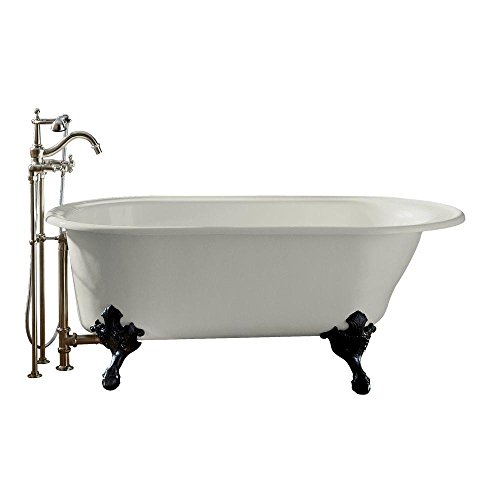
The Historic clawfoot tub uses Kohler's enameled cast iron construction in a classic slipper silhouette, with one end raised for backrest support, delivering the heat retention and solid, quiet feel that defines authentic clawfoot bathing.
Cast iron's density is what gives clawfoot tubs their distinctive quiet, solid feel when filling and their genuinely longer heat retention compared to acrylic. The enamel surface, when cared for with non-abrasive cleaners, can outlast the rest of a bathroom renovation by decades.
The tub's substantial weight is the primary installation consideration: confirm with a structural professional that the floor joists can support the combined weight of the tub, water, and bather, which can exceed 800 pounds at full capacity, particularly important in older homes or upper-floor installations.
Cast iron clawfoot tubs remain the gold standard for authentic traditional bathing largely because no other common material matches their thermal mass. The trade-off is entirely logistical, weight and installation planning, not performance or longevity, which genuinely favor cast iron over acrylic alternatives.

Woodbridge's acrylic clawfoot tub replicates the classic slipper silhouette and ball-and-claw feet at roughly a quarter of cast iron's weight, making it practical for upper-floor installations where structural load is a genuine constraint.
Acrylic's dramatically lower weight is a genuine practical advantage for any installation where structural support is uncertain or where the tub must be maneuvered up stairs or through tight doorways during renovation. It also lowers cost meaningfully compared to cast iron.
Acrylic does not retain heat as long as cast iron and can be more prone to surface scratching from abrasive cleaners over time, though gel-coat acrylic formulations used by reputable manufacturers hold up reasonably well under normal household use.
For the large share of clawfoot tub buyers whose homes cannot easily support 400-plus pounds of cast iron on an upper floor, acrylic is not a compromise so much as the only realistic option. Modern acrylic clawfoot tubs replicate the silhouette convincingly enough that the material difference is primarily felt in temperature retention, not appearance.

The Cambridge alcove tub delivers enameled cast iron construction in the standard 60-inch alcove footprint, allowing homeowners to upgrade a builder-grade acrylic or steel tub-shower to genuine cast iron durability without changing the bathroom's layout.
Alcove cast iron tubs are the most straightforward traditional upgrade for a standard American bathroom, since the 60 by 32 inch footprint matches the vast majority of existing tub-shower alcove dimensions, allowing direct replacement without reframing.
Cast iron alcove tubs retain the material's core advantages, heat retention and a solid, quiet fill sound, while remaining compatible with standard wall-mount traditional tub-shower trim covered in our bathtub faucets and showerheads guide.
For renovators who want cast iron's genuine performance advantages without the cost and complexity of a full freestanding tub installation, a cast iron alcove tub is an underused option. It delivers most of the material benefit within a familiar, budget-friendlier footprint.
The Iron Works freestanding pedestal tub delivers cast iron's material advantages in a solid-base silhouette rather than four separate feet, a traditional variant that reads as slightly more contemporary while retaining the exposed-exterior clawfoot presence.
A solid pedestal base eliminates the narrow gaps beneath a clawfoot tub's exposed feet, an area that can be more difficult to clean thoroughly. For households prioritizing easier maintenance while still wanting a freestanding traditional tub, the pedestal base is a practical middle ground.
Like all cast iron tubs, weight and floor support must be confirmed before installation. The freestanding pedestal design also requires clearance on all sides similar to a clawfoot tub, since the exterior remains fully exposed.
The pedestal base is a genuinely underrated variant for buyers who love the freestanding cast iron aesthetic but find cleaning around exposed clawfoot feet tedious. It delivers the same material performance with a small but real maintenance advantage.

Woodbridge's slipper clawfoot tub raises one end significantly higher than the other, creating a pronounced backrest angle for reclined soaking, built in lightweight acrylic for practical installation in a wider range of homes.
The slipper silhouette's pronounced backrest angle is specifically designed for one-person reclined soaking rather than lying flat, a meaningful ergonomic difference from a standard double-ended clawfoot tub for buyers whose primary use case is a long, reclined bath.
Foot finish options (typically matching the tub's faucet and hardware finish) should be selected to coordinate with the bathroom's other traditional fixtures, since mismatched metal tones between the tub feet and faucet are a common and avoidable styling inconsistency.
Slipper tubs are frequently chosen for their visual drama, but the backrest angle is a genuine ergonomic feature worth prioritizing for buyers who plan to use the tub primarily for long, reclined soaking rather than as an occasional secondary bathing option.
American Standard's Colony cast iron alcove tub delivers the same core enameled cast iron construction as premium alternatives at a more accessible price point, in the standard 60-inch alcove footprint for straightforward replacement projects.
American Standard built its reputation partly on its toilet line's flush-testing dominance, and applies similar manufacturing consistency to its cast iron tub production. The Colony alcove tub uses the same enameling process as its premium lines, keeping quality reasonable at a lower price point.
For renovation budgets where cast iron durability is a priority but a freestanding centerpiece tub is not, the Colony alcove is a low-risk pick that fits directly into most existing tub-shower footprints without reframing.
American Standard's use of enameled cast iron across its full alcove tub line, rather than reserving it for premium tiers, is why its value-priced models still earn positive long-term durability ratings from owners over acrylic alternatives at a similar price.
Enameled cast iron offers superior heat retention and a solid, quiet fill sound but weighs 300 to 500 pounds empty, requiring confirmed floor support. Acrylic replicates the same silhouette at 70 to 120 pounds empty, making it practical for upper-floor installations, though it retains heat for a shorter period and can be more prone to surface scratching over time.
Acrylic clawfoot tubs are commonly installed on second floors due to their much lower weight. Cast iron clawfoot tubs can also be installed on upper floors, but only after a structural professional confirms the floor joists can support the combined weight of the tub, water, and bather, which can exceed 800 pounds.
A slipper tub has one end raised significantly higher than the other, creating a built-in backrest angle for reclined soaking. A double-slipper tub has both ends raised. Standard clawfoot tubs without this raised end are sometimes called classic or roll-top tubs.
Yes. Clawfoot and freestanding tubs require a dedicated floor-mount or deck-mount faucet set with a riser pipe, since there is no adjacent wall to house a standard wall-mount valve. Alcove-style traditional tubs use standard wall-mount tub-shower trim.
A well-maintained enameled cast iron tub surface can last several decades, often outliving other elements of a bathroom renovation. Longevity depends on using non-abrasive cleaners and avoiding chipping the enamel surface, since exposed cast iron beneath a chip can begin to rust if not repaired.
Standard alcove tubs in the US measure 60 inches long by 30 to 32 inches wide, matching the vast majority of existing tub-shower alcove footprints. This standardization makes alcove tub replacement, including upgrading to cast iron, straightforward in most homes without reframing.
Clawfoot and freestanding tubs require clearance on all sides for the exposed exterior and feet, typically at least 4 to 6 inches from adjacent walls for practical cleaning access, though more generous clearance improves the visual and functional experience.
Clawfoot tub feet are commonly available in polished chrome, brushed nickel, oil rubbed bronze, and polished brass, allowing coordination with the bathroom's faucet and hardware finishes. Confirm the specific finish options for your chosen tub model before purchase.
No. A clawfoot tub sits on four separate decorative feet, while a pedestal-base freestanding tub sits on a single solid base. Both are traditional-style freestanding tub configurations, but the pedestal base eliminates the gaps beneath exposed feet, which some owners find easier to clean.
Use a non-abrasive cleaner and a soft cloth or sponge. Avoid abrasive powders, steel wool, or harsh acidic cleaners, which can dull or scratch the enamel surface over repeated use. For mineral deposits, a diluted white vinegar solution is generally safe when rinsed promptly.
A filled cast iron clawfoot tub with a bather can weigh 800 pounds or more. Standard residential floor framing is generally designed to support this load when the tub is positioned appropriately relative to floor joists, but verification by a structural professional is recommended for any full cast iron tub installation, particularly on upper floors or in older homes.
For ground-floor bathrooms with confirmed structural support, the Kohler Iron Works Historic clawfoot delivers the most authentic traditional bathing experience with genuine cast iron heat retention. Second-floor and weight-constrained installations are best served by the Woodbridge acrylic clawfoot, while straightforward tub-shower replacements should look to the American Standard Cambridge or Colony cast iron alcove tubs. In every case, confirm floor load capacity and faucet compatibility (floor-mount versus wall-mount) before finalizing a purchase.
How we rank & our data sources
We do not run physical lab tests. Rankings are built from published, verifiable data and real owner feedback, never paid placement.
Researched by admin · Last updated July 3, 2026 · Our review method
Freestanding soaking tubs in light, natural finishes built to feel like the centerpiece of a sunlit, plant-filled bathroom rather than a purely…
Read the guideA complete walkthrough covering water shutoff, old vanity removal, leveling and anchoring, countertop and sink setting, and reconnecting the P-trap and supply…
Read the guide
Warm wood tones, wrought-iron accents and hand-finished cabinetry for a vanity that fits a Santa Fe or desert-adobe bathroom.
Read the guide