Why Toilet Trapways Are Curved Like an S
Toilets4.6
Learn why toilet trapways curve like an S, how each bend blocks sewer gas, and what the shape means for clogs and…
Read the guideSwapping a toilet is one of the most approachable DIY plumbing jobs, but only if you choose the right model. These picks combine low clog rates, strong MaP flush scores, EPA WaterSense efficiency, and installation designs that let a confident adult finish the job in under two hours with basic hand tools.
The TOTO Drake is the top DIY-friendly toilet for most households: its two-piece design keeps individual components light enough to carry alone, its G-Max siphon jet scores 1000 grams on MaP flush testing, and the standard 12-inch rough-in fits nearly every home without any pipe adjustments.
Replacing a toilet is one of the most rewarding weekend home projects. Unlike a leaky pipe or a fuse panel, a toilet swap follows a predictable sequence: turn off the water supply, flush and sponge out the tank, disconnect the supply line, unscrew two floor bolts, lift the old toilet off the wax ring, set the new wax ring, lower the new toilet into position, hand-tighten the nuts, reconnect the supply line, and turn the water back on. Most homeowners with a wrench and a sponge can do this in 90 minutes to two hours.
What makes a toilet genuinely easy to install without a plumber is not a secret feature list. It comes down to three things: a two-piece design (so the tank and bowl ship separately, each weighing 30 to 45 pounds instead of 80 to 100 pounds all at once), a standard 12-inch rough-in that matches the vast majority of U.S. homes without any pipe relocation, and clear installation hardware included in the box. Every pick on this list checks those boxes. We also ranked them on flush performance using MaP (Maximum Performance) testing data, EPA WaterSense certification, and aggregated owner review patterns covering installation difficulty, clog frequency, and long-term reliability. See our best flushing toilets guide for our wider performance rankings.
| Toilet | Best For | MaP Score | GPF | Rating | Check Price |
|---|---|---|---|---|---|
| TOTO Drake | Overall DIY pick | 1000 g | 1.28 | 4.8 | Check price |
| Kohler Highline | Reliable two-piece value | 1000 g | 1.28 | 4.7 | Check price |
| American Standard Cadet 3 | Budget DIY install | 1000 g | 1.28 | 4.5 | Check price |
| TOTO Entrada | Lightweight beginner install | 800 g | 1.28 | 4.4 | Check price |
| Woodbridge T-0001 | Modern one-piece look | 800 g | 1.28 | 4.4 | Check price |
| Swiss Madison St. Tropez | Dual-flush water saving | 600 g | 0.8 / 1.28 | 4.3 | Check price |
| Gerber Viper | Commercial-grade durability | 1000 g | 1.28 | 4.4 | Check price |
| American Standard Champion 4 | Clog-proof family toilet | 1000 g | 1.6 | 4.5 | Check price |
Two-piece toilets with a standard 12-inch rough-in are the easiest for DIY installation. The tank and bowl ship separately, keeping each piece under 50 pounds so one person can carry and position them without help. The TOTO Drake and Kohler Highline are the most consistently praised for clear, tool-free installation hardware and minimal fit issues in standard U.S. bathrooms. One-piece toilets look clean but weigh 80 to 100 pounds as a single unit, which makes solo installation significantly harder.
The TOTO Drake and Kohler Highline both achieve the maximum 1000-gram MaP (Maximum Performance) flush-test score, which is the independent benchmark for single-flush waste clearing capacity. The American Standard Champion 4 and Gerber Viper also hit 1000 grams. For a DIY-friendly toilet that will not require double flushing, any model rated 800 grams or above is a strong choice, and 1000 grams represents the practical ceiling for residential gravity toilets.
MaP testing, conducted by independent labs under the Maximum Performance program, measures the grams of solid media a toilet can clear in a single flush. A score of 500 grams is a baseline pass; 600 to 700 grams is adequate for light use; 800 grams is strong; and 1000 grams, the program maximum, means the toilet will almost never require a second flush under normal household use. Any toilet rated at 800 grams or above is a reliable choice for a family bathroom.
The American Standard Cadet 3 consistently ranks as the best value for a DIY toilet installation. It carries a 1000-gram MaP score and 1.28 GPF WaterSense certification at one of the lowest positions in its performance class, and the two-piece design keeps installation straightforward. The TOTO Entrada is a close second for buyers who want the TOTO brand's track record with a simpler, lighter, entry-level design that still delivers reliable 800-gram MaP performance.
The American Standard Champion 4 is built around a 4-inch flush valve and a 2-3/8-inch fully glazed trapway, which together move a large volume of water fast and are the main reasons owners report that clogs are almost nonexistent. For families with children, for large-family households with heavy daily use, or for any household that regularly reaches for a plunger, the Champion 4's clog resistance is its defining advantage. The Gerber Viper also earns high marks for trapway diameter and is a strong alternative in this category.
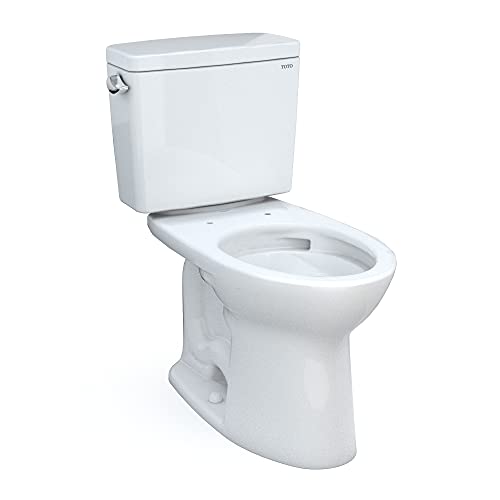
The TOTO Drake earns the top spot not just because of its maximum 1000-gram MaP score, but because the combination of flush performance and installation simplicity is hard to beat. The two-piece design keeps the heaviest single component (the tank) under 40 pounds, and the bowl sits on a standard 12-inch rough-in that fits the overwhelming majority of U.S. homes without requiring any pipe work.
TOTO's G-Max flushing system uses a 3-inch flush valve and a large siphon jet to generate fast, high-volume water flow that clears the bowl in a single push. At 1000 grams on the MaP scale, it sits at the practical ceiling for a residential gravity toilet, and owners across thousands of aggregated reviews consistently report single-flush reliability even for heavy loads. The fully glazed 2-1/8-inch trapway is a meaningful detail: a smooth interior surface gives waste and paper nowhere to snag, which is a core reason the Drake's clog rate is among the lowest you will find in this category.
Installation-wise, the Drake is among the most straightforward toilets TOTO makes. The hardware kit is complete, the instruction sheet is clear, and the standard 12-inch rough-in means most buyers simply unbox the bowl, set a wax ring, lower the bowl onto the floor bolts, hand-tighten the nuts, and attach the tank. Owners on home improvement forums frequently report sub-90-minute installs. The only adjustment worth making before you start is to verify your floor is level, as a slightly uneven floor is one of the most common causes of a rocking or leaking base regardless of brand.
If you are replacing a toilet in a standard U.S. bathroom and you want to do it once and not think about it again, the Drake is the answer. It is the toilet that licensed plumbers install in their own homes, and that track record carries more weight than any marketing claim.

The Kohler Highline is one of the most-installed toilets in North America for a simple reason: it combines a near-perfect MaP score with broad availability of replacement parts, a comfort-height bowl, and an installation process familiar to any DIYer who has watched a single tutorial video. Kohler's reputation for support and parts availability is an underrated benefit when you are doing your own work.
Kohler's Class Five flushing system channels water at an angle designed to maximize both the cleaning of the bowl walls and the force at the trapway exit. The 1000-gram MaP score confirms it clears heavy waste in a single flush, and the 1.28 GPF rating means it does so while qualifying for EPA WaterSense and potentially state rebate programs. The two-piece format keeps shipping weight manageable, and because the Highline has been in production for decades, installation videos, replacement flappers, fill valves, and flush handles are universally available at any hardware store.
Owners who install it themselves regularly note that the hardware kit is complete, the mounting bolts align easily, and the tank seats on the bowl without fuss. The comfort-height bowl at around 17 inches is the same height as a standard chair, which makes it notably easier to use for taller adults and an especially good fit for a senior-friendly bathroom upgrade.
The Highline's greatest long-term advantage is parts. Ten years after your DIY install, when the flapper wears out or the fill valve starts hissing, you will find Kohler-compatible parts at any hardware store for a modest amount. That accessibility is worth factoring into the purchase decision.

The American Standard Cadet 3 is the toilet that proves a low position does not have to mean lower performance. It hits 1000 grams on the MaP flush test, uses 1.28 gallons per flush, and comes with American Standard's EverClean surface, which is an antimicrobial glaze that resists the bacterial growth and staining that accumulates faster in lower-spec bowls.
American Standard's PowerWash rim directs a rim-cleaning rinse around the bowl with each flush, which helps keep the inner rim cleaner between scrubbing sessions. Combined with the EverClean glaze, owners report that the bowl resists the brown staining that plagues older ceramic without a specialized coating. At 1000 grams on the MaP test, the Cadet 3 clears solid waste as effectively as models at considerably higher positions, which is why it appears on best-of lists targeting value-focused buyers year after year.
Installation follows the standard two-piece sequence without surprises. The bowl is light enough for one person to manage, the floor bolt pattern is standard, and the tank attachment uses a pair of simple bolts with rubber washers that hand-tighten securely. Owners frequently cite this as one of the less stressful DIY toilet installs available, and American Standard's broad customer support network means help is easy to find if anything is unclear.
For a rental property or a basement bathroom, the Cadet 3 is the obvious answer. You get genuine 1000-gram performance and a clean-keeping glaze at the lowest reliable price point in the category. It is not glamorous, but it does every job a toilet is supposed to do.

The TOTO Entrada is TOTO's entry-level toilet, and it earns its place on this list precisely because it is the most forgiving model in the brand's lineup for a first-time DIY install. The bowl is lighter than the Drake, the hardware is straightforward, and you still get TOTO's reliable flushing engineering without the premium cost of the higher-tier models.
TOTO's E-Max flushing system in the Entrada uses a 3-inch flush valve and a wide trapway to generate reliable siphon action at 1.28 GPF. The 800-gram MaP score is solid for guest bath and lighter daily use, though it steps down from the 1000-gram ceiling that the Drake and Highline achieve. For most households in a secondary bathroom, 800 grams is more than adequate, and the tradeoff is a lighter, less expensive toilet that is notably easier to position during a solo installation.
The standard 12-inch rough-in matches the majority of homes, and the two-piece format means the bowl and tank each ship and carry independently. Owner reviews specifically call out how simple the Entrada is to set up: the instructions are clear, the wax ring seating is standard, and the supply line connection is a straightforward hand-tighten. For anyone nervous about their first solo toilet swap, the Entrada removes most of the variables that trip people up.
The Entrada is the toilet for someone who wants TOTO reliability but is installing a toilet for the first time and wants a lighter, less complex unit. You trade 200 grams of MaP headroom for a noticeably easier install experience, and for a guest or secondary bathroom that is a reasonable trade.

The Woodbridge T-0001 is the pick for buyers who want a skirted, seamless one-piece look without paying premium-brand prices, but who are also willing to manage a heavier one-piece installation. The soft-close seat is included in the box, which is a genuine value addition that several competitors sell separately.
The T-0001 uses a dual-flush button set into the top of the tank, offering 0.8 GPF for liquid waste and 1.28 GPF for solid waste. Over a year of use in a household, that 0.8-GPF liquid flush adds up to a meaningful reduction in water consumption compared with a single-flush 1.28-GPF model, especially in high-traffic bathrooms. The skirted design conceals the trapway entirely, which removes the ledges and crevices where grime collects in exposed-trapway designs, making routine cleaning faster.
Installation requires two people for the one-piece lift and positioning step. Once the toilet is on the wax ring, however, the installation is standard: hand-tighten the floor bolts, connect the supply line, and turn the water on. Owners report the dual-flush mechanism is intuitive and reliable, and the included soft-close seat is a quality component that operates smoothly. The 1-year warranty is shorter than what TOTO and Kohler offer, which is worth factoring into a long-term ownership calculation.
The T-0001 offers a premium look at a mid-range position, but be honest with yourself about the one-piece weight. If you can recruit a helper for the 20-second lift-and-set step, this is a genuinely good value in the modern-design category. If you are installing alone, the two-piece picks are safer.

The Swiss Madison St. Tropez is a skirted one-piece with a top-mount dual-flush button, clean European proportions, and a consistent track record in owner reviews for reliable flush performance and easy cleaning. It is the pick for buyers who want to minimize water use and upgrade to a contemporary aesthetic at the same time.
At 600 grams on the MaP flush test, the St. Tropez falls below the 800-gram threshold we recommend for high-traffic family bathrooms. That distinction matters: in a guest bath or a low-traffic powder room, 600 grams is entirely adequate and the 0.8/1.28 dual-flush option genuinely reduces monthly water consumption. In the main bathroom of a busy household, the TOTO Drake or Kohler Highline's 1000-gram rating is a more reliable long-term choice.
Swiss Madison's skirted base eliminates the contoured exterior of a standard trapway, leaving a smooth surface that wipes clean in seconds. The brand has grown its North American distribution considerably, but replacement parts availability still lags behind TOTO and Kohler, which is worth noting before committing. Installation follows the standard one-piece sequence: recruit one helper for the lift, set the wax ring, lower, hand-tighten bolts, connect the supply line.
The St. Tropez is a genuine water saver and a sharp-looking toilet, but it belongs in a low-to-medium-traffic bathroom. For a main family bath, the lower MaP score is a real limitation. Match the toilet to the room.
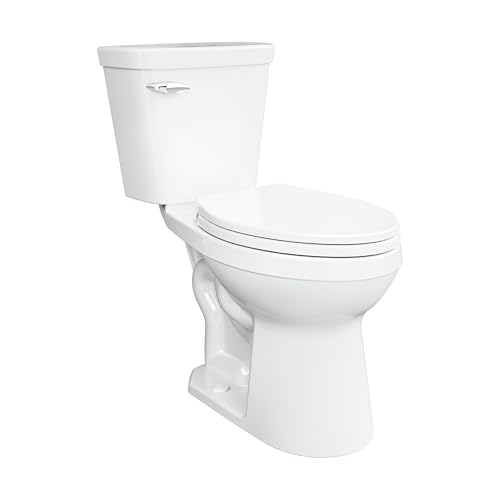
The Gerber Viper is a commercial-lineage toilet that has been adapted for residential use, and its reputation for durability is built on the same design principles that make Gerber a preferred brand for hotels and high-traffic institutional buildings. The Viper hits 1000 grams on the MaP test with a 1.28-GPF flush and a 3-inch flush valve that delivers forceful, reliable siphon action.
Gerber's Viper uses a fully glazed trapway and a 3-inch flush valve to generate a powerful siphon flush that clears 1000 grams of solid waste in a single pull. The commercial-grade vitreous china is thicker and denser than what you find in standard residential models, which translates to a heavier bowl but also to greater crack and chip resistance over years of heavy use. Owners in rental property and high-occupancy settings consistently report exceptional longevity with minimal maintenance.
The two-piece installation is standard and follows the same sequence as any of the top picks on this list. Floor bolt pattern is 12-inch rough-in standard, tank attachment is two-bolt with rubber gaskets, and the supply line connection is a standard 7/8-inch ballcock fitting. Gerber's EPA WaterSense certification confirms the 1.28-GPF flush meets current efficiency standards, and the lifetime limited warranty on the china provides long-term protection against manufacturing defects.
The Viper is the toilet for property owners who are done thinking about toilets. Its commercial heritage means the materials and mechanical tolerances are built for repetitive heavy use, and at 1000 grams MaP with WaterSense certification, it gives nothing away on performance.
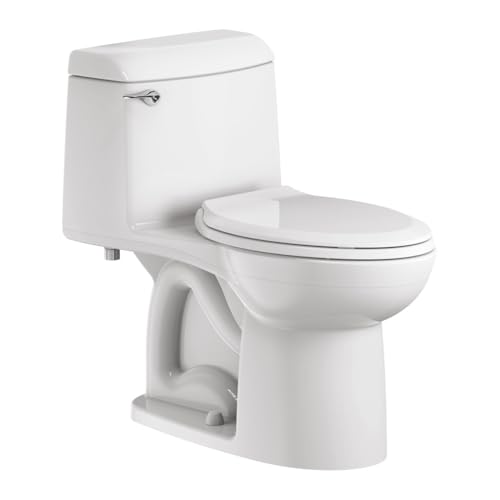
If the primary reason you are replacing a toilet is that the current one clogs constantly, the American Standard Champion 4 is the targeted fix. It is built around a 4-inch accelerator flush valve, the largest in the residential category, and a fully glazed 2-3/8-inch trapway that is wide enough to pass golf balls without clogging, which is the claim American Standard used to introduce it and the one that has held up in years of owner experience.
The 4-inch accelerator valve opens wider than any standard 3-inch valve, which means the rush of water into the bowl is faster and more voluminous. Combined with the 2-3/8-inch glazed trapway, this creates a flush so powerful that clogging is exceptionally rare even in households with children or heavy paper use. At 1000 grams on the MaP scale, it clears the same load as the Drake or Highline but with more water and less restriction through the trapway. See our full guide to the best toilets for large families for a deeper comparison of high-capacity options.
The trade-off is water use. At 1.6 GPF the Champion 4 does not qualify for EPA WaterSense certification, and in states with strict water efficiency codes it may not be the compliant choice. For most of the country, however, that 0.32-gallon-per-flush difference is an acceptable trade for essentially eliminating clogs. Installation follows the standard two-piece sequence, and the bowl and tank are within normal weight ranges for a DIY install.
The Champion 4 is the toilet for families who are tired of the plunger. The 4-inch valve and wide trapway are genuine engineering advantages, not marketing language, and the lived experience of owners in heavy-use households confirms it. Just verify that 1.6 GPF is permitted in your area before purchasing.
Almost every toilet on this list follows the same installation sequence, which means the most important variable in a successful DIY install is preparation, not the brand you choose. Before you remove the old toilet, measure the rough-in distance (wall to center of floor bolts), confirm your floor is level, and have a wax ring, supply line, and adjustable wrench ready. Those three steps prevent 90 percent of the frustrations people report in installation reviews.
The tools you need for a standard toilet installation are minimal: an adjustable wrench or channel-lock pliers, a sponge and bucket, a putty knife or floor scraper, a wax ring (most new toilets do not include one), a new supply line (if the old one is kinked or corroded), and a level. A second set of hands is useful for a one-piece toilet; most two-piece installs are genuinely manageable solo.
Step 1: Shut off the supply valve. The shutoff valve is on the wall behind and below the toilet. Turn it clockwise until it stops, then flush the toilet to drain most of the water from the tank and bowl. Use a sponge to remove the remaining water in both the tank and the bowl. Disconnect the supply line from the bottom of the tank.
Step 2: Remove the old toilet. Pop the plastic caps off the floor bolts, unscrew the nuts, and lift the old toilet straight up off the wax ring. The toilet is heavier than it looks. For a two-piece old toilet, remove the tank first, then the bowl. Set the old toilet on cardboard or old towels to avoid scratching the floor. Use a putty knife to scrape the old wax ring off the floor flange completely.
Step 3: Inspect the flange. The floor flange is the drain connection the toilet sits on. Check it for cracks or corrosion. A damaged flange must be repaired or replaced before you set the new toilet, and this is the one step that may actually require a plumber if the flange is cracked at floor level. For most installations in functioning bathrooms, the flange is in good shape.
Step 4: Set the wax ring and lower the bowl. Press a new wax ring onto the bottom of the new bowl (horn-side down toward the flange) or onto the top of the flange, depending on your preference. Lift the bowl and align the bolt holes with the floor bolts, then lower it straight down. Apply even downward pressure to seat the wax ring. Install washers and nuts on the floor bolts and hand-tighten, then snug with a wrench, alternating sides and checking the bowl for level. Do not overtighten, as vitreous china cracks under excessive bolt torque.
Step 5: Attach the tank (two-piece only). Lower the tank onto the bowl, aligning the tank bolt holes. Tighten the tank bolts hand-tight, then snug with a wrench, alternating sides to ensure even seating of the rubber gasket between tank and bowl.
Step 6: Connect the supply line and turn on the water. Attach the supply line to the fill valve tailpiece at the bottom of the tank and to the shutoff valve at the wall. Hand-tighten both connections, then snug them a half-turn with pliers. Turn the shutoff valve counterclockwise to open it. Watch both connections for drips as the tank fills, and tighten slightly if needed. Flush three times and inspect the base for leaks from the wax ring seal.
That is the complete process. For further detail on each step, see our comprehensive best toilets of 2026 guide, which includes a full installation section and rough-in measurement instructions.
The one question to answer before buying is: two-piece or one-piece? For most DIY installers, the answer is two-piece. The lighter components, wider availability of replacement parts, and lower initial outlay make two-piece toilets the sensible default. One-piece toilets have their place in design-forward bathrooms where the seamless look is worth the installation complexity and the premium position, but they are not inherently easier or better flushing.
Yes, for a straight toilet replacement in a bathroom with an intact floor flange and a standard 12-inch rough-in, installation is within the skill range of any confident adult with basic tools. The process takes 60 to 120 minutes and requires no pipe cutting or soldering. You need a plumber only if the floor flange is damaged, the rough-in is non-standard, or the shut-off valve is corroded and will not close.
The rough-in is the distance from the finished wall behind the toilet to the center of the floor drain (floor bolt center). Measure from the wall to the center of the bolt caps on your existing toilet. Most U.S. homes are 12 inches. Some older homes have 10-inch or 14-inch rough-ins, and buying a toilet that does not match your rough-in is the most common avoidable DIY mistake.
Always use a new wax ring. Wax rings are a single-use seal. Once the toilet is removed, the old wax ring is disturbed and cannot create a reliable seal a second time. New wax rings cost a few dollars at any hardware store and are non-negotiable for a leak-free installation.
Yes, for most DIY installers. A two-piece toilet ships with the tank and bowl as separate units, each weighing 30 to 45 pounds. A one-piece toilet ships as a single unit weighing 80 to 100 pounds, which is very difficult to maneuver alone in a confined bathroom. The actual connection steps are identical; the advantage of two-piece is purely in the handling weight.
An adjustable wrench or channel-lock pliers, a sponge and bucket to remove water from the old toilet, a putty knife to scrape the old wax ring, a new wax ring (sold separately), and a new supply line if the existing one is old or kinked. A torpedo level is helpful but not strictly required. No power tools or pipe cutting tools are needed for a standard replacement.
MaP stands for Maximum Performance, an independent flush-testing program run by Canadian and U.S. testing organizations. It measures grams of solid media a toilet can clear in a single flush. A score of 500 grams is a pass; 800 grams is strong; 1000 grams is the practical maximum for residential gravity toilets. A higher MaP score means fewer double flushes and a lower probability of clogs. It is the most reliable single number for comparing flush performance across brands.
EPA WaterSense is a voluntary certification program that labels toilets using 1.28 gallons per flush or less and meeting independent flush-performance criteria. A WaterSense toilet uses at least 20 percent less water than a standard 1.6-GPF model. Many U.S. states and utilities offer rebates for purchasing WaterSense-certified toilets, which can meaningfully offset the purchase position.
With the existing toilet in place, measure from the finished wall (not the baseboard) to the center of the toilet's floor bolt caps. On a new installation without a toilet, measure from the wall to the center of the floor flange. If the measurement is close to 10, 12, or 14 inches, order that rough-in size. When in doubt between 12 and 10 inches, check with a tape measure, as guessing wrong requires returning the toilet.
Comfort height (sometimes called chair height or ADA compliant height) describes a toilet bowl that sits 17 to 19 inches from floor to seat, matching the height of a standard chair. Standard height is 15 to 16 inches. Comfort height is notably easier to sit down on and rise from, which is particularly relevant for taller adults, anyone with knee or hip mobility issues, and seniors. Most of the picks on this list are comfort height.
A leak at the base almost always means the wax ring did not seal properly. This happens when the bowl was not pressed down firmly enough to compress the wax, when the floor is uneven and one side of the bowl lifted before the wax seated, or when the floor flange sits too low relative to the floor surface. Remove the toilet, inspect the flange height, confirm the floor is level, and reset with a new wax ring. Do not reuse the wax ring you removed.
Technically yes, but it is significantly harder than installing a two-piece model. A one-piece toilet weighs 80 to 100 pounds and must be lifted over the back of the toilet area, lowered precisely onto the floor bolts and wax ring, and held steady while you check alignment, all in a small bathroom. Most installation guides recommend a second person for the lift-and-set step. If you must install alone, clear maximum floor space and use a dolly to position the toilet close before lifting.
The TOTO Drake typically includes the tank, bowl, tank-to-bowl bolts and gasket, toilet seat, and hardware for floor bolt attachment. It does not include a wax ring or supply line, both of which you need to purchase separately. Check the specific product listing for the model variant you are purchasing, as some kits include more than others.
A gravity flush uses the weight of the water dropping from the tank to generate flushing pressure, which is quiet, reliable, and the dominant design in residential toilets. A pressure-assisted flush uses compressed air trapped in the tank to eject water with additional force, resulting in a stronger flush but noticeably louder operation. For most DIY replacements, gravity flush toilets like those on this list are the practical choice.
Wall-hung toilets require a structural carrier frame to be built into the wall, which is a full renovation project requiring framing, plumbing relocation, and drywall work. They are not a DIY toilet swap. Pressure-assisted toilets are otherwise standard to install, but the mechanical cartridges require specific replacement parts if they fail. Tankless electric toilets require both plumbing and electrical work. Floor-mounted gravity two-piece and one-piece toilets are the right category for DIY replacement.
For a first-time installer doing a like-for-like replacement (same rough-in, intact flange, no plumbing changes), 90 to 120 minutes is realistic including cleanup. An experienced person who has done it before can do it in 45 to 60 minutes. The steps that take the most time are removing and disposing of the old toilet, cleaning the flange area, and waiting for the first tank fill to confirm no leaks.
It depends on the toilet and the package you choose. Two-piece toilets like the TOTO Drake and Kohler Highline typically include a seat in the package, though some vendors sell them separately. One-piece models like the Woodbridge T-0001 usually include a soft-close seat. Always verify the product listing before purchasing, and check that the seat type (round or elongated) matches the bowl.
TOTO and Kohler both offer limited lifetime warranties on the porcelain and a shorter warranty (typically 1 to 3 years) on mechanical components such as the flush valve and fill valve. American Standard and Gerber offer comparable lifetime china warranties. Swiss Madison and Woodbridge typically offer 1-year warranties, which is shorter and worth factoring into a long-term ownership decision.
For a straightforward like-for-like swap in good condition, no. The typical plumber charge for a toilet installation ranges from $150 to $300 in labor, and you are paying for a task that requires no specialist skill when the flange is intact and the rough-in is standard. Hire a plumber if the floor flange is damaged, if the shut-off valve does not close properly, or if you discover water damage under the toilet during removal.
The TOTO Drake is the single best toilet to install without a plumber for most homes. Its two-piece design keeps the components manageable for a solo install, the G-Max siphon jet delivers a maximum 1000-gram MaP flush score, and the standard 12-inch rough-in fits without adjustment in the vast majority of U.S. bathrooms. For buyers on a tighter budget, the American Standard Cadet 3 matches the Drake's MaP score at a lower position. For families dealing with frequent clogs, the American Standard Champion 4's 4-inch flush valve is the targeted solution. And for anyone who wants a contemporary look with water savings, the Woodbridge T-0001 or Swiss Madison St. Tropez bring skirted one-piece aesthetics and dual-flush efficiency to a DIY-approachable installation. Check our guide to best toilets for everyday home use for additional context on matching a toilet to your household's specific needs.
Learn why toilet trapways curve like an S, how each bend blocks sewer gas, and what the shape means for clogs and…
Read the guideAlmost every US toilet has a left-side handle. Learn the plumbing and mechanical reasons behind the layout and when it actually changes.
Read the guideHome toilets rely on tanks because household water lines lack the pressure that public flushometer systems use to flush straight from the…
Read the guide