Why Toilet Trapways Are Curved Like an S
Toilets4.6
Learn why toilet trapways curve like an S, how each bend blocks sewer gas, and what the shape means for clogs and…
Read the guideA basement bathroom is a special plumbing problem because the floor often sits below the level of the main sewer line, so gravity alone cannot carry waste out. That single fact splits basement toilets into two families: upflush (macerating) systems that grind and pump waste upward to the sewer, and standard gravity toilets that work only when there is a below-floor drain or a sewage ejector pit already in place. The right pick depends entirely on which situation you have. We ranked the best of both kinds using published manufacturer specifications, MaP flush-test scores where available, EPA WaterSense certification, pump and macerator ratings, and the patterns that show up across thousands of aggregated owner reviews.
If your basement floor sits below the sewer line and you cannot break concrete, the Saniflo SaniPlus upflush system is the strongest, most proven macerating pick: it pumps waste up to 15 feet vertically and 150 feet horizontally. If you have a below-floor drain or an ejector pit, install a standard TOTO Drake instead for a quieter, cheaper, 1000 gram MaP flush.
Putting a toilet in a basement is not the same job as putting one in any other room of the house. In most homes the main sewer line leaves through the foundation at or above the basement floor, which means a toilet sitting on that floor has no downhill path for gravity to do its work. Waste has to be lifted up to the level of the sewer before it can drain away. That single physical reality drives every decision on this page, and it is the reason a basement toilet that works perfectly in someone else's home might be completely wrong for yours.
There are two ways to solve the problem. The first is an upflush or macerating toilet, which sits on top of the finished floor and uses a small grinding pump, hidden behind or beside the bowl, to liquefy waste and push it up through a narrow pipe to the sewer. The second is a standard gravity toilet, which works only if the home already has a below-floor drain rough-in or a sewage ejector pit with a pump in the basement floor. Both approaches are valid, and the better one for you depends entirely on what is already under your concrete. We cover the best models in each category below so you can match the toilet to your plumbing rather than the other way around.
We do not physically test toilets or run them in a lab. Instead we compare published manufacturer specifications, independent MaP (Maximum Performance) flush-test scores where they exist, gallons-per-flush figures, EPA WaterSense certification, macerator and pump horsepower, vertical and horizontal pumping range, and the consistent themes that appear across large numbers of verified owner reviews. For a basement toilet the questions that matter most are these: can it move waste to where your sewer line is, how reliable is the pump or flush over years of use, how loud is it, how easy is it to service, and does it use water efficiently. The picks below answer those questions across a range of budgets, plumbing situations and styles.
Every model on this list had to fit a real basement plumbing situation and back it up with verifiable specifications. For upflush systems we prioritized macerator power, the rated vertical lift and horizontal run, pump reliability across long-term owner reports, and how easy the unit is to access and service when something eventually wears. For standard gravity picks we prioritized models that score 800 to 1000 grams on the MaP test, because a basement bathroom that drains into an ejector pit still benefits from a strong, complete one-flush clear. We then looked at water efficiency in gallons per flush, EPA WaterSense certification, trapway design, noise, and brand parts availability. We weighted published specifications and aggregated owner reviews over marketing language, and we do not take payment for placement. For a broader look at raw flush strength across every category, see our pillar guide to the best flushing toilets.
| Toilet | Best For | MaP | GPF | Rating | Check Price |
|---|---|---|---|---|---|
| Saniflo SaniPlus | Below-grade upflush | Pump | 1.28 | 4.6 | Check price |
| Saniflo SaniAccess 3 | Serviceable upflush | Pump | 1.28 | 4.5 | Check price |
| TOTO Drake | Standard gravity | 1000 g | 1.28 | 4.8 | Check price |
| Liberty Pumps Ascent II | Quiet upflush | Pump | 1.28 | 4.5 | Check price |
| American Standard Cadet 3 | Gravity value | 1000 g | 1.28 | 4.3 | Check price |
| Kohler Highline | Easy all-rounder | 1000 g | 1.28 | 4.7 | Check price |
| Saniflo Sanicompact | Tight spaces | Pump | 1.0/1.28 | 4.2 | Check price |
| Woodbridge T-0001 | Modern one-piece | 800 g | 1.28 | 4.5 | Check price |

The SaniPlus is the upflush system we point most basement owners toward because it is the most proven, most widely supported macerating unit in North America and it solves the below-grade problem without breaking a single inch of concrete.
The SaniPlus uses a sealed macerating pump that sits behind the bowl and activates the moment you flush, grinding waste into a slurry and pushing it up through a narrow 1 inch discharge pipe. Its rated 15 feet of vertical lift and 150 feet of horizontal run cover almost any basement layout, and the unit can also accept gray water from a nearby sink, shower or tub, which lets you build a full bathroom without a gravity drain.
Owner reviews over years of use describe it as dependable as long as you treat it correctly, which mainly means flushing only waste and septic-safe paper. The macerator runs for a few seconds on each flush, so it is audible, and the pump is the part that eventually wears, but Saniflo's parts and service network is the broadest in the category, which is exactly why it sits at the top of this list.
If you are finishing a basement bathroom and the sewer line is above your floor, the SaniPlus is the default choice. Buy it knowing two things: never flush wipes, paper towels or feminine products, because the macerator is the one part that fails when abused, and keep the access panel reachable so servicing the pump is a 30 minute job rather than a demolition project.

The SaniAccess 3 is the SaniPlus upgraded for people who want to service the pump without removing the toilet, adding removable access covers that make maintenance far less painful.
Mechanically the SaniAccess 3 matches the SaniPlus, with the same 15 feet of vertical lift and 150 feet of horizontal range, but it adds two removable access panels on the macerator housing. That sounds minor until something clogs the pump: with the SaniAccess you pop a cover and clear it, where on a sealed unit you may have to disconnect the whole assembly. For a basement bath you plan to keep for years, that access is genuinely valuable.
It can also tie in additional fixtures like a sink and shower, so it supports a complete below-grade bathroom. Owners praise the serviceability and the same broad Saniflo parts network, and the usual rule applies: flush only waste and dissolvable paper to keep the macerator healthy.
Spend a little more on the SaniAccess 3 over the SaniPlus if you are at all handy. The removable access covers turn an eventual pump clog from a dreaded job into a quick fix, and over the life of a basement bathroom that convenience pays for itself the first time you need it.
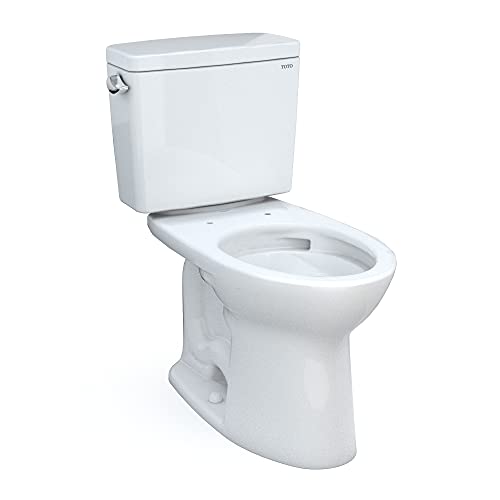
If your basement already has a below-floor drain rough-in or a sewage ejector pit, skip the macerator entirely and install the Drake, a true 1000 gram MaP gravity toilet that is quieter, cheaper and simpler than any upflush unit.
The Drake clears the bowl through a wide, fully glazed trapway driven by TOTO's G-Max siphon jet, which is why it posts the top 1000 gram MaP score and rarely clogs. In a basement that drains into an ejector pit, that strong single flush keeps the pit cleaner and reduces the work the ejector pump has to do. At 1.28 gallons per flush it is also EPA WaterSense certified.
Owners describe it as the toilet they forget about because it simply works, and its flappers, fill valves and seats are stocked everywhere and inexpensive. For a basement bathroom where a gravity drain exists, a standard toilet like the Drake is almost always the smarter choice than an upflush system, because there is no pump to maintain, no grinding noise and no special flushing rules.
Do not buy an upflush toilet by default just because the bathroom is in a basement. If a plumber can confirm a below-floor drain or ejector pit, the Drake gives you a silent, 1000 gram flush with no pump to ever fail, at a fraction of the long-term cost of a macerating system. Confirm your drain situation before you spend on a macerator you may not need.

The Liberty Pumps Ascent II is a macerating toilet designed to address the two biggest complaints about upflush systems, noise and pump access, with a quieter run cycle and a smart serviceable design.
The Ascent II carries a slightly higher rated vertical lift than the Saniflo units at around 20 feet, and owners frequently note its macerator runs quieter, which matters in a finished basement living space where the bathroom may sit near a media room or bedroom. The comfort-height elongated bowl is also more pleasant for adults than the standard-height bowls common on entry upflush units.
Liberty Pumps has a strong reputation in the pump world for durable, well-built sewage and effluent equipment, and that engineering shows in the Ascent II. The usual macerator rules still apply, flush only waste and dissolvable paper, but for buyers who put noise and build quality first, it is a strong alternative to the Saniflo family.
Choose the Ascent II over the Saniflo units when the upflush toilet sits in or near a finished living area and flush noise is a real concern. The quieter cycle, higher lift and comfort-height bowl justify the step up, and Liberty Pumps' pedigree in sewage equipment is reassuring for the one component that does the hard work.

For a basement that has a below-floor drain and a tight budget, the Cadet 3 delivers a genuine 1000 gram MaP flush and comfort height without the premium price of the top brands.
The Cadet 3 uses a fast-acting 3 inch flush valve and a wide, fully glazed trapway to clear the bowl in one pass at an efficient 1.28 gallons, earning a 1000 gram MaP score. Its EverClean antimicrobial surface resists the stains and odor-causing bacteria that can build up in a damp, less-ventilated basement, which helps the bowl stay fresher between cleanings.
The bowl is a full-size, dependable piece of china, and the long 10-year warranty is reassuring at this position. For a basement bathroom that already drains by gravity and where you want one-flush strength without overspending, it is the value pick that does not feel like a compromise. For more reliable everyday picks, our guide to the best toilets for home covers daily-use gravity models in depth.
The Cadet 3 is the smart-money standard toilet for a basement bathroom that drains by gravity. You get a true 1000 gram flush, comfort height and a stain-resistant surface for far less than the premium models, and the EverClean coating is a real benefit in the damper air a basement often carries.

The Highline is the no-drama standard pick for a basement with a drain: a comfort-height fixture with Kohler's strong Class Five flush and one of the best parts networks in the country.
The Class Five flushing system pairs a large 3-1/4 inch flush valve with a wide flush passage to post a near-perfect 1000 gram MaP score, so a single flush clears the bowl. In a basement draining into an ejector pit, that complete clear keeps the pit cleaner and lightens the load on the ejector pump. The comfort-height elongated bowl is easier for adults and sits stable once installed.
Build quality is what you expect from Kohler, with dense china and a planted feel. Like the Drake, replacement parts are everywhere and inexpensive, which keeps a basement toilet serviceable long term. It is a two-piece, so there is a seam to wipe, but that also makes the lighter components easier to carry down basement stairs during installation.
The Highline is the toilet to buy if your basement has a drain and you want a strong, WaterSense-rated flush from a major brand whose parts your local store will always stock. The lighter two-piece design is also genuinely easier to maneuver down a narrow basement stairway than a heavy one-piece.

The Sanicompact is a self-contained macerating toilet with the pump built directly into the unit, giving the smallest footprint of any upflush option for a cramped basement corner or half bath.
Because the macerator is integrated into the body rather than hidden in a separate box behind the bowl, the Sanicompact takes up far less room than a SaniPlus, which makes it the pick when space is the limiting factor. Its dual-flush button keeps water use low, an asset on a unit that pumps every flush. The trade-off is a shorter rated range, around 9 feet of lift, and it is intended for the toilet alone rather than a full bathroom group.
Owners value the compact footprint and the cleaner one-piece look, but note it is best matched to a powder room or half bath where a sink can drain separately. For a small below-grade space where you only need a toilet, it is an efficient, space-saving solution.
Use the Sanicompact only where space is genuinely tight and you need a toilet alone, not a full bathroom group. Its integrated macerator and small footprint are the appeal, but if you want to tie in a shower or sink, or you need a long pumping run, step up to the SaniPlus or SaniAccess instead.

For a basement with a gravity drain where you want a modern look, the Woodbridge T-0001 brings a skirted one-piece design at a friendly position, with a seamless body that wipes clean fast in a frequently damp space.
The seamless one-piece body has no tank-to-bowl crevice to scrub, and the smooth skirted sides wipe clean in seconds, which is a real advantage in a basement where dust, humidity and infrequent cleaning are common. The siphon flush clears the bowl quietly at an efficient 1.28 gallons per flush, and the included soft-close seat saves a separate purchase.
Its 800 gram MaP score handles normal basement-bathroom loads well, though it is not at the 1000 gram leaders. The one caution is weight: one-piece toilets are heavy, so plan the trip down the basement stairs. For a gravity-drained basement bath where looks and easy cleaning matter, it is strong value.
Pick the T-0001 for a gravity-drained basement bath where you want a clean, modern look with minimal scrubbing. The seamless skirted body is genuinely easier to keep tidy in a dusty basement, just recruit a second person to carry the heavy one-piece down the stairs during installation.
The most expensive basement-toilet mistake is buying an upflush system you did not need. Before spending on a macerator, have a plumber confirm whether your floor has a below-grade drain or ejector pit. If it does, a standard gravity toilet is the better long-term answer in every way that matters: no pump to fail, no grinding noise, no special flushing rules and far cheaper parts. Reserve the upflush systems for the genuine no-drain situation they were designed to solve.
Start with your drain situation. This is the decision that drives everything else. If your main sewer line exits the foundation above the basement floor and there is no below-floor drain or ejector pit, you need an upflush macerating toilet. If a below-floor drain rough-in or a sealed ejector pit already exists, choose a standard gravity toilet. A short inspection or a plumber visit settles this in minutes and prevents buying the wrong category.
For upflush systems, match the pump to your run. Macerating units are rated for a maximum vertical lift and horizontal distance to the sewer connection. Measure how high and how far the waste has to travel and pick a unit that comfortably exceeds both. The Saniflo SaniPlus and SaniAccess 3 handle about 15 feet up and 150 feet over, while the Liberty Pumps Ascent II rates slightly higher lift. Undersizing the pump leads to clogs and strain.
Prioritize serviceability on a macerator. The pump is the one component on an upflush toilet that will eventually need attention. Choose a model with removable access covers, like the SaniAccess 3, and keep the unit physically reachable so a future repair does not require demolishing finished walls. Build the bathroom around access from day one.
For gravity toilets, prioritize a strong MaP score. If you are installing a standard gravity toilet over a drain, the same rules as any bathroom apply: a high MaP score means fewer clogs and double flushes. Aim for 800 to 1000 grams. A complete one-flush clear is especially helpful when draining into an ejector pit, because it keeps the pit cleaner and reduces how hard the ejector pump has to work.
Consider water efficiency and humidity. An EPA WaterSense toilet uses 1.28 gallons per flush or less, which matters for both gravity and upflush picks since a macerator pumps every flush. Basements also tend to be damp, so an antimicrobial surface like American Standard's EverClean helps the bowl resist the staining and odor that humidity encourages. For a deeper look at top picks across bathroom types, see the best toilets of 2026 roundup.
Plan the install and the parts. Basement stairs are narrow and toilets are heavy, especially one-piece models, so factor in getting the fixture down there. For both categories, choose a brand whose parts are easy to find, because a basement toilet is exactly the kind of fixture people neglect until it fails. The TOTO Drake and Kohler Highline lead on parts availability, and Saniflo leads among upflush brands.
An upflush toilet is the right answer when there is genuinely no gravity drain below your basement floor. It installs on top of the finished slab, needs no concrete cutting, and can often tie in a nearby sink or shower, which makes it the practical way to add a full bathroom to a finished basement that was never plumbed for one. The costs are real: the macerator is audible on every flush, parts are pricier than a standard toilet, and the pump imposes strict flushing rules and an eventual repair.
A standard gravity toilet is the better choice whenever the plumbing allows it, meaning a below-floor drain rough-in or a sewage ejector pit is present. It is silent, uses cheap and universal parts, has no pump to fail, and a top model like the Drake or Highline delivers a 1000 gram MaP flush. The catch is that installing one where no drain exists means breaking concrete to set a flange and, often, adding an ejector pit and pump, which is a larger up-front project. For families weighing heavy daily use as well, our guide to the best toilets for large families covers the strongest low-clog gravity models in depth.
Basement bathrooms are often used by guests, older relatives or as a secondary suite, so comfort height is worth prioritizing on a standard toilet. A comfort-height (chair-height) bowl places the seat at roughly 16.5 to 19 inches, which is easier for adults and older users to sit down on and stand up from. Most upflush bowls are standard height, though the Liberty Pumps Ascent II offers a comfort-height option, which is one more reason it stands out among macerating units.
An elongated bowl adds a more supportive seating area and is the more comfortable choice in nearly every situation where space allows. If the basement bath will serve older family members or anyone with mobility concerns, our guide to the best toilets for seniors goes deeper on comfort height, grab-bar planning and safety, all of which apply equally below grade.
It depends on your plumbing. If the basement floor has no below-grade drain, the Saniflo SaniPlus upflush system is the best pick because it pumps waste up to the sewer without breaking concrete. If a below-floor drain or ejector pit already exists, a standard gravity toilet like the TOTO Drake is quieter, cheaper and easier to maintain.
Yes, but only if the basement has a below-floor drain rough-in or a sewage ejector pit that can carry waste to the sewer. If the floor sits below the sewer line with no drain path, a standard gravity toilet has nowhere for waste to go, and you need an upflush macerating toilet instead.
An upflush, or macerating, toilet sits on top of the finished floor and uses a small grinding pump behind the bowl to liquefy waste and push it up through a narrow pipe to the main sewer line. It lets you add a bathroom below the sewer level without cutting concrete, which is why it is the standard solution for unplumbed basements.
Most residential macerating toilets pump waste up to about 15 feet vertically and 150 feet horizontally, with the two trading off against each other. The Saniflo SaniPlus and SaniAccess 3 hit roughly those figures, while the Liberty Pumps Ascent II rates slightly higher vertical lift. Always confirm your run is within the unit's rated range.
They are audible. The macerator runs for a few seconds on each flush, producing a grinding then a pumping sound. It is not loud enough to disturb a whole house but is noticeable nearby, which is why a quieter model like the Liberty Pumps Ascent II is worth choosing if the bathroom sits near living space.
Never flush wipes (including flushable ones), paper towels, feminine products, dental floss, grease, or anything other than human waste and dissolvable toilet paper. These items jam or burn out the macerator, which is the single most common cause of upflush toilet failure. Treating the unit gently is the key to a long pump life.
A well-maintained macerating pump typically lasts about 10 to 15 years. The macerator blades and motor wear over time, and lifespan depends heavily on flushing only waste and paper. Choosing a serviceable model like the Saniflo SaniAccess 3, with removable access covers, makes eventual repairs much simpler.
A sewage ejector pit is a sealed basin set into the basement floor that collects waste from a standard gravity toilet and other fixtures, then uses a built-in ejector pump to lift the collected waste up to the main sewer line. It lets you use ordinary toilets below grade but requires the pit to be installed in the floor.
An ejector pit setup lets you use quiet, cheap standard toilets and is better when you can install the pit, often during construction. An upflush system is better as a retrofit in a finished basement where breaking concrete for a pit is impractical. The right choice depends on whether the pit already exists or can be added cost-effectively.
Yes. The macerator is electric, so an upflush toilet needs a dedicated power outlet nearby, and it will not flush during a power outage. A standard gravity toilet draining to a sewer or ejector pit does not need power for the toilet itself, though an ejector pump also relies on electricity.
Many can. Units like the Saniflo SaniPlus and SaniAccess 3 accept gray water from a nearby sink, shower or tub through additional inlets, which lets you build a full basement bathroom around one pump. Compact units like the Saniflo Sanicompact are intended for the toilet alone, so check the inlets before planning a full bath.
If you are installing a standard gravity toilet, aim for a MaP score of at least 800 grams, with 1000 grams being the practical maximum. A strong one-flush clear matters even more when draining into an ejector pit, because it keeps the pit cleaner and reduces how hard the ejector pump has to work.
Upflush toilets clog mainly when the wrong items are flushed and jam the macerator, so the fix is disciplined flushing. Standard gravity toilets draining into a pit clog like any other toilet, so a high MaP score and a wide fully glazed trapway, as on the TOTO Drake, are the best protection.
Basement toilet odor often comes from a dry trap, a poorly vented drain line, or a sewage ejector pit with a failing seal or vent. Dampness in basements also encourages bacterial buildup in the bowl. Keeping the trap filled, ensuring proper venting and choosing an antimicrobial-surface toilet like the American Standard Cadet 3 all help.
A finished basement bathroom generally adds usable living space and resale appeal, especially if it supports a guest suite or rec room. Whether you use an upflush system or a gravity setup matters less to value than that the bathroom is functional, code-compliant and reliably drained, so choose the solution that fits your plumbing.
Almost always, yes. Adding a toilet below grade involves drainage, venting and often electrical work, all of which are typically regulated by local building codes. Pulling a permit ensures the installation is inspected and compliant, which protects both function and resale value. Check with your local building department before starting.
Comfort height (chair height), at roughly 16.5 to 19 inches, is the most versatile choice because basement baths often serve guests and older relatives. Most upflush bowls are standard height, but the Liberty Pumps Ascent II offers a comfort-height option, and any standard gravity pick like the Drake or Highline comes in comfort height.
A handy DIYer can install many upflush systems, since they connect to a standard water supply, a power outlet and a small discharge pipe without cutting concrete. That said, local codes, venting and drain connections can be tricky, so confirm permit requirements and consider a plumber for the discharge tie-in to the main sewer line.
The right basement toilet is decided by your plumbing, not your preference. If the floor has no below-grade drain, the Saniflo SaniPlus is the most proven upflush pick, and the SaniAccess 3 is the smarter buy if you want easy pump access for the inevitable future repair. For a quieter macerating unit near living space, the Liberty Pumps Ascent II leads. But if a below-floor drain or ejector pit already exists, install a standard gravity toilet like the TOTO Drake instead: it gives a silent 1000 gram MaP flush with cheap, universal parts and no pump to ever fail. Confirm what is under your concrete first, match the toilet to that reality, and a basement bathroom will serve reliably for years.
Learn why toilet trapways curve like an S, how each bend blocks sewer gas, and what the shape means for clogs and…
Read the guideAlmost every US toilet has a left-side handle. Learn the plumbing and mechanical reasons behind the layout and when it actually changes.
Read the guideHome toilets rely on tanks because household water lines lack the pressure that public flushometer systems use to flush straight from the…
Read the guide