Why Toilet Trapways Are Curved Like an S
Toilets4.6
Learn why toilet trapways curve like an S, how each bend blocks sewer gas, and what the shape means for clogs and…
Read the guideComposting toilets turn human waste into dry, inert compost using aerobic decomposition instead of water and a sewer line. Whether you need a self-contained unit for a cabin, a split-system for a tiny home, or a 12V-powered model for van life, we ranked the best composting toilets by decomposition speed, odor control, capacity, code compliance, ease of maintenance, and the weight of thousands of aggregated long-term owner reports so you get a system that actually works off grid, not just looks good in a brochure.
The Nature's Head Self-Contained Composting Toilet is the best composting toilet for most off-grid buyers: its spider-handle agitator breaks material efficiently, the separated urine diverter eliminates odor at the source, and a 12V fan keeps the solids chamber dry enough that a couple can go 4 to 6 weeks between empties. The Separett Villa 9215 is the better choice when you want a true flush-and-forget system with a larger full-size household capacity.
A composting toilet works on a fundamentally different principle than a standard gravity-flush or pressure-assist model. Instead of routing waste through a sewer or septic system with 1.28 to 1.6 gallons of water per flush, it separates liquid from solid waste and aerobically decomposes the solid portion inside the unit itself. Urine diversion is the critical mechanism: when liquid and solid waste are kept separate, the odor-causing anaerobic bacteria that thrive in mixed wet waste cannot establish themselves. Solids dry out quickly, oxygen reaches the mass, and beneficial aerobic organisms break the material down to a dry, volume-reduced end product that most local codes classify as safe for garden or compost pile disposal.
We do not test these units in our own facility. Instead we compare manufacturer-published capacities (daily use ratings), independent code compliance records, NSF/ANSI 41 certifications where applicable, the electrical draw and ventilation requirements, and the aggregated patterns from thousands of owner reviews across platforms covering real-world maintenance cycles, odor events, and failure modes. If a standard flush toilet suits your situation, our guide to the best flushing toilets covers the full landscape of conventional picks. For households that need a waterless or near-waterless solution because a sewer or septic connection is unavailable, impractical, or not yet installed, read on.
| Toilet | Best For | Capacity | Power | NSF/ANSI 41 | Rating |
|---|---|---|---|---|---|
| Nature's Head Self-Contained | Best overall off grid | 1-2 people | 12V DC | Yes | 4.6 |
| Separett Villa 9215 AC/DC | Best full-household capacity | 3-4 people | 12V / 120V | Yes | 4.5 |
| Sun-Mar Excel Non-Electric | Best for no electricity | 3 people / seasonal | None required | Yes | 4.4 |
| Air Head Composting Toilet | Best for vans and boats | 1-2 people | 12V DC | No | 4.3 |
| Sun-Mar Centrex 2000 | Best central / split system | 3-4 people continuous | 120V AC | Yes | 4.4 |
| BioLet 65A Non-Electric | Best European-style non-electric | 2-3 people | None required | Yes | 4.2 |
| OGO Origin Composting Toilet | Best compact modern design | 1-2 people | 12V DC | No | 4.3 |
| Camco Portable Travel Toilet | Best budget / temporary | Portable use | None | No | 4.1 |
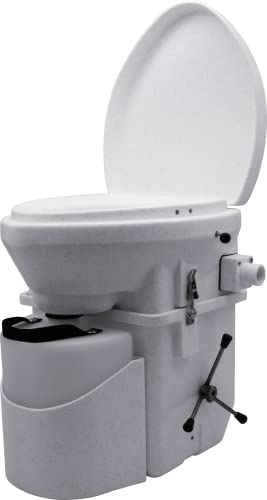
Nature's Head is the composting toilet that dominates long-term owner reviews from sailboat liveaboards, van dwellers, and cabin owners precisely because its urine-diverting design and spider-handle agitator work reliably for years with almost no odor when maintained correctly.
The Nature's Head operates on urine diversion: a shaped seat directs liquid waste forward into a 2.2-gallon bottle and solid waste rearward into the main composting chamber. That single design choice eliminates the primary source of odor in any composting system by keeping wet and dry waste completely separate. The spider-handle crank on the side of the unit stirs the solids chamber, mixing in the peat or coco coir bulking medium and aerating the mass. A 12V fan runs continuously, drawing air through the chamber and out a 2-inch vent hose, keeping the solids dry and odor-free when the vent exits through a hull, wall, or roof.
Long-term owner reports consistently describe two to three years of service with no odor events when the vent hose is correctly installed and bulking medium is added after each solid use. The urine bottle typically needs emptying every two to three days for a couple. The solids chamber goes four to six weeks before the dry, reduced-volume material is ready to empty. The main drawback is capacity: at higher occupancy, that timeline compresses significantly. But for one or two people in a mobile or off-grid setting, no composting toilet on the market has a longer reliability track record.
Nature's Head is the default pick for a reason that goes beyond specs: its failure mode is visible and correctable. When odor appears, it is almost always due to insufficient bulking medium, a kinked vent hose, or an overfull liquid bottle. Each fix takes under two minutes. Competing designs that mix or auto-tumble waste can fail in less obvious ways that are harder to diagnose off grid. Start here unless your household size exceeds two people regularly.

The Separett Villa 9215 is the composting toilet most comparable to a conventional household toilet in terms of use experience: the urine goes directly into a dedicated hose connection, solids drop into a biodegradable liner-bag container, and a robust 4-inch ventilation fan handles all odor without any manual agitation required.
Sweden-based Separett has been building composting toilets since 1976 and the Villa 9215 shows that institutional knowledge. The unit uses a rotating container that holds biodegradable bags: when the bag fills, you rotate the drum to expose a fresh bag without ever handling the waste directly. A 12V or 120V fan maintains continuous negative air pressure through a 4-inch vent, and the urine is piped away separately through a connection at the rear, so the unit handles a family-sized load without overloading odor control. NSF/ANSI 41 certification means it meets independent sanitation standards accepted by most U.S. code authorities when installed to spec.
Owner reports from families using the Villa 9215 as their primary bathroom fixture for years describe essentially zero odor when the vent is sized correctly and the urine line drains freely. The rotating drum system is the defining operational difference from Nature's Head: you never need to add bulking medium or turn a handle. The tradeoff is a larger footprint and a higher price, which makes it less practical for tight van or boat installs but very well suited to off-grid homes, tiny houses, and seasonal cabins where space is available.
If your household has three or more people using a composting toilet as the primary bathroom fixture, the Separett Villa 9215 is the right move. Its continuous-use design rating and rotating drum system mean maintenance stays low even under heavy use, which is exactly where self-contained units like the Nature's Head fall behind.

The Sun-Mar Excel is the benchmark non-electric composting toilet: a batch-drum design with a fiberglass body that requires no fan or heating element, making it the right choice for truly off-grid locations where neither solar nor shore power is available.
Sun-Mar has held NSF/ANSI 41 certification longer than almost any other composting toilet brand in North America, which matters when navigating local permit offices. The Excel's drum rotates on a handle crank to aerate the composting mass and move finished material into the finishing drawer below. Unlike urine-diverting designs, the Excel accepts both liquid and solid waste together, relying on evaporation through the passive vent stack to handle liquid volume. That design works well at seasonal-use rates and cool climates but struggles with full-time liquid loads at higher occupancy, which is why Sun-Mar publishes separate continuous and seasonal capacity ratings.
Owner feedback over many years highlights durability: the fiberglass body and drum resist cracking, the NSF seal satisfies most local health departments, and the finishing drawer makes emptying straightforward. The critical success factor is not overloading liquid volume. Households that exceed the rated capacity report liquid pooling and odor, which is a system design limitation, not a unit defect. Follow the rated capacity and the Excel is a genuinely reliable option for the sites where no powered alternative exists.
The Sun-Mar Excel is the correct answer when the question is specifically "what if we have no power at all." Its NSF/ANSI 41 certification smooths permit conversations, and its long track record means spare parts and dealer support are accessible. Do not overload the liquid capacity and it will run for many years without drama.
The Air Head is a urine-diverting composting toilet built specifically for the dimensional and power constraints of sailboats, powerboats, and conversion vans, with a footprint small enough to fit in a marine head compartment and a 12V fan drawing barely enough current to matter on a small battery bank.
Air Head is a small-batch U.S. manufacturer, and the unit reflects that: tight tolerances, solid hardware fittings, and a urine bottle sized to the marine environment where pump-out is the norm. The composting chamber holds coco coir medium and uses a rotating agitator handle very similar to the Nature's Head mechanism. The 12V fan is the smallest-draw model in this category, which matters aboard a sailboat running on a modest solar setup. The 3-year warranty is stronger than most competing compact units.
Owner reviews from the sailing community describe reliable odor control across multi-week passages when the vent hose exits the hull properly, with the main maintenance rhythm being daily urine bottle emptying and occasional medium addition. The Air Head is not NSF/ANSI 41 certified, which limits its use for permanent residential permits in many jurisdictions, but for marine and mobile applications where that certification is not required, it is a tightly built, field-proven option.
The Air Head and the Nature's Head are closely matched in operating principle. Air Head wins on footprint and fan draw for tight marine installs. Nature's Head wins on availability of spare parts at more suppliers. If you are fitting out a boat with a truly cramped head compartment, measure first and buy whichever physically fits with the vent run you can achieve.
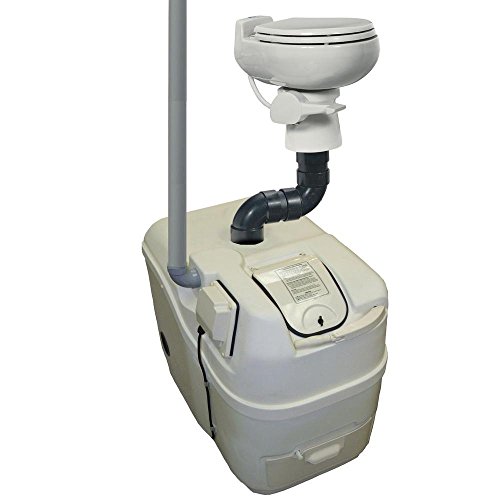
The Sun-Mar Centrex 2000 NE is a remote composting unit that installs in a basement or crawl space below a conventional-looking toilet seat above, making it the right choice when you want a completely normal bathroom appearance but need to avoid a sewer connection.
Split-system or central composting toilets separate the collection point from the composting unit. A compact pedestal or toilet seat on the floor above feeds waste through a chute directly into the Centrex drum below. This means the bathroom fixture itself looks nearly identical to a standard toilet, with no visible composting chamber, no crank handle on the side, and no miniature vent fan in the room. All the biology happens remotely in the basement where temperature, space, and access are less constrained. Sun-Mar's NSF/ANSI 41 certification covers the Centrex line, which is a substantial advantage for permit applications in states that require third-party sanitation certification for alternative systems.
Long-term owners describe the Centrex as low-maintenance once sized correctly to household use. The drum-and-finishing-drawer mechanism is the same proven design as the Excel, scaled up. The main installation requirement is a straight or minimally angled chute from toilet to unit below, which rules out slab-on-grade homes without excavation. Where that drop exists, the Centrex is the most livable composting option for a household that does not want to explain a composting toilet to every guest.
The Centrex 2000 is the right call for any off-grid home where the bathroom needs to look normal. Install a standard elongated seat pedestal above, run the chute, and guests will not notice anything unusual. That livability advantage is worth the installation complexity for permanent off-grid homes, even if it costs more than a self-contained unit.
The BioLet 65A is a Swedish-designed non-electric composting toilet with an automatically mixing composting chamber and a trap door that closes after each use, giving it a more enclosed feel than open-drum alternatives while requiring no fan or heater.
BioLet toilets have NSF/ANSI 41 certification, which the 65A carries as a selling point for permit purposes. The auto-mix paddle stirs the composting mass without any manual crank, operating mechanically when the seat is lifted and lowered. The passive vent stack requires a clear vertical run of at least six feet and an unobstructed roof exit for natural convection to move air through the chamber. In cool-to-moderate climates with low continuous liquid loads, that passive ventilation keeps the material aerobic and odor-free.
The BioLet 65A draws mixed long-term owner feedback compared to the Sun-Mar Excel in similar use cases: some owners describe consistent performance over years while others report odor issues in hot, humid conditions where passive evaporation cannot keep pace with liquid input. The sealed trap door is appreciated by users who find open-chamber designs psychologically uncomfortable, and the self-mixing action reduces the manual engagement required compared to a hand-crank drum. For cool-climate seasonal cabins with moderate use, it is a viable option with the permit-friendly NSF certification.
The BioLet 65A works best in the climates it was designed for: cool, low-humidity Scandinavian-type conditions. In the American Southeast or anywhere summer humidity is high, the non-electric evaporation model struggles. If your cabin is in the Pacific Northwest or upper Midwest and sees weekend-to-seasonal use, the auto-mix feature and NSF certification make it a reasonable alternative to the Sun-Mar Excel.
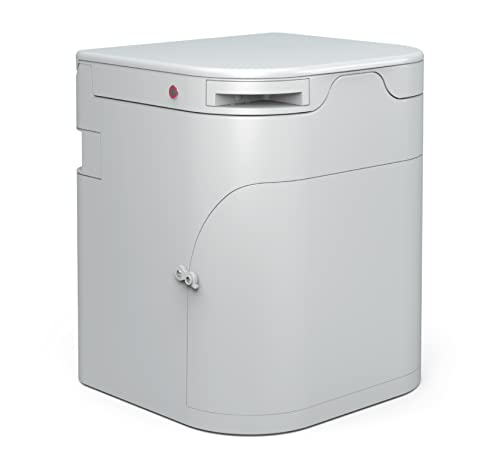
The OGO Origin is the most visually contemporary urine-diverting composting toilet in this category, with an electric agitator that replaces the hand crank, a modern injection-molded body, and a compact footprint that suits tight van builds and modern tiny homes.
The OGO Origin entered the composting toilet market after Nature's Head and Air Head established the urine-diverting segment, and it improved specifically on the ergonomic shortcomings of those designs: the crank handle is replaced by a push-button electric agitator, the liquid bottle is larger and easier to remove, and the overall body is injection-molded in a shape that looks at home in a finished bathroom rather than an industrial utility space. The 12V fan and agitator draw a modest combined current that a small solar setup handles comfortably.
Owner reports from van lifers and tiny home owners describe consistent odor performance comparable to Nature's Head when installation is correct, with the electric agitator being the most frequently praised feature. The OGO does not carry NSF/ANSI 41 certification, which limits its use in jurisdictions requiring third-party certification for permanent alternative sanitation systems. For mobile and tiny-home use where permits are less restrictive, it is the best-looking composting toilet available and a serious competitor to the Nature's Head on function.
The OGO Origin is where you go when appearance in the bathroom matters as much as function. Its electric agitator is a real quality-of-life improvement over manual cranks, and the larger liquid bottle reduces the frequency of the most repetitive maintenance task. If your build has reliable 12V power and aesthetics are part of your design brief, OGO is worth the premium over Nature's Head.

The Camco Portable Travel Toilet is not a true composting system but it fills the gap for camping, construction sites, and temporary off-grid situations where a full composting installation is not practical, with a holding tank that accepts portable deodorizer treatment and empties at a dump station.
The Camco uses a piston-pump flush mechanism that draws from the upper freshwater tank and flushes waste into the sealed lower holding tank. Treatment tablets or liquid deodorizer suppress odor between dump-outs. The 5.3-gallon lower tank handles roughly 50-60 uses before needing to be emptied at an RV dump station or standard toilet. Setup requires no tools, no vent, and no power. At a very low price point, it is the accessible entry point for anyone exploring off-grid toilet options before committing to a permanent system.
This is not a composting toilet in any biological sense: there is no decomposition, no end-product compost, and no pathogen reduction happening inside the unit. It is a portable holding tank with a rinse mechanism. That matters for anyone choosing between this and a true composting system for long-term use: the Camco requires regular dump-outs that depend on access to a dump station, while a proper composting unit processes waste on site. Include it as a transitional or supplemental option, not a replacement for a real system.
Buy the Camco for a construction project, a camping trip, or as a temporary measure while your composting system ships. Do not buy it expecting it to replace a real composting toilet for any use case that extends past a few weeks. The maintenance rhythm of dump-outs and treatment chemicals gets old fast, and it produces no on-site waste reduction benefit.
Most off-grid buyers should start with a urine-diverting composting toilet (Nature's Head, Air Head, or OGO) rather than a mixing-drum unit. Urine diversion eliminates odor at its source rather than managing it after the fact, and the maintenance pattern is more predictable. Go to a central system (Centrex) if you have a basement and want a normal bathroom look. Go to a non-electric drum (Sun-Mar Excel) only when power is completely unavailable. The right system depends on your occupancy, climate, and whether you need NSF/ANSI 41 certification for your local permit office.
Before choosing a composting toilet, you need to answer four questions: How many people will use it? Is power available? Do you need a permit? And is this a fixed installation or mobile use? Each answer narrows the field significantly.
Self-contained composting toilets house the entire composting process inside a single unit that mounts where the toilet sits. They require only a vent hose exit through a wall or roof and, for most models, a 12V DC connection for a small fan. They are compact, portable, and work in spaces without a lower level for remote installation. Central or split systems separate a toilet pedestal above from a larger composting unit below, typically in a basement or crawl space. They handle higher occupancy loads and produce a completely conventional bathroom appearance upstairs, but they require a gravity-fed drop of at least two to three feet between pedestal and unit and a fixed installation.
This is the single most important design decision in a composting toilet. Urine-diverting toilets (Nature's Head, Separett Villa, Air Head, OGO) separate liquid from solid waste at the point of deposit using a shaped seat and a dividing channel. Odor from human waste comes primarily from the chemical reaction between urine and solid waste in a wet, oxygen-poor environment. When those two streams never contact each other, that reaction cannot occur and odor is dramatically reduced. Mixed-composting toilets (Sun-Mar Excel, BioLet, Centrex) accept combined waste and rely on aeration, evaporation, and sometimes heat to manage the liquid load. They work when sized correctly to occupancy and climate, but they are more sensitive to overloading. For new buyers and mobile installations, urine-diverting models are generally more forgiving.
Manufacturers publish capacity as a number of people per day or a number of uses before emptying. These ratings assume average use frequency and a mix of liquid and solid uses in a normal ratio. For a couple living aboard a boat and treating the toilet as their only toilet, plan for the lower end of the published range. For a cabin used only on weekends by that same couple, the rated capacity applies more accurately. If your average occupancy exceeds the rated capacity, you will empty more frequently than expected, which is not a failure but a size mismatch. When in doubt, size up.
Every composting toilet requires a vent exit, whether active (fan-driven through a 2-inch or 4-inch duct) or passive (thermally driven through a larger-diameter stack). The vent must exit to outside air. Common exit routes are through a hull fitting in a marine installation, through an exterior wall in a van build, or through the roof in a cabin. The fan-driven models are more reliable across a broader range of conditions because they maintain constant negative pressure in the chamber regardless of outdoor wind direction. Passive vent stacks depend on thermal convection and can reverse briefly in windy conditions, which occasionally pushes odor back into the room. If you are building a permanent installation, active ventilation is the safer choice even if you have to add a 12V connection.
Urine-diverting composting toilets require a bulking medium added to the solids chamber: peat moss and coco coir are the two most common. The medium does several jobs simultaneously: it provides carbon to balance the nitrogen-heavy waste, it maintains porosity so air can reach the composting mass, and it absorbs surface moisture. Coco coir is the more environmentally neutral option and is available compressed in bricks that expand with water, making it easy to transport and store. Plan on adding a small amount after each solid use. Mixed-composting toilets use the same types of medium but may require less frequent addition since the drum mixing handles aeration.
The NSF/ANSI 41 standard is the U.S. certification most relevant to composting toilets. It covers non-liquid-saturating wastewater treatment systems and is the credential most state and county health departments recognize when approving alternative sanitation systems. If your composting toilet is the primary sanitation fixture for a permitted dwelling, verify with your local health department whether they require NSF/ANSI 41 certification. Nature's Head, Separett Villa, and Sun-Mar all carry NSF/ANSI 41 approval. Air Head and OGO do not, which may matter for fixed-dwelling permit applications even though it rarely affects mobile or marine use.
In most U.S. jurisdictions with a permitting process for alternative sanitation systems, your path forward with a composting toilet starts with a phone call to the county health department, not a product selection. Some counties approve any NSF/ANSI 41 unit automatically. Others require a site evaluation, a secondary treatment method for urine, or specific setback distances. Solve the permitting question before buying the toilet, not after.
A standard flush toilet uses 1.28 to 1.6 gallons of water per flush to move waste through a sewer or septic system, where treatment happens off site. A composting toilet uses no water and processes waste biologically inside the unit itself through aerobic decomposition, producing a dry, reduced-volume end product. Composting toilets are used where sewer or septic connections are unavailable, impractical, or environmentally undesirable. If a conventional flush toilet is an option for your situation, see our guide to the best toilets of 2026 for the top picks across every standard category.
Active decomposition in a composting toilet begins immediately and continues over weeks. In a urine-diverting unit, solid waste combined with bulking medium reduces to roughly one-tenth its original volume over four to six weeks for a two-person household. The material in the solids chamber is not fully composted humus when emptied: it is partially decomposed, dry, and significantly reduced in volume and pathogen load, but it typically requires a secondary composting period of several months in an outdoor pile before it is safe for garden use. Non-electric mixing-drum toilets like the Sun-Mar Excel use a finishing drawer where material undergoes final decomposition before removal.
A correctly installed and properly maintained composting toilet should produce no detectable odor inside the bathroom. Urine-diverting models achieve this by preventing the odor-causing chemical reaction between liquid and solid waste from occurring at all. Fan-ventilated models maintain negative air pressure inside the composting chamber, ensuring any odor is drawn out through the vent rather than into the room. Odor events in owner reports are almost always traceable to a specific cause: an overfull urine bottle, a kinked or blocked vent hose, insufficient bulking medium, or a fan failure. Each cause is correctable in minutes once identified.
Composting toilets are legal in all 50 U.S. states but regulated at the county level, which means requirements vary substantially. Many counties accept NSF/ANSI 41 certified units as primary sanitation systems for permitted dwellings when installed with proper ventilation and urine disposal. Some counties require a secondary system for liquid waste management, a setback from wells or property lines, or a site evaluation. Mobile and marine use typically falls under different regulations than permanent residential installation. Always contact your local health department before installing a composting toilet in a permitted dwelling.
The Nature's Head Self-Contained Composting Toilet and the OGO Origin are the two most-used composting toilets in tiny home builds. Nature's Head wins on parts availability, a longer track record, and a lower price. OGO wins on modern aesthetics, a larger urine bottle, and the convenience of an electric agitator instead of a hand crank. For a tiny home that needs to pass inspections as a permanent dwelling, check whether your jurisdiction requires NSF/ANSI 41 certification, since the Nature's Head carries it and the OGO does not. Tiny home buyers should also look at what their home weighs when choosing between the Separett Villa (heavier, higher capacity) for stationary use and the compact urine-diverting units for mobile builds. For comparisons with conventional toilet options suitable for small spaces, see our guide to the best toilets for home use.
A composting toilet breaks down human waste using aerobic decomposition inside the unit, without water or a sewer connection. Most designs either separate urine from solid waste at the seat or mix waste with bulking material and aerate it with a fan or passive vent. Solid waste reduces in volume by up to 90% over weeks as it dries and decomposes.
For a urine-diverting model used by two people, the urine bottle typically needs emptying every two to three days and the solids chamber every four to six weeks. Single users go longer; three or more people shorten both intervals significantly. Non-electric mixing-drum units like the Sun-Mar Excel are rated by people-per-day and emptied at the finishing drawer when the indicator shows ready.
Yes, with caveats. Aerobic decomposition slows significantly below 55 degrees Fahrenheit. In unheated cabins in cold climates, the biological activity in a mixing-drum unit may nearly stop during winter, which means the material will not fully process until temperatures rise. Urine-diverting models are less affected because they rely primarily on drying rather than active decomposition in the solids chamber. In very cold conditions, the urine line and bottle should be protected from freezing.
The material emptied from a composting toilet solids chamber is partially decomposed and should be treated as such. Most manufacturers recommend a secondary composting period of six months to a year in a dedicated outdoor pile before any garden application. Many off-grid users simply deposit it in a shallow trench away from water sources and vegetable gardens. Check local regulations: some jurisdictions specify minimum setbacks from wells and property lines for humanure composting.
Fan-driven composting toilets use very little power. Nature's Head draws approximately 0.17 amps at 12V DC continuously, which is about 2 watts. The OGO Origin's fan and electric agitator draw a similarly small amount. Over 24 hours, a composting toilet fan consumes less energy than a single LED light bulb left on for an hour. This makes them practical for solar-powered off-grid setups with even a modest battery bank.
In most U.S. counties, yes. Regulations vary: some counties approve NSF/ANSI 41 certified units as primary sanitation automatically; others require a site evaluation, secondary urine treatment, or variance. Call your local county health department before purchasing. Mobile and marine installations typically fall under different regulations where permits are not required for the toilet itself.
NSF/ANSI 41 is a U.S. standard covering non-liquid-saturating wastewater treatment systems, which includes composting toilets. Third-party testing by NSF International verifies that the unit performs as claimed and meets minimum sanitation and material requirements. Nature's Head, Separett, Sun-Mar, and BioLet carry this certification. It is the credential most U.S. county health departments recognize when approving alternative sanitation systems for permitted dwellings.
Yes, with the right unit. The Separett Villa 9215 is rated for three to four people in continuous use. The Sun-Mar Centrex 2000 is also rated for family-sized continuous use in a central installation. Self-contained units like the Nature's Head are optimized for one to two people; running them at four-person occupancy compresses the maintenance cycle significantly and is not ideal for primary residential use.
Coco coir and peat moss are the two standard options. Coco coir is the more environmentally preferred choice since peat is a slow-renewing resource. Both provide the carbon balance and porosity the composting process needs. Coco coir is available in compressed bricks that expand with water, making it easy to store in quantity. Add a small amount after each solid use in a urine-diverting unit to maintain a dry, aerated mass.
It depends on the design. Self-contained urine-diverting models like Nature's Head sit at a height and shape that most users find acceptable, but some have a lower seat height than a standard comfort-height toilet. The Separett Villa 9215 can be installed at a custom height with the right base. The maintenance tasks (emptying the urine bottle and solids chamber) require some physical capacity. For seniors who need a comfort-height conventional toilet, see our guide to the best toilets for seniors covering ADA-compliant comfort-height picks.
Yes, but with modification. Standard toilet paper can be added in small quantities to the solids chamber of a urine-diverting model and will decompose along with the solid waste. However, most composting toilet users choose to keep toilet paper volume low by using a small waste bin for paper rather than depositing it in the chamber, which slows the fill rate and makes emptying cleaner. Some users switch to bamboo tissue, which breaks down faster than virgin-pulp paper.
A fan failure in an active-vent composting toilet will eventually allow odor to build in the composting chamber and migrate into the room, since the negative pressure that contains odor is no longer present. Most composting toilet fans are standard 12V computer case or marine fans that can be replaced inexpensively. Nature's Head and Air Head both use fans that are readily available and easy to swap without specialized tools. Keep a spare fan on hand if you rely on the toilet for full-time off-grid use.
Urine-diverting models route liquid waste into a separate holding bottle or drain connection that is managed separately from the composting chamber. The urine bottle is typically emptied every two to three days for one to two users and can be diluted and used as a plant fertilizer (1:8 ratio with water in most guidelines) or disposed of in a legal drain. Non-diverting mixing-drum models rely on evaporation through the vent stack to manage liquid volume, which is why they are more sensitive to liquid overloading and climate conditions.
Quality composting toilets last 10 to 20 years or more with basic maintenance. The primary wear components are the fan, any seals on the liquid diverter or drum, and the liquid bottle. All are replaceable. Nature's Head offers a 5-year warranty, and owners report units running well beyond that. The fiberglass and heavy-duty polyethylene bodies of Sun-Mar units are similarly durable. The main life-limiting factor is usually a neglected maintenance issue that becomes a cleaning or odor problem rather than a mechanical failure.
Yes. Nature's Head, Air Head, and OGO Origin are all used in RVs and camper vans. The vent hose typically exits through a side wall or cabinet vent. The 12V fan runs from the vehicle's auxiliary battery. Urine bottles empty at dump stations, campground bathrooms, or diluted into any legal drain. The main installation variable is the vent run length: keep it as short and straight as possible, since long or kinked runs reduce fan effectiveness and can allow odor to linger.
Incinerating toilets burn waste to sterile ash using electricity or propane, producing a small amount of dry ash that can be disposed of in standard trash. They require significantly more power than a composting toilet (typically 1,000 to 1,800 watts per cycle for electric models) and produce combustion odor that must be vented. Composting toilets require no combustion energy and produce a reusable or compostable end product. Incinerating toilets are better suited to extreme cold where biological composting slows to a stop. Composting toilets are better for energy-constrained off-grid systems in temperate climates.
Not effectively and not safely. All composting toilets require ventilation. Without a vent, odor cannot be managed and the aerobic conditions needed for decomposition cannot be maintained. Non-electric units use a passive chimney-effect stack; electric units use a fan-driven duct. The vent path must exit to outside air. Attempts to use a composting toilet in an enclosed space without a proper vent exit will result in odor problems regardless of the unit's design quality.
Standard composting toilets are sized for one to four people depending on the model. Large families of five or more will exceed the rated capacity of most residential composting units, requiring either a central system sized for higher load or multiple units. For large families in off-grid settings, the Sun-Mar Centrex line offers the highest continuous-use capacity, while some installations use two Nature's Head or Separett units in separate bathrooms to distribute the load. For conventional toilets designed for high-traffic family use, see our guide to the best toilets for large families.
The Nature's Head Self-Contained Composting Toilet is the default recommendation for off-grid buyers: its urine-diverting design eliminates odor at the source, the spider-handle agitator is field-proven across a decade of liveaboard, van-life, and cabin use, and the 5-year warranty backs a unit that owners routinely run for 10-plus years. Go to the Separett Villa 9215 when your household has three or more people or you want a completely hands-off maintenance routine with biodegradable bag containers. Choose the Sun-Mar Excel only when power is truly unavailable. For anyone evaluating whether a composting toilet is the right choice at all, compare it against the best conventional options in our guide to the best toilets for home use.
Learn why toilet trapways curve like an S, how each bend blocks sewer gas, and what the shape means for clogs and…
Read the guideAlmost every US toilet has a left-side handle. Learn the plumbing and mechanical reasons behind the layout and when it actually changes.
Read the guideHome toilets rely on tanks because household water lines lack the pressure that public flushometer systems use to flush straight from the…
Read the guide