Best Toilet Brands Ranked 2026
Brands4.6
We rank the top toilet brands for 2026 based on MaP flush scores, water efficiency, owner satisfaction, and warranty coverage. Find the…
Read the guideAmerican Standard has made toilets in the United States for over 140 years. This brand guide covers how their flush technology works, where they stand against TOTO and Kohler, and which American Standard models earn their place in 2026 based on MaP flush-test data, EPA WaterSense certification, trapway engineering, and aggregated owner reports.
Research updated June 2026.
The best American Standard toilet for most households is the Champion 4, which earns a perfect 1000-gram MaP score using a four-inch flush valve that clears heavy waste loads in a single flush reliably. Households prioritizing water savings should choose the Cadet 3 FloWise, which matches the Champion 4's MaP score at just 1.28 GPF with EPA WaterSense certification.
American Standard is one of the oldest continuously operating plumbing brands in the United States, founded in 1875 and still headquartered domestically. Unlike TOTO, which competes on ceramic glaze technology and Japanese precision engineering, or Kohler, which invests heavily in premium design and smart toilet integration, American Standard built its modern reputation on a simpler promise: a toilet that flushes hard and does not clog. The Champion 4's four-inch flush valve, introduced in the early 2000s, became the specific engineering decision that separated American Standard from competitors still using two-inch valves at the time.
For a cross-brand perspective comparing American Standard against TOTO's Double Cyclone and Kohler's AquaPiston technology, see our best flushing toilets pillar guide. If you are comparing brands specifically, our Best TOTO Toilets of 2026, Ranked and Best Kohler Toilets of 2026, Ranked guides cover those lineups in detail.
American Standard uses several distinct flush systems depending on the product line. Understanding these systems helps you choose the right model for your household's specific needs.
The flagship technology is the Champion flushing system, defined by an oversized four-inch flush valve paired with a fully glazed 2-3/8-inch wide trapway. The four-inch valve is the largest in the mainstream residential market. Standard toilets use a two-inch or three-inch valve; the four-inch valve dumps the tank volume into the bowl roughly twice as fast, creating a surge that clears bulk waste before it has a chance to jam the trapway. The fully glazed trapway means the ceramic surface is smooth end-to-end, so waste slides through without the friction buildup that gradually narrows unglazed passages over time. MaP testing under ISO-equivalent methodology confirms the Champion 4 clears 1000 grams of solid waste in a single flush, which is the maximum score the test awards.
The VorMax system takes a different approach: instead of relying solely on raw valve size, it engineers a single-stream rim jet that forces water down one side of the bowl in a spiraling vortex. This cleaning pattern covers more of the bowl surface than a traditional rim-feed design, directing the strongest water flow directly at the trapway entrance. American Standard claims the VorMax cleans 2x better than a standard toilet, a figure based on third-party laboratory testing of surface stain removal. The VorMax Plus model adds an ActiClean self-cleaning system that automatically dispenses cleaning solution on the full flush. MaP scores for VorMax models reach 1000 grams on full-flush configurations.
The Cadet line uses a three-inch flush valve, a step down from the Champion's four-inch valve but still a meaningful improvement over the two-inch valves in older residential toilets. The fully glazed 2-1/8-inch trapway is slightly narrower than the Champion's, though still wide enough to achieve 1000 grams on MaP testing when paired with the FloWise 1.28 GPF configuration. The Cadet 3 is American Standard's highest-volume seller precisely because it delivers near-Champion-level flush performance at a lower price point while meeting EPA WaterSense efficiency standards.
Most American Standard toilets carry the EverClean surface treatment, a permanent antimicrobial layer bonded into the vitreous china during firing. American Standard states this inhibits the growth of bacteria, mold, and mildew on the toilet's surface. Unlike TOTO's CeFiONtect glaze, which is a nano-particle-level smooth coating aimed at preventing waste from adhering, EverClean is primarily antimicrobial rather than a friction-reduction treatment. Both approaches improve hygiene between cleanings, but they target different mechanisms.
| Toilet | Best For | MaP Score | GPF | Flush System | Rating | Check Price |
|---|---|---|---|---|---|---|
| American Standard Champion 4 | Maximum bulk flushing | 1000 g | 1.6 | Champion (4") | 4.7 | Check price |
| American Standard Cadet 3 FloWise | Best value + WaterSense | 1000 g | 1.28 | Cadet (3") | 4.6 | Check price |
| American Standard Champion 4 Max | Power flush at 1.28 GPF | 1000 g | 1.28 | Champion (4") | 4.6 | Check price |
| American Standard VorMax Plus | Self-cleaning bowl | 1000 g | 1.28 | VorMax | 4.5 | Check price |
| American Standard H2Option | Dual flush water savings | 1000 g | 0.92/1.28 | Dual Flush | 4.4 | Check price |
| American Standard Cadet 3 | Everyday family toilet | 1000 g | 1.28 | Cadet (3") | 4.5 | Check price |
| American Standard Concealed Trapway | Skirted modern look | 800 g | 1.28 | Cadet (3") | 4.3 | Check price |
| American Standard Colony | Budget-friendly pick | 800 g | 1.28 | Standard (2") | 4.2 | Check price |
The American Standard Champion 4 has the strongest flush in the brand's lineup. Its four-inch flush valve, the largest available in mainstream residential toilets, combined with a fully glazed 2-3/8-inch trapway, earns a perfect 1000-gram MaP score, meaning it clears the maximum measurable solid-waste load in a single flush. The Champion 4 Max achieves the same 1000-gram score while using 1.28 GPF instead of 1.6 GPF, making it the stronger-flushing choice for households that also need water efficiency.
MaP (Maximum Performance) testing is an independent flush-performance methodology that measures how many grams of simulated solid waste a toilet clears in a single flush. A score of 500 grams is considered adequate for average household use. A score of 800 grams is strong, and 1000 grams is the test ceiling, awarded to toilets that clear the maximum load without failure. Most top American Standard models, including the Champion 4, Cadet 3 FloWise, Champion 4 Max, and VorMax Plus, score 1000 grams. The Colony and some design-focused skirted models score 800 grams, which is still above average but below the brand's leading flush tier.
The American Standard Champion 4 is the most clog-resistant toilet American Standard makes. Its four-inch flush valve creates a faster, higher-volume surge than any three-inch or two-inch valve can generate, and its 2-3/8-inch fully glazed trapway is wide enough to pass bulk waste in a single pass without lodging. Aggregated owner reviews specifically cite clog elimination as the top reason households replace older toilets with the Champion 4, often after years of repeated plunging. The Cadet 3 FloWise is the next-best option when clog resistance must be balanced against EPA WaterSense compliance.
American Standard, TOTO, and Kohler all compete in the mid-range to premium residential toilet market but occupy distinct positions. American Standard leads on raw flushing power per dollar: the Champion 4's four-inch flush valve outpaces Kohler's AquaPiston and approaches TOTO Drake's gravity-flush performance, but at a lower typical price point. TOTO leads on ceramic bowl cleanliness due to its CeFiONtect nano-glaze coating, which prevents waste adhesion more effectively than American Standard's EverClean antimicrobial surface. Kohler leads on design range and smart toilet integration, with the broadest catalog of skirted, wall-hung, and intelligent toilet configurations. For clog resistance at a mid-range price, American Standard's Champion line wins. For bowl hygiene, TOTO wins. For design flexibility, Kohler wins. See our dedicated guides: Best TOTO Toilets of 2026, Ranked, Best Kohler Toilets of 2026, Ranked, and Best American Standard Toilets of 2026.
Yes. Multiple American Standard models carry EPA WaterSense certification, which requires a maximum of 1.28 gallons per flush and independent flush performance verification. WaterSense-certified American Standard models include the Cadet 3 FloWise (1.28 GPF), Champion 4 Max (1.28 GPF), VorMax Plus (1.28 GPF), and H2Option (0.92/1.28 GPF dual flush). All WaterSense-certified toilets use at least 20% less water than the 1.6 GPF federal maximum, and the H2Option's 0.92 GPF low-flush mode uses 43% less water than that standard. WaterSense certification is managed by the EPA and details are publicly available at epa.gov/watersense.
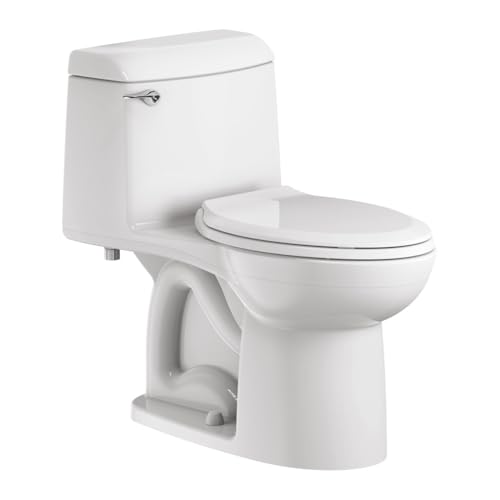
The Champion 4 earns the top position on raw, independently verified flush performance: a four-inch flush valve, a 2-3/8-inch fully glazed trapway, and a perfect 1000-gram MaP score that outclasses nearly every comparable gravity toilet on the market.
The four-inch flush valve is the Champion 4's defining engineering decision. When the flush is triggered, the oversized valve dumps the full tank volume into the bowl in roughly 1.6 seconds, far faster than the 2-3 seconds a two-inch valve produces. This speed creates a strong siphon that pulls waste through the fully glazed 2-3/8-inch trapway before solid material has time to stall. American Standard's MaP certification is independently verified, not self-reported, and the 1000-gram ceiling score means the Champion 4 cleared the maximum solid load during testing with zero failures across multiple flush attempts.
Owner reports across aggregated review platforms consistently describe a before-and-after experience: households that replaced older two-inch-valve toilets with the Champion 4 report eliminating the need to keep a plunger next to the toilet entirely. The most common owner complaint is the 1.6 GPF water use, which adds up on high-frequency household water bills and does not qualify for WaterSense rebates available in many municipalities. Maintenance reports are positive: the flush valve and tank internals use standard American Standard components that are widely stocked at hardware stores, simplifying repair. The limited lifetime warranty on the vitreous china and a one-year warranty on the flush mechanism reflect standard industry terms for this price tier.
The Champion 4 is the correct first choice for any household that has plunged a toilet more than twice in a calendar year. No marketing claim or marketing name matters as much as that four-inch valve on a clogged trapway. If water efficiency is important to you, step directly to the Champion 4 Max, which keeps the same valve in a 1.28 GPF configuration. Do not compromise down to a three-inch-valve toilet to save cost on the initial purchase and then spend that difference on plumber visits.

The Cadet 3 FloWise achieves the same 1000-gram MaP score as the Champion 4 while using 20% less water per flush and carrying EPA WaterSense certification, making it the strongest case for performance-per-gallon in the American Standard catalog.
The Cadet 3 uses a three-inch flush valve paired with a 2-1/8-inch fully glazed trapway. While narrower than the Champion 4's trapway by 1/4 inch, this design still achieved the 1000-gram MaP ceiling in independent testing. The 1.28 GPF flow rate makes it eligible for EPA WaterSense certification and for local utility rebates in states including California, Texas, Colorado, and several northeastern states where rebate programs are active. American Standard includes the EverClean antimicrobial surface treatment on Cadet 3 models as standard.
Aggregated owner reports describe the Cadet 3 FloWise as a reliable household standard with very few clog complaints, though a small minority of owners with older sewer lines report occasional slow drain issues that turn out to be pipe-related rather than toilet-related. The Cadet 3 platform has been in production long enough that replacement parts, including fill valves, flappers, and handles, are stocked at virtually every hardware retailer, which reduces long-term maintenance cost. For most households replacing a 3.5 GPF or 1.6 GPF older toilet, the Cadet 3 FloWise is the most straightforward upgrade that improves both flushing and water efficiency simultaneously.
The Cadet 3 FloWise is where most households should start their search. It hits 1000 grams on MaP at 1.28 GPF, which means it beats the old 1.6 GPF toilet on both clog resistance and water use. The price point is low enough that replacing two or three toilets in a house simultaneously makes sense financially, especially if WaterSense rebates apply in your area. Reserve the Champion 4 specifically for the bathroom that has a chronic clog history.
The Champion 4 Max is the rare toilet that combines a four-inch flush valve, a 1000-gram MaP score, and EPA WaterSense certification at 1.28 GPF, removing the only meaningful tradeoff between the Champion 4 and the Cadet 3 FloWise.
American Standard engineers the Champion 4 Max to retain the four-inch flush valve from the original Champion 4 while reducing water volume to 1.28 GPF. Achieving 1000 grams at this lower water volume requires precise tank geometry and fill-level calibration: the smaller water volume must be delivered fast enough to generate the siphon needed to clear a 1000-gram load. MaP testing confirms the design succeeds. The result is a toilet that performs identically to the Champion 4 on the most clog-relevant metric, uses 20% less water per flush, and qualifies for WaterSense rebates.
Owner feedback for the Champion 4 Max closely mirrors the original Champion 4 in terms of flush satisfaction and clog elimination, which is the expected result given the shared valve size. The main distinguishing owner comment is positive surprise at the water savings: households coming from 1.6 GPF models notice a reduction in water usage on metered bills without any perceived reduction in flush strength. Reliability reports are consistent with the Champion 4 platform, with the same widely available replacement parts and the same limited lifetime ceramic warranty. For most households that can budget up from the standard Cadet 3, the Champion 4 Max is the rational choice.
The Champion 4 Max closes the last argument between choosing the Champion 4 and the Cadet 3 FloWise. If your primary concern is preventing clogs, the four-inch valve is the decisive factor and you want this model. If your primary concern is cost and the Cadet 3's three-inch valve at 1000 grams MaP is sufficient, the Cadet 3 FloWise saves money upfront. There is no wrong answer between these two, but there is no longer a reason to buy the original 1.6 GPF Champion 4 over the Max version.

The VorMax Plus pairs a 1000-gram MaP score with an integrated ActiClean self-cleaning system that dispenses cleaning solution automatically on every full flush, making it the right choice for households that want the bowl to stay cleaner between manual cleaning sessions.
The VorMax flush system concentrates all water flow into a single rim jet that spirals water around the bowl in a vortex rather than distributing it through multiple smaller rim holes. This design keeps the rim area simpler and less prone to mineral deposit buildup, since there is only one jet opening to maintain rather than a series of small holes that can clog with hard water scale. American Standard's third-party laboratory data claims the VorMax design removes 2x more waste from bowl surfaces per flush compared to a standard toilet. The one-piece ceramic design reduces the exterior cleaning burden compared to two-piece toilets, which have a gap between tank and bowl that accumulates grime.
The ActiClean system uses a proprietary cleaning cartridge installed in the tank that releases cleaning solution when the full-flush lever is used. Short flushes do not trigger the dispenser, which helps extend cartridge life. American Standard rates each cartridge at approximately 1,700 full flushes, roughly three months in a single-occupant bathroom or less in high-use settings. Owner reviews note the self-cleaning benefit is meaningful but not a substitute for periodic manual cleaning: the bowl stays cleaner between sessions, but a visible ring still develops over weeks without scrubbing. The one-piece ceramic carries the same limited lifetime warranty as the two-piece Champion and Cadet lines.
The VorMax Plus is the correct choice for households that genuinely hate scrubbing toilets and are willing to pay for cleaning cartridges to reduce that frequency. The 1000-gram MaP score means flush performance is not compromised for the cleaning feature. Compare the VorMax cleaning approach to TOTO's CeFiONtect glaze: the VorMax actively dispenses cleaner each flush while TOTO's glaze passively resists adhesion. Both work, but the VorMax's active approach is more visible to daily users who look for results.

The H2Option offers 0.92 GPF liquid-waste and 1.28 GPF solid-waste flush modes in a single EPA WaterSense-certified toilet, achieving measurably lower water bills in households where the low-flush mode is used consistently on appropriate waste loads.
The H2Option uses a dual-button flush mechanism on the tank lid: one button releases 0.92 gallons for liquid waste and the other releases 1.28 gallons for solid waste. In a household of four where the low-flush button is used two out of three flushes, the daily water savings compared to a 1.6 GPF toilet can exceed 10 gallons per day, which translates to meaningful reductions on metered water bills over a year. The full-flush MaP score of 1000 grams confirms the 1.28 GPF flush performs adequately on solid waste loads. American Standard does not publish a MaP score for the 0.92 GPF mode, which is expected since that mode is not designed for solid-waste clearing.
The most common owner complaint with the H2Option is user habit: households that push the full-flush button for every use eliminate the water savings entirely, and households with older sewer lines occasionally report that the 0.92 GPF low flush does not carry waste far enough down the drain to prevent odor. Both issues are behavioral or infrastructure-related rather than product defects. The dual-button mechanism itself receives positive reliability reviews, with few reports of button failure or leaking in long-term owner data. The H2Option is particularly relevant in California, Arizona, and Nevada, where water utility pricing makes GPF reduction financially significant.
Dual-flush toilets deliver real water savings only when households actually use the low-flush mode on appropriate loads. Before buying the H2Option, be honest about your household's habits. If all occupants are likely to use the full-flush button for convenience, you are better served by the Cadet 3 FloWise at 1.28 GPF with simpler mechanics. If your household is disciplined about dual-flush use, the H2Option is the highest water-efficiency toilet American Standard makes without stepping to a 0.8 GPF pressure-assist model.

The standard Cadet 3 is the highest-volume seller in the American Standard lineup because it reliably scores 1000 grams on MaP testing, uses a three-inch flush valve for above-average flush speed, and ships with the EverClean antimicrobial surface at a mid-range price point accessible for multi-toilet household projects.
The Cadet 3 platform has been in production long enough that its long-term reliability record is well established in owner data. Reports spanning five to ten years of ownership describe consistent flush performance with no significant valve or seal degradation, which is what you expect from a toilet using widely standard three-inch valve components. American Standard supplies the Cadet 3 in configurations covering round and elongated bowl shapes, standard and Right Height seating, as well as left-hand and right-hand flush options, making it adaptable to nearly any existing bathroom layout without retrofit complications.
The 1000-gram MaP score is the number that matters most here. At 1.28 GPF with a three-inch valve, the Cadet 3 clears the same maximum test load as the Champion 4 and the Champion 4 Max. The practical difference in household use is marginal for most families: the four-inch valve produces a faster initial surge that some plumbers prefer for worst-case loading scenarios, but for typical residential use, the Cadet 3's 1000-gram MaP score represents full adequacy. The EverClean antimicrobial surface is present on all Cadet 3 models, maintaining the same bowl hygiene between cleanings as the rest of the American Standard lineup.
The Cadet 3 is the reliable baseline of the American Standard lineup. If you need one toilet for a rental property or a secondary bathroom and the budget does not support the Champion 4 Max, the Cadet 3 at 1000 grams MaP and 1.28 GPF is the right call. The parts availability alone, which is better for the Cadet 3 than for any specialized model, is a meaningful advantage for landlords or property managers who need to fix toilets quickly with hardware-store parts.

The Concealed Trapway one-piece is American Standard's strongest entry for design-conscious bathrooms, providing a clean skirted silhouette that hides the trapway contours behind smooth ceramic, reducing exterior cleaning effort while maintaining 800-gram MaP performance at 1.28 GPF.
The Concealed Trapway design encases the trapway in smooth ceramic that extends the skirt of the toilet base to the floor, eliminating the exposed S-curve that characterizes standard two-piece toilets. This design makes the toilet visually cleaner and easier to wipe down on the exterior since there are no trapway ridges where dust, hair, and grime accumulate. The one-piece construction eliminates the tank-to-bowl joint, another common grime accumulation point in two-piece designs. American Standard applies the EverClean antimicrobial surface to skirted models as standard.
The 800-gram MaP score reflects a step down from the Champion and Cadet 3 lines. This is consistent with the engineering tradeoffs in skirted toilets: the concealed trapway geometry reduces the maximum achievable trapway width compared to exposed-trapway designs. An 800-gram MaP score is above average for a residential toilet, and it handles normal household use without regular clogging for most families. However, households with a documented history of clogs or heavy-use family bathrooms should be honest about whether the design priority justifies the flush performance tradeoff. Brands including Woodbridge, whose T-0001 and T-0019 models compete in the skirted one-piece category, also offer 800-gram MaP scores with comparable aesthetics if cross-brand comparison is useful; see our Best Woodbridge Toilets of 2026 guide for that comparison.
The Concealed Trapway is the right American Standard toilet for a master bathroom renovation where the toilet is a design element, not just a utility fixture. The 800-gram MaP score is adequate for two adults. If you have children or a household with four or more people, reconsider: the Champion 4's 1000-gram score and four-inch valve handle high-frequency heavy use in a way that an 800-gram toilet cannot always match. Buy the skirted design for bathrooms where appearance matters; buy the Champion 4 for bathrooms where performance is the only criteria.

The American Standard Colony is the entry-level model for buyers who need a dependable American Standard toilet at the lowest available price, accepting an 800-gram MaP score and a standard two-inch flush valve in exchange for significantly reduced upfront cost.
The Colony uses a two-inch flush valve, which is the entry-level configuration for gravity-flush toilets. A two-inch valve delivers a slower initial surge compared to the three-inch and four-inch valves in the Cadet and Champion lines, which translates to the 800-gram MaP score rather than 1000 grams. For a guest bathroom used occasionally or a powder room with liquid-waste-only use, 800 grams is adequate. The 1.28 GPF flow rate qualifies the Colony for WaterSense certification, and the EverClean antimicrobial surface is present on Colony models, maintaining surface hygiene parity with higher-spec American Standard toilets.
Owner reports for the Colony are generally positive for low-frequency use applications but include a higher rate of clog complaints compared to Cadet 3 and Champion models when used in high-frequency family bathrooms. This is the predictable result of the narrower flush valve and lower MaP score. For buyers who understand the Colony's positioning as an entry-level model and use it in appropriate low-demand applications, it serves well. For buyers considering the Colony for a primary household bathroom used by multiple people daily, the additional cost to upgrade to the Cadet 3 is justified by the 25% improvement in MaP score and meaningfully wider flush valve.
Buy the Colony only if cost is the decisive factor and the bathroom is low-frequency. If you are a landlord, the Colony in a single-occupant unit or guest bathroom makes economic sense. If you are outfitting a primary bathroom for a family, spend the difference to reach the Cadet 3 FloWise. The Colony's 800-gram MaP score is not insufficient for all applications, but it will show its limitations quickly in any high-demand situation. The Cadet 3 is worth the premium over the Colony for any bathroom that gets daily family use.
The American Standard lineup breaks cleanly into two tiers based on flush valve size. The Champion series (four-inch valve) and the Cadet series (three-inch valve) both achieve 1000 grams on MaP, so the decision is about priority: maximum surge speed and widest trapway versus broader style options and lower entry cost. The Colony sits below both tiers at 800 grams. Do not let the brand name or price guide your choice here. Let the MaP score and valve size match the actual demand of the bathroom you are equipping.
If you have plunged your current toilet more than twice in the past year, the issue is almost certainly valve and trapway geometry, not user error. The fix is a toilet with a larger flush valve and a wider glazed trapway. That points directly to the Champion 4 or Champion 4 Max. If your current toilet flushes adequately but you are replacing it for water savings, efficiency, or design reasons, the Cadet 3 FloWise covers all those needs at a lower price than the Champion 4 Max.
American Standard labels Right Height models at 16.5 inches from floor to bowl rim, which matches the seat height of a standard chair. This height reduces knee stress for adults and is classified as ADA-compliant for accessibility. Standard-height models sit at 14-15 inches, which is easier for children to use but harder for adults with limited mobility to stand from. Most buyers should default to Right Height unless specific household members require standard height for ergonomic or accessibility reasons.
Rough-in distance is measured from the finished wall behind the toilet to the center of the floor drain. Most American homes have a 12-inch rough-in, which is what the Cadet 3, Champion 4, and most American Standard models assume. A small percentage of homes have 10-inch or 14-inch rough-ins, particularly in older construction. American Standard publishes rough-in specifications for each model, and selecting a toilet with the wrong rough-in requires floor work or adapter kits that add installation cost. Measure before ordering.
Two-piece toilets (separate tank and bowl) dominate American Standard's lineup in the Champion and Cadet series. They are less expensive to manufacture and ship, easier to repair because tank components are accessible without moving the entire unit, and available in a wider range of configurations. One-piece toilets (integrated tank and bowl) are easier to clean on the exterior because there is no tank-to-bowl joint, look more contemporary, and are somewhat shorter front-to-back in some designs. American Standard's VorMax Plus and Concealed Trapway models are their primary one-piece options. The main practical difference for most buyers is aesthetics and cleaning convenience, not flush performance.
Gerber's Viper and Avalanche models compete directly with the Cadet 3 on gravity-flush performance, with the Gerber Viper achieving 1000 grams at 1.28 GPF using a different flush valve geometry. Gerber's warranty and parts availability are strong in North American markets, making it a legitimate alternative if local pricing favors Gerber. Woodbridge's T-0001 and T-0019 compete in the skirted one-piece segment at 800-gram MaP scores similar to American Standard's Concealed Trapway model. Swiss Madison's St. Tropez and other skirted models occupy the design-focused segment. None of these brands match the Champion 4's four-inch valve advantage in the clog-resistance category. For the clog-resistance use case specifically, the Champion 4 and Champion 4 Max have no direct equivalent in the Gerber, Woodbridge, or Swiss Madison lineups at comparable price points. See our Best American Standard Toilets of 2026 guide for a deeper comparison within the brand.
The four-inch flush valve is the mechanism inside the tank that opens to release water into the bowl when you flush. Standard toilets use a two-inch valve; the Champion 4's four-inch valve is twice the opening diameter, which allows water to rush into the bowl approximately twice as fast. This faster initial surge creates a stronger siphon that clears heavier solid waste loads without a second flush. Independent MaP testing confirms this design achieves 1000 grams, the maximum test score.
The American Standard Champion 4 achieves a MaP score of 1000 grams, which is the maximum score awarded by Maximum Performance (MaP) flush testing. This score means the toilet cleared a 1000-gram simulated solid waste load in a single flush with zero failures during independent testing. The Champion 4 Max and Cadet 3 FloWise also achieve 1000 grams. The Colony and Concealed Trapway models score 800 grams.
Several American Standard models carry EPA WaterSense certification, including the Cadet 3 FloWise (1.28 GPF), Champion 4 Max (1.28 GPF), VorMax Plus (1.28 GPF), and H2Option (0.92/1.28 GPF). WaterSense certification requires a maximum of 1.28 gallons per flush and independent flush performance verification. The original Champion 4 at 1.6 GPF does not qualify for WaterSense certification because it exceeds the 1.28 GPF threshold.
Both use the same four-inch flush valve and the same 2-3/8-inch fully glazed trapway, and both achieve 1000 grams on MaP testing. The Champion 4 uses 1.6 GPF and does not qualify for EPA WaterSense certification. The Champion 4 Max uses 1.28 GPF, is EPA WaterSense certified, and qualifies for WaterSense rebates in applicable municipalities. For most buyers, the Champion 4 Max is the better choice because it delivers identical flush performance with 20% less water per flush.
The Cadet 3 FloWise achieves the same 1000-gram MaP score as the Champion 4, meaning both clear the maximum solid-waste test load in a single flush. The practical difference is in flush valve size: the Champion 4 uses a four-inch valve versus the Cadet 3's three-inch valve. The four-inch valve produces a faster initial water surge, which is the deciding factor in worst-case clogging scenarios. For typical household use, both perform comparably. For households with a documented clogging history, the Champion 4's larger valve is the more conservative choice.
EverClean is an antimicrobial surface treatment that American Standard bonds into the vitreous china during manufacturing. It inhibits the growth of bacteria, mold, and mildew on the toilet surface. Unlike TOTO's CeFiONtect glaze, which uses nano-particles to create a slicker surface that reduces waste adhesion, EverClean is primarily a microbial growth inhibitor. Both technologies improve hygiene between cleanings but through different mechanisms. EverClean is a permanent treatment that does not wear off with cleaning products.
The vitreous china of an American Standard toilet is covered by a limited lifetime warranty against cracking and manufacturing defects. The ceramic itself can last 50 years or longer with normal use. Tank components including fill valves, flush valves, and flappers are wear parts with a typical service life of 5-10 years, depending on water quality and usage frequency. American Standard tank components are standard across the industry and stocked at hardware retailers nationwide, making repairs straightforward without specialized parts. Hard water accelerates mineral buildup in tank valves and may shorten component life.
The majority of American Standard toilet models are designed for a 12-inch rough-in, which is the distance from the finished wall to the center of the floor drain. This is the most common rough-in in North American residential construction. Some American Standard models are available in 10-inch and 14-inch rough-in configurations, but selection is more limited. Always measure your rough-in distance before selecting a toilet. Most homes built before 1990 have 12-inch rough-ins, though older construction occasionally differs.
American Standard's Right Height bowl height of 16.5 inches from floor to bowl rim meets ADA (Americans with Disabilities Act) guidelines for accessible toilet height, which require a seat height of 17-19 inches including the seat. Right Height models are suitable for adults and recommended for users with limited knee mobility or who find standing from a low seat difficult. Standard-height American Standard models at 14-15 inches are lower than ADA guidelines and are better suited for households with children who need a lower seated position.
VorMax is American Standard's single-jet flush system that concentrates the full water flow through one rim port rather than distributing it through multiple smaller rim holes. The single jet creates a spiraling vortex that covers the bowl surface more completely per flush compared to standard multi-port rim designs, and it directs the strongest water force toward the trapway entrance. American Standard claims VorMax cleans 2x more bowl surface area per flush than a standard toilet, based on third-party laboratory stain removal testing. VorMax Plus models add the ActiClean automatic cleaning dispenser.
The ActiClean system in the VorMax Plus uses a cleaning cartridge installed inside the tank that releases cleaning solution into the bowl when the full-flush lever is activated. Short flushes do not trigger the dispenser. American Standard rates each cartridge at approximately 1,700 full flushes, roughly three months in a single-person bathroom. The system reduces the frequency of manual bowl scrubbing but does not eliminate it entirely. Cartridge replacements are proprietary to the ActiClean system and must be purchased as American Standard replacement parts.
American Standard's Champion 4 and Champion 4 Max, with their four-inch flush valves and 1000-gram MaP scores, match or exceed the Kohler Highline and Cimarron's AquaPiston-driven performance on MaP test results. Kohler's Highline and Cimarron both achieve strong MaP scores, but their AquaPiston uses a canister-style valve rather than a flapper, which Kohler claims improves water seal reliability over time. Both brands reach 1000 grams on their top gravity-flush models. American Standard's advantage is the four-inch valve's wider trapway diameter; Kohler's advantage is the canister valve's long-term seal performance. See our Best Kohler Toilets of 2026, Ranked for full details.
Yes. The American Standard H2Option is the primary dual-flush model in the lineup. It uses 0.92 gallons per flush for liquid waste and 1.28 gallons per flush for solid waste. The full-flush mode achieves a 1000-gram MaP score. The H2Option is EPA WaterSense certified and is available in elongated bowl configurations with Right Height seating. Activation uses a two-button mechanism on the tank lid: one button for each flush volume.
American Standard is a US-founded brand (1875) that has historically manufactured toilets at domestic facilities. As of 2026, American Standard's parent company is LIXIL Group, a Japanese conglomerate that also owns GROHE. Manufacturing for the North American market includes facilities in the United States and other locations. American Standard maintains its US headquarters and product development operations domestically. Buyers specifically concerned with country of manufacture should verify current production location information directly with American Standard, as manufacturing sourcing can change over time.
American Standard offers a limited lifetime warranty on the vitreous china (the ceramic body) against defects in material and workmanship. Tank components, including fill valves, flush valves, flappers, and handles, are covered for one year. The warranty is limited to the original purchaser and requires proof of purchase. American Standard's warranty terms are standard for the residential toilet industry and comparable to those offered by Kohler and TOTO on equivalent product tiers. Extended warranty options are not typically offered directly by American Standard but may be available through some retailers.
Yes. American Standard tank components are among the most widely stocked replacement parts in hardware and plumbing supply stores in North America. Flush valves, fill valves, flappers, handles, and wax rings are available at Home Depot, Lowe's, and most local plumbing supply houses. American Standard also sells replacement parts directly through its website. The Cadet 3 and Champion 4 platforms use components that have been in production long enough to ensure excellent parts availability even for older units.
The Champion 4's trapway is 2-3/8 inches wide and fully glazed from bowl to sewer connection. Trapway width determines the maximum diameter of solid material that can pass without getting lodged. A wider, smoother trapway means waste that would jam a narrower unglazed trapway passes cleanly. The 2-3/8-inch width on the Champion 4 is the widest in the mainstream residential market. By comparison, the Cadet 3's trapway is 2-1/8 inches wide, and many older toilets use 1-3/2-3/8-inch trapways that are significantly more prone to clogging.
American Standard, particularly the Cadet 3 and Champion 4 models, is a strong choice for rental properties. The brand's flush reliability reduces the frequency of tenant-reported clog complaints. Replacement parts are inexpensive and widely available, reducing maintenance cost when repairs are needed. The standard two-piece design is easier to service than one-piece or wall-hung configurations. Many property managers specifically standardize on Cadet 3 or Champion 4 models across multiple units to simplify parts inventory and maintenance procedures.
American Standard's core strength is delivering more flush power per dollar than any comparable mainstream brand. The Champion 4 Max is the definitive pick: it keeps the four-inch flush valve that built the brand's clog-resistance reputation, achieves a 1000-gram MaP score, and qualifies for EPA WaterSense certification at 1.28 GPF, eliminating the only historical reason to choose the original 1.6 GPF Champion 4. For budget-focused buyers, the Cadet 3 FloWise at 1000 grams MaP and 1.28 GPF is the strongest value toilet in the brand's lineup. For households prioritizing bowl hygiene and self-cleaning, the VorMax Plus adds the ActiClean system without sacrificing flush performance. American Standard does not compete on ceramic glaze technology the way TOTO does with CeFiONtect, nor on design breadth the way Kohler does, but for the household that simply needs a toilet that does not clog, American Standard's engineering focus on valve size and trapway width produces exactly that result.
How we rank & our data sources
We do not run physical lab tests. Rankings are built from published, verifiable data and real owner feedback, never paid placement.
Researched by Marcus Bell · Last updated July 4, 2026 · Our review method
We rank the top toilet brands for 2026 based on MaP flush scores, water efficiency, owner satisfaction, and warranty coverage. Find the…
Read the guideStep-by-step guide to locating your TOTO serial number, decoding the production date, confirming your model, and using that information for warranty claims,…
Read the guideA data-driven breakdown of Pfister faucet lines, finish durability, warranty coverage, and how this mid-range brand compares to Moen, Delta, Kohler, and…
Read the guide