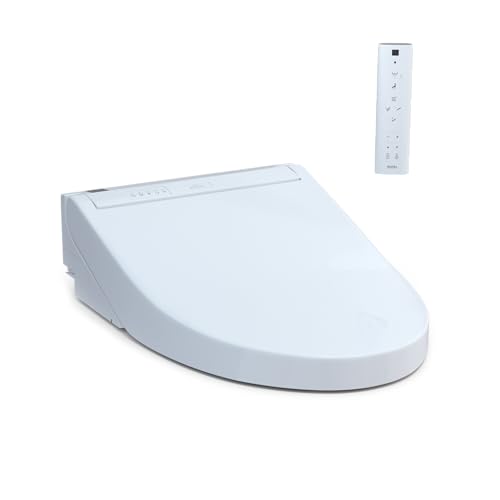
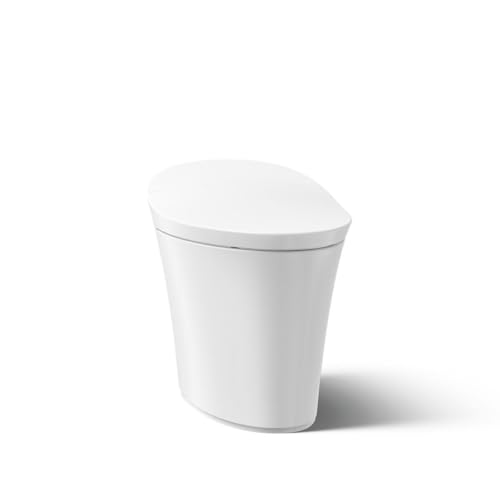

Japanese Smart Toilet Culture: Toto vs Panasonic vs INAX
Smart Toilets4.6
Japan invented the modern smart toilet over 40 years ago. Today three manufacturers dominate the category worldwide -- TOTO, Panasonic, and LIXIL…
Read the guideEverything you need to know about seat warmth levels, bidet water temperature settings, how to dial them in for comfort, and what the specs actually mean for different households.
Most smart toilets and bidet seats offer seat heat from 86 to 104 degrees Fahrenheit and water wash temperature from 86 to 104 degrees Fahrenheit, adjustable in three to five steps. The sweet spot for most adults is seat level 2 to 3 and water level 2 to 3 -- roughly 93 to 97 F for both settings.
Smart toilets and bidet toilet seats typically offer seat temperature in a range of approximately 86 to 104 degrees Fahrenheit (30 to 40 degrees Celsius), adjustable across three to five discrete steps. Wash water temperature follows the same general range, though some entry-level units top out around 100 F while flagship models such as the TOTO Washlet+ S7 reach a consistent 104 F. Both functions are independent controls, so you can run warm water with a cool seat or vice versa.
Temperature control is one of the features buyers discover matters most after ownership. A toilet that flushes brilliantly but delivers a cold seat in January quickly loses favor -- and the inverse, a bidet seat that overheats the bowl area, can cause discomfort for extended use. Understanding the actual numbers behind the marketing labels ("warm," "hot," "level 3") helps you pick the right unit and configure it correctly the first week.
This guide covers seat temperature ranges by brand, wash water temperature ranges, how instantaneous-heat versus tank-based heating systems work, energy consumption tradeoffs, and practical tuning advice for different body types, climates, and household members.
Seat temperature refers to the warmth of the physical ceramic or plastic seat you sit on, produced by a thin heating element embedded in the seat. Water temperature refers to the warmth of the bidet spray stream, produced either by an instantaneous in-line heater or a small reservoir tank. The two systems are mechanically separate and are adjusted by independent controls on the remote or panel.
Confusing the two is the most common mistake first-time smart toilet buyers make. A heated seat with cold water will still shock you during the wash cycle. A warm spray with an unheated seat means the comfort gap is felt immediately when you sit down. Flagship units like the TOTO Neorest NX2 and the Kohler Veil Intelligent handle both independently, with clear labeling on their remotes. Budget bidet seats sometimes heat only the water or only the seat -- read spec sheets carefully.
Plumbing professionals note that the water temperature spec is often the more important of the two because it affects comfort throughout the entire wash duration, whereas seat heat is noticed only at initial contact. Homeowners in northern climates with unheated bathroom floors benefit most from maximizing seat temperature, while those in warm climates frequently disable seat heat entirely to save energy.
Instantaneous (tankless) heaters heat water on demand as it flows through the unit and can maintain a consistent temperature indefinitely, making them ideal for extended use. Tank-based heaters store a small reservoir of pre-heated water (typically 0.1 to 0.2 liters) that provides warm water immediately but can cool down during long washes. TOTO Washlet units use tank heating at entry price points and instantaneous heating at higher tiers.
The heating system architecture has real consequences for day-to-day use. Here is what each approach means in practice:
Tank heaters are common on seats priced under $400. The reservoir is pre-heated while the unit is in standby, so the first few seconds of spray feel warm immediately. After the tank empties -- usually within 30 to 45 seconds of continuous spray -- the water either drops to room temperature or the unit reheats slowly mid-use. For users who prefer short wash cycles (15 to 25 seconds), tank heaters perform well. For users who rely on longer therapeutic wash cycles or who share the unit in rapid succession, temperature consistency becomes an issue.
TOTO's entry-level C5 Washlet uses a tank system. American Standard's SpaLet bidet seats also rely on tank heating at base configurations. The tradeoff is that tank units are simpler mechanically, often quieter, and less expensive to manufacture -- which is why the price difference between tank and tankless models from the same brand is often $150 to $300.
Instantaneous heaters pass water over a heating element the moment you activate the wash function. There is no reservoir to deplete. The temperature stays constant whether the wash runs for 20 seconds or two minutes. TOTO uses this system in the Washlet+ S7 and the Neorest series. Kohler's Veil and Innate intelligent toilets incorporate instantaneous heating. Woodbridge's B0960S uses an instantaneous system, which is notable at its price point.
The tradeoff for instantaneous heat is a slightly higher peak draw during operation -- typically 1,200 to 1,400 watts for the heating element compared to 40 to 80 watts in standby for a tank unit. This rarely trips circuit breakers in practice because the draw is brief and GFCI-protected dedicated circuits handle it comfortably.
| Feature | Tank Heater | Instantaneous Heater |
|---|---|---|
| Warm water duration | 30 to 60 seconds | Unlimited |
| Time to first warm water | Immediate (pre-heated) | Near-immediate (1 to 2 sec) |
| Peak wattage | 200 to 400 W | 1,200 to 1,400 W |
| Standby energy use | 40 to 80 W (keeps tank warm) | 5 to 15 W (no tank) |
| Complexity | Lower | Higher |
| Common brands/models | TOTO C5, A/S SpaLet entry | TOTO S7, Kohler Veil, Woodbridge B0960S |
| Typical price tier | $200 to $600 | $500 to $2,000+ |
TOTO Washlet seats publish a seat temperature range of 86 to 104 degrees Fahrenheit (30 to 40 degrees Celsius) across five levels. Kohler intelligent toilet seats offer a similar range of 86 to 104 F in three steps. American Standard SpaLet bidet seats specify 95 to 104 F in three steps. Woodbridge bidet seats typically publish 95 to 104 F across three levels. Swiss Madison smart toilets advertise seat warmth at three levels but do not always publish the exact Fahrenheit range in marketing materials.
The differences in range endpoints matter less than the step granularity. A five-step system lets you fine-tune comfort more precisely for households where multiple people use the same toilet and have different preferences. A three-step system is adequate for most single-person or same-preference households.
| Brand / Product Line | Seat Temp Range | Steps | Heater Type | Notable | Check Price |
|---|---|---|---|---|---|
| TOTO Washlet+ S7 / S7A | 86 to 104 F (30 to 40 C) | 5 | Instantaneous | ewater+ electrolyzed water, PREMIST | Check price |
| TOTO Washlet C5 | 86 to 104 F | 5 | Tank | Most popular TOTO entry seat | Check price |
| Kohler Veil Intelligent | 86 to 104 F | 3 | Instantaneous | UV-A self-cleaning, Google / Alexa | Check price |
| Kohler Innate | 86 to 104 F | 3 | Tank | Bidet seat, not full toilet | Check price |
| American Standard SpaLet AT200 | 95 to 104 F | 3 | Tank | Fits most elongated toilets | Check price |
| Woodbridge B0960S | 95 to 104 F | 3 | Instantaneous | Full one-piece smart toilet | Check price |
| Swiss Madison Ivy | 3 levels (F range not published) | 3 | Tank | Compact form factor | Check price |
| Toto Neorest NX2 | 86 to 104 F | 5 | Instantaneous | Flagship; UV wand, tornado flush | Check price |
For full toilet comparisons including flush power and MaP scores, see our best flushing toilets guide. For a deep dive into the full smart toilet category, our best smart toilet 2026 roundup compares 12 models head to head.
Adults generally prefer seat temperature at level 2 to 3 (approximately 93 to 97 F) and water temperature at level 2 to 3 for daily use. Children and elderly users often benefit from slightly lower water temperature -- level 1 to 2, roughly 88 to 93 F -- to reduce any risk of discomfort from prolonged warm exposure. Many smart toilets support user presets (typically two to four user profiles stored in the remote or panel) so household members do not have to re-adjust every session.
Here are practical tuning recommendations by use case:
Start with both seat and water at level 2. Live with this for one week. If the seat feels barely perceptible, raise seat to level 3. If the water feels lukewarm during wash, raise water to level 3 as well. Most users in temperate climates settle at seat level 2 to 3, water level 2 to 3.
If the unit supports user presets (TOTO's S7A supports two user presets, Kohler Veil supports up to three), assign individual profiles and store them. If the unit has only a single profile, compromise at the midpoint of both users' preferences, which is typically level 2 for both functions. The remote or panel should be wall-mounted at a comfortable reaching height for both users to encourage consistent use.
Pediatric guidance from plumbing professionals suggests keeping bidet wash water at level 1 (approximately 86 to 90 F) for young children, which is closer to body temperature and reduces the risk of thermal shock or discomfort. Seat heat at level 1 is appropriate. Many parents disable seat heat entirely in summer months when the bathroom stays warm. Check the unit's child lock or mode features -- TOTO Washlet+ units include a "gentle" mode for this purpose.
Users with reduced skin sensitivity or circulatory conditions should keep water temperature at level 1 to 2 and consult a physician before using extended-duration spray at higher temperatures. The ADA notes that bathroom fixtures presenting hot-water exposure above 120 F require additional signage or mitigation -- all smart toilets on the market cap well below this, but the principle of caution for vulnerable users applies.
In bathrooms that fall below 65 F overnight (common in older homes without heated floors), the contrast between room temperature and body temperature makes seat warmth feel most impactful. Eco-mode or "away" mode -- available on TOTO, Kohler Veil, and Woodbridge models -- reduces seat temperature during inactive hours rather than switching off entirely, maintaining the seat at approximately 82 to 86 F (level 1 or a sub-level-1 standby temperature) to ensure the seat is already warmed when you arrive in the morning.
HVAC and bathroom designers recommend matching seat temperature setting to the baseline bathroom temperature. If the room holds 72 F or warmer year-round, a heated seat at level 1 or even disabled provides sufficient comfort. If the bathroom routinely dips into the 60s, level 2 to 3 counteracts the chill without overheating. This calibration also cuts standby energy use, as the heating element works harder to maintain higher set points against greater ambient temperature differentials.
A smart toilet's seat heater in constant-on mode draws approximately 20 to 50 watts continuously, translating to roughly 0.5 to 1.2 kilowatt-hours per day or $2 to $5 per month at average US electricity rates. The wash water heater draws 1,200 to 1,400 watts instantaneously but only for 20 to 60 seconds per use, adding roughly $1 to $3 per month. Eco-mode and occupancy sensors reduce seat-heat standby energy by 50 to 70 percent according to manufacturer specifications.
Energy use is a surprisingly common concern among smart toilet buyers, particularly those upgrading from conventional toilets and adding a dedicated GFCI outlet. Here is a breakdown of the real numbers:
The seat heater maintains a set temperature continuously (or in eco standby at a reduced set point). At level 3 (approximately 97 F), the element cycles on and off to maintain temperature, averaging about 40 watts of actual draw. At level 1, it averages around 20 watts. Over 24 hours, this is 480 watt-hours (0.48 kWh) to 960 watt-hours (0.96 kWh). At the US average electricity rate of $0.16 per kWh (EIA 2025 data), that is $0.08 to $0.15 per day, or approximately $2.40 to $4.50 per month for seat heat alone.
Enabling eco-mode cuts this significantly. TOTO reports that its eco-mode function reduces seat standby energy by approximately 65 percent by dropping the standby set point to a lower temperature and using the toilet's occupancy sensor to ramp up only before predicted use times. Woodbridge and Kohler offer similar economy standby modes under different names.
Instantaneous heaters draw 1,200 to 1,400 watts during active operation. At two minutes of wash use per day (two 60-second sessions), that is 0.033 to 0.047 kWh per day from water heating, or approximately $0.19 to $0.27 per month -- nearly negligible. Tank heaters continuously warm a small reservoir (approximately 40 to 80 watts to maintain standby temperature), which actually uses more energy than an instantaneous system despite the lower peak wattage.
Total energy cost for a full-featured smart toilet with seat heat and bidet water heating, running in a typical household, is approximately $3 to $8 per month. This compares to near-zero for a conventional toilet. For users concerned about energy, choosing a unit with an occupancy sensor and eco-mode (standard on TOTO's S7, Kohler Veil, and Woodbridge B0960S) brings the monthly cost to the lower end of that range. See our smart toilet water use guide for a full efficiency breakdown including GPF and EPA WaterSense data.
| Feature | Constant-On Mode | Eco Mode | Notes |
|---|---|---|---|
| Seat heater (level 3) | ~$4.50/mo | ~$1.60/mo | Varies by ambient temperature |
| Seat heater (level 1) | ~$2.40/mo | ~$0.90/mo | Eco savings proportional |
| Water heater (instantaneous) | ~$0.25/mo | ~$0.25/mo | No standby draw |
| Water heater (tank) | ~$2.00/mo | ~$0.90/mo | Standby draw to keep tank warm |
| Total (instantaneous seat + water, eco) | -- | ~$1.85 to $2.85/mo | Best efficiency scenario |
Calculations based on US EIA average residential electricity rate of $0.16/kWh and typical household use patterns. Individual results vary based on usage frequency, bathroom ambient temperature, and specific unit model.
The safe and comfortable range for bidet wash water is 95 to 102 degrees Fahrenheit -- close to body temperature -- which most users report as neutral to comfortably warm without risk of thermal discomfort. Seat temperatures in this same range are well below the 111 F threshold generally associated with thermal discomfort on skin contact. No commercially available smart toilet on the market reaches temperatures that could cause burns during normal use.
Safety is a non-issue with all UL-listed or CE-certified smart toilets, but understanding the temperature physics helps users tune for optimal comfort rather than defaulting to max settings out of curiosity.
Human skin perceives water as "neutral" (neither warm nor cool) when it is near skin surface temperature, approximately 91 to 95 F. Water at 95 to 100 F registers as comfortably warm. Water at 100 to 104 F (the top of most smart toilet ranges) is perceived as warm to slightly hot -- noticeable but not uncomfortable for most adults during a 30 to 60 second wash. Prolonged exposure above 104 F begins to feel hot for sensitive skin, which is exactly why 104 F is the industry-wide cap for this product category.
A common user error is setting both seat and water to maximum during initial use "to see what it does" and then perceiving the maximum as "normal." In practice, level 3 of 5 (approximately 97 F water, 95 F seat) provides subjectively warmer comfort in a cold bathroom than level 5 provides in a warm bathroom, because comfort is relative to ambient temperature. Setting the maximum in summer can feel uncomfortably warm and wastes energy. The right approach is to set starting points at mid-range and adjust by one level per week until comfort is achieved.
Certified bathroom remodelers frequently note that the most common post-installation call they receive about smart toilets involves temperature settings -- specifically users who set everything to maximum and then find the seat "too hot" in warmer months. They advise starting every installation with all temperature functions at level 2, noting that most households never adjust above this baseline once they acclimate. The same professional class notes that the eco-mode feature should be enabled at installation and re-evaluated only if the user reports the seat feeling cold at first use.
On TOTO Washlet units, seat temperature is adjusted via the handheld remote by pressing the seat temperature button (labeled with a seat icon) and toggling through five levels. Kohler Veil uses a touchscreen panel mounted on the wall or the unit, with temperature sliders in the settings menu. Woodbridge B0960S and similar models use a dedicated remote with directional buttons. App-connected units like Kohler Veil and some TOTO Neorest models allow temperature adjustment via smartphone app as well.
The adjustment procedure varies by interface type:
TOTO Washlet C5, S7, and Neorest units all ship with a wall-mounted remote. The seat temperature button is typically labeled with a seat icon or the word "seat." Pressing it cycles through levels 1 to 5 (or 1 to 3 on three-step models) with a brief indicator light or display showing the current level. Water temperature is a separate button. Settings save automatically when you exit or after a few seconds of inactivity. There is no confirmation step -- the setting you land on is the active setting.
Kohler's Veil Intelligent Toilet uses a wall-mounted touchscreen panel. Navigate to "Settings" then "Comfort" to access seat temperature (three levels) and water temperature (three levels) independently. The Kohler Konnect app mirrors these controls via Bluetooth or Wi-Fi. American Standard SpaLet seats use a wired side panel with physical buttons -- seat heat toggle cycles through off, low, medium, and high.
Units with user profile memory (TOTO S7A supports two users, Kohler Veil supports three) let each user store their preferred seat temperature, water temperature, spray position, and pressure independently. The user presses their profile number on the remote before using, and all settings load instantly. This is the most effective solution for multi-person households with strongly different temperature preferences. For more on smart toilet features by price tier, see our best smart toilet under $1,000 and best smart toilet under $500 guides.
Yes, significantly. In winter or in cold bathrooms (below 65 F), seat heat at level 3 provides an immediate comfort contrast against the cold environment, while the same level 3 setting in a warm summer bathroom may feel uncomfortably hot. Most users with seasonal climates benefit from adjusting both seat and water temperature by one level down in summer and one level up in winter relative to their base setting.
This seasonal tuning is under-communicated in most smart toilet documentation. The heating element does not "know" that the bathroom is warmer in July -- it simply maintains the set temperature. A seat held at 97 F in a 75 F bathroom feels much hotter to the touch than the same seat in a 60 F bathroom because the thermal contrast is larger.
Practical seasonal recommendation for most US climates:
Units with occupancy sensors and predictive eco-mode -- TOTO S7A, Kohler Veil, Neorest NX2 -- handle part of this automatically by learning your usage schedule and pre-heating only before expected use, which reduces the energy cost of maintaining higher set points in colder months. This sensor-driven approach is worth factoring into purchase decisions for households in climates with significant seasonal temperature swings.
EPA WaterSense certification evaluates flush performance and water consumption (gallons per flush), not bidet water temperature. MaP testing similarly measures waste removal per flush at specified gram loads and does not evaluate temperature functions. Temperature ranges are governed by UL safety standards (UL 2748 for bidet seats in the US) and CE marking for European market units, not by WaterSense or MaP protocols.
This is an important distinction for buyers. A toilet can earn EPA WaterSense certification (requiring 1.28 GPF or less with a flush performance standard) and simultaneously have any seat or water temperature configuration. The certifications address different performance dimensions.
UL 2748, the safety standard for bidet toilet seats and smart toilet seats, does establish requirements around electrical safety, water temperature limits (typically capping maximum water temperature to prevent scalding), and GFI protection requirements. All major brands selling in the US market -- TOTO, Kohler, American Standard, Woodbridge, Swiss Madison -- comply with UL 2748 or its equivalent. This is why no US-market smart toilet goes above 104 F for wash water; UL standards effectively set that ceiling.
For buyers interested in flush performance alongside smart features, MaP scores are available for TOTO's Neorest and Washlet+ combo systems as integrated units. The TOTO Neorest 700H carries MaP scores indicating complete removal at the 1,000-gram test threshold -- the highest MaP certification tier. The TOTO Aquia IV, while not a smart toilet, is notable for its MaP performance and can be paired with a Washlet+ bidet seat to create an effective smart toilet combination at a lower entry price than an integrated unit.
Plumbing engineers point out that smart toilet buyers often conflate EPA WaterSense and MaP certification with safety and quality certifications for all functions. WaterSense and MaP evaluate only flush performance. The temperature, electrical, and water-safety functions are governed by UL and IAPMO standards, and it is worth verifying UL listing specifically before purchasing imported smart toilet units from lesser-known brands, as compliance is not universal across all products sold online.
Most adults find seat temperature at level 2 to 3 (approximately 93 to 97 F) comfortable year-round. Level 1 (86 to 90 F) works in warm bathrooms or summer. Level 4 to 5 (100 to 104 F) is preferred by some users in very cold bathrooms. Start at level 2 and adjust after one week of use.
Water temperature at level 2 to 3 (approximately 93 to 97 F) provides a comfortably warm wash experience for most users. Level 1 is appropriate for children or sensitive users. Room-temperature water (no heat) is an option on all units if you prefer a cool refresh during warm months.
Yes. All US-market smart toilets comply with UL 2748, which caps wash water temperature at levels well below scalding risk. The maximum temperature across all major brands is 104 F -- below the threshold that poses burn risk during the brief wash cycles typical of bidet use.
Press the seat temperature button (seat icon) on the handheld remote to cycle through five levels. Press the water temperature button separately to adjust wash water temperature through five levels. Settings save automatically. For user profile storage (S7A models), press the user button first to select your profile before adjusting.
A heated seat in constant-on mode uses approximately 20 to 50 watts, costing roughly $2.40 to $4.50 per month. Enabling eco-mode or using an occupancy sensor cuts this by 50 to 70 percent. The water heater adds approximately $0.25 to $2.00 per month depending on whether it is instantaneous or tank-based.
Constant-on mode maintains your set temperature continuously. Eco mode drops the seat to a reduced standby temperature (approximately 82 to 86 F) when the toilet has not been used for a set period, then ramps back up -- often using an occupancy sensor to pre-heat before expected use. Eco mode reduces energy consumption by 50 to 70 percent without noticeably reducing comfort for most users.
Yes, if your unit supports user profiles. TOTO S7A stores two user profiles, Kohler Veil stores up to three. Each profile saves seat temperature, water temperature, spray position, spray pressure, and other preferences. Budget units typically offer only a single setting shared by all users.
Not automatically by season. However, units with occupancy sensors and eco-mode learn your usage schedule and adjust pre-heating timing accordingly. Users are responsible for manually adjusting temperature settings seasonally -- most find one level down in summer and one level up in winter from their base setting provides consistent comfort.
For households with one to two users who prefer short wash cycles, tank heaters are adequate. For households with multiple users in rapid succession, or users who rely on longer wash sessions (30 to 90 seconds), instantaneous heaters eliminate the experience of the water cooling mid-wash. Instantaneous units also have lower standby energy use, partially offsetting the higher purchase price over time.
104 degrees Fahrenheit (40 degrees Celsius) is the industry standard maximum, enforced by UL 2748 compliance requirements in the US market. TOTO, Kohler, American Standard, Woodbridge, and Swiss Madison all cap at 104 F or slightly below. No mainstream smart toilet sold in the US exceeds this ceiling.
This is the characteristic limitation of tank-based water heaters. The pre-heated reservoir (typically 0.1 to 0.2 liters) empties after 30 to 60 seconds of continuous spray, and the water reverts to inlet supply temperature. If your wash cycle consistently runs longer than the warm period, you either need to shorten the cycle or upgrade to an instantaneous-heater unit.
Yes. A dedicated 15-amp or 20-amp GFCI-protected 120V outlet within reach of the toilet is required for all US-market smart toilets. The outlet must meet the NEC requirements for bathroom receptacles. Most plumbers and electricians can install a dedicated outlet during a smart toilet installation, typically in one to two hours of labor.
Start at level 1 for both seat and water for elderly users, especially those with reduced skin sensitivity or circulatory issues. Level 1 (approximately 86 to 90 F) is safe and still comfortable. Consult a physician before using higher temperature settings for users with diabetes, neuropathy, or vascular conditions that affect temperature perception.
Prolonged operation at maximum seat temperature over many years can theoretically accelerate wear on plasticizers in the seat material, but no major brand has documented this as a warranty concern under normal use conditions. All major manufacturers (TOTO, Kohler, American Standard) rate their heated seats for normal residential use at all published temperature settings for the duration of their warranty period.
Yes. Seat heat and water heat are independent controls on every smart toilet on the market. You can disable seat heat entirely (selecting "off") while maintaining any water temperature level, or vice versa. Many users in warm climates disable seat heat in summer while keeping water temperature at level 2 for a comfortable wash.
PREMIST is a pre-wetting feature on select TOTO Washlet units that mists the bowl with water before each use to create a non-stick surface, reducing cleaning frequency. It is not a temperature-related feature -- it uses cold inlet water. PREMIST operates independently of seat heat and wash water temperature settings and cannot be adjusted for temperature.
Water temperature does not significantly affect hygiene efficacy according to published plumbing and hygiene research. The mechanical action of the spray is the primary cleansing mechanism. Warm water is chosen for comfort, not because it is more hygienic than cool water. Bidet wash is more effective at cleansing than dry wiping regardless of temperature setting.
TOTO publishes detailed specifications in Fahrenheit and Celsius with step counts for all Washlet and Neorest models. Kohler publishes temperature ranges in product data sheets for Veil and Innate lines. American Standard publishes temperature ranges for SpaLet models. Woodbridge publishes ranges for their B-series smart toilets. Swiss Madison and some budget brands publish only step counts without Fahrenheit values in US marketing materials.
No. Smart toilet seats heat the rear portion of the seat where most body contact occurs during use. The front of the seat and the lid (where provided) are typically unheated or minimally warmed by thermal conduction. The heating element is embedded in the seat material and concentrated where skin contact is most frequent. Users with cold sensitivity notice this most on initial seating contact.
Standalone heated toilet seat add-ons (non-bidet) typically offer two to three temperature levels and draw 15 to 30 watts -- lower than full bidet-seat heaters because they only warm the seat without water heating infrastructure. Full smart toilet seats with bidet functions draw more power but provide the combined benefit of seat heat plus wash water temperature control in a single unit. Standalone heated seats are priced from approximately $30 to $100 and represent a budget alternative for users who only want seat warmth.
For most households, smart toilet seat temperature set at level 2 to 3 (93 to 97 F) and bidet water temperature at level 2 to 3 delivers the right balance of comfort, energy efficiency, and safety. Enabling eco-mode cuts standby energy cost by half without any perceptible comfort loss. Users willing to spend more for an instantaneous-heater unit like the TOTO Washlet+ S7 or Kohler Veil Intelligent will never face the mid-wash temperature drop that affects tank-heater units at lower price points. Whatever model you choose, resist the impulse to run everything at maximum -- mid-range settings tuned to your bathroom's ambient temperature nearly always outperform max settings for real-world daily comfort. For a full breakdown of performance, flush power, and MaP-tested value, see our best flushing toilets guide.
Japan invented the modern smart toilet over 40 years ago. Today three manufacturers dominate the category worldwide -- TOTO, Panasonic, and LIXIL…
Read the guideA data-driven comparison of TOTO's four flagship Neorest models, covering flushing performance, water efficiency, smart features, and which version is right for…
Read the guideSmart toilets combine bidet functions, heated seats and self-cleaning cycles into one unit, but the electronics and moving parts demand a gentler,…
Read the guide