
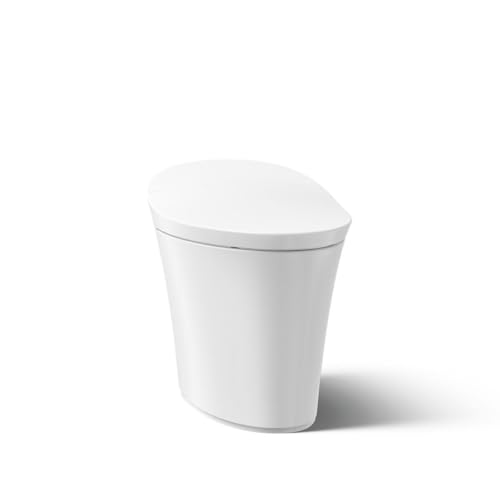

Japanese Smart Toilet Culture: Toto vs Panasonic vs INAX
Smart Toilets4.6
Japan invented the modern smart toilet over 40 years ago. Today three manufacturers dominate the category worldwide -- TOTO, Panasonic, and LIXIL…
Read the guideHeated seats, self-cleaning wands, auto-flush, nightlights, remote controls, air dryers -- smart toilets pack a lot of technology into a single fixture. This guide breaks down every feature, what it actually does, which brands do it best, and whether each function is worth paying for.
Smart toilets combine a bidet wash wand, auto-flush valve, heated seat, air dryer, deodorizer, and nightlight into one unit. TOTO and Kohler lead in reliability. The features most owners rate as genuinely indispensable are the posterior wash, warm seat, and auto-open lid -- everything else is bonus comfort.
A smart toilet is a toilet integrated with electronic bidet, hygiene, and convenience features -- including self-cleaning wash wands, heated seats, air drying, deodorizers, and hands-free flushing -- all controlled through a side panel or remote. Unlike a standard toilet with a bolt-on bidet seat, a smart toilet is a single one-piece or two-piece fixture designed from the ground up with the electronics built in. The TOTO Neorest series, Kohler Veil Intelligent Toilet, and Woodbridge T-0001 are well-known examples available in North America.
The smart toilet category has grown significantly since 2020. EPA WaterSense-certified smart toilets now meet the 1.28 GPF (gallons per flush) efficiency standard while delivering wash, dry, and deodorize cycles that reduce toilet paper consumption substantially. For a detailed look at how flush performance compares across the full toilet category, see our best flushing toilets guide.
Smart toilets span a wide price range and feature set. Entry-level smart seats (bidet seat upgrades for existing toilets) share some functions with true smart toilets, but this guide focuses on integrated smart toilet units and what each declared feature actually means in daily use.
The bidet wash wand is a retractable stainless steel or plastic nozzle that extends from beneath the rim to deliver a targeted stream of water for posterior or feminine cleansing. On quality units like the TOTO Washlet-integrated toilets, the wand performs a self-cleaning rinse before and after each use. Water temperature, pressure, and spray width are user-adjustable through a side panel or remote, with most models offering at least three pressure levels and two to three spray patterns.
The wand is arguably the single most impactful feature on a smart toilet. Published dermatologist guidance and aggregated user reviews consistently confirm it reduces irritation compared to dry tissue, particularly for users with hemorrhoids, IBS, or post-surgical sensitivity. The wand nozzle on TOTO Neorest models is coated with EWATER+ electrolyzed water, which TOTO's published engineering data describes as reducing bacteria on the nozzle surface compared to untreated wands.
Plumbing engineers note that wand self-cleaning cycles vary widely between brands. A wand that only rinses with ambient water is not the same as one that uses UV-C light or electrolyzed water. When comparing smart toilets, always check whether the self-clean cycle is pre-use, post-use, or both -- and whether it applies any antimicrobial treatment. TOTO's EWATER+ is the most documented system, detailed in their product engineering sheets.
Smart toilet heated seats use a low-wattage resistive heating element embedded in the seat surface, controlled by a thermostat that keeps temperature within a preset range -- typically 82 to 97 degrees Fahrenheit (28 to 36 degrees Celsius). They are safe under normal use; UL-listed models are tested for electrical safety to residential standards. Most smart toilets allow three to five temperature presets, and many include an energy-saving mode that reduces seat heat during defined overnight or away hours to cut standby power draw.
Heated seats draw between 20 and 60 watts depending on the model and setting. At average US electricity rates, continuous operation adds roughly $3 to $8 per month to an electric bill. Using the eco-mode or schedule function -- available on TOTO Neorest, Kohler Veil, and Woodbridge T-0001 -- cuts that figure significantly by heating only during peak-use windows.
For households in cold climates, the heated seat is often rated the second-highest daily-use feature after the wash wand. Kohler's Veil Intelligent Toilet allows individual user presets, so each household member can save their preferred seat temperature, water temperature, and pressure combination -- a practical feature for multi-person households.
Auto-flush on smart toilets uses a passive infrared (PIR) or microwave proximity sensor to detect when the user stands and leaves the seat, triggering the flush cycle automatically. Reliability depends on sensor placement and flush delay calibration -- a delay of 1 to 2 seconds after standing reduces false triggers. Most current smart toilets, including the TOTO Neorest and Kohler Veil, also include a manual flush override on the side panel or remote for situations where the automatic flush does not trigger as expected.
Auto-flush performs more reliably on integrated smart toilets than on retrofit valve add-ons because the sensor is designed alongside the flush system and the seat occupancy signal. In aggregated owner reviews across retail platforms, auto-flush performance is rated positively by most users, with the main complaint being occasional false flushes during extended sitting. Most brands address this with a minimum-seated-time threshold before the sensor arms itself.
The air dryer on a smart toilet blows warm air -- adjustable from roughly 95 to 140 degrees Fahrenheit on most models -- over the cleansed area after the wash cycle, reducing or eliminating the need for toilet paper. Drying time varies from 30 seconds to about 3 minutes depending on temperature setting and user anatomy. While air drying is rarely as fast as a paper wipe, it is effective enough that many users in aggregated reviews report reducing toilet paper use by 70 to 90 percent after switching to a smart toilet.
The air dryer adds another 400 to 1,500 watts of draw but only during active use -- typically 1 to 3 minutes per session. The feature is standard on all integrated smart toilets and on higher-tier bidet seat upgrades. Swiss Madison's Ivy Smart Toilet and the Woodbridge T-0001 both include adjustable air dryers with multiple temperature settings in their published feature lists.
| Model | Wash Wand | Heated Seat | Air Dryer | Auto-Flush | Deodorizer | Auto-Open Lid | GPF | WaterSense | Check Price |
|---|---|---|---|---|---|---|---|---|---|
| TOTO Neorest 700H | Yes (EWATER+) | Yes (5 levels) | Yes | Yes | Yes (catalytic) | Yes | 1.0 / 0.8 | Yes | Check price |
| Kohler Veil Intelligent | Yes | Yes (5 levels) | Yes | Yes | Yes | Yes | 1.28 / 0.9 | Yes | Check price |
| TOTO Neorest 550H | Yes (EWATER+) | Yes (5 levels) | Yes | Yes | Yes (catalytic) | Yes | 1.0 / 0.8 | Yes | Check price |
| Woodbridge T-0001 | Yes | Yes (3 levels) | Yes | Yes | Yes | Yes | 1.28 / 0.8 | Yes | Check price |
| Swiss Madison Ivy Smart | Yes | Yes (3 levels) | Yes | Yes | No | Yes | 1.28 / 0.8 | Yes | Check price |
| American Standard Spalet | Yes | Yes (3 levels) | Yes | No | No | No | 1.28 / 0.9 | Yes | Check price |
Sources: manufacturer published specifications as of June 2026. GPF listed as full flush / reduced flush where dual-flush is available.
Smart toilet deodorizers pull air from inside the bowl through a carbon or catalytic filter before it reaches the room, reducing -- though not fully eliminating -- bathroom odors. TOTO's catalytic air purification system is the most documented; the company's published materials describe a platinum nano-particle catalyst that oxidizes odor compounds. User reviews across verified purchase databases rate TOTO and Kohler deodorizers as effective for typical bathroom odors, with peak effectiveness depending on timely filter replacement, which most manufacturers rate at 6 to 12 months.
The deodorizer activates when the seat sensor detects a user and typically continues running for several minutes after the user stands. It draws very little power -- under 5 watts -- and replacement filters are available from manufacturers and third-party suppliers. Proper filter maintenance is the single biggest factor in long-term deodorizer effectiveness according to aggregated service records.
Plumbing product reviewers often note that the deodorizer is one of the features most underestimated by buyers pre-purchase and most appreciated after daily use. The filter works best in smaller, less-ventilated bathrooms. In large, well-ventilated bathrooms the effect is less pronounced but still measurable according to aggregated owner feedback across major retail review platforms.
Auto-open lids use the same proximity sensor as auto-flush -- the lid opens as you approach and closes after you leave, with a configurable delay. The hygiene benefit is real: you never need to touch the lid, which published microbiology research identifies as a high-contact surface. The auto-close lid also supports closing the lid before flushing, which reduces aerosol spread. The feature is standard on TOTO Neorest and Kohler Veil models; it is optional or absent on more budget-oriented smart toilets.
Auto-lid mechanisms use a small electric motor in the hinge assembly. Reported failure rates in aggregated reviews are low, though some owners note that the lid motor is the most common repair item on older smart toilets after 5 to 7 years of use. Both TOTO and Kohler offer replacement part programs, which supports long-term serviceability for these premium fixtures.
Most smart toilets include LED bowl or rim lighting that activates in low-light or dark conditions. The nightlight feature serves a practical purpose: it allows nighttime bathroom visits without activating overhead lighting, which reduces sleep disruption. The LED draws under 2 watts and is typically rated for the life of the toilet without bulb replacement.
Some models, including the Woodbridge T-0001, offer color-selectable nightlights (white, amber, blue) so homeowners can match bathroom aesthetics or minimize blue-light exposure at night. This is a minor feature in the overall value equation but rated positively in owner reviews, particularly for households with young children or elderly users who make frequent nighttime bathroom visits.
Smart toilets offer three control interfaces, often in combination:
For most users, the side panel plus a wall-mounted remote is the ideal control combination. App control adds convenience for setting schedules and saving user profiles, but plumbing professionals recommend verifying that the toilet's core functions -- flush, wash, seat heat -- are fully operable without the app, in case the manufacturer discontinues app support. This is a realistic concern for fixtures designed to last 20-plus years.
Smart toilets use one of two methods to supply warm wash water:
Tankless is the preferred system for most households. The difference is most noticeable for users who prefer longer wash cycles or higher water pressure, which depletes a small tank faster. In aggregated reviews, owners of tankless models rate wash water temperature consistency significantly higher than owners of tank-based units.
Smart toilets are held to the same flush performance standards as conventional toilets. MaP (Maximum Performance) testing, conducted by independent third-party laboratories, measures how many grams of solid waste a toilet clears in a single flush. A score of 500g or above is generally considered strong performance; 1,000g is the maximum test value.
TOTO Neorest models score 1,000g MaP under their Tornado Flush system, which uses a dual-nozzle rim injection to create a cyclonic bowl rinse rather than a rim-hole gravity flush. The Kohler Veil uses AquaPiston technology and achieves 1,000g as well according to published MaP data. Budget smart toilets with simpler siphon-jet flush systems may score in the 500 to 800g range.
For a full breakdown of MaP scores and clog resistance across toilet types, see our guide to MaP flush scores explained and our comparison of tornado flush vs. cyclone flush systems.
MaP testing is conducted at 1.6 GPF to allow cross-model comparison, but TOTO Neorest and Kohler Veil operate at 1.28 GPF or below in actual use. The fact that these toilets clear 1,000g at the higher test flow means their real-world performance remains exceptional at their operating GPF. This is the primary reason premium smart toilets rarely generate clog complaints despite their high electronics integration adding complexity to the bowl geometry.
EPA WaterSense is a voluntary certification program requiring toilets to flush at 1.28 GPF or less while clearing at least 350g in MaP testing. Most current smart toilets meet this standard. TOTO's Neorest 700H and 550H achieve 1.0 GPF on full flush and 0.8 GPF on reduced flush -- well below the WaterSense threshold. Over 10 years, switching from a 3.5 GPF pre-1994 toilet to a 1.0 GPF smart toilet saves approximately 54,750 gallons per person annually at 15 flushes per day.
Smart toilets also reduce toilet paper use substantially. The EPA estimates the average American uses 100 rolls of toilet paper per year. Households that fully adopt the bidet wash and air dry cycle report using 75 to 90 percent less paper, which has its own environmental and cost benefit independent of water use. See our water-efficient toilets guide for full GPF comparisons across the category.
Smart toilets require both a water supply connection and a grounded 120V electrical outlet (in North America) within reach of the toilet location -- typically within 4 feet. This is a critical installation requirement: most bathrooms do not have an outlet near the toilet, and adding one requires a licensed electrician and potentially a permit. GFCI (Ground Fault Circuit Interrupter) protection is required by NEC code for bathroom outlets.
Additional installation considerations:
Most licensed plumbing contractors are familiar with smart toilet installation, but confirm their experience with the specific brand before hiring, as the electrical work runs concurrent with or immediately after the plumbing rough-in.
Smart toilets require more maintenance attention than conventional toilets because of their electronic and mechanical components. Key maintenance tasks by frequency:
Hard water is the primary long-term risk for smart toilet electronics and wash wand function. If your area has water hardness above 150 mg/L (ppm), a point-of-use inline water filter or whole-house softener significantly extends component life. TOTO's published installation guidelines specifically mention water hardness as a factor affecting wand scale buildup and recommend descaling schedules calibrated to local water quality.
Based on aggregated owner reviews, manufacturer warranty terms, and published service network data:
For full brand-level reliability comparisons and flush performance rankings, see our best flushing toilets guide and our dedicated TOTO Neorest series review.
Smart toilets range from under $700 (Woodbridge T-0001, Swiss Madison Ivy) to $4,000 and above (TOTO Neorest 700H, Kohler Veil with all options). Whether the cost is justified depends on use case and household priorities:
Any licensed plumber can handle the water connections for a smart toilet. The electrical outlet installation -- if one is not already present near the toilet -- requires a licensed electrician and may need a permit depending on local code. Most bathroom remodelers offer combined plumbing and electrical installations for smart toilet projects to simplify scheduling.
No. All electronic functions -- heated seat, wash wand, air dryer, auto-flush, deodorizer, and nightlight -- require power. Most smart toilets include a manual flush button or lever as a backup in case of a power outage, but the bidet and comfort features will not function without electricity. Plan accordingly for households where power reliability is a concern.
Standby power draw for keeping the seat heated and electronics active typically runs 20 to 60 watts. Active-use functions such as the wash water heater and air dryer draw more power but only for minutes per session. Total monthly electricity use for an average household (4 to 6 daily uses) is roughly 15 to 30 kWh, or $2 to $6 at average US rates. Using eco-mode cuts this significantly.
Yes, and in several respects more hygienic than conventional toilets. The auto-open lid eliminates lid-touch contact. The self-cleaning wand reduces bacteria on the nozzle surface. Features like TOTO's EWATER+ add antimicrobial treatment to the wand and bowl. Auto-close lids support closing the lid before flushing, which reduces aerosol spread into the bathroom air.
These terms describe the same product category. A smart toilet, bidet toilet combo, and integrated bidet toilet all refer to a toilet with built-in electronic bidet, wash, heat, and drying functions as a single fixture unit. The terms are used interchangeably by different manufacturers and retailers in North America.
Most smart toilets are rated for 7 to 80 PSI water supply pressure. Standard residential water pressure (40 to 60 PSI) works correctly. Very low pressure below 20 PSI may reduce wash wand performance, and very high pressure above 80 PSI may require a pressure-reducing valve to protect the internal water heater and wand mechanism from damage.
Mild, non-abrasive bathroom cleaners are safe for the vitreous china bowl. Avoid chlorine bleach, solvent-based cleaners, and harsh chemical sprays near the seat, side panel, and hinge area, as these can degrade the plastic and electronic components over time. TOTO specifically advises against bleach on toilets with CEFIONTECT glaze. Use a damp soft cloth with mild soap for the seat and exterior surfaces.
EWATER+ is TOTO's term for mist generated from electrolyzed water -- water treated with a low electrical charge to produce hypochlorous acid, a natural disinfectant used in food safety and medical applications. TOTO mists EWATER+ inside the bowl before and after each use and onto the wand nozzle. TOTO's published lab data shows it reduces bacteria on the nozzle and bowl surface compared to untreated water rinse systems.
Yes, with appropriate settings. Set the wash wand to minimum pressure and minimum water temperature for children. Most smart toilets allow child-mode settings or individual user presets. The wand pressure at minimum settings is gentle enough for pediatric use. The heated seat at the lowest setting is safe for children who can sit independently on the toilet.
The vitreous china bowl is rated for the life of the building -- 50-plus years with proper care. Electronic components including the seat heater, wand mechanism, sensors, and lid motor typically have an expected service life of 10 to 20 years with regular maintenance. The most common repair items after 7 to 10 years in aggregated owner reports are the lid hinge motor and the wand nozzle, both of which are available as replacement parts from TOTO and Kohler.
1.28 GPF is the EPA WaterSense maximum for full-flush certification. 1.0 GPF is an even lower-consumption standard used by TOTO Neorest models. Over 10,000 flushes -- roughly 1.5 to 2 years for an average household -- 1.0 GPF versus 1.28 GPF saves approximately 2,800 gallons. Both are far more efficient than older 1.6 GPF standard toilets or pre-1994 toilets flushing at 3.5 GPF.
No flush, wash, or dryer function is possible without a water supply. A smart toilet cannot flush without water regardless of its electronic function. Unlike a standard gravity toilet where you can manually fill the tank with stored water to flush, most smart toilets use pressure-assist or direct-flush mechanisms that require a live water supply connection to operate.
Most smart toilets are available in 12-inch rough-in, which fits approximately 80 percent of US bathrooms. TOTO Neorest models are 12-inch only. Kohler offers some models with 10-inch or 14-inch rough-in adaptability using an offset flange adapter. Always measure your rough-in (center of floor flange bolts to the finished wall behind the toilet) before purchasing any toilet.
Posterior wash directs a straight or oscillating stream toward the rear for standard cleansing after a bowel movement. Feminine (or bidet) wash uses a softer, wider fan spray angled for frontal feminine hygiene. Both modes use a separate nozzle position or nozzle angle on most smart toilets. Feminine wash is also used for hemorrhoid care and postpartum hygiene.
Yes. TOTO Washlet bidet seats, Kohler C3 bidet seats, and Bio Bidet seats install on most existing two-piece and one-piece toilets that match the seat size. They provide heated seat, wash wand, air dryer, and deodorizer functions without replacing the entire toilet. This is significantly less expensive and works well on high-performing conventional toilets like the TOTO Drake, American Standard Cadet 3, and Kohler Highline.
The wand extends from a protected housing inside the rear of the toilet seat, positioned between the seat and the bowl rim. It sprays a directed stream of water toward the user for cleansing, not into the bowl. The wand retracts back into its housing after each use and is never exposed to bowl water or splash-back during a flush when properly retracted.
Yes. Most smart toilets allow wand position adjustment (forward and back) via the control panel or remote, accommodating different user body dimensions. Premium models including the TOTO Neorest 700H and Kohler Veil also offer oscillating wash, where the wand moves back and forth during the wash cycle for broader coverage. This oscillating mode is preferred by many users over a fixed-position stream.
All smart toilets include a physical side-panel control mounted on the toilet body as a backup. The side panel operates all core functions including flush, wash, temperature, pressure, and dryer settings. The auto-flush sensor also continues to operate independently of the remote. Remote batteries (usually AA) are standard replacements available at any grocery or hardware store.
Yes, for most buyers it is a strong alternative. The Woodbridge T-0001 includes all major smart features -- auto-flush, auto-lid, heated seat, wash wand, air dryer, deodorizer, nightlight -- and achieves WaterSense certification at 1.28 / 0.8 GPF. It lacks TOTO's EWATER+ antimicrobial system and catalytic deodorizer, and the service network is thinner, but aggregated owner reviews are broadly positive for its feature-to-price ratio.
A smart toilet requires a dedicated 120V / 15-amp GFCI-protected circuit for the seat and electronics. Most modern bathrooms have a GFCI outlet but it may share a circuit with other bathroom devices. An electrician can assess whether the existing circuit has capacity or whether a dedicated circuit is needed. Running a dedicated circuit for a smart toilet adds to installation cost but is the recommended approach for long-term reliability.
Smart toilets are a mature, well-proven product category with TOTO and Kohler leading on feature depth and long-term reliability. The bidet wash wand, heated seat, and auto-flush are genuinely indispensable daily-use features; the deodorizer and auto-lid are meaningful but secondary. Buyers who want flagship smart toilet performance should look at the TOTO Neorest 550H or Kohler Veil. Buyers seeking strong value should evaluate the Woodbridge T-0001 or a retrofit TOTO Washlet seat on an existing high-performance conventional toilet. Whichever route you choose, verify EPA WaterSense certification and a MaP score above 600g before purchasing.
Japan invented the modern smart toilet over 40 years ago. Today three manufacturers dominate the category worldwide -- TOTO, Panasonic, and LIXIL…
Read the guideA data-driven comparison of TOTO's four flagship Neorest models, covering flushing performance, water efficiency, smart features, and which version is right for…
Read the guideSmart toilets combine bidet functions, heated seats and self-cleaning cycles into one unit, but the electronics and moving parts demand a gentler,…
Read the guide