Common Shower Problems and How to Fix Them (2026)
Showers4.6
Step-by-step fixes for the shower problems homeowners run into most often, from weak water pressure and temperature swings to leaking valves, slow…
Read the guideA no-fluff comparison of the top pressure-balancing and thermostatic shower valves -- covering flow rate, scald protection, installation ease, and long-term reliability -- so you can make the right call before the plumber arrives.
The Moen Posi-Temp is the best pressure-balancing shower valve for most homes -- it offers reliable scald protection, wide trim kit compatibility, and straightforward DIY installation. For households that need precise temperature control across multiple outlets, the Kohler K-2973 thermostatic valve is the standout choice among premium options.
A shower valve is the component that controls water temperature and flow behind your shower wall. It is one of the most consequential fixtures you will buy because it directly determines whether your shower is safe, comfortable, and consistent -- yet most buyers spend more time choosing a showerhead than the valve controlling it. This guide focuses on two valve categories that matter most for residential bathrooms: pressure-balancing valves and thermostatic valves.
Pressure-balancing valves are the code-required minimum in most U.S. jurisdictions. They maintain a fixed ratio of hot to cold water, preventing scalding when a toilet is flushed or a dishwasher starts. Thermostatic valves go further: they maintain a precise temperature regardless of supply pressure or temperature fluctuations, and they allow independent control of volume and temperature. Understanding the difference is the starting point for choosing the right valve for your remodel or new build.
This roundup covers eight top-rated valves based on published specifications, certification records, and aggregated owner feedback from thousands of verified reviews. Brands covered include Moen, Kohler, Delta, American Standard, Grohe, and Symmons. Where relevant, we note ASSE 1016 certification (the ANSI standard for shower valves), maximum flow rates, and warranty terms.
If you are also evaluating your bathroom's full fixture picture, our guide to the best flushing toilets covers everything from pressure-assist tanks to dual-flush systems that pair well with a water-efficient shower setup.
A pressure-balancing valve maintains the ratio of hot to cold water pressure, so a drop in cold water pressure (e.g., when a toilet flushes) does not cause a sudden temperature spike. A thermostatic valve goes further by actively sensing and maintaining a specific outlet temperature -- typically within plus or minus 2 degrees Fahrenheit -- regardless of changes in supply pressure or incoming water temperature. Thermostatic valves are significantly more expensive but deliver consistent comfort and superior scald protection, particularly in households with variable hot water supply from a tank-style heater.
For most single-family homes with a standard water heater, a pressure-balancing valve meets code and delivers safe, comfortable showers. The 2021 International Plumbing Code (IPC) and the Uniform Plumbing Code (UPC) both require shower valves to comply with ASSE 1016, which pressure-balancing valves satisfy. Thermostatic valves that meet ASSE 1070 provide an additional layer of protection and are preferred in custom master bath installations, multi-body shower systems, and households with elderly or young children.
Cost is the clearest differentiator: quality pressure-balancing valve bodies start around the $30 to $80 range while thermostatic valve bodies for multi-function systems can reach several hundred dollars before trim and accessories. Labor costs are also higher for thermostatic setups because they typically require separate volume and diverter controls.
The Moen 2520 Posi-Temp is the benchmark pressure-balancing valve in U.S. residential plumbing -- it has earned its reputation through consistent performance, a deep trim kit library spanning Moen's entire current lineup, and one of the most straightforward rough-in processes available.
The Posi-Temp valve body houses a cartridge that Moen has refined over decades. Owner feedback across major retailers consistently praises its ease of installation, with many plumbers noting it is one of the few valves that can be roughed-in by a confident DIYer before a plumber completes the trim. The integral shut-off stops built into the valve body are a practical feature that reduces the number of separate isolation valves needed inside the wall.
Temperature performance is solid for a pressure-balancing design. The valve meets ASSE 1016 scald protection requirements and limits maximum outlet temperature via an adjustable rotational limit stop -- a useful safeguard in households with children. One real-world consideration: in high-rise buildings or homes with severe pressure swings, the temperature compensation is finite; a thermostatic valve provides better consistency in those environments.
The Moen Posi-Temp remains the default recommendation for residential shower valve replacement precisely because it eliminates the need to match legacy trim -- Moen's consistent valve geometry means a trim kit purchased today fits a 2520 rough-in installed a decade ago. For a budget-conscious remodel, that long-term flexibility is hard to beat.
Kohler's K-2973 thermostatic valve delivers the precise temperature control that defines the thermostatic category -- it holds outlet temperature within approximately 2 degrees Fahrenheit of the set point even when supply conditions change, making it a strong foundation for any multi-outlet shower system.
The K-2973 is designed to be the anchor in a multi-component Kohler shower system. It ships with integral check stops, and the thermostatic cartridge uses a wax-element actuator that responds quickly to supply temperature changes. Kohler publishes installation manuals that specify minimum supply pressure requirements (at least 20 PSI static) -- an important detail for homes in areas with low municipal pressure.
Owner feedback is largely positive around temperature consistency and build quality, with the main frustration being the learning curve of a multi-valve rough-in. Plumbers who work regularly with Kohler's DTV system report that the K-2973 is reliable and that cartridge replacement -- when needed -- is straightforward once the wall is open.
The K-2973 is a legitimate thermostatic valve at a price point that does not require a total remodel budget. For a master bath with a rain head, two body sprays, and a handheld, this valve provides the stable temperature baseline the whole system depends on -- and its compatibility with the DTV+ digital controller gives it a credible upgrade path.
Delta's MultiChoice Universal valve body is one of the most reviewed shower valves in North America because its single rough-in accepts both pressure-balancing and volume control cartridges, giving homeowners the flexibility to change trim styles without cutting into the wall.
The R10000-UNBX earns its high ratings primarily from the breadth of compatible trim options and the forgiving rough-in that accommodates tile depth adjustments. Delta's Inex cartridge (included with trim kits) uses a ceramic disc rather than a traditional rubber seat, which reduces wear from hard water and contributes to the long-term reliability that owner reviews frequently cite as a strength.
For homeowners who are tiling a new shower and are not certain of their final trim selection, roughing in with the R10000-UNBX removes all that uncertainty from the critical path. Delta's vast trim library -- spanning Ara, Dryden, Linden, and many other collections -- means the same rough-in serves everything from a transitional aesthetic to a modern frameless look.
The MultiChoice concept is genuinely useful on new construction: frame, board, tile, and come back to your trim decision when the design direction is settled. That said, homeowners replacing an existing Delta valve often discover the R10000-UNBX makes the cartridge swap easier than expected -- a real advantage when a worn cartridge causes dripping.
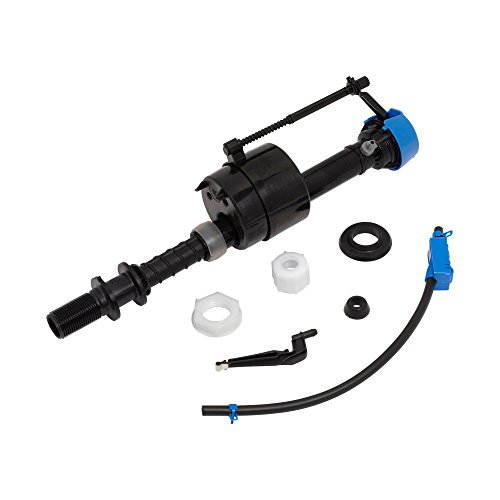
American Standard's Ceramix line delivers code-compliant ASSE 1016 pressure-balancing performance at an accessible price point without sacrificing the ceramic disc cartridge technology that makes the brand's fixtures durable in high-use settings.
The Ceramix valve represents American Standard's practical, no-frills approach to shower plumbing. It meets all required standards, uses a durable cartridge, and comes from a brand with over 140 years of documented manufacturing history in the U.S. plumbing market. For a rental unit bathroom where per-unit cost is a real consideration, this valve provides the necessary safety compliance without budget strain.
Owner reviews note occasional difficulty sourcing trim kits at big-box retailers compared to Moen or Delta, so confirming trim availability in your preferred finish before roughing-in is a practical step. American Standard's Cadet and Colony trim collections are the most commonly paired options.
When you need to valve eight bathrooms in a rental building and budget per unit matters, the Ceramix is the valve that keeps you code-compliant without overspending. The ceramic disc gives it better long-term durability than older rubber-seat designs that required frequent cartridge replacements.
Grohe's Grohtherm 3000 is a wall-mounted exposed thermostatic valve that stands out for its TurboStat cartridge technology, which Grohe specifies as capable of reacting to temperature changes in under 0.5 seconds -- one of the fastest response rates published by any manufacturer in this category.
The Grohtherm 3000's exposed format is its most distinctive feature: the valve mounts directly on the supply lines without requiring a cavity behind the tile, which simplifies installation considerably in retrofit situations where opening walls is not practical. Grohe uses StarLight chrome plating on the trim surfaces, which the company specifies as tested to 100,000 Taber abrasion cycles -- a data point that correlates with the finish durability noted across owner reviews.
The separate temperature and volume handles are clearly differentiated and labeled, making daily use intuitive. Grohe's European heritage is visible in the fit and finish, which tends to impress in showroom settings and earns consistent five-star comments for appearance. Parts availability in the U.S. has improved as Grohe's distribution network has expanded through LIXIL Group ownership.
For a bathroom where the valve is a design feature rather than a hidden component, the Grohtherm 3000 delivers the visual presence and thermostatic precision to justify its position. The exposed installation path also reduces the risk of rough-in errors that can cause expensive tile repairs.
Symmons invented the pressure-balancing shower valve in 1939, and the Temptrol remains the workhorse product that built that reputation -- it is widely specified in hotels, multifamily housing, and institutional settings where consistent scald protection across dozens of daily users is non-negotiable.
The Temptrol's piston-based pressure-balancing spool is machined from solid brass rather than the plastic internals found in lower-cost valves. That distinction matters in commercial-adjacent residential settings: a rental home that sees 4-6 occupants and 10+ showers per day will stress a plastic spool far more than a primary residence. Symmons' construction reflects that reality.
The calibration ring inside the valve allows a plumber to set a precise maximum temperature limit, not just the coarse rotational limit stop that most consumer valves offer. For households with elderly residents or young children, that granularity provides meaningful added protection. Several independent plumbing forums rate the Temptrol among the top two pressure-balancing valves they recommend for scald prevention.
If your primary concern is scald protection and you want a valve that will outlast the rest of the bathroom renovation, the Temptrol is the specification-grade choice. It has earned its place in hospital bathrooms, and that pedigree translates directly to a family home with four kids and one water heater.
Kohler's Rite-Temp valve is specified specifically for installations where stud-cavity depth is limited -- it has a smaller rough-in footprint than the Moen or Delta equivalents, making it the preferred choice for back-to-back bathroom plumbing or older homes with non-standard framing.
Kohler designed the Rite-Temp specifically for the U.S. residential market, balancing the pressure with a brass-bodied piston element. Its compact profile -- roughly 20% smaller in overall depth than the standard Kohler valve bodies -- is the defining feature that makes it worth selecting when framing constraints are the main variable. The integrated service stops simplify future cartridge maintenance without requiring a wall repair.
Owner reviews across plumbing supply channels note the Rite-Temp is particularly favored in condo and apartment remodels where walls cannot be opened deeply. A small number of reviews cite difficulty aligning the stops with 1/2" IPS supply lines in cramped conditions, but the consensus remains positive for planned installations where pipe routing is intentional.
When we encounter a back-to-back bathroom situation in a 1960s or 1970s home, the Rite-Temp is frequently the answer to fitting a compliant valve without modifying the framing. The compact body makes compliant installation possible in spaces where a standard valve literally will not fit.
The Moen 2520-8EP adds a factory-integrated diverter port and PEX-A crimp connections to the proven Posi-Temp valve body, making it the most relevant choice for ADA-accessible shower conversions and new builds using PEX plumbing throughout.
For any bathroom remodel targeting ADA compliance or aging-in-place design, a diverter that allows simultaneous overhead and handheld routing is functionally important. The integrated diverter on the 2520-8EP handles that in a single valve body, reducing the number of penetrations in the tile wall and the number of potential leak points. When paired with an accessible shower bench, grab bars, and a compliant toilet height, this valve is a logical component in a complete accessible bathroom design.
PEX plumbing has become the dominant supply piping in new construction across the U.S., and the expansion connections on the 2520-8EP align with the Uponor and Rehau systems that builders most commonly specify. Owner reviews from accessible-bathroom remodelers consistently note that the integrated diverter simplifies the rough-in and reduces callbacks.
Accessible bathroom conversions increasingly drive shower valve decisions, and the 2520-8EP answers the most common needs in one body: PEX connections for modern supply piping, pressure balancing for safety, and a diverter for a flexible showerhead arrangement that serves users of all mobility levels.
| Valve | Type | Certification | Max GPM | Connections | Warranty |
|---|---|---|---|---|---|
| Moen Posi-Temp 2520 | Pressure-Balancing | ASSE 1016 | 2.5 | 1/2" IPS or CxC | Ltd. Lifetime |
| Kohler K-2973 | Thermostatic | ASSE 1016/1070 | 8.0 | 1/2" NPT | Ltd. Lifetime |
| Delta R10000-UNBX | Pressure-Balancing | ASSE 1016 | 2.5 | 1/2" IPS or CxC | Ltd. Lifetime |
| American Standard Ceramix | Pressure-Balancing | ASSE 1016 | 2.5 | 1/2" CxC | 5-Year Ltd. |
| Grohe Grohtherm 3000 | Thermostatic (exposed) | ASSE 1016 | 10.5 | 1/2" NPT | Ltd. Lifetime |
| Symmons Temptrol | Pressure-Balancing | ASSE 1016 | 2.5 | 1/2" Sweat/IPS | Ltd. Lifetime |
| Kohler Rite-Temp K-304 | Pressure-Balancing | ASSE 1016 | 2.5 | 1/2" IPS | Ltd. Lifetime |
| Moen 2520-8EP | Pressure-Balancing + Diverter | ASSE 1016 | 2.5 | 1/2" PEX-A | Ltd. Lifetime |
Based on aggregated feedback from plumbing forums and trade publications, the Moen Posi-Temp 2520 and the Delta MultiChoice R10000-UNBX are the two pressure-balancing valves most frequently recommended by residential plumbers in the U.S. Plumbers cite trim kit compatibility, widespread parts availability, and straightforward cartridge replacement as the key reasons for both choices. For thermostatic applications, the Kohler K-2973 is the most common specification among plumbers working on high-end residential projects.
The recommendation pattern reflects practical realities: plumbers carry Moen and Delta cartridges on their trucks precisely because callbacks are less likely when parts are universally available. A valve from a brand with limited distribution may perform well initially but can become a sourcing problem when a cartridge fails five years later.
Grohe and Symmons maintain strong specification followings in specific markets -- Grohe among European-influenced designers and Symmons in institutional and multifamily construction -- but neither commands the same residential mindshare as Moen and Delta at the broad market level.
A thermostatic shower valve is worth the additional investment in specific scenarios: households with a tankless water heater (which can produce variable outlet temperatures during combustion cycling), multi-body shower systems with more than one spray outlet, homes with elderly or mobility-impaired occupants who benefit from no-adjustment daily shower consistency, and master baths where comfort precision is a priority. For a standard single-head shower in a home with a storage tank water heater, a high-quality pressure-balancing valve such as the Moen Posi-Temp delivers safe, consistent performance at a significantly lower cost.
The price gap between thermostatic and pressure-balancing valves is most visible at the valve body level, but the total installed cost difference is larger once you account for the separate volume and diverter controls that thermostatic systems require. A complete thermostatic system for a two-outlet shower typically costs two to three times the installed cost of an equivalent pressure-balancing single-handle system.
For homeowners building a primary bath as a long-term investment, the thermostatic premium often makes financial sense as a percentage of total renovation cost. For a secondary bathroom or a functional remodel on a defined budget, pressure-balancing remains the rational choice.
The most common scenario where a thermostatic valve genuinely earns its keep is a household that replaced a tank water heater with a tankless unit and then noticed temperature fluctuations that did not exist before. A tankless heater's combustion cycling can produce temperature swings that a pressure-balancing valve cannot fully compensate for -- a thermostatic valve eliminates those swings at the valve level.
All residential shower valves in the U.S. are required by the International Plumbing Code and Uniform Plumbing Code to meet ASSE 1016, which is the standard for automatic compensating valves for individual shower and tub-shower combinations. ASSE 1016 certifies that the valve protects against both scalding and thermal shock. Thermostatic mixing valves may additionally carry ASSE 1070 certification, which covers point-of-use water temperature control devices to a maximum of 120 degrees Fahrenheit -- the ASSE 1070 standard is commonly specified in healthcare settings and is an added marker of scald protection capability.
ASSE (American Society of Sanitary Engineering) certification is third-party verified, meaning a valve does not carry the certification solely on the manufacturer's claim -- it must pass independent testing. When comparing valves, confirming ASSE 1016 certification on the product data sheet is more reliable than relying on marketing language alone.
Some manufacturers also note compliance with CSA B125 (Canadian standards) and IAPMO listing, which are relevant for U.S. projects in jurisdictions that have adopted the UPC or for installations where dual compliance is specified by the architect or building department.
Shower valve installation permitting requirements vary by jurisdiction: many U.S. states allow homeowners to perform their own plumbing work in their primary residence without a licensed plumber, provided the work passes a rough-in inspection before the wall is closed. However, some states and municipalities require a licensed plumber for all rough-in plumbing including valve installation. Checking your local building department requirements before starting is the only reliable way to confirm what applies to your project.
From a technical standpoint, installing a pressure-balancing shower valve with copper sweat connections or PEX crimp fittings is within the capability of a competent DIYer who is comfortable with basic plumbing. The most common errors are over-tightening IPS connections (which cracks valve bodies), setting the shower valve at the wrong depth for the planned tile thickness, and failing to test for leaks before closing the wall. Each of these errors is preventable with careful reading of the installation manual.
Thermostatic valve systems with multiple trim components and custom rough-in configurations are more complex. The combination of volume controls, diverter valves, and thermostatic valve body placement requires precise planning of water supply routing within the wall cavity, and errors at this stage can be expensive to correct after tile is set. Professional installation is the more sensible choice for complex thermostatic systems, particularly in a high-value master bath. For more guidance on bathroom plumbing planning, our bathroom faucet buying guide covers related fixture and supply planning considerations.
As covered above, the starting question is whether you need a pressure-balancing valve (code minimum, works well for most single-head showers) or a thermostatic valve (premium performance, better for multi-outlet systems or tankless heater homes). This decision drives everything downstream, including budget, trim selection, and rough-in complexity.
Valve bodies are sold in three primary connection configurations: copper sweat (CxC), threaded IPS (iron pipe size), and PEX. Most modern valve bodies offer at least two options. If your home uses PEX supply lines -- which is increasingly the norm in construction after 2010 -- confirm whether the valve accepts PEX-A expansion fittings (Uponor system) or PEX-B crimp rings. Using the wrong fitting type requires an adapter, which adds a potential leak point. PEX-A and PEX-B are not interchangeable without adapters.
Most shower valves sold at plumbing supply houses and big-box retailers are valve bodies only -- the trim kit (handle, escutcheon plate, cartridge) is a separate purchase. This is intentional: it allows the trim style to be chosen after the rough-in, and it permits style updates without replumbing. Confirm trim compatibility before purchasing the valve body, particularly if you are replacing an existing valve body and want to use existing holes in the tile without redrilling.
Integral service stops -- built into the valve body on both hot and cold inlets -- allow water to be shut off at the valve for cartridge replacement without shutting off the whole-house supply. Not all valve bodies include them as standard; some require a separate stop kit. This feature is worth specifying because future cartridge maintenance becomes dramatically simpler when a plumber does not need to shut down the house water supply to change a worn cartridge.
Nearly all ASSE 1016-certified valves include an adjustable rotational limit stop that prevents the handle from being turned past a maximum hot position. This stop should be set to limit outlet temperature to 120 degrees Fahrenheit (49 degrees Celsius) or lower, which is the CDC-recommended maximum to prevent scalding burns. Check that the valve you select allows easy adjustment of this stop without opening the wall -- on most modern designs, the limit stop is accessible after removing the trim plate.
The shower valve itself does not carry EPA WaterSense certification -- that certification applies to showerheads (which must deliver 2.0 GPM or less at 80 PSI to qualify). However, the valve's maximum flow rate affects what showerheads can be paired with it. Most residential pressure-balancing valves are rated to pass at least 2.5 GPM, which accommodates any WaterSense-certified showerhead while leaving capacity for an upgrade. If you are building a multi-body system, the thermostatic valve's aggregate flow rating determines how many outlets can run simultaneously without a pressure drop.
Our bathroom ventilation guide covers the complementary upgrades that make a shower remodel complete, including sizing exhaust fans for tile showers and wet zones.
ASSE 1016 is the American Society of Sanitary Engineering standard for automatic compensating valves in shower and tub-shower applications. Compliance means the valve has been third-party tested to protect against scalding (water too hot) and thermal shock (water suddenly too cold). Most U.S. plumbing codes require ASSE 1016 compliance for all new and replacement shower valves.
Signs that a shower valve needs replacement include: a dripping showerhead that persists after replacing the cartridge, difficulty adjusting temperature or flow, visible corrosion or mineral buildup on the trim plate, water appearing inside the wall cavity, or a valve that is not ASSE 1016 certified (common in homes built before the 1990s). A plumber can also diagnose internal seat damage that is not visible without disassembly.
Yes, in most cases. The valve body (the brass fitting soldered or threaded into the supply lines) is designed to last the life of the home. Cartridges are the serviceable wear component and can be replaced without opening walls, provided the valve has integral stops. Moen, Delta, and Kohler all sell replacement cartridges that are widely available and straightforward to swap in most of their valve lines.
A single-function valve controls temperature and flow for one outlet (typically the showerhead). A multi-function or multi-outlet configuration uses a thermostatic valve plus separate volume and diverter controls to simultaneously manage a rain head, body sprays, and a handheld -- each controlled independently. Multi-function systems require a higher valve flow capacity and more complex rough-in, but provide the independent control that makes them desirable in custom shower enclosures.
The CDC and most plumbing codes recommend setting your water heater to 120 degrees Fahrenheit and setting the shower valve's limit stop to prevent the outlet from exceeding 120 degrees Fahrenheit as well. For households with children under 5 or elderly residents, setting the limit stop to 110 degrees Fahrenheit provides a wider safety margin against scalding, which can occur in as little as 5 seconds at 120 degrees Fahrenheit.
Yes, and they perform better than pressure-balancing valves in that pairing. Tankless water heaters can produce temperature swings as the burner cycles on and off, which a pressure-balancing valve cannot compensate for because it only corrects for pressure differentials. A thermostatic valve actively senses and corrects outlet temperature regardless of the source of variation, making it the preferred solution for homes with tankless hot water systems.
Most residential shower valves require a minimum static supply pressure of 20 PSI and a dynamic flow pressure of at least 15 PSI to operate correctly. Thermostatic valves typically specify a higher minimum -- Kohler specifies 20 PSI static for the K-2973, for example. Homes with well pumps or low municipal pressure may need a pressure-boosting system before a thermostatic valve will perform to specification.
Both Moen and Delta produce reliable, ASSE 1016-certified pressure-balancing valves with lifetime limited warranties and broad trim compatibility. The choice between them is largely a matter of which trim collection you prefer aesthetically and which is more available in your market. Moen's Posi-Temp has a slight edge in cartridge availability at independent plumbing supply houses; Delta's MultiChoice has a wider trim library. Either brand is a sound choice.
Ceramic disc cartridges used in most quality shower valves typically last 15 to 20 years before showing wear symptoms such as dripping or difficulty turning. Rubber-seat cartridges used in older or budget designs may need replacement every 5 to 10 years. Hard water accelerates wear on both types; installing a whole-house water softener or scale inhibitor can extend cartridge life significantly in areas with water hardness above 10 grains per gallon.
A diverter valve redirects water flow between two or more outlets -- for example, switching from an overhead showerhead to a handheld. A volume control regulates the flow rate of water going to a specific outlet without redirecting it. In a multi-outlet thermostatic system, you typically use one thermostatic valve to maintain temperature, one or more volume controls to adjust individual outlet flow, and a diverter (or multiple diverters) to direct flow to specific outlets.
Most shower valve manufacturers specify a rough-in depth that positions the valve face 1/2" to 1" behind the finished tile surface. The exact specification is printed in the installation manual for each valve and accounts for the escutcheon plate and trim depth. Installing the valve at the wrong depth is one of the most common rough-in errors -- it results in either a protruding cartridge or an escutcheon plate that does not sit flush against the tile.
No. Shower valves must be installed in the orientation specified by the manufacturer -- typically with the hot supply on the left and cold on the right (when facing the valve from the shower side), and the valve positioned vertically. Installing hot and cold in reverse causes the temperature handle to work backward, and some thermostatic cartridges will not function correctly if mounted horizontally when designed for vertical installation. Always follow the manufacturer's orientation specification.
Grohe is a German brand (now owned by Japan's LIXIL Group) that produces high-quality valves sold globally. Their products sold in the U.S. carry ASSE 1016 certification and use 1/2" NPT connections compatible with U.S. plumbing. The main consideration for U.S. buyers is parts availability: Grohe cartridges are less universally stocked at independent plumbing supply houses than Moen or Delta cartridges, so ordering online may be necessary for future maintenance.
Symmons, Grohe, American Standard, Watts, and Rohl all produce ASSE 1016-certified shower valves with documented reliability track records. Symmons is particularly well regarded in institutional and multifamily applications. Watts is a strong choice for commercial applications. American Standard's Ceramix line offers solid budget-tier performance. Each brand has trade-offs in trim library size and parts availability relative to the Moen/Delta/Kohler tier.
The most reliable method is to identify the valve body model number (usually stamped on the brass body and listed in the installation manual) and search the manufacturer's website for listed compatible trim kits. Moen, Delta, and Kohler all maintain online compatibility tools. For older or discontinued valve bodies where compatibility is unclear, a plumbing supply house counter person can often identify compatible trim from the valve body dimensions and connection geometry.
Valve bodies and trim kits are sold without a showerhead -- the showerhead connects to the shower arm, which is a separate fitting that screws into the wall flange coming from the valve's outlet. Some complete shower faucet sets sold at big-box retailers bundle the trim kit and showerhead together, but the valve body is always a separate purchase. This allows any ASSE 1016-compliant showerhead -- including WaterSense-certified models -- to be paired with any valve.
A pressure-balancing spool is the internal element that equalizes hot and cold pressure within the valve. It is commonly made of either plastic or brass. Brass spools (as used in the Symmons Temptrol) are more durable under high-use and hard-water conditions. Plastic spools used in consumer-grade valves are adequate for typical residential use but may wear faster in high-traffic installations or where water chemistry is aggressive. For commercial-adjacent applications, a brass-spool valve is the more conservative specification.
A concealed valve is installed inside the wall with only the trim plate and handle visible -- this is the standard configuration for most U.S. residential showers. An exposed valve mounts on the surface of the wall with visible piping and the valve body itself as a design element -- common in European-style bathrooms and in retrofit situations where opening the wall for a concealed rough-in is not practical. Grohe's Grohtherm 3000 is an example of an exposed thermostatic valve. Concealed valves provide a cleaner look; exposed valves simplify installation in retrofit scenarios.
The Moen Posi-Temp 2520 is the best shower valve for most homeowners: it is code-compliant, broadly compatible with current and future trim kits, and backed by a lifetime limited warranty that minimizes long-term risk. For those building a multi-outlet custom shower or dealing with a tankless water heater, stepping up to the Kohler K-2973 thermostatic valve delivers genuinely superior temperature consistency that justifies the added investment. In every case, prioritize ASSE 1016 certification and integral service stops as non-negotiable features -- they represent the two decisions you are most likely to appreciate years after installation day.
Step-by-step fixes for the shower problems homeowners run into most often, from weak water pressure and temperature swings to leaking valves, slow…
Read the guide
A water-saving showerhead has to solve the same problem a water-saving faucet does, cutting flow without leaving the spray feeling thin, since…
Read the guideA practical framework for deciding between a shower head, a full shower system, and an enclosure upgrade, plus how to match flow…
Read the guide