
Best Eclectic Showers (2026)
Showers4.6
Shower systems and showerheads with enough finish and shape range, from unlacquered brass to matte black, to anchor a bathroom built on…
Read the guideSeven thoroughly researched picks covering pressure-balancing valves, thermostatic systems, rain heads, and everything in between -- with real specs and honest tradeoffs.
Research updated June 2026.
The Moen Posi-Temp 82604 is the single best shower faucet for most homes: a pressure-balancing valve with a solid brass body, simple trim-kit compatibility, and a lifetime warranty. If your household needs precise temperature control across multiple outlets, step up to a Kohler Rite-Temp or Symmons Temptrol thermostatic instead.
Choosing the wrong shower faucet leads to scalding when the toilet flushes, inconsistent temperatures, or a valve that needs replacing in five years. This guide covers seven picks ranked by valve quality, trim-kit range, certifications, and aggregated owner data -- not sponsor fees. Two terms matter before you scroll: a pressure-balancing valve compensates for supply pressure changes to prevent scalding; a thermostatic valve holds a precise temperature (within 2-3 degrees F) regardless of pressure swings, at a higher cost. If you are also renovating the toilet side of your bathroom, our best flushing toilets guide covers MaP-tested models that pair well with any of these valves.
| Model | Type | Material | Max Flow (GPM) | Certifications | Warranty |
|---|---|---|---|---|---|
| Moen Posi-Temp 82604 | Pressure-balancing | Brass body | 2.0 | ASSE 1016, cUPC | Lifetime (residential) |
| Delta Monitor 17 Series | Pressure-balancing | Brass body | 2.0 | ASSE 1016, cUPC | Lifetime (residential) |
| Kohler Rite-Temp K-304-K | Pressure-balancing | Brass body | 2.0 | ASSE 1016, cUPC | Lifetime (limited) |
| Symmons Temptrol 2-96 | Pressure-balancing | Solid brass | 2.5 | ASSE 1016, NSF 61 | Lifetime (residential) |
| American Standard Seva | Pressure-balancing | Brass/ABS | 1.8 | ASSE 1016, EPA WaterSense | Limited lifetime |
| Grohe Grohtherm 3000 | Thermostatic | Brass body | 2.5 | ASSE 1016, CE, DZR brass | Limited lifetime |
| Hansgrohe ShowerSelect S | Thermostatic | Brass body | 2.5 | ASSE 1016, cUPC | Limited lifetime |
A pressure-balancing valve reacts to changes in water pressure -- when the toilet flushes and cold supply drops, the valve restricts hot water to match, keeping temperature within roughly 3 degrees Fahrenheit of the set point. A thermostatic valve measures actual outlet temperature and adjusts flow to hold it precisely, typically within 2 degrees, regardless of pressure changes, making it safer for households with children or elderly members.
Pressure-balancing valves satisfy ASSE 1016 for most homes at a fraction of thermostatic cost. The real case for thermostatic is multi-outlet systems -- body sprays, overhead, and handheld running simultaneously -- where simultaneous flow would tax a pressure-balancing cartridge.
The Moen Posi-Temp 82604 earns its position as the default recommendation for American households because it combines a proven pressure-balancing cartridge, a wide trim-kit ecosystem, and a no-questions Lifetime warranty into one package that plumbers consistently stock and trust.
The Posi-Temp cartridge is a ceramic disc design with field-proven longevity -- owner reviews routinely reference 15-plus-year service runs before any cartridge swap. The brass body resists the dezincification that shortens cheaper zinc-alloy alternatives.
Critically for DIY installers, the rough-in body is universal, meaning you can choose any Moen shower trim kit after the valve is set in the wall -- a flexibility that saves money if your bathroom aesthetic changes during a renovation. The integrated pressure-balancing spool responds to supply pressure changes in milliseconds, meeting the ASSE 1016 requirement that outlet temperature not exceed 120 F during normal household pressure fluctuations.
The Posi-Temp is the first valve many licensed plumbers reach for in a standard tub-shower replacement because the cartridge swap takes under 20 minutes without wall demolition. The fact that Moen supplies replacement cartridges free under warranty for life is a genuine long-term cost advantage.
Delta's Monitor 17 Series uses a patented dual-function cartridge that handles both pressure balancing and rotational temperature limiting, making it one of the most intuitive valves on the market while also meeting ASSE 1016 anti-scald requirements.
Delta's Monitor branding refers specifically to the spool inside the cartridge that equalizes pressure differentials. The trim catalog spans over 150 collections, giving homeowners substantial design choice without touching the valve body. The R10000-UNBX includes a universal backing plate and integrated volume control port, making it easier to add a diverter later without re-opening the wall.
Both the Monitor 17 and the Moen Posi-Temp are legitimate lifetime choices. Brand preference often comes down to which replacement cartridges your local plumber stocks -- check before committing to a trim ecosystem.
American Standard's Seva shower valve is one of the few pressure-balancing units that carries EPA WaterSense certification for the complete trim-plus-showerhead package, delivering 1.8 GPM flow while maintaining adequate rinsing performance according to WaterSense flow criteria.
EPA WaterSense showerheads must use no more than 2.0 GPM at 80 psi while still delivering acceptable coverage per a standardized spray-force test. The Seva system qualifies for rebates offered by many municipal water utilities in water-stressed regions including California and the desert Southwest. American Standard is a well-established name in bath fixtures -- see our American Standard brand guide -- and the Seva continues that tradition of straightforward, code-compliant design.
EPA WaterSense certification on a complete valve-plus-head system is genuinely useful for homeowners seeking utility rebates. Check your local water authority's rebate portal before buying -- the savings can offset the purchase cost substantially in high-rate water districts.
The Grohe Grohtherm 3000 Cosmopolitan is a fully thermostatic valve with a separate volume control, enabling users to set a precise temperature once and simply turn flow on and off without touching the temperature dial again -- a meaningful daily convenience and a real safety improvement in family bathrooms.
Grohe's TurboStat thermostatic element is a wax-element thermostat -- mature, well-understood technology with decades of service data, not prone to the failure modes of bimetallic alternatives. DZR (dezincification-resistant) brass in the body matters in regions with high-chlorine water supplies, where standard yellow brass can develop pitting as zinc is selectively leached over time. For a custom shower intended to last 20-plus years, these material specifications justify the cost premium.
Thermostatic valves shine in households where multiple people shower at different times and temperatures -- each person sets their preference once, and the valve holds it. The Grohtherm 3000 is a cost-effective entry into proper thermostatic performance without the complexity of a full Grohe Rapido or SmartControl system.
Symmons has manufactured the Temptrol valve since 1939, and the 2-96 variant remains a staple of commercial and multi-family residential installation because of its all-brass construction, NSF 61 water-quality certification, and a piston design that many plumbers prefer for high-cycle durability.
The Temptrol's piston design is a single moving part with two o-rings -- simpler than ceramic disc or diaphragm cartridges, and reliably durable under high-cycle use. NSF 61 certifies that valve materials do not leach heavy metals or other contaminants into potable water above EPA thresholds; not all residential valves carry this listing, and it matters in any home where water sits in fixture bodies for extended periods.
Symmons Temptrol valves appear in hospitals, dormitories, and apartment buildings at volume precisely because their failure rate under high-cycle use is well-documented and low. For a single-family home the advantage is reduced, but if longevity is the priority and you can live with fewer trim choices, the 2-96 is an excellent call.
Hansgrohe's ShowerSelect S delivers genuine thermostatic performance with a distinctive flat-panel trim design that integrates cleanly into tiled walls -- a meaningful advantage for renovation projects where aesthetics matter as much as performance.
The ShowerSelect S uses Hansgrohe's iBox Universal concealed rough-in, which accepts multiple trim-face options -- meaning the valve body set in tile can be refaced years later without wall work. The two-outlet configuration controls an overhead rain head and a handheld simultaneously via independent volume dials, while the single thermostatic cartridge maintains consistent temperature across both outlets.
Hansgrohe's iBox system is the most design-forward approach to thermostatic concealed valves in this price segment. The two-piece rough-in/trim model is standard in European plumbing and is increasingly common in US luxury renovations. Ensure your plumber is familiar with iBox installation before specifying it.
Kohler's Rite-Temp valve is the standard pressure-balancing option within the Kohler trim ecosystem, offering ASSE 1016 compliance and broad trim compatibility at an accessible installed cost -- a reliable choice for builder-grade renovation projects and Kohler-loyal households.
The Kohler Rite-Temp uses a ceramic disc cartridge confirmed ASSE 1016 compliant at the factory-set 120 F limit. Kohler also manufactures the well-regarded Highline and Cimarron toilet lines (see our Kohler Highline review), so specifying the Rite-Temp valve keeps the bathroom on a single-manufacturer warranty and service relationship. The limited lifetime terms cover defects in materials and workmanship for the life of the original purchaser.
Kohler Rite-Temp is a solid performer in its class. The main reason to choose it over Moen or Delta is if you are already locked into the Kohler trim ecosystem from prior renovations -- replacing the valve alone while keeping existing trim is the practical use case.
EPA WaterSense certifies showerheads at or below 2.0 GPM and requires minimum spray-force performance to prevent scalding cold rinse cycles, making 2.0 GPM the best balance for most households. Areas with severe water restrictions increasingly require 1.8 GPM or less, while 2.5 GPM remains legal in most US states and delivers a noticeably stronger spray experience -- especially relevant in rain-head configurations where coverage area is large.
ASSE 1016 is the primary standard governing individual shower and tub-shower combination pressure-balancing and thermostatic valves in the United States. It requires the valve to limit outlet water temperature to no more than 120 degrees Fahrenheit and to respond to pressure changes within two seconds. ASSE 1070 covers separate point-of-use temperature-limiting devices (such as faucet aerators), while NSF 61 addresses material safety in potable water contact -- a separate but complementary certification.
Trim kits are not interchangeable between valve brands -- each manufacturer designs trim to fit their specific rough-in valve body. Within a single brand, trim interchangeability varies: Moen Posi-Temp trim works with any Posi-Temp rough-in valve but not with Moen's M-PACT valves, and Delta 17-Series trim works only with 17-Series rough-in bodies. Always confirm the trim series number matches the rough-in valve series number before purchasing, particularly when updating aesthetics in a bathroom with an existing valve.
Replacing a trim kit on an existing rough-in valve typically requires no plumbing license and is within DIY capability for most homeowners -- it involves no pipe cutting and no permits in most jurisdictions. Installing a new rough-in valve body, however, usually requires opening the wall, cutting and soldering or crimping supply pipes, and is subject to local plumbing permit requirements in most US jurisdictions. Always verify local code requirements before starting a rough-in installation.
The most common DIY mistake is assuming all valves from one brand share a cartridge. Moen alone has four distinct platforms (Posi-Temp, M-PACT, ExactTemp, legacy two-handle) that are not interchangeable. Identify the existing valve series first -- the model number is stamped on the body inside the wall access panel.
The visible trim -- handle, escutcheon, diverter -- sits on a valve body that will be inside your wall for decades. Getting the valve body right matters far more than finish choices.
Solid brass is the preferred material for long-term durability. It resists dezincification (a form of corrosion where zinc is selectively leached from brass alloys, weakening the metal) better than standard yellow brass or zinc-alloy bodies. Some manufacturers use ABS plastic for non-wetted internal components, which is acceptable -- but the water-contact surfaces should be brass or stainless steel. Avoid any valve where the entire body is plastic, particularly in regions with chlorinated or hard water supplies.
ASSE 1016 is required by the International Plumbing Code and virtually all US state codes for new shower valve installations. Decline any valve without it regardless of price -- it is the certification that prevents outlet temperature from exceeding 120 F during pressure fluctuations, the scenario responsible for most shower scalding incidents.
Moen and Delta have the broadest trim catalogs -- each offering over 150 collections in finishes from chrome to matte black. Grohe and Hansgrohe offer tighter but distinctively European-aesthetic lines. If you anticipate updating the bathroom look in 10 years without opening the wall, Moen or Delta gives maximum future flexibility.
The valve itself has minimal impact on flow rate -- that is controlled by the showerhead. For EPA WaterSense rebate eligibility, pair a WaterSense-listed showerhead with your valve. See our best showerhead guide for certified options. California requires 1.8 GPM maximum for residential showerheads in new construction.
Lifetime warranties are common but differ in scope. Moen's is effectively unconditional -- they replace parts or the whole valve without requiring proof of installation date. Delta covers both valve and finish components for life. Kohler's limited lifetime warranty excludes some conditions. Read the actual warranty document, not the marketing summary.
ASSE 1016 is the American Society of Sanitary Engineering standard that certifies a shower valve can maintain outlet water temperature within a safe range during supply pressure fluctuations. Specifically, it requires the valve to prevent water temperature from exceeding 120 F. This certification is required by most US plumbing codes for all new shower valve installations.
Yes, in most cases. If the rough-in valve body is structurally sound and the cartridge is in good condition, you can update the trim kit (handle, escutcheon, spout) to a newer aesthetic without opening the wall. The trim kit must be compatible with the existing rough-in valve series -- confirm the series number before ordering.
The Posi-Temp cartridge is a ceramic disc pressure-balancing unit that Moen covers for free under its lifetime warranty. Owner accounts and contractor reports suggest 15 to 20 years of service is common before a cartridge swap is needed.
Yes. Most thermostatic valves need at least 15 to 20 psi differential between hot and cold supply lines. If your home runs below 30 psi static, consult the manufacturer's published minimum specifications. Pressure-balancing valves generally tolerate lower differentials better.
EPA WaterSense is a voluntary labeling program that certifies showerheads using no more than 2.0 GPM at 80 psi inlet pressure while meeting minimum spray-force and coverage requirements. WaterSense-certified products are eligible for rebates from many municipal water utilities. The EPA publishes a searchable database of all certified products at epa.gov/watersense.
No. Trim kits are brand-specific and often series-specific within a brand -- Moen Posi-Temp trim works only on Posi-Temp rough-in valves; Delta 17-Series trim only on 17-Series bodies. Verify your rough-in valve series number before ordering any trim kit.
DZR brass is a brass alloy formulation that resists dezincification, a form of corrosion where zinc is selectively removed from the alloy by aggressive water chemistry, leaving a weakened, porous copper matrix. Standard yellow brass (C36000) can dezincify in regions with high-chlorine or high-pH water supplies. DZR brass, used by Grohe and some other premium brands, contains added arsenic or antimony to inhibit the dezincification reaction.
Look for a model number stamped on the valve body -- access it through the shower surround or an opposite-wall access panel. The brand name is usually cast into the brass. Moen's website offers a photo-submission model-identification tool if the stamping is unreadable.
A single-handle faucet controls temperature and flow with one lever -- rotating adjusts temperature, pushing/pulling controls volume. Two-handle designs use separate hot and cold handles requiring manual blending; they typically lack a pressure-balancing element and are not ASSE 1016 compliant under modern code.
A diverter redirects flow between two or more outlets -- rain head to handheld, for example. Single-outlet showers need no diverter. For dual-outlet setups, a diverter is built into some trim kits or added inline on the riser. Thermostatic valves with multiple volume-control handles often replace the need for a separate diverter.
Yes. The Moen Posi-Temp and Delta Monitor 17 Series are both available in tub-shower combo configurations with an integral diverter directing flow to the tub spout or showerhead. Verify the specific rough-in SKU is specified for tub-shower use -- some models are shower-only.
Major brands offer chrome, brushed nickel, polished nickel, matte black, oil-rubbed bronze, brushed gold, and polished gold. Chrome remains the most durable in humid shower environments. Matte black and brushed gold are popular for modern aesthetics, though long-term humidity resistance varies by manufacturer.
California Title 20 / Title 24 amendments cap residential showerheads at 1.8 GPM for new construction and major renovations. The restriction applies to the showerhead, not the valve body. Replacing a valve in California without changing the showerhead -- confirm the existing head already meets the 1.8 GPM limit.
Install an ASSE 1016-certified pressure-balancing valve if your shower does not already have one. The pressure-balancing element detects when cold water pressure drops (as happens when a toilet refills) and restricts the hot side proportionally, keeping the temperature stable. Any of the valves on this list will solve this problem -- it is the primary function of all modern residential shower valves.
NSF 61 is a standard published by NSF International (formerly the National Sanitation Foundation) that certifies plumbing fixtures and materials do not leach contaminants into potable water above EPA maximum contaminant level thresholds. It is particularly relevant for fixtures with large internal wetted surface areas or long water residence times. The Symmons Temptrol 2-96 carries NSF 61 listing in addition to ASSE 1016.
Both brands share German roots but have operated independently since 1985. Grohe is now owned by LIXIL Corporation of Japan; Hansgrohe remains publicly traded and family-influenced. Both are premium-tier brands with strong engineering reputations. Grohe trends more minimalist; Hansgrohe tends toward a warmer residential feel.
A solid brass-body valve (Moen Posi-Temp, Delta Monitor, Symmons Temptrol) should last 20 to 30 years in residential service. The cartridge or piston may need replacement at 10 to 20 years -- a straightforward repair that leaves the valve body intact. Cheap zinc-alloy bodies in builder-grade valves often fail within 5 to 10 years in hard or chlorinated water.
Yes, provided the valve body has an extra outlet port or you add an inline diverter on the supply riser. The pressure-balancing function stays active regardless of which outlet is in use. Note that a large-format rain head (8 inches or larger) at 2.0 GPM delivers noticeably lower spray intensity than a standard 4-inch head at the same flow rate.
Yes. American Standard produces pressure-balancing valves (Seva, Colony, Studio) and some thermostatic options, all carrying ASSE 1016 certification. The brand is best known for toilets -- the Champion 4 and Cadet 3 are among the most recommended in the category -- but the faucet line holds to the same quality standards.
The Moen Posi-Temp 82604 is the best shower faucet for most households: ASSE 1016 anti-scald protection, a 15-plus-year track record, and the widest trim-kit ecosystem with a lifetime no-questions warranty. For multi-outlet custom showers or families with children, the Grohe Grohtherm 3000 justifies its premium with precise set-and-forget temperature control. Water-conscious buyers should consider the American Standard Seva for EPA WaterSense rebate eligibility. Whatever you choose, prioritize brass body, ASSE 1016 certification, and warranty scope -- the trim is easy to change; the valve body is not.
How we rank & our data sources
We do not run physical lab tests. Rankings are built from published, verifiable data and real owner feedback, never paid placement.
Researched by Marcus Bell · Last updated June 28, 2026 · Our review method
Shower systems and showerheads with enough finish and shape range, from unlacquered brass to matte black, to anchor a bathroom built on…
Read the guideSlim round showerheads and simple matte-black or brushed-nickel shower systems with quiet, uncluttered geometry that suit a calm, low-contrast East Asian-influenced bathroom.
Read the guide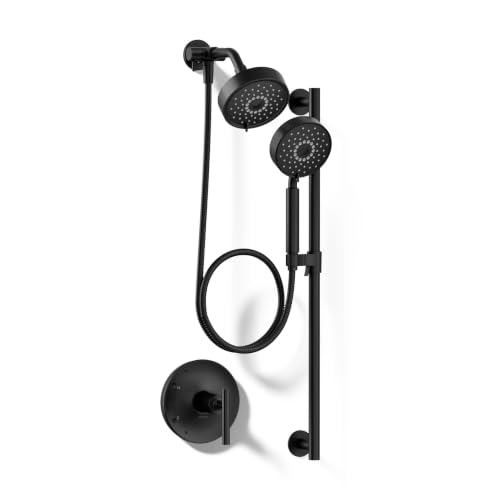
Matte black and brushed nickel shower systems with slim square or round heads and clean single-lever valves, ranked on certified WaterSense flow…
Read the guide