Best Toilet Flush Valve: How to Choose the Right One
Plumbing4.6
Which is the best toilet flush valve? Compare 2-inch, 3-inch, adjustable, and canister flush valves by fit and flush power, plus how…
Read the guideWhen a toilet fails to flush fully, the root cause is almost always inside the tank or at the rim jets, not in the drain line. This five-step diagnostic guide works through each cause in cheapest-first order, using published MaP flush-test scores, EPA WaterSense specifications, and aggregated owner-review patterns so you can restore a complete flush, or make an informed upgrade decision, without guessing.
A toilet not flushing fully is most often caused by a tank water level sitting below the molded fill line, a flapper that closes too early, or rim jets clogged with mineral deposits. Raise the water level first, set the flapper to hold open longer, then clean the jets with vinegar. Those three free fixes resolve the large majority of incomplete-flush complaints before any parts need replacing.
An incomplete flush, where the bowl clears partly but waste or paper remains, is one of the most common toilet complaints in households with hard water or older fixtures. Unlike a completely dead flush, an incomplete flush can be deceptively subtle: the tank drains, the bowl swirls, but the siphon never fully engages and the bowl does not clear completely. Understanding why that siphon fails is the key to fixing it.
A full flush is a precisely timed sequence. The handle lifts the flapper, which dumps the entire tank volume through the rim jets and siphon jet in a matter of seconds. That fast, directed rush of water builds a siphon in the trapway, and the siphon does the actual pulling. If the water volume is too low, the jets are narrowed by scale, the flapper closes before the tank empties, or the trapway is partly blocked, the siphon never reaches full strength and the flush stops short. Each of those causes has a specific and inexpensive fix, and this guide covers them in order.
Research on this site draws on manufacturer flush specifications, independent MaP (Maximum Performance) flush-test scores that measure grams of solid waste cleared in a single pass, EPA WaterSense water-efficiency data, and aggregated owner-review patterns from thousands of verified buyers. We do not run in-house flush tests. Where those sources converge on a repair pattern or a product recommendation, we report it.
Each cause produces a slightly different symptom. A low water level makes the flush feel short and choppy, as if it ran out of steam halfway through. An early-closing flapper produces a flush that starts strong but seems to give up before the bowl clears. Clogged rim jets show up as streaks under the rim and a weak, uneven swirl rather than a full spiral rinse. A partial trapway clog makes the bowl rise before it drains and often produces a slow gurgle. And a bowl that has reached the limit of its design will flush cleanly but shallowly, leaving the same residue every time regardless of what you adjust.
| Symptom | Most likely cause | Step to fix it | Cost |
|---|---|---|---|
| Flush feels short, cuts off fast | Low tank water level | Step 1 - raise float | Free |
| Bowl swirls but does not clear | Flapper closes too early | Step 2 - adjust or replace flapper | Under $10 |
| Weak swirl, streaks under rim | Clogged rim and siphon jets | Step 3 - vinegar cleaning | Free |
| Bowl rises before draining slowly | Partial trapway clog | Step 4 - plunge or auger | Low cost |
| Still incomplete after all fixes | Bowl design is the limit | Step 5 - upgrade to high-MaP model | Replacement |
This is the single most common cause of an incomplete flush and the easiest to correct. Every flush uses the full volume of water stored in the tank. When that level falls below the molded fill line, the tank simply does not hold enough water to build a complete siphon, and the flush stops before the bowl clears. Over time, fill valves drift, floats get bumped, or a well-meaning person lowers the level to save water without realizing they are starving the flush.
Look on the inside rear wall of the tank for a molded waterline indicator, usually labeled "water line" or shown as a stamped ridge. Alternatively, the correct level is approximately one inch below the top of the overflow tube (the tall standpipe in the center of the tank). If the resting water is lower than that marker, the flush is underpowered. Adjusting the float restores the level:
After adjusting, flush and wait for the tank to refill. Measure the resting level again. It should sit right at the fill line, not above it. Raising the water above the overflow tube means the tank continuously drains down the tube without adding any flush power, which is wasted water and a running toilet. Even a half-inch gain at or below the fill line can transform an incomplete flush into a complete one. For a detailed walkthrough of restoring power by tank adjustment and other methods, see the guide to improving toilet flush power.
The flapper is the rubber or silicone disc at the base of the tank that lifts when you flush. Its job is to stay elevated long enough for the entire tank to drain into the bowl in one fast rush. If it closes early, the flush is throttled at the source. This single part is responsible for a surprisingly large share of incomplete flush complaints, and it is also the part most likely to degrade quietly over two or three years.
Watch a flush from directly above with the tank lid off. A correctly behaving flapper will rise fully, float up as the water level drops, stay open until only an inch or two of water remains in the tank, and then drop cleanly to reseal. If the flapper slaps down while several inches of water remain in the tank, the flush has been cut short. Two things cause this:
A correctly timed flapper is one of the highest-leverage fixes in toilet repair. When owners report that their toilet "used to flush fine but gradually got weaker," a flapper that has lost its hold time is the cause more often than anything else. Replacing it with a quality flapper, such as a Korky 100BP or Fluidmaster 502 series, and setting it to hold open for the full tank drain, restores an incomplete flush in most cases without touching anything else.
The most common mistake we see is replacing the flapper with the cheapest available universal model and not adjusting its buoyancy. A correctly chosen and correctly set flapper is the single part that most often turns an incomplete flush into a complete one, and it takes about five minutes to swap. If you are buying a replacement, choose one rated for your tank volume and spend thirty seconds dialing in the float before closing the lid.
This is the fix that most homeowners overlook and that resolves a surprising share of gradual flush deterioration. Under the rim of your bowl is a series of small angled holes, called rim jets or rinse holes, that aim water inward and downward to create the spiral rinse. At the base of the bowl near the front is a single larger hole called the siphon jet, which delivers the focused blast of water that initiates the siphon. Together, these openings direct the full tank volume where it needs to go. When they narrow from mineral scale, the same volume of water is spread thinner and aimed wrong, and the siphon never reaches full pull.
In hard-water areas (defined by the US Geological Survey as water with more than 120 mg/L of dissolved minerals, which covers more than 85 percent of the United States), these holes begin to scale noticeably within one to three years. The flush does not fail overnight; it gets progressively weaker in a way that can seem like the toilet is "just getting old" when the actual fix is a vinegar treatment. Symptoms include streaks of discoloration running down from the rim holes, an uneven swirl that favors one side of the bowl, and a flush that was noticeably stronger when the toilet was new.
To clean the jets:
After cleaning, a full flush will often show a visibly stronger, more even spiral and a complete bowl clearance where only a weak swirl existed before. In homes with very hard water, this cleaning every three to six months is the most effective maintenance habit for sustaining flush power over the toilet's life. For a broader look at what causes chronically incomplete clearing, the guide to why toilets keep clogging covers the relationship between jet restriction and siphon strength in detail.
If the tank water level is correct, the flapper holds open fully, and the jets are clean, but the bowl still does not clear completely, the problem has moved downstream. A partial blockage in the trapway, the S-shaped ceramic channel that carries waste from the bowl into the drain line, can choke the siphon even when the mechanical side of the flush is functioning correctly. This type of blockage is easy to miss because it does not completely stop the toilet: water still drains, but slowly and incompletely, and the bowl may rise before it falls.
Common partial trapway blockage causes include too much toilet paper compacted in the curved passage, wipes and hygiene products labeled "flushable" that do not break down as advertised, a flushed object (a toy, cotton pad, or other non-waste item), or in older cast-iron drain lines, mineral or rust accumulation that has narrowed the pipe over years.
Clear it in this order:
A successfully cleared partial blockage often restores a flush that seemed permanently degraded, and it can eliminate the need for a toilet replacement entirely. If partial clogs recur frequently, a toilet with a larger trapway diameter is a better long-term solution. The American Standard Champion 4's 2-3/8 inch glazed trapway and the TOTO Drake's 2-1/8 inch fully glazed trapway are both specifically engineered to reduce the lodging potential of solids, which is why they score near the top of independent MaP testing. The weak flush fix guide covers how trapway size affects clearing power across major models.
When Steps 1 through 4 all check out and the toilet still does not flush fully, the bowl geometry is the honest answer. Not all toilet bowls are engineered equally. Older 3.5 GPF models from before 1994, first-generation 1.6 GPF toilets introduced under the 1992 Energy Policy Act, and lower-priced modern bowls with small trapways or poorly angled jet holes can reach the physical limit of their flush capacity even when every mechanical part is in perfect condition. No adjustment will change that.
The benchmark for evaluating bowl capability is the MaP (Maximum Performance) score. MaP testing, conducted by an independent laboratory, measures how many grams of soybean paste (a standardized solid waste proxy) a toilet clears in a single pass at its rated GPF. Scores run from under 200 grams on weak bowls to 1,000 grams, the maximum for a residential gravity-flush toilet. For a primary bathroom:
If your current toilet has a MaP score below 600 grams, or predates MaP testing entirely, the upgrade math is clear. A high-MaP, WaterSense-certified 1.28 GPF toilet like the models below will clear more waste per flush than the toilet it replaces while using roughly 20 percent less water per year. The EPA estimates that WaterSense-certified toilets save the average household approximately 13,000 gallons of water annually compared to a 3.5 GPF pre-1994 toilet. For the complete ranked list with MaP scores, see the best flushing toilets roundup.
Among currently available gravity-flush models, MaP testing and aggregated owner reviews consistently put the TOTO Drake II and American Standard Champion 4 at the top for outright clearing power. Both achieve the 1,000-gram maximum MaP score. The difference is in design approach: the Drake II uses TOTO's Double Cyclone technology, which fires water simultaneously from two rim nozzles rather than a ring of small jets, producing a stronger and more consistent bowl wash. The Champion 4 relies on a 4-inch flush valve (versus the standard 2-inch) and an oversized trapway to move a high-volume rush of water in a single pulse.
MaP scores are particularly useful because they remove marketing language from the comparison. A toilet advertised as "powerful" or "high-performance" may score 500 grams on an independent MaP test while a less prominently marketed model scores 900 grams. The score also accounts for GPF efficiency, since it is measured at the toilet's rated water volume. A 1.28 GPF toilet scoring 1,000 grams is doing more with less water than a 1.6 GPF toilet scoring 600 grams. For context, the EPA WaterSense certification requires a minimum MaP score of 350 grams for a 1.28 GPF toilet, which means WaterSense certification alone does not guarantee strong clearing power. Always check the published MaP score directly at map-testing.com alongside the WaterSense label.
When Steps 1 through 4 confirm the bowl itself is the limit, these are the models that consistently deliver complete single-flush clearing based on published MaP scores, manufacturer specifications, and aggregated owner-review patterns.
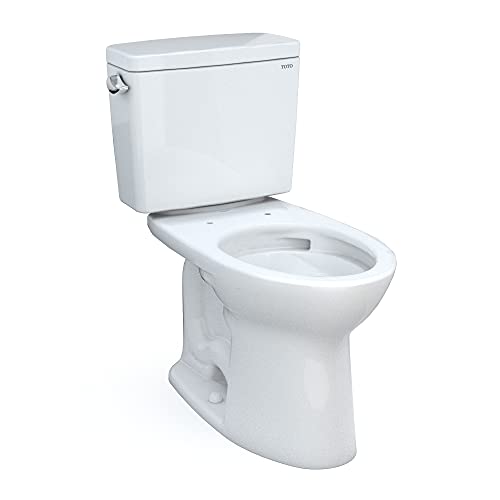
The Drake II earns its top position through the combination of a 1,000-gram MaP score, TOTO's Double Cyclone dual-nozzle rim system, and a fully glazed 2-1/8 inch trapway that together produce a complete, single-pass bowl clear on 1.28 gallons, eliminating the double flushes that define life with a weak older toilet.
TOTO's Double Cyclone system fires water from two nozzles positioned at opposite sides of the rim rather than through a ring of small holes. This approach produces a stronger, more even bowl wash than conventional rim-jet designs and is less susceptible to partial blockage from mineral scale, a direct answer to the jet-clogging problem described in Step 3 above. Published MaP testing at map-testing.com confirms a 1,000-gram score at 1.28 GPF, and aggregated owner reviews consistently cite a clean single-flush clear as the most frequently reported satisfaction driver for this model.
The fully glazed trapway reduces friction and mineral adhesion compared to partially glazed designs, which contributes to the low clog rate in owner reports. TOTO's SanaGloss or CeFiONtect ceramic glaze option on select configurations also reduces the surface adhesion that contributes to staining and reduces the cleaning frequency that many owners cite as a secondary benefit of the upgrade.
The Drake II is the recommendation that appears most consistently across published MaP data and owner review aggregation for primary bathroom replacements. Its Double Cyclone system specifically addresses the rim-jet clogging vulnerability that makes older conventional toilets degrade over time. If the diagnostic above identified jet blockage as a recurring cause of your incomplete flush, this model's dual-nozzle design is a structural solution rather than a maintenance workaround.

American Standard's Champion 4 pairs the widest glazed trapway in residential gravity-flush toilets (2-3/8 inches) with a 4-inch flush valve that opens the full tank in a single high-volume surge, producing a 1,000-gram MaP score that eliminates incomplete flushes in demanding household use.
The Champion 4's 4-inch flush valve is twice the diameter of a standard 2-inch flapper valve, which means the full tank volume exits in a shorter burst. That concentrated surge produces the hydraulic force that drives a complete siphon even in a bowl that sees heavy daily use. American Standard publishes a 10-year limited warranty on the tank and bowl, which is the longest in this class and reflects the brand's confidence in the mechanism's durability.
The 2-3/8 inch glazed trapway is wide enough to pass a solid mass larger than any standard residential waste load, which is why this toilet appears frequently in owner reviews from large households and in recommendations for families with children who flush non-optimal items. The glaze on the trapway interior reduces the surface adhesion that causes partial blockages to accumulate over time in unglazed or partially glazed designs.
If partial trapway blockages (Step 4 above) were a recurring cause of your incomplete flush, the Champion 4's 2-3/8 inch glazed trapway is the most direct structural solution. No pump-style cleaner or auger session is a permanent fix for a narrow trapway on a toilet that sees heavy daily use. The Champion 4 simply moves more material per flush than any other residential gravity toilet at this GPF rating.
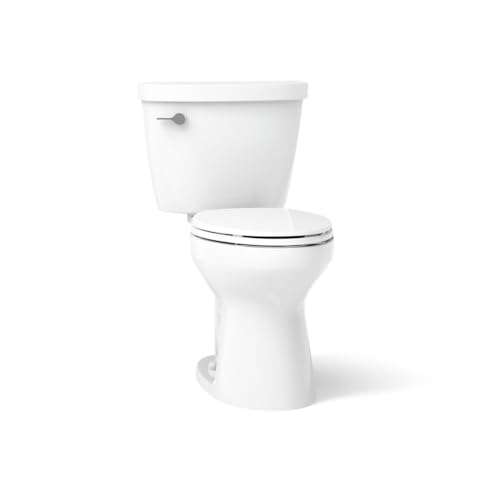
Kohler's AquaPiston canister valve opens from all 360 degrees and delivers water faster than a standard flapper, giving the Cimarron a MaP-confirmed 1,000-gram flush and consistent single-pass bowl clearing at a value position well below TOTO's comparable models.
Kohler's AquaPiston canister design removes the hinge-point failure mode of a conventional flapper and opens the full tank from all sides simultaneously, which produces a faster water release than a single-point flapper. The 1,000-gram MaP score puts the Cimarron at the top of the testing scale for reliable single-flush clearing in a standard household, at a lower price than most competitors that reach the same ceiling.
The Cimarron's strong national parts network is a practical advantage: AquaPiston replacement canisters and seals are stocked at every major hardware chain, which matters for long-term ownership. Owner reviews consistently cite the quiet, efficient flush and straightforward installation as the main satisfaction drivers, while the most common complaint is that the one-year warranty is shorter than the American Standard Champion 4's ten-year coverage.
The Cimarron's 1,000-gram MaP score matches the top of the testing scale at a price well below most other toilets that reach the same ceiling. That makes it the strongest value pick in this guide for buyers who want maximum flush confidence without paying a premium brand price.

The UltraMax II brings the Drake II's Double Cyclone flush technology and 1,000-gram MaP score into a seamless one-piece body that eliminates the tank-to-bowl joint where two-piece toilets most often develop leaks or collect grime.
The UltraMax II carries the same Double Cyclone flush engine as the Drake II and achieves the same 1,000-gram MaP score, which means flush performance is identical between the two models. The difference is entirely physical: a one-piece body has no seam between tank and bowl, which eliminates the gasket joint that can loosen over time and removes a cleaning surface that collects mineral deposits in hard-water homes.
TOTO's optional CeFiONtect ceramic glaze produces a surface that resists the adhesion of waste, scale, and bacterial film, reducing the cleaning frequency owners cite in long-term reviews. The UltraMax II is consistently the highest-rated one-piece model in owner satisfaction surveys for bathrooms where both visual presentation and flush reliability are priorities.
If the Drake II is the performance benchmark, the UltraMax II is the same benchmark in a form that is easier to keep clean and better suited to a renovated bathroom. The price premium over the two-piece Drake II is real but smaller than many buyers expect. For a primary bathroom that will see the toilet daily for ten or fifteen years, that premium amortizes quickly against the cleaning time saved on a seamless surface.
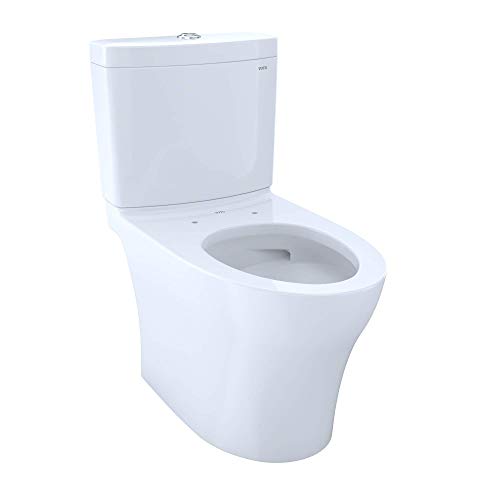
The Aquia IV delivers TOTO's Double Cyclone flush in a dual-flush configuration that uses 1.0 GPF for liquid waste and 1.28 GPF for solid waste, adding meaningful water savings over a single-flush model while maintaining a complete siphon on the full-flush setting.
Dual-flush toilets address the specific incomplete-flush complaint from a different angle: by offering two distinct flush volumes, they allow the full 1.28 GPF to be reserved for solid waste where clearing power matters, while the 1.0 GPF liquid cycle saves water on the majority of flushes. The Aquia IV's 1,000-gram MaP score on the full-flush cycle matches the ceiling of the best single-flush models and is more than strong enough for single-pass solid waste clearing in typical household use.
TOTO's skirted trapway design on the Aquia IV conceals the trapway behind a smooth exterior panel, which reduces cleaning effort at the base of the toilet. Owner reviews cite the clean visual profile and the water savings on utility bills as the main purchase drivers, while the most frequent concern is that houseguests unfamiliar with dual-flush buttons occasionally choose the wrong setting.
The Aquia IV makes the most sense as a replacement when the current toilet's incomplete flush is partly a water-volume problem and water efficiency is also a household goal. On the full-flush cycle it delivers a complete clear for typical solid waste. The 1.0 GPF liquid cycle saves roughly 23 percent of tank volume per liquid-waste flush compared to a 1.28 GPF single-flush model, which adds up to a measurable reduction in water use over a year of daily household use.

The Woodbridge T-0019 delivers a skirted one-piece design and a 1.28 GPF WaterSense-certified flush at a significantly lower cost than TOTO one-piece models, with a published flush performance adequate for most residential use cases.
The T-0019 occupies a different tier from the TOTO and Kohler models above. Woodbridge does not publish an independent MaP score for this model, which makes flush performance harder to verify against a single number. Aggregated owner reviews report satisfactory single-flush clearing for typical household waste in secondary bathrooms, while a minority of reviews from high-use primary bathrooms note occasional double flushing on larger loads.
The skirted trapway design conceals the base of the toilet and simplifies cleaning, which is the primary reason buyers choose it over a comparably priced exposed-trapway alternative. The one-year warranty is standard for this price tier. Parts availability is more limited than TOTO or Kohler, so factor that into a long-horizon decision about where in the home this toilet will be installed.
The T-0019 is a reasonable choice for a guest bathroom or a bedroom bathroom that sees light use, where the budget constraint is real and the primary driver is replacing an outdated visual rather than solving a chronic flush-power problem. For a primary bathroom where an incomplete flush has been a recurring issue, we would spend the additional amount to get a verified MaP score of 800 grams or higher from Kohler, TOTO, or American Standard.
The original TOTO Drake uses a G-Max gravity flush system and a fully glazed 2-1/8 inch trapway to deliver reliable, complete single-flush clearing across years of aggregated owner reports, making it the right call when a proven long-term track record matters as much as the latest flush technology.
The original Drake has been in production long enough to have owner reviews spanning more than fifteen years, which is a data set that newer models cannot match. That long track record consistently shows complete single-flush clearing, low clog rates, and a service life well beyond ten years when parts are maintained. TOTO's G-Max system uses a 3-inch flush valve and a tower-style flushing mechanism that is mechanically simpler than the Double Cyclone configuration.
For households where the incomplete-flush problem was identified in Steps 1 through 4 as a tank or jet issue (not a bowl design limit), the original Drake is a strong replacement option at a lower position than the Drake II. Its G-Max flush is less technologically complex and has a longer owner-review track record, which matters to buyers who prioritize long-term reliability data over published test scores from a newer model.
The Drake is the recommendation when budget matters and the household does not have a history of recurring partial clogs or extreme daily use. Its G-Max flush with a fully glazed 2-1/8 inch trapway handles typical household waste reliably, and its fifteen-year owner review history is a form of validation that independent test scores alone cannot provide.
Across all seven models above, the pattern is consistent: flush completeness in a gravity toilet is determined by three interacting factors: the volume of water delivered (GPF and tank level), the speed at which it arrives (flush valve size and jet design), and the path it travels (trapway diameter and glaze). Any toilet with a MaP score of 800 grams or higher, a fully glazed trapway of 2 inches or more, and EPA WaterSense certification will eliminate the double-flush habit that defines life with a weak older toilet. The gap in day-to-day experience between an 800-gram and a 1,000-gram model is smaller than the gap between either and a 400-gram bowl.
Whether you repaired the existing toilet or replaced it, the same three habits sustain complete flush performance over the long term.
In hard-water homes, mineral scale rebuilds in the rim jets within months of cleaning. A quarterly vinegar treatment, pouring warm white vinegar down the overflow tube and letting it sit overnight, costs nothing and prevents the gradual narrowing that caused the incomplete flush in the first place. In very hard-water regions (more than 200 mg/L dissolved minerals), monthly is more realistic.
A proactive flapper replacement every three to four years costs less than ten dollars and prevents the early-closing problem described in Step 2 from recurring. A fresh flapper holds open fully for the entire tank drain, which is the timing that produces a complete siphon. Waiting until the flapper visibly fails means weeks or months of degraded flush performance before the problem is diagnosed.
Wipes, paper towels, cotton products, and hygiene items do not break down in the trapway the way toilet paper does. Even products labeled "flushable" are associated with partial blockage accumulation in plumbing surveys. The clearest path to sustaining a strong siphon is keeping the trapway free of materials that do not dissolve.
A toilet not flushing fully is almost always a solvable mechanical problem before it is ever a bowl design problem. Work through the five steps in order: raise the tank water to the marked fill line, adjust or replace the flapper so it holds open for the full tank drain, clean the rim and siphon jets with white vinegar, clear any partial trapway blockage with a flange plunger or closet auger, and only then evaluate whether the bowl geometry itself is the limit. That sequence, each step costing little or nothing, resolves the large majority of incomplete-flush complaints. When the bowl is genuinely the limit, the TOTO Drake II (1,000-gram MaP, Double Cyclone) and the American Standard Champion 4 (1,000-gram MaP, 2-3/8 inch trapway) are the two strongest gravity-flush replacements, with the Kohler Cimarron as the strongest value alternative, also at a 1,000-gram MaP score. Diagnose first, replace only when the diagnosis points there, and choose by MaP score.
The four most common causes are a tank water level sitting below the molded fill line, a flapper that closes before the tank empties, rim and siphon jets narrowed by mineral scale, and a partial obstruction in the trapway. Each has a specific cheap fix. Lift the tank lid and watch one flush to identify which cause matches your symptom before buying any parts.
Start by raising the tank water level to the marked fill line. If the level is already correct, watch whether the flapper closes before the tank empties and adjust its buoyancy or replace it. Then check whether the rim jets produce an even swirl or streaky incomplete rinse, which points to mineral clogging that a vinegar treatment resolves. Work these three checks in order before suspecting the drain.
A tank water level below the fill line is the single most common cause of an incomplete flush. The flush uses whatever water volume is in the tank, so a low level produces a proportionally weaker siphon. This is also the easiest fix: adjust the float so the fill valve shuts off at the correct fill line, confirm with one flush, and the problem is usually resolved without buying anything.
The flapper should rise when you press the handle and stay elevated until only the last inch or two of water remains in the tank, then drop to reseal. That timing allows the full tank volume to exit in one fast rush, which is what builds a complete siphon. A flapper that closes while two or three inches of water remain has been cutting the flush short and is either set too tight or has hardened and needs replacement.
Yes, and it is the leading cause of gradual flush power loss in homes with hard water. Dissolved minerals in the water supply deposit on the inside surfaces of the rim jets and siphon jet, gradually narrowing the holes and reducing the speed and coverage of the water entering the bowl. The flush weakens over months or years in a way that feels like the toilet is aging when the actual cause is mineral scale that a vinegar treatment removes.
Pour warm white vinegar around the bowl rim so it runs into the jet holes, or hold vinegar-soaked paper towels against the rim for two hours to dissolve mineral scale. For heavy buildup, pour one to two cups of warm vinegar down the tank overflow tube and leave it overnight before flushing. After treatment, use a stiff brush or thin wire to clear any remaining deposits from individual holes. Repeat quarterly in hard-water homes.
A MaP score of 800 grams or higher is the practical threshold for reliable single-flush clearing in a primary household bathroom. The 1,000-gram maximum score, achieved by models including the TOTO Drake II and American Standard Champion 4, provides additional margin for heavy daily use and large households. Avoid models below 500 grams for a primary bathroom if double flushing is a concern. Check published scores at map-testing.com before buying.
Yes, when the bowl is well designed. Modern 1.28 GPF WaterSense-certified toilets are engineered to clear waste forcefully on less water through improved trapway geometry, larger flush valves, and optimized jet placement. Many 1.28 GPF models outperform older 3.5 GPF toilets in independent MaP testing because flush power comes from how water is directed, not simply from volume. Judge by the MaP score, not the gallons-per-flush figure alone.
A bowl that swirls without clearing has enough water to produce a rinse but not enough volume, speed, or jet coverage to build a full siphon. The most common causes are a flapper closing before the tank empties (which cuts the flush short after the swirl starts) and rim jets narrowed by scale (which produces a weak, uneven swirl that never develops into a siphon). Fix the flapper timing first, then clean the jets if the problem persists.
If you have raised the water to the fill line, set the flapper to hold open for the full tank drain, cleaned all the rim and siphon jets, and cleared the trapway of any blockage, and the flush is still incomplete, the bowl design is the limit. Confirm by pouring a gallon and a half of water directly into the bowl from a bucket: if that fast pour also fails to fully clear the bowl, the trapway geometry or jet placement cannot build a complete siphon at this GPF.
A toilet that will not flush at all has a mechanical failure in the handle, chain, or flush rod that prevents the flapper from lifting, or the tank is empty because the water supply is off or the fill valve has failed. A toilet that flushes but does not clear fully has all those mechanical parts working, but delivers water that is insufficient in volume, speed, or coverage to complete the siphon. The diagnostic step is the same for both: lift the lid and watch one flush from above.
No, and they can cause harm. Chemical drain cleaners formulated for sink and tub drains are not effective at clearing the solid obstructions most commonly found in toilet trapways, can pool in the curved ceramic passage without reaching the blockage, and may damage rubber seals or porcelain glaze. A flange plunger followed by a closet auger is the correct approach for a partial trapway blockage in a toilet.
A new flapper that still produces a weak flush is either set too tight (buoyancy adjusted to close early) or is the wrong size for the flush valve seat diameter. Adjust the buoyancy float so the flapper holds open until the tank is nearly empty. If the rubber does not match the seat diameter exactly, the flapper may not seat fully and can leak between flushes as well. Bring the old flapper to the hardware store to confirm sizing before buying a replacement.
The EPA WaterSense program requires a minimum MaP score of 350 grams at 1.28 GPF for certification. That threshold confirms a toilet clears at least 350 grams of solid waste in a single pass, which represents adequate performance for typical household use. However, WaterSense certification alone does not guarantee strong clearing power: scores range from 350 to 1,000 grams among certified models. Always confirm the published MaP score alongside the WaterSense label.
TOTO, Kohler, and American Standard consistently lead independent MaP testing and long-term aggregated owner-review satisfaction for flush performance. TOTO's Double Cyclone models (Drake II, UltraMax II) and American Standard's Champion 4 are the top-rated by MaP score among gravity-flush toilets. Gerber's Viper and Avalanche models also perform well in independent testing at a lower position. Woodbridge and Swiss Madison offer competitive GPF ratings at budget positions but publish fewer independent MaP scores.
A WaterSense-certified toilet uses 1.28 GPF. Pre-2000 low-flow models used 1.6 GPF. Pre-1994 toilets used 3.5 GPF. Volume alone does not determine whether a flush completes, since older 3.5 GPF toilets sometimes flush less effectively than modern 1.28 GPF designs due to inferior bowl geometry. What determines whether a flush completes is how the water volume is directed through the rim jets and trapway, which is why MaP score is more useful than GPF for comparing flushing power.
A blocked vent stack reduces the toilet's ability to drain quickly by creating a vacuum in the drain line, which slows the siphon and can cause gurgling and incomplete clearing. Suspect the vent when all tank and trapway checks pass, the bucket-test pour also drains slowly, and other fixtures in the home (tub, sink) are also draining sluggishly. Clearing a vent stack requires roof access and is typically a job for a plumber.
Most rubber flappers last three to five years under normal use before the rubber hardens, warps, or loses its seal. In chlorinated municipal water or hard water, the timeline can be shorter. The first sign of flapper aging is usually a running toilet (slow leak past the flapper) or a gradual weakening of flush completeness as the flapper starts closing earlier. Replacing it proactively every three to four years is more reliable than waiting for a visible failure.
A fully glazed trapway has a smooth ceramic coating on every interior surface of the S-shaped waste passage. This reduces the surface friction that slows moving waste and scale adhesion that narrows the passage over time. An unglazed or partially glazed trapway has rough ceramic that creates more friction, collects more mineral buildup, and increases the chance of partial blockages that cause incomplete flushes. TOTO, Kohler, and American Standard all offer fully glazed trapways on their performance-tier models.
Look at the base of the bowl near the front while the toilet is empty. The siphon jet is a single opening, larger than the rim jets, that delivers the concentrated rush of water that initiates the siphon. If it shows visible mineral deposits, a narrowed opening, or directs water off to one side rather than straight toward the trapway, it is partly blocked. Clean it using the vinegar method in Step 3, and use a thin wire or jet-cleaning tool to open the hole if vinegar alone does not fully clear it.
Which is the best toilet flush valve? Compare 2-inch, 3-inch, adjustable, and canister flush valves by fit and flush power, plus how…
Read the guideYes, flushing a toilet can make your shower go cold, hot, or lose pressure. Learn why it happens, how to diagnose it,…
Read the guideWhen you flush one toilet and another gurgles or bubbles, it usually means a venting or drain problem. Here are the causes,…
Read the guide