

Best Toilet Flush Valve: How to Choose the Right One
Plumbing4.6
Which is the best toilet flush valve? Compare 2-inch, 3-inch, adjustable, and canister flush valves by fit and flush power, plus how…
Read the guideThe right drain pipe diameter is the difference between a toilet that flushes cleanly every time and one that backs up at the worst moment. Here is everything you need to know, from the code minimums to the mistakes plumbers see most often.
Toilets in residential homes require a minimum 3-inch drain pipe under the International Residential Code, but most licensed plumbers install 4-inch pipe because the larger bore handles solids more reliably, resists partial blockages longer, and meets the code requirements of many local jurisdictions that exceed the IRC minimum.
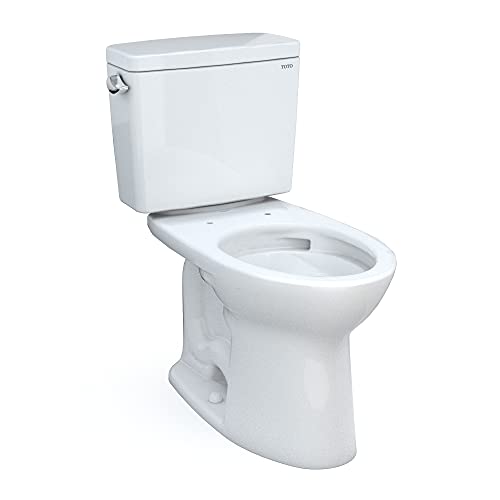
A toilet's drain pipe is the one component that no amount of flush power can compensate for if it is undersized or incorrectly pitched. The TOTO Drake, for instance, carries a MaP score of 1,000 grams -- the maximum rating on the MaP flush-test scale -- meaning it can evacuate 1,000 grams of solid waste in a single flush. But if the drain pipe downstream is too narrow or pitched too steeply, even that kind of hydraulic performance cannot prevent recurring slow drains or clogs.
Most toilets sold in the United States use 1.28 gallons per flush (GPF), the threshold set by the EPA WaterSense program for high-efficiency toilets. At that flow rate, the water-to-waste ratio depends heavily on pipe diameter to achieve the scouring velocity that keeps solids moving through the drain system. Understanding drain pipe sizing is not just a plumbing code exercise -- it directly affects how well your toilet performs year after year.
The standard toilet drain pipe size in the United States is 3 inches in diameter for residential installations, as specified by the International Residential Code (IRC) Section P3005. However, 4-inch pipe is widely used and often required by local amendments, commercial codes, and multi-fixture drain lines. Never install smaller than 3-inch pipe for a toilet drain under any residential code.
The IRC sets the minimum, but "minimum" is not always the best choice. Many jurisdictions -- including those following the Uniform Plumbing Code (UPC) instead of the IRC -- have adopted 4-inch as the de facto standard for toilet drain branches and all horizontal drain lines that receive toilet waste. When in doubt, check with your local building department before rough-in work begins.
Licensed master plumbers frequently recommend 4-inch pipe even where 3-inch is code-legal. The extra inch of diameter nearly doubles the cross-sectional area of the pipe, which significantly reduces the chance of a partial blockage from toilet paper, wipes, or accumulated scale. The incremental material cost is small compared to a service call or a finished-ceiling repair after a drain backup.
A 3-inch pipe has a cross-sectional area of about 7.07 square inches, while a 4-inch pipe has about 12.57 square inches -- roughly 78 percent more flow capacity. In practical terms, a 4-inch drain line handles high-volume flushes and multi-toilet branches more reliably, maintains self-cleaning velocity at lower flow rates, and is less susceptible to partial clogs from grease buildup or mineral scale.
| Pipe Diameter | Cross-Sectional Area | Fixture Units Supported | Typical Use | Code Reference |
|---|---|---|---|---|
| 2 inches | 3.14 sq in | Not approved for toilet | Lavatory, tub drains only | IRC P3005 (prohibited for toilets) |
| 3 inches | 7.07 sq in | Up to 20 drainage fixture units (DFU) | Single toilet, minimum residential | IRC P3005 -- minimum allowed |
| 4 inches (recommended) | 12.57 sq in | Up to 160 DFU on a branch | Single or multiple toilets, best practice | IRC P3005, UPC 703.0 -- preferred |
| 6 inches | 28.27 sq in | 200+ DFU | Building mains, commercial | IPC Table 702.1 |
The IRC requires horizontal drain pipes 3 inches and smaller to slope at 1/4 inch per foot (2 percent grade), while pipes 4 inches and larger must slope at a minimum of 1/8 inch per foot (approximately 1 percent grade). Insufficient pitch causes solids to settle; excessive pitch (steeper than 1/2 inch per foot) causes water to outrun solids, leaving them behind to accumulate as clogs.
Getting the slope right is as important as getting the diameter right. A perfectly sized 4-inch pipe installed level will back up. A 3-inch pipe with excessive slope will drain water fast but strand solid waste. The sweet spot for most residential toilet drain runs is 1/4 inch of drop per linear foot of pipe, which keeps water velocity between 2 and 4 feet per second -- the range plumbing engineers consider adequate for self-cleaning.
Drain slope errors are among the most common mistakes in DIY toilet installations. If your drain run is long -- say, 20 feet from the toilet to the stack -- a 1/4-inch-per-foot slope requires 5 inches of total vertical drop. If there is not enough floor-joist depth to achieve that, a licensed plumber may need to reroute the drain or specify a pressure-assisted toilet to compensate. Always measure the available drop before selecting pipe diameter or toilet type.
The toilet rough-in measurement (typically 10, 12, or 14 inches from the finished wall to the center of the drain flange) is separate from the drain pipe diameter. The rough-in controls where the toilet sits relative to the wall; the drain pipe diameter controls flow capacity. A 12-inch rough-in toilet connects to whatever diameter pipe is stubbed up through the floor, whether that pipe is 3 or 4 inches.
The most common rough-in in North American homes is 12 inches. Toilets like the TOTO Drake, Kohler Highline, American Standard Champion 4, and Woodbridge T-0001 are all available in 12-inch rough-in configurations and connect directly to a standard 4-inch closet flange. If your home has a 10-inch or 14-inch rough-in -- common in older homes and some manufactured housing -- you need a toilet specifically rated for that dimension, but the drain pipe diameter requirement does not change.
For a deeper look at how to match a toilet to your bathroom layout, see our guide to toilet rough-in sizes.
PVC (polyvinyl chloride) is the dominant material for new residential toilet drain installations because it is lightweight, smooth-walled (resisting buildup), easy to cut and join, inexpensive, and approved under all major residential codes. ABS (acrylonitrile butadiene styrene) is common in Western states and Canada. Cast iron is still found in older homes and preferred for multi-story noise reduction. Older homes may have clay or Orangeburg pipe in the sewer lateral, which often requires replacement.
The smooth interior surface of Schedule 40 PVC pipe is one of its main plumbing advantages. Unlike galvanized steel or clay tile, PVC does not corrode or accumulate scale at the rate that older materials do, which keeps the effective bore close to nominal diameter for the life of the pipe. ABS offers similar benefits and is slightly more impact-resistant but is less chemically resistant than PVC. Both are acceptable for toilet drain applications under IRC and UPC.
If you are remodeling and find cast-iron drain pipe in good condition, there is generally no reason to replace it just because it is old. Cast iron that has not pitted or cracked can last a century. The real reason plumbers sometimes switch older homes to PVC is not the material itself but the joints -- lead-and-oakum or hub-and-spigot joints can become loose over decades, allowing root infiltration or slow leaks. A camera inspection will tell you the real condition of existing pipe before you commit to a full replacement.
Flush performance is typically measured using the MaP (Maximum Performance) flush-testing protocol, which rates how many grams of solid waste a toilet can clear in a single flush at its rated GPF. Scores range from 250 to 1,000 grams, with 1,000 being the maximum. Toilets like the TOTO UltraMax II, American Standard Champion 4, and Kohler Cimarron routinely score 1,000 grams at 1.28 GPF -- impressive hydraulic performance.
But MaP testing measures what happens inside the toilet bowl and trapway, not what happens in the drain pipe below the floor. A high MaP score means the toilet gets waste out of the bowl efficiently. Whether that waste travels successfully through your drain system depends on pipe diameter, slope, pipe material, the distance to the main stack, and the condition of the sewer lateral. That is why pairing a high-performance toilet with a properly sized drain line matters more than chasing the highest MaP score in isolation.
For our top recommendations backed by MaP scores and owner reviews, see our full roundup of the best flushing toilets.
Yes, but the drain pipe must be sized to handle the cumulative fixture unit load of all toilets on that branch. Under the IRC, each toilet is assigned 3 Drainage Fixture Units (DFU). A 3-inch horizontal drain branch can handle up to 20 DFU, which technically allows multiple toilets, but a 4-inch branch is required once you exceed 20 DFU on a single run, and many local codes require 4 inches for any toilet branch regardless.
In practical terms, if you are plumbing a bathroom addition with two toilets sharing a common drain branch before they connect to the main stack, use 4-inch pipe for the entire branch run. This is not just about code compliance -- it is about maintaining adequate velocity through the system when both toilets flush in close succession, which is common in family homes.
An undersized drain pipe creates a series of predictable failure modes. The most immediate is chronic slow draining -- the bowl takes longer than normal to empty after flushing. Over time, partial clogs form as solid waste accumulates faster than the flow rate can clear it. Repeated use of a chemical drain cleaner is a sign that the pipe may be undersized or improperly pitched, not just dirty.
A severe blockage in a toilet drain can cause wastewater to back up into floor-level fixtures like tub drains or floor drains, which share the same stack. In worst cases, sewage can back up through the toilet itself. Any of these events in a finished bathroom means not just a plumbing repair but potential damage to flooring, subfloor, and the space below.
The closet flange (also called a toilet flange) is the fitting that connects the toilet horn to the drain pipe in the floor. Most residential closet flanges are designed for 4-inch pipe, with an internal hub that accepts either 3-inch or 4-inch pipe depending on the configuration. The flange opening at the floor level is standardized so that the toilet wax ring or wax-free seal creates a watertight joint regardless of which toilet brand you install.
A 3-inch drain with a 4-inch flange collar is a common configuration -- the 4-inch flange provides a wider mounting footprint for the toilet bolts and a stable seat for the wax ring, while the 3-inch pipe exits below. Conversely, using a 3-inch flange on a 4-inch pipe requires a reducing adapter. The flange must be level with or slightly above the finished floor surface; a flange set too deep below the floor is one of the most common causes of recurring toilet leaks at the base.
For related guidance on setting and sealing your toilet properly, see our article on toilet installation.
Several major toilet brands publish trapway dimensions alongside their MaP scores, and these numbers give a useful window into how their toilets interact with drain systems.
| Toilet Model | MaP Score | GPF | Trapway Diameter | Recommended Drain Pipe | Check Price |
|---|---|---|---|---|---|
| TOTO Drake II (CST454CEFG) | 1,000 g | 1.28 | 2-1/8 in fully glazed | 3 in min / 4 in recommended | Check price |
| TOTO UltraMax II (MS604114CEFG) | 1,000 g | 1.28 | 2-1/8 in fully glazed | 3 in min / 4 in recommended | Check price |
| American Standard Champion 4 (2034.014) | 1,000 g | 1.6 | 4 in fully glazed | 4 in strongly recommended | Check price |
| Kohler Highline (K-3978) | 1,000 g | 1.28 | 3-5/16 in | 3 in min / 4 in recommended | Check price |
| Kohler Cimarron (K-3887) | 1,000 g | 1.28 | 3-5/16 in | 3 in min / 4 in recommended | Check price |
| Woodbridge T-0001 | 800 g | 1.28 | 2-1/8 in | 3 in min / 4 in recommended | Check price |
| American Standard Cadet 3 (2383.012) | 1,000 g | 1.28 | 3 in fully glazed | 3 in min / 4 in recommended | Check price |
| Gerber Viper (21-302) | 1,000 g | 1.28 | 3-1/8 in | 3 in min / 4 in recommended | Check price |
Notice that the American Standard Champion 4 has a 2-3/8-inch trapway -- the widest of any mainstream residential toilet. That design choice is specifically intended to reduce clogs at the bowl level, but the drain pipe downstream still needs to be 3 or 4 inches per code. Some plumbers argue that the Champion 4's 2-3/8-inch trapway is best matched with a 4-inch drain line for full system consistency.
For more on how these models compare on overall flush reliability, see our American Standard Champion 4 review and our dedicated coverage of TOTO Drake vs. competition.
Before replacing a toilet or roughing in a new bathroom, you need to know what size drain pipe you have. Here is how to determine that without calling a plumber first.
These are the drain-pipe mistakes that plumbing inspectors and service plumbers report most frequently during toilet installations and bathroom remodels.
Most special-purpose toilets follow the same drain pipe standards as conventional gravity-flush models, but there are a few exceptions worth knowing.
Pressure-assist toilets such as the American Standard Cadet 3 Pressure-Assist use a pressurized vessel inside the tank to deliver a more forceful flush at 1.0 or 1.28 GPF. They still require a 3-inch minimum drain line, and the improved velocity from pressure assist does not reduce the requirement. In fact, some plumbers note that pressure-assist toilets are slightly more forgiving of marginally undersized or low-slope drain runs because the initial flush velocity is higher.
Macerating toilets (such as those from Saniflo) are the notable exception to standard drain sizing. These units grind solid waste into a fine slurry and pump it through a 3/4-inch or 1-inch small-bore discharge pipe. Macerating systems allow toilets to be installed below grade or far from the main stack where gravity drainage is impractical. However, they require power, need more maintenance than conventional toilets, and are not appropriate for primary bathrooms in most homes.
Upflush toilets follow the same principle as macerating units -- they pump waste upward through small-diameter pipe to a drain line above. Standard drain sizing rules do not apply to the discharge pipe, but the receiving drain line at the top of the pump discharge must still be properly sized.
Dual-flush toilets such as the TOTO Aquia IV (0.8/1.28 GPF) use less water on the liquid flush cycle. At 0.8 GPF, the scouring velocity in the drain pipe is lower than at 1.28 GPF. This is another reason why 4-inch pipe -- which achieves self-cleaning velocity at lower flow rates -- is preferable over 3-inch pipe when dual-flush toilets are installed on long horizontal runs.
In most jurisdictions, any work that involves replacing or extending drain pipe requires a plumbing permit. The permit process involves submitting a rough-in diagram that specifies pipe diameters, slopes, fixture unit counts, and venting arrangements. An inspection is then scheduled at the rough-in stage (before walls are closed) and at final completion.
Skipping the permit for drain work creates real risks. If a drain backup causes water damage and your insurance company discovers that un-permitted plumbing was involved, it can complicate or deny your claim. When you sell the home, an inspector may flag un-permitted work, which can stall or reduce the value of the sale. The cost and inconvenience of pulling a permit is modest compared to those risks.
Yes. The International Residential Code (IRC) Section P3005 allows 3-inch minimum diameter for a toilet drain. However, many local jurisdictions and the Uniform Plumbing Code (UPC) used in Western states require or strongly prefer 4-inch pipe. Always verify with your local building department before rough-in work begins.
No. No US plumbing code permits 2-inch pipe for a toilet drain. The minimum is 3 inches. Two-inch pipe is reserved for lavatory sinks, tub drains, showers, and similar fixtures that carry liquid waste only.
Nominal pipe size (the "4-inch" label on a pipe) refers to a standardized trade designation, not the exact measured diameter. A nominal 4-inch Schedule 40 PVC pipe has an actual outside diameter of 4.500 inches and an inside diameter of approximately 4.026 inches. This distinction matters when ordering fittings -- always buy fittings labeled for the same nominal size as your pipe.
Under the IRC, a toilet on a 3-inch drain branch may be located up to 6 feet from the vent stack (wet-vented or individually vented). On a 4-inch branch, this distance can be extended. Local amendments vary, and the maximum distance also depends on the venting method used. Long horizontal runs should always use 4-inch pipe and verify the available vertical drop for the required slope.
Most 4-inch drain pipes use a 4-inch closet flange that connects directly. However, many flanges sold as "4-inch" accept either 4-inch pipe inside the hub or 3-inch pipe inside the hub, with 4-inch slip-fit on the outside. Read the flange label carefully to confirm which pipe diameter it is designed to receive.
The IRC requires a minimum slope of 1/8 inch per foot for 4-inch and larger horizontal drain pipes. While 1/8 inch per foot is the code minimum, most plumbers target 1/4 inch per foot for residential toilet drain branches to provide a margin for any settling or minor misalignment over time.
Yes, provided the combined drainage fixture unit (DFU) load does not exceed the capacity of the 3-inch pipe (20 DFU maximum). A toilet is 3 DFU and a lavatory sink is 1 DFU, so a combined run of 4 DFU is well within the 3-inch limit. A 4-inch branch is not required unless the total fixture unit count exceeds 20 DFU or local code mandates it.
A 4-inch horizontal drain branch can handle up to 160 Drainage Fixture Units (DFU) under the IRC. Since each toilet counts as 3 DFU, a 4-inch branch could theoretically serve over 50 toilets -- far more than any residential application requires. Commercial buildings with many toilets use 6-inch and larger mains.
Both PVC and ABS are durable, smooth-walled, and code-approved for residential toilet drain applications. PVC is slightly more chemical-resistant and is the dominant choice in Eastern US markets. ABS is more impact-resistant and is common in Western states and Canada. The practical difference in toilet drain performance between the two materials is negligible.
Gurgling after flushing usually indicates a venting problem -- either a blocked roof vent, a missing vent, or an improperly sized vent pipe. When the drain lacks adequate airflow, negative pressure forms behind the draining water, causing it to pull air through adjacent fixture traps and produce a gurgling sound. A plumber can diagnose this with a smoke test or camera inspection.
If you are opening walls or floors for a bathroom remodel, upgrading from 3-inch to 4-inch drain pipe is worth the modest extra material cost. The larger bore reduces future service calls, handles high-performance low-GPF toilets more reliably, and meets the standards of most local plumbing codes. If the 3-inch system has been performing without issues and the pipe is accessible and in good condition, replacement is not strictly necessary.
A sanitary tee is a drain fitting that allows a branch drain to connect to a vertical stack at a sweeping angle rather than a sharp 90-degree angle. Sanitary tees are used where a horizontal toilet drain branch connects to a vertical drain stack. They must be installed with the correct orientation (branch entering from the side, flow direction down) to prevent solids from being held at the junction.
The plumbing code does not adjust minimum drain pipe size based on a toilet's GPF rating -- 3-inch minimum applies regardless of whether the toilet uses 1.28 GPF, 1.6 GPF, or 1.0 GPF. However, lower-GPF toilets produce less flushing velocity, which is an argument for using 4-inch pipe in long horizontal runs where maintaining scouring velocity matters most.
Yes. A rubber transition coupling (sometimes called a Fernco coupling or mission coupling) creates a code-approved, watertight joint between cast iron and PVC pipe. These couplings use stainless steel clamps to compress a rubber sleeve over both pipe ends. They are widely available at plumbing supply houses and do not require solvent weld or heat.
Signs of an undersized toilet drain include: the bowl takes more than 5-6 seconds to fully drain after flushing, the toilet requires plunging more than once a month under normal household use, neighboring floor-level fixtures (tub, floor drain) back up when the toilet is flushed, or there is a gurgling sound from the tub drain immediately after flushing the toilet. A licensed plumber can confirm the diagnosis with a camera inspection.
Yes, toilet drain pipe can run through a crawlspace, provided the pipe is properly supported (hangers every 4 feet for PVC under IRC), correctly sloped, protected from freezing in cold climates, and accessible for inspection at connections and cleanouts. Local codes may require additional clearances or insulation in freeze-prone crawlspaces.
Cleanouts must be the same nominal size as the drain pipe up to 4 inches in diameter. So a 4-inch toilet drain requires a 4-inch cleanout, and a 3-inch drain requires a 3-inch cleanout. Cleanouts must be installed at each change of direction greater than 45 degrees and at least every 100 feet on horizontal runs under the IRC.
No. EPA WaterSense certification relates to water efficiency (maximum 1.28 GPF for toilets) and confirmed flush performance -- it does not change drain pipe requirements. WaterSense-certified toilets must still connect to a minimum 3-inch drain pipe per code, and 4-inch pipe is the recommended practice regardless of WaterSense status.
For virtually every residential toilet installation, 4-inch drain pipe is the right choice -- not the minimum, but the practical standard. It provides substantially more flow capacity than 3-inch pipe, maintains scouring velocity with today's low-GPF toilets, handles multi-toilet branches without friction, and satisfies the local code requirements in many jurisdictions that exceed the IRC minimum. If you are roughing in a new bathroom, remodeling an existing one, or replacing aging cast-iron drain lines, size up to 4-inch and slope it at 1/4 inch per foot. Paired with a high-MaP toilet from TOTO, Kohler, American Standard, or Gerber, that combination delivers the kind of reliable, clog-resistant drain system that requires little maintenance for decades.
Which is the best toilet flush valve? Compare 2-inch, 3-inch, adjustable, and canister flush valves by fit and flush power, plus how…
Read the guideYes, flushing a toilet can make your shower go cold, hot, or lose pressure. Learn why it happens, how to diagnose it,…
Read the guideWhen you flush one toilet and another gurgles or bubbles, it usually means a venting or drain problem. Here are the causes,…
Read the guide