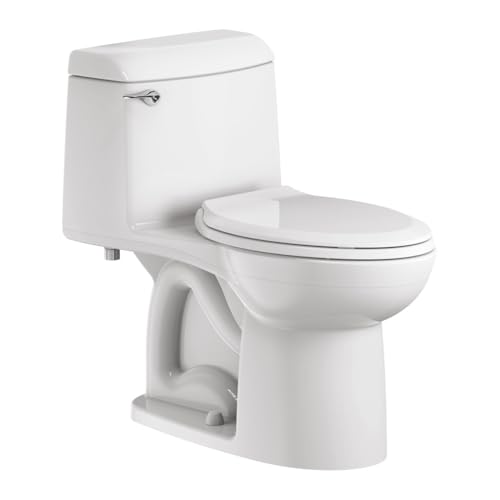
A toilet bowl turning blue or green is one of the stranger plumbing surprises, but in most homes the cause is entirely predictable: copper pipe corrosion, in-tank cleaning tablets, or a copper-sulfate reaction triggered by specific water chemistry. This guide explains every confirmed cause, shows you how to identify yours in a few minutes, covers when discoloration signals a real water-quality issue, and tells you when a stained or corroding bowl is worth replacing rather than cleaning again.
Quick Answer
Toilet bowls most often turn blue or green because copper ions leaching from corroding copper pipes or fittings react with bowl moisture and leave a blue-green tint on the porcelain. In-tank cleaning tablets with blue dye are the second most common cause. If you have copper plumbing and acidic water (pH below 7.0), treating the supply pH and replacing the corroded fitting with a certified low-lead brass or PVC connector solves the discoloration at the source. The TOTO Drake with CeFiONtect ceramic glaze resists copper staining far better than bare porcelain once the source is fixed.
Blue and green toilet bowl discoloration is less common than yellow or brown staining, but it has a distinct and diagnosable cause in almost every case. The color comes from copper compounds or from added dye, not from contamination or a failing toilet. Understanding which of the two families your case falls into takes only a couple of minutes and leads to a clear fix. For broader context on toilet performance and glazing, see the best flushing toilets guide.
Quick identification test. Do you use in-tank drop-in cleaning tablets or an automatic bowl cleaner inside the tank? If yes, that is almost certainly the source of any blue or blue-green color. If no, and you have copper plumbing, the cause is copper corrosion interacting with slightly acidic water. These two families cover the large majority of blue and green toilet bowl cases.
Why does my toilet bowl turn blue or green?
Toilet bowls turn blue or green most commonly because copper ions from corroding copper pipes, supply lines, or tank fittings dissolve into the water and react with moisture and the bowl surface to leave a blue-green stain. In-tank drop-in cleaning tablets with blue dye are the second most common cause. Copper corrosion is triggered by water with a pH below 7.0 or by naturally soft, aggressive water that eats away at copper plumbing over time.
Blue-green staining on a toilet bowl is what chemists call a copper patina forming on a moist surface. The same process turns copper roofs and statues turquoise over decades, but inside a toilet bowl it happens faster because the porcelain surface is constantly wet and water sits still in the bowl for hours. Each flush brings a fresh supply of copper-laden water, and each evaporation cycle concentrates the ions and deposits another thin layer of blue-green pigment on the glaze.
What causes blue-green staining in a toilet bowl?
Blue-green toilet bowl staining is caused by one of three confirmed mechanisms: copper ion leaching from corroding copper pipes or supply lines in acidic water, blue dye from in-tank drop-in cleaning tablets or automatic bowl cleaners, or in rare cases copper sulfate from algae-treatment products used in the water supply. Of these, copper corrosion from low-pH household water is the most chemically significant because it signals plumbing degradation that affects every fixture in the home, not just the toilet.
The three causes leave distinguishable fingerprints. Drop-in tablet dye tints the water uniformly blue on every flush and washes off the porcelain easily. Copper corrosion deposits a harder blue-green or turquoise stain that concentrates below the waterline and at the rim holes, resists scrubbing, and appears even without any added cleaning product. Algae, which can produce green discoloration in bowls that sit unused for weeks, form a slippery film rather than a hard mineral deposit and respond to disinfection. Knowing which pattern you see points to the right solution.
Is blue or green toilet water dangerous?
Blue or green toilet water from copper corrosion can indicate elevated copper levels in the household water supply. The EPA's action level for copper in drinking water is 1.3 milligrams per liter. At typical residential corrosion levels the toilet water itself is not a contact hazard during normal use, but if the kitchen tap also runs blue-tinted or you notice a metallic taste in drinking water, the EPA recommends testing the water before consuming it. In-tank tablet dye is a cosmetic issue only and poses no health risk during normal toilet use.
Copper is an essential mineral, but at high concentrations it causes gastrointestinal effects. The EPA's Lead and Copper Rule sets an action level of 1.3 mg/L for copper in drinking water. If your drinking water has a blue or metallic tint, or if aggregated owner reports and municipal water-quality reports in your area flag copper levels above 0.3 mg/L (the aesthetic threshold for color and taste), a certified lab test is the right next step. Staining on a toilet bowl does not by itself tell you the concentration in your drinking water, since the stain forms from ions deposited over time rather than from water you consume at that moment. The primary concern is at the kitchen tap.
Cause 1: Copper pipe corrosion and acidic water
This is the most chemically significant cause. Copper plumbing is standard in homes built before 1990 and remains common today. When household water is slightly acidic (pH below 7.0) or soft (low total dissolved solids), it becomes aggressive and slowly dissolves copper from the inside of pipes, fittings, and supply lines. The resulting copper ions travel in the water to every fixture. At a toilet, the water sits still in the bowl for long periods, the ions concentrate as surface moisture evaporates, and a blue-green copper compound forms on the porcelain.
Acidic water from certain well sources, areas with naturally low-mineral surface water, or improperly balanced municipal systems is the most common trigger. A water pH test kit or a certified home water test will confirm whether your supply is below 7.0. If pH is the root cause, a whole-house acid neutralizer (typically a calcite or calcite-corosex filter) raises pH to a non-corrosive range and stops new copper leaching across every fixture simultaneously. Replacing the corroded supply line with a certified low-lead brass or polymer-lined flexible supply line eliminates the most direct corrosion source at the toilet itself.
Plumber's first step. When diagnosing blue-green staining in a home with copper plumbing, the most informative single action is a cold-water pH test at the main supply. A pH below 7.0 at the main confirms aggressive water. A pH between 7.0 and 8.5 shifts suspicion to a corroding local fitting, a deteriorating dielectric union, or a dissimilar-metal joint that is accelerating corrosion at that specific fixture.
Cause 2: In-tank cleaning tablets and automatic bowl cleaners
Drop-in toilet tank tablets, automatic bowl cleaner clips that hang over the rim, and continuous-release blue tablets placed in the tank are intentionally dyed blue. That dye transfers to the bowl water on every flush and tints the standing water blue. Some products also use copper sulfate or citric acid to provide cleaning action, which can create a blue-green stain on the bowl glaze when the product residue sits at the waterline between flushes.
The fix is simply to remove the product and flush the tank several times. The blue tint in the water clears quickly. Any staining left on the glaze is the residue of the tablet's active ingredients bonded to the porcelain, and it responds to a toilet bowl cleaner or an acidic mineral cleaner applied with a non-scratch pad. The more important concern is the long-term effect of in-tank tablets on toilet hardware: chlorine-based in-tank tablets accelerate breakdown of rubber flappers, seals, and fill valve components, leading to running toilets and premature part failure, which is why most toilet manufacturers specifically recommend against their use.
Editorial Take
If you have been using in-tank drop-in tablets and see blue staining, remove the tablet, flush five times, and evaluate whether the discoloration is from the dye or from the tablet's chemistry reacting with your bowl glaze. If the blue wipes off easily, it was just the dye. If a hard blue-green stain remains, the tablet's cleaning compound has bonded to the glaze, and an acidic bowl cleaner is the right tool. Stop using chlorine tablets entirely if you want your flapper and fill valve to last their rated lifespan.
Cause 3: Algae and biofilm in rarely used toilets
A toilet that goes unused for two or more weeks can develop algae or biofilm in the bowl water, especially in bathrooms that get sunlight on the bowl. Algae produces a green tint or a green slippery film at the waterline, distinctly different from the hard mineral stain of copper corrosion. Biofilm from certain iron bacteria can also produce blue-green coloring in well-water homes. Cleaning with a toilet bowl disinfectant and restoring regular use eliminates this cause.
Algae growth is also a sign the bowl is not being flushed often enough to prevent stagnation. In vacation homes or rarely used bathrooms, adding a small amount of bleach to the bowl before leaving, or installing a rim-clip blue sanitizing tablet (without the in-tank chlorine version), slows algae growth without damaging tank components. If a green slime returns quickly after cleaning in a regularly used toilet, have the water tested for iron bacteria, which require specific well-disinfection treatment.
Cause 4: Copper sulfate and municipal water treatment
In some regions, water utilities use copper sulfate as an algaecide in reservoirs and open water sources. At concentrations meeting EPA drinking-water standards this is legal and safe, but homes very close to the source can sometimes see elevated copper temporarily in the supply, particularly after seasonal algae treatments. This is rare and typically resolves within days as the water is diluted through the distribution system. If blue-green staining appears suddenly in multiple homes in your neighborhood at the same time, contact the utility for a water-quality update.
How to remove blue and green stains from a toilet bowl
Matching the cleaner to the stain chemistry determines whether the stain comes off in five minutes or requires multiple applications.
Stain Type
Cause
Best Remover
Effort
Blue-green hard mineral stain
Copper corrosion on porcelain
White vinegar soak + non-scratch pad, or oxalic acid cleaner
Moderate
Uniform blue water tint
In-tank tablet dye
Remove tablet, flush multiple times
Easy
Blue-green ring at waterline
In-tank tablet residue
Acidic toilet bowl cleaner + non-scratch pad
Easy
Green slippery film
Algae or biofilm
Toilet bowl disinfectant or bleach solution
Easy
Deep turquoise stain, resists cleaning
Severe copper corrosion on worn glaze
Pumice stone + repeat acid application; consider replacement
High
Copper-corrosion stains are alkaline compounds that dissolve in mild acid. White vinegar applied liberally to the bowl, left for 30 minutes, then scrubbed with a non-scratch pad removes light copper deposits. For heavier staining that has bonded to worn glaze, a toilet bowl cleaner containing hydrochloric or citric acid works faster. A wet pumice stone is safe on vitreous china for stains that resist chemical treatment alone. After cleaning, treat the source or the staining returns within weeks.
If cleaning does not resolve a deeply bonded stain and the bowl glaze is visibly worn or crazed, the bowl is a replacement candidate. A modern bowl with an engineered ceramic glaze resists copper staining far better than bare or aged porcelain and stays cleaner with less maintenance effort. See the comparison below for the models that perform best in corrosion-prone conditions.
Does a blue or green toilet bowl mean copper in my drinking water?
Blue-green staining on a toilet bowl can indicate elevated copper in the household water supply, but the stain alone does not tell you the concentration at the kitchen tap. The EPA's action level for copper in drinking water is 1.3 mg/L. If you notice a blue tint or metallic taste in drinking water from any tap, or if you have young children or pregnant individuals in the home, a certified water test is the appropriate next step. Staining limited to the toilet bowl, with clear water at drinking taps, typically indicates localized corrosion at a fitting near the toilet rather than a systemic high-copper supply.
The EPA Lead and Copper Rule requires utilities to monitor copper at customer taps and to take corrective action when more than 10 percent of sampled sites exceed the 1.3 mg/L action level. Your annual Consumer Confidence Report from the utility shows whether copper is being monitored and what the 90th-percentile results are for your service area. For private well users, no utility monitoring applies, making an independent certified lab test the only way to know your actual copper levels. The EPA recommends letting the cold tap run for 30 seconds to 2 minutes before using water for drinking or cooking if you suspect copper corrosion in the supply lines.
Which Toilet Has the Strongest Glaze Resistance to Copper Staining?
TOTO toilets with CeFiONtect ceramic glaze consistently outperform bare-porcelain bowls in resisting copper and mineral staining. CeFiONtect creates an ultra-smooth, ion-barrier surface at the microscopic level that prevents mineral and copper compounds from bonding to the porcelain. American Standard's EverClean surface is the leading alternative, offering an antimicrobial and stain-resistant glaze at a lower price point. Both outperform untreated vitreous china in hard-water and copper-prone conditions.
What Is the Best Toilet for Preventing Blue-Green Staining?
The best toilet for preventing blue-green copper staining is one with an engineered ceramic glaze, a strong 1,000-gram MaP-rated flush that fully clears the bowl on each cycle, and corrosion-resistant tank hardware. The TOTO Drake (1,000-gram MaP, 1.28 GPF, CeFiONtect glaze) leads this category. The Kohler Cimarron with its Class Five canister valve uses corrosion-resistant components that minimize rust shedding into the tank. American Standard's Cadet 3 and Champion 4 with EverClean surfaces are the strongest value alternatives.
What Is a Good MaP Score and Why Does It Matter for Staining?
A MaP (Maximum Performance) score of 600 grams or higher is considered good, and 800 grams and above is excellent. A score of 1,000 grams (the maximum on standard MaP testing) means the toilet reliably flushes 1,000 grams of solid waste in a single flush. For staining prevention, a high MaP score matters because a powerful flush clears the bowl completely, reducing the time that copper-ion-rich water sits in contact with the porcelain surface and limiting the deposit buildup that causes blue-green staining between flushes.
MaP testing is conducted by an independent testing organization and published at map-testing.com. It is the most objective single metric for comparing toilet flush power across brands. A toilet that scores 1,000 grams on MaP and carries EPA WaterSense certification at 1.28 GPF or less gives you the most flush power at the lowest water volume, which is the ideal combination for both staining prevention and household water efficiency.
Comparison: Best Toilets for Copper-Staining-Prone Homes
These five models are compared on the specifications most relevant to homes dealing with blue-green staining from copper water or worn bowl glaze. All five carry EPA WaterSense certification at 1.28 GPF or less. MaP scores are from published testing data.
The TOTO Drake earns the top spot because CeFiONtect is the most rigorously documented ceramic glaze in the toilet category and aggregated owner reports consistently show fewer staining complaints on CeFiONtect bowls compared to standard porcelain across multiple review platforms. The Drake II adds a double cyclone rim wash that reaches under the rim more thoroughly, which matters because copper deposits concentrate at rim holes. The Kohler Cimarron's Class Five canister valve uses a corrosion-resistant body that reduces particulate shedding into the tank. American Standard's Cadet 3 and Champion 4 bring EverClean to a lower price point. Woodbridge and Swiss Madison also offer smooth porcelain in this price range, though neither publishes a named proprietary glaze treatment comparable to CeFiONtect or EverClean.
Top picks for homes with copper plumbing and staining problems
If blue-green staining has already damaged the current bowl or the glaze has worn past the point where cleaning helps, these three models are the strongest upgrades for copper-prone or hard-water homes. Each pairs a stain-resistant glaze with a maximum 1,000-gram MaP score and EPA WaterSense certification at 1.28 GPF.
Best Stain Resistance
TOTO Drake (Two-Piece)
CeFiONtect ceramic glaze + 1,000-gram MaP flush
4.7
CeFiONtect creates an ultra-smooth ceramic barrier at the microscopic level that copper ions and minerals cannot bond to the way they bond to bare or aged porcelain, combined with a G-Max siphon-jet flush scoring 1,000 grams on independent MaP testing at a water-efficient 1.28 GPF.
Double cyclone rim wash reaches copper deposit zones
4.7
The Drake II replaces the G-Max rim holes with a double cyclone nozzle system that coats the entire bowl on every flush, clearing the rim deposits where copper staining concentrates, while retaining CeFiONtect glaze, 1,000-gram MaP performance, and 1.28 GPF WaterSense certification.
American Standard's EverClean surface inhibits mineral and bacteria bonding on the porcelain and is documented to outlast bare vitreous china in hard-water environments, paired with a fully glazed 2-3/8 inch trapway and 1,000-gram MaP-rated PowerWash rim for reliable single-flush clearing at 1.28 GPF.
Replacing the bowl without addressing the pH of your water supply is a temporary fix. A new CeFiONtect bowl in a home with a 6.5-pH supply will stain within a year, though it will stain more slowly than bare porcelain. Do both: correct the pH or replace the corroding fitting, then upgrade to an engineered-glaze bowl if the current one is worn. That combination gives a clean bowl for the toilet's full service life instead of a brief improvement that regresses.
When should I replace a toilet with blue-green staining?
Not every blue-green stain calls for a new toilet. The decision depends on which of three conditions is true.
Replace when: the bowl glaze is visibly worn, crazed, or pitted, and the blue-green stain returns within a week of cleaning no matter what product you use. A worn glaze is not restorable. Copper ions lodge permanently into microscopic pores and no amount of cleaning removes the embedded pigment for long.
Replace when: the bowl is an older 3.5 GPF or 1.6 GPF gravity-fed model with a weak flush that leaves water sitting in the bowl for a long time after each cycle, because prolonged dwell time accelerates copper deposition. A high-efficiency 1.28 GPF toilet with a strong MaP-rated flush clears the bowl completely and reduces copper contact time on every cycle.
Keep and clean when: the stain is new, the bowl glaze is intact and the color comes off cleanly with an acidic cleaner, and you can identify and fix the source (a corroded supply line, a dissolving tank tablet, or algae from disuse). In that case the current bowl is fine and replacement is not necessary. See our guide on how to improve toilet flush power if the issue is residue from a weak flush rather than from copper water.
Why Does My New Toilet Bowl Turn Blue or Green?
A new toilet bowl turning blue or green immediately after installation typically points to an in-tank cleaning tablet or rim-clip product used with the new unit, or to a new supply line connection being made with mismatched metal fittings that are already corroding. If neither product applies, the new toilet may be connected to existing copper plumbing carrying corrosive acidic water. A pH test at the supply will confirm whether the water chemistry itself is the source, and replacing the supply line with a polymer-lined or brass fitting eliminates the most direct corrosion contact point.
A brand-new bowl should not stain within the first weeks of installation if it has an intact modern glaze and the supply water is neutral or slightly alkaline. Rapid early staining on a new toilet is a sign the water chemistry is the driver, not the toilet's glaze quality. Test the supply pH before concluding the new toilet is defective. If the pH is in range and staining still appears, inspect whether anyone added a cleaning tablet to the tank or whether a plumbing fitting used in the installation is copper contacting a dissimilar metal that is accelerating galvanic corrosion.
If your toilet is not flushing properly in addition to the discoloration, the issues may be related: a partial blockage that keeps copper-laden water in extended contact with the bowl also concentrates deposits. See our guide on what to do when a toilet is not flushing properly for a step-by-step flush diagnosis before assuming the staining is a standalone problem.
Step-by-step fix for blue-green toilet bowl staining
Work through the steps in order. Stop as soon as the step resolves the staining. Each step is progressively more involved, so starting with the fast diagnostic avoids unnecessary work.
Step
Action
Time
Cost
1
Remove any in-tank tablets or rim-clip cleaners and flush the tank five times
5 min
Free
2
Apply white vinegar to the bowl, wait 30 min, scrub with non-scratch pad
35 min
Low
3
Test supply water pH with a home kit (target: 7.0-8.5)
10 min
Low
4
Inspect and replace the toilet supply line (choose braided stainless or polymer)
20 min
Low-moderate
5
If pH is below 7.0, install a whole-house acid neutralizer or consult a plumber
Varies
Moderate
6
If bowl glaze is worn and staining returns despite fixing the source, replace the toilet
2-4 hrs
Moderate
For step 4, a 12-inch braided stainless steel supply line with a polymer core eliminates corrosion at the immediate toilet connection and is a universal fit for the standard 7/8-inch ballcock nut and 1/2-inch compression fitting used in most North American residential toilets. Replacing it takes under 20 minutes with a wrench and costs very little at any hardware store.
Fixing a weak flush that is leaving water to sit in extended contact with the bowl is often overlooked as a contributing factor. See our guide on weak toilet flush causes and solutions if the bowl is also draining slowly. Related to this, if the toilet keeps clogging and the plunging is disrupting the fill pattern, that pattern can extend copper-water dwell time significantly. See also why your toilet keeps clogging for a diagnosis of clog-related contributors.
Additional models worth considering
Beyond the three top picks above, several models in the TOTO, Kohler, Woodbridge, Swiss Madison, and Gerber lines are worth evaluating for copper-staining-prone homes based on published specifications.
4
One-Piece Pick
TOTO UltraMax II
4.7One-piece, no seam to trap copper deposits
The UltraMax II combines TOTO's CeFiONtect glaze with a one-piece skirted profile that eliminates the tank-to-bowl joint where copper deposits concentrate in two-piece models, and its double cyclone flush reaches every inch of the bowl interior on each cycle.
Flush TypeDouble Cyclone
GPF1.28
MaP Score800 g
Bowl Height17.25 in (ADA)
Warranty1 year parts and labor
Best For
One-piece buyers who want easy cleaning around the base
Homes where the two-piece joint collects copper-stained water
ADA comfort height at 17.25 inches without an extra riser
Not Ideal For
Tight budgets (one-piece premium applies)
Homes needing a 10-inch or 14-inch rough-in (standard 12-inch only)
TOTO's double cyclone technology replaced the older G-Max rim hole design and covers the rim and bowl walls more completely per flush. In copper-staining scenarios this matters because the rim holes in older designs are the first place copper deposits become visible as dark teal rings. The double cyclone nozzle system eliminates those static deposits by directing water flow across the full rim surface.
Owner reports on the UltraMax II consistently note it remains clean between scrubbing sessions longer than standard porcelain, particularly in hard-water areas where other brands accumulate visible staining within a month. The MaP score of 800 grams puts it below the Drake's 1,000 grams but still well above the 600-gram threshold for strong flush performance.
Editorial Take
The UltraMax II is the right choice when the primary complaint is staining around and under the rim in addition to the bowl. The single-piece design and double cyclone flush together address the two places copper most visibly accumulates. The tradeoff is a higher unit cost than the Drake, but the cleaning time saved per week is a real benefit over a 10-to-15-year toilet lifespan.
Bottom Line: The cleanest toilet rim-to-base for copper-staining-prone homes, at a premium price that is justified by the reduced maintenance over its service life.
5
Pressure-Flush Option
Kohler Highline
4.5Reliable standard two-piece, widely available parts
Kohler's Highline is the company's most-installed gravity-flush two-piece, a consistently reliable standard with a smooth bowl glaze, a fully glazed 2-1/8-inch trapway, and a Class Five canister flush valve that uses corrosion-resistant materials to limit tank contamination.
Flush TypeGravity Siphon Jet
GPF1.28
MaP Score1000 g
Bowl Height16.5 in (comfort height available)
Warranty1 year parts and labor
Best For
Buyers who want maximum parts availability and service familiarity
Homes replacing an existing Kohler toilet without changing rough-in
Budget-to-mid buyers who want a 1,000-gram MaP score
Not Ideal For
Homes where a named proprietary stain-resistant glaze is a hard requirement
Buyers wanting a seamless one-piece profile
Kohler does not publish a named ceramic glaze comparable to CeFiONtect or EverClean for the Highline line, but the smooth vitreous china glaze is competitive with standard industry glazes and the 1,000-gram MaP score means the bowl clears thoroughly on every flush, reducing copper-water contact time. Aggregated owner reports show fewer staining complaints on the Highline than on budget brands with rougher porcelain surfaces.
The Class Five canister flush valve is a notable differentiator from a corrosion standpoint: it uses a canister body with a three-inch opening and corrosion-resistant materials rather than a traditional flapper, which means fewer corroding metal components shedding particles into the tank water. This is a meaningful design advantage in homes with aggressive low-pH water.
Editorial Take
The Highline is the right choice when you want a proven 1,000-gram MaP toilet with maximum parts availability and do not need the premium glaze of a CeFiONtect bowl. Its weakness is the absence of a documented stain-resistant glaze treatment, but its flush power and corrosion-resistant valve design make it a better choice than cheaper options in copper-prone plumbing.
Bottom Line: A dependable, parts-accessible 1,000-gram MaP toilet with corrosion-resistant valve hardware that makes it a practical upgrade for copper-affected homes on a mid-range budget.
6
Budget Pick
Woodbridge T-0001
4.4One-piece, skirted, smooth porcelain for budget-conscious
The Woodbridge T-0001 offers a fully skirted one-piece profile with smooth porcelain and a dual cyclone flush at an accessible price, making it a reasonable upgrade target for a home replacing an old badly-stained bowl without wanting to pay TOTO prices.
Flush TypeDual Cyclone
GPF1.28 / 0.8 dual
MaP ScoreManufacturer-rated (no independent MaP on file)
Bowl Height16.5 in
Warranty5 years (tank and bowl)
Best For
Budget-to-mid buyers wanting a one-piece skirted profile
Second bathrooms where premium glaze investment is hard to justify
Dual-flush households wanting water savings on liquid waste
Not Ideal For
Homes that need a confirmed independent MaP score for a high-demand bathroom
Buyers who require a documented engineered stain-resistant glaze
Woodbridge does not publish an independently verified MaP score for the T-0001, which is a meaningful limitation compared to TOTO, Kohler, and American Standard where third-party MaP data is publicly available at map-testing.com. The smooth porcelain surface performs adequately for average copper exposure, but it does not have a named micro-smooth glaze treatment and will stain faster than CeFiONtect in high-copper-content water.
The five-year warranty on tank and bowl components is notably longer than the one-year coverage from TOTO and Kohler, which partially compensates for the less documented flush performance data. Aggregated owner reports are generally positive on the flush and form factor, with the main complaint being variable quality control on the wax ring seal at installation.
Editorial Take
The Woodbridge T-0001 is a reasonable budget alternative if the primary motivation for replacing the current toilet is the bowl profile and the glaze is still sound on the existing unit. If severe copper staining is the driver and water chemistry is the documented cause, spend up to a CeFiONtect or EverClean option, because the savings on a Woodbridge are quickly consumed in extra cleaning time in a copper-prone home.
Bottom Line: A solid one-piece value pick for average conditions, but not the first choice for homes where copper plumbing and acidic water are the documented staining cause.
The Swiss Madison St. Tropez brings a rimless bowl design that directly addresses one of the most common copper-staining complaints: the blue-green ring that forms under traditional rim holes, since there is no under-rim channel for copper ions to concentrate in when the rim is fully open.
Flush TypeDual Flush Rimless
GPF1.28 / 0.8
MaP ScoreManufacturer spec only
Bowl Height16.5 in
Warranty1 year
Best For
Buyers where under-rim copper staining is the primary complaint
Contemporary bathroom designs where visual profile matters
Buyers needing a confirmed independent MaP flush rating
Homes that need the widest possible parts availability network
The rimless bowl design is a genuine advantage for copper-staining prevention because traditional rim holes create a dark, wet, enclosed channel where copper ions deposit and are difficult to reach with standard cleaning tools. A rimless bowl eliminates that micro-environment entirely. The visual under-rim copper ring that frustrates so many owners of older toilets simply cannot form in the same way without the rim channel.
Swiss Madison does not publish independently verified MaP testing results, which is the main limitation compared to the top TOTO and Kohler picks. The flush performance is rated by the manufacturer, not by an independent testing body, making it harder to compare objectively. Aggregated owner reports suggest the 1.28 GPF flush performs adequately for standard household waste loads but is not at the same confidence level as a 1,000-gram independent MaP certification.
Editorial Take
If under-rim copper staining specifically has been the most aggravating part of maintaining the current toilet, the rimless design of the St. Tropez is a structurally different solution than any amount of glaze treatment. The absence of a rim channel means the problem cannot form in the same location. Pair it with a supply-side pH fix for a complete solution.
Bottom Line: The rimless bowl design eliminates the under-rim copper-deposit channel that plagues traditional toilets, making it a structurally smart choice for owners where that specific complaint has been most persistent.
The American Standard Champion 4 pairs EverClean stain-resistant porcelain with the largest flush valve in its class (4 inches versus the standard 2 or 3 inches), producing enough flush force to clear the bowl completely and prevent the waste residue buildup that worsens copper-staining patterns in hard-use households.
Flush TypeGravity Siphon Jet (4-inch valve)
GPF1.6
MaP Score1000 g
Bowl Height16.5 in (Right Height also available at 17 in)
Warranty10 years (tank and bowl)
Best For
High-use family bathrooms where residue buildup is as much a problem as copper staining
Buyers who want a 10-year tank-and-bowl warranty
Homes that tried lower-flow toilets and found them unsatisfying
Not Ideal For
Water-efficiency-first households (1.6 GPF vs. 1.28 GPF WaterSense models)
Areas with water restrictions requiring 1.28 GPF or lower
The Champion 4's 1.6 GPF is higher than WaterSense's 1.28 GPF standard, which is a tradeoff worth acknowledging for households focused on water efficiency. The 4-inch flush valve produces a scouring flush force that consistently scores 1,000 grams on independent MaP testing, and the EverClean surface inhibits both mineral and bacterial bonding on the porcelain from the day of installation.
The 10-year warranty on the tank and bowl is one of the longest in the consumer toilet category and reflects confidence in the product's longevity. Aggregated owner reports consistently rate the Champion 4 as reliable over many years of heavy use, with the most common complaints being the slightly higher water use and the bulkier two-piece profile compared to one-piece competitors.
Editorial Take
If clogging has been a compound problem alongside the copper staining, meaning the bowl was not clearing completely and copper water was sitting in contact with residue for extended periods, the Champion 4's 4-inch flush valve is the right engineering solution. The higher GPF is a minor water-use penalty compared to the cleaning and maintenance relief in a heavy-use household.
Bottom Line: The most powerful standard-gravity flush available with a documented stain-resistant glaze and a 10-year warranty, best suited to high-use bathrooms where flush force and cleanliness both matter.
9
Dual Flush
TOTO Aquia IV
4.6CeFiONtect dual-flush for water-efficiency-first buyers
The TOTO Aquia IV combines CeFiONtect ceramic glaze with a dual-flush system rated 1.0 GPF (partial) and 1.28 GPF (full), carrying EPA WaterSense certification and TOTO's CEFIONTECT glaze documentation, making it the dual-flush equivalent of the Drake for stain-resistance in copper-prone homes.
Homes where water bills are a meaningful concern alongside staining
Not Ideal For
Buyers who find dual-flush buttons counterintuitive after years of single-flush
Very low water-pressure homes where 1.0 GPF partial flush may not clear adequately
The Aquia IV's Tornado flush uses two nozzles to create a centrifugal water flow pattern that covers the full bowl circumference, which means copper deposits at the waterline and below the rim are directly targeted by water movement on every flush rather than relying on a static rim hole pattern. The 1,000-gram MaP score on the full flush confirms the flush is strong enough for complete bowl clearing.
CeFiONtect on the Aquia IV is the same glaze technology as on the Drake and Drake II. TOTO documents it as creating a surface so smooth that the contact area for minerals and bacteria is dramatically reduced compared to standard porcelain. For copper-staining prevention specifically, a smoother surface means fewer microscopic sites where copper ions can deposit and begin building up a visible teal layer.
Editorial Take
The Aquia IV is the pick when a buyer wants both stain resistance and the lowest possible per-flush water use. The 1.0 GPF partial flush is genuinely low for a toilet that also has a 1,000-gram MaP full-flush rating, and CeFiONtect means the bowl stays visibly clean longer between maintenance cycles than any standard porcelain alternative at this water volume.
Bottom Line: The dual-flush CeFiONtect option for buyers who want maximum stain resistance and minimum water use in one package, with a 1,000-gram MaP full-flush rating confirming it is not sacrificing performance for efficiency.
Editorial Take
Across all the picks above, the common thread for copper-staining resistance is: engineered glaze (CeFiONtect or EverClean) plus a flush strong enough to clear the bowl fully on every cycle so copper-laden water does not sit in prolonged contact with the porcelain. No amount of glaze engineering fully compensates for a weak flush that leaves water standing in a copper-prone supply. The best long-term result comes from fixing the water chemistry, upgrading the supply line, and choosing a high-MaP toilet with an engineered glaze.
FAQ
Frequently asked questions about blue and green toilet bowl staining
? Why is my toilet bowl turning blue?
The most common cause is copper ions from corroding copper pipes, fittings, or supply lines dissolving into the water and depositing a blue-green tint on the bowl porcelain. In-tank drop-in cleaning tablets with blue dye are the second most common cause. If you use no cleaning tablets and have copper plumbing, a water pH test is the right next step: a pH below 7.0 is the usual driver of copper corrosion that produces this staining.
? Is a blue or green toilet bowl dangerous?
The staining itself is not a contact hazard during normal toilet use. However, copper corrosion that produces visible bowl staining can also elevate copper in the drinking water supply. The EPA's action level for copper is 1.3 mg/L. If your kitchen or drinking tap also runs blue-tinted, or if you notice a metallic taste, get the water tested before consuming it. In-tank tablet dye that causes blue color is a cosmetic issue only.
? What causes green staining in a toilet bowl?
Green staining in a toilet bowl is usually copper corrosion that has oxidized to a more green-toned copper patina, algae growth in a rarely used bowl, or the combined residue from an in-tank cleaning product with a blue-green dye. Copper corrosion and algae leave different textures: copper deposits are hard and cling below the waterline; algae form a slippery film. Algae respond to disinfection; copper staining requires an acidic cleaner and a fix for the supply pH.
? Can copper pipes cause blue or green toilet stains?
Yes. Copper pipes carrying slightly acidic water (pH below 7.0) corrode slowly and release copper ions into the water. Those ions travel to the toilet bowl, where the water sits still long enough for the copper to deposit on the porcelain as a blue-green stain. Correcting the water pH with a whole-house acid neutralizer stops the corrosion; replacing the toilet supply line with a braided stainless or polymer-lined connector eliminates the most direct point of contact.
? Do toilet tank tablets cause blue water?
Yes. Drop-in tank tablets and rim-clip automatic bowl cleaners are typically dyed blue, and that dye transfers to the bowl water on every flush. Remove the tablet and flush the tank five or more times to clear the color. Any residual blue-green stain on the porcelain from the tablet's cleaning compound responds to an acidic bowl cleaner. Most toilet manufacturers specifically warn against chlorine-based in-tank tablets because they accelerate deterioration of rubber flappers and fill valves.
? How do I remove blue-green stains from a toilet bowl?
Apply white vinegar generously to the stained area, leave it for 30 minutes, then scrub with a non-scratch pad or pumice stone for hard deposits. For more stubborn copper staining, a toilet bowl cleaner containing citric or hydrochloric acid works faster. Do not use chlorine bleach on copper or mineral stains; bleach does not dissolve copper compounds and can react to make removal harder. Always fix the staining source before cleaning or it returns within weeks.
? My toilet water is blue but I don't use cleaning tablets. Why?
If there are no tablets in use, blue or blue-green water almost certainly points to copper ions from corroding plumbing. The supply line connecting the toilet to the wall, the tank bolts, a deteriorating fill valve body, or the copper pipes themselves are the most common sources. Lift the tank lid and look for blue-green residue on the inside walls, bolts, or the base of the fill valve. A water pH test confirms whether acidic water is feeding the corrosion.
? What water pH causes blue toilet stains from copper?
Water with a pH below 7.0 is considered aggressive or corrosive to copper plumbing. The lower the pH, the faster the corrosion rate. Even water at pH 6.5 to 6.9, which is only slightly acidic, will corrode copper over years. An acid neutralizer (calcite filter) is the standard treatment that raises supply pH to a stable 7.0 to 8.0 range where copper corrosion slows significantly. Water softeners alone do not correct pH and in some cases reduce pH slightly.
? Why does my toilet have a blue-green ring under the rim?
The under-rim ring forms because the rim holes in traditional toilet designs create a dark, wet, enclosed channel where water flows slowly and then sits. Copper ions deposit in that confined space just as they deposit at the main bowl waterline, but the under-rim area is harder to reach with a brush and staining accumulates faster. A rimless toilet design eliminates this specific problem entirely by removing the enclosed channel. Alternatively, a double cyclone or tornado flush system that directs water across the full rim circumference keeps that area cleaner than static rim hole designs.
? Does a water softener fix blue toilet water from copper?
A water softener removes calcium and magnesium (the minerals that cause hardness) but does not reliably correct pH, which is the root driver of copper corrosion. In some cases a softener slightly lowers pH, which can worsen copper corrosion. To stop blue staining from copper, address the pH directly with an acid neutralizer, not a standard water softener. A plumber or water treatment specialist can test your supply and recommend the right treatment based on the actual pH and mineral profile.
? How do I know if I have acidic water causing copper corrosion?
A basic pH test kit from a hardware store or home improvement center gives you a reading in minutes. Fill a clean glass from the cold tap and dip the test strip. A reading below 7.0 confirms acidic water. For more complete information on copper levels, iron, and other parameters, a certified water test kit or a sample sent to a local certified water testing lab provides precise results. Many municipalities also publish water-quality reports that include pH ranges.
? Why is only my toilet turning blue but not my sinks or tubs?
If only the toilet is affected, the cause is likely local to the toilet's supply line or tank rather than systemic in the main pipes. A corroding flexible supply line (especially an older chrome-over-brass or galvanized connection), a deteriorating fill valve body with a copper component, or copper tank bolts corroding are the most common local sources. Replace the toilet supply line with a braided stainless steel or polymer-core version and inspect the tank hardware for corrosion.
? Can algae in the toilet cause green staining?
Yes, in toilets that are not used regularly. Algae requires light, moisture, and nutrient sources, and a bowl with standing water in a sunlit bathroom provides all three. Algae staining is slippery and wipes off easily with a disinfectant, unlike hard copper mineral deposits. Regular flushing prevents algae growth. If green slime returns quickly after cleaning in a regularly used toilet on well water, iron bacteria may be the cause and require professional well-water treatment.
? Which toilet glaze resists blue-green copper staining best?
TOTO's CeFiONtect ceramic glaze is the most documented stain-resistant toilet glaze available. It creates a nano-level smooth surface that significantly reduces the bonding points for copper ions and mineral deposits compared to standard vitreous china. American Standard's EverClean surface is a strong alternative at a lower price point. Both perform better than plain porcelain in copper-prone plumbing conditions and are available across multiple toilet models from each manufacturer.
? Should I replace my toilet if it keeps getting blue-green stains?
Replace the toilet only if the bowl glaze is worn to the point where staining returns within days of cleaning, or if the toilet is an old inefficient model that also flushes weakly. In most other cases, identifying and fixing the copper source (supply pH, corroded supply line, or in-tank tablet) and cleaning with an acidic bowl cleaner solves the staining without replacement. A new toilet stains just as fast as the old one if the water chemistry is not corrected.
? Is a Gerber toilet good for copper-prone homes?
Gerber's Viper and Avalanche models use smooth vitreous china and strong siphon-jet flush systems. Gerber does not publish a named proprietary ceramic glaze treatment comparable to CeFiONtect or EverClean. The Gerber Avalanche reaches 1,000 grams on MaP testing, which is a meaningful advantage for flush completeness. For copper-staining-prone homes, a Gerber is a reasonable functional choice but does not offer the same documented glaze stain-resistance as TOTO or American Standard.
? What is the EPA limit for copper in drinking water?
The EPA's secondary standard for copper (which governs aesthetic quality including taste and color) is 1.0 mg/L. The action level under the Lead and Copper Rule is 1.3 mg/L. At or above the action level, utilities must take corrective measures including treating the water to reduce corrosivity. For private well users, the EPA recommends testing if there is any reason to suspect elevated copper, and the CDC provides guidance on treatment options for high-copper well water.
? Can a running or leaking toilet make blue-green staining worse?
Yes. A running toilet continuously refills the bowl with fresh water, which in a copper-prone supply means a constant supply of copper ions contacting the bowl surface. The steady trickle of water also keeps the area at the waterline and below perpetually damp, which is exactly where copper deposits form fastest. Fixing a running toilet is one of the first steps in slowing copper staining. See our guide on toilet not flushing properly for related mechanical issues that can worsen staining by disrupting normal water-fill patterns.
? How long does it take to get blue-green staining after moving into a home with copper pipes?
The timeline depends on water pH and the age of the copper plumbing. In a home with pH 6.5 water and older copper pipes that are already corroding, visible blue-green staining can appear in a toilet bowl within a few weeks. With near-neutral pH water and newer copper pipes, it can take months to years before staining becomes visible. A whole-house pH test shortly after moving in tells you whether your supply is corrosive and whether proactive treatment is worthwhile before staining begins.
Manufacturer published specifications (TOTO, Kohler, American Standard)
EPA Lead and Copper Rule, epa.gov/dwreginfo/lead-and-copper-rule
EPA Secondary Drinking Water Standards, epa.gov/sdwa/secondary-drinking-water-standards-guidance-nuisance-chemicals
CDC Copper in Drinking Water guidance, cdc.gov
Our Verdict
Blue and green toilet bowl staining traces almost entirely to copper pipe corrosion in acidic water or to blue-dye cleaning tablets. Start by removing any in-tank tablets and testing the supply water pH. A pH below 7.0 confirms the corrosion driver and points to a whole-house acid neutralizer as the lasting fix. Replace the toilet supply line with a braided stainless or polymer-core version regardless. Clean existing deposits with white vinegar or an acidic bowl cleaner, never bleach. When the bowl glaze is too worn to clean reliably, upgrade to a toilet with a documented engineered glaze: the TOTO Drake (CeFiONtect, 1,000-gram MaP, 1.28 GPF) leads this category outright. The TOTO Drake II, American Standard Cadet 3 (EverClean), Kohler Cimarron, and TOTO Aquia IV are all strong alternatives depending on budget and flush preference. Fix the water chemistry first, then choose the bowl. That sequence gives a clean toilet for the full 15-to-20-year service life.
Derek researches plumbing specifications, installation requirements and parts availability, cross-checking manufacturer claims against owner-reported reliability. Rankings are based on documented data and real owner reports, never paid placement.
Updated August 2026 · Plumbing
Keep reading
Related guides
Best Toilet Flush Valve: How to Choose the Right One
Plumbing
4.6
Which is the best toilet flush valve? Compare 2-inch, 3-inch, adjustable, and canister flush valves by fit and flush power, plus how…