
Best Toilet Flush Valve: How to Choose the Right One
Plumbing4.6
Which is the best toilet flush valve? Compare 2-inch, 3-inch, adjustable, and canister flush valves by fit and flush power, plus how…
Read the guideA complete breakdown of every plumbing requirement, code rule, and cost driver involved in adding a toilet to an existing bathroom or brand-new space -- from rough-in measurements to finished permit sign-off.
Adding a toilet typically costs $800 to $2,500 for parts and labor when connecting to existing drain lines, or $3,000 to $6,000 or more for a new bathroom addition requiring fresh supply, drain, and vent work. You need a 3-inch drain, proper venting within code distance, and a cold-water supply line at minimum pressure of 25 PSI.
Adding a toilet is one of the most valuable bathroom upgrades a homeowner can make. Whether you are converting a half-bath to a full bath, finishing a basement, or adding an entirely new bathroom to a home addition, the plumbing requirements are specific, code-governed, and non-negotiable. This guide covers every requirement you need to know before the first pipe is cut.
Every toilet installation requires three plumbing systems to work together: a 3-inch (minimum) drain line that connects to the main DWV (drain-waste-vent) stack, a cold-water supply line delivering at least 25 PSI, and a vent pipe that prevents siphoning and allows sewer gas to escape safely. Without all three, a toilet will not flush reliably and will fail inspection.
These three systems -- drain, supply, and vent -- are the backbone of any toilet rough-in. Planners who ignore any one of them will face failed inspections, callbacks, and expensive rework. Let us examine each in detail.
The toilet drain must be a minimum of 3 inches in diameter per the International Plumbing Code (IPC) and most local adopted codes. In practice, many plumbers install 4-inch lines from the toilet flange to the main stack to reduce clogs and improve flow. The drain must maintain a slope of 1/4 inch per foot of horizontal run toward the stack. A toilet drain that runs flatter than that will not self-clean and will back up.
The toilet flange -- the collar that connects the toilet base to the drain pipe -- must sit flush with, or up to 1/4 inch above, the finished floor surface. If the flange sits too low after tile or flooring is installed, wax ring seals fail and leaks follow. Flanges are available in PVC, ABS, cast iron, and stainless steel to match existing pipe material.
Rough-in distance -- the measurement from the finished wall to the center of the toilet flange -- is the specification that most first-time buyers overlook. Standard rough-in is 12 inches. Some older homes have 10-inch or 14-inch rough-ins. Buy a toilet that matches your rough-in or you will face a significant drain relocation job. TOTO, Kohler, and American Standard all publish rough-in dimensions clearly in their product spec sheets.
Toilet drains must be vented. Without a vent, negative pressure created as water drains will siphon water out of the P-trap, allowing sewer gas -- which contains methane and hydrogen sulfide -- to enter the living space. The IPC requires that a toilet vent be at least 2 inches in diameter and must connect to the stack or exit through the roof within code-specified distances. Most codes allow up to 6 feet of horizontal vent run before the pipe must turn vertical, though the exact limit varies by jurisdiction.
Air admittance valves (AAVs) are an alternative to traditional vent pipes in jurisdictions that allow them. An AAV opens under negative pressure and closes when neutral, allowing air in but not sewer gas out. However, not all codes permit AAVs for toilets; they are more commonly allowed for sinks and tubs. Always verify local code before specifying an AAV on a toilet installation.
Toilets need a cold-water supply line only -- no hot water is required. The supply stub-out is typically a 1/2-inch copper, CPVC, or PEX line with a shutoff valve (also called an angle stop valve) located within 6 to 8 inches of the toilet left side, 6 to 7 inches above finished floor. The fill valve inside the tank requires a minimum dynamic pressure of 20 to 25 PSI to fill correctly; most residential systems deliver 40 to 80 PSI, which is well within range.
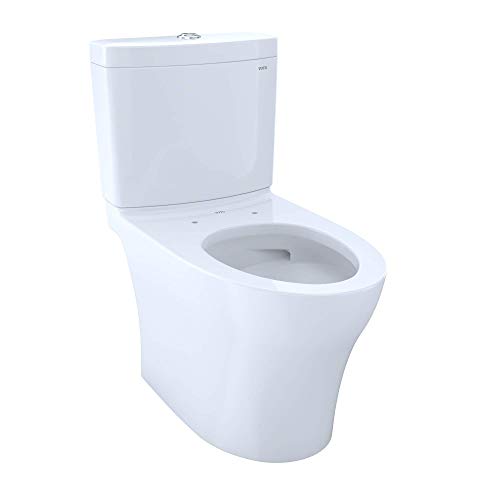
Modern EPA WaterSense-certified toilets use 1.28 GPF (gallons per flush) or less. High-efficiency dual-flush models like the TOTO Aquia IV offer 0.8 GPF for liquid waste and 1.0 GPF for solid waste. The supply line size of 1/2 inch is sufficient to refill even a 1.6 GPF tank within 60 to 90 seconds, which is the general consumer expectation.
Under the International Plumbing Code, a toilet drain can run horizontally up to 6 feet from the vent connection before it must be wet-vented or receive a separate vent branch. The maximum horizontal distance from the toilet trap to the stack varies by local code but is commonly 6 to 10 feet. Longer runs require larger pipe or additional venting to maintain proper slope and prevent slow draining.
Distance matters because every foot of horizontal drain run requires 1/4 inch of drop. A 10-foot run requires a 2.5-inch drop in elevation. In basements or slab-on-grade installations, that vertical budget runs out quickly, which is why below-grade toilets often require upflush systems or jackhammering the slab to lower the drain line.
| Run Length | Required Drop (1/4" per ft) | Notes |
|---|---|---|
| 3 ft | 0.75 in | Easy in most spaces |
| 6 ft | 1.5 in | Typical near-stack run |
| 8 ft | 2 in | Manageable with planning |
| 10 ft | 2.5 in | Requires careful elevation check |
| 12 ft | 3 in | May need re-venting or upsized pipe |
Adding a toilet almost always requires a plumbing permit because it involves connecting to the drain-waste-vent system and altering potable water supply lines. Permit requirements vary by municipality, but in most U.S. jurisdictions, any new fixture that ties into the DWV stack requires a permit, inspection of rough-in work before walls are closed, and a final inspection after the toilet is installed. Unpermitted plumbing work can complicate home sales and void homeowner insurance claims.
The permit process typically involves submitting a description of work, paying a fee (commonly $75 to $250 for a single fixture addition), and scheduling two inspections: one for the rough-in (before walls are closed) and one for the finished installation. Your licensed plumber should pull the permit; in most states, homeowners doing their own work can also pull permits for their primary residence.
Do not skip the permit to save time or money. A toilet added without a permit creates a disclosed defect that must be corrected before selling a home. Beyond the legal issue, uninspected drain work that violates slope or venting requirements will cause slow drains, sewer gas, and eventual water damage -- costs that far exceed the permit fee.
The cost to add a toilet with new plumbing ranges from $800 to $2,500 when connecting to an existing nearby drain stack, and $3,000 to $6,500 or more when full rough-in plumbing must be installed from scratch, such as in a new bathroom addition or basement conversion. The toilet fixture itself adds $150 to $1,200 depending on model and features. Labor alone in most U.S. markets runs $45 to $120 per hour for a licensed plumber.
Cost is the most common concern homeowners have when planning a toilet addition. The range is genuinely wide because job complexity varies so much. Here is a breakdown of the major cost buckets.
| Cost Item | Typical Range | Notes |
|---|---|---|
| Plumbing labor (near existing stack) | $400 - $900 | 4-8 hrs at $75-$120/hr |
| Plumbing labor (full rough-in) | $1,500 - $3,500 | New drain, vent, supply from scratch |
| Permit + inspections | $75 - $250 | Varies by municipality |
| Drain and vent pipe materials | $80 - $350 | PVC schedule 40, fittings, hangers |
| Supply line + shutoff valve | $20 - $60 | Angle stop + braided stainless line |
| Toilet fixture | $150 - $1,200 | Wide range; see our best flushing toilets guide |
| Wax ring + closet bolts | $10 - $30 | Replace with every new toilet |
| Slab saw-cut (basement/slab) | $500 - $2,000 | Only when below-grade drain needed |
Several variables can push a straightforward project into the higher cost range. Access to existing plumbing is the biggest factor: if your plumber has to open walls, remove tile, or cut a concrete slab, expect significant added labor and restoration costs. Distance from the main stack multiplies both pipe materials and labor time. Older homes with cast iron drain systems require specialized cutters and transition fittings that add cost. In some areas, inspector backlogs add days to project timelines, which can affect scheduled trades.
Geographic labor market variation is also substantial. The same job that costs $600 in a rural market may cost $1,400 in a major metro with high cost of living. Always get at least three written quotes from licensed plumbers before committing.
Basement toilet additions are among the most complex because the drain must run below the main floor slab, which already sits near or at the sewer line elevation. Two approaches exist. The first is jackhammering the slab to install a below-grade drain -- this is the most durable solution but also the most disruptive. The second is an upflush macerating toilet system, such as those made by Saniflo, which grinds waste and pumps it up and out through small-diameter pipes. Upflush systems cost $800 to $1,500 for the unit and require an outlet for the pump motor, but they avoid concrete work entirely.
Upflush systems work well in low-traffic basement bathrooms but they do require periodic maintenance and the macerator blade wears over time. For a basement bathroom that will see heavy daily use, the investment in slab cutting and a conventional gravity drain system is almost always the better long-term choice.
The International Residential Code requires a minimum of 21 inches of clear floor space in front of the toilet and at least 15 inches from the toilet centerline to any side wall or obstruction. The absolute minimum room size for a toilet-only half-bath is generally considered 18 to 20 square feet, with many codes requiring a minimum width of 30 inches. ADA-compliant designs require a 60-inch clear turning radius and side transfer space.
Space planning must happen before rough-in work begins, because drain flange placement locks in the toilet position. Moving a flange after concrete or tile work is an expensive correction. Use a template or draw the toilet footprint -- typically about 28 to 30 inches deep and 18 to 20 inches wide at the tank -- and verify all clearances before the plumber sets the flange.
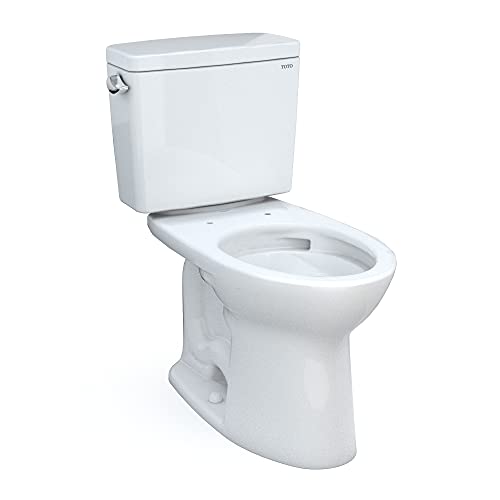
ADA (Americans with Disabilities Act) requirements, enforced in commercial buildings and relevant for universal design in residential, specify that the toilet centerline must be exactly 16 to 18 inches from the side wall, with a grab bar behind and to the side. ADA-height toilets (comfort height, 17 to 19 inches seat height) like the TOTO Drake II, Kohler Cimarron, and American Standard Cadet 3 right-height models meet the seat height requirement and are widely specified for accessible and aging-in-place bathrooms.
For a new toilet installation where all plumbing is being roughed in fresh, an EPA WaterSense-certified 1.28 GPF or dual-flush model is the right starting point. MaP (Maximum Performance) flush testing, conducted by independent laboratories, rates toilets on how many grams of solid waste they can clear in a single flush -- a score of 500g or higher indicates strong performance, and the best models score 1,000g. TOTO, Kohler, and American Standard dominate at the top of MaP rankings.
Choosing the right toilet for a new installation is an opportunity that should not be wasted on a budget fixture. Since the plumber will already be on-site doing rough-in work, swapping up to a better flush performer costs nothing extra in labor. Consider the following models for new installations.
| Model | GPF | MaP Score | WaterSense | Rough-In | Best For | Check Price |
|---|---|---|---|---|---|---|
| TOTO Drake II | 1.28 | 1,000g | Yes | 12" | Overall performance | Check price |
| TOTO Aquia IV | 1.0 / 0.8 | 800g+ | Yes | 12" | Water savings | Check price |
| Kohler Highline | 1.28 | 800g+ | Yes | 12" | Value + reliability | Check price |
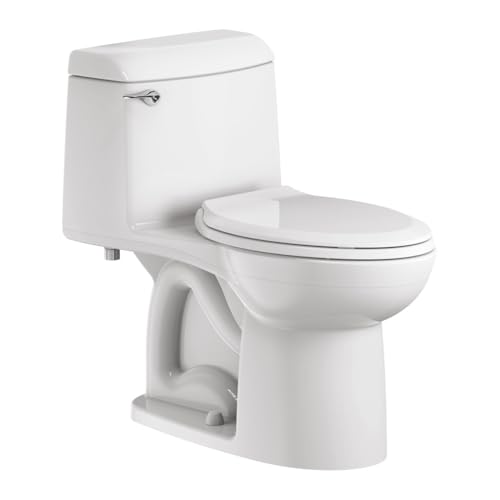
| American Standard Champion 4 | 1.6 | 1,000g | No (1.6 GPF) | 12" | Clog-resistance | Check price |
| American Standard Cadet 3 | 1.28 | 1,000g | Yes | 12" / 10" | Tight rough-ins | Check price |
| Woodbridge T-0001 | 1.28 / 0.8 | 800g+ | Yes | 12" | Modern design | Check price |
| TOTO UltraMax II | 1.28 | 1,000g | Yes | 12" | One-piece, easy cleaning | Check price |
| Gerber Avalanche Elite | 1.28 | 1,000g | Yes | 12" | Commercial-grade durability | Check price |
For a newly plumbed bathroom where water efficiency matters for long-term utility costs, the TOTO Aquia IV dual-flush is worth considering. Its 0.8 GPF liquid-waste setting and 1.0 GPF solid-waste setting are well below the 1.6 GPF legacy standard, and published MaP data confirms it clears solid waste reliably at those low volumes. The TOTO Drake II remains the most consistent performer in independent MaP testing and is widely specified by professional plumbers for both new builds and replacements.
For related reading on how individual models perform, see our guide to TOTO Drake toilet review and our comparison of 1.28 GPF vs 1.6 GPF toilets.
Two-piece toilets (separate tank and bowl) are easier to transport and install in tight spaces because the tank and bowl can be carried separately. One-piece toilets are heavier but have fewer joints where leaks can develop over time. For a first-floor bathroom with easy access, either style works fine. For basement or attic installations where the space is cramped, two-piece models like the TOTO Drake II or Kohler Highline are more practical to maneuver into position.
Measure from the finished wall (not the baseboard) to the center of the drain stub or existing flange. Do this before purchasing any toilet. A 12-inch rough-in toilet on a 10-inch rough-in will either not fit against the wall or require significant repositioning of the drain. The American Standard Cadet 3 is notable for being available in both 10-inch and 12-inch rough-in versions, which makes it a safe choice when the existing rough-in measurement is uncertain.
If you are setting a new flange from scratch, position it at 12 inches from the finished wall (accounting for drywall thickness if framing is still exposed) to maintain the widest toilet selection. That is the industry standard and every major manufacturer -- TOTO, Kohler, American Standard, Woodbridge, Swiss Madison, Gerber -- produces their widest range at 12-inch rough-in.
EPA WaterSense certification requires a toilet to flush at 1.28 GPF or less while meeting minimum performance standards. The agency estimates that replacing an older 3.5 GPF or 1.6 GPF toilet with a WaterSense model saves the average family approximately 13,000 gallons of water per year. At national average water rates, that represents $110 or more in annual savings. Over a 20-year fixture life, the water savings from a 1.28 GPF WaterSense toilet versus a 1.6 GPF model are meaningful.
For households in California, Colorado, Texas, and other water-restricted states, low-GPF toilets may be required by state or local code regardless of personal preference. Check your local building department requirements before finalizing fixture selection.
For more on how to evaluate flushing performance, see our article on understanding MaP flush testing scores.
Having the following information ready when you call a licensed plumber saves time and allows them to give you an accurate quote on the first call.
Only if there is an existing rough-in or stub-out already in the location you want. If there is no flange or drain connection at the spot, you will need new drain pipe run from the closest point on the DWV system. There is no shortcut around this requirement.
The International Plumbing Code requires a minimum 3-inch diameter drain for a toilet. Many plumbers recommend 4-inch pipe from the toilet flange to the main stack for improved flow and reduced clog potential, especially on longer horizontal runs.
In virtually all U.S. jurisdictions, yes. Adding a toilet requires a plumbing permit because it involves new connections to the DWV system and potable water supply. Work done without a permit is a disclosed defect that must be corrected before a home sale can close.
A simple rough-in connecting to an adjacent existing stack typically takes 4 to 8 hours for an experienced plumber. A full rough-in in a new bathroom addition -- new drain run, new vent stack connection, and new supply lines from the main -- can take 1 to 2 days or more depending on access and distance.
Yes, but basements add complexity because the toilet drain must run at or below the main sewer line elevation. Options include jackhammering the slab to install a below-grade drain (the most permanent solution) or installing an upflush macerating toilet system (like Saniflo) that pumps waste upward through small-diameter pipes without slab work.
The rough-in is the distance from the finished wall (behind the toilet) to the center of the toilet drain flange. The standard is 12 inches. Some older homes have 10-inch or 14-inch rough-ins. Buying a toilet that does not match your rough-in results in either a gap at the wall or the toilet not fitting against the wall at all.
Adding one toilet rarely causes noticeable pressure drop in a typical residential system, because fill valves refill tanks slowly (over 60 to 90 seconds) rather than all at once. If your home already has marginal pressure, a plumber can assess whether your main supply line is sized adequately for the added fixture.
The IPC and most local codes require at least 15 inches from the toilet centerline to any side wall, fixture, or obstruction. ADA-compliant installations require the toilet centerline to be 16 to 18 inches from the side wall, with at least 60 inches of clear floor space alongside for a wheelchair transfer.
If the half-bath already has a toilet, adding a shower or tub turns it into a full bath -- that is a separate question. If the half-bath has only a sink and you want to add a toilet, you need to rough in a 3-inch drain, vent connection, and cold-water supply line, assuming none are present.
An EPA WaterSense-certified 1.28 GPF toilet is the standard recommendation for any new installation in 2026. Dual-flush models like the TOTO Aquia IV offer even lower consumption (0.8 GPF for liquid waste). The American Standard Champion 4 at 1.6 GPF is no longer WaterSense-eligible but remains popular where maximum clog resistance is the priority.
The drain carries waste water and solids from the toilet bowl to the sewer. The vent pipe carries air from the drain system to the atmosphere (through the roof), preventing negative pressure that would siphon water from the P-trap and allow sewer gases into the home. Both are required; one without the other creates either a non-functional drain or a health hazard.
A wet vent is a drain pipe that simultaneously carries both waste and serves as a vent for another fixture. Under IPC rules, a toilet can be wet-vented in certain configurations where the drain line also vents a sink or other fixture. Wet venting must meet specific size requirements (typically 3 inches for a toilet wet vent) and is not allowed in all jurisdictions.
Some local codes allow AAVs for toilet venting; others do not. AAVs are more commonly permitted for sinks, tubs, and other fixtures. Always check with your local building department before specifying an AAV for a toilet installation, as a failed inspection requiring a retrofit roof vent costs far more than a code check in advance.
Licensed plumber rates in 2026 range from approximately $45 per hour in lower-cost rural markets to $150 per hour or more in high-cost metros. Most toilet rough-in projects are quoted as a flat job rate rather than hourly, typically $400 to $900 for a simple connection and $1,500 to $3,500 for full new rough-in work.
The closet flange is the ring fitting at the top of the drain pipe that the toilet bolts to. It must sit flush with or up to 1/4 inch above the finished floor. If it sits below the floor after tile is installed, the wax ring cannot seal properly and water leaks at the base. Flange extenders and adjustable flanges can correct low-flange situations without replacing the drain pipe.
Typically, yes -- at least temporarily. Adding a new supply stub-out requires cutting into the existing supply line, which requires shutting off water to that section of the house. If the plumber is tapping off a line with an existing shutoff nearby, only that branch needs to be isolated. Plan for water to be off for 2 to 4 hours minimum during the rough-in phase.
Both brands produce toilets that consistently score at or near maximum on MaP flush testing. TOTO's Tornado Flush and Double Cyclone technologies have earned strong reputations for clog resistance and bowl cleanliness based on aggregated owner reviews. Kohler's Class Five flushing system is also well-regarded. The decision often comes down to preferred style, seat height, and whether WaterSense certification is a priority.
A slope greater than 1/2 inch per foot is considered too steep for toilet drains. At excessive slope, liquid runs ahead of solids, leaving waste deposited in the pipe rather than flushing it to the stack. The IPC specifies 1/4 inch per foot as the correct slope for most horizontal drain runs. Correct slope is enforced at the rough-in inspection.
Adding a toilet is a well-defined plumbing project with clear code requirements: a 3-inch drain at 1/4-inch-per-foot slope, a proper vent connection, and a cold-water supply line at minimum 25 PSI. Costs range from roughly $800 to $2,500 for connections to existing plumbing, up to $6,500 or more for full new rough-in. Choosing an EPA WaterSense-certified toilet with a strong MaP score -- the TOTO Drake II and American Standard Cadet 3 are consistent top performers -- ensures long-term reliability and water efficiency from day one. Pull the permit, hire a licensed plumber, and do not skip the rough-in inspection.
Which is the best toilet flush valve? Compare 2-inch, 3-inch, adjustable, and canister flush valves by fit and flush power, plus how…
Read the guideYes, flushing a toilet can make your shower go cold, hot, or lose pressure. Learn why it happens, how to diagnose it,…
Read the guideWhen you flush one toilet and another gurgles or bubbles, it usually means a venting or drain problem. Here are the causes,…
Read the guide