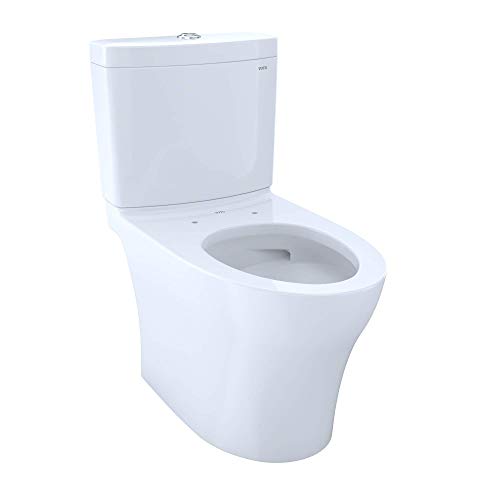

TOTO Drake Two-Piece Toilet vs Kohler Highline Two-Piece Toilet: Which Should You Buy?
Comparisons4.6
We compared the TOTO Drake and Kohler Highline two-piece toilets: both hit MaP 1000 at 1.28 GPF. See flush systems, verified specs…
Read the guideEverything you need to decide which toilet type fits your bathroom, budget, and plumbing before you buy or remodel in 2026.
Floor-standing toilets cost less to buy and install, work with any existing plumbing, and are repaired without opening walls. Wall-hung toilets free up floor space, ease cleaning, and offer adjustable bowl height, but require a carrier frame inside the wall and a professional installation starting around $500 in labor alone.
When a homeowner or remodeler compares a wall hung vs floor standing toilet, the visible difference is obvious: one bowl floats off the floor and the other stands on it. But the engineering behind each type, the installation requirements, the long-term maintenance, and the flush performance are very different stories.
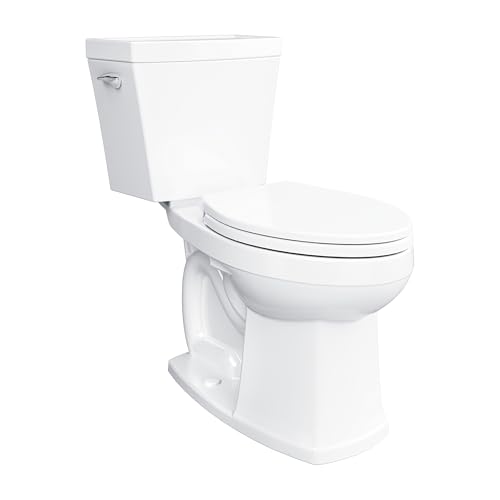
Floor-standing toilets, also called floor-mount or gravity-fed toilets, are the dominant type in North American homes. The tank sits directly on the bowl, the base seals to the floor with a wax ring, and the entire unit connects to a standard 3- or 4-inch rough-in at the floor level. Brands like TOTO, Kohler, American Standard, and Gerber have built entire product families around this format.
Wall-hung toilets, also called wall-mount or in-wall tank toilets, suspend the bowl from a steel carrier frame concealed inside the wall. The cistern (tank) lives inside that frame too, hidden behind a flush plate on the wall surface. The drain exits horizontally through the wall rather than dropping down through the floor. This design is standard in European and Australian bathrooms and has been growing steadily in North American upscale renovations.
This comparison digs into both types across every dimension that matters: installation, flush performance, water use, cleaning ease, cost, and long-term reliability. By the end, you will know exactly which type fits your situation.
Wall-hung toilets require an in-wall carrier frame and horizontal drain rough-in, making them more complex and expensive to install than floor-standing toilets, which connect to a standard floor-level flange. Floor-standing toilets offer a wider range of certified models at every price point. Wall-hung models offer adjustable height and a cleaner visual profile, but both types can achieve EPA WaterSense certification and strong MaP flush scores.
| Feature | Wall-Hung Toilet | Floor-Standing Toilet |
|---|---|---|
| Installation complexity | High (carrier frame, in-wall tank) | Low (standard flange, wax ring) |
| Typical labor cost | $500 to $1,500+ | $100 to $350 |
| Bowl height adjustability | Yes (15 to 19 inches) | Fixed (standard or comfort height) |
| Floor space freed | Yes (4 to 8 inches) | No |
| Cleaning ease | Easier (floor fully accessible) | Harder (base collects debris) |
| Flush performance (MaP top models) | Up to 1,000g (MaP Premium) | Up to 1,000g (MaP Premium) |
| EPA WaterSense eligible | Yes | Yes |
| Dual-flush availability | Most models | Select models |
| Tank access for repair | Behind flush plate (limited) | Direct tank lid access |
| Weight capacity (bowl) | Up to 880 lbs (carrier-rated) | Varies, typically 1,000 lbs+ |
| Best overall for most homes | ✓ Winner for most situations |
A wall-hung toilet is worth the extra cost if you are already opening the wall for a full bathroom remodel, have a smaller bathroom where floor space matters, or need adjustable bowl height for ADA compliance or accessibility. If you are doing a simple toilet swap on existing plumbing, the $800 to $1,200 additional installation cost rarely pays off compared to a high-performing floor-standing model from TOTO or Kohler.
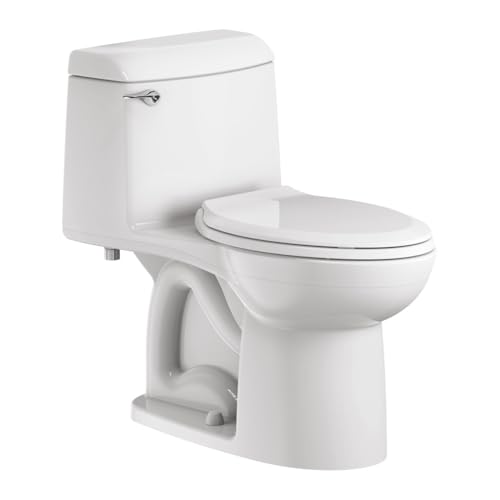
Let's break down the cost difference in detail. A quality floor-standing toilet from TOTO (the Drake II, for instance) or American Standard (the Champion 4) typically sells in the $300 to $700 range. Licensed plumber labor to remove the old unit and set the new one runs $100 to $350 in most markets. Total installed cost: roughly $400 to $1,050.
A wall-hung toilet system is a different category. The bowl alone for a Swiss Madison Ivy or Woodbridge wall-mount unit costs $250 to $600. But you also need the in-wall carrier frame (Geberit, Duofit, or similar), which adds $300 to $700. The flush plate adds another $50 to $200. Labor to frame, plumb, drywall, tile, and install the flush plate can run $500 to $1,500 depending on your market and whether framing work is already happening. Total installed cost: $1,100 to $3,000+.
The math only tips toward wall-hung if the bathroom remodel is already budgeted, the aesthetic difference matters to you, or you have a genuine need for height adjustability or a more sanitary floor around the toilet base.
Plumbing contractors consistently note that wall-hung installations are straightforward during a full bath remodel but expensive as a standalone swap. The carrier frame requires a minimum 6-inch wall depth (8 to 10 inches is more comfortable to work with), and any future tank repair requires removing the flush plate and reaching into the chase. For high-traffic commercial bathrooms or households with older members who benefit from adjustable height, the investment is justified. For most standard residential replacements, a TOTO Drake or Kohler Highline delivers equivalent or superior flushing performance at a third of the installed cost.
Neither toilet type has an inherent flush performance advantage. MaP (Maximum Performance) testing -- which measures how many grams of solid waste a toilet clears in a single flush -- rates both wall-hung and floor-standing toilets at the MaP Premium level (1,000g) when properly engineered. The flush quality depends on the bowl design, trapway size, and flush valve, not whether the tank is in the wall or on the bowl. TOTO's Tornado Flush technology and American Standard's PowerWash rim are available in floor-standing models and deliver certified 1,000g MaP scores.
MaP flush testing is the gold standard for toilet performance. Run by independent laboratories, MaP assigns a score in grams to every toilet tested, representing the maximum solid waste cleared reliably in a single flush. A score of 500g is adequate, 800g is good, and 1,000g (MaP Premium) is the top rating. Both toilet types can and do earn 1,000g scores.
The TOTO Drake (CST743S) earns a 1,000g MaP Premium score with its G-Max flushing system and 2-1/8 inch glazed trapway. The TOTO Drake II (CST454CEFG) earns 1,000g as well using the Double Cyclone flush. The American Standard Champion 4 is legendary for its fully glazed 2-3/8-inch wide trapway and EverClean antimicrobial surface, also hitting MaP Premium. These are all floor-standing toilets.
On the wall-hung side, European-spec in-wall tank systems from Geberit typically fill the bowl with 3 liters (0.8 GPF) on a partial flush and 6 liters (1.6 GPF) on a full flush, with dual-flush push plates standard. American brands offering wall-hung bowls -- like Swiss Madison and Woodbridge -- pair with Geberit or compatible frames to achieve MaP scores in the 600 to 1,000g range depending on the specific bowl geometry.
If raw flushing power is the primary concern, the floor-standing TOTO Drake, TOTO UltraMax II, and American Standard Champion 4 represent the most well-documented high performers based on published MaP data and aggregated owner reviews. You can see these models featured in our best flushing toilets guide with full spec comparisons.
Both wall-hung and floor-standing toilets can meet EPA WaterSense standards, which require 1.28 GPF (gallons per flush) or less. Many wall-hung models use dual-flush mechanisms with a 0.8/1.6 GPF split by default, which can result in lower average water use than single-flush floor-standing models. However, numerous floor-standing toilets -- including the TOTO Aquia IV (0.8/1.0 GPF dual-flush) and the Kohler Cimarron (1.28 GPF WaterSense) -- also meet or exceed these efficiency benchmarks.
EPA WaterSense certification requires that a toilet use no more than 1.28 gallons per flush and meet a minimum flush performance threshold (350g MaP). A toilet earning the WaterSense label has been independently tested and certified.
Floor-standing toilets with WaterSense certification include the TOTO Drake II at 1.28 GPF, the TOTO Aquia IV at 0.8/1.0 GPF (dual-flush), the Kohler Cimarron at 1.28 GPF, and the American Standard Cadet 3 at 1.28 GPF. The Gerber Avalanche is another WaterSense-certified floor-standing option worth noting.
Wall-hung systems with Geberit dual-flush frames default to 0.8 GPF (liquid waste cycle) and 1.6 GPF (solid waste cycle). In practice, most flushes for liquid waste use the 0.8 GPF setting, bringing average daily consumption below what a 1.28 GPF single-flush WaterSense toilet would use. This is a genuine water-saving advantage in households with high toilet usage frequency.
The TOTO Aquia IV is a notable exception on the floor-standing side: its 0.8/1.0 GPF dual-flush uses less water than most wall-hung systems on average because the full-flush cycle is only 1.0 GPF rather than 1.6 GPF. This makes it arguably the most water-efficient floor-standing option currently certified by EPA WaterSense.
Water utility rebate programs in states like California, Texas, and Colorado often apply to any WaterSense-certified toilet, regardless of whether it is wall-hung or floor-standing. Before budgeting your purchase, check your local utility's rebate portal. Some programs offer $50 to $200 per toilet replaced when upgrading from a pre-1994 3.5 to 5.0 GPF unit to a certified 1.28 GPF or lower model.
Wall-hung toilets are significantly easier to clean around because the bowl floats above the floor, giving a mop or cloth full access to the floor beneath without obstacles. The base of a floor-standing toilet collects hair, dust, and cleaning product residue in the crevices around the floor bolts and base skirt. However, floor-standing toilets are far easier to maintain mechanically: flapper replacement, fill valve adjustment, and flush valve repair all require only removing the tank lid, while wall-hung repairs require accessing the in-wall frame through the flush plate access panel.
The cleaning debate is one area where wall-hung toilets have a clear edge. The absence of a floor-mounted base means that mopping, sweeping, or robot vacuum cleaning around the toilet is unobstructed. In households where bathroom hygiene is a priority -- or where someone with mobility limitations needs to clean more quickly -- this is a real quality-of-life benefit.
Maintenance is where floor-standing toilets regain their advantage. The internal components of a standard two-piece toilet (flapper, fill valve, flush handle, overflow tube) are accessible to any homeowner in five minutes. Most replacement parts cost $10 to $30 at any hardware store. A running or phantom-flushing floor-standing toilet can be diagnosed and fixed without calling a plumber.
Wall-hung tank maintenance depends on the carrier frame brand and the flush plate design. Geberit access panels are generally well-designed and allow fill valve and flush valve replacement from the front without opening the wall. However, the components themselves are proprietary and cost more. A Geberit replacement fill valve can run $60 to $150 versus $15 to $25 for a universal fill valve that fits any standard floor-mounted tank.
For bowl-level issues (clogs, rim cleaning), both types are comparable. The main difference is that wall-hung bowls sometimes have a smaller water surface and a sharper trapway angle depending on design, which can affect how residue adheres to the bowl surface. Brands like TOTO address this with SanaGloss ceramic glaze (on floor-standing and some wall-hung models), which reduces staining and mineral buildup.
Related: see our guide on clog-resistant toilets and our breakdown of toilet trapway size for how these factors connect to long-term performance.
A wall-hung toilet requires a steel carrier frame (Geberit Duofix and similar brands are the standard) bolted to the floor and wall studs, a wall cavity of at least 6 inches deep (ideally 8 to 10 inches for comfortable installation), and a horizontal drain rough-in at the correct height -- typically 7 to 11 inches above the finished floor depending on the frame spec. Floor-standing toilets require only a floor-level drain flange at the correct rough-in distance (12 inches from wall is standard, 10 or 14 inches for off-spec situations) and are compatible with existing North American plumbing in virtually all cases.
This is the most important practical difference for anyone comparing the two types before a purchase or renovation decision.
Floor-standing installation requirements:
Wall-hung installation requirements:
One important structural note: wall-hung carrier frames are engineered to hold significant weight. Geberit's Duofix frame, for example, is rated for loads up to 880 lbs (400 kg) on the bowl support arms. This is more than adequate for any user. The carrier frame is not a weak point; the weak point is the installation itself. A frame that is not properly anchored to structural framing will shift over time, potentially cracking the bowl-to-frame connection or creating an uncomfortable seating position.
This is why most experts recommend wall-hung installation only during a full bathroom gut renovation when the walls are open and framing can be verified. Retrofitting a wall-hung toilet into an existing bathroom with unknown wall construction is a more complex and potentially expensive project.
When evaluating whether a wall-hung toilet is feasible in an existing bathroom, the key question is what is behind the wall. A standard 2x4 stud wall framed 16 inches on center leaves only 3.5 inches of cavity depth -- not enough for most carrier frames without either furred-out framing or a dropped soffit. A 2x6 exterior wall gives 5.5 inches, which is workable. Many installers build a short half-wall or chase specifically for the carrier frame, which adds framing cost but avoids disturbing the existing structure.
Rather than an exhaustive roundup, here are the most well-regarded models in each category based on published MaP scores, EPA WaterSense status, and aggregated owner feedback -- with honest notes on who each suits best.
TOTO Drake II (CST454CEFG) - The Drake II earns a 1,000g MaP Premium rating using the Double Cyclone flush with a 1.28 GPF consumption and EPA WaterSense certification. The two-piece design makes it accessible to homeowners doing DIY replacement. Available with or without washlet seat compatibility. This model consistently appears at the top of aggregated owner satisfaction ratings for flushing power and bowl cleanliness. Check the TOTO Drake II on Amazon.
TOTO Aquia IV (CT449CGF) - TOTO's dual-flush flagship with a 0.8/1.0 GPF split -- the most water-efficient WaterSense-certified dual-flush option currently on the market. The Tornado Flush technology uses a rimless bowl with two nozzles rather than a traditional rim to distribute water, reducing areas where bacteria accumulate. Best for households prioritizing water savings without sacrificing flush power. Check the TOTO Aquia IV on Amazon.
American Standard Champion 4 - The Champion 4's fully glazed 2-3/8-inch trapway is the widest available in a residential toilet and earns a 1,000g MaP score. The EverClean surface resists mold, mildew, and bacteria. Best for households with chronic clogging issues or heavy use. Check the American Standard Champion 4 on Amazon.
Kohler Cimarron - A consistently rated performer with AquaPiston canister flush technology, 1.28 GPF WaterSense certification, and comfort height (17 to 19 inches) options. The AquaPiston valve opens 90 degrees versus a flapper's 45 degrees, delivering more water volume per flush cycle. Check the Kohler Cimarron on Amazon.
Gerber Avalanche - A less marketed but well-regarded 1.28 GPF WaterSense option with a fully glazed trapway and consistently positive owner feedback on clog resistance. Gerber carries a 10-year warranty on the china, the longest in this class. Check the Gerber Avalanche on Amazon.
Swiss Madison Ivy Wall-Hung Toilet - A widely available North American wall-hung option designed for compatibility with standard Geberit in-wall frames. The elongated bowl and clean skirted design make it a popular choice in modern bathroom remodels. Published flush performance data is frame-dependent (Geberit DT1 frame delivers 1.0/1.6 GPF dual flush). Check the Swiss Madison Ivy on Amazon.
Woodbridge Wall-Hung Toilet (B-0500) - The Woodbridge B-0500 is an elongated wall-hung bowl compatible with Woodbridge or Geberit carrier frames. Owner reviews consistently highlight the easy-clean design and high-gloss finish. Best for modern or minimalist bathroom remodels where the floating aesthetic is the priority. Check the Woodbridge B-0500 on Amazon.
For a deeper dive into flush testing data and how these models compare across all categories, see our guide on toilet flush performance and dual-flush toilet guide.
One common oversight when shopping wall-hung systems is buying the bowl and frame separately without confirming compatibility. Not every wall-hung bowl is compatible with every carrier frame. Geberit publishes a bowl compatibility chart on their website. Swiss Madison and Woodbridge both specify which Geberit frame versions are compatible with each bowl model. Mismatched components can result in incorrect mounting heights, drain connection gaps, or flush valve incompatibility. Always confirm the full system (bowl + frame + flush plate) before purchasing parts separately.
After analyzing installation requirements, flush performance, cleaning, maintenance, and cost, here is a direct decision guide:
Choose a floor-standing toilet if you:
Choose a wall-hung toilet if you:
Yes, significantly. A wall-hung toilet system (bowl, carrier frame, and flush plate) typically costs $600 to $1,500 in materials alone before installation. Labor to frame, plumb, tile over, and install adds $500 to $1,500. A quality floor-standing toilet with installation averages $400 to $1,050 total.
It is possible but complex and expensive. You need to open the wall to install the carrier frame, add blocking or new framing to meet depth requirements, re-plumb the drain to a horizontal exit point, and then re-drywall and re-tile. Most plumbers and contractors recommend this only during a full bath remodel when the walls are already open.
Yes. MaP flush testing rates both types at up to 1,000g (MaP Premium) depending on the specific bowl and flush valve design. The tank location (in-wall vs. on-bowl) does not determine flushing power. Bowl geometry, trapway size, and flush valve design are the dominant performance factors.
Most carrier frames require 6 inches of wall cavity depth as the absolute minimum, with 8 to 10 inches preferred for comfortable installation and future access. A standard 2x4 stud wall is only 3.5 inches deep, which is insufficient without additional framing or a purpose-built chase wall.
Yes. Quality carrier frames are engineered for loads well in excess of typical use. The Geberit Duofix frame, for instance, is rated for 880 lbs (400 kg) at the bowl support points. The critical factor is proper anchoring to structural framing; an improperly anchored frame can fail regardless of its rated capacity.
The standard North American rough-in is 12 inches from the finished wall to the center of the drain flange. Some older homes use a 10-inch rough-in and some have 14-inch rough-ins. Most major brands (TOTO, Kohler, American Standard) offer their core models in all three rough-in variants. Always measure before purchasing.
Wall-hung systems typically use dual-flush with a 0.8/1.6 GPF split, which averages lower water use per day than a standard 1.28 GPF single-flush toilet. However, the TOTO Aquia IV floor-standing model uses a 0.8/1.0 GPF dual-flush split, making it more efficient than most wall-hung systems on average daily water consumption.
Geberit and most major carrier frame brands include an access panel via the flush plate. Removing the flush plate exposes the fill valve and flush valve for replacement without opening the wall. Proprietary parts for Geberit frames are available through plumbing supply houses, though they cost more than generic floor-standing toilet parts.
Yes, and this is one of the strongest arguments for wall-hung toilets. Because the mounting height is adjustable during installation (typically 15 to 19 inches to the top of the seat), wall-hung toilets can be set to exactly the ADA-required 17 to 19 inches more easily than fixed-height floor-standing models. Floor-standing comfort-height models also meet ADA at 17 to 19 inches, but wall-hung allows fine-tuning.
Several floor-standing toilets earn the top MaP Premium rating of 1,000g, including the TOTO Drake (CST743S), TOTO Drake II (CST454CEFG), TOTO UltraMax II, and American Standard Champion 4. The MaP testing database at map-testing.com lists all certified toilets with their published scores and is updated regularly.
Swiss Madison, Woodbridge, TOTO (select models), Kohler (select models), American Standard (select commercial models), and European brands like Duravit, Villeroy and Boch, and Roca all offer wall-hung bowls in the US market. These bowls are typically paired with Geberit in-wall carrier frames for the tank system.
Cleaning around the base of a floor-standing toilet is more difficult because the base skirt and floor bolts create crevices where dust, hair, and residue accumulate. Wall-hung toilets leave the floor beneath the bowl completely open for mopping and cleaning. Rim cleaning is comparable between both types, though rimless designs (available in both types) are easier to clean inside the bowl.
Yes. Installing a floor-standing toilet is a straightforward DIY project for homeowners with basic plumbing knowledge. It involves removing the old unit, installing a new wax ring on the flange, setting the toilet over the flange bolts, tightening the base nuts, connecting the supply line, and testing. Most installs take one to three hours. A wall-hung installation is not DIY-appropriate due to framing, rough-in, and waterproofing requirements.
Standard height toilets measure 14 to 15 inches from floor to rim (16 to 17 inches with seat). Comfort height or "chair height" toilets measure 16 to 18 inches from floor to rim (17 to 19 inches with seat), matching the height of a standard chair and easing sitting and standing for taller adults and those with mobility considerations. Most major brands offer both options across their product lines.
Yes. EPA WaterSense certification applies to any toilet (wall-hung or floor-standing) that uses 1.28 GPF or less per flush and meets a minimum 350g MaP flush performance threshold. Many wall-hung systems, particularly those paired with Geberit dual-flush frames, are WaterSense eligible. Check the EPA WaterSense product search at epa.gov/watersense to find certified models.
Geberit and comparable quality carrier frames are designed for 25+ years of use with properly maintained seals and periodically replaced internal tank components (fill valve, flush valve). The steel frame itself does not degrade if installed correctly. The porcelain bowl on a wall-hung system has the same ceramic lifespan as any toilet bowl -- essentially indefinite unless physically damaged.
Yes. Most wall-hung toilet bowls are available in both elongated (oval, approximately 18.5 inches front-to-back) and round-front (approximately 16.5 inches front-to-back) options. Elongated bowls are more common in wall-hung designs for the US market. Swiss Madison, Woodbridge, and TOTO wall-hung models all offer elongated options.
Some TOTO washlet models are compatible with select TOTO wall-hung bowls. However, washlet compatibility is bowl-specific -- not every washlet fits every wall-hung bowl due to seat mounting differences. TOTO publishes a compatibility chart. For floor-standing toilets, TOTO WASHLET compatibility is broader since most TOTO floor-standing bowls are designed with WASHLET mounting points built in.
For a genuinely small bathroom, wall-hung has a meaningful advantage. By suspending the bowl from the wall and concealing the tank in-wall, the visual footprint is reduced and 4 to 8 inches of floor depth is reclaimed, making the room feel more open. Floor-standing toilets are also available in compact round-front versions that minimize depth, but they cannot match the visual openness of a floating wall-hung design.
Floor-standing toilet warranties vary by brand: TOTO offers a 1-year limited warranty on flushing components and a limited warranty on the vitreous china; American Standard covers the flush mechanism for one year; Gerber covers china for 10 years. Wall-hung systems have split warranty coverage -- the bowl follows the manufacturer's standard warranty, while the carrier frame (Geberit) carries its own 10-year or limited lifetime warranty depending on the product line.
For the majority of homeowners doing a toilet replacement, a certified floor-standing toilet from TOTO, Kohler, or American Standard delivers equal or superior flush performance, lower installed cost, and far simpler long-term maintenance. Wall-hung toilets earn their place in full bathroom renovations where adjustable height, cleaning ease, and modern aesthetics justify the higher installation investment -- particularly when the walls are already open. Know your bathroom, your plumbing access, and your budget before choosing, and you will make the right call for your specific situation.
We compared the TOTO Drake and Kohler Highline two-piece toilets: both hit MaP 1000 at 1.28 GPF. See flush systems, verified specs…
Read the guideHome / Comparisons / TOTO Drake vs TOTO Drake II TOTO Drake Two-Piece Toilet vs TOTO Drake II Two-Piece Toilet: Which Should…
Read the guideA data-driven look at resale impact, long-term availability, and which color choice makes more sense for your bathroom and your budget.
Read the guide