

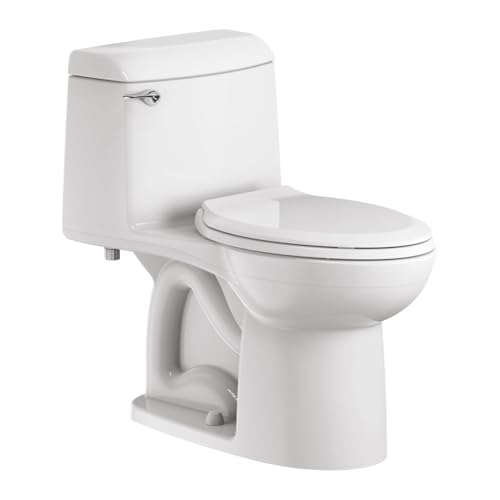
TOTO Drake Two-Piece Toilet vs Kohler Highline Two-Piece Toilet: Which Should You Buy?
Comparisons4.6
We compared the TOTO Drake and Kohler Highline two-piece toilets: both hit MaP 1000 at 1.28 GPF. See flush systems, verified specs…
Read the guideA detailed breakdown of how macerating upflush systems differ from conventional gravity-flush toilets, covering cost, installation, maintenance, performance and the scenarios where each type belongs.
Regular gravity-flush toilets suit any bathroom with an existing drain line. Upflush toilets are necessary when you are adding a toilet below the main sewer line or where cutting into a concrete slab is impractical. They cost more upfront and require more maintenance, but they open up basement and below-grade bathrooms that a regular toilet simply cannot serve.
Most homeowners never have to think about which type of toilet they need. The rough-in is already there, a standard flange sits flush with the floor, and a conventional gravity toilet drops right in. But the moment you decide to add a bathroom in a basement, a garage conversion, or any space below the main sewer line, everything changes. Suddenly the type of toilet you choose becomes a structural and plumbing decision, not just an aesthetic one.
This guide cuts through the noise and gives you a practical side-by-side comparison so you can make the right call before spending a dollar on fixtures or installation labor. We cover how each system works, where each shines, what the real ownership costs look like, and which brands consistently earn high marks from both plumbers and everyday owners.
| Factor | Regular Gravity-Flush Toilet | Upflush (Macerating) Toilet |
|---|---|---|
| How waste moves | Gravity drops waste down through trap and drain | Motor macerated waste and pumps it up and out |
| Drain line required below floor | Yes, must connect to existing gravity drain | No, connects to any pipe within pumping range |
| Average unit cost | Low to moderate (wide market range) | Moderate to high (macerator unit alone is higher) |
| Installation complexity | Moderate (cutting slab adds labor) | Lower (no slab cutting needed) |
| Best for below-grade bathrooms | No (requires major excavation) | Yes (designed for this use case) |
| MaP flush performance (max tested) | Up to 1,000 g (TOTO, American Standard top picks) | Typically 450-600 g effective solids removal |
| EPA WaterSense eligibility | Yes, many certified at 1.28 GPF or less | Some models certified; pump water adds usage |
| Noise level | Very quiet (gravity only) | Audible motor sound (10-20 seconds per flush) |
| Maintenance needs | Minimal (standard rubber parts) | Motor, macerator blade, seals - periodic service |
| Lifespan | 20-50 years (porcelain) with part replacements | 10-15 years for macerator unit; bowl indefinite |
| Power dependency | None | Requires electrical outlet |
| Suitable for full-time use | Yes | Yes, but motor lifespan shortens with heavy use |
A regular gravity-flush toilet stores water in an elevated tank. When the flush valve opens, water falls rapidly into the bowl, creating hydraulic pressure that pushes waste through the trapway and down into the drain. The entire system relies on a downward-sloping drain line that connects to the home's main sewer stack.
Because gravity does all the work, there are no motors or blades involved. This simplicity is why gravity toilets dominate the market and why top-scoring models like the TOTO Drake II and American Standard Champion 4 can achieve perfect 1,000-gram MaP flush scores with nothing more than well-engineered bowl geometry and a well-calibrated tank refill.
The critical requirement is drain access. Without an existing floor flange and drain line positioned at or below floor level, a standard toilet cannot be installed without cutting into the floor or rerouting plumbing at significant expense.
Licensed master plumber input aggregated from trade forums consistently notes that gravity-flush toilet installations in above-grade bathrooms take one to three hours including rough-in connection. The same installation in a basement requiring a concrete core can expand to one to three days and involves a jackhammer, excavation, proper grading of new pipe, and concrete patch work. That labor difference alone frequently makes upflush systems financially competitive for basement additions even accounting for higher fixture cost.
An upflush toilet, also called a macerating toilet, pairs a standard toilet bowl with a separate macerator unit positioned directly behind or beneath it. When the toilet is flushed, waste flows into the macerator where a rotating blade assembly shreds it into a fine slurry within seconds. A built-in pump then forces the slurry upward and horizontally through a small-diameter discharge pipe (typically 3/4 inch to 1.5 inch) to reach the existing sewer line.
The discharge pipe can travel vertically upward by 12 to 15 feet and horizontally up to 150 feet depending on the unit, which is what makes upflush toilets uniquely useful for basement bathrooms where waste must travel up before it can go down into the main drain. The macerator unit runs on a standard 120V electrical outlet and the motor activates automatically on each flush.
Brands like Saniflo, Macerator Systems Ltd (SaniAccess, SaniPlus, SaniBest Pro) and Liberty Pumps are the primary players in the North American upflush market. Upflush units designed for heavy-duty or commercial use include reinforced macerator blades rated for higher solids content and more daily flush cycles.
Trade professionals who specialize in basement finishing often position upflush toilets as the default recommendation when a homeowner does not want the disruption and expense of concrete cutting. The discharge pipe installation typically fits inside finished walls with minimal drywall disturbance. However, they also caution that the macerator unit must be accessible for future service, meaning it should never be permanently enclosed behind tile or drywall without a cleanout access panel.
A regular toilet is the right choice whenever you have an existing gravity drain line at or below floor level. It offers lower long-term maintenance costs, significantly better flushing power as measured by MaP testing, complete independence from electrical power, and the widest possible selection of designs, heights, and certifications including EPA WaterSense.
For a primary bathroom, a second-floor bathroom, or any above-grade addition where drain lines can be run conventionally, a gravity-flush toilet from a proven brand will outperform and outlast an upflush system in nearly every measurable category. The TOTO Drake, Kohler Highline, and American Standard Cadet 3 all represent the kind of reliable, well-documented gravity performance that most households need most of the time.
Budget is also a factor. Even the most expensive gravity toilet from brands like TOTO (UltraMax II, Aquia IV) costs less to maintain over a decade than replacing a macerator unit every 10 to 15 years and periodically servicing the blade assembly and seals.
For any bathroom where conventional drain access exists, a gravity-flush toilet is almost always the better long-term investment. You get quieter operation, more powerful flushing verified by published MaP scores, easier parts sourcing, and no dependency on electrical power. If a clog occurs, a standard plunger or auger resolves most issues. With an upflush system, a clog in the macerator itself typically requires calling a plumber or disassembling the unit.
The best flushing toilets in the gravity category cover a wide range of budgets and bowl configurations, from round front basic models to elongated comfort height designs with dual-flush capabilities. That diversity simply does not exist in the upflush segment because the market is smaller and the technology is more specialized.
An upflush toilet becomes not just practical but often essential when adding a bathroom in a space that sits below the main sewer line level, most commonly a finished basement, a below-grade ADU, or a space where cutting through a concrete slab is either prohibitively expensive or structurally inadvisable. In these situations, gravity-flush toilets cannot function without major excavation work because waste simply cannot flow downward to reach the drain.
Additional scenarios include temporary bathroom setups during construction, rental property basement additions where disruption to existing tenants must be minimized, and historic buildings where floor structure must not be disturbed. Some garage conversions and detached accessory structure projects also use upflush systems when running a conventional drain line to the main building is too expensive or complex.
The decision is also practical in tight timelines. A licensed plumber can install a complete upflush toilet system in a single day with minimal demolition. The equivalent conventional bathroom installation in a below-grade space with no existing drain can take multiple days of skilled labor and significant materials cost.
Home inspectors frequently note that improperly installed below-grade gravity drain systems are a significant source of sewage backup problems in older homes. A drain line that lacks proper slope (the standard is 1/4 inch drop per 12 inches of run) will eventually clog regardless of which toilet sits above it. Upflush systems bypass this concern entirely because the pump creates positive pressure rather than relying on gravity slope. For homeowners who need a functional bathroom without opening their basement slab, an upflush unit installed correctly by a licensed plumber is a sensible, code-compliant solution in most jurisdictions.
Modern gravity-flush toilets hold the clear advantage in water efficiency. Hundreds of models carry EPA WaterSense certification at 1.28 gallons per flush (GPF) or less, with dual-flush options like the TOTO Aquia IV dropping as low as 0.8 GPF on a light flush. These savings add up substantially over time in a household with multiple daily flushes.
Upflush toilets operate the toilet bowl at a similar low GPF, but the macerator pump itself adds a small additional water volume per flush cycle and also runs on electricity, adding an energy cost that a gravity-flush toilet does not have. Some upflush units carry EPA WaterSense certification for the bowl portion, but the total system consumption including pump operation is higher. For homeowners prioritizing sustainability, a gravity-flush toilet in a location where it can be installed conventionally will always be the more water- and energy-efficient choice.
That said, the environmental and cost impact of the pump's water and energy use is modest for most households. Saniflo publishes the SaniPlus, for example, with a rated bowl flush volume of 1.28 GPF, and the electrical draw of the pump motor during a 10-20 second cycle is minimal on an annual electricity bill. The efficiency gap matters most when comparing long-run totals over years of use.
A well-maintained gravity-flush toilet from a brand like TOTO, Kohler, or American Standard may go a decade or more without needing any service beyond an occasional flapper or fill valve replacement, both of which are inexpensive and straightforward DIY tasks. The vitreous china bowl itself has a virtually indefinite lifespan under normal use, and parts for major brands remain available for 15 to 20 years after a model is discontinued.
Upflush toilet maintenance is more involved. The macerator blade assembly and the rubber seals inside the pump unit are wear parts that degrade over time, especially in households with high flush frequency. Manufacturers typically recommend a descaling treatment every 6 to 12 months using a dedicated macerator descaler (not standard toilet bowl cleaner, which can damage internal components). Certain products must never be flushed through an upflush system: sanitary wipes even if labeled flushable, cotton products, dental floss, excess toilet paper, and food waste from kitchen connections. The macerator blades can jam or shear on these materials.
When a macerator unit fails, the repair or replacement cost is considerably higher than replacing the internals of a conventional toilet tank. Unit replacement typically involves purchasing a new macerator assembly and having it installed by a plumber, as working near the sewage connection requires proper handling. This is why the total cost of ownership over 15 years often narrows the gap between the two systems even when the upflush unit avoids a large upfront installation cost.
Plumbing service technicians who work on macerating systems note that a high percentage of upflush service calls involve items that should not have been flushed. A household that is disciplined about what goes into the system, and that performs the recommended annual descaling, can realistically extend a macerator unit's functional life past the typical 10-year mark. The discipline required is meaningfully higher than what gravity-flush toilet owners face, which is worth considering if the bathroom will be used by guests or family members who may not know or follow the rules.
Gravity-flush toilets produce a brief flush sound followed by the tank refill, typically complete within 60 to 90 seconds. High-efficiency designs from TOTO and Kohler are notably quieter at the bowl due to their flushing valve geometry. Comfort height models with elongated bowls tend to flush with less turbulence and less noise. Overall, a modern gravity-flush toilet in good repair is one of the quietest plumbing fixtures in a home.
Upflush macerator units produce a distinctive motor sound during the flush cycle. The macerator blade running at speed creates a grinding or whirring noise that lasts 10 to 20 seconds after the bowl flush. This sound travels through the discharge pipe and can be audible in adjacent rooms depending on wall and floor construction. In a basement bathroom positioned beneath a bedroom or living space, the motor sound at night is a real quality-of-life consideration. Some owners describe it as comparable to a garbage disposal running briefly; others find it more intrusive. Manufacturers have improved sound insulation in newer units, but the macerator will always be louder than a gravity-flush alternative.
If the bathroom is in a detached garage, a basement laundry room, or a space where sound isolation is not a concern, this factor is largely irrelevant. In a finished living space below occupied rooms, it is worth factoring noise into the decision.
A gravity-flush toilet installation in an existing bathroom with a floor flange in place is a straightforward task. The existing wax ring is replaced, the toilet is set, and the supply line is connected. Code requirements vary by jurisdiction, but rough-in dimensions of 10 inches, 12 inches, or 14 inches from the wall to the drain center are the most common, and most major manufacturers offer multiple rough-in options. The TOTO Drake II, for example, is available in all three standard rough-in sizes. American Standard's Cadet 3 and Kohler Cimarron are similarly available in 12-inch rough-in, covering the vast majority of existing installations.
Adding a gravity-flush toilet where no drain exists is a completely different project. In a basement with a concrete slab floor, the contractor must locate the main drain line, determine the proper connection point, break or core-drill through concrete, excavate to the required depth, install appropriately sloped PVC pipe back to the connection, install the floor flange at the correct height, and then patch the concrete. In some basements this process is straightforward; in others it involves navigating footings, vapor barriers, or radiant heat installations. The total project cost and duration varies enormously by site conditions.
An upflush toilet installation avoids all of that. The unit is positioned on the existing floor surface. A 3/4-inch or 1-inch flexible discharge hose connects the macerator to the nearest soil stack or waste pipe, typically by drilling a small hole through the wall or rim joist. The toilet bowl connects to the macerator inlet with a short flexible connector. A standard 120V electrical outlet nearby provides power. A licensed plumber can complete the work in a few hours, and the installation is reversible, which is why landlords and homeowners who want flexibility also consider upflush systems even when conventional drain options exist.
For related guidance on how drain layout affects toilet choices, see our article on toilet rough-in sizes explained and our comparison of one-piece vs two-piece toilets for context on installation weight and footprint.
TOTO has dominated MaP testing for years. The TOTO Drake II (model MS454CUFG) achieves a perfect 1,000-gram MaP score at 1.28 GPF and carries EPA WaterSense certification. The TOTO UltraMax II one-piece model delivers the same flushing performance in a sleek skirted profile. The TOTO Aquia IV dual-flush achieves 1,000 grams MaP on its full flush and operates at 0.8 GPF on the light flush, making it one of the most water-efficient certified toilets on the market.
Kohler's Highline Classic and Kohler Cimarron are consistent performers with aggregated owner ratings that reflect well on long-term reliability. Kohler's Class Five flushing technology produces a powerful, low-profile flush that scores consistently above 800 grams in independent MaP testing. The Cimarron Comfort Height in elongated configuration is widely recommended for ADA-compatible installations.
American Standard's Champion 4 built its reputation on clog resistance. Its 2-3/8-inch glazed trapway (one of the largest in the consumer market) and oversized 4-inch flush valve produce a fast, forceful flush that scores 1,000 grams MaP. The Cadet 3 offers similar performance in a slimmer profile. Both carry EPA WaterSense certification at 1.28 GPF. The American Standard VorMax uses a directed-jet flushing action that scores well in MaP testing and is noted for bowl cleanliness in aggregated reviews.
Gerber is a less-marketed but well-regarded brand among licensed plumbers. The Gerber Viper and Gerber Maxwell achieve MaP scores above 900 grams and are often specified in commercial and multi-family construction for their proven reliability and straightforward serviceable parts. Woodbridge's T-0001 is a value-priced one-piece that consistently earns strong aggregated consumer ratings for its dual flush operation and rimless bowl design. Swiss Madison's Chateau and Sublime II offer modern European-influenced profiles at accessible price points with WaterSense certification.
Saniflo is the most widely recognized upflush brand in North America. Their SaniPlus unit handles toilet waste plus a hand sink and shower, making it suitable for a complete basement bathroom rather than just a toilet. The SaniBest Pro is their heavy-duty unit rated for larger solids and higher daily flush frequency, which makes it the choice for busier households or commercial applications. Saniflo publishes clear installation specifications and maintains US-based support resources.
Liberty Pumps produces the Liberty Ascent upflush system which uses a different macerator approach and is favored by some contractors for its serviceability. Zoeller and Liberty also make sewage ejector systems that work on a different principle (pumping already-macerated or small-particle waste) but achieve similar results in below-grade applications.
When selecting an upflush unit, verify the manufacturer's published vertical lift rating and horizontal run rating for your specific installation. A unit rated for 12 feet of vertical lift and 100 feet of horizontal run covers most residential basement scenarios, but larger homes with longer pipe runs may need a higher-capacity unit. Always confirm local code compliance, as some jurisdictions have specific requirements for macerating toilet installations and approved discharge pipe diameters.
For more on how flushing mechanisms differ across toilet types, see our guide on toilet flushing systems compared and our overview of dual flush toilets.
Gravity-flush toilets have lower fixture costs across most of the market, lower maintenance costs (parts are cheap and widely available), and no electricity consumption. Over a 20-year horizon, a quality gravity toilet represents one of the lowest total cost plumbing fixtures you can install in a home.
Upflush toilets have higher unit costs due to the macerator assembly, and they carry ongoing maintenance obligations including periodic descaling and eventual macerator replacement (typical lifespan 10 to 15 years with proper care, shorter with heavy use or improper items flushed). The electricity cost of the pump motor is small but present. There is also a non-trivial risk of costly repairs if the macerator jams on a non-flushable item or if seals fail and the unit leaks before the leak is noticed in a finished basement space.
The calculation flips when you factor in installation context. Adding a gravity toilet to a below-grade space without an existing drain is a major plumbing project. Depending on local labor rates and site conditions, excavating a concrete slab, running new drain pipe, and restoring the concrete can represent a substantial portion of a full bathroom project budget. In that context, an upflush system's higher fixture and maintenance cost can still be the more economical choice when installation labor and materials are included in the comparison.
The honest answer is that there is no universal winner on total cost. The right comparison is always site-specific: get quotes for both approaches in your specific situation before deciding. Contractors who specialize in basement finishing can provide estimates for both the concrete work for a conventional drain and an upflush installation, and the comparison in your specific home will be clearer than any general guide can show.
Yes, many households use upflush toilets as the primary or only toilet in a basement or below-grade bathroom without significant issues. The main adjustment is following stricter guidelines about what can be flushed and performing scheduled maintenance. They are designed for daily household use, though heavy-use households should choose a higher-capacity unit like the Saniflo SaniBest Pro rather than an entry-level macerator.
In most jurisdictions, connecting any toilet to the home's sanitary sewer system requires a licensed plumber and a permit. Upflush units are mechanically simpler to connect than conventional drain systems, but the sewage pipe connection, venting requirements, and electrical outlet still need to meet local code. Always check with your municipality before proceeding.
An upflush toilet cannot flush during a power outage because the macerator pump requires electricity to operate. This is one of the practical disadvantages compared to gravity-flush toilets, which function entirely without electricity. In areas with frequent power outages, this is a real consideration. Some households keep a portable camping toilet or a bucket flushing option available for emergencies.
Never flush sanitary wipes (including those labeled "flushable"), cotton balls, cotton swabs, dental floss, feminine hygiene products, excess toilet paper, cigarette butts, hair, or any food waste. These materials can jam or damage the macerator blades. Only human waste and toilet paper should go into an upflush system, and even toilet paper should be used in moderate quantities per flush.
An upflush macerator unit is noticeably louder than a gravity-flush toilet. The motor and blade assembly runs for 10 to 20 seconds after each flush, producing a grinding or whirring sound similar to a garbage disposal. The sound level varies by unit design and installation; some newer models have improved sound insulation. In a detached basement with no occupied rooms directly above, this is usually a non-issue. In a bedroom-adjacent bathroom, it can be disruptive at night.
Standard toilet bowl cleaners with strong acids, bleach-based tablet systems that sit in the tank, and concentrated chemical drain cleaners can damage the rubber seals and plastic components inside a macerator unit. Manufacturers including Saniflo recommend using their dedicated macerator descaler product or a diluted citric acid solution for maintenance. Always follow the specific manufacturer's cleaning guidelines for your unit.
Coverage depends on your specific policy. Some standard homeowner's policies cover sudden and accidental water damage from plumbing failures including macerator unit failures. Others exclude "gradual" damage or mechanical system failures. Contact your insurance provider to confirm coverage before installing an upflush system, particularly in a finished basement where water damage from a failed seal or pipe connection could be significant.
MaP (Maximum Performance) testing measures how effectively a toilet flushes a specific mass of simulated solid waste with a single flush. MaP testing is designed for gravity-flush toilets and rates the best conventional models at 1,000 grams per flush. Upflush macerating toilets are not typically included in MaP's standard published database because their mechanism differs fundamentally. Their effective solids-handling capacity is more often described by the manufacturer in terms of macerator blade capability than standardized MaP scores.
No. The macerator unit must remain accessible for periodic maintenance and eventual service or replacement. Installing an upflush toilet system and then permanently enclosing the macerator unit behind tile, drywall, or cabinetry with no access panel is a mistake that will result in costly demolition when the unit eventually needs service. Always install an access panel or design the enclosure for easy removal.
Pumping distance varies by model and unit capacity. Standard residential upflush units typically handle vertical lift of 9 to 15 feet and horizontal runs of 100 to 150 feet. Heavy-duty units designed for commercial or larger residential applications may exceed these ranges. Always verify the specific unit's rated lift and run specifications against your actual installation geometry before purchasing. Horizontal runs should still maintain a slight downward slope where possible to assist pump performance.
Upflush macerating toilet systems are listed to NSF/ANSI 14 or equivalent standards and are code-compliant in most US and Canadian jurisdictions when properly installed. Local codes vary, and some municipalities have additional requirements around venting, discharge pipe sizing, or permit documentation. Always pull the appropriate permit and have the installation inspected to ensure code compliance and to protect your home's resale value.
Upflush systems can work in seasonal use properties, but there are important winterization considerations. If the property will be unheated in winter and pipes can freeze, the macerator unit and discharge line must be properly winterized, which involves emptying the unit of water and protecting seals from freezing temperatures. Some units are more freeze-tolerant than others. Check the manufacturer's guidance for seasonal use before selecting a specific unit for a cabin or vacation home.
Yes. If a basement already has a sewage ejector pit (a below-floor tank with an ejector pump), a conventional toilet can drain into it through a standard gravity drain line from the toilet to the pit. The ejector pump then handles lifting the waste to the main sewer line. This is different from an upflush toilet but achieves the same outcome. Many older homes with finished basements use this approach. The ejector pit requires its own maintenance and eventual pump replacement, similar to a sump pump.
TOTO consistently earns high marks in both independent plumbing trade surveys and aggregated owner reviews for long-term reliability and flush consistency. Kohler and American Standard are close behind with large installed bases and widely available parts. Gerber is frequently cited by licensed plumbers for commercial durability. All four brands have documented MaP scores and EPA WaterSense certifications across multiple models, which provides an objective baseline for flushing performance claims.
Standard toilet paper dissolves quickly in water and is specifically designed to pass through macerating systems. Using moderate amounts of toilet paper per flush is appropriate for all upflush systems. Thick "premium" or quilted toilet paper varieties may take slightly longer to macerate but generally do not cause problems when used in reasonable quantities. The manufacturer's guidance is consistent: toilet paper is fine; paper towels, wet wipes, and tissue paper are not.
Most upflush systems require proper venting to function correctly and to comply with plumbing codes. The vent prevents vacuum lock in the discharge line and allows sewage gases to escape safely. Some units connect to an existing vent stack through the discharge connection; others require a dedicated vent line. Air admittance valves (AAVs) may be an approved alternative in some jurisdictions. Verify venting requirements with your local building department and the manufacturer's installation documentation before purchasing.
Saniflo is the largest and most widely distributed upflush toilet brand in North America, but they are not the only option. Liberty Pumps, Zoeller, and several international brands also make macerating toilet systems. The core technology is similar across brands, but specifications differ in motor power, blade design, lift capacity, discharge pipe diameter, and sound levels. Saniflo's broad distribution network means parts and authorized service technicians are typically easier to find in the US and Canada, which is a practical advantage for long-term ownership.
Get quotes for both approaches from licensed plumbers who work in your area and who have reviewed the actual basement layout. The decision hinges on the specific geometry of your slab, your budget, your timeline, whether you want the bathroom to be easily reversible, and your tolerance for the upflush system's ongoing maintenance requirements. In many cases the concrete cutting approach is more expensive but produces a lower-maintenance bathroom long term. In others, site conditions (deep drain lines, complex footings, radiant heat) make cutting impractical and upflush is clearly preferable.
Regular gravity-flush toilets are the right choice for the vast majority of installations. They offer superior flushing performance (with top MaP scores up to 1,000 grams from brands like TOTO, Kohler, and American Standard), lower lifetime maintenance costs, and complete independence from electricity. Choose an upflush macerating system when adding a bathroom below the main sewer line where conventional drain installation would require expensive concrete excavation. In that specific scenario, a properly installed upflush unit from an established brand like Saniflo is a legitimate, code-compliant, and practical solution that opens up bathroom spaces a gravity toilet simply cannot serve.
We compared the TOTO Drake and Kohler Highline two-piece toilets: both hit MaP 1000 at 1.28 GPF. See flush systems, verified specs…
Read the guideHome / Comparisons / TOTO Drake vs TOTO Drake II TOTO Drake Two-Piece Toilet vs TOTO Drake II Two-Piece Toilet: Which Should…
Read the guideA data-driven look at resale impact, long-term availability, and which color choice makes more sense for your bathroom and your budget.
Read the guide