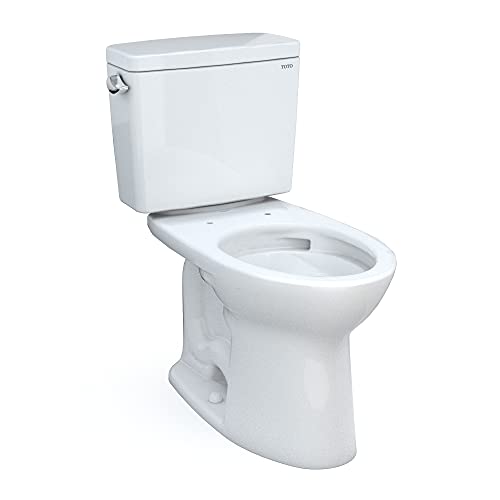
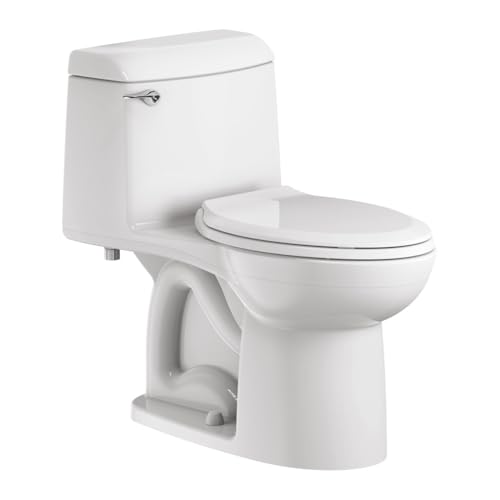
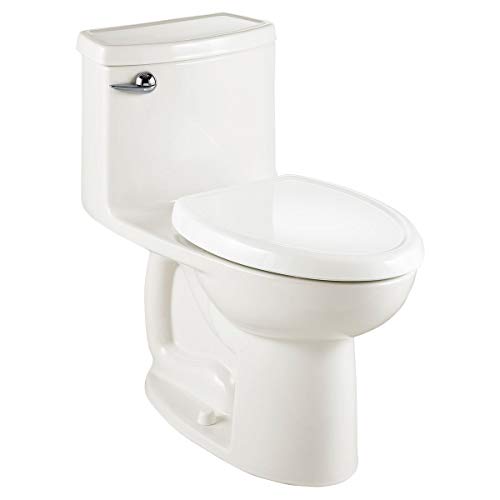

TOTO Drake Two-Piece Toilet vs Kohler Highline Two-Piece Toilet: Which Should You Buy?
Comparisons4.6
We compared the TOTO Drake and Kohler Highline two-piece toilets: both hit MaP 1000 at 1.28 GPF. See flush systems, verified specs…
Read the guideA side-by-side breakdown of hygiene, flushing performance, water efficiency, and real-world maintenance so you can choose the right design for your bathroom.
Rimless toilets are significantly easier to clean because they eliminate the hidden rim channel where bacteria, mold, and limescale accumulate. Rimmed toilets cost less upfront but demand more frequent scrubbing of concealed surfaces that a brush cannot easily reach. For long-term hygiene, rimless wins.
The toilet rim is one of those design details that most buyers never think about until they are on their hands and knees with a brush trying to scrub a dark ring they can barely see. The choice between a rimless bowl and a traditional rimmed bowl has become one of the most debated specifications in bathroom design, and for good reason: it affects how long cleaning takes every week, how effectively bacteria are flushed away, and how much water the flush uses.
This guide covers everything you need to know, including the science of rim design, flushing mechanics, hygiene data, water efficiency, top-rated models from TOTO, Kohler, American Standard, Woodbridge, Swiss Madison, and Gerber, plus a comprehensive FAQ so you can make a fully informed decision.
You can also see how these designs compare within our broader guide to the best flushing toilets on the market today.
A rimless toilet (also called an open-rim or direct-flush toilet) replaces the traditional enclosed channel that runs around the inside top of the bowl with an open ledge or a specifically engineered water-jet system. Instead of water trickling from dozens of small holes hidden beneath a rim shelf, rimless designs use one or two directed jets that swirl water forcefully across the entire inner bowl surface.
TOTO popularized this approach with its Tornado Flush technology, which uses two nozzles to generate a powerful centrifugal whirlpool. Swiss Madison and Woodbridge offer rimless or semi-rimless designs at more accessible price points. The key structural difference is that the top interior of the bowl has no enclosed cavity -- the surface is fully visible and touchable from above.
Plumbing trade publications have noted that the shift toward rimless design in European markets began in the early 2010s driven by hospital-grade hygiene standards. Studies cited by German sanitary associations found that traditional rimmed toilets can harbor fecal bacteria in rim channels even after flushing, because the enclosed area is poorly irrigated. Rimless designs reduce that hidden reservoir by eliminating the channel entirely.
A rimmed toilet (standard or traditional design) features a hollow channel that runs around the full perimeter of the bowl just below the top edge. Water enters from the tank and flows through this channel, exiting through a series of small angled holes or jets cut into the underside of the rim. The intent is to distribute water evenly around the bowl surface for a thorough rinse.
This design has been the North American standard for well over a century. The vast majority of toilets sold by Kohler, American Standard, and Gerber in the US use rimmed construction. The TOTO Drake and Drake II, among the highest MaP-rated toilets in their class, are rimmed designs. American Standard's Champion 4 and Cadet 3 are both rimmed. Kohler's Highline and Cimarron lines are rimmed.
The rimmed approach is proven, inexpensive to manufacture, and highly compatible with all standard US rough-in dimensions (10-inch, 12-inch, and 14-inch).
| Feature | Rimless | Rimmed (Traditional) |
|---|---|---|
| Cleaning ease | Easier -- all surfaces visible and reachable | Harder -- hidden channel traps bacteria |
| Hygiene (bacteria retention) | Lower bacterial load post-flush | Hidden rim can retain bacteria between cleans |
| Flushing coverage | Directed jets cover full bowl surface | Multiple rim holes distribute water widely |
| MaP score availability | Growing -- TOTO rimless models score 800-1000g | Extensive data -- TOTO Drake II scores 1000g |
| Water use (GPF) | Typically 1.0-1.28 GPF | Typically 1.28-1.6 GPF; some 1.0 GPF models |
| EPA WaterSense eligibility | Many models certified | Many models certified (1.28 GPF or less) |
| Price range | $300-$900 most common range | $120-$600 most common range |
| US market availability | Growing; strongest in TOTO, Swiss Madison, Woodbridge | Dominant; all major US brands |
| Seat compatibility | Check brand-specific fit; not always universal | Standard seats fit nearly all models |
| Long-term limescale buildup | Lower risk -- jets prevent mineral deposits in channels | Higher risk in hard-water areas -- rim holes can clog |
Winner row highlights the superior option in that category. Data based on published manufacturer specifications, MaP testing database, and EPA WaterSense certification lists as of June 2026.
Yes, by a measurable margin. The enclosed rim channel in traditional toilets is poorly irrigated during flushing, allowing fecal bacteria, mold spores, and limescale to accumulate in areas that a toilet brush cannot reach. Rimless designs eliminate that concealed space entirely, exposing all bowl surfaces to directed flush water and to the cleaning brush -- which reduces bacterial harboring points significantly.
University studies in Europe (particularly those referenced in German and Dutch sanitary engineering journals) have documented that rimmed toilet interiors, when swabbed in the hidden channel, show bacterial counts that persist between standard household cleaning cycles. Rimless bowls, with their open surfaces, allow both flush water and cleaning products to reach 100% of the ceramic surface area.
For households where hygiene is a priority -- families with young children, people who are immunocompromised, or anyone managing a high-traffic bathroom -- the rimless design offers a structural advantage that no cleaning product can replicate in a rimmed toilet.
Certified master plumbers who work on commercial and healthcare bathroom installations often specify rimless or close-coupled rimless designs in settings where infection control matters. The reasoning is straightforward: you cannot clean what you cannot see or reach. The rim channel on a traditional toilet creates exactly that problem -- a hidden surface that flush water contacts inconsistently.
In most cases, yes -- and some rimless designs actually outperform comparable rimmed models on bowl coverage because the directed jets target the full inner surface rather than relying on gravity-fed trickle through small rim holes. The TOTO Tornado Flush system, found on several rimless models, uses two strong nozzle jets to create a full-bowl centrifugal rinse that leaves minimal residue.
MaP (Maximum Performance) testing -- the independent flush-test standard that measures how many grams of solid waste a toilet clears in a single flush -- rates several rimless TOTO models at 800g to 1000g, the same top-tier range as the best rimmed toilets like the TOTO Drake II (1000g) and American Standard Champion 4 (1000g). The flushing mechanism design matters more than whether the bowl has a rim or not.
One caveat: lower-priced rimless models from lesser-known brands without MaP certification scores may use simpler jet designs that do not match the flush force of a well-engineered rimmed toilet. Always check the MaP score, not just the marketing description.
Neither design has an inherent water-use advantage -- both rimless and rimmed toilets span the full range from 1.0 GPF to 1.6 GPF depending on the specific model. The EPA WaterSense program certifies toilets at 1.28 GPF or less, regardless of rim design, and many models from both categories carry that certification. What determines water use is the tank and valve engineering, not the bowl rim design.
That said, high-efficiency rimless models like the TOTO Aquia IV (0.8/1.0 GPF dual-flush) combine a rimless bowl with dual-flush valves to achieve very low water consumption. On the rimmed side, the TOTO Drake II (1.28 GPF, WaterSense certified) and the American Standard Cadet 3 (1.28 GPF, WaterSense certified) are similarly efficient. Buyers should compare the specific GPF rating of each model they are considering, not assume the rim design determines water use.
The EPA WaterSense program reports that a WaterSense-labeled toilet uses 20% less water than the federal maximum of 1.6 GPF while meeting or exceeding flushing performance standards. Both rimless and rimmed toilets can earn this certification. The key requirement is a MaP score of at least 350g at the labeled flush volume -- most certified models from major brands score far above that minimum.
The primary downsides of rimless toilets in the US market are higher price and more limited availability compared to traditional rimmed models. Most rimless designs available to North American buyers come from a smaller pool of brands -- primarily TOTO, Swiss Madison, and Woodbridge -- which limits price competition and parts availability. Kohler and American Standard do not yet offer a wide rimless lineup in the US.
A secondary concern is splash. Some rimless designs with aggressive jet angles can direct water droplets upward and outward during flushing, which may affect nearby surfaces or users who prefer to use the toilet while flushing. This varies significantly by model and the specific nozzle geometry, so reading aggregated owner reviews for the specific model is important before purchasing.
Seat compatibility is a third consideration. While rimmed toilets accept nearly any standard US toilet seat due to consistent bowl geometry, rimless bowls sometimes require brand-specific or shape-matched seats to achieve a proper seal. Check seat compatibility specifications before purchasing an aftermarket seat.
Rimless toilets have a clear long-term advantage in areas with hard water (above 180 mg/L total dissolved solids). Hard water leaves calcium and magnesium deposits wherever water sits or flows slowly, and the small holes in a traditional rim channel are prime locations for progressive mineral blockage. Over months and years, partially blocked rim holes reduce the flush water's distribution pattern, creating spots in the bowl that receive less rinse water -- accelerating stain buildup and eventually requiring professional descaling or rim replacement.
Rimless toilets eliminate those small-bore channels entirely. The larger jet nozzles used in rimless designs are less susceptible to blockage from mineral deposits, and because all surfaces are accessible, limescale that does form on the bowl walls can be treated with descaling products more effectively. For households on well water or in regions with documented hard water, rimless design offers a meaningful maintenance advantage over the toilet's lifespan.
In hard-water markets -- particularly the American Southwest and Midwest -- plumbers frequently encounter traditional toilets whose rim jets have become significantly restricted by limescale after five to ten years of service. This restriction not only impairs cleaning coverage but also reduces flushing velocity, which can increase clogging frequency. Rimless designs sidestep this failure mode entirely because there are no small-bore channels to block.
Rimless toilets remain less common in the North American retail market than in Europe and Asia, but several well-regarded models are available through US retailers and online channels.
TOTO's Tornado Flush technology uses two concentrated nozzle jets angled to create a centrifugal whirlpool across the entire bowl surface. Several TOTO models in the Aquia and Neorest lines incorporate this system alongside a rimless or open-edge bowl design. The TOTO Aquia IV, available as a two-piece and one-piece, combines Tornado Flush with a rimless-adjacent design and a 0.8/1.0 GPF dual-flush system that qualifies for WaterSense certification. Check price on Amazon.
Swiss Madison has built a reputation for bringing European-style toilet design to the US market at competitive prices. The Concorde series uses an open-rim bowl design with a single-flush or dual-flush valve and a fully skirted trapway for a clean exterior profile. Aggregated owner reviews highlight easy cleaning as the primary advantage, with some notes on above-average splash at high flush volumes. Check price on Amazon.
The Woodbridge T-0001 is one of the most reviewed mid-range toilets in its category on US platforms, known for its one-piece skirted design and dual-flush operation. The rimless variant maintains an open bowl edge and uses a single concentrated jet sweep. Owners report that the cleaning experience is notably faster than comparable rimmed toilets, and the smooth ceramic surface resists staining. Check price on Amazon.
The best rimmed toilets on the market combine high MaP flush scores, EPA WaterSense certification, and long parts-supply chains that make repairs straightforward.
The Drake II is the benchmark by which many other toilets are judged. It earns a MaP score of 1000g -- the maximum possible -- at 1.28 GPF, and it holds EPA WaterSense certification. Its Tornado Flush system uses a wide 3-inch flush valve and a fully glazed 2-1/8-inch trapway to produce one of the most reliable flushes in the standard rimmed category. Available in 12-inch rough-in and a 10-inch rough-in variant. Check price on Amazon.
The Champion 4 earns its MaP score of 1000g through an oversized 4-inch flush valve -- significantly larger than the standard 2-inch or 3-inch valves found on most toilets. The result is a high-volume, high-velocity flush that clears waste reliably in a single flush. It uses 1.6 GPF, which does not qualify for WaterSense certification, but its clog resistance is among the highest measured in its class. Check price on Amazon.
The Cadet 3 is American Standard's efficiency-focused answer to the Champion 4, using 1.28 GPF while still achieving a MaP score of 1000g in its top configurations. WaterSense certified. The siphon-jet flushing system directs water forcefully into the trap to initiate a strong siphonic action. Its EverClean antimicrobial glaze is applied to both the bowl surface and some rim channel areas to reduce bacterial growth between cleanings. Check price on Amazon.
Kohler's Cimarron uses the AquaPiston flush engine, which Kohler describes as using 360-degree water entry into the canister valve to generate consistent flush force. Available at 1.28 GPF (WaterSense) and 1.6 GPF. The Cimarron is one of the most widely sold toilets in the US market, with extensive third-party parts availability and strong aggregated owner review scores for reliability over five-plus years of use. Check price on Amazon.
Gerber is one of the less-marketed but consistently well-reviewed American toilet brands, and the Viper earns attention for its 1.28 GPF WaterSense-certified flush and a reported MaP score of 1000g on its top-configuration model. The Viper uses a large 3-inch tower flush valve and a fully glazed 2-1/8-inch trapway. Gerber maintains consistent parts supply in North America, making this a sound long-term investment. Check price on Amazon.
The cleaning time difference between rimless and rimmed toilets may seem minor in isolation, but it accumulates significantly over a year. Consider a household that cleans the toilet twice per week:
At twice per week, that difference of 1-3 minutes per session translates to roughly 1.7 to 5 hours of cleaning time per year per toilet. For a multi-bathroom household, the difference is even more significant. More importantly, the rimless toilet's fully accessible surface means cleaning products contact the ceramic directly, rather than the cleaner partially reaching a hidden channel.
Related: how to clean a toilet properly covers cleaning techniques for both designs in detail.
Both rimless and rimmed toilets install using the same fundamental process: a wax ring seal over the floor flange, two floor bolts, and a water supply connection. The installation difficulty is identical, and either type can be installed as a DIY project by a competent homeowner following manufacturer instructions.
However, several compatibility factors are worth checking before purchase:
For a full walkthrough of toilet installation, see our toilet installation guide.
Rimmed toilets have a meaningful price advantage at the entry level. A reliable WaterSense-certified rimmed toilet with a 1000g MaP score (such as the TOTO Drake in its standard configuration or the American Standard Cadet 3) is available for $150-$350 at most major US retailers. Parts for these models are widely stocked and inexpensive.
Rimless toilets in the US market tend to start at $280-$350 for Woodbridge and Swiss Madison options, rising to $500-$900 for TOTO models with Tornado Flush technology. TOTO parts are available but are somewhat more expensive than American Standard or Kohler components.
The long-term value calculation depends on individual priorities. If cleaning time, hard-water resistance, and maximum hygiene are the priority, the premium for a rimless toilet is justified over a 10-to-15-year ownership period. If budget and parts availability are the priority, a high-MaP rimmed toilet from TOTO, American Standard, or Kohler delivers excellent value.
See also our one-piece vs two-piece toilet comparison for another key design decision that affects price and maintenance.
Yes, though the selection is smaller than in Europe. TOTO, Woodbridge, and Swiss Madison offer rimless or open-rim designs available through US retailers and Amazon. The European market has a wider variety, but US availability is growing steadily as consumer awareness of hygiene benefits increases.
Some rimless designs with strong directed jets can produce more visible splash than a traditional rimmed toilet, depending on water level and jet angle. This varies significantly by model. Reading aggregated owner reviews for the specific toilet you are considering is the best way to gauge splash behavior before purchasing.
TOTO's Tornado Flush uses two concentrated jets that create a centrifugal swirl across the bowl, but not all Tornado Flush models are fully rimless in the traditional sense. Some TOTO Tornado Flush toilets have a reduced or modified rim rather than a completely open bowl edge. Check the specific model's bowl design in the product specifications before purchasing.
Look for a MaP score of 600g or higher for reliable everyday performance. Scores of 800g-1000g indicate exceptional flushing power. The MaP testing database (map-testing.com) lists scores for individual models. Always verify the score applies to the specific model number, not just the product line, since flush performance can vary within a line.
No. The rim is a structural part of the porcelain bowl. There is no retrofit conversion available. If you want the benefits of a rimless design, you need to replace the entire toilet. This is a standard installation job that most licensed plumbers can complete in under two hours.
The internal flushing mechanism (fill valve, flush valve, flapper or tower) is separate from the bowl design and uses standard components that are widely available. Bowl design does not affect parts availability. What matters more is whether the brand you choose (TOTO, Kohler, American Standard) has a strong US parts distribution network, which all three do.
No. Many rimmed toilets hold EPA WaterSense certification. The certification requires a flush volume of 1.28 GPF or less and a MaP score of at least 350g at that volume. Bowl rim design is not a factor in WaterSense eligibility. Both rimmed and rimless toilets can and do hold this certification.
European health and sanitary regulations, particularly in Germany and the Netherlands, set stricter standards for restroom hygiene in public and commercial buildings during the 2000s and 2010s. These regulations accelerated the adoption of rimless designs. North American regulatory standards have not yet driven the same market shift, so rimmed designs remain dominant partly due to manufacturer inertia and cost factors.
American Standard's EverClean antimicrobial surface inhibits the growth of bacteria, mold, and mildew on the ceramic surface by incorporating a silver-ion compound into the glaze. It reduces microbial growth on reachable surfaces but does not address bacterial accumulation inside the inaccessible rim channel. It is a useful feature, but it does not eliminate the hygiene disadvantage of the enclosed rim design.
For commercial settings where janitorial staff clean multiple fixtures quickly, rimless toilets reduce cleaning time per unit and lower the risk of cross-contamination from poorly cleaned rim channels. Healthcare, hospitality, and food-service facilities increasingly specify rimless designs precisely for this reason. For light-traffic residential bathrooms, either design performs adequately with regular cleaning.
There is no evidence that rimless toilets clog more often than rimmed ones. Clog frequency depends primarily on trapway diameter and glazing, flush volume and velocity, and user behavior -- not whether the bowl has a rim. A rimless toilet with a large, fully glazed trapway and a high MaP score will resist clogging as effectively as any comparable rimmed model.
For tight spaces, a compact rimless one-piece toilet minimizes the number of external seams and reduces total depth. The Swiss Madison St. Tropez and Woodbridge T-0001 series offer compact one-piece rimless designs with shorter overall dimensions than standard two-piece models. Measure your rough-in distance and available floor space carefully before selecting.
Rimless toilet cleaning is simpler. Apply bowl cleaner to the interior, let it dwell for a few minutes, then scrub with a toilet brush -- the entire inner surface is reachable in a single sweep. For rimmed toilets, you need to angle the brush under the rim edge and work around the full circumference, ideally checking with a mirror or light to confirm you have reached the hidden channel areas.
Seat dimensions (round vs elongated, bolt spacing) are generally the same, but the top edge geometry of some rimless bowls may differ from standard rimmed bowls, affecting how well standard seats seal. Check the toilet manufacturer's compatibility list for the specific model before ordering a third-party seat.
The Kohler Highline uses a traditional enclosed rim design with standard rim-hole water distribution. It is not a rimless toilet. The Highline is one of the most widely sold rimmed toilets in North America, valued for its tall chair-height bowl, 1.28 GPF WaterSense-certified flush, and AquaPiston canister valve technology.
As of mid-2026, neither Kohler nor American Standard offers a dedicated rimless toilet line for the North American market. Both brands have explored open-rim designs for international markets but have not launched them in the US or Canada. For rimless designs, TOTO, Woodbridge, and Swiss Madison are the primary options available to US buyers.
Toilet rebates from municipal water utilities and state programs are based on WaterSense certification and flush volume, not bowl rim design. A rimless toilet that is WaterSense certified at 1.28 GPF or less qualifies for the same rebates as any other certified toilet. Check the EPA WaterSense rebate finder or your local water utility's website to find programs available in your area.
Both rimless and rimmed toilet bowls are vitreous china that typically lasts 20-50 years or more if not physically damaged. The internal flushing hardware (fill valve, flush valve, flapper) in both types typically needs replacement every 5-10 years. Longevity is determined by ceramic quality, hardware durability, and maintenance -- not by rim design.
No. A skirted toilet (also called a concealed or fully skirted design) refers to the exterior profile of the bowl, where the trapway and base are enclosed in a smooth ceramic skirt rather than exposed. Rim design (rimless vs rimmed) refers to the interior top edge of the bowl. A toilet can be skirted and rimmed, skirted and rimless, or unskirted with either rim design -- they are separate design dimensions.
Rimless toilets are the superior choice for long-term hygiene, cleaning ease, and hard-water resistance. If minimizing cleaning time and bacterial harboring is your priority, invest in a TOTO Tornado Flush model or a Woodbridge rimless design with a verified MaP score. If budget is the primary constraint or you prefer broad parts availability, a high-MaP rimmed toilet from TOTO (Drake II), American Standard (Cadet 3 or Champion 4), Kohler (Cimarron), or Gerber (Viper) delivers excellent and well-documented performance at a lower cost. Both designs can earn EPA WaterSense certification and top MaP scores -- the rim design is one important factor among several, not the only one that matters.
We compared the TOTO Drake and Kohler Highline two-piece toilets: both hit MaP 1000 at 1.28 GPF. See flush systems, verified specs…
Read the guideHome / Comparisons / TOTO Drake vs TOTO Drake II TOTO Drake Two-Piece Toilet vs TOTO Drake II Two-Piece Toilet: Which Should…
Read the guideA data-driven look at resale impact, long-term availability, and which color choice makes more sense for your bathroom and your budget.
Read the guide