TOTO Drake Two-Piece Toilet vs Kohler Highline Two-Piece Toilet: Which Should You Buy?
Comparisons4.6
We compared the TOTO Drake and Kohler Highline two-piece toilets: both hit MaP 1000 at 1.28 GPF. See flush systems, verified specs…
Read the guideA fact-based comparison of gravity-fed best flushing toilets versus pressure assist toilets, covering flush power, MaP scores, water efficiency, noise, maintenance, and real-world owner satisfaction to help you choose the right toilet for your home.
Best flushing toilets (gravity-fed) use a large trapway and optimized bowl design to clear waste with 1.28 GPF quietly and reliably, ideal for homes. Pressure assist toilets use compressed air to blast water at high velocity, achieving higher MaP scores (1,000g+) but with louder operation and higher maintenance, better suited for commercial or high-traffic settings.
The fundamental difference lies in the flush mechanism. A gravity-fed toilet, like the TOTO Drake II or American Standard Champion 4, uses the natural weight of water falling from the tank into the bowl. The water fills the trapway, creating a siphon that pulls waste out. These toilets typically use 1.28 gallons per flush (GPF) and achieve MaP scores of 800g to 1,000g. They are quiet, simple, and require little maintenance beyond occasional cleaning.
Pressure assist toilets, such as the Kohler Highline Pressure Lite or Gerber Viper, contain a plastic pressure vessel inside the tank. Air is compressed as the tank fills, and when flushed, the compressed air expels water at a much higher velocity. This results in MaP scores of 1,000g or more, making them extremely clog-resistant. However, the flush is noticeably loud, often described as a loud whoosh or bang. The pressure vessel also has more parts that can fail, requiring service or replacement every 5-10 years.
For residential bathrooms where noise is a concern, a gravity-fed best flushing toilet is almost always the better choice. Pressure assist toilets are best for basements, commercial restrooms, or homes with frequent high-volume use where clog resistance outweighs noise considerations.
MaP (Maximum Performance) testing is the industry standard for measuring toilet flush power. A score of 500g is considered the minimum for residential use, but most modern toilets exceed this. Pressure assist toilets typically score in the 1,000g range, with some models clearing 1,200g. Gravity-fed best flushing toilets from brands like TOTO, Kohler, and American Standard also perform exceptionally well, with many models scoring 800g to 1,000g.
In practical terms, a MaP score of 800g is enough for a family of four. A score of 1,000g provides a safety margin for larger waste or heavy use. Pressure assist toilets have a slight edge in raw power, but the difference is rarely noticeable in daily use unless you frequently flush large amounts of waste or use thick, water-absorbent toilet paper.
| Model | MaP Score | GPF | Flush Type | Trapway | Height | Best For | Check Price |
|---|---|---|---|---|---|---|---|
| TOTO Drake II | 1,000g | 1.28 | Gravity (Tornado Flush) | 2-1/8 in. glazed | 16-1/8 in. (ADA) | Best overall residential | Check price |
| American Standard Champion 4 | 1,000g | 1.28 | Gravity (PowerWash) | 2-3/8 in. glazed | 16-1/2 in. (ADA) | Best value residential | Check price |
| Kohler Highline Pressure Lite | 1,000g+ | 1.28 | Pressure assist | 2 in. glazed | 16-1/2 in. (ADA) | Best for high-traffic | Check price |
| Gerber Viper | 1,000g+ | 1.28 | Pressure assist | 2 in. glazed | 16-1/2 in. (ADA) | Best commercial value | Check price |
| Woodbridge T-0001 | 800g | 1.28 | Gravity (dual flush) | 2-1/8 in. glazed | 16-1/2 in. (ADA) | Best dual flush | Check price |
Noise is one of the most common complaints from pressure assist toilet owners. The flush sound is often compared to a commercial airplane toilet or a loud air compressor. In a residential bathroom, this can be disruptive, especially at night or in bathrooms near bedrooms. Some owners report that the noise diminishes slightly over time, but it never becomes whisper-quiet.
Gravity-fed best flushing toilets, particularly those with a TOTO Tornado Flush or American Standard PowerWash rim, are designed for quiet operation. The water flows smoothly and the siphon action is quiet. Many owners say they can barely hear the flush from the next room. If noise is a priority, choose a gravity-fed toilet with a large, glazed trapway and a tall tank for optimal water pressure.
If you have a master bathroom or a powder room near a living area, avoid pressure assist toilets. The noise is a deal-breaker for many homeowners. Stick with a gravity-fed model from TOTO or American Standard for a quiet, powerful flush.
EPA WaterSense certification requires toilets to use no more than 1.28 GPF and pass a MaP test of at least 350g. Most best flushing toilets and pressure assist toilets exceed this standard. The TOTO Drake II, American Standard Champion 4, and Kohler Highline Pressure Lite all use 1.28 GPF and are WaterSense certified.
Pressure assist toilets are sometimes marketed as using less water per flush because the compressed air does some of the work. However, the difference is minimal. Both types save water compared to older 1.6 GPF or 3.5 GPF toilets. The environmental impact is similar, but gravity-fed toilets have fewer parts to fail, reducing waste from replacements. Pressure assist vessels eventually need replacement, adding to landfill waste.
Gravity-fed toilets are the standard for low maintenance. The most common issues are a worn flapper or a stuck fill valve, both of which cost under $20 and take 10 minutes to replace. The large trapway in models like the American Standard Champion 4 is less prone to clogging, and the glazed surface resists staining.
Pressure assist toilets have a plastic pressure vessel inside the tank. Over time, the air charge can leak, causing the flush to lose power. Recharging the vessel requires a special tool or professional service. The vessel itself may need replacement every 5-10 years, costing $100-$200 plus labor. The flush valve and air inducer are also more complex. For a low-maintenance home toilet, gravity-fed is the clear winner.
For a rental property or a home where you want to avoid service calls, choose a gravity-fed toilet. Pressure assist toilets are better for commercial settings where maintenance staff can handle the specialized repairs.
The best overall gravity-fed toilet with a proven 1,000g MaP score and the quiet, powerful Tornado Flush system.
The TOTO Drake II is the benchmark for residential toilets. It uses the Tornado Flush system, which releases water from two jets to create a powerful centrifugal rinse. Owner reviews consistently praise its ability to clear a full bowl in one flush without noise. The 2-1/8 inch fully glazed trapway is one of the largest in the industry, reducing clog risk. It is also available in a 1.0 GPF version for maximum water savings, though the 1.28 GPF is recommended for most homes.
Many owners report years of trouble-free use with no clogs or maintenance issues. The comfort height (ADA compliant) is suitable for most adults. The limited lifetime warranty adds peace of mind. For a quiet, powerful, and reliable toilet, the TOTO Drake II is the top choice.
The TOTO Drake II is the best gravity-fed toilet for most homes. Its combination of flush power, quiet operation, and reliability is unmatched. Choose this if you want the best all-around performer.
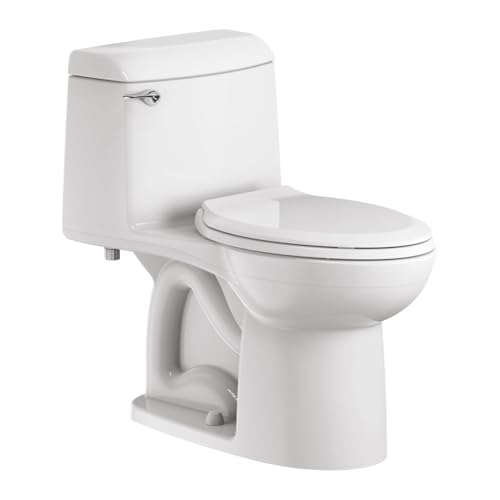
An excellent value gravity-fed toilet with a 1,000g MaP score and a massive 2-3/8 inch trapway.
The American Standard Champion 4 is famous for its oversized 2-3/8 inch trapway, which is the largest among gravity-fed toilets. This makes it extremely resistant to clogs. The PowerWash rim uses a series of jets to clean the bowl thoroughly. Owner reviews often mention that this toilet rarely clogs, even with heavy use. It is also one of the most affordable toilets with a 1,000g MaP score.
Some owners note that the flush is slightly louder than the TOTO Drake II, but still much quieter than a pressure assist toilet. The bowl surface can require more frequent cleaning to prevent stains. Overall, the Champion 4 offers outstanding value for a high-performance gravity-fed toilet.
The American Standard Champion 4 is the best value gravity-fed toilet. If you want a clog-resistant toilet on a budget, this is the one to get.

A top pressure assist toilet with a 1,000g+ MaP score, ideal for high-traffic or commercial settings.
The Kohler Highline Pressure Lite is a popular pressure assist toilet for commercial and high-traffic residential applications. It uses a FLUSHMATE pressure vessel to deliver a powerful, clog-resistant flush. Owner reviews in commercial settings report very few clogs, even with heavy use. The 1.28 GPF is water efficient.
The main downside is the noise. Many owners describe the flush as startlingly loud. The pressure vessel also has a shorter warranty than the china bowl, and replacement vessels can be costly. For a home bathroom, the noise is a significant drawback. However, for a basement bathroom or a rental property where durability is key, it can be a good choice.
The Kohler Highline Pressure Lite is a good choice for commercial settings or high-traffic areas where flush power is the top priority. For a quiet home bathroom, choose a gravity-fed model.

A dual flush gravity-fed toilet with a good MaP score and a modern, elongated design.
The Woodbridge T-0001 is a dual flush toilet that uses 0.8 GPF for liquid waste and 1.28 GPF for solid waste. It has a MaP score of 800g, which is sufficient for most households. The design is modern and the toilet is relatively quiet. Owner reviews generally praise its water savings and appearance.
Some owners report occasional flapper issues that can cause the toilet to run. The MaP score of 800g is lower than the TOTO or American Standard, meaning it may clog more easily with heavy use. For a guest bathroom or a low-traffic home, it is a solid choice.
The Woodbridge T-0001 is a good dual flush option for water-conscious homeowners, but the TOTO Drake II or American Standard Champion 4 offer better flush power for similar money.
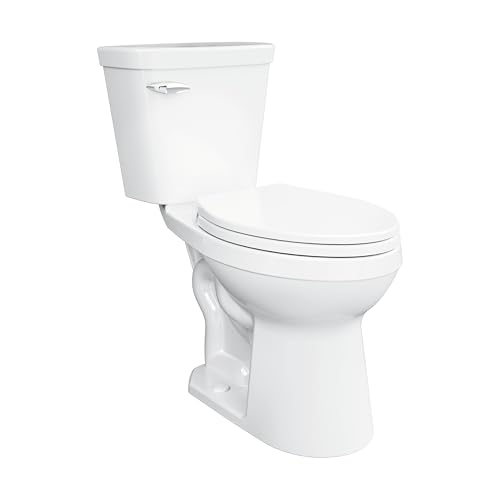
A commercial-grade pressure assist toilet with a 1,000g+ MaP score, built for durability and heavy use.
The Gerber Viper is a workhorse pressure assist toilet commonly found in commercial buildings. It uses a FLUSHMATE vessel to deliver a powerful flush that rarely clogs. Owner reviews in commercial settings are positive, with many noting its durability and low maintenance in high-traffic bathrooms.
The flush is very loud, making it unsuitable for quiet residential bathrooms. The design is utilitarian, with a basic round or elongated bowl. For a home, the noise and maintenance requirements are significant drawbacks. However, for a basement bathroom or a workshop, it can be a good choice.
The Gerber Viper is a solid commercial-grade pressure assist toilet, but its noise and maintenance make it a poor choice for most homes.

A modern dual flush gravity-fed toilet with a sleek one-piece design and good water efficiency.
The Swiss Madison St. Tropez is a one-piece dual flush toilet that offers a modern look and water savings. It uses 0.8 GPF for liquid and 1.28 GPF for solid waste. Owner reviews often mention its attractive design and quiet flush. The MaP score of 800g is adequate for most homes.
Some owners report occasional incomplete flushes, especially with solid waste. The trapway is 2 inches, which is smaller than the TOTO or American Standard models, potentially leading to more clogs. For a guest bathroom or a low-traffic home, it is a good option, but not as reliable as the top picks.
The Swiss Madison St. Tropez is a stylish dual flush toilet, but its flush power is not as reliable as the TOTO Drake II or American Standard Champion 4.
For most homes, no. They are louder and require more maintenance than gravity-fed toilets. They are best for commercial settings or high-traffic areas where clog resistance is critical.
Both types typically use 1.28 GPF and are WaterSense certified. The water savings are similar. Pressure assist toilets use compressed air to enhance flush power, not to reduce water volume.
Gravity-fed toilets are much quieter. Pressure assist toilets produce a loud whoosh or bang when flushed, which can be disruptive in a quiet home.
No. Pressure assist toilets require a special sealed tank and pressure vessel. You cannot convert a standard gravity toilet to pressure assist.
Yes, they generally clog less because the high-velocity water clears the bowl more aggressively. However, top gravity-fed toilets like the TOTO Drake II and American Standard Champion 4 also have very low clog rates.
Most pressure assist toilets achieve MaP scores of 1,000g or more. Some models can clear 1,200g or higher.
The TOTO Drake II is widely considered the best gravity-fed toilet due to its 1,000g MaP score, quiet Tornado Flush, and large glazed trapway.
They require a standard 12-inch rough-in and a water supply line. The pressure vessel is pre-charged and does not need electrical connections. Installation is similar to a gravity toilet.
The china bowl can last for decades, but the pressure vessel typically needs replacement every 5-10 years. The vessel warranty is often shorter than the china warranty.
They are generally more expensive upfront, often $100-$200 more than comparable gravity-fed models. Replacement parts also cost more.
Yes, but be prepared for the noise. They are best for basements, garages, or high-traffic homes where noise is less of a concern.
The Kohler Highline Pressure Lite is a popular choice for residential use, but the noise is a common complaint.
Most pressure assist toilets are single flush. Dual flush is more common in gravity-fed toilets.
Gravity-fed toilets are better for rental properties because they are simpler, quieter, and require less maintenance. Pressure assist toilets may be considered for high-traffic rentals like dormitories.
For the vast majority of homeowners, a gravity-fed best flushing toilet is the better choice. Models like the TOTO Drake II and American Standard Champion 4 offer powerful, quiet, and reliable flushes with minimal maintenance. Pressure assist toilets are louder, require more maintenance, and are best reserved for commercial or high-traffic settings where maximum clog resistance is essential. Choose a gravity-fed toilet for a quiet, efficient, and low-maintenance bathroom.