

How Often Should You Clean a Toilet?
Cleaning & Maintenance4.6
Clean a toilet fully once a week, wipe the handle and seat with a disinfecting cloth two to three times between weekly…
Read the guideToilet odors come from four distinct sources: organic waste residue in the bowl and trap, bacterial biofilm growing under the rim and in the tank, wax ring or seal failure that lets sewer gas into the room, and dry or cracked P-traps. Each source needs a different fix. Spraying an air freshener over the bowl treats a symptom while the cause compounds. This guide covers every proven deodorizing method, explains the chemistry behind each, gives step-by-step instructions for natural and chemical approaches, and addresses the underlying toilet and plumbing issues that no spray can solve. It also tells you when persistent odor means a toilet replacement is the right answer, and which current TOTO, Kohler, American Standard and Woodbridge models are built to stay fresher longer between cleans.
For most toilet odors, the fastest effective fix is a baking soda and white vinegar treatment under the rim plus an enzyme-based tank tablet: pour one cup of baking soda into the bowl, add two cups of distilled white vinegar, let it fizz for 20 minutes, scrub under the rim with a quality brush and flush. For odors that return within a day, the source is bacterial biofilm in the tank or sewer gas from a failing wax ring, not the bowl itself.
Toilet odor is one of the most common bathroom complaints, but it is almost always solvable with the right diagnosis. The bowl is the obvious suspect, but in a large number of cases the actual odor source is somewhere else: the tank interior coated in a dark bacterial film, biofilm growing under and behind the rim jets where no brush reaches, a dried wax ring that passes sewer gas at the base, or a P-trap that has run dry in a rarely used bathroom. Treating only the bowl when the tank is the source, or air-freshening over a sewer-gas problem, produces temporary results at best and can mask a plumbing issue that worsens over time.
This guide moves through each odor source in diagnostic order, starting with the quickest fixes and working toward the ones that require a plumber. It covers natural methods (baking soda, white vinegar, citric acid, essential oils, enzyme cleaners) and commercial chemical methods (bleach-based bowl cleaners, chlorine tank tablets, commercial biofilm treatments) with honest trade-offs for each. It also covers the toilet features, from glazing to flush power, that directly affect how fast odor-causing bacteria and residue accumulate between cleans. For a complete look at which current models are easiest to keep clean overall, the pillar guide to the best flushing toilets covers MaP scores and surface technologies side by side.
The four main sources of persistent toilet odor are: organic waste residue and bacterial biofilm in the bowl (strongest after use, improves with cleaning), bacterial film inside the tank (musty or mildew smell that persists regardless of bowl cleanliness), failing wax ring or cracked floor seal allowing sewer gas in (sulfur or rotten-egg smell at the base), and a dry P-trap in a rarely used toilet (sulfur smell that disappears after flushing and running water). Identifying which source is present determines which fix works.
Each odor source has a distinct profile that helps with diagnosis before any cleaning product is applied.
This is the most common case. The rim of a standard toilet has a row of small water jets (rim holes) that distribute flush water around the bowl. Over time, mineral deposits from hard water and organic matter create a biofilm inside those jets and on the ceramic just above the waterline. Because a standard toilet brush cannot reach inside the rim holes, this biofilm builds in a zone that is never contacted by cleaning products unless they are specifically applied there. The smell from rim biofilm is distinctly organic and stale, strongest immediately after a flush when the contaminated water passes through the jets. It does not smell like sulfur.
Lift the tank lid and look inside. A clean tank has near-clear water and light-colored porcelain walls. A tank with an odor problem typically has dark brown, green or black film coating the walls and components. Every time the toilet flushes, the tank empties and refills, and that contaminated water passes through the rim jets and into the bowl. If the tank is the source, scrubbing the bowl does not eliminate the odor because fresh contaminated water enters the bowl with every flush. Tank odor is often described as musty, mildew-like, or faintly sewage-like, distinct from the pure sulfur of sewer gas.
A toilet is connected to the drain pipe by a wax ring that creates an airtight seal. When that ring is damaged, dried out, improperly seated, or cracked, it allows sewer gas to pass from the drain pipe into the room around the base of the toilet. Sewer gas is primarily methane and hydrogen sulfide, and hydrogen sulfide has the characteristic rotten-egg or sulfur smell. The key diagnostic sign is that the odor persists regardless of how clean the bowl or tank is, tends to be stronger near the floor around the toilet base, and does not change meaningfully after flushing. If you can rock the toilet slightly when pushing it side to side, the seal is almost certainly compromised. This is a plumbing repair, not a cleaning task.
Every toilet trap holds a standing volume of water that acts as a physical barrier blocking sewer gas from rising up through the drain. In a guest bathroom or vacation home used infrequently, the water in the trap evaporates over several weeks and that barrier disappears. The fix is simple: pour a gallon of water into the bowl to refill the trap, and the odor stops within a few minutes. If the trap dries again quickly in a normally used toilet, the fill valve or flapper may be allowing the bowl water level to drop between uses, or the trap is cracked.
| Odor Source | Smell Profile | Diagnostic Sign | Fix |
|---|---|---|---|
| Bowl biofilm and residue | Organic, stale, strongest after use | Improves after bowl clean | Bowl cleaner + under-rim treatment |
| Tank bacterial film | Musty or mildew-like | Persists after bowl clean; tank walls dark | Tank scrub + enzyme or bleach tablet |
| Failing wax ring / base seal | Sulfur or rotten egg | Strong near base; toilet rocks slightly | Plumber to reseat or replace wax ring |
| Dry P-trap | Sulfur, disappears after flush | Rarely used bathroom, bowl water low | Pour 1 gallon of water into bowl |
| Cracked bowl or hairline trap fracture | Persistent organic or sulfur odor | Visible staining at base, odor does not clear | Toilet replacement |
The most effective natural deodorizing method is a baking soda and white vinegar treatment combined with a thorough under-rim scrub. Baking soda (sodium bicarbonate) neutralizes acidic odor compounds directly, while white vinegar (5% acetic acid) dissolves the mineral and organic film that harbors odor-causing bacteria. Together they reach a pH range that disrupts bacterial cell membranes without the toxicity concerns of chlorine bleach. This combination is not as bactericidal as bleach but is sufficient for regular deodorizing maintenance in a household toilet.
This is the most widely documented natural deodorizing method and works well for routine maintenance, particularly for households avoiding bleach. It does not substitute for a dedicated disinfecting clean during illness or for removing heavy mineral scale.
For the best results from the under-rim step, you need a brush with an angled or curved head that can reach the jets. Our guide to the best toilet brushes of 2026 covers which designs reach the full rim circumference.
The baking soda and vinegar method is effective for regular deodorizing but it is not a disinfectant in the clinical sense. The acidity at diluted concentrations kills some bacteria but does not achieve the log-reduction kill rates that EPA-registered disinfectants do. Use it for weekly odor maintenance. During illness, use a bleach-based bowl cleaner that stays wet on the surface for the dwell time specified on the label. Do not combine the two in the same session: residual bleach and vinegar produce chlorine vapor in an enclosed space.
The three most effective chemical methods for toilet deodorizing are: bleach-based clinging bowl gels applied under the rim with adequate dwell time (kills bacteria and whitens organic stains), enzyme-based cleaners that break down the organic compounds feeding odor-causing bacteria without bleach, and chlorine-based in-tank tablets that deliver a low concentration of disinfectant with every flush. Each method targets a different part of the toilet or a different type of odor compound, and they are most effective when matched to the specific source of the odor.
Products like Clorox Toilet Bowl Cleaner with Bleach use a thickened formula (typically hydroxyethylcellulose or a similar gelling agent) that clings to the porcelain surface rather than diluting immediately in the bowl water. This extended contact time is what makes clinging gels more effective than pouring straight bleach into the bowl. The active ingredient, sodium hypochlorite at 2 to 5%, kills the bacteria responsible for organic odor and whitens the yellow and brown stains that contribute to perceived odor.
Application: squeeze the gel under the rim so it drips down the bowl walls, let it dwell for at least 5 minutes (10 minutes for heavier odor), scrub the full bowl including under the rim, and flush. Do not use inside the tank, as hypochlorite at these concentrations degrades rubber flapper seals and can damage internal components. For tank treatment, use chlorine tablet products specifically designed for that purpose.
Enzyme cleaners use specific enzyme classes, protease (breaks down protein), lipase (breaks down fat and grease), and amylase (breaks down starch and carbohydrate residue), to digest the organic material that odor-causing bacteria feed on. Unlike bleach, enzyme cleaners work by eliminating the food source rather than killing the bacteria directly. They are particularly effective at treating the organic film that forms under the rim and in the drain outlet because enzymes can penetrate biofilm layers that bleach cannot always reach with limited dwell time.
Products in this category include Bio-Clean, Zep Enzyme Toilet Bowl Cleaner, and CLR Bath and Kitchen Cleaner (enzyme variant). Apply under the rim, allow a 15 to 30 minute dwell time, and flush. Enzyme cleaners are safe for septic systems and do not degrade rubber flappers or tank components. They are also the correct treatment for a toilet with a partial drain clog contributing to slow clearing and residual odor, since enzymatic drain treatments can be poured directly into the bowl.
Chlorine-based in-tank tablets, placed inside the tank (never in the bowl), slowly release chlorine as water flows over them with each flush, delivering a dilute bactericidal dose to the bowl with every use. They are effective at reducing bowl odor between manual cleans and at suppressing the bacterial film on the inside of the tank itself. The limitation is concentration: the dilution in the tank water is low enough to clean but not strong enough to remove established biofilm on the tank walls without physical scrubbing. As a maintenance product between thorough cleans, tank tablets are one of the most convenient odor-control tools available.
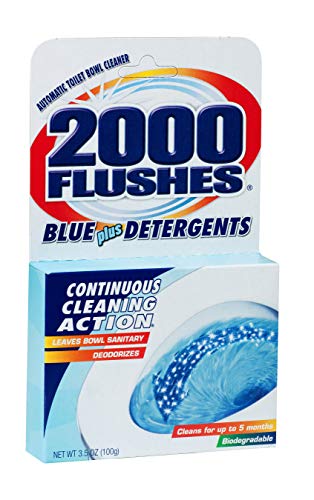
Important: use only tablets specifically designed for in-tank use. Products that combine bleach with blue dye (2000 Flushes, Kaboom Scrub Free) are formulated at concentrations that are safe for rubber and plastic tank components when used as directed. Do not place standard dish detergent pucks or solid air freshener tabs in the tank as substitutes. Chlorine bleach in the tank at household concentrations shortens the life of rubber flappers; tablet formulas are buffered to reduce this effect.
| Method | Best For | Kills Bacteria? | Safe for Septic? | Tank Safe? | Dwell Time |
|---|---|---|---|---|---|
| Baking soda + white vinegar | Routine maintenance, no-bleach households | Partially | Yes | Yes | 15 to 20 min |
| Bleach clinging gel | Disinfecting clean, organic stain removal | Yes | Use sparingly | No | 5 to 10 min |
| Enzyme cleaner | Biofilm, drain residue, septic homes | Indirectly | Yes | Yes | 15 to 30 min |
| In-tank chlorine tablet | Between-clean maintenance | Yes (dilute) | Use sparingly | Yes (tablet form) | Continuous |
| Citric acid powder | Mineral scale and hard-water odor | Partially | Yes | Yes | 30 to 60 min |
| Borax paste | Stubborn rim stains and odor | Partially | Use sparingly | No | 30 to 60 min |
To deodorize a toilet tank, remove the tank lid, pour one cup of distilled white vinegar into the tank water, let it sit for 30 to 60 minutes without flushing, then flush to rinse. For visible dark biofilm on the tank walls, turn off the water supply valve, flush to empty the tank, scrub the walls and components with a long-handled brush and a dilute bleach solution (1/4 cup bleach per gallon of water), flush multiple times to rinse fully, then turn the water back on. Add an in-tank chlorine tablet to maintain cleanliness between manual scrubs.
This procedure addresses the tank specifically, which is the overlooked odor source in a large proportion of "persistent toilet smell" complaints. Run this process every two to three months as preventive maintenance, or whenever the inside of the tank has visible discoloration on the walls or components.
Note: never use full-strength undiluted bleach poured directly into the tank. The rubber flapper seal is the most bleach-sensitive component. Even buffered chlorine tablets can shorten flapper life over time; check the flapper every 12 months for brittleness or warping if you use tank tablets regularly.
Yes, baking soda (sodium bicarbonate) is an effective odor neutralizer for toilet odors because many organic odor compounds, including volatile short-chain fatty acids from waste, are acidic. Sodium bicarbonate reacts with these acids in a neutralization reaction that converts them into carbon dioxide, water and sodium salts, which are odorless. It does not kill bacteria or dissolve biofilm as effectively as bleach or enzyme cleaners, but for routine deodorizing between weekly cleans it is a reliable and non-toxic option.
Baking soda's effectiveness as a toilet deodorizer is chemical rather than physical. When an acidic odor molecule contacts sodium bicarbonate in solution, a neutralization reaction occurs: the odor compound loses its volatile acid structure and becomes inert. This is distinct from how air fresheners work: air fresheners either mask odor with a stronger fragrance or, in the case of products like Febreze, use cyclodextrin molecules to encapsulate and trap volatile odor compounds. Neither of those mechanisms eliminates the source. Baking soda actually changes the odor molecules.
The practical limitation is that baking soda has no meaningful effect on odors from alkaline compounds (some ammonia-based odors resist neutralization by baking soda) and does not kill bacteria or digest biofilm. For a toilet that smells primarily from a bacterial film in the bowl or tank, baking soda reduces but does not eliminate the odor. Combining baking soda with white vinegar, or following a baking soda application with an enzyme cleaner, addresses the biofilm problem that baking soda alone does not.
Add one to two tablespoons of baking soda to the toilet bowl and let it dissolve without flushing. Leave it in the bowl for several hours or overnight. The baking soda in the standing water neutralizes odor compounds that form in the bowl water between flushes. This is particularly useful for households with older toilets that flush completely but have uncoated porcelain with a higher surface roughness that retains more organic particles between scrubs. It can be done nightly without any risk to the toilet or plumbing.
Eliminating sewer odor from a toilet requires identifying whether the source is a dry P-trap, a failed wax ring seal, or a crack in the bowl or drain connection. A dry trap (common in guest bathrooms) is fixed by pouring water into the bowl to restore the water barrier. A failed wax ring requires toilet removal and a new ring, which is a plumbing repair. A cracked bowl that allows sewer gas to escape is grounds for toilet replacement. No bowl cleaner, air freshener, or deodorizing tablet resolves sewer gas from a failed mechanical seal.
Sewer gas is produced by the anaerobic decomposition of waste in the drain system below the toilet. Under normal conditions, the water sealed in the P-trap prevents any of that gas from rising into the bathroom. When the seal fails for any of the reasons above, the gas, which contains hydrogen sulfide, methane, carbon dioxide and ammonia in various concentrations, enters the room continuously. The smell is unmistakably different from bowl odor: it is the distinct sulfur or rotten-egg smell rather than the organic smell of waste residue.
Wax ring failure (requires plumber or experienced DIY): If the toilet rocks when pushed side to side, or if there is soft discoloration or staining on the floor around the toilet base, the wax ring seal has failed. The repair involves shutting off the water, flushing and removing tank and bowl water, disconnecting the water supply line, unbolting the toilet from the floor, removing the old wax ring, inspecting the drain flange, installing a new wax ring, and reseating the toilet. This is a two-hour job for an experienced DIY plumber or a routine 45-minute call for a licensed plumber. It cannot be patched from above without removing the toilet.
Cracked bowl or hairline trap fracture: A hairline crack in the porcelain trap section of the bowl (the S-curve at the base of the bowl) allows sewer gas to bypass the water seal in the trap. These cracks are often invisible to the eye until you run your hand along the outside of the trap at the base. A consistently low water level in the bowl between uses, or a bowl that never fully holds water at the normal fill line, is diagnostic. There is no repair for a cracked porcelain trap: the toilet must be replaced. See our guide to the best flushing toilets for current model recommendations across all budgets and configurations.
Essential oils are not deodorizers in the chemical sense; they are fragrance agents that mask or displace existing odors. Certain essential oils, particularly tea tree (melaleuca alternifolia), thyme, and eucalyptus, contain compounds, primarily terpenes like terpinen-4-ol in tea tree oil, that have demonstrated antimicrobial activity in laboratory conditions. However, the concentrations typically used in home applications are far below those tested in antimicrobial studies, and the contact time in a toilet bowl is insufficient for meaningful bactericidal action.
That said, essential oils used in conjunction with a proper cleaning routine serve a useful function: they leave a pleasant scent that indicates cleanliness and can suppress mild residual odor between scrubs. The most effective toilet application is not adding essential oils to the bowl water but applying them to the underside of the toilet lid or to a wool dryer ball placed inside the tank lid.
Under-lid application: Apply 4 to 5 drops of tea tree or eucalyptus oil to a cotton ball or pad and place it under the toilet tank lid, resting on top of the internal tank walls. The lid traps the fragrance and releases it gradually. Replace every one to two weeks. This method does not contact the water or any mechanical components.
DIY toilet bomb: Mix 1 cup baking soda, 1/4 cup citric acid, 20 to 30 drops of essential oil (tea tree, lavender or peppermint work well), and 2 tablespoons of cornstarch into a powder. Lightly mist with water while mixing to allow clumping, then pack into silicone molds and dry for 24 to 48 hours. Drop one tablet into the bowl, let it fizz for 10 to 15 minutes, then scrub and flush. The citric acid dissolves mineral film, the baking soda neutralizes organic odors, and the essential oil leaves a residual scent.
White vinegar spray on exterior surfaces: For the toilet seat, lid, tank exterior and base, undiluted white vinegar in a spray bottle is an effective deodorizer for the exterior surfaces where body odor, moisture and aerosol bacteria accumulate. Spray, let sit two minutes, and wipe dry. The vinegar smell dissipates completely within 20 to 30 minutes and takes the underlying odor with it.
Citric acid for mineral-driven odor: If the primary odor is the stale mineral smell from hard-water scale (a dry, dusty, alkaline smell rather than organic), citric acid dissolves the calcium carbonate deposits that harbor it. Mix two to three tablespoons of citric acid powder into a cup of warm water, apply to the bowl and under the rim, dwell for 30 to 60 minutes, scrub and flush. Citric acid is food-grade, completely septic-safe, and will not damage toilet components. Our guide to the best bathroom cleaners of 2026 includes citric acid products alongside conventional options.
Reactive deodorizing is less efficient than preventing the buildup that creates odor. Several toilet features and user habits have a direct and measurable impact on how quickly a toilet accumulates the organic residue, bacterial biofilm and mineral film that cause odor between cleans.
A toilet flush creates an aerosol (sometimes called "toilet plume") of water droplets that can carry bacteria and organic particles. Research published in microbiology journals has documented that flush aerosols deposit detectable levels of bacteria on surrounding surfaces including the toilet lid, the seat underside, and nearby countertops. Closing the lid before flushing significantly reduces the surface area that receives this aerosol, which reduces the bacterial load on the seat and lid surfaces that would otherwise contribute to persistent bathroom odor. This is the single highest-leverage habit change for reducing between-clean odor in a standard bathroom.
A bathroom exhaust fan rated at 1 CFM (cubic feet per minute) per square foot of bathroom floor space, run for at least 15 to 20 minutes after use, removes humidity that bacterial film needs to grow and dilutes the volatile odor compounds that are released during and after toilet use. A bathroom with no working exhaust fan accumulates moisture-driven bacterial growth on every surface, including the toilet exterior, seat hinges and base, at a rate that is impossible to control with cleaning frequency alone. An undersized or failing exhaust fan is a root cause of chronic bathroom odor in a large number of cases. For broader bathroom deodorizing, our picks for the best bathroom cleaners include options that work alongside proper ventilation.
Toilet models from TOTO, Kohler and American Standard differ significantly in how fast they accumulate the biofilm that produces odor between cleans.
TOTO's CeFiONtect glaze, available on the TOTO Drake, Drake II, UltraMax II, Aquia IV and Vespin II, is an ion-barrier glaze applied at the factory that creates an extremely low-porosity surface. Bacteria and organic particles find fewer microscopic surface irregularities to adhere to, and water sheets off more completely with each flush. Owner reviews for CeFiONtect-equipped models consistently report that the bowl looks visibly cleaner between scrubs and develops odor-causing film more slowly than comparable non-coated models. The Kohler Cimarron and Kohler Santa Rosa offer DryLock surface technology with similar benefits. American Standard's Champion 4 and Cadet 3 include EverClean surface treatment, which uses an antimicrobial additive in the glaze to inhibit stain and odor-causing bacteria.
The Woodbridge T-0001 and T-0019 dual-flush models use standard vitreous china without a proprietary antimicrobial coating, but their skirted trapway design eliminates the exposed exterior crevices at the base of conventional toilets where dust, moisture and bacteria accumulate and contribute to bathroom odor. The Swiss Madison St. Tropez similarly benefits from a concealed trapway that reduces exterior surfaces requiring cleaning.
A toilet that achieves a 1000-gram MaP (Maximum Performance) score in independent flush testing clears the bowl completely in a single flush and leaves minimal organic residue on the bowl walls between flushes. Every gram of residue left in the bowl after an incomplete flush is a substrate for odor-causing bacteria. The American Standard Champion 4 and Gerber Viper both achieve 1000 g MaP scores. The TOTO Drake in its standard configuration achieves 1000 g. The TOTO Aquia IV in dual-flush mode scores 600 g on the low-volume 0.8 GPF flush, which is designed for liquid waste; using the full-flush 1.28 GPF cycle for solid waste maintains adequate bowl clearance. A toilet consistently scoring below 400 g MaP will produce chronic mild odor from bowl residue no matter how frequently it is cleaned, because bacterial activity on the remaining residue outpaces any reasonable cleaning schedule.
If you are dealing with persistent toilet odor despite weekly cleaning and are planning any bathroom update in the next few years, the combination of a TOTO Drake with CeFiONtect and a quality in-tank enzyme tablet resolves the majority of between-clean odor complaints permanently. The 1000 g MaP flush removes virtually all bowl residue in a single pass, the CeFiONtect glaze prevents bacterial adhesion, and the enzyme tablet suppresses the tank biofilm that causes odor on the refill. That combination genuinely changes the maintenance experience, not just the result of individual cleaning sessions.
The picks below represent the most effective products in each deodorizing category based on published active ingredient data, EPA registration status, and aggregated owner review patterns. No prices are listed as these change frequently.
A thick clinging gel that coats the full rim circumference and holds contact with porcelain for the full dwell period rather than diluting into the standing bowl water immediately. EPA-registered disinfectant with a 2.4% sodium hypochlorite formula.
Check price on AmazonUses citric acid as the active descaling agent and plant-based surfactants for organic odor, making it safe for septic systems and compatible with tank use at diluted levels. No bleach, no chlorine, dye-free.
Check price on AmazonSpecifically formulated for tank placement at a controlled release rate. Delivers a low-level chlorine dose to the bowl with every flush for roughly 2000 flushes per tablet. Does not require bowl scrubbing to be effective.
Check price on AmazonToilet odor that originates from the drain rather than the bowl or tank requires a different approach. Drain-sourced odor comes from the buildup of organic matter, soap scum, hair and biological film inside the drain pipe immediately below the toilet trap, in the branch drain line, or at the main stack vent. In a single-toilet bathroom the P-trap in the toilet itself blocks most drain odors, but partial clogs that trap organic matter just below the trap opening can produce a strong, persistent odor that smells like sewage even when the bowl is spotless.
An enzyme drain treatment is the correct first tool for this situation. Products like Bio-Clean or Green Gobbler Enzyme Drain Cleaner use a concentrated blend of protease and lipase enzymes to digest the organic matter coating the pipe walls below the toilet. Pour the enzyme product directly into the toilet bowl (the entire dose goes down the drain past the trap) and do not flush for 6 to 8 hours, ideally overnight. The extended dwell time allows the enzymes to work on the pipe walls rather than being immediately diluted and flushed into the main line. For the best drain cleaning products to pair with this approach, see our guide to the best drain cleaners of 2026.
Do not use chemical drain cleaners (sodium hydroxide or sulfuric acid formulas) in a toilet. These products are designed for metal pipes and can cause thermal cracking of porcelain with the heat they generate in reaction with water. They also do not dissolve biological film effectively; they work primarily on grease and hair clogs. For toilet drain odor, enzymatic treatment is the correct chemistry, not caustic drain cleaners.
A persistent drain odor from a well-maintained toilet that does not respond to enzyme treatment is a signal to have a plumber run a drain camera. Partial clogs from accumulated debris, root intrusion in older homes, or a disconnected or broken drain coupling can all produce chronic odor that no cleaning product eliminates because the source is in the pipe, not the fixture. In homes built before 1980 with cast iron drain lines, partial scale buildup in the horizontal branch line is a common source of chronic bathroom odor that is invisible without a camera and requires hydro-jetting to clear.
Urine odor in a toilet that persists despite regular cleaning is almost always sourced from three areas: the underside of the toilet seat (urine splatter hardens and bonds to plastic), the floor around the toilet base (especially between the base and the floor, and under the toilet itself in households with male users), and the seal between the seat hinges and the bowl rim where urine collects and is never reached by wiping. Clean all three: remove the seat and scrub the hinge posts and surrounding porcelain with undiluted white vinegar, clean the floor under and around the base with an enzyme-based floor cleaner, and wipe under the rim carefully with a bleach gel and a cotton pad.
Yes, it is safe to pour diluted bleach into the toilet bowl for cleaning, but direct contact with porcelain at full concentration can cause yellowing over time and is unnecessary since clinging gel products are formulated for this use. Never pour bleach into the tank: hypochlorite at household concentrations degrades rubber flapper seals within weeks at the concentrations it sits at in a filled tank. Use bleach only in the bowl, and use in-tank tablet formulas (which are buffered) for tank treatment.
A sulfur or rotten-egg smell from a toilet indicates hydrogen sulfide gas, which originates from the decomposition of organic matter in the sewage system below. The smell enters the bathroom when the water seal in the P-trap evaporates (fix: refill the bowl), when the wax ring seal at the toilet base fails (fix: reseat the toilet with a new wax ring), or when there is a crack in the toilet bowl or trap section. A clean bowl with a sulfur smell is almost always a mechanical seal problem, not a cleaning problem.
No. Baking soda (sodium bicarbonate) and white vinegar (5% acetic acid) are both safe for all types of drain pipe material, including PVC, ABS and cast iron. The fizzing reaction produces only carbon dioxide gas, water and sodium acetate, none of which harm porcelain, rubber components or pipe materials. The mixture is also safe for septic systems.
The three most common reasons a toilet still smells after cleaning are: (1) the tank was not cleaned and introduces contaminated water with each flush; (2) the underside of the toilet seat hinge area and the seat underside were not cleaned and harbor accumulated organic material; (3) the source is sewer gas from a failed seal and no amount of bowl cleaning addresses it. If a full bowl and tank clean does not resolve the odor within a day of cleaning, the source is almost certainly not the bowl itself.
Most clinging bowl gels specify 5 to 10 minutes of dwell time for general cleaning and up to 15 minutes for heavy stain or odor treatment. The dwell time is what allows the active ingredient to penetrate and react with the biofilm and organic compounds rather than simply coating the surface. Flushing immediately after application provides no more deodorizing benefit than a clean water flush. Five minutes minimum, ten minutes for best results, and scrubbing under the rim during the last minute of dwell time.
Essential oils like tea tree, eucalyptus and peppermint can be used as a supplemental fragrance treatment but are not effective primary deodorizers. Their antimicrobial compounds are present at concentrations too low for meaningful bactericidal action in home applications. Their most effective toilet use is on a cotton ball under the tank lid, away from the water and mechanical components, where they release fragrance gradually without contacting the flush mechanism or rubber components.
Urine odor without visible bowl soiling almost always comes from one of four sources: the underside of the toilet seat and hinge posts (which are never contacted during bowl cleaning), the floor immediately around the toilet base (urine splatter on grout and tile), the inner lip of the toilet base where it meets the floor (a gap that collects urine in households with male users), or the wax ring area if there is any seal failure. Lift the seat completely and examine the underside of the seat, hinge areas and the matching porcelain beneath them. These surfaces require deliberate targeted cleaning, not routine bowl scrubbing.
In-tank chlorine tablets used in moderation are generally compatible with septic systems because the diluted chlorine concentration reaching the tank is low enough that the beneficial bacteria in the septic tank recover between doses. However, daily high-concentration chlorine use can suppress septic bacteria over time. Enzyme-based toilet deodorizers and cleaners are fully septic-safe because they add beneficial enzymes that actually support the organic breakdown process in a septic tank. If you are on a septic system, favor enzyme treatments for regular maintenance and reserve bleach-based products for quarterly disinfecting cleans.
The most effective chemical-free approach combines: baking soda in the bowl overnight (neutralizes acidic odor compounds), white vinegar spray on exterior surfaces (dissolves mineral and organic film, dissipates with the odor), citric acid powder for hard-water scale (dissolves calcium deposits that harbor bacteria), and closing the lid before flushing (reduces aerosol bacterial deposition on surrounding surfaces). Together these four habits provide meaningful odor control without any synthetic chemicals, though they are less effective at disinfecting than registered products.
Standard toilet brushes cannot reach inside the individual rim jets. The most effective method is to use a curved-tip or angled-head brush that can push up into the rim and a thickened bowl gel that clings inside the jets rather than dripping away. An alternative is to apply gel with a squeeze bottle directly under the rim and use a dental pick or a thin brush (a stiff-bristled bottle brush) to clean individual jets. Another approach: seal the rim jets with adhesive strips, pour vinegar into the tank overflow tube so it drips through the jets into the bowl (with the water supply off), and let it dwell in the jets for an extended period before flushing.
Three features have a documented impact on between-clean odor: antimicrobial glaze (TOTO CeFiONtect, Kohler DryLock, American Standard EverClean all resist bacterial adhesion), a high MaP flush score of 800 to 1000 g (leaves less organic residue in the bowl), and a skirted or concealed trapway design (reduces exterior crevices that accumulate dust, moisture and bacteria). A toilet with all three, such as the TOTO Vespin II with CeFiONtect, requires measurably less frequent deodorizing treatment to stay fresh.
Yes. Borax (sodium tetraborate) is an effective toilet deodorizer and mild disinfectant. Apply one cup directly to the bowl, distribute with a brush under the rim, and let it sit for 30 to 60 minutes before scrubbing and flushing. Borax is alkaline and works on different odor compounds than vinegar (acidic), making it a useful alternative for ammonia-based or alkaline odors that vinegar and baking soda do not fully neutralize. It is also safe for porcelain and drain pipes. Do not mix borax with acidic cleaners like vinegar in the same application.
A thorough deodorizing treatment, which includes the bowl, under the rim, and the tank, should be done weekly as part of the regular cleaning schedule. Between-clean odor suppression (baking soda in the bowl, an in-tank tablet, or essential oil under the tank lid) can be done daily or continuously without any risk to the toilet. For households with hard water or a tank biofilm problem, a specific acid descaling or tank scrub session every two to four weeks addresses the odor before it becomes noticeable.
Yes, for two reasons. Closing the lid before flushing reduces the aerosol of water droplets carrying bacteria and organic particles that deposits on the seat, lid underside and surrounding surfaces, reducing the total bacterial load on bathroom surfaces between cleans. Closing the lid between uses also reduces the rate at which volatile organic compounds from the bowl water escape into the room air. Both effects are modest in isolation but meaningful over a full week in a well-used bathroom. It is the single easiest habit change for reducing between-clean bathroom odor.
A black ring at the waterline is a biofilm of anaerobic bacteria, typically serratia marcescens and other gram-negative organisms, that produces the characteristic dark pigment and a distinctive musty organic odor. It is more common in soft-water areas and in toilets with lower waterline turnover. The most effective treatment is a clinging bleach gel applied under the rim and at the waterline, with a 10-minute dwell time followed by thorough scrubbing. For recurrence, an in-tank chlorine tablet maintains a low-level bactericidal environment that prevents recolonization of the waterline between scrubs. If the ring returns within two weeks of a bleach treatment, the tank itself is likely the reservoir: scrub the tank walls and add a tablet.
They address different types of odor and should not be selected as interchangeable options. White vinegar (acetic acid) dissolves mineral scale, neutralizes acidic odor compounds, and disrupts biofilm without killing bacteria efficiently. Bleach (sodium hypochlorite) kills bacteria and disinfects but does not dissolve mineral deposits and can set organic stains rather than removing them if applied in the wrong order. For routine maintenance and mineral-related odor: vinegar. For bacterial odor, disinfection after illness, or visible biofilm: bleach gel. Never combine them in the same bowl at the same time.
Most toilet odor problems are solved by treating the correct source: bowl biofilm responds to a clinging bleach gel or baking soda and vinegar with under-rim scrubbing; tank biofilm requires a dedicated tank clean and an in-tank tablet; sewer odor from a failing wax ring requires a plumber, not a cleaning product. For households wanting to reduce how often the problem occurs, a TOTO Drake or Kohler Cimarron with an antimicrobial glaze and a 1000 g MaP score cuts between-clean odor buildup significantly compared to an older or uncoated bowl.
Clean a toilet fully once a week, wipe the handle and seat with a disinfecting cloth two to three times between weekly…
Read the guide
Orange and rust-brown streaks in a toilet bowl are iron oxide, a mineral deposit that bleach cannot dissolve and often intensifies. This…
Read the guide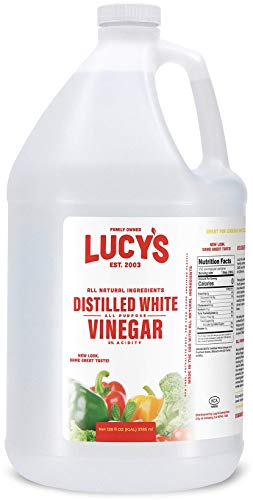
The toilet tank sits out of sight and out of mind until the flush goes weak, the bowl develops a mystery ring,…
Read the guide