

How Often Should You Clean a Toilet?
Cleaning & Maintenance4.6
Clean a toilet fully once a week, wipe the handle and seat with a disinfecting cloth two to three times between weekly…
Read the guideToilet seats come in at least six distinct materials and each one has a cleaning chemistry that works and a cleaner that will quietly destroy it. Bleach wipes that sanitize a polypropylene seat within two minutes will slowly crack a wooden seat and permanently cloud a soft-close acrylic lid. The wrong disinfectant on a padded vinyl seat seeps into the foam, trapping bacteria instead of killing them. A citric-acid bowl cleaner that strips calcium off porcelain will also strip the surface coating off a chrome hinge in a single use. This guide covers every seat material you are likely to own or encounter, including white and colored polypropylene, solid wood and MDF-core, soft padded vinyl, acrylic and resin, plastic soft-close damper mechanisms, heated bidet seats, and the stainless hardware underneath, with the right cleaner for each, the products to keep away from each, a step-by-step method for each material, and a unified weekly routine that keeps every seat type clean, disinfected, and intact for years.
For standard polypropylene seats (the white plastic found on most toilets including TOTO Drake and Kohler Highline), spray with Clorox Disinfecting Bathroom Cleaner, let it dwell two minutes, then wipe clean. For wood seats, use a mild dish-soap solution and dry immediately. Never use bleach, abrasive scrubs, or ammonia on any seat material, and always clean the underside, hinges, and the porcelain underneath the hinge bolts where bacteria concentrate most.
A toilet seat is the most-touched bathroom surface in a household, contacted dozens of times a day and cleaned far less often than the bowl beneath it. Most seat-cleaning failures happen not because people skip the job but because they reach for the wrong product. The bleach gel in the bowl cleaner, the abrasive scrub pad used on the tank, the pine-oil cleaner kept under the sink, and the scented spray meant for countertops can each damage a specific seat material permanently, while leaving bacteria behind on the surface they did not react with. Understanding what your seat is made of takes about ten seconds and unlocks the right method for the next ten years of ownership.
We do not run laboratory swab tests. Instead we compare published manufacturer care instructions for the major seat brands (TOTO, Kohler, American Standard, Woodbridge, Swiss Madison, Bemis, Mayfair), the chemistry of common cleaning agents and how they interact with each surface material, EPA-registered disinfectant testing methodology, and the patterns across thousands of verified owner reviews filtered for durability, discoloration, and cracking after specific cleaners. The broad context for all of this maintenance is our pillar guide to the best flushing toilets, which covers the bowl, trapway, and flush performance behind whatever seat you are cleaning.
Almost every toilet seat ships with a material designation on the packaging and often on a label stamped under the hinge. If you no longer have the packaging, the following characteristics identify the six main types reliably:
| Seat Material | Safe Cleaners | Never Use | Disinfection Method | Frequency |
|---|---|---|---|---|
| Polypropylene / Polyresin | Mild soap, Lysol spray, Clorox Bathroom | Undiluted bleach gel, abrasive pads | EPA-registered bathroom spray, 2-min dwell | Weekly or after illness |
| Thermoset / Duraplastic | Mild soap, Lysol, Seventh Generation spray | Steel wool, abrasive scrubs | Disinfecting wipe, 4-min dwell | Weekly |
| Solid Wood (enameled) | Dish-soap solution, Murphy's Oil (wood seats only) | Bleach, ammonia, soaking water, abrasives | Mild spray, immediate dry | 2x weekly, never saturate |
| MDF-core (enameled) | Damp cloth, dish-soap solution, quick dry | Any soaking cleaner, bleach, acid, abrasive | Damp-wipe only, dry within 30 sec | 2x weekly, strictly dry |
| Padded Vinyl | Mild soap-and-water wipe, dry cloth | Bleach, alcohol, acetone, any solvent | No disinfecting sprays at seams | 2x weekly, surface only |
| Acrylic / Colored Resin | Dish soap, microfiber cloth, warm water | Alcohol, acetone, ammonia, abrasive cloth | Soap-and-water only; diluted H2O2 if needed | Weekly, buff dry |
| Heated Bidet Seat | Damp cloth body, mild soap nozzle, dry near electronics | Any spray near wiring, submerging, steam cleaners | Wipe seat body with disinfecting cloth; not near control panel | Weekly body, monthly nozzle |
The reason seat finishes yellow, crack, or cloud prematurely is almost always a mismatch between the cleaning product and the seat material. The worst offender is undiluted toilet bowl bleach gel applied directly to a plastic seat as a shortcut, then left to sit. Concentrated sodium hypochlorite will whiten the bowl but it degrades polyresin at the molecular level over time, causing brittleness and yellowing that no cleaning product can reverse. Keep bowl cleaner in the bowl and use an EPA-registered bathroom spray or a disinfecting wipe on the seat itself.
This covers the seats that come standard on TOTO Drake, TOTO Ultramax II, Kohler Highline, Kohler Cimarron (polyresin model), American Standard Champion 4, American Standard Cadet 3, Woodbridge T-0001, and Woodbridge T-0019. Polypropylene is the most forgiving seat material and the one where a fast, consistent method delivers the cleanest result.
Repeat weekly for a one-person household, every three to four days for a family of four or more, and immediately after illness. For the dedicated toilet brushes that handle the bowl during the same cleaning session, see our guide to the best toilet brushes of 2026.
The hinge zone is where every toilet seat cleaning goes wrong. People spray and wipe the flat surfaces and consider the job done, but the channel where the plastic bolt post passes through the ceramic rim is a narrow, rarely-touched space that gathers hard-water scale, hair, and organic matter that a spray-and-wipe never reaches. A 30-second pass with a narrow brush and dish soap at the hinges every week prevents the kind of embedded buildup that eventually has to be removed with a dental pick.
Solid wood and MDF-core seats (sold by Mayfair, Bemis, Church Seat Company, and some Kohler Memoirs and Kohler Santa Rosa toilet package combinations) are the most common casualty of the wrong cleaning product. The risk is not staining but structural damage: water that seeps under the paint or lacquer layer at the hinge post holes, around the seat bolts, and along the seat edges causes MDF to swell and delaminate from inside, while solid wood splits and checks over time. Bleach and ammonia accelerate both processes and dull the painted or lacquered finish.
Padded vinyl seats were popular in the 1970s and 1980s and remain in many bathrooms that have not been recently renovated. They are also available as low-contact-height comfort options for individuals with mobility considerations. The cleaning challenge is the seam: vinyl is heat-fused or glued to a foam core along an edge seam, and any liquid cleaner that contacts the seam under pressure can wick through the foam and become impossible to remove, creating a reservoir of trapped moisture and bacteria inside the seat. The outer vinyl surface is also degraded by bleach, acetone, and alcohol-based cleaners, which cause the vinyl to stiffen, crack, and peel.
Acrylic and resin seats from Swiss Madison (St. Tropez), Gerber, and designer brands are the most scratch-sensitive and solvent-sensitive of the common seat types. The high-gloss surface that makes them look polished is also what gets damaged by the wrong product. A single wipe with an alcohol-based hand sanitizer or a Windex spray can leave permanent cloudiness (crazing) in certain acrylic formulations.
The safest cleaner for any colored toilet seat, whether polypropylene, thermoset, or acrylic, is warm water with a small amount of mild dish soap applied on a microfiber cloth. Alcohol, bleach, ammonia, and acetone-based products can discolor, cloud, or crack the finish on colored seats permanently. For disinfection without risk of discoloration, use an EPA-registered spray labeled safe for plastic bathroom surfaces, applied to the cloth before wiping, never sprayed directly on colored seats.
Yellow staining on a white polypropylene or thermoset toilet seat usually has two causes: UV degradation of the plastic from sunlight exposure, or deep organic staining from urine and moisture over time. For organic stains, a paste of baking soda and a small amount of dish soap applied with a soft cloth and left for 10 minutes before rinsing removes most discoloration without damaging the plastic. Repeat weekly for several weeks for built-up yellowing. UV-degraded yellowing (typically orange-yellow and present even in a room without staining) cannot be reversed with cleaning and requires seat replacement. Bleach-based products accelerate UV-type yellowing rather than reversing it, so they should not be used for this purpose.
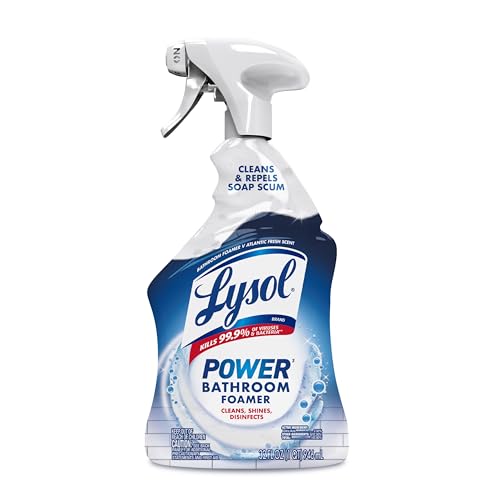
Lysol Disinfecting Wipes are safe on polypropylene and thermoset toilet seats and are an effective weekly disinfection tool, as they carry an EPA-registered kill claim for common bathroom bacteria and viruses. Clorox Bleach Wipes (which contain diluted sodium hypochlorite, not concentrated bleach gel) are generally safe on polypropylene plastic in limited use but should not be used repeatedly on painted wood, MDF-core, padded vinyl, or acrylic seats, where the bleach content degrades the finish over time. Neither type of wipe should be used near the electronics panel, nozzle, or wiring of a heated bidet seat.
The CDC and public health guidance recommend cleaning and disinfecting frequently-touched bathroom surfaces at least once a week in a typical household, and more frequently (every two to three days) in households with young children, multiple occupants sharing one bathroom, or during illness. The underside of a toilet seat, the hinge recesses, and the area of the porcelain bowl directly under the hinge posts accumulate the most bacteria and should receive specific attention at each cleaning rather than only the top surface.
The hinge area of a toilet seat collects hard-water scale, mineral buildup, hair, and organic matter more than any other zone because it is narrow, rarely touched directly, and repeatedly exposed to moisture from flush spray. The most effective method is to remove the seat entirely (most quick-release seats from TOTO, Kohler, and American Standard unclip in 30 seconds), clean the hinge posts with a toothbrush and dish-soap solution, clean the ceramic bowl holes with the same brush, then dry before reattaching. If the seat hinges are not quick-release, use a narrow cleaning brush or a toothbrush inserted into the hinge channel, with dish soap on the brush and a damp cloth for rinsing.
Heated and electronic bidet seats from TOTO (Washlet C200, C5, G450 series), Kohler (Novita BN330, C3-230), and American Standard (SpaLet AT888 and AT897) require a different cleaning approach than a passive seat because they contain electronic components, a water-supply solenoid, a heating element, a nozzle assembly, and in some models a remote receiver and air dryer, all of which are damaged by saturation, spray cleaners, and steam.
The cleaning advice most bidet seat owners miss is that the nozzle-clean function built into TOTO Washlets and Kohler bidet seats is genuinely effective at keeping the nozzle sanitary in normal use, and using aggressive disinfecting wipes on the nozzle tip defeats the purpose. Run the built-in nozzle clean function after every use if your unit supports it (most C2 and above TOTO Washlets do), and reserve the vinegar wipe-down for monthly scale removal. The seat body gets treated just like a standard plastic seat. The only rule is no spray near the electronics, ever.
The white or beige mineral ring that forms around hinge bolt posts and along the seat edge where it contacts the bowl rim is calcium and lime from the water supply. It is exactly the same chemistry as the mineral ring in the bowl, and the treatment is the same: acid dissolves it, bleach does not. The approach for seat-surface scale is different from the bowl, however, because the seats are plastic or wood, not porcelain, and concentrated acid bowl cleaner applied directly to plastic or wood causes damage.
Mix white vinegar (full strength, 5% acidity) with a small amount of dish soap and apply it to the mineral deposit with an old toothbrush. Let it sit for five minutes, then scrub and wipe away. For a thick calcium ring around a bolt post that has built up over years, a paste of baking soda and white vinegar applied and left for 15 minutes softens the deposit enough to scrub off with a narrow brush. Do not use commercial toilet bowl acid cleaners like Lime-A-Way directly on plastic seat surfaces or on any wood seat material. For the bowl itself, our guide to the best drain cleaners of 2026 covers the chemical options when mineral buildup reaches the trap.
Urine stains (orange-yellow discoloration, often with a stronger odor zone on the underside near the front of the seat) are organic and respond to an oxidizing cleaner. A paste of baking soda and hydrogen peroxide (3%, drugstore concentration) applied to the stained area and left for 10 to 15 minutes before scrubbing and rinsing with warm water removes most urine discoloration from polypropylene, thermoset, and acrylic seats. Rinse completely to prevent hydrogen peroxide residue from slowly bleaching the surface around the treated area. For repeated urine staining on the underside of the seat, the real solution is frequency of cleaning, because urine that is wiped within an hour of contact does not have time to set into the surface.
Black or dark-gray mold growth under a toilet seat and in the hinge channel is a ventilation and moisture problem as much as a cleaning problem. The primary treatment is a diluted bleach solution (1 tablespoon of household bleach per quart of water) applied with a cotton ball or narrow brush to the affected area, left for five minutes, then rinsed and dried. Wear gloves. After removal, address the root cause by improving bathroom ventilation and wiping the underside of the seat dry after each use. Mold on a wood or MDF seat is a different situation: bleach solution on a painted wood seat strips the finish, and a molded MDF seat that is showing mold at the edges has likely been moisture-compromised and should be replaced. For a persistent bathroom mold problem beyond the seat, our guide to the best bathroom cleaners of 2026 covers mold-targeted products for the full bathroom.
Rust-orange staining on a white toilet seat near the hinge bolts comes from iron in the water supply reacting with the bolt hardware, not from the seat material itself. Replacing plastic hinge bolts with stainless steel versions (available as aftermarket parts for most Kohler, TOTO, American Standard, and Gerber seats) eliminates the source. For the existing staining, a paste of Barkeeper's Friend (oxalic acid-based cleanser) mixed with water to a thick consistency, applied to the rusted area on polypropylene or thermoset seats, left for five minutes, then scrubbed gently with a soft cloth and rinsed completely, removes most iron staining without damaging the plastic. Do not use Barkeeper's Friend on acrylic, painted wood, or MDF seats.
This is the unified routine that works across all seat materials, adapted by step for the two major material families: forgiving plastics (polypropylene, thermoset) and vulnerable materials (wood, MDF, padded vinyl, acrylic). Do the whole routine in four to five minutes while the toilet bowl cleaner is dwelling in the bowl from your standard cleaning pass.
An EPA-registered disinfectant with a 2-minute contact-time claim, the right chemistry for the most common seat material, and a spray bottle that reaches the underside and hinge area without direct contact. Rated safe for plastic bathroom surfaces by the manufacturer.
Check price on AmazonFormulated for finished wood surfaces, safe for toilet seats with a raw, oil-rubbed, or lacquered wood body, and effective at lifting grime without the bleach or ammonia that destroy wood seat finishes. Not for painted MDF or acrylic.
Check price on AmazonA set of small-format cleaning brushes in multiple widths, with the narrow slot brush sized exactly for toilet seat hinge channels where a standard toilet brush cannot reach. The bristles are firm enough to dislodge scale but soft enough to not scratch polypropylene or thermoset surfaces.
Check price on AmazonClorox Disinfecting Wipes (the multi-surface kind, not the bleach gel) are safe for daily use on polypropylene and thermoset plastic toilet seats. Daily use on painted wood or MDF seats will degrade the finish over weeks. For acrylic colored seats, the alcohol content in most Clorox wipes can gradually cloud the surface with daily use. A daily pass with a damp cloth and a weekly pass with the wipe is a more seat-protective routine for non-plastic materials.
The two distinct causes of yellowing on a white polypropylene seat are UV degradation and organic staining. UV-related yellowing is orange-yellow, affects the entire seat evenly, and is irreversible because it is a breakdown of the polypropylene polymer itself. Organic staining from urine and cleaning-product residue is typically concentrated near the front hinge zone and the seat underside, and it responds to baking-soda-and-hydrogen-peroxide paste. Using bleach products to "whiten" a yellowing seat actually accelerates UV-type yellowing over time.
With the seat lifted to the full-open position, spray disinfecting bathroom cleaner on a paper towel or microfiber cloth and reach under the front edge of the seat to wipe the underside from front to back. For the underside near the hinges, a long-handled microfiber duster or a toothbrush wrapped in a damp cloth reaches the recessed areas. Removing the seat entirely (most modern seats unclip in 30 seconds with a quick-release button or tab at the hinge post) makes a thorough cleaning possible in two minutes.
TOTO sells two seat types: standard polypropylene seats (SoftClose models SS124 and similar) and Washlet bidet seats (C200, C5, G400, G450 series). Standard TOTO seats clean with any mild EPA-registered bathroom spray and a soft cloth. Washlet bidet seats require a different approach: a barely-damp cloth on the seat body, the built-in nozzle-clean function for the nozzle, and no sprays near the control panel or power connection. TOTO's own maintenance document for Washlet series units specifies using a "soft, damp cloth" on the seat body and running the nozzle cleaning function for routine hygiene.
White distilled vinegar (5% acidity) is effective at dissolving hard-water mineral deposits around toilet seat hinge bolts and the bolt-post holes in the bowl rim, where scale accumulates. It is safe on polypropylene, thermoset, and acrylic seats and on porcelain. It is not a registered disinfectant at 5% concentration, so it cleans mineral deposits but does not reliably kill bacteria and viruses to the same standard as an EPA-registered product. For mineral removal, vinegar is a good tool; for disinfection, use a registered spray afterward.
Odor concentrated under a toilet seat almost always comes from one of three zones: dried urine on the front underside of the seat, bacterial growth in the hinge channel and the ceramic bolt holes where moisture collects, and in some cases contaminated foam in a padded vinyl seat. Clean the underside and hinge area thoroughly with a disinfecting cleaner (not just a deodorizing spray, which masks without killing bacteria), then use the toothbrush to work into the hinge channels where odor-causing bacteria collect. If the odor returns within a day or two of cleaning, the source is likely the hinge channel or the ceramice bolt holes, which require the deeper brush-and-dry treatment described in the weekly routine.
Most toilet seats installed in the past ten years use a quick-release mechanism. On TOTO, Kohler, and American Standard seats, there is a plastic tab or button at the back of each hinge post that you press or slide while lifting the seat; it releases in about two seconds per side. Older seats use plastic wing nuts or plastic caps over bolts accessible from the top of the hinge post; unscrew the wing nuts by hand (or with pliers if they are seized) to remove the seat. Standard bolt size across TOTO, Kohler, American Standard, Woodbridge, Swiss Madison, and Gerber is a 5/16-inch carriage bolt, and aftermarket quick-release hinges that retrofit to these bolt holes are available.
Diluted bleach wipes are generally safe for polypropylene and thermoset plastic seats in occasional use, but concentrated toilet bowl bleach gel should never be applied directly to any toilet seat surface. Concentrated sodium hypochlorite degrades polypropylene gradually, destroys paint and lacquer on wood and MDF seats, attacks vinyl seams on padded seats, and clouds acrylic. For disinfection of plastic seats, a product specifically formulated as an EPA-registered bathroom surface disinfectant is both safer and more effective than applying bowl-cleaner bleach gel to the seat.
Brown staining on a toilet seat seat (as distinct from the bowl) is almost always one of three things: iron-tannin staining from well water that contacts the seat during flush spray, accumulated urine residue that has dried and oxidized (most common on the underside and the front of the seat), or residue from brown-colored cleaning products or hard water with high humic-acid content. The treatment depends on the source: iron-tannin staining responds to an oxalic-acid product like Barkeeper's Friend on plastic seats; oxidized urine residue responds to baking soda and hydrogen peroxide paste; humic-acid staining typically responds to a mild dish-soap scrub.
Magic Erasers (melamine foam) are micro-abrasive and effective at removing surface scuffs and light staining from polypropylene and thermoset plastic toilet seats when used gently with water only. Used dry or with heavy pressure, they leave micro-scratches that make the surface dull and trap future staining more easily. Do not use Magic Erasers on acrylic, glossy resin, or painted wood and MDF seats, where the micro-abrasive action scratches or dulls the finish permanently. For polypropylene seats, test on an underside area first and use with minimal pressure.
Soft-close damper hinges on seats from Kohler, TOTO, American Standard, and Bemis contain a hydraulic or pneumatic damper mechanism inside the hinge housing. The mechanism itself is sealed and does not require internal cleaning. The external hinge housing and the slot where the hinge arm slides into the mounting post are cleaned the same way as any hinge channel: a toothbrush with dish-soap solution worked into the slot, rinsed with a damp cloth, and dried. Spraying WD-40 or lubricating oil into a soft-close hinge can damage the damper fluid over time and is not recommended by any of the major seat manufacturers.
The only safe method for a padded vinyl toilet seat is a damp cloth with mild dish soap, wrung out very well so it is barely moist, wiped across the surface with light pressure away from the seams, followed by an immediate dry-cloth pass. No spray cleaners at the seams, no bleach or alcohol products on the vinyl, and no soaking moisture at any contact point. If the foam inside has been contaminated by a previous saturation event (identifiable by an odor that persists after surface cleaning), the seat should be replaced rather than attempting to disinfect the foam core from the outside.
Toilet seats crack from three distinct causes: physical impact (a heavy lid drop on a polypropylene seat without a soft-close damper, particularly on elongated seats under leverage), chemical degradation (concentrated bleach, acid bowl cleaners, or solvent-based products applied to plastic seats, which weaken the material before cracking appears), and UV degradation (prolonged sunlight exposure that embrittles polypropylene or acrylic). Soft-close seats from TOTO, Kohler, and American Standard reduce impact cracking. Using appropriate cleaners for the seat material and keeping the seat out of direct sunlight address the other two causes.
Mold on a toilet seat grows in the hinge channel and under the seat edge because those zones stay damp after flushing and cleaning. The prevention strategy has three components: dry the underside of the seat after cleaning by wiping rather than air-drying, improve bathroom ventilation to reduce ambient humidity (an exhaust fan running for 20 minutes after shower or bath is the most effective single change), and wipe the hinge channel dry when you clean the seat surface. A weekly disinfecting pass kills mold spores before visible growth forms. The high-humidity bathroom environments most prone to seat mold are also the ones most likely to have mineral-rich water that feeds hard-water buildup in the bowl, covered in our guide to the best bathroom cleaners of 2026.
Polypropylene (PP) seats are injection-molded thermoplastic, lighter in weight, slightly more flexible, and the standard material on most volume-production toilet seats from TOTO, Kohler, American Standard, and Woodbridge. Thermoset seats (often labeled Duraplastic or urea resin) are compression-molded into a permanently cured shape, heavier, harder-surfaced, more resistant to surface scratches and impact cracking, and feel more like ceramic than plastic. Both materials are safe for the same cleaners (mild soap and EPA-registered bathroom spray), and neither should have concentrated bleach gel applied to them. Thermoset seats typically cost more and are sold as upgrades on elongated comfort-height toilets.
Black toilet seats (polypropylene or thermoset, sold by Kohler, American Standard, Gerber, Swiss Madison, and others) show water spots and cleaning-product residue far more visibly than white seats. The streak-free method is to use a microfiber cloth dampened with warm water and a small amount of dish soap, wipe in one direction, rinse with a clean damp cloth, then immediately buff dry with a third dry microfiber cloth. This three-cloth method (soap, rinse, dry) eliminates the water-spot mineral deposits that appear as white streaks on dark seats. Spray cleaners left to air-dry on a black seat leave a visible residue haze from the product's inactive ingredients.
A polypropylene or thermoset toilet seat in a typical residential bathroom lasts 5 to 10 years with normal use and appropriate cleaning. The indicators that replacement is needed rather than continued cleaning: visible cracks anywhere on the seat or lid (a cracked seat is a hygiene and injury risk), persistent odor that survives thorough cleaning of all surfaces and hinge zones, yellowing from UV degradation that cleaning cannot reverse, a hinge mechanism that no longer holds the seat open at 90 degrees or has visible cracking at the damper housing, and any visible deterioration of the mounting bolts or hinge posts. TOTO, Kohler, American Standard, and Swiss Madison all offer replacement seat options sold separately from the bowl.
Mild dish soap diluted in warm water is one of the safest cleaning agents for every toilet seat material except padded vinyl at the seams (where any liquid should be used minimally). Dish soap removes organic grime, urine residue, and surface biofilm effectively, it does not degrade any seat material, it is safe for acrylic and glossy resin seats that cannot tolerate alcohol or bleach, and it is safe for painted wood and MDF seats that require immediate drying. Its limitation is that it does not carry an EPA-registered disinfection claim, so it cleans without providing the verified germ-kill that a registered disinfecting product delivers. For a complete routine, dish soap handles the physical cleaning and a registered bathroom spray or wipe handles the disinfection step on plastic seats.
Cleaning a toilet seat correctly comes down to two decisions made before you open a cleaning product: identifying the seat material and choosing the chemistry that works on it without degrading it. Polypropylene and thermoset seats (the default on TOTO Drake, Kohler Highline, American Standard Champion 4, Woodbridge, and most production toilets) are the most forgiving and clean well with any EPA-registered bathroom spray and a microfiber cloth. Wood and MDF seats need dish soap, immediate drying, and an absolute avoidance of bleach, ammonia, and soaking moisture. Acrylic and resin seats require alcohol-free, abrasive-free microfiber-only care. TOTO and Kohler bidet seats need a barely-damp cloth on the body and the built-in nozzle-clean function for the nozzle, with no sprays near electronics. For every material, the hinge channel and the ceramic bowl holes around the hinge bolts are the highest-bacteria zones and the most consistently missed in a surface-only wipe. Add those to your weekly routine and the seat stays genuinely clean between deep cleans, not just wiped on top.
Clean a toilet fully once a week, wipe the handle and seat with a disinfecting cloth two to three times between weekly…
Read the guide
Orange and rust-brown streaks in a toilet bowl are iron oxide, a mineral deposit that bleach cannot dissolve and often intensifies. This…
Read the guide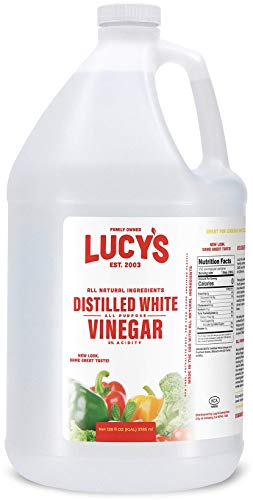
The toilet tank sits out of sight and out of mind until the flush goes weak, the bowl develops a mystery ring,…
Read the guide