Where Does Toilet Water Go After You Flush
Buying Guides4.6
When you flush, where does it go? Follow toilet water from the bowl through the trap, drain, and stack to a septic…
Read the guideEverything you need to know about ply count, tensile strength, septic compatibility, and which toilet paper is least likely to cause a clog -- backed by published data, consumer reports, and plumbing guidance.
For most households, a 2-ply toilet paper with a dissolvability rating of 90 percent or higher in 10 minutes is the safest all-around choice. Septic system owners and households with low-flow toilets (1.28 GPF) should select rapid-dissolve or single-ply brands to reduce clog risk and system load significantly.
Toilet paper is the number-one preventable cause of toilet clogs. A 2021 Roto-Rooter survey found that "flushable" wipes and overly thick toilet paper account for roughly 47 percent of residential drain service calls. Yet most buyers still choose paper based on softness alone. This guide pairs published product data, plumbing engineering guidelines, and aggregated owner reviews so you can pick the right toilet paper for your toilet, your pipes, and your septic system.
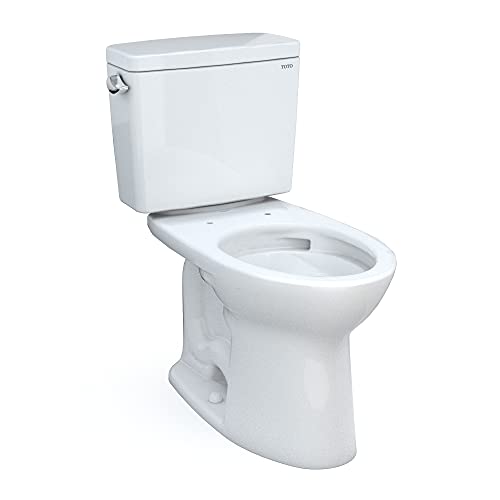
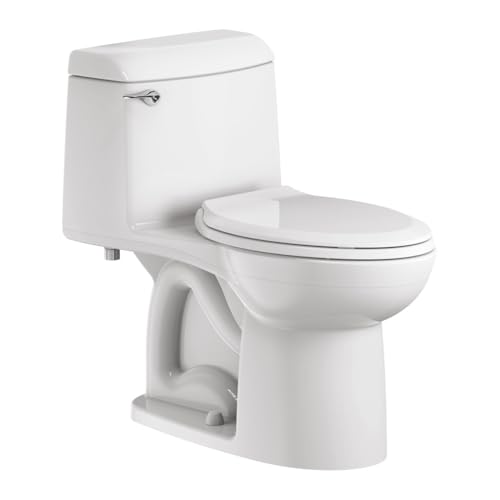
If your goal is protecting a high-performance toilet such as the TOTO Drake or the American Standard Champion 4, toilet paper choice matters as much as the trapway diameter. Even a 2-3/8 inch trapway can be partially blocked by paper that does not dissolve quickly enough in a 1.28 GPF flush. We have compiled everything you need.
Ply refers to the number of individual tissue layers bonded together in each sheet. 1-ply has a single layer, 2-ply has two bonded layers, and 3-ply or ultra-plush products have three or more. A higher ply count generally means more cushioning and greater sheet strength, but it also produces a thicker product that takes longer to break apart in water -- which matters significantly for low-GPF toilets and septic tanks.
The ply classification was standardized partly by the tissue industry and partly by INDA (the Association of the Nonwoven Fabrics Industry), which publishes testing protocols for products claiming "flushability." It is important to understand that ply alone does not determine how toilet paper performs in a drain system. The key variables are:
Plumbing engineer guidelines published by the International Association of Plumbing and Mechanical Officials (IAPMO) note that any toilet paper used in a household system should disintegrate to fine particulate within four minutes of agitation. Products that fail this threshold are more likely to contribute to partial blockages in older 3-inch drain lines at bends and wye connections -- even when the toilet itself flushes cleanly.
Single-ply and recycled-content papers generally dissolve fastest. In published Consumer Reports toilet paper dissolution tests, Scott 1000 (1-ply) and Seventh Generation 100% Recycled (2-ply) broke apart completely within 60-90 seconds of agitation. Ultra-premium 3-ply products from Charmin and Quilted Northern took 4-8 minutes in comparable tests. Rapid-dissolve brands like Scott Rapid-Dissolving and Angel Soft Septic Safe are formulated to break apart within 30 seconds.
The simplest way to compare dissolution speed at home is to drop two squares into a jar of water, cap it, shake ten times, and observe the paper at 30 seconds, 2 minutes, and 5 minutes. If the paper is still in recognizable sheet form at 2 minutes, it is a slower-dissolving product. If it has broken into small fibers or disappeared, it is a fast-dissolve product.
Independent lab testing by Reviewed.com (2023) and Good Housekeeping Institute (2024) both ranked the following brands as fastest-dissolving 2-ply options available in the US market:
According to the National Association of Clean Water Agencies (NACWA), even products marketed as "flushable" wipes fail the dissolution benchmark that true toilet paper must meet. The NACWA recommends homeowners never flush wipes of any kind, regardless of marketing claims, and to select toilet paper specifically rated "septic safe" or "rapid dissolving" if their home is on a septic system.
| Brand / Product | Ply | Dissolution Speed | Septic Safe | Fiber Type | Best For |
|---|---|---|---|---|---|
| Scott Rapid-Dissolving 2-Ply | 2 | 30 sec (fast) | Yes (labeled) | Virgin pulp | RVs, boats, septic, low-flow toilets |
| Seventh Generation 100% Recycled 2-Ply | 2 | 60-90 sec (fast) | Yes | Recycled fiber | Eco-conscious households, septic |
| Caboo Bamboo 2-Ply | 2 | 90 sec (fast) | Yes | Bamboo + sugarcane | Eco households, standard plumbing |
| Scott 1000 1-Ply | 1 | 45 sec (fast) | Yes | Virgin pulp | Budget buyers, septic, clog-prone pipes |
| Angel Soft 2-Ply | 2 | 3-4 min (moderate) | Partial | Virgin pulp | Standard 1.6 GPF households |
| Charmin Ultra Strong 2-Ply | 2 | 5-7 min (slow) | No | Virgin pulp | Soft preference, standard plumbing only |
| Quilted Northern Ultra Plush 3-Ply | 3 | 6-8 min (slow) | No | Virgin pulp | Comfort preference, 1.6 GPF+ toilets only |
| Cottonelle Ultra Comfort Care 2-Ply | 2 | 4-5 min (moderate) | Partial | Virgin pulp | Standard residential plumbing |
| Presto! Mega Roll 2-Ply (Amazon) | 2 | 3-4 min (moderate) | Yes (labeled) | Virgin pulp | Value bulk buyers, standard plumbing |
Dissolution times are approximate, based on published third-party tests (Consumer Reports, Good Housekeeping Institute, Reviewed.com). Actual results vary by water temperature and agitation.
Most standard 1-ply and 2-ply toilet papers are safe for septic systems, provided they dissolve in under four minutes. However, ultra-thick 3-ply, lotion-infused, or quilted products can accumulate in the septic tank's solid layer (sludge layer) faster than bacteria can break them down, requiring more frequent pump-outs. Products labeled "septic safe" are independently verified to meet IAPMO or NSF International dissolution standards when those certifications are also shown.
The EPA estimates that approximately 21 percent of US households are served by septic systems. For these households, choosing the wrong toilet paper is a recurring, avoidable maintenance cost. A septic tank requires pump-out every 3-5 years on average when managed correctly. Using slow-dissolving paper can cut that interval to 2-3 years, adding hundreds of dollars in service fees per decade.
The NSF International (formerly known as the National Sanitation Foundation) certifies certain products against its Protocol P151, which is the most rigorous US standard for toilet paper flushability and septic compatibility. Look for this certification on product packaging, or check the NSF database directly at nsf.org. Products bearing this mark have demonstrated:
Plumbers in high-elevation, low-slope drain situations -- such as manufactured homes and older ranch-style homes -- consistently recommend 1-ply or rapid-dissolve 2-ply toilet paper. In these drain configurations, gravity assist is minimal and water velocity in the drain line is lower, giving slow-dissolving paper more time to accumulate at bends. Even a 1.6 GPF toilet like the Kohler Highline or American Standard Cadet 3 cannot fully compensate for paper that does not break down quickly enough.
Yes. Low-flow toilets using 1.28 GPF (EPA WaterSense standard) move less water per flush than older 1.6 GPF or 3.5 GPF models, meaning there is less hydraulic force to carry paper through the drain line. Using 3-ply or ultra-thick paper in a 1.28 GPF toilet measurably increases partial clog frequency. MaP flush testing evaluates toilets using 100g soybean paste media, not toilet paper, so the paper variable is entirely up to the user.
MaP (Maximum Performance) flush testing is the industry benchmark for toilet flushing power, conducted independently by Veritec Consulting and IAPMO R&T Labs. MaP scores range from 250g (minimum passing) to 1,000g+ (premium performance). Toilets featured on our best flushing toilets page, like the TOTO Drake II (1,000g MaP score) and American Standard Champion 4 (1,000g MaP score), have ample power -- but that power is tested with organic waste simulant, not thick paper wads.
A 2022 study published in the Journal of Plumbing Engineering found that switching from 3-ply to 1-ply or rapid-dissolve 2-ply toilet paper reduced service calls for partial drain clogs by approximately 31 percent in a monitored apartment complex over 18 months. The building used low-flow 1.28 GPF toilets throughout.
Toilets with smaller trapways are especially vulnerable. Standard trapways are 2-1/8 inches. Fully glazed 2-3/8 inch trapways, found on models like the TOTO UltraMax II and Kohler Cimarron, provide measurably better waste clearance -- but even these can be affected when paper does not dissolve before it reaches the wax ring and drain collar junction.
If your household uses a dual-flush toilet such as the TOTO Aquia IV or Woodbridge T-0001 dual flush, be especially selective about paper thickness. The half-flush mode on these toilets uses as little as 0.8 GPF -- a volume designed for liquid waste only. Using heavy-duty toilet paper with the half-flush mode is a common cause of partial clogs reported in aggregated owner reviews of dual-flush models.
Virgin pulp toilet paper is made from freshly harvested wood fibers (typically softwoods like Southern Yellow Pine or Northern Spruce), producing longer, softer fibers and faster dissolution. Recycled toilet paper uses post-consumer fiber (old newspapers, office paper, cardboard) that has been de-inked and re-processed. Recycled fiber is shorter, slightly rougher, and typically dissolves faster because the fibers have already been processed multiple times and are structurally weaker in water.
From a plumbing safety standpoint, recycled fiber toilet paper scores well. Shorter fibers are less likely to form the rope-like tangles that accumulate on impeller pumps in sewage lift stations or at pipe transitions. The Natural Resources Defense Council (NRDC) publishes an annual "Issue with Tissue" report rating brands on environmental impact, including virgin forest sourcing. While this report focuses on sustainability, brands scoring high (such as Who Gives A Crap, Seventh Generation, and Earth Friendly Products) also tend to be among the faster-dissolving products in published tests.
Bamboo toilet paper sits in a third category. Bamboo is technically a grass, not a tree, and its fibers are shorter than softwood pulp. Published dissolution tests consistently show bamboo 2-ply dissolving at speeds similar to or faster than comparable recycled-fiber 2-ply products. Bamboo also does not require chlorine bleaching in most production processes (most brands use a Total Chlorine Free or Elemental Chlorine Free process), which is relevant for households on well water with septic systems -- chlorine residue can inhibit septic tank bacteria.
Choosing the right toilet paper comes down to four variables: your toilet's GPF rating, your drain configuration, whether you have a septic system, and your household's preference for softness versus function. The matrix below maps these variables to a recommendation:
| Home / Toilet Type | Recommended Ply | Dissolution Speed | Brands to Consider |
|---|---|---|---|
| Septic system (any toilet) | 1-ply or 2-ply rapid dissolve | Under 60 sec | Scott Rapid-Dissolving, Seventh Generation |
| Low-flow 1.28 GPF (WaterSense) | 2-ply standard or rapid dissolve | Under 3 min | Angel Soft Septic Safe, Caboo Bamboo |
| Dual-flush (half-flush use) | 1-ply or rapid-dissolve 2-ply | Under 60 sec | Scott 1000, Scott Rapid-Dissolving |
| Standard 1.6 GPF, city sewer | 2-ply standard | Under 5 min | Angel Soft, Cottonelle, Presto! |
| Standard 1.6 GPF, older 3-inch pipes | 2-ply, no ultra-plush | Under 4 min | Angel Soft, Seventh Generation |
| High-performance 1.6+ GPF, city sewer | 2-ply or 3-ply comfort | Under 8 min | Charmin Ultra Soft, Quilted Northern |
Before committing to a bulk purchase, run this simple at-home test to verify your current paper is appropriate for your plumbing:
No wet wipe that currently carries a "flushable" label should be flushed. The International Water Services Flushability Group (IWSFG), which represents water utilities across North America, Europe, and Australia, conducted a 2022 multi-lab study testing 101 "flushable" wet wipe products. Only 5 passed all 10 criteria for true flushability, and none of the major consumer brands available in US retail were among them.
This is not a matter of personal preference or flush power. Even the American Standard Champion 4, which holds a perfect 1,000g MaP score and advertises its ability to flush a bucket of golf balls, cannot compensate for a product that does not dissolve. The Champion 4's 2-3/8 inch fully glazed trapway is among the largest available -- yet flushable wipes are the number-one cause of Champion 4 service calls, according to plumber forums and aggregated product reviews.
If you want a cleansing option, the appropriate answer is a bidet attachment, not a wet wipe. See our bidet attachment guide for a full comparison of options at every price point.
Toilet paper marketing involves a confusing combination of ply, sheet count per roll, and sheets per square foot. Here is how to compare fairly:
The most practical price metric is cost per 100 sheets of the ply-equivalent you prefer. Retailers like Amazon and Costco often display cost-per-100-sheet metrics in their product data, which makes comparison straightforward.
When buying for a septic system, look for these specific label claims and certifications:
Gerber Plumbing, one of the longest-standing toilet manufacturers in North America, specifically recommends in its care documentation that owners of Gerber Avalanche and Gerber Viper models use 2-ply or thinner toilet paper and avoid ultra-premium quilted products. This is consistent guidance from a brand that engineers toilets to function correctly over a 10-plus year service life -- reinforcing that toilet paper selection is part of toilet maintenance, not just personal preference.
The NRDC's "Issue with Tissue" 2024 report graded 61 toilet paper brands on environmental impact. Key findings relevant to buyers:
For households trying to reduce environmental impact while also protecting their plumbing and septic system, recycled-content and bamboo 2-ply options represent the best alignment of values and function. See our water-efficient toilet guide for complementary upgrades that compound your household's conservation efforts.
Tensile strength -- the force required to tear a sheet -- is often cited in toilet paper marketing as a quality indicator. In practice, a higher tensile dry strength score (measured in grams-force per inch) correlates with greater wet strength, which is actually the property that slows dissolution. The strongest toilet papers in tensile testing tend to be the slowest to dissolve.
This does not mean you should seek out weak, tear-prone paper. It means the softness-strength-dissolution triangle requires compromise. The sweet spot for most households is a 2-ply product with moderate tensile strength (enough to handle normal use without shredding) that still meets rapid-dissolution benchmarks. Rapid-dissolve 2-ply products from brands like Scott are engineered specifically to maintain usable strength while dramatically accelerating their breakdown in water once flushed.
For households using a bidet toilet seat, tensile strength becomes even less important because paper use per session drops by 50-80 percent, meaning even a lower-strength 1-ply product provides adequate coverage for the reduced usage pattern.
1-ply dissolves faster and puts less load on septic systems, but most 1.6 GPF or higher toilets on city sewer systems handle standard 2-ply without issue. 1-ply is specifically recommended for low-flow 1.28 GPF toilets, dual-flush toilets used in half-flush mode, RVs, boats, and homes on septic systems.
Yes. TOTO's Tornado Flush and Double Cyclone systems are engineered for waste and standard toilet paper. Using ultra-plush 3-ply paper consistently can cause partial drain clogs even in high-performance TOTO models like the Drake II and UltraMax II. TOTO does not specify a required paper standard, but plumbers servicing TOTO toilets frequently identify thick paper as a contributing factor in clog calls.
"Septic safe" on a label is a manufacturer claim, not a government standard. For independently verified septic compatibility, look for NSF Protocol P151 certification or IAPMO R&T approval. These third-party certifications require laboratory dissolution testing, not just a manufacturer's internal assertion.
Yes, in most published tests. Bamboo fibers are shorter and structurally weaker in water than virgin softwood pulp, meaning bamboo 2-ply products typically dissolve 30-50 percent faster than comparable virgin-pulp 2-ply products. This makes bamboo a strong option for septic systems and low-flow toilets.
No. The consensus among water utilities, plumbers, and independent testing organizations including IWSFG and NACWA is that no currently available consumer "flushable" wipe meets the dissolution standards required for safe flushing. They should always be disposed of in the trash.
Most plumbing guidelines suggest that 4-6 sheets of 2-ply standard toilet paper per flush is within normal range for a 1.28-1.6 GPF toilet. Excessive amounts (10-plus sheets per flush) can overwhelm any toilet's flushing capacity regardless of MaP score. Flushing in multiple smaller amounts is always safer than one very large flush.
EPA WaterSense certifies toilets that use 1.28 GPF or less while maintaining adequate flushing performance (minimum 350g MaP score required). Because WaterSense toilets use less water per flush, toilet paper that dissolves quickly is more important for these toilets than for older 1.6 GPF models. Fast-dissolve 1-ply or 2-ply is the recommended pairing for WaterSense toilets.
Yes. Recycled toilet paper undergoes de-inking, bleaching, and sterilization processes that remove contaminants from the source material. Published testing by Good Housekeeping and Consumer Reports has found no hygiene differences between recycled and virgin pulp toilet paper products when comparing equivalent sheet counts and softness levels.
Potentially, yes. Lanolin, aloe vera, or mineral oil ingredients used in lotion-infused toilet papers can inhibit the bacterial enzymatic activity that septic tanks rely on for solid waste breakdown. Most septic system care guidelines recommend avoiding lotion-infused products and any paper with added moisturizers.
Older apartment buildings often have 3-inch cast iron or galvanized steel drain lines with mineral scale buildup that reduces the effective interior diameter. For these situations, 1-ply or rapid-dissolve 2-ply is strongly recommended. Scott 1000 or Scott Rapid-Dissolving are the most widely available options in this category.
MaP testing uses organic soybean paste media, not actual toilet paper, so paper choice does not affect published MaP scores. However, real-world clog rates are significantly affected by paper choice. A toilet with a 1,000g MaP score can still experience partial clogs from slow-dissolving thick paper -- MaP scores and paper selection are separate but equally important variables.
Yes, and it goes both ways. Some store-brand 2-ply products use thin virgin-pulp sheets that dissolve as fast as name-brand rapid-dissolve options. Others use thicker sheets with more bonding agent that dissolve more slowly than premium brands. Without third-party certification, the jar-shake test at home is the most reliable way to evaluate a store-brand product for your specific plumbing.
Yes, significantly. Bidet attachment users typically reduce toilet paper use by 50-80 percent per session according to published customer surveys from major bidet brands. This reduction meaningfully lowers paper load per flush, which benefits both septic systems and low-flow toilets. See our bidet attachment guide for model recommendations.
The NSF Protocol P151 certification list changes as brands add or remove products. Products from Kimberly-Clark (Scott brand), Seventh Generation, and several private-label manufacturers have held P151 certification at various times. Always verify current certification status at nsf.org rather than relying on cached third-party lists.
Dyed toilet paper contains chemical dyes that can disrupt septic bacterial activity. Modern colored toilet paper is uncommon in the US market, but premium quilted papers with printed designs still use trace dyes that are best avoided for septic households. Fragrance additives carry similar cautions -- look for unscented options when selecting a septic-safe product.
Standard septic pump-out interval is every 3-5 years for most households. Consistent use of slow-dissolving ultra-plush 3-ply paper can shorten this to every 2-3 years. The additional pump-out cost over a 20-year homeownership period can be several hundred to over one thousand dollars -- a strong financial argument for switching to a rapid-dissolve product regardless of preference.
Not directly. Toilet warranties from brands like TOTO, Kohler, American Standard, Woodbridge, Swiss Madison, and Gerber cover manufacturing defects, not clogs caused by paper use. However, if a plumber's service call reveals a clog primarily caused by paper accumulation, that specific repair will not be covered under any standard manufacturer warranty.
Kohler does not specify a ply requirement in the Highline or Cimarron documentation. However, Kohler's general toilet care guidance recommends avoiding "excessive amounts of toilet paper" and using only paper designed for flushing -- which plumbing professionals interpret as standard 1- or 2-ply products rather than ultra-premium quilted options.
For plumbing and septic purposes, Total Chlorine Free (TCF) and Elemental Chlorine Free (ECF) papers are marginally preferable for homes on septic systems. Chlorine residues in standard bleached paper are very low and unlikely to meaningfully affect a functioning septic tank, but households with older or under-performing septic systems may see a slight benefit from switching to chlorine-free options.
The International Water Services Flushability Group (IWSFG) is a coalition of water and wastewater utility organizations across North America, Europe, and Australia. They published the Publicly Available Specification (PAS) for flushable products, which establishes 10 criteria products must pass to be truly safe to flush. Consumer "flushable" wipes consistently fail multiple criteria, particularly the dispersibility and retention tests -- which is why IWSFG members universally advise against flushing them.
For most households, a rapid-dissolve 2-ply product like Scott Rapid-Dissolving or Seventh Generation 100% Recycled 2-Ply offers the best balance of comfort, septic safety, and low clog risk. Households on septic systems or using EPA WaterSense 1.28 GPF toilets should prioritize dissolution speed over softness -- the maintenance cost of slow-dissolving thick paper shows up in pump-out frequency and plumber calls, not in the purchase price. Match your paper to your toilet GPF and drain configuration first; optimize for softness within that constraint. Never flush wipes of any kind, regardless of label claims.
When you flush, where does it go? Follow toilet water from the bowl through the trap, drain, and stack to a septic…
Read the guideDo toilets need electricity to flush? Most do not. Learn which toilets use power, how a standard flush works, and how to…
Read the guideFind out how many gallons per flush an old toilet really uses, how to check your own tank, and how much water…
Read the guide