

Where Does Toilet Water Go After You Flush
Buying Guides4.6
When you flush, where does it go? Follow toilet water from the bowl through the trap, drain, and stack to a septic…
Read the guideA transparent breakdown of what you will actually pay for toilet installation in 2026, including labor, materials, and the hidden costs that catch homeowners off guard.
In 2026, standard toilet installation labor ranges from $150 to $350, with total project costs between $250 and $800 for a basic swap. Complex jobs involving floor repairs, rough-in changes, or high-end toilets can reach $1,500 or more. The toilet itself typically accounts for 30% to 50% of the total bill.
Toilet installation costs in 2026 have shifted slightly due to material price adjustments and increased demand for water-efficient models. A straightforward replacement of an existing toilet with a new floor-mount model usually runs $250 to $600. This includes removing the old unit, installing the new wax ring, bolts, and toilet, plus basic disposal. If you are installing a toilet on a concrete slab or need to move the waste pipe (rough-in relocation), expect to pay $800 to $1,500. Plumbers in high-cost urban areas charge $100 to $200 per hour, while rural rates may be $60 to $100 per hour. Most plumbers quote a flat fee for a standard install, typically $150 to $350.
What is the average labor cost for toilet installation in 2026? The average labor cost for a standard toilet replacement is $200 to $350. This covers removal of the old toilet, installation of the new unit, and basic cleanup. Complex jobs like rough-in relocation or floor repair add $200 to $600.
Several variables influence the final price. The condition of your existing flange and floor is the biggest wildcard. A rotted subfloor or corroded flange adds $100 to $400 in repairs. The type of toilet also matters: a basic two-piece toilet is cheapest to install, while a wall-hung or smart toilet requires more labor and specialized parts. Accessibility is another factor. A toilet in a tight half-bath or on an upper floor with narrow stairs takes longer, increasing labor charges. Finally, local permit fees, which range from $30 to $150, can apply if you are doing a major bathroom renovation.
Most homeowners overlook the flange condition. Before you buy a toilet, lift the old one and inspect the flange. If it is cracked or rusted, budget an extra $150 for a replacement. This single step prevents having to call the plumber back after the new toilet wobbles.
| Service | Typical Cost Range | Notes |
|---|---|---|
| Standard toilet replacement (labor only) | $150 - $350 | Includes removal and disposal |
| New installation on existing rough-in | $200 - $450 | First-time install, no existing toilet |
| Rough-in relocation | $500 - $1,200 | Requires cutting subfloor and moving waste pipe |
| Floor or subfloor repair | $100 - $400 | Often needed with older homes |
| Wall-hung toilet installation | $800 - $1,800 | Requires in-wall carrier frame |
| Smart toilet / bidet toilet install | $300 - $700 | Electrical and water line connections |
DIY toilet installation is feasible for a confident homeowner with basic tools. The task involves lifting the old toilet, scraping old wax, setting a new wax ring, and bolting down the new unit. The risk is a poor seal that leads to leaks or a cracked flange. If you have to move the waste pipe or work on a concrete slab, hire a plumber. The cost of a single water damage claim far exceeds the $200 you save by doing it yourself. For most people, the peace of mind from a licensed plumber is worth the labor fee.
Is it worth installing a toilet yourself to save money? Yes, if you have a direct replacement with the same rough-in distance and a solid floor. No, if you need to move plumbing, repair subfloor, or install a wall-hung toilet. A simple swap can save you $200, but a mistake can cost thousands in water damage.
Beyond labor and the toilet itself, several hidden costs appear. A new wax ring and bolts cost $5 to $15, but a waxless rubber seal is $15 to $25 and often recommended for a better seal. If your old supply line is corroded, a new braided stainless steel hose is $10 to $20. A toilet shim kit ($5) may be needed to level the bowl. Disposal fees for the old toilet range from $10 to $30 if your hauler charges extra. If you are upgrading to a taller comfort-height toilet, you might also need a taller supply line. Finally, if your bathroom lacks a nearby electrical outlet for a smart toilet, an electrician will charge $150 to $300 to run a new line.
Always buy a new wax ring and supply line before the plumber arrives. Many plumbers charge a premium for parts they pick up at the supply house. A $5 wax ring can become a $25 line item on your invoice. Also, consider a waxless gasket like the Fluidmaster Better Than Wax for a cleaner install.
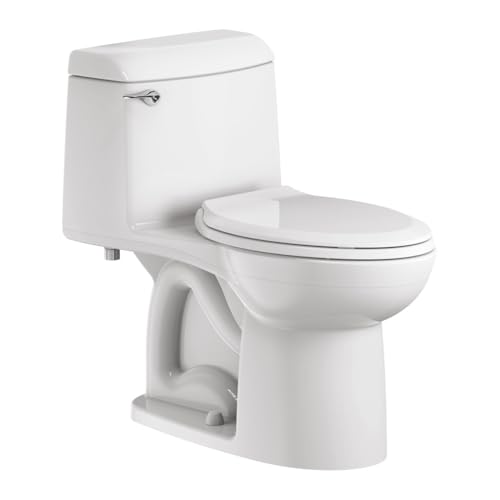
The toilet you choose directly impacts installation complexity. A standard two-piece toilet is the easiest and cheapest to install because it comes in separate bowl and tank sections that are light enough for one person. One-piece toilets are heavier and require more careful handling, adding $50 to $100 to labor. Wall-hung toilets are the most expensive because they require a heavy-duty carrier frame inside the wall, which must be installed before the wall is finished. Smart toilets with bidet functions require both a water line and an electrical outlet, adding $100 to $300 to the install. Corner toilets and round-bowl models in tight spaces also increase labor time.
Does a one-piece toilet cost more to install than a two-piece? Yes, typically $50 to $100 more. One-piece toilets are heavier and more awkward to maneuver, especially in small bathrooms. Two-piece toilets are lighter and easier for a single installer to handle.
While we do not list specific prices, the following table compares the installation-related specs of popular models. The cost to install each model is similar for standard floor-mount units, but wall-hung and smart models add significant labor.
| Model | MaP Score | GPF | Flush Type | Trapway | Height | Best For | Check Price |
|---|---|---|---|---|---|---|---|
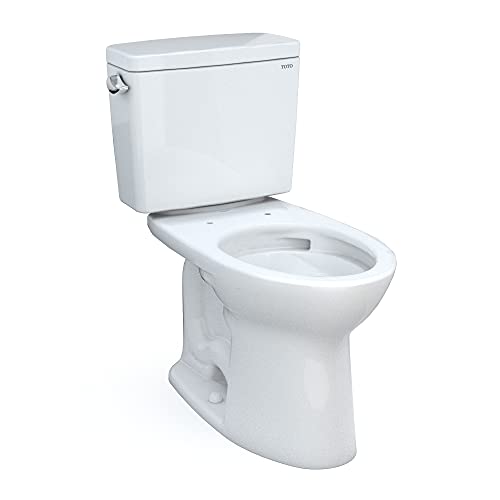
| TOTO Drake II | 1000g | 1.28 | G-Max | 2-1/8" | Comfort | Best overall value | Check price |
| Kohler Highline | 1000g | 1.28 | Class Five | 2-3/16" | Comfort | Reliable workhorse | Check price |
| American Standard Champion 4 | 1000g | 1.28 | Flush Tower | 2-3/8" | Comfort | Clog resistance | Check price |
| Woodbridge T-0001 | 1000g | 1.28 | Dual Flush | 2-1/8" | Comfort | One-piece design | Check price |
| Gerber Viper | 1000g | 1.28 | Single Flush | 2" | Standard | Budget pick | Check price |
| Swiss Madison St. Tropez | 1000g | 1.28 | Dual Flush | 2-1/8" | Comfort | Wall-hung option | Check price |
To avoid surprises, get at least three quotes from licensed plumbers. Provide the exact model you plan to buy, the rough-in distance (measure from wall to bolt center), and photos of the existing toilet and floor. Ask if the quote includes removal and disposal of the old toilet, a new wax ring and bolts, and any subfloor repair. Clarify whether the price includes the toilet itself or just labor. If you are buying a wall-hung or smart toilet, confirm that the plumber has experience with that specific type. A detailed written quote protects both you and the plumber.
What should I ask a plumber before hiring them for toilet installation? Ask if the quote includes removal and disposal, a new wax ring, and any flange repair. Also confirm their experience with your specific toilet type, especially if you are installing a wall-hung or smart toilet. Always get a written estimate.
Standard installation labor is $150 to $350, with total project costs of $250 to $800 for a basic swap. Complex jobs can reach $1,500 or more.
Yes, if you have a direct replacement with the same rough-in and a solid floor. DIY saves $150 to $350 but risks leaks if the seal is poor.
The distance from the finished wall to the center of the toilet flange bolts. Standard is 12 inches, but 10 and 14 inch rough-ins exist.
Usually not for a simple replacement. Major plumbing changes or new construction may require a permit costing $30 to $150.
A standard replacement takes 1 to 2 hours. Complex jobs with floor repair or rough-in relocation can take 4 to 8 hours.
Wall-hung toilet installation costs $800 to $1,800 due to the in-wall carrier frame and additional labor.
Yes, typically $50 to $100 more than a two-piece because of the heavier weight and more difficult handling.
Wax ring, supply line, shims, disposal fees, flange repair, and subfloor repair. These add $20 to $400 to the total.
Waxless rubber seals are easier to install and less messy, but wax rings are cheaper and more traditional. Both work well.
Moving a rough-in costs $500 to $1,200, depending on floor type and accessibility. This is a major plumbing job.
Yes, smart toilets require electrical and water line connections, adding $100 to $300 to the labor cost.
A standard two-piece toilet like the TOTO Drake II or Kohler Highline installs quickly and has low labor costs.
Yes, especially if you have multiple toilets to install or if you are bundling with other plumbing work. Ask for a package discount.
Check online reviews, ask for references, and get three written quotes. Verify license and insurance before hiring.
Toilet installation in 2026 is a straightforward expense for most homeowners, with labor averaging $200 to $350. The key to avoiding cost overruns is inspecting the flange and subfloor before the plumber arrives. For a standard replacement, a DIY approach can save money, but a professional install guarantees a leak-free seal. Choose a model like the TOTO Drake II or Kohler Highline for the best balance of performance and installation simplicity. Always get multiple quotes and ask about hidden fees. A well-installed toilet should last 20 years with minimal maintenance.
When you flush, where does it go? Follow toilet water from the bowl through the trap, drain, and stack to a septic…
Read the guideDo toilets need electricity to flush? Most do not. Learn which toilets use power, how a standard flush works, and how to…
Read the guideFind out how many gallons per flush an old toilet really uses, how to check your own tank, and how much water…
Read the guide