

Where Does Toilet Water Go After You Flush
Buying Guides4.6
When you flush, where does it go? Follow toilet water from the bowl through the trap, drain, and stack to a septic…
Read the guideWhether you are upgrading to a water-saving EPA WaterSense model or replacing a cracked bowl, getting rid of the old porcelain the right way keeps it out of the landfill and may even save you money.
The best way to dispose of an old toilet is to donate it if intact, recycle the porcelain through a local concrete recycler, or schedule a municipal bulk-waste pickup. Landfill disposal is legal but wasteful. Habitat for Humanity ReStores accept working toilets at no cost to you.
Porcelain is heavy, brittle, and almost indestructible once it is in a landfill. An average toilet weighs between 60 and 120 pounds, most of it vitreous china or ceramic that takes hundreds of years to decompose. In 2023 the EPA estimated that roughly 4 million toilets are replaced in the United States every year. If only half of those end up in landfills intact, that is around 120 million pounds of salvageable ceramic buried underground each year.
The good news: every one of the five disposal paths below keeps porcelain out of the landfill, reduces greenhouse gas emissions from trucking, and in many cases costs you nothing. If you are upgrading to a high-efficiency model such as the best flushing toilets reviewed on this site, pairing a responsible disposal plan with your new purchase closes the loop on the full replacement project.
Before removing an old toilet, shut off the water supply valve, flush once to empty the tank, and sponge out any remaining water from both tank and bowl. Disconnect the water supply line at the wall, unbolt the closet bolts at the base, and rock the toilet gently to break the wax seal. Keeping tank and bowl as one unit makes transport easier; split them only if weight is an issue.
Safety matters here. Porcelain is extremely heavy and can shatter into razor-sharp shards. Wear thick work gloves and closed-toe shoes. If the toilet has been in service for decades, the wax ring may have been sealed with lead-based putty on pre-1980 installations. Set the removed toilet on a piece of cardboard or an old blanket to protect your floor and contain any residual water.
Tools you will likely need:
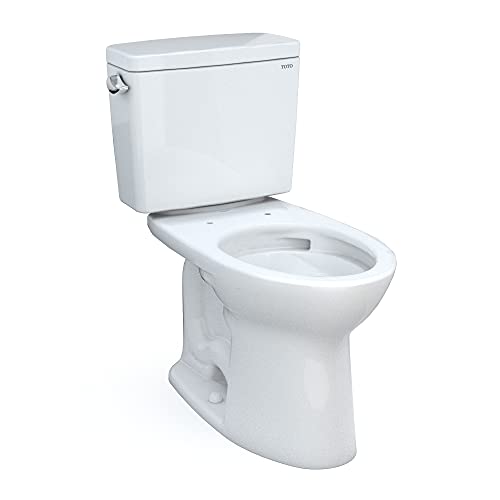
Plumbing professionals consistently recommend photographing the rough-in measurement (distance from finished wall to center of the closet flange) before removing the old toilet. This number, typically 10, 12, or 14 inches, determines which replacement model fits without floor modifications. Most homes are 12-inch rough-ins; TOTO's Drake II, Kohler's Highline, and American Standard's Champion 4 all ship in 12-inch configurations as standard.
Yes, a toilet that flushes reliably, has no cracks, and retains its seat can often be donated to a Habitat for Humanity ReStore, a local reuse center, or a salvage building supply store. Habitat for Humanity operates more than 900 ReStore locations across the United States and accepts working plumbing fixtures at no charge. Donated toilets are sold at steep discounts to low-income homeowners, keeping the fixture in use for another decade or more.
Donation is the highest-value disposal path because it extends the useful life of the fixture, offsets the demand for new manufacturing, and gives you a receipt that may be tax-deductible as a charitable contribution. The IRS allows taxpayers to deduct the fair market value of donated household goods under Section 170 of the tax code, provided the item is in "good used condition or better."
Who accepts toilet donations:
habitat.org/restores for your nearest locationOlder toilets that use 3.5 or even 5 gallons per flush (GPF) may still be accepted for donation, though some reuse centers prefer units that meet at least the 1.6 GPF standard set by the Energy Policy Act of 1992. Pre-1994 toilets using 3.5 GPF may be refused by centers that have adopted water-conservation policies. If yours is a high-water-user from the 1980s or earlier, call ahead before hauling it across town.
If your toilet features a branded model like Kohler's Cimarron or American Standard's Cadet 3 in white and it is less than 15 years old with no visible cracks, it is almost certainly donatable. Colored or designer porcelain from discontinued lines can fetch real money at architectural salvage stores. Do not throw away what someone else will pay for.
Vitreous china and ceramic are chemically similar to aggregate used in road base, construction fill, and concrete production. A growing number of concrete recyclers and construction debris processors accept porcelain plumbing fixtures. The material is crushed and blended into road sub-base or used as recycled aggregate in new concrete mixes, reducing the demand for virgin quarried stone.
Porcelain recycling availability varies significantly by region. California, Oregon, Washington, and many northeastern states have more robust construction debris recycling infrastructure than the rural Midwest or South. Earth911.com maintains a searchable database by material and zip code; searching "porcelain" or "ceramic" at earth911.com will surface local facilities.
What to expect at a concrete recycler:
Porcelain recycling is the best option when a toilet is cracked, stained beyond cleaning, or too old to be useful to anyone. Crushing porcelain for aggregate diverts roughly 80-100 pounds of ceramic per toilet from landfill and gives it a second life in construction materials that may last another 50-100 years.
Many municipalities offer bulk waste pickup programs that include porcelain fixtures at no extra cost beyond normal service fees. Some water utilities run toilet rebate and recycling programs where customers can trade in old high-flow toilets (3.5 GPF or above) for a voucher toward a new EPA WaterSense-certified model, and the utility handles recycling. Check your local public works department and water utility websites for current programs.
Most U.S. cities with curbside waste service schedule periodic bulk or large-item pickup days where residents can set oversized items at the curb. Toilets typically qualify as bulk waste. Some cities include two to four bulk-waste pickups per year in standard residential service; others charge a modest per-item fee ($10-$25 is common). A minority of cities refuse porcelain from residential curbside pickup entirely and direct residents to a transfer station or household hazardous waste facility instead.
To find your city's policy, search "[your city name] bulk waste pickup schedule" or call your public works department. Many cities publish downloadable calendars with collection dates by neighborhood.
Water utility toilet rebate programs are the most financially attractive option and are available in hundreds of cities. Utilities such as the Las Vegas Valley Water District, the Metropolitan Water District of Southern California, and the San Antonio Water System have historically offered $50 to $150 rebates per toilet when residents replace a pre-1994 high-flow unit with an EPA WaterSense-certified model using 1.28 GPF or less. The old toilet must typically be surrendered to the utility or a designated recycler to qualify. Programs change year to year; the EPA's WaterSense website maintains a national rebate finder at epa.gov/watersense.
| Disposal Method | Typical Cost to Homeowner | Landfill Diversion | Effort Level | Best For |
|---|---|---|---|---|
| Donate (ReStore / reuse center) | Free (may get tax deduction) | 100% | Low -- drop off or schedule pickup | Working toilets under 20 years old |
| Porcelain / concrete recycler | Free to $30 | 100% | Moderate -- requires transport | Cracked or non-working toilets |
| Municipal bulk pickup | Free to $25 | Varies by program | Very low -- curbside | Any toilet; check local policy |
| Water utility rebate + recycling | Free (earn rebate) | 100% (utility recycles) | Low -- utility-managed | Pre-1994 high-flow toilets |
| Junk removal service | $50 to $150 | Partial (varies) | Very low -- they come to you | Full bathroom remodel with multiple items |
Companies like 1-800-GOT-JUNK, Junk King, LoadUp, and College Hunks Hauling Junk operate in most U.S. metro areas and will carry a toilet from inside your home to their truck. This is the lowest-effort option for homeowners who cannot transport the fixture themselves or who are doing a larger remodel with multiple items to remove.
Cost depends on item count, location, and how much truck space you use. A single toilet typically falls in the range of $50 to $150. Many of these companies now partner with local donation centers and recyclers; ask specifically whether the toilet will be donated, recycled, or landfilled. A reputable company will tell you. If they cannot answer, look for a different provider.
For a full bathroom renovation where you are removing a toilet, vanity, bathtub, tile, and flooring simultaneously, junk removal services often provide the best value because they charge by volume, not by item. The per-toilet cost drops considerably when bundled with other materials.
This option is not for everyone, but a porcelain toilet can be repurposed in creative ways that keep it entirely out of the waste stream. Gardeners have long used old toilets as planters -- the tank becomes a large planter for herbs or succulents, and the bowl works for larger plants. The porcelain holds moisture well and does not leach chemicals into soil.
Other documented repurposing uses:
In most U.S. jurisdictions, toilets are classified as bulky inert waste and are legally accepted at municipal solid waste landfills. They do not require special handling like hazardous waste. However, many landfills charge a per-item or per-ton tipping fee for bulky items, and some cities prohibit curbside trash collection of large porcelain fixtures. Always check your local landfill's accepted materials list before hauling a toilet there, as policies vary by county and state.
Landfill disposal is the path of last resort. Porcelain does not decompose meaningfully on any human timescale, it takes up significant volume, and it displaces space that could be used for organic waste that actually breaks down. That said, landfill is sometimes the only practical option in rural areas with limited recycling infrastructure or when a toilet is severely damaged and contaminated beyond normal use.
If you must landfill a toilet, breaking it into smaller pieces first (safely, with eye and hand protection and heavy wrapping to contain shards) may reduce the tipping fee at facilities that charge by volume rather than weight. Do not do this in a residential neighborhood; transport the intact unit and break it at the facility if permitted.
Apartment renters are almost never responsible for toilet disposal; that responsibility falls to the landlord or building owner as part of the property's maintenance and renovation obligations. If a plumber or contractor removes your toilet during a repair or renovation, they are typically responsible for hauling it away. Ask explicitly before work begins whether toilet removal and disposal is included in the quoted price, as some contractors charge separately for haul-away.
Condo owners occupy a middle ground: responsibility depends on whether the toilet is considered part of the unit (owner responsibility) or part of the building's shared plumbing system (HOA/building management responsibility). Check your condo bylaws or contact your HOA before undertaking toilet replacement.
Once the old toilet is out, the replacement you choose determines how much water your household uses for the next 20-30 years. The EPA's WaterSense program certifies toilets that use 1.28 GPF or less -- saving more than 16,500 gallons per year compared to a pre-1994 3.5 GPF model in a four-person household. MaP (Maximum Performance) flush testing, conducted by an independent laboratory, scores toilets on their ability to flush solid waste in grams; a score of 500g is considered the minimum for reliable performance, and models scoring 800g or above (MaP Premium) are recommended for families or high-use installations.
The following brands and models represent well-documented, tested options across different price categories:
For a full comparison of these and other highly rated models, see our guide to the best flushing toilets. You may also find these related articles useful during your replacement project:
The switch from a 3.5 GPF toilet (standard before 1994) to a 1.28 GPF EPA WaterSense model in a four-person household can reduce toilet flushing water use by more than 60 percent. At U.S. average water/sewer rates of roughly $0.007 per gallon, that equates to savings of $115 to $140 per year per toilet. The replacement pays for itself in water savings within 5-8 years for most households, depending on local utility rates.
It depends on the dumpster rental company and the type of dumpster. Most general construction dumpsters accept inert materials like porcelain, but some companies prohibit it or charge an additional fee. Always ask your dumpster rental company specifically about toilets before tossing one in. If you are renting a dumpster for a full bathroom renovation, porcelain is usually included in the permitted load.
Some Habitat for Humanity ReStore locations offer free furniture and household goods pickup, but pickup availability for toilets varies by chapter. Many chapters will pick up toilets if you are donating multiple items. Call your local ReStore directly to ask; contact information for every U.S. location is at habitat.org/restores. Standalone toilet-only pickup is less common than for furniture.
No. A standard porcelain toilet is classified as inert solid waste, not hazardous waste. The porcelain itself contains no recognized hazardous materials under EPA RCRA classifications. Old toilet tank components may contain small amounts of lead (from pre-1986 brass fittings) or chlorine tablets, but the porcelain body is non-hazardous and safe to handle with standard work gloves and eye protection.
Junk removal services typically charge $50 to $150 to haul away a single toilet, depending on your location and the company. Municipal bulk pickup is usually free or included in your regular service. Donation to a ReStore is free. If you transport it yourself to a transfer station or recycler, expect $0 to $30. The most expensive option by far is hiring a plumber specifically for removal, as many charge their hourly labor rate ($80-$150/hour) just to carry it out.
Home Depot and Lowe's do not typically operate porcelain recycling programs for old toilets. Neither chain accepts used fixtures as part of a take-back or recycling initiative. Some locations that offer installation services through third-party contractors may include haul-away as part of an installation package, but the store itself is not the recycler. Ask at the service desk if haul-away is available when purchasing a new toilet with professional installation.
Toilet rebate programs are offered by local water utilities to encourage replacement of water-wasting old toilets (typically 3.5 GPF or above, installed before 1994) with EPA WaterSense-certified models using 1.28 GPF or less. Rebate amounts typically range from $25 to $150 per toilet. Qualifications usually require proof of purchase of a WaterSense-certified model, a water utility account in the service area, and sometimes surrender of the old toilet to a utility-designated recycler. Use the EPA WaterSense rebate finder at epa.gov/watersense to locate programs in your area.
The average toilet weighs between 60 and 120 pounds; two-piece toilets (where tank and bowl are separate) are easier to move because you can carry each piece independently. The tank alone is typically 25-40 pounds; the bowl is 50-80 pounds. A hand truck or appliance dolly makes transport manageable for one person, but having a second person to spot you on stairs or tight hallways is much safer. Porcelain is extremely fragile if dropped on concrete.
Breaking a toilet into smaller pieces reduces its footprint for transport and may lower tipping fees at facilities that charge by volume. However, breaking porcelain is genuinely dangerous -- shards are razor-sharp and can fly a significant distance. If you break a toilet, do it outdoors on a tarp, wearing safety goggles, heavy-duty gloves, and closed-toe shoes. Wrap the pieces tightly in the tarp before loading them. Never break a toilet inside your home.
Yes, if it is in working order. Facebook Marketplace and Craigslist are the most effective channels; list it as "free" for fastest pickup, or ask a nominal $10-$30 for a working unit in good cosmetic condition. Vintage colored toilets in avocado green, harvest gold, or pink from the 1960s-70s have a collector market; architectural salvage dealers may pay $50-$200 for complete sets in desirable colors. Photograph the model information label inside the tank before listing.
Donated toilets at Habitat for Humanity ReStores are inspected, cleaned, and priced at a significant discount below retail (typically 50-90% below new). They are sold to individuals, contractors, and nonprofit housing projects. Revenue from ReStore sales directly funds Habitat for Humanity's home-building programs. If a donated toilet cannot be resold, some ReStores partner with local recyclers for proper disposition; the fixture does not simply go to a landfill from a ReStore.
Many plumbers include haul-away in their installation quote, but not all do. Ask explicitly whether toilet removal and disposal are included before the job begins. Some plumbers charge an additional $25-$75 disposal fee on top of the installation labor. If your plumber offers to take it away, ask where it goes -- a good plumber should know whether their shop donates, recycles, or landfills old fixtures.
An experienced DIYer can remove and replace a toilet in 1-2 hours in a straightforward installation. First-time DIYers should budget 2-3 hours. A professional plumber typically completes the swap in under an hour. The most time-consuming parts are waiting for the tank to drain, scraping old wax from the flange, and seating the new wax ring correctly. A leaking wax seal is the most common mistake in DIY toilet installation.
Yes, some utilities offer no-cost toilet replacement programs for low-income customers or in areas with severe water shortage designations. These programs typically deliver and install a new high-efficiency toilet and remove the old one at no cost to the homeowner. Contact your local water utility directly to ask about income-qualified programs. The EPA's WaterSense program lists utilities that have partnered in its national rebate and replacement initiative.
No. Toilets are far too large and heavy for standard residential trash bins and are explicitly excluded from regular curbside pickup in virtually every U.S. municipality. Placing a toilet in a regular trash bin risks damaging the bin and will typically result in the item not being collected. Use bulk waste pickup, junk removal, or transport to a facility instead.
A single toilet contributes roughly 60-120 pounds of inert ceramic to a landfill. While porcelain does not leach toxins into groundwater, it occupies space indefinitely -- porcelain does not biodegrade on any human timescale. The indirect environmental cost includes the embodied carbon from its original manufacturing (roughly 150-250 kg CO2 equivalent for a ceramic toilet) that is "stranded" when the fixture is discarded prematurely rather than donated for continued use. Keeping a working toilet in circulation for an additional 10 years through donation avoids a new unit's manufacturing footprint.
The EPA WaterSense label certifies that a toilet uses 1.28 GPF or less and has been independently tested to meet minimum performance standards. MaP testing (map-testing.com) provides independent flush performance scores from 250g to 1,000g; look for 500g or above for reliable household use, and 800g or above (MaP Premium) for families or high-use bathrooms. These two independent certifications together are the most reliable indicators of efficiency and performance available to toilet buyers.
If the toilet is a pre-1994 model using 3.5 GPF or more, the water savings from replacing it with a 1.28 GPF WaterSense model typically outweigh the cost of replacement within 5-8 years. If it is already a 1.6 GPF or 1.28 GPF model in good working condition, replacing it solely for aesthetics may not be cost-effective from a resource perspective. Functional toilets using 1.28 GPF should generally be kept unless a specific performance issue (chronic clogging, cracking, or seal failure) justifies replacement.
Most toilet malfunctions -- running water, weak flush, phantom flushing, slow tank refill, leaking base -- can be repaired with inexpensive parts. A complete rebuild kit including fill valve, flapper, flush handle, and supply line typically costs under $30 and takes under an hour. The only scenarios where replacement is clearly better than repair are: cracked tank or bowl (cannot be safely repaired), outdated 3.5 GPF flush mechanism (repair does not improve water use), or consistent chronic clogging due to undersized trapway design.
Donating a working toilet to Habitat for Humanity ReStore or a local reuse center is the best disposal option for most homeowners: it is free, tax-deductible, and keeps the fixture in use for years. Cracked or non-working units should go to a concrete/porcelain recycler rather than a landfill. Check your water utility for rebate programs before replacing any pre-1994 toilet -- you may be paid to do the right thing. Whatever path you choose, keep porcelain out of the landfill. It lasts forever there.
When you flush, where does it go? Follow toilet water from the bowl through the trap, drain, and stack to a septic…
Read the guideDo toilets need electricity to flush? Most do not. Learn which toilets use power, how a standard flush works, and how to…
Read the guideFind out how many gallons per flush an old toilet really uses, how to check your own tank, and how much water…
Read the guide