Where Does Toilet Water Go After You Flush
Buying Guides4.6
When you flush, where does it go? Follow toilet water from the bowl through the trap, drain, and stack to a septic…
Read the guideThe siphon jet is the engineering secret behind the most powerful and quiet toilets on the market. Here is exactly how it works, why it outperforms standard gravity flush toilets, and which models use it best.
A toilet siphon jet uses a dedicated jet hole at the front of the rim to shoot water directly into the trapway, creating a powerful siphon that pulls waste out of the bowl. This design delivers a stronger, quieter, and more clog-resistant flush than standard gravity toilets, often achieving MaP scores of 800 grams or higher while using only 1.28 gallons per flush.
A siphon jet is a secondary water channel that delivers a concentrated stream of water directly into the trapway. When you press the flush lever, water from the tank flows through both the rim holes (to wash the bowl) and the siphon jet hole. The jet stream fills the trapway with water quickly, which initiates a full siphon effect. This siphoning action pulls the bowl contents out faster and more completely than a gravity flush alone.
Standard gravity toilets rely on the weight of water falling from the rim to push waste through the trap. This method works but lacks the velocity and vacuum force of a siphon jet. As a result, gravity toilets often require more water (1.6 GPF or more) to achieve a similar flush performance. Siphon jet toilets can achieve MaP scores of 800 to 1,000 grams with only 1.28 GPF, making them both more powerful and more water-efficient.
The siphon jet is the defining feature of the TOTO Drake and American Standard Champion 4. These toilets consistently score above 900 grams in MaP testing because the jet adds velocity that a standard rim-only flush cannot match.
Every siphon jet toilet has a dedicated jet hole that is machined into the porcelain during manufacturing. This hole is usually 1/2 to 3/4 inch in diameter and is positioned at the 6 o'clock position of the bowl rim. When the flush valve opens, water flows through a channel inside the toilet body and exits through this jet hole at high velocity.
The trapway is another critical component. In siphon jet toilets, the trapway is designed with a larger diameter (typically 2-3/8 inches or wider) and a smooth interior surface to minimize friction. This allows the siphon to pull waste through without clogging. The bowl shape also matters: elongated bowls provide more water surface area, which improves the siphon action compared to round bowls.
Most siphon jet toilets use a 3-inch flush valve, which allows more water to enter the bowl quickly. This rapid water delivery is essential for creating the siphon effect. Some models, like the TOTO UltraMax II, use a double-cyclone flushing system that combines rim wash with a powerful jet for even better performance.
| Model | MaP Score | GPF | Flush Type | Trapway | Height | Best For | Check Price |
|---|---|---|---|---|---|---|---|
| TOTO Drake II | 1,000g | 1.28 | Siphon Jet | 2-3/8" | 17" | Overall Performance | Check price |
| American Standard Champion 4 | 1,000g | 1.28 | Siphon Jet | 2-3/8" | 16.5" | Clog Resistance | Check price |
| Kohler Highline | 800g | 1.28 | Siphon Jet | 2-1/8" | 16.5" | Value | Check price |
| Woodbridge T-0001 | 900g | 1.28 | Siphon Jet | 2-3/8" | 17" | Quiet Flush | Check price |
This is the benchmark for siphon jet performance, achieving a perfect MaP score of 1,000 grams with only 1.28 GPF.
The TOTO Drake II uses a 3-inch flush valve and a precision-machined siphon jet that delivers water at the exact velocity needed to create a full siphon. Owner reviews consistently report that it rarely clogs, even with large waste loads.
The bowl is coated with TOTO's CEFIONTECT glaze, which prevents debris from sticking. This reduces the need for cleaning and maintains the siphon jet's efficiency over time.
If you want the best siphon jet flush on the market, the Drake II is the gold standard. Its MaP score is unmatched, and the flush is so quiet you might not hear it.
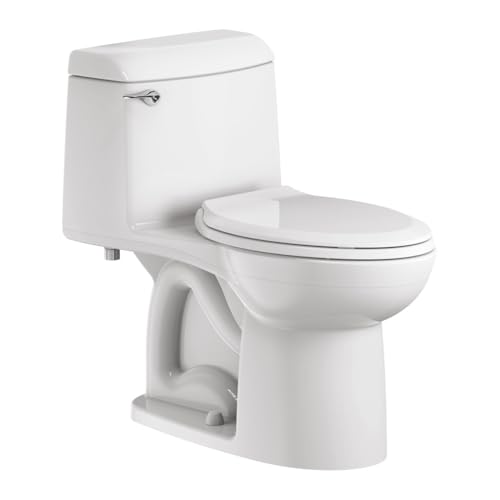
This toilet uses a 4-inch flush valve and a large 2-3/8 inch trapway to create an exceptionally strong siphon that handles heavy waste easily.
The Champion 4 is engineered with a 4-inch flush valve that allows water to enter the bowl faster than standard 3-inch valves. This rapid water delivery is key to creating a powerful siphon jet.
Owner reviews highlight its ability to flush large amounts of waste without clogging. The EverClean surface helps prevent mold and bacteria buildup, which keeps the siphon jet hole clear.
The Champion 4 offers the best value in siphon jet toilets. You get TOTO-level performance at a lower price point.

The Kohler Highline uses a Class Five flush technology that combines a large trapway with a direct-fed jet for strong siphoning action at a budget-friendly price.
The Highline's Class Five flush uses a direct-fed jet that delivers water directly into the trapway. This creates a strong siphon that is effective for most household needs.
While it does not match the MaP score of the TOTO or American Standard, it is still a reliable performer. Owner reviews note that it flushes well with minimal noise.
The Kohler Highline is a solid choice if you want a siphon jet toilet without spending a lot. It is not the most powerful, but it is dependable.

This toilet uses a siphon jet flush that is remarkably quiet, with a MaP score of 900 grams and a soft-close seat included.
The Woodbridge T-0001 uses a siphon jet that is designed to minimize noise. The flush is so quiet that many owners report not hearing it from the next room.
Despite the quiet operation, it still achieves a MaP score of 900 grams. The included soft-close seat adds value, and the modern design fits well in contemporary bathrooms.
If noise is a concern, the Woodbridge T-0001 is one of the quietest siphon jet toilets available without sacrificing performance.
The siphon effect works because the jet stream fills the trapway with water faster than it can drain, creating a pressure difference. The water in the bowl is then pulled into the trapway by this vacuum, carrying waste with it. This process is much more efficient than relying on the weight of water alone.
Clog resistance is improved because the siphon jet helps push waste through the trapway before it can settle and cause a blockage. The larger trapway diameter (2-3/8 inches vs. 1-3/4 inches in older toilets) also means that larger waste can pass through without getting stuck. Many siphon jet toilets also use a glazed trapway surface that reduces friction, further improving flow.
In MaP testing, siphon jet toilets consistently score above 800 grams, with top models reaching 1,000 grams. This means they can flush up to 1,000 grams of waste in a single flush without clogging. Standard gravity toilets often score below 600 grams, making them more prone to clogs.
Mineral deposits from hard water can accumulate inside the siphon jet hole and reduce water flow. If you notice that the flush is getting weaker, check the jet hole for white or brown deposits. You can clean it by scrubbing with a small brush or by pouring a cup of white vinegar into the overflow tube and letting it sit for 30 minutes before flushing.
Other maintenance tasks include checking the flush valve flapper for wear and ensuring the water level in the tank is set correctly. A low water level can reduce the siphon jet's effectiveness because there is not enough water to create a strong vacuum. Most manufacturers recommend adjusting the water level to 1/2 inch below the top of the overflow tube.
It is also important to use toilet cleaning tablets that are safe for siphon jet toilets. Some tablets contain chemicals that can damage the rubber seals or clog the jet hole. Stick to tablets that are labeled as safe for all toilet types, or use a liquid cleaner instead.
A siphon jet is a small hole at the front of the toilet bowl that shoots water directly into the trapway to create a siphoning action that pulls waste out of the bowl.
When you flush, water from the tank flows through the rim holes and the siphon jet hole. The jet fills the trapway quickly, creating a vacuum that siphons waste out of the bowl.
Yes, siphon jet toilets generally provide a more powerful and clog-resistant flush than standard gravity toilets. They also use less water, typically 1.28 GPF versus 1.6 GPF.
MaP scores for siphon jet toilets range from 800 grams to 1,000 grams. Top models like the TOTO Drake II and American Standard Champion 4 achieve 1,000 grams.
While siphon jet toilets are more clog-resistant than standard toilets, they can still clog if the trapway is blocked by large objects or if mineral deposits clog the jet hole.
Use a small brush to scrub the jet hole, or pour a cup of white vinegar into the overflow tube and let it sit for 30 minutes before flushing.
The TOTO Drake II is widely considered the best siphon jet toilet due to its perfect MaP score of 1,000 grams, quiet operation, and durable construction.
Most modern siphon jet toilets use 1.28 gallons per flush (GPF) and are WaterSense certified. Some older models may use 1.6 GPF.
No, siphon jet toilets are generally quieter than pressure-assisted toilets. The Woodbridge T-0001 is known for being particularly quiet.
Most siphon jet toilets have a trapway diameter of 2-3/8 inches, which is larger than the 1-3/2-3/8-inch trapway found in older toilets.
They require minimal maintenance, but you should check the jet hole for mineral buildup and clean it as needed to maintain flush performance.
Yes, but use tablets that are safe for all toilet types. Avoid tablets with harsh chemicals that can damage rubber seals or clog the jet hole.
A siphon jet is a type of flush mechanism, while dual flush refers to having two flush options (one for liquid waste and one for solid waste). Some toilets combine both features.
With proper maintenance, a siphon jet toilet can last 20 to 30 years or more. The porcelain bowl and tank are durable, but the internal components like the flapper may need replacement every 5 to 10 years.
The siphon jet is the most effective flush mechanism for residential toilets, offering superior clog resistance, water efficiency, and quiet operation. The TOTO Drake II remains the top choice for its perfect MaP score and reliable performance. For a more budget-friendly option, the American Standard Champion 4 delivers nearly identical performance at a lower price. If noise is a concern, the Woodbridge T-0001 is the quietest siphon jet toilet available. Regardless of which model you choose, a siphon jet toilet will outperform a standard gravity flush toilet in every measurable way.
When you flush, where does it go? Follow toilet water from the bowl through the trap, drain, and stack to a septic…
Read the guideDo toilets need electricity to flush? Most do not. Learn which toilets use power, how a standard flush works, and how to…
Read the guideFind out how many gallons per flush an old toilet really uses, how to check your own tank, and how much water…
Read the guide