

Where Does Toilet Water Go After You Flush
Buying Guides4.6
When you flush, where does it go? Follow toilet water from the bowl through the trap, drain, and stack to a septic…
Read the guideFrom matte black fixtures and smart toilets to low-flow technology and spa-inspired wet rooms, here is what homeowners and designers are actually specifying in 2026 - and which toilet brands are leading each shift.
In 2026 the dominant bathroom trends are water conservation (1.0 GPF or dual-flush), wall-hung and skirted toilet silhouettes, integrated bidet seats, matte finish fixtures, and biophilic material palettes. Brands like TOTO, Kohler, and American Standard have product lines built around every one of these directions.
The bathroom has quietly become the most scrutinized room in the home. Zillow data consistently shows that an updated master bath ranks in the top three features buyers care about, and remodeling spend on bathrooms hit record levels in 2024-2025 according to the Joint Center for Housing Studies at Harvard. The design choices that were once reserved for boutique hotels - wall-hung toilets, heated floors, rain showers, integrated bidets - are now showing up in suburban tract-home renovations coast to coast.
Three forces are shaping 2026 specifically. First, water regulations keep tightening: California, Colorado, and several Northeastern states now mandate 1.28 GPF or lower at point of sale, and the EPA WaterSense program has set a de facto national standard that most mid-to-high-end brands now design toward. Second, supply chains have normalized after the post-pandemic fixture shortage, meaning homeowners can actually get the products they want rather than settling. Third, bidet culture has crossed into the mainstream in North America following years of steady growth - roughly 30 percent of new toilet purchases in the premium segment now include an integrated or add-on bidet seat according to industry channel data.
Interior designers who specialize in bathrooms note that buyers in 2026 are asking for fewer shiny chrome surfaces and more cohesive material stories - matte finishes, natural stone or stone-look porcelain, and fixtures that read as furniture rather than plumbing hardware. The toilet is no longer an afterthought: it is being specified alongside the vanity and shower as part of a coordinated look.
The biggest bathroom trends for 2026 are water-efficient low-flow toilets (1.0 to 1.28 GPF), wall-hung and skirted toilet silhouettes, integrated bidet functionality, matte black and matte white fixture finishes, and spa-inspired wet-room layouts. Sustainable materials, smart technology integration, and accessible universal design round out the top directions. These trends are visible across major manufacturers including TOTO, Kohler, American Standard, Woodbridge, and Swiss Madison.
Water efficiency is no longer a niche preference - it is the baseline expectation. The EPA WaterSense label requires 1.28 GPF or less, and many of the most sought-after 2026 models hit 1.0 GPF or lower. TOTO's Aquia IV dual-flush system offers 0.8 GPF (liquid waste) and 1.28 GPF (solid waste), earning WaterSense certification while still delivering a MaP flush score of 1,000 grams - the maximum possible. That combination of minimal water use and maximum waste-clearing power is exactly what the market is asking for.
American Standard's Champion 4 One-Piece continues to be specified in renovations where budget is a consideration, offering 1.28 GPF with a fully glazed 2-3/8 inch trapway that holds its MaP score above 800 grams. Kohler's Cimarron and Highline both carry WaterSense certification at 1.28 GPF. Gerber, a brand that gets underrated in consumer coverage, offers several 1.0 GPF models in its Viper and Maxwell lines with strong independent flush test results.
Dual-flush systems are particularly popular in 2026 because they give households visible control over consumption without requiring any behavioral adjustment beyond button selection. Woodbridge's T-0001 dual-flush one-piece is frequently specified in mid-range bathroom remodels for combining the look of a skirted toilet with a 0.8/1.6 GPF option and a price point well below TOTO.
| Model | GPF (full / reduced) | WaterSense | MaP Score | Style | Check Price |
|---|---|---|---|---|---|
| TOTO Aquia IV Dual Flush | 1.28 / 0.8 | Yes | 1,000 g | Two-piece / wall-hung options | Check price |
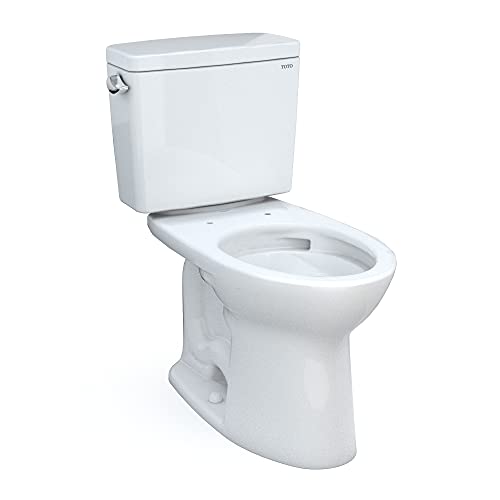
| TOTO Drake II | 1.28 (single) | Yes | 1,000 g | Two-piece | Check price |
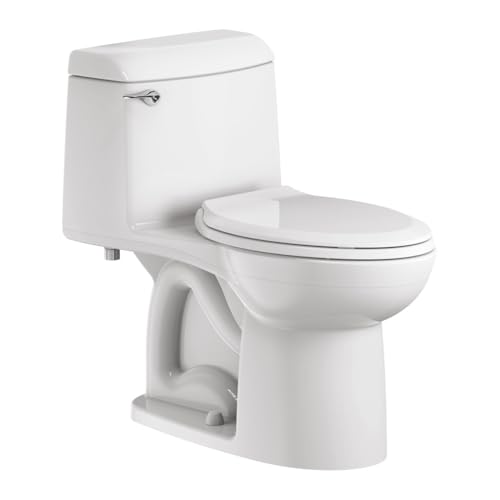
| American Standard Champion 4 | 1.28 (single) | Yes | 1,000 g | One-piece and two-piece | Check price |
| Kohler Cimarron | 1.28 (single) | Yes | 800+ g | Two-piece | Check price |
| Woodbridge T-0001 | 1.6 / 0.8 | No | 800+ g | One-piece skirted | Check price |
| Swiss Madison Chateau | 1.28 / 0.8 | Yes | 600+ g | One-piece wall-hung | Check price |
| Gerber Viper | 1.0 (single) | Yes | 700+ g | Two-piece | Check price |
For a comprehensive look at the highest-performing models across all categories, see our guide to the best flushing toilets rated by independent MaP testing data.
The visual language of the toilet has changed more in the last five years than in the previous fifty. Wall-hung toilets, once almost exclusively a commercial specification, are now mainstream in high-end residential bathrooms. The toilet bowl mounts directly to a concealed in-wall carrier frame (from brands like TOTO, Geberit, or Kohler), with the tank hidden inside the wall and only a flush plate visible. This creates the floating appearance that photographs well and reads as distinctly contemporary.
The practical benefits reinforce the aesthetic ones: wall-hung toilets allow the floor height to be adjusted during installation (ideal for tall users or ADA-adjacent preference), the floor beneath is fully accessible for cleaning, and the overall footprint is slightly smaller, which matters in compact bathrooms. Swiss Madison's Classe and Concealed series have made wall-hung toilets more accessible in the $400 to $700 range, bringing a look that previously required a $1,500+ TOTO or Kohler investment.
For those who want the clean skirted look without the in-wall carrier complexity, skirted one-piece toilets accomplish a similar visual result at lower cost and with standard rough-in installation. TOTO's UltraMax II and Drake series in the skirted configuration, American Standard's Studio Concealed Trapway, and the Woodbridge T-0001 are among the most-specified in this category. The absence of an exposed trapway means easier cleaning and a more furniture-like profile.
Design professionals note that wall-hung toilets require more planning - the in-wall carrier must be framed in before drywall, and the tank access panel needs to be incorporated into the wall tile design. For renovations where walls are already open, the upgrade cost is modest. For a cosmetic-only remodel where walls stay closed, a skirted floor-mount is usually the more practical choice for the same visual result.
Bidet seat adoption in North America accelerated sharply during 2020-2021 and has not slowed down. By 2026, the category has matured: consumers are now distinguishing between basic add-on bidet attachments, mid-range bidet seats with adjustable water pressure and temperature, and fully integrated smart toilets where the bidet, seat, lid, and bowl are a single engineered unit.
TOTO's Washlet series - from the entry-level C2 to the flagship S7 - remains the benchmark. The S7 includes rear and front wash, warm air dryer, deodorizer, heated seat, auto open/close lid, and an eWater+ electrolyzed water cleaning system that mists the bowl before and after each use to reduce waste adhesion. TOTO's Neorest line takes the integration further, with a one-piece toilet and Washlet combined in a unit that MaP tests at 1,000 grams and uses 1.0 GPF or less.
Kohler's Puretide and C3 bidet seats bring the category to Kohler's existing elongated bowl lineup. American Standard's AquaWash seats are a value-oriented entry. For consumers who want a complete smart toilet at a lower price than TOTO Neorest, Woodbridge and Swiss Madison offer integrated bidet toilets with heated seats, adjustable washes, and wireless remote controls in the $500 to $900 range with reasonable owner satisfaction ratings.
Key features to evaluate in a bidet seat or smart toilet for 2026: instantaneous versus tank water heating (instantaneous avoids waiting but can have lower pressure), remote versus side-panel controls, seat sensor for automatic lid operation, and whether the unit has an effective dryer (many budget units have dryers too weak to be practical without supplemental paper use). See our guide to bidet toilet seats for side-by-side feature comparisons.
Matte black and matte white are the dominant fixture finishes in 2026, with brushed gold and gunmetal gaining ground in premium bathrooms. Chrome is declining as a primary finish choice, especially for faucets and towel bars. For wall colors, warm whites, greige tones, deep charcoals, and nature-inspired sage greens lead the palette.
Chrome has been the default bathroom fixture finish for decades because it is durable, inexpensive to manufacture, and easy to match across brands. In 2026, it is losing ground to matte alternatives in virtually every design segment above the builder-grade level. The shift is visible in how manufacturers are stocking their lineups: Kohler, American Standard, Delta, and Moen have all significantly expanded their matte black offerings across faucets, showerheads, towel bars, and toilet hardware over the last two to three years.
Matte black fixtures create sharper contrast against white or light-colored tile and cabinetry, which photographs well and aligns with the graphic, editorial aesthetic that design-forward homeowners are drawn to in 2026. Brushed gold (sometimes labeled "Champagne Bronze" or "Polished Gold Matte") is performing strongly in transitional and traditional bathroom styles where matte black reads as too stark.
For toilets specifically, most models continue to be offered in white, bone, and biscuit - the finish options are primarily a faucet and hardware story rather than a toilet color story. However, Kohler and American Standard both offer select toilet models in black, and TOTO makes certain models available in Sedona Beige for traditional spaces. The coordinated approach - matching toilet finish to the rest of the hardware in the room - is a concept that has become more accessible as vendors expand color families.
Biophilic design - the practice of bringing natural materials, textures, and colors into interior spaces - is moving from living rooms and kitchens into bathrooms. In 2026, this shows up as large-format porcelain tile in travertine, limestone, and wood-look patterns, natural stone vanity tops, live-edge wood accents, warm terracotta and sage color palettes, and an overall move away from the crisp all-white bathroom that dominated the 2010s.
The practical implication for toilet specification is that white toilets remain the safe default because they pair with any material story without clashing. The more design-forward move is to select a toilet with a particularly clean silhouette - a wall-hung model or a skirted one-piece - so that the fixture recedes visually and the materials take center stage. This is partly why TOTO's Neorest and UltraMax II, with their minimal profiles, sell well in high-end biophilic renovations even at premium price points.
The all-white spa bathroom with polished chrome accents has not disappeared, but it has shifted from aspirational to expected. Designers who want to create a distinctive space are layering in warmth through material texture - fluted tile, rattan accessories, wood teak details near the shower - while keeping the plumbing fixtures understated. The toilet, vanity, and shower should feel like they belong to the same material family even if they are not identical in finish.
Smart toilets are worth the investment for most households when evaluated against long-term toilet paper savings, hygiene benefits, and the durability of leading brands like TOTO and Kohler. Entry-level integrated bidet seats deliver core washing functionality at accessible price points; full smart toilets with auto-open lids, tankless heating, and self-cleaning systems cost more but consistently earn high long-term satisfaction scores in aggregated owner reviews. The main caveats are requiring a nearby electrical outlet and ensuring your water line and floor drain accommodate the unit.
ADA-compliant toilets require a seat height of 17 to 19 inches from the floor, versus the standard 14 to 15 inches of a traditional toilet. This "comfort height" or "chair height" specification, once primarily a code requirement for commercial and accessible bathrooms, has become the majority preference in residential renovation. Most buyers simply find it more comfortable regardless of age or mobility status.
The trend in 2026 goes further than seat height. Grab bar blocking - framing inside the wall during renovation to allow future grab bar installation without hitting a stud - is increasingly being done proactively by renovators who anticipate aging-in-place needs. Barrier-free shower entries (curbless wet rooms), wider door clearances, and lever-style hardware rather than knob hardware are all part of a universal design philosophy that 2026 buyers are requesting from the start rather than retrofitting later.
For toilets specifically, ADA-height models from TOTO (Drake, Drake II, UltraMax II), Kohler (Highline Comfort Height), and American Standard (Cadet 3, Champion 4) all carry the comfort-height spec as a standard option, usually at no additional cost over the standard-height version. See our detailed ADA toilet height guide for rough-in considerations and model recommendations.
The wet room concept - a fully waterproofed bathroom where the shower area is open to the rest of the room, with a linear drain in the floor and no shower enclosure or curb - continues its rise in 2026 renovation planning. The look is spa-like and visually expansive, and the curbless floor makes the space genuinely more accessible. The trade-off is that wet room construction requires careful waterproofing of all surfaces, a linear drain correctly sloped to capture water, and heating (typically radiant floor) to prevent the large wet surface from making the room cold.
In a wet room or open-plan bathroom, the toilet selection takes on more visual weight because it is in an undivided space rather than a separate water closet. Wall-hung models particularly excel here because they look intentional and architectural rather than incidental. If the budget does not support a wall-hung installation, a one-piece skirted toilet with a matte white finish sits cleanly in a wet room without looking out of place.
TOTO is the most recommended brand for 2026 bathroom renovations based on MaP flush test performance, WaterSense certification across the lineup, and the widest range of design silhouettes from standard two-piece to wall-hung and smart toilet integration. Kohler follows with strong design variety and reliability. American Standard and Gerber offer the best value at mid-price points. Woodbridge and Swiss Madison lead for design-forward skirted and wall-hung looks at accessible price points.
TOTO's 2026 lineup covers every major trend simultaneously. The Drake and Drake II are workhorses with 1,000-gram MaP scores and 1.28 GPF WaterSense certification that have earned them consistent top rankings in independent testing. The Aquia IV answers the dual-flush demand with a 0.8/1.28 GPF system and a maximum MaP score. The UltraMax II delivers the single-flush 1.28 GPF experience in a one-piece skirted form that fits the clean-silhouette trend. The Neorest series satisfies the smart-toilet demand at the high end, and the Washlet seat line (C2 through S7) retrofits bidet functionality onto any TOTO bowl.
TOTO also manufactures wall-hung carriers and bowls that integrate with standard European carrier systems, making them the easiest specification for architects and designers working on projects that combine North American and European supply chains. The brand's Tornado Flush technology, which uses dual nozzles to create a centrifugal rinsing action rather than a single-point wash, consistently achieves the highest flush scores with the least water.
Kohler's strength in 2026 is range. The Highline is the workhorse two-piece at the value end. The Cimarron steps up to a more refined profile with Class Five flushing technology and consistent 800-gram-plus MaP performance. The Santa Rosa and Veil offer the one-piece and wall-hung options. The Veil wall-hung in particular has seen strong growth as a specification in premium renovations where the Kohler brand provides confidence to clients who are not familiar with TOTO.
Kohler's Puretide and C3 bidet seats allow the brand's existing installed base to add bidet functionality without replacing the entire toilet. For the small-bathroom trend, Kohler's Elongated Comfort Height models in 12-inch rough-in are useful where standard 12-inch rough-ins meet shorter wall-to-drain distances.
View Kohler Cimarron on Amazon
American Standard's Champion 4 remains one of the most specified mid-range toilets in North America and for good reason: its 2-3/8 inch fully glazed trapway and 1,000-gram MaP score make it genuinely clog-resistant at a price point accessible to most renovation budgets. The Cadet 3 covers the same bases in a slightly more compact form. The VorMax technology in American Standard's higher-end models uses a directed rim jet that cleans more of the bowl surface per flush than a traditional rim design.
For 2026, American Standard has expanded its Concealed Trapway and Studio line with skirted profiles that satisfy the clean-silhouette trend without the wall-hung complexity. These are strong choices for renovation projects where the goal is a contemporary look on a realistic budget. See our full American Standard Champion 4 review for independent flush data and owner feedback analysis.
View American Standard Champion 4 on Amazon
Woodbridge's T-0001 has become the go-to recommendation for homeowners who want the skirted one-piece look at an accessible price point. The dual-flush system (0.8 and 1.6 GPF), soft-close seat, and clean rectangular profile appeal to buyers who have seen wall-hung toilets in design media and want something close to that aesthetic without the installation commitment. Owner review aggregations across major retail platforms show above-average satisfaction for the price tier, with the main complaints centering on the instruction manual quality rather than the toilet itself.
Swiss Madison's Chateau and Classe wall-hung models have democratized the floating toilet look for renovation budgets well below the TOTO and Kohler equivalents. These units require the same carrier frame as any wall-hung installation, but the bowl and flush plate pricing has come down significantly. MaP scores for Swiss Madison wall-hung models are lower than TOTO's top performers, so they are better suited for primary bathrooms with moderate use rather than high-traffic applications. For guest bathrooms and powder rooms, they are an excellent value proposition.
View Woodbridge T-0001 on Amazon
Gerber toilets rarely appear in consumer trend coverage but are frequently specified by plumbers and contractors who prioritize parts availability, serviceability, and consistent flush performance. Gerber's Maxwell and Viper lines offer 1.0 GPF performance with trapway designs that exceed the minimum for clog resistance. For renovation projects where the homeowner will not be the one doing the installation, a Gerber recommendation from a trusted plumber is worth taking seriously. The brand also supports accessible bathroom design through its Comfort Height options across the full lineup. See our Gerber toilet brand review for more detail.
According to remodeling industry data, the bathroom features with the highest resale value impact in 2026 are a walk-in or curbless shower, double vanity with sufficient counter space, updated fixtures and hardware in a cohesive finish, and a water-efficient toilet. A bidet seat or smart toilet is increasingly seen as a positive by buyers rather than a niche extra. Energy and water efficiency features matter more to 2026 buyers than in prior cycles, partly because utility costs have risen and partly because younger buyers prioritize sustainability credentials.
If you are renovating with an eye to resale value rather than pure personal preference, the hierarchy of priorities looks roughly like this based on what appraisers and real estate professionals report. First, fix anything functionally broken: a toilet with a poor flush, slow-closing drains, or a leaking faucet will cost you more in buyer negotiations than the entire renovation budget. Second, update the toilet if it is more than 15 years old or uses more than 1.6 GPF - a WaterSense-certified replacement is a selling point, not a neutral feature, in 2026. Third, focus on lighting: a well-lit bathroom with layered light sources (ambient, task, and accent) photographs far better and feels more valuable than an identical room with a single ceiling fixture. Fourth, update hardware and fixtures in a single cohesive finish before replacing cabinets or tile if budget is constrained - the coordination of finish across faucet, towel bar, toilet handle, and mirror frame has an outsized visual impact relative to cost.
For the toilet specifically: a one-piece comfort-height WaterSense model with a soft-close seat is the minimum that reads as "renovated" to a 2026 buyer. If the budget allows, an integrated bidet seat elevates the perception of the entire bathroom significantly. A wall-hung toilet signals a premium renovation to anyone familiar with the installation complexity it requires.
Wall-hung toilets and skirted one-piece toilets are the leading silhouettes in 2026. Both eliminate the exposed trapway that traditional two-piece toilets show, resulting in a cleaner profile. Elongated bowls remain the standard over round front for comfort in most residential applications.
Yes. Models like the TOTO Drake II and American Standard Champion 4 achieve 1,000-gram MaP flush scores at 1.28 GPF, which is the maximum MaP score possible. 1.28 GPF is sufficient for virtually any residential application when the toilet uses an efficient flushing mechanism and a large, fully glazed trapway.
EPA WaterSense is a voluntary program that certifies toilets using 1.28 GPF or less that also meet minimum performance standards. A WaterSense toilet must pass independent third-party testing to verify flush effectiveness. Most major brands including TOTO, Kohler, and American Standard have certified their primary residential models.
MaP (Maximum Performance) testing is an independent protocol that measures how many grams of solid waste a toilet can clear in a single flush. Scores range from 250 to 1,000 grams. A score of 600 grams or above is considered good; 800+ is excellent; 1,000 grams is the maximum. TOTO, American Standard Champion 4, and several Kohler models achieve 1,000-gram scores.
The bowl and seat are serviced exactly like a standard toilet. The tank is inside the wall but is accessible via a removable flush plate cover. Most carriers from TOTO, Geberit, and Kohler are designed for serviceability. Plumbers who work with wall-hung toilets routinely note they are no harder to maintain than floor-mounted models once installed.
Bidet seats connect to the existing cold water supply line at the toilet shut-off valve using a T-fitting. No new plumbing lines are needed. The only additional requirement is an electrical outlet within a few feet of the toilet, which is not present in all bathrooms and may require an electrician to add.
Comfort height refers to toilet seat heights of 17 to 19 inches from the floor, matching the height of a standard chair. Standard toilets sit at 14 to 15 inches. Comfort height is the current default preference in residential renovation and is the ADA-compliant range for accessible bathrooms.
White and cotton white remain the dominant toilet body finishes because they pair with any design direction. For fixture hardware (flush handles, faucets, towel bars), matte black and brushed gold have overtaken polished chrome as the preferred finishes in renovation projects above the builder-grade level.
A skirted toilet conceals the trapway (the curved pipe visible on the outside of a traditional toilet) behind a smooth porcelain skirt that runs from the bowl down to the base. The result is a cleaner profile with no crevices on the exterior of the bowl, which is both aesthetically preferred in 2026 and easier to clean.
Yes, assuming users select the correct flush for each use. Typical household usage results in approximately 60 to 70 percent liquid waste flushes, so a 0.8/1.28 GPF dual-flush system uses meaningfully less water per day than a 1.28 GPF single-flush toilet. The TOTO Aquia IV is the most-cited example of this combination done well.
Most North American homes built after 1980 have a 12-inch rough-in (the distance from the finished wall to the center of the drainpipe). Older homes may have 10-inch or 14-inch rough-ins. Measuring before purchasing is essential, as installing a 12-inch rough-in toilet in a 10-inch rough-in space is a common and costly mistake.
The porcelain bowl and tank of a quality toilet will last 50 years or more. Internal components (fill valve, flapper, flush valve) typically need replacement every 5 to 10 years and are widely available for under $30 from any major brand. TOTO, Kohler, and American Standard all provide parts support for models well beyond their initial production run.
Warm whites, warm greys (greige), deep charcoal, sage green, terracotta, and warm taupe are the leading bathroom color directions in 2026. The shift is away from the cool grey and stark white palettes that dominated the 2010s toward warmer, more natural tones that pair with biophilic material choices like travertine, wood, and rattan.
One-piece toilets have a single molded unit with no seam between tank and bowl, which eliminates a potential leak point and is easier to clean. Two-piece toilets are typically less expensive, easier to ship and install (lighter in two sections), and allow the tank to be replaced independently if damaged. Both types include models at every performance level.
TOTO's Tornado Flush uses two nozzles positioned at the rim to create a centrifugal rinsing action that cleans the bowl surface in a circular pattern. Compared to traditional rim-hole flushing, Tornado Flush covers more of the bowl interior per flush while using the same amount of water, contributing to TOTO's consistently high MaP scores and cleaner bowls between uses.
Large-format tiles (24x48 inches and larger) are the dominant floor and wall specification in 2026 renovations. They create fewer grout lines, which reads as more contemporary and is easier to clean. Zellige-look handmade tiles in smaller formats (3x6, 4x4) are popular as accent surfaces, particularly in shower niches and backsplash areas behind freestanding tubs.
A curbless walk-in shower with a linear drain is one of the most consistently cited buyer preferences in real estate data for 2026. It reads as both luxurious and accessible, appeals to a wide range of buyers including aging-in-place demographics, and photographs well. The main cost consideration is the proper waterproofing membrane under the tile, which is not optional and should be done by an experienced tile setter.
A bidet seat add-on is the lower-cost, lower-commitment option that works with any existing elongated bowl. A fully integrated smart toilet provides a seamless look, more advanced feature integration, and often better performance but requires a full toilet replacement. If you already have a TOTO, Kohler, or American Standard toilet in good condition, a quality bidet seat is likely the better investment. If you are replacing the toilet anyway, the integrated route makes more sense.
TOTO offers a one-year warranty on mechanical parts and a limited lifetime warranty on the vitreous china. Kohler provides a limited lifetime warranty on the toilet and a one-year warranty on electrical components for smart toilet products. American Standard offers a five-year limited warranty on the toilet and one year on mechanical parts. Woodbridge and Swiss Madison typically provide one-year limited warranties, reflecting their value positioning.
Wall-hung toilet installation is significantly more complex than a standard floor-mount replacement. The carrier frame must be set into a wall that is opened during construction or renovation, bolted to floor and framing, and tiled around with precise alignment. Most homeowners engage a licensed plumber for carrier installation and a tile setter for the surrounding wall work. DIY is possible for experienced renovators but is not the typical approach.
Bathroom design in 2026 is defined by water efficiency, clean silhouettes, and considered material choices. The toilet decisions that fit this moment are the same ones that have earned the strongest independent test results: TOTO leads on flush performance and design range, Kohler provides confidence and variety, American Standard delivers genuine reliability at mid-price, and Woodbridge and Swiss Madison make the skirted and wall-hung look accessible without the premium brand price. Specify a WaterSense-certified comfort-height model as the baseline, add a bidet seat if the budget allows, and let the tile and material selection carry the visual story. That formula holds up to buyer scrutiny in 2026 and well beyond.
When you flush, where does it go? Follow toilet water from the bowl through the trap, drain, and stack to a septic…
Read the guideDo toilets need electricity to flush? Most do not. Learn which toilets use power, how a standard flush works, and how to…
Read the guideFind out how many gallons per flush an old toilet really uses, how to check your own tank, and how much water…
Read the guide