Bathroom Vanity Cost Breakdown: Material vs Labor
Bathroom Remodeling4.6
A closer look at how much of a bathroom vanity budget goes to materials versus labor, broken down by cabinet construction, countertop…
Read the guideA practical, priority-ranked playbook for homeowners who want real results without blowing their savings. Every upgrade listed here is backed by published cost data, contractor estimates, and verified product specs.
Research updated June 2026.
A focused $1,000 bathroom remodel should prioritize swapping an aging toilet for an EPA WaterSense-certified model, replacing the vanity faucet, refreshing caulk and grout, and adding a new light fixture. These four upgrades deliver the most visible transformation and long-term water savings per dollar spent.
A full bathroom gut-and-replace can run $10,000 to $25,000 depending on your market. But the uncomfortable truth most contractors skip: the upgrades that create the biggest perceived improvement rarely cost the most. A systematic, priority-driven $1,000 remodel can modernize a dated bathroom, reduce water use by thousands of gallons per year, and meaningfully increase resale appeal.
This guide breaks the budget into ranked upgrades, explains why each one matters, and gives you specific product categories and certified models to target. We cover toilets in depth because they combine the highest water savings potential, the most visible functional impact, and some of the best value-per-dollar of any bathroom fixture.
Estimated costs including materials and basic DIY or semi-pro labor for a single full bathroom.
| Upgrade | Est. DIY Cost | Est. Pro Cost | ROI Priority | Water Savings |
|---|---|---|---|---|
| Toilet replacement (WaterSense) | $200–$400 | $350–$600 | ★ Top | Up to 13,000 gal/yr vs. pre-1994 models |
| Vanity faucet + aerator | $80–$180 | $150–$280 | ★ High | 30% vs. standard 2.2 GPM faucets |
| Showerhead upgrade | $50–$120 | $80–$160 | High | 20% vs. standard 2.5 GPM models |
| Light fixture replacement | $80–$200 | $150–$350 | High (visual impact) | None |
| Caulk & grout refresh | $30–$60 | $100–$200 | High (prevents damage) | None |
| Mirror replacement | $60–$150 | $100–$220 | Medium | None |
| Toilet seat upgrade | $30–$120 | $50–$150 | Medium | None |
| Hardware (towel bars, TP holder) | $40–$100 | $80–$180 | Medium (cohesion) | None |
The toilet replacement delivers the best combination of visual refresh, functional improvement, and long-term cost savings per dollar spent. An EPA WaterSense-certified toilet uses 1.28 gallons per flush or less compared to 3.5 to 7 gallons per flush in pre-1994 models, saving a household of four up to 13,000 gallons of water annually. Choosing a model with a MaP score of 800 grams or higher also eliminates the clog problems that make old toilets a daily frustration.
If your toilet was manufactured before 1994, it uses 3.5 to 7 gallons per flush (GPF). Federal law has capped new toilets at 1.6 GPF since 1994, and the EPA WaterSense program certifies models that flush effectively at 1.28 GPF or less. That gap is enormous in dollar terms: a family of four flushing an old 3.5 GPF toilet five times a day consumes roughly 25,550 gallons per year from the toilet alone. A WaterSense-certified 1.28 GPF model uses about 9,344 gallons for the same usage pattern, a reduction of more than 16,000 gallons annually.
MaP (Maximum Performance) testing is the industry standard for measuring real-world flush performance. An independent lab tests each toilet by flushing it with soybean paste in increasing gram amounts until the toilet fails to clear the bowl in a single flush. A score of 500 grams is acceptable; 800 grams is recommended; 1,000 grams (the maximum tested) is excellent. Several popular models under $500 consistently achieve 1,000-gram scores.
Plumbing professionals consistently cite toilet age as the most underestimated drain on household water bills. Beyond the raw GPF comparison, older low-flush 1994-era toilets often use 1.6 GPF but rely on pressure assist or older siphonic designs that produce incomplete flushes, leading to double-flushing that effectively doubles real-world consumption. Modern 1.28 GPF WaterSense models with fully glazed 2-inch or larger trapways and high-volume flush valves typically need one flush to clear, making them measurably superior in actual use.
The TOTO Drake has maintained its position as one of the most consistently reviewed two-piece toilets in North America because it combines proven G-Max flushing technology with long-term mechanical reliability at an accessible price point.
The Drake's G-Max flushing system uses a 3-inch flush valve and a large water surface area in the bowl to create a powerful siphon. Aggregated owner reviews across multiple retail platforms consistently highlight that double-flushing is essentially unheard of with this model, which matters more than the rated GPF for actual water use.
If water savings certification is a priority, the TOTO Drake II adds EPA WaterSense certification at 1.28 GPF while retaining the same core siphonic design. For those who do not have a pre-1994 toilet to replace, the jump from 1.6 to 1.28 GPF yields meaningful but smaller savings compared to replacing a true vintage toilet.
The TOTO Drake is the toilet that professional plumbers most commonly recommend to customers asking for a reliable, no-fuss replacement. Its consistency across decades of production and the brand's quality control reputation make it a reference model in the category.
American Standard's Cadet 3 is one of the most specified toilets in contractor new-build and replacement projects because it balances EPA WaterSense certification, a strong MaP score, and broad availability of repair parts across hardware stores nationwide.
The Cadet 3's 2-3/8-inch trapway is notably larger than the 2-1/8-inch openings found on many competitor models, which directly reduces clog frequency. American Standard's EverClean surface inhibits the growth of bacteria, mold, and mildew on the bowl interior, reducing cleaning frequency according to the brand's published testing data.
At 1.28 GPF with a maximum MaP score, the Cadet 3 disproves the old assumption that water-saving toilets require multiple flushes. It is a strong first recommendation for households replacing a pre-1994 toilet where the water savings argument is central to the decision.
American Standard's wide distribution network means Cadet 3 parts are stocked at most major hardware retailers. That availability matters for long-term ownership: fill valves, flappers, and flush valve seats are all standard replacements you can source locally at 2 AM on a Sunday.
The Woodbridge T-0001 brings a contemporary skirted one-piece design to the budget segment, offering the visual profile of toilets that typically cost significantly more, backed by decent flush performance and dual-flush water savings.
Woodbridge has built a reputation for delivering cosmetic features at prices that undercut major brands by a meaningful margin. The T-0001's skirted trapway eliminates the crevices that collect grime in traditional two-piece designs, reducing cleaning time substantially. Aggregated owner reviews consistently praise the aesthetics while noting the flush power is adequate for standard household waste.
The absence of independent MaP test data is a real limitation. Buyers prioritizing verified clog resistance should choose the Cadet 3 or TOTO Drake. Buyers prioritizing bathroom aesthetics and easy cleaning within the budget will find the T-0001 a credible choice, particularly if they also fit into a remodel that targets a contemporary design direction.
Interior designers specify the Woodbridge T-0001 as a budget-accessible way to achieve the skirted one-piece look that reads as premium in listing photos. For resale-focused remodels, the visual upgrade this toilet delivers is disproportionate to its cost.
A new vanity faucet is the most photogenic upgrade you can make relative to the time and money it costs. A standard faucet replacement takes 1 to 2 hours for a competent DIYer and requires no special tools beyond an adjustable wrench and basin wrench. The visual impact is immediate: a brushed nickel, matte black, or oil-rubbed bronze faucet on even a modest vanity reads as intentional and modern.
EPA WaterSense certifies bathroom faucets that flow at 1.5 GPM or less without sacrificing usable water pressure. Standard faucets flow at 2.2 GPM; WaterSense models use 32 percent less water for the same tasks. Over a year of typical household use, that difference amounts to roughly 700 gallons per faucet.
Key specs to verify before purchasing: hole configuration (single-hole, center-set 4-inch, or widespread 8-inch) must match your existing vanity. Drain type (pop-up vs. push-down) affects installation complexity. Most replacement faucets under $200 include everything needed for installation including supply lines and the drain assembly.
Faucet finish cohesion is one of the highest-leverage decisions in a budget remodel. Choosing a single finish and carrying it through the faucet, towel bars, toilet paper holder, and light fixture creates a designed look that costs nothing extra. Mixing finishes, even intentionally, requires a confident eye to avoid reading as unfinished.
The showerhead is the bathroom fixture that directly affects daily comfort, making it one of the most noticed upgrades in routine use. Standard showerheads flow at 2.5 GPM; EPA WaterSense-certified models are rated at 2.0 GPM or less. For an average 8-minute shower, that difference is 4 gallons per shower, approximately 1,460 gallons per person per year.
Modern high-efficiency showerheads achieve the 2.0 GPM rating through air-infusion technology that mixes air into the water stream, producing a larger perceived spray pattern without increasing water volume. Consumer reviews consistently note that well-designed 1.8 GPM showerheads are indistinguishable from 2.5 GPM models in daily use.
For a budget remodel, a WaterSense-certified showerhead in a finish that matches your new faucet is the correct choice. Installation is a 15-minute task requiring only plumber's tape and an adjustable wrench. The fixture is entirely within DIY reach regardless of experience level.
A $1,000 bathroom remodel focused on EPA WaterSense-certified fixtures can save a household of four between 15,000 and 25,000 gallons of water per year. Replacing a pre-1994 toilet alone accounts for 10,000 to 13,000 gallons; adding a WaterSense faucet and showerhead contributes another 2,000 to 5,000 gallons. At average US water rates of approximately $0.005 per gallon for combined water and sewer charges, total annual savings can reach $75 to $125 per year, with the toilet generating the majority of the return.
Bathroom lighting is chronically underinvested in renovation budgets, yet lighting quality determines how every other upgrade appears. A dated builder-grade bar light above the mirror makes even new fixtures look utilitarian. Replacing it with a vertical sconce pair flanking the mirror, or a modern LED bar in a coordinated finish, transforms the atmosphere of the entire room.
Practical considerations for budget bathroom lighting: choose fixtures rated for damp locations (not just dry), ensure the wattage matches your existing switch and any dimmer you plan to install, and verify that the mounting plate covers the existing junction box footprint to avoid patching drywall. LED-integrated fixtures eliminate bulb replacement entirely and typically carry 5 to 10-year warranties.
If your budget is constrained, prioritize the light fixture over the mirror. A well-lit room with an existing mirror reads better than a new mirror in poor light. The most effective remodel sequence: toilet, faucet, light fixture, then mirror if budget remains.
Discolored or cracked caulk around the tub surround, toilet base, and vanity backsplash is one of the most noticed signs of a neglected bathroom. It also represents a structural risk: failed caulk allows water intrusion that can damage subfloor and wall framing over time, turning a $30 fix into a $3,000 remediation project.
A complete caulk refresh requires a caulk removal tool, isopropyl alcohol for surface prep, and a siliconized latex or 100% silicone caulk rated for bathroom use. Total materials cost is typically $25 to $45. Grout re-coloring or sealing on existing tile adds $20 to $40 in products and can make 10-year-old tile look newly installed.
This upgrade requires the most patience of anything on this list. Proper adhesion demands fully dry surfaces; curing time is 24 to 48 hours before water exposure. Done correctly, the result is a bathroom that reads as well-maintained even before any fixtures are replaced.
TOTO and American Standard consistently lead independent MaP flush testing at budget-friendly price points. The TOTO Drake and Drake II each achieve the maximum 1,000-gram MaP score, with the Drake II adding EPA WaterSense certification at 1.28 GPF. American Standard's Cadet 3 and Champion 4 also score 1,000 grams on MaP testing; the Cadet 3 earns WaterSense certification while the Champion 4 offers an exceptionally large 4-inch flush valve for households with known clog problems. Kohler's Highline and Cimarron are strong third options with consistent owner satisfaction scores and broad part availability.
If the toilet itself does not need replacing but the seat is yellowed or cracked, a soft-close elongated or round seat in a coordinating finish is a $30 to $120 upgrade that takes 10 minutes. Soft-close mechanisms eliminate the slamming noise that makes older seats feel low-quality. Several brands, including Kohler and American Standard, offer elongated seats with quick-release hinges for easier cleaning.
A plate-glass builder mirror can be framed without removal using a peel-and-stick wood or metal frame kit for $50 to $100. Replacing it entirely with a framed mirror or medicine cabinet adds storage and creates a more finished look. Budget $60 to $150 for a quality framed mirror in a size that matches your vanity width.
Towel bars, robe hooks, and toilet paper holders in a single finish create the impression of a designed space rather than an assembled one. Replacing three pieces of builder-grade chrome hardware in matte black or brushed nickel takes 30 minutes per piece and typically costs $15 to $30 per item. Bundled sets reduce per-piece cost and guarantee finish matching.
Repair is the right choice when the toilet bowl and trapway are intact, the toilet uses 1.28 to 1.6 GPF, and the problem is limited to a worn flapper, fill valve, or flush handle. These repairs cost $10 to $50 in parts. Replacement becomes cost-effective when the toilet predates 1994 and uses 3.5 GPF or more, has a hairline crack in the porcelain, requires repeated double-flushing due to weak siphon action, or is loose at the floor flange. A new WaterSense toilet pays back its installation cost through water savings within 2 to 4 years in most utility markets.
Sequencing matters in a small bathroom remodel. Doing things in the wrong order creates rework. The correct sequence for a $1,000 single-bathroom project is:
Total elapsed time for a DIYer doing this sequence over a weekend is approximately 8 to 12 hours, including drying time for caulk. A licensed plumber handling the toilet and faucet work while you do the cosmetic tasks can compress the schedule to a single day.
The most common mistake in budget bathroom remodels is spending too much on items that get less attention than anticipated and too little on items that get constant daily use. The toilet and faucet are touched dozens of times a day. The light fixture sets the mood for every other element. The showerhead determines how you start your morning. Spending on these four items, in that priority order, is defensible at every decision point.
For a deeper look at the toilet segment of this upgrade, our best flushing toilets guide covers 10 models across all price tiers with full MaP score comparisons and GPF breakdowns. If you are choosing between specific technologies, see our guides on whether dual-flush toilets are worth it, our American Standard Cadet 3 full review, and our comparison of TOTO Drake vs. Drake II for the WaterSense upgrade question. Homeowners doing a broader accessibility-focused remodel should also read our ADA-compliant toilet guide.
A disciplined $1,000 bathroom remodel is not about compromise. It is about identifying the four or five upgrades that deliver the most water savings, visual transformation, and long-term reliability per dollar spent. The toilet is the anchor decision: choose an EPA WaterSense-certified model with a MaP score of 800 grams or higher, and everything else in the budget falls into place around it. Pair it with a WaterSense faucet, a modern light fixture, and a caulk refresh, and you have a bathroom that looks and performs significantly better than its cost suggests.
The American Standard Cadet 3 and TOTO Drake are consistently the most recommended models in the budget-to-mid-range segment. Both achieve maximum 1,000-gram MaP flush scores, and the Cadet 3 is additionally EPA WaterSense certified at 1.28 GPF. Either model represents a significant upgrade over any pre-1994 toilet.
EPA WaterSense-certified toilets use 1.28 gallons per flush or less and are required to pass independent performance testing to confirm they can effectively flush waste in a single cycle. The program was launched in 2006 and is one of the most reliable indicators of a toilet that saves water without sacrificing function.
MaP (Maximum Performance) testing measures how many grams of soybean paste a toilet can clear in a single flush. Scores range from 100 to 1,000 grams. A score of 500 grams is considered minimum acceptable; 800 grams or higher is recommended for household use; 1,000 grams means the toilet passed the maximum test load without failure.
Yes, for most straightforward swaps. Toilet replacement requires shutting off the water supply, disconnecting the supply line, removing the old wax ring, setting a new wax ring or wax-free gasket, and bolting the new toilet to the floor flange. Most manufacturers include detailed instructions. Complications arise with corroded floor flanges, non-standard rough-in distances, or in-slab plumbing, at which point professional help is advisable.
The rough-in is the distance from the finished wall to the center of the drain flange. Standard US rough-in is 12 inches, which covers the vast majority of homes. Older homes may have 10-inch or 14-inch rough-ins. Measure before purchasing; most manufacturers offer models in all three sizes, though 10-inch and 14-inch options are less common and may cost slightly more.
Two-piece toilets (separate tank and bowl) are generally less expensive and easier to ship and carry because the tank and bowl can be moved separately. One-piece toilets are easier to clean because there is no joint between tank and bowl where grime accumulates. For pure value, two-piece models like the TOTO Drake and American Standard Cadet 3 are the stronger recommendation at budget price points.
The original TOTO Drake uses 1.6 GPF and is not EPA WaterSense certified. The TOTO Drake II uses 1.28 GPF and carries WaterSense certification. Both achieve the maximum 1,000-gram MaP score. The Drake II is the stronger choice for households motivated by water savings; the original Drake may be preferred in areas with lower water pressure where the higher volume provides a margin of flush reliability.
Pre-1994 toilets typically use 3.5 to 7 gallons per flush. A WaterSense-certified 1.28 GPF replacement can save between 10,000 and 20,000 gallons per year for a family of four depending on original fixture use. The EPA estimates that US households collectively use approximately 30 percent of their indoor water through toilets, making this the highest-leverage single fixture change for water conservation.
According to published remodeling cost-versus-value data, bathroom updates rank among the highest ROI home improvement projects. Fixture modernization (toilet, faucet, showerhead), lighting, and caulk/grout refresh consistently deliver near-dollar-for-dollar return on investment when the total cost is under $1,500. Full bathroom remodels with tile and vanity replacement have higher absolute returns but lower percentage ROI due to higher cost.
Comfort height toilets (16.5 to 18 inches from floor to seat) are sometimes called ADA height and are easier to use for adults over 5 feet 6 inches, for older adults, and for anyone with mobility limitations. Standard height (14 to 15 inches) is preferred by shorter adults and children. Most toilet product lines offer both options; verify which is available for your preferred model before purchasing.
A fully glazed trapway means the internal passage through which waste exits the toilet has been coated with the same vitreous china glaze as the exterior bowl surface. This creates a smooth, non-porous surface that waste slides through more easily and that resists scale and mineral buildup over time. Unglazed trapways, found on cheaper models, are rougher and more prone to catching debris.
Inspect the caulk bead around the base of the toilet, the tub and shower surround, and the vanity backsplash. Black or gray discoloration that does not clean off is mold growing inside compromised caulk. Cracks, gaps, or sections where the caulk has pulled away from the surface indicate failure. Either condition warrants immediate re-caulking to prevent water damage to underlying surfaces.
For most households, a 1.28 GPF EPA WaterSense-certified toilet with a MaP score of at least 800 grams is the correct choice. It saves water versus older 1.6 GPF models and significantly more versus pre-1994 fixtures, while its verified flush performance means double-flushing is not a practical concern. The 1.0/1.6 dual-flush option is appropriate for households with strong water conservation goals who are comfortable managing a push-button flush mechanism.
The American Standard Champion 4 uses a 4-inch piston flush valve compared to the Cadet 3's 3-inch valve, making it exceptionally powerful and particularly appropriate for households with chronic clog problems or for commercial applications. However, the Champion 4 uses 1.6 GPF and lacks EPA WaterSense certification, whereas the Cadet 3 is WaterSense certified at 1.28 GPF. For water savings, choose the Cadet 3; for maximum clog prevention, choose the Champion 4.
Verify the hole configuration matches your vanity top (single-hole, 4-inch centerset, or 8-inch widespread). Look for EPA WaterSense certification at 1.5 GPM or less. Ceramic disc cartridges last longer than ball or cartridge valve designs and are less prone to dripping. A finish that matches your planned hardware finish ties the room together. Reputable brands in the affordable segment include Moen, Delta, and Kohler; all publish cartridge replacement part numbers for long-term serviceability.
Yes. Keeping existing tile intact is the single most effective way to stay within a $1,000 budget while achieving a significant transformation. Caulk and grout refresh can make existing tile look significantly newer. Focus the budget on fixture replacement (toilet, faucet, showerhead), lighting, and hardware cohesion. These elements drive the bulk of perceived quality improvement without the cost and complexity of tile work.
A focused $1,000 remodel limited to fixture replacement, lighting, and caulk refresh typically takes one to two weekends for a capable DIYer, or one to two days with a licensed plumber handling the fixtures. The primary time constraint is caulk curing, which requires 24 to 48 hours before water exposure.
The Kohler Highline is a two-piece siphonic toilet available in 1.28 GPF WaterSense and 1.6 GPF versions with a classic elongated or round bowl profile. It is a reliable, well-reviewed option with strong Kohler warranty support. The Cadet 3 edges it out in MaP score verification and trapway size (2-3/8 inch vs. Highline's 2-1/8 inch), but the Highline's broader color range and Kohler brand cachet make it a legitimate alternative for buyers where aesthetics are a primary decision factor.
Comfort height (sometimes listed as ADA height or right height) refers to a toilet seat height between 16.5 and 18 inches from the finished floor to the top of the seat. This is the same height range as a standard chair and is easier for most adults to sit on and stand from compared to standard-height toilets at 14 to 15 inches. Many plumbing codes require comfort height in ADA-accessible bathrooms; it is optional in standard residential bathrooms.
Gerber toilets are a legitimate option that deserves more attention than they receive in mainstream comparisons. The Gerber Viper, Avalanche, and Maxwell lines offer solid MaP scores, EPA WaterSense certification on select models, and a 10-year warranty that is one of the strongest in the category. Gerber's distribution is somewhat more limited than TOTO or American Standard, which can affect parts availability, but they represent genuine value for buyers willing to look beyond the most marketed brands.
How we rank & our data sources
We do not run physical lab tests. Rankings are built from published, verifiable data and real owner feedback, never paid placement.
Researched by Marcus Bell · Last updated June 28, 2026 · Our review method
A closer look at how much of a bathroom vanity budget goes to materials versus labor, broken down by cabinet construction, countertop…
Read the guide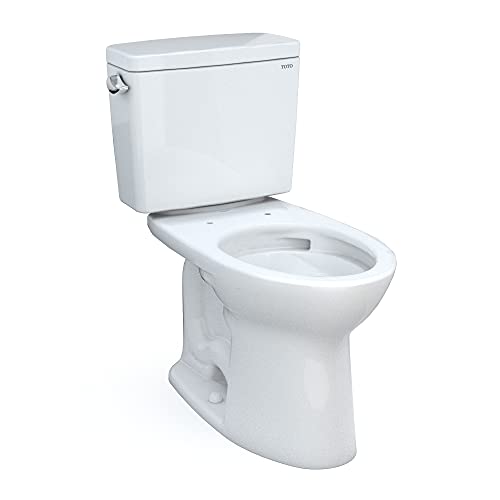
An honest, spec-by-spec comparison of Kohler's Villager and Archer bathtub lines against American Standard's Cadet bathtub line, covering material, install type, weight…
Read the guideThe industry has largely moved to comfort height, but that does not mean it is automatically right for your bathroom. Here is…
Read the guide