
Best 30-Inch Bathroom Vanities (2026)
Bathroom Remodeling4.6
Thirty inches is the sweet spot between a cramped 24-inch vanity and a full 36-inch cabinet, giving a single-sink bathroom real drawer…
Read the guideA solid wood bathroom vanity is built from real hardwood, oak, maple, birch, or similar species, rather than an engineered panel product, which gives it genuine longevity and the ability to be refinished, but also means it demands more humidity control and sealing care than an engineered alternative. We compared real hardwood construction, finish quality, and moisture protection from James Martin, Native Trails, and other vanity brands to find the solid wood vanities worth the added care they require.
The James Martin solid oak vanity is the best overall solid wood bathroom vanity, with genuine hardwood construction and a sealed finish built to handle real bathroom humidity. The Native Trails reclaimed wood vanity is the best pick for a primary bathroom that wants a distinctive, sustainably sourced wood character, and a solid maple single-sink vanity is the top choice for a smaller bathroom that still wants real hardwood construction.
Solid wood is the premium tier of bathroom vanity construction. Unlike engineered wood products that use wood particles or veneers bonded with resin, a solid wood vanity uses real hardwood boards joined together with traditional cabinetry techniques, which gives it a genuine grain pattern that runs consistently through the material rather than stopping at a thin surface layer. That construction also means a solid wood vanity can be sanded and refinished if the surface is damaged, something an engineered vanity cannot do.
Because of that premium construction, we weighted hardwood species and finish quality above nearly everything else for this list. A bathroom is one of the more demanding environments for wood furniture due to humidity from showers and sinks, so a properly sealed finish is what actually protects the investment over time, not the wood species alone. We also looked at joinery quality, since traditional joints hold up to years of drawer and door use better than glued particleboard construction. For a broader look at vanity sizing and configuration, see our bathroom vanity buying guide.
A genuine solid wood vanity is built from real hardwood boards, such as oak, maple, or birch, joined using traditional cabinetry techniques rather than assembled from engineered panels or thin veneers. Check product specifications carefully, since some vanities described loosely as "wood" actually use a wood veneer over an engineered core rather than solid boards throughout.
Solid wood can perform well in a bathroom, but it requires a properly sealed finish and reasonable humidity control, such as running a bathroom fan during and after showers, to prevent warping or finish damage over time. Unlike engineered wood with moisture-resistant laminate, solid wood relies more heavily on its finish and sealing to resist daily humidity exposure.
Yes, a solid wood vanity generally needs more attentive care than an engineered wood vanity with a moisture-resistant laminate surface, including periodic resealing or refinishing and consistent bathroom ventilation. In exchange, solid wood offers genuine longevity and the ability to be refinished rather than replaced when the surface eventually shows wear.
Seven real solid wood vanities chosen for hardwood construction, finish durability, and design versatility.
| Vanity | Best For | Key Spec | Notes | Check Price |
|---|---|---|---|---|
| James Martin Solid Oak Vanity | Best overall | Solid oak, sealed finish | Genuine hardwood, built to handle bathroom humidity | Check price |
| Native Trails Reclaimed Wood Vanity | Best distinctive wood character | Reclaimed solid wood | Sustainably sourced, unique grain patterns | Check price |
| Solid Maple Single-Sink Vanity | Best smaller bathroom fit | Solid maple, 30 to 36 in | Real hardwood in a compact footprint | Check price |
| James Martin Solid Wood Double-Sink Vanity | Best primary bathroom double vanity | Solid hardwood, 60 to 72 in | Two-basin configuration in real wood | Check price |
| Furniture-Style Solid Wood Vanity | Best traditional design statement | Solid hardwood, turned legs | Reads as genuine furniture, not builder-grade | Check price |
| Solid Walnut Vanity | Best rich, dark wood tone | Solid walnut | Deep grain and color for a modern look | Check price |
| Solid Wood Floating Vanity | Best modern wall-mount look | Solid hardwood, wall-mounted | Real wood in a contemporary silhouette | Check price |
Each pick is ranked on hardwood construction and finish durability first, then design and configuration.
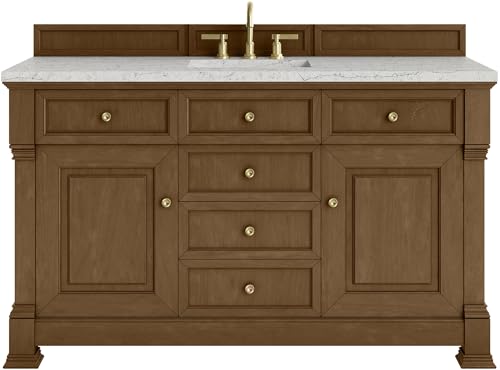
The James Martin solid oak vanity is the best all-around solid wood vanity, with genuine hardwood construction and a sealed finish built to handle real bathroom humidity.
Oak is one of the more common hardwoods used in furniture-grade cabinetry because of its pronounced grain and real structural strength, and James Martin's construction uses solid oak boards rather than a thin veneer layer, which means the visible grain pattern continues through the material rather than stopping at the surface. That distinction matters if the vanity is ever refinished, since a solid wood surface can be sanded down and resealed, while a veneer cannot.
The factory-applied sealed finish is the detail that actually determines how well this vanity holds up in a real bathroom, since even the best hardwood needs a genuine moisture barrier against daily humidity from a shower or sink. Owner reviews consistently note the finish holds up well with normal bathroom ventilation, though periodic resealing every few years is still worth planning for.
When a buyer wants a genuine hardwood vanity rather than a wood-look engineered alternative, this is where we start. The sealed finish is the part that actually earns its keep in a bathroom, not just the fact that it is solid oak underneath.

The Native Trails reclaimed wood vanity brings a distinctive, sustainably sourced wood character to a primary bathroom that wants a genuinely unique grain pattern no mass-produced vanity can replicate.
Reclaimed wood is sourced from previously used lumber, old barns, factories, or other structures, rather than newly harvested hardwood, which gives each vanity genuine character marks, nail holes, weathering, and grain variation, that a new hardwood board simply does not have. Native Trails builds its reclaimed wood vanities with the same sealed, bathroom-rated finish as its other pieces, so the sustainable sourcing does not come at the cost of humidity protection.
For a primary bathroom remodel that wants a genuine design story behind the vanity, not just a nice-looking cabinet, reclaimed wood delivers that in a way new hardwood cannot replicate. Every piece is slightly different, which is a real consideration for buyers who want visual consistency, but is exactly the appeal for buyers chasing a one-of-a-kind look.
We recommend reclaimed wood specifically to buyers who want their vanity to be a genuine conversation piece, not just furniture. The character marks are not flaws here, they are the entire point of choosing reclaimed material over new-cut hardwood.

A solid maple single-sink vanity brings genuine hardwood construction to a compact 30 to 36-inch footprint, built for a smaller bathroom that still wants real wood rather than an engineered alternative.
Maple has a tighter, more subtle grain pattern than oak, which gives a solid maple vanity a cleaner, more understated look that suits both traditional and contemporary bathrooms without dominating the room's design. In a compact 30 to 36-inch footprint, that subtlety works especially well, since a bold grain pattern can feel busy in a smaller space.
The construction and finish quality mirror what buyers get in a larger solid wood vanity, genuine hardwood boards and a sealed, moisture-resistant topcoat, just scaled down to fit a guest bathroom or smaller primary bathroom. For buyers who assumed solid wood construction meant committing to a large vanity, this closes that gap.
Smaller bathrooms do not need to default to an engineered wood vanity just because of size constraints. A well-built solid maple vanity in a compact width delivers the same real hardwood quality without demanding a large footprint.

The James Martin solid wood double-sink vanity brings genuine hardwood construction to a full 60 to 72-inch primary bathroom configuration shared by two people.
Scaling solid wood construction up to a 60 to 72-inch double-sink vanity is a bigger undertaking than a compact single-sink piece, since the cabinet needs enough structural hardwood framing to stay stable across that width without warping. James Martin's double-sink solid wood vanities use the same sealed, humidity-rated finish as their smaller pieces, just built across a larger footprint with two dedicated basin and storage zones.
For a primary bathroom remodel that wants genuine hardwood quality rather than an engineered wood double vanity, this is the piece that delivers real refinishing potential decades into the future, something no laminate or veneer surface can offer once it eventually shows wear. Confirm floor loading and wall support during installation given the added weight of solid hardwood at this scale.
For a primary bathroom that wants to invest once in a vanity that can be refinished rather than replaced decades from now, this is the solid wood double vanity we recommend. The upfront cost reflects genuine long-term value, not just a premium material name.

A furniture-style solid wood vanity uses turned legs and traditional joinery to read as a genuine antique-style piece of furniture rather than a builder-grade cabinet.
A furniture-style vanity leans into solid wood's traditional cabinetry roots, using decorative turned or tapered legs and applied molding that mimic freestanding antique furniture rather than a flush, built-in cabinet. Traditional joinery, dovetail drawers and mortise-and-tenon frame construction, is common at this tier and genuinely holds up better to years of daily opening and closing than glued particleboard joints.
For a bathroom designed around an antique or traditional aesthetic, this style of vanity often reads as though it was converted from an actual piece of period furniture, even when purpose-built as a vanity from the start. The tradeoff is that exposed legs leave less enclosed storage than a flush-front cabinet base.
When a bathroom's whole design direction is built around an antique or traditional look, we steer buyers toward a genuine furniture-style solid wood vanity rather than a flat-front cabinet with applied trim. The traditional joinery is a real functional upgrade, not just a style choice.
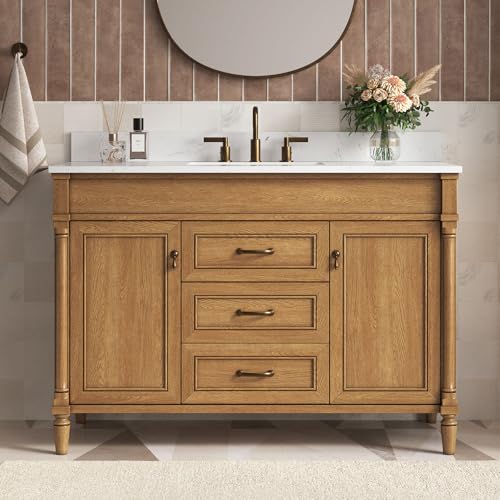
A solid walnut vanity brings rich, dark wood tones and dramatic grain to a modern bathroom that wants solid hardwood without a lighter, traditional wood look.
Walnut is one of the more premium hardwoods used in furniture and cabinetry, prized for its deep chocolate-brown color and dramatic, flowing grain that reads as noticeably more modern than the lighter, warmer tones of oak or maple. For a bathroom leaning into a contemporary or minimalist design, walnut's color does a lot of the design work on its own.
Construction and finish requirements are the same as any solid hardwood vanity, real boards joined with traditional cabinetry techniques and sealed against bathroom humidity, but walnut commands a higher price than oak or maple due to its cost as a raw material. The dark surface also shows water spots and dust more visibly than a lighter wood tone, worth factoring into daily cleaning expectations.
For a modern bathroom that wants solid wood's authenticity without the more traditional, warm tone of oak, walnut is the hardwood we recommend. Just be upfront with buyers that the dark surface needs more frequent wiping to look its best day to day.

A solid wood floating vanity combines real hardwood construction with a modern, wall-mounted silhouette that visually opens up a bathroom's floor space.
Solid wood is more commonly associated with traditional, floor-standing vanity designs, but a floating solid wood vanity proves the material works just as well in a modern, wall-mounted silhouette. The visible wood grain and genuine hardwood construction carry through even without a floor-standing cabinet base, and the exposed floor beneath makes cleaning noticeably faster.
Because solid wood is heavier than an engineered wood panel of the same size, wall blocking rated for the mounted weight is a genuine requirement here, more so than for a lighter MDF floating vanity, so this is worth confirming with a contractor before installation. For a bathroom that wants both a contemporary look and authentic hardwood construction, this bridges both.
A floating solid wood vanity is a great option for buyers who assume "modern" and "solid wood" are mutually exclusive. The key installation detail is confirming the wall blocking is rated for real hardwood's weight, not just a standard floating cabinet.
Across all seven picks, the solid wood pattern is consistent: the finish and sealing quality matter as much as the hardwood species itself, since even the best oak or walnut needs real moisture protection to perform well in a bathroom. Solid wood rewards buyers who want a vanity that can be refinished and can genuinely last for decades, in exchange for more attentive humidity care than an engineered wood alternative requires.
The right solid wood vanity depends on how much humidity control your bathroom has, whether you want a traditional or modern silhouette, and how much you value refinishing potential over decades of use. These checks cover the decisions that matter most.
Solid wood's biggest bathroom vulnerability is moisture, so a properly sealed, moisture-resistant topcoat is what actually protects the vanity day to day, not the hardwood species alone. Check manufacturer finish details before buying.
Consistent ventilation during and after showers meaningfully reduces the humidity exposure a solid wood vanity faces daily, extending the life of the finish and reducing the need for early resealing or refinishing.
Solid hardwood is heavier than engineered wood, which matters most for a floating wall-mount vanity that needs wall blocking rated for that weight, and for a large double-sink vanity that needs adequate floor support.
The James Martin solid oak vanity is the best overall pick, with genuine hardwood construction and a sealed finish built for real bathroom humidity.
Yes, with a properly sealed finish and reasonable bathroom ventilation. Solid wood offers genuine longevity and refinishing potential, though it requires more attentive humidity care than engineered wood alternatives.
Check the product specifications carefully, since some vanities described as wood actually use a thin wood veneer over an engineered core rather than solid boards throughout. Genuine solid wood construction should be stated explicitly in the specifications.
Yes, a solid wood vanity can be sanded down and resealed if the surface is scratched or damaged over time, something an engineered wood vanity with a veneer or laminate surface cannot do.
Oak, maple, and walnut are among the most common hardwoods used in bathroom vanity construction, each offering different grain patterns and color tones to suit different design directions.
Yes, running a bathroom fan during and after showers and periodically resealing the finish helps protect a solid wood vanity from the humidity exposure it faces daily in a bathroom.
Yes, reclaimed wood vanities offer genuine character and sustainable sourcing, with the same sealed, bathroom-rated finish protection as new hardwood vanities, though natural variation means less predictable uniformity.
Solid wood costs more due to the raw material cost of real hardwood boards and the more labor-intensive traditional joinery construction, compared to the manufactured, machine-produced panels used in MDF vanities.
Yes, solid wood floating vanities are available and combine genuine hardwood construction with a modern silhouette, though they require wall blocking rated for solid wood's added weight.
This varies by finish and bathroom humidity levels, but periodic resealing every few years helps maintain a solid wood vanity's moisture protection and appearance over its lifespan.
Yes, walnut offers a rich, dark tone and dramatic grain that suits modern bathroom design, though it costs more than oak or maple and shows water spots and dust more visibly due to its dark color.
Solid wood is the premium tier of bathroom vanity construction, offering genuine hardwood durability and refinishing potential in exchange for more attentive humidity care. The James Martin solid oak vanity leads for most buyers, the Native Trails reclaimed wood vanity is the standout for a genuinely distinctive design story, and a solid maple single-sink vanity proves real hardwood works well even in a smaller bathroom footprint.
Thirty inches is the sweet spot between a cramped 24-inch vanity and a full 36-inch cabinet, giving a single-sink bathroom real drawer…
Read the guide
Cast iron is the material homeowners choose when heat retention and permanence matter more than installation weight, and Kohler remains the brand…
Read the guideStep-by-step fixes for the bathroom vanity problems that show up most often, from misaligned drawers and doors to water damage at the…
Read the guide