
Best Kingston Brass Bathtubs (2026)
Bathroom Remodeling4.6
Seven Kingston Brass bathtubs pulled from the Aqua Eden line, compared on material, style and installation type using published specifications and aggregated…
Read the guideAmerican Standard has produced bathtubs in the United States for more than a century, spanning acrylic soaking tubs, cast iron alcove tubs, and enameled steel budget models. This guide covers the Cadet, Colony, Ovation, and Princeton lines, with real material specs, dimensions, and honest tradeoffs to help you pick the right tub for your renovation.
Research updated June 2026.
The best American Standard bathtub for most households is the Cadet 60x32 alcove tub, an enameled steel model that fits standard rough-in openings at a reasonable weight and price. Buyers wanting a soaking tub with integral armrests should choose the Ovation 60x32 acrylic, and buyers who want the most durable long-term surface should choose the Princeton cast iron alcove tub.
American Standard sells bathtubs across three core material categories: cast iron (Princeton), acrylic (Ovation), and enameled steel (Cadet, Colony). Each material has real tradeoffs in weight, heat retention, surface durability, and installation complexity, and none of these three materials is objectively "better" across every use case. The right choice depends on your subfloor's weight capacity, your budget, and whether you prioritize heat retention or ease of installation.
The Princeton is American Standard's cast iron alcove tub, built from a single cast iron shell coated with a fused porcelain enamel finish baked at high temperature. Cast iron is the heaviest common bathtub material, with a standard 60x32-inch Princeton weighing approximately 355 to 400 pounds empty, which means it typically does not require additional floor reinforcement beyond a standard code-compliant subfloor, but does require careful handling during installation and at least two installers. The enamel surface resists scratching and staining better than acrylic and retains heat longer than steel, since cast iron has significantly higher thermal mass. Cast iron tubs are also the most rigid material available, eliminating the flexing or creaking some steel and acrylic tubs develop over years of use.
The Cadet and Colony lines use pressed steel coated with the same porcelain enamel process as the Princeton, but at a much lighter weight, typically 110 to 130 pounds for a standard 60x32-inch alcove tub. Steel is more affordable to manufacture and ship than cast iron, and its lighter weight makes single-installer handling realistic. The tradeoff is a thinner enamel layer that is more prone to chipping if a heavy object is dropped in the tub, and steel loses heat faster than cast iron because it has less thermal mass. Steel tubs can also produce a hollow sound and slight flex underfoot compared to cast iron, though this is largely cosmetic and does not indicate structural weakness when installed to code.
The Ovation is American Standard's acrylic soaking and alcove tub line, formed from a vacuum-molded acrylic sheet reinforced with fiberglass backing. Acrylic tubs weigh in the middle range, typically 70 to 100 pounds for a standard alcove size, lighter than steel because the fiberglass-backed shell uses less material mass while acrylic's inherent flexibility allows for more design variety, including integral armrests, contoured backs, and soaking-depth profiles that cast iron and steel molds cannot easily replicate. Acrylic retains heat better than steel due to its lower thermal conductivity, though not as well as cast iron. Acrylic surfaces are more prone to scratching from abrasive cleaners than porcelain enamel, but scratches can often be buffed out, which is not possible with enamel.
American Standard bathtubs across all three lines are available primarily as alcove installations, meaning three walls surround the tub and one side is finished and visible. Some Princeton and Ovation configurations also support drop-in or freestanding-adjacent installations. Alcove tubs are the most common residential configuration because they fit standard 60-inch rough-in openings and require the least additional framing work during a renovation.
| Model | Line | Key Spec | Best For | Check Price |
|---|---|---|---|---|
| American Standard Cadet 60x32 | Cadet (Steel) | 110-130 lb, 60x32 in | Standard alcove replacement | Check price |
| American Standard Princeton 60x32 | Princeton (Cast Iron) | 355-400 lb, fused enamel | Maximum durability and heat retention | Check price |
| American Standard Ovation 60x32 | Ovation (Acrylic) | 70-100 lb, integral armrests | Soaking comfort and lighter install | Check price |
| American Standard Colony 60x30 | Colony (Steel) | 100-120 lb, 60x30 in | Budget replacement, smaller footprint | Check price |
| American Standard Princeton 60x30 | Princeton (Cast Iron) | 320-360 lb, compact footprint | Cast iron durability in smaller bathrooms | Check price |
| American Standard Ovation 60x30 | Ovation (Acrylic) | 65-90 lb, contoured back | Compact bathrooms wanting acrylic comfort | Check price |
| American Standard Cadet Right-Hand Drain | Cadet (Steel) | 110-130 lb, right drain config | Bathrooms with right-side plumbing | Check price |
Cast iron, in the Princeton line, is the most durable material American Standard offers, with a porcelain enamel surface that resists scratching and chipping far better than enameled steel and holds heat longest due to its high thermal mass. Enameled steel, in the Cadet and Colony lines, is the lightest and most budget-friendly option but has a thinner enamel coating more prone to chipping from dropped objects. Acrylic, in the Ovation line, sits in between on weight and durability but offers the most design flexibility, including integral armrests and contoured soaking profiles that neither cast iron nor steel molds can replicate.
Weight varies significantly by material. A standard 60x32-inch Princeton cast iron tub weighs approximately 355 to 400 pounds empty. The same size Cadet enameled steel tub weighs approximately 110 to 130 pounds. The Ovation acrylic tub in the same footprint weighs approximately 70 to 100 pounds. Add the weight of water and a bather when evaluating floor load: a full 60x32 tub with an adult occupant can add over 400 pounds of live load regardless of tub material, which is a standard consideration in code-compliant residential framing rather than a tub-specific concern.
Yes. The Princeton line is American Standard's cast iron bathtub, available in multiple lengths including 60x32 and 60x30 configurations, both left-hand and right-hand drain options, and alcove or recessed installation types. The Princeton uses the same fused porcelain enamel process on cast iron that American Standard has used for over a century, producing a surface that is more resistant to scratching, staining, and chemical damage than acrylic or enameled steel.
The Colony 60x30 or Ovation 60x30 are the best choices for smaller bathrooms because the 30-inch width reduces the footprint compared to the standard 32-inch depth while still fitting a standard 60-inch rough-in length. The Ovation's lighter acrylic construction also makes it easier to maneuver into a tight bathroom during installation compared to the heavier Princeton cast iron tub, which needs more clearance and manpower to place.

The Cadet 60x32 is the enameled steel alcove tub most homeowners should default to for a standard bathtub replacement, fitting the common 60-inch rough-in opening at a weight light enough for a two-person installation without professional lifting equipment.
The Cadet uses pressed steel coated with a fused porcelain enamel finish baked at high temperature, the same enamel technology American Standard applies to its cast iron Princeton line, just on a thinner steel substrate. This keeps the empty weight around 115 pounds, roughly a third of what the equivalent cast iron Princeton weighs, which materially changes the installation difficulty. Two people can carry and set a Cadet without a hydraulic lift or professional moving equipment, a real consideration for DIY renovators working in upstairs bathrooms with narrow stairwells.
Owner reviews consistently describe the Cadet as a dependable, no-surprises tub replacement. The most common complaint across aggregated retail reviews is the hollow sound and slight flex underfoot compared to the previous cast iron tub being replaced, which is a normal characteristic of steel construction rather than a defect, though some buyers find it noticeable when stepping in. The enamel surface itself receives positive marks for scratch resistance in normal use, with chipping reported almost exclusively from dropped heavy objects like shampoo bottles with metal caps or bathroom tools.
The Cadet is the correct default choice for a standard bathtub swap unless you have a specific reason to go heavier or lighter. It fits the rough-in opening nearly every American home already has, the enamel finish holds up fine under normal household use, and the weight keeps installation labor costs down. Only step up to the Princeton if you have small children who tend to drop hard objects in the tub or you specifically want the added heat retention cast iron provides.

The Princeton is American Standard's cast iron alcove tub, offering the most scratch-resistant and chip-resistant surface in the lineup along with the best heat retention of any material the brand sells, at the cost of a significantly heavier and more labor-intensive installation.
Cast iron's thermal mass is the practical reason bathers notice a difference between the Princeton and a steel or acrylic tub: bathwater in a cast iron tub cools more slowly because the iron itself absorbs and re-releases heat gradually rather than conducting it away quickly. The fused porcelain enamel finish on the Princeton is also measurably thicker and more resistant to impact chipping than the enamel applied to the thinner steel Cadet, since the cast iron substrate does not flex under impact the way steel can.
The tradeoff is entirely in the installation process. At roughly 380 pounds empty, the Princeton requires at least two people to carry and typically benefits from professional installation, particularly for upper-floor bathrooms or homes with narrow stairwells and doorways. Owner reviews are overwhelmingly positive on long-term performance, with many reporting the tub still looks new after a decade or more of daily use, but installers commonly note in reviews that the weight caught first-time DIY renovators off guard.
Choose the Princeton when the tub is a long-term, once-per-generation renovation decision rather than a quick fix. The enamel-on-cast-iron surface genuinely outlasts steel and resists the scratches and chips that eventually dull an acrylic or steel tub's finish. Just confirm your access route and stairwell width before ordering. A tub that will not fit around a stairwell corner is a real and common installation failure with cast iron products.
The Ovation is American Standard's acrylic soaking tub, offering integral armrests and a contoured back profile that neither the Cadet's steel mold nor the Princeton's cast iron mold can replicate, at a mid-range weight that simplifies installation compared to cast iron.
Acrylic's vacuum-molding process allows American Standard to shape the Ovation with a deeper soaking profile and contoured backrest that pressed steel and cast iron molds cannot achieve at a comparable price point. The fiberglass backing reinforces the acrylic shell for rigidity, keeping flex to a minimum despite the lighter overall weight compared to steel or cast iron. At roughly 85 pounds empty, the Ovation is light enough for two people to install without special equipment, while still retaining heat noticeably better than the Cadet due to acrylic's lower thermal conductivity.
The most consistent owner feedback concerns cleaning products: acrylic surfaces can dull or scratch under repeated use of abrasive powders or scouring pads, which is not a concern with porcelain enamel on the Princeton or Cadet. American Standard and most acrylic tub manufacturers recommend non-abrasive cleaners specifically formulated for acrylic surfaces. Owners who follow this guidance report the surface holding its shine for many years, and minor scratches that do occur can typically be buffed out, an option not available with a chipped enamel surface.
The Ovation is the right call when soaking comfort matters as much as installation practicality. The integral armrests are a genuine ergonomic upgrade over a flat-back steel or cast iron tub, and the weight savings over the Princeton make it realistic for a wider range of installation scenarios. Just commit to non-abrasive cleaning products from day one to keep the acrylic surface looking new.
The Colony is American Standard's entry-level enameled steel tub, offering the same enamel-on-steel construction as the Cadet in a slightly narrower 30-inch depth that reduces both weight and cost for budget-focused renovations.
The Colony trims two inches of depth compared to the Cadet, from 32 inches to 30 inches, which is a meaningful reduction in usable bathing space but also reduces material cost and shipping weight. For rental properties, guest bathrooms, or budget renovations where the tub is a functional necessity rather than a design centerpiece, the narrower profile is rarely a dealbreaker. The enamel finish and steel gauge are comparable to the Cadet, meaning the durability profile is essentially the same, just in a smaller size.
Owner reviews for the Colony are consistent with the Cadet in terms of finish quality and installation ease, with the main differentiator being the reduced bathing space, which some reviewers note feels noticeably tighter for taller adults. For households prioritizing cost above all else in a tub replacement, the Colony delivers the same core enamel technology as the rest of the American Standard lineup at the lowest price point.
Choose the Colony specifically when budget or a narrow bathroom footprint is the deciding factor, not as a default. The two-inch depth reduction compared to the Cadet is noticeable in daily use, particularly for taller household members. If your rough-in opening supports the standard 32-inch depth and your budget has any flexibility, the Cadet is the better everyday tub for the same enamel technology.
This 30-inch-deep version of the Princeton brings cast iron's chip resistance and heat retention into bathrooms too narrow for the standard 32-inch depth, without giving up the enamel-on-iron durability that defines the line.
The 30-inch Princeton weighs slightly less than the 32-inch version at approximately 340 pounds, but it remains firmly in cast iron's heavy-installation category compared to steel or acrylic alternatives at the same footprint. The narrower depth makes it a direct fit for bathrooms that were originally built around a 30-inch tub opening, a common dimension in older homes built before the 32-inch depth became a more standard offering.
Owner feedback mirrors the 32-inch Princeton: buyers consistently report satisfaction with long-term surface durability and heat retention, with the installation weight being the primary planning consideration rather than a product complaint. This model is a straightforward recommendation for anyone replacing an existing cast iron tub in a home with an older, narrower rough-in.
If your bathroom was built with a 30-inch tub opening, and many older homes were, this is the cast iron option rather than trying to force a 32-inch Princeton into a smaller space. Confirm your exact rough-in measurement before ordering since cast iron tubs are far more difficult to return or exchange after delivery given their weight and packaging.
The 30-inch Ovation delivers the same contoured acrylic soaking profile as the 32-inch version in a narrower footprint, giving compact bathrooms a comfort-focused option that steel and cast iron alternatives in the same size cannot match.
At approximately 75 pounds empty, the 30-inch Ovation is the lightest tub in this roundup, making it a realistic option for solo or two-person installation in tight bathrooms where maneuvering a heavier cast iron or even steel tub into place would be genuinely difficult. The contoured backrest and integral armrest design carry over from the 32-inch model without modification, preserving the comfort advantage that defines the Ovation line.
Owner reviews highlight the ease of installation as the standout benefit of this size and material combination, particularly for renovators working in older homes with narrow doorways or tight stairwells. As with all acrylic Ovation models, non-abrasive cleaning products are recommended to preserve the surface finish over time.
This is the tub to choose when both your bathroom footprint and your installation manpower are limited. It is the lightest, most maneuverable option in the American Standard lineup while still delivering genuine soaking comfort through its contoured shape, something the equivalent steel or cast iron tub in this size cannot offer.
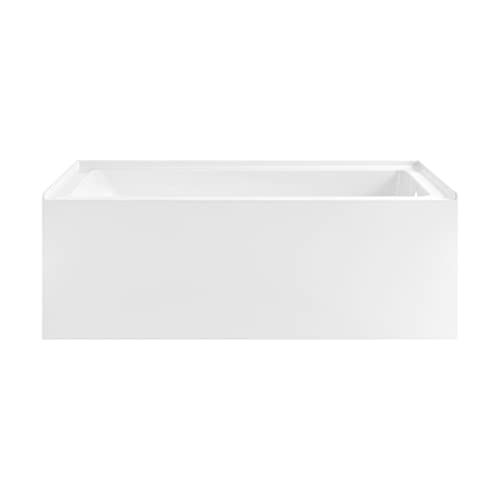
This right-hand drain configuration of the Cadet exists specifically to match bathrooms where the drain and supply plumbing are already roughed in on the right side, avoiding the cost of relocating plumbing to fit a standard left-drain tub.
Drain position is determined by which end of the tub the drain and overflow are installed on when facing the tub. Getting this wrong means either relocating drain plumbing, an expensive and invasive change, or returning the tub. American Standard offers the Cadet in both left-hand and right-hand configurations specifically so renovators replacing an existing tub can match the current plumbing layout exactly.
Beyond the drain position, this model shares identical material, weight, and enamel finish specifications with the standard left-hand Cadet. Owner reviews focus almost entirely on confirming the drain side matches expectations upon delivery, a reminder to always verify your existing plumbing's drain side by standing at the foot of the tub facing the drain end before ordering.
Before ordering any tub, confirm your drain side using the industry-standard method: stand facing the tub from the end without the drain. If the drain is on your right, you need a right-hand drain tub. Getting this wrong is one of the most common and costly mistakes in DIY tub replacement projects, so double-check before purchase rather than assuming the new tub will match the old one automatically.
Yes. American Standard has manufactured bathtubs in the United States for over a century and offers all three major bathtub materials, cast iron, enameled steel, and acrylic, at accessible price points with consistent enamel and finish quality across its Princeton, Cadet, Colony, and Ovation lines.
American Standard has a long history of U.S. manufacturing and maintains domestic production for portions of its plumbing fixture lineup, though sourcing can vary by product line and has shifted over time. Check the specific product listing or contact American Standard customer service for current manufacturing location details on a given model.
Both the Cadet and Colony use enameled steel construction with the same finish technology. The primary difference is size: the Cadet is typically offered in a 32-inch depth while the Colony is offered in a narrower 30-inch depth, making the Colony a better fit for tighter bathroom footprints and a lower price point.
A standard 60x32-inch American Standard Princeton cast iron tub weighs approximately 355 to 400 pounds empty. The narrower 60x30-inch version weighs slightly less, around 320 to 360 pounds. Always confirm the exact weight with the specific product listing since finish thickness and design details can shift the figure.
Most residential subfloors built to standard code requirements can support a cast iron tub without additional reinforcement, since floor joist spans in typical bathroom sizes are engineered with adequate live-load capacity. However, older homes, unusually long joist spans, or bathrooms on upper floors with reduced structural capacity should be evaluated by a contractor or structural engineer before installing a cast iron tub, particularly in a renovation where the tub is being added rather than replaced in the same location.
Enameled steel tubs like the Cadet and Colony, and acrylic tubs like the Ovation, are light enough for two capable people to carry and set without professional equipment, making DIY installation realistic for homeowners comfortable with basic plumbing and tile work. Cast iron Princeton tubs are heavy enough that most homeowners benefit from professional installation or at minimum a team of three or more people for safe handling.
The most common standard size across the Cadet, Princeton, and Ovation lines is 60 inches long by 32 inches deep, matching the most widespread residential rough-in opening in the United States. A 30-inch-deep variant is also available across most lines for narrower bathrooms or older rough-in openings.
Enameled steel and enameled cast iron both use a porcelain enamel surface that is generally more chip- and scratch-resistant over decades of use than acrylic, provided heavy objects are not dropped in the tub. Acrylic surfaces can dull or scratch under abrasive cleaning but scratches can often be buffed out, an option not available once porcelain enamel chips. Overall lifespan under normal care is comparable across all three materials when properly maintained.
Bathtub drain and overflow assemblies are typically sold separately from the tub itself across most American Standard bathtub listings, consistent with standard plumbing fixture industry practice. Confirm the specific listing to see whether a drain kit is included or needs to be purchased separately.
American Standard typically covers its bathtubs with a limited warranty against manufacturing defects, commonly one year from the date of purchase, though exact terms can vary by product line and retailer. Review the specific warranty documentation included with your model or available on American Standard's official site for exact coverage terms.
Stand at the end of the tub opening opposite the drain, facing the drain end. If the drain is positioned on your left, you need a left-hand drain tub; if it is on your right, you need a right-hand drain tub. This standard orientation method applies across the entire American Standard bathtub lineup and most other manufacturers as well.
American Standard covers all three major bathtub materials with consistent build quality across its Princeton, Cadet, Colony, and Ovation lines. Most households should start with the Cadet for its balance of cost, weight, and enamel durability, step up to the Princeton cast iron tub for a permanent long-term installation, and choose the Ovation acrylic when soaking comfort and integral armrests matter most.
Related Guides: Best American Bathtubs · Best American Showers · Best American Bathroom Faucets · Bathtub Buying Guide · American Standard Brand Guide
How we rank & our data sources
We do not run physical lab tests. Rankings are built from published, verifiable data and real owner feedback, never paid placement.
Researched by admin · Last updated July 3, 2026 · Our review method
Seven Kingston Brass bathtubs pulled from the Aqua Eden line, compared on material, style and installation type using published specifications and aggregated…
Read the guide
An honest, spec-by-spec comparison of corner bathroom vanities against standard rectangular vanities, covering floor space savings, model selection, storage layout and installation…
Read the guide
An honest, spec-by-spec comparison of wall-mounted and floor-mounted bathroom vanities, focused on the structural and installation requirements each configuration places on your…
Read the guide