
Best Kingston Brass Bathtubs (2026)
Bathroom Remodeling4.6
Seven Kingston Brass bathtubs pulled from the Aqua Eden line, compared on material, style and installation type using published specifications and aggregated…
Read the guideKohler manufactures one of the widest bathtub catalogs in the US market, spanning cast iron alcove tubs, acrylic freestanding soakers, and whirlpool systems. This guide ranks the strongest Kohler tub lines by material, dimensions, and installation type so you can match the right tub to your bathroom's rough-in and weight-load capacity.
Research updated June 2026.
The Kohler Villager cast iron alcove tub is the most widely specified Kohler bathtub for standard renovations, prized for its durability and classic 60 by 30.25 inch footprint that fits most existing rough-ins. For a freestanding statement tub, the Underscore acrylic oval is the strongest all-around pick, balancing weight, price, and soaking depth.
Kohler's bathtub catalog spans several distinct material categories: cast iron with a fused porcelain enamel finish, cast acrylic, and a smaller number of engineered composite tubs. Each material has different weight, heat retention, and installation implications, so this guide organizes picks by real use case rather than treating all Kohler tubs as interchangeable.
Selection criteria included documented material composition from Kohler's published specification sheets, standard versus nonstandard rough-in dimensions (since a nonstandard tub can require costly plumbing modifications), aggregated owner ratings from major retailers, and weight-load data relevant to older homes where floor joist capacity for a 400-plus pound cast iron tub filled with water is a genuine engineering consideration.
Kohler bathtubs span cast iron (heaviest, most durable, best heat retention), acrylic (lighter, more design flexibility, less expensive to ship and install), and composite materials. The right choice depends on your subfloor's weight capacity, your installation type (alcove, freestanding, or drop-in), and whether you prioritize heat retention or ease of installation.
| Model | Line | Key Spec | Best For | Check Price |
|---|---|---|---|---|
| Villager Alcove Tub | Villager | Cast iron, 60 x 30.25 in, 3-wall alcove | Standard renovation, most rough-ins | Check Price |
| Underscore Oval Freestanding | Underscore | Acrylic, 66 x 32 in, freestanding | Statement soaking tub | Check Price |
| Archer Alcove Tub | Archer | Acrylic, 60 x 32 in, integral apron | Modern alcove remodels | Check Price |
| Memoirs Alcove Tub | Memoirs | Cast iron, 60 x 32 in, traditional profile | Traditional and transitional baths | Check Price |
| Bellwether Alcove Tub | Bellwether | Cast iron, 60 x 30.25 in, integral apron | Budget cast iron replacement | Check Price |
| Windward Alcove Whirlpool | Windward | Acrylic, 60 x 32 in, whirlpool jets | Hydrotherapy in a standard footprint | Check Price |

The Villager has been Kohler's core cast iron alcove tub for decades, and its 60 by 30.25 inch footprint remains the single most common bathtub rough-in dimension in US residential construction, making it the default replacement choice for most bathroom remodels.
Cast iron's core advantage over acrylic is heat retention. The dense iron substrate absorbs heat from the bathwater slowly and releases it back gradually, which is why cast iron tubs measurably stay warmer for longer soaking sessions compared with acrylic tubs of the same water volume. This is a genuine, physics-based difference rather than a marketing claim, and it is the primary reason cast iron remains popular despite its installation weight disadvantage.
The installation weight is the real tradeoff. At approximately 355 pounds empty, and considerably more once filled with water and an occupant, the Villager requires confirmation that the bathroom subfloor and joist structure can support the load, particularly in older homes or upper-floor bathroom installations. A structural engineer or experienced contractor can typically make this determination in a single site visit.
The Villager remains the gold standard for a straightforward alcove tub replacement precisely because its dimensions have not changed in decades. If you are replacing an existing cast iron tub with the same footprint, plumbing rough-in locations typically do not need to move, which keeps installation labor and cost predictable. Verify floor-load capacity before committing on any upper-floor installation.

The Underscore oval brings Kohler's freestanding acrylic tub program to a design-forward oval shape, with a considerably lighter installation weight than any cast iron equivalent while still delivering a deep, full-body soak.
Freestanding tubs have become the defining feature of primary bathroom remodels over the past decade, and the Underscore's oval profile is one of Kohler's most consistently well-reviewed acrylic freestanding models. At 79 gallons to overflow, it provides genuine full-immersion soaking depth uncommon in alcove tubs, which are typically shaped to accommodate a shower conversion and therefore compromise on depth.
The installation weight advantage is significant for practical reasons beyond just ease of carrying it into the bathroom. A 106-pound empty acrylic tub places dramatically less ongoing load on the subfloor than a 355-pound cast iron equivalent, which matters for upper-floor installations in older homes where structural reinforcement would otherwise be required for a cast iron freestanding tub.
Acrylic freestanding tubs like the Underscore solve the weight problem that has historically limited freestanding tub installations to ground-floor bathrooms with slab foundations. For upper-floor primary bath remodels, an acrylic freestanding tub is frequently the only realistic path to a true soaking tub without a structural engineering review and floor reinforcement project.

The Archer combines a squared, modern silhouette with acrylic's much lower installation weight, making it a strong option for buyers who want a contemporary alcove tub without the physical demands of a cast iron install.
The Archer's 32-inch width is a genuine point of differentiation, providing more interior legroom than the 30.25-inch Villager, but this also means it will not drop into an existing 30.25-inch rough-in without adjusting the surrounding wall framing. Buyers doing a straightforward like-for-like replacement should confirm existing rough-in width before choosing the Archer over the narrower Villager or Bellwether.
Acrylic construction also has real installation-day advantages beyond weight. A 100-pound tub can typically be maneuvered into a bathroom and set into an alcove by two people without specialized lifting equipment, whereas a cast iron tub at 350-plus pounds often requires either additional labor or mechanical assistance, particularly for stairwell or hallway navigation in older homes.
The Archer is a sensible middle-ground choice for buyers who want the contemporary squared-apron look without committing to a full freestanding tub or the installation difficulty of cast iron. Confirm the 32-inch width against your existing rough-in before ordering, since this is the detail most likely to cause an installation surprise.
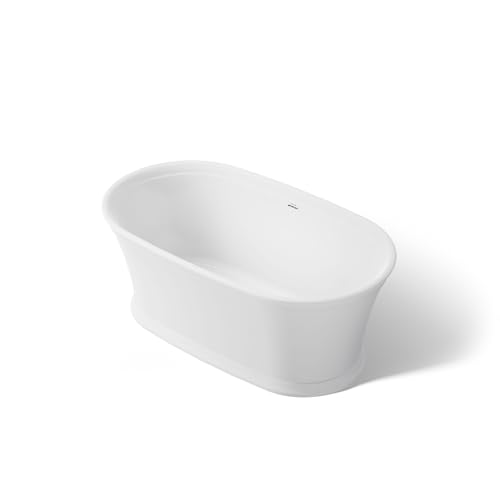
The Memoirs cast iron alcove tub pairs the heat-retention benefits of cast iron with a softer, more traditionally profiled apron than the Villager, and it coordinates with Kohler's broader Memoirs fixture family for buyers pursuing a matched suite.
For buyers pursuing a coordinated traditional or transitional bathroom, the Memoirs tub's value lies primarily in matching Kohler's Memoirs pedestal sinks, toilets, and faucet trim, creating visual continuity that mismatched fixture selections cannot replicate. The apron's gentler curve and detailing distinguish it from the more utilitarian Villager profile, though both share the same cast iron and porcelain enamel construction.
At approximately 390 pounds empty, the Memoirs is the heaviest tub in this comparison, and buyers should treat the floor-load verification step as non-negotiable, particularly for any installation above a basement or slab-on-grade level. A contractor experienced with cast iron tub installation will typically check joist spacing and span against local building code load tables before delivery day.
The Memoirs makes the most sense as part of a deliberate suite-matching strategy rather than as a standalone tub purchase. If you are not pairing it with Memoirs sinks and toilets, the Villager delivers essentially the same cast iron performance at a lower price point with an equally clean profile.

The Bellwether is Kohler's most accessible-priced cast iron alcove tub, delivering the same fundamental porcelain enamel and cast iron construction as the Villager and Memoirs at a lower entry cost with a simplified integral apron design.
For landlords and property managers weighing tub replacement costs across multiple units, the Bellwether's value proposition is straightforward: it delivers the long-term durability advantage of cast iron (a 40-plus year service life is common) without the premium styling costs of the Villager or Memoirs lines. Since the apron is not visible in most bathroom layouts once tile surround is installed, the styling difference is largely immaterial to end users.
Some Bellwether SKUs are available with an integrated grip rail molded into the apron or tub wall, a genuine accessibility feature for aging-in-place renovations or rental units serving elderly tenants. This is worth checking specifically, since not every Bellwether configuration includes this option.
The Bellwether is a rational choice anywhere cast iron's durability is the priority and styling is secondary, particularly for rental portfolios where tub replacement frequency and total cost of ownership matter more than design distinctiveness. Check for grip-rail SKU availability if accessibility is a factor in the renovation.

The Windward adds Kohler's whirlpool jet system to a standard 60 by 32 inch alcove footprint, delivering hydrotherapy functionality without requiring the larger footprint or floor-load planning of a freestanding jetted tub.
Whirlpool tubs introduce a genuine maintenance requirement that non-jetted tubs do not have: the internal jet plumbing can harbor soap scum, body oil residue, and bacterial growth if not periodically flushed with a manufacturer-recommended cleaning cycle. Kohler's documentation for the Windward recommends running a dedicated cleaning cycle using a whirlpool-safe cleaning product at regular intervals, a maintenance step that owners of non-jetted tubs do not need to perform.
The electrical requirement is also a real installation cost factor that buyers should budget for separately from the tub itself. A dedicated GFCI-protected circuit for the pump motor typically requires a licensed electrician, and the circuit routing depends heavily on the tub's location relative to the home's electrical panel.
Whirlpool tubs are a legitimate feature for buyers who specifically want hydrotherapy massage, but they are not the right choice for anyone who simply wants a deep soaking tub, since the maintenance and electrical requirements add real ongoing complexity. If passive soaking is the goal, an acrylic freestanding tub like the Underscore delivers that experience with none of the jet-related maintenance.
Cast iron holds heat longer, resists scratching better, and typically lasts 40 years or more, but it weighs three to four times as much as an equivalent acrylic tub and requires floor-load verification, especially on upper floors of older homes. Acrylic is significantly lighter, easier to install, and typically less expensive, but it retains heat for a shorter period and can scratch more easily under abrasive cleaning.
The decision generally comes down to two factors: the structural capacity of your subfloor and how much you value long soaking sessions where water temperature retention matters. For ground-floor installations over a slab foundation, cast iron's weight is rarely an obstacle. For upper-floor bathrooms in older wood-frame construction, acrylic is often the more practical choice without expensive structural reinforcement.
See the bathtub buying guide for a full breakdown of material tradeoffs, including engineered composite and steel-enamel options from other manufacturers.
The most common standard alcove bathtub rough-in in US residential construction is 60 inches long by 30 to 32 inches wide. Kohler's Villager and Bellwether use the narrower 30.25-inch width, while the Archer, Memoirs, and Windward use the wider 32-inch width. Always measure your existing rough-in opening before ordering a replacement tub.
A mismatch between your existing rough-in and a new tub's width is one of the most common and costly surprises in a bathroom tub replacement. A tub that is narrower than the rough-in opening will leave a gap that requires additional framing or trim work, while a tub that is wider than the opening will not fit without modifying the surrounding wall studs. Measuring the exact rough-in width, and confirming it against the specific model's published dimensions (not just "standard 60-inch tub" assumptions), is the single most important pre-purchase step.
Standard residential floor construction is generally designed to support typical bathroom fixture loads, but a filled cast iron tub with an occupant can weigh 800 to 1,000 pounds concentrated in a relatively small footprint. This load, combined with the age and condition of the floor joists, should be evaluated by a contractor or structural engineer before installing a cast iron tub, particularly on any floor above ground level or in homes built before modern span-table code requirements.
Most ground-floor bathrooms over a concrete slab or well-supported joist system handle a filled cast iron tub without any modification. The concern arises specifically with older upper-floor bathrooms, additions built with undersized joists, or spans that exceed current code recommendations. A contractor can typically assess joist size, spacing, and span in a single visit and recommend whether sistering additional joists or adding blocking is warranted before installation.
Both Kohler and American Standard manufacture cast iron bathtubs using a comparable fused porcelain enamel process, and both offer similar 60-inch standard alcove dimensions. There is no independently published data showing a meaningful long-term durability gap between the two brands' cast iron tub lines; both are considered premium-tier cast iron manufacturers in the US market.
The more relevant differentiator is model-specific dimensions and apron styling. Kohler's Villager, Memoirs, and Bellwether cover slightly different width and styling niches, while American Standard's cast iron offerings are organized under different naming conventions. For buyers comparing across brands, matching the exact rough-in width remains more important than brand selection, since both manufacturers' cast iron formulations perform similarly under normal residential use.
Kohler cast iron tubs commonly remain in functional service for 40 years or longer, since the porcelain enamel surface is fused to the iron substrate at high temperature and resists wear under normal residential use. The primary failure mode over decades of use is surface chipping from dropped hard objects rather than structural failure of the tub itself.
At approximately 100 pounds empty, an acrylic tub like the Archer can sometimes be maneuvered by one strong individual over short distances, but Kohler and most contractors recommend at least two people for safe handling and to avoid damaging the tub or surrounding walls during installation.
Both are 60 by 30.25 inch cast iron alcove tubs with comparable durability. The Villager offers a broader range of color and finish options and a more established styling history, while the Bellwether is Kohler's more accessible-priced cast iron option with simpler apron detailing and, on select SKUs, an available integrated grip rail.
Freestanding tubs like the Underscore typically use a floor-mounted drain and overflow assembly rather than the wall-mounted configuration used in alcove tubs. This requires the drain rough-in to be positioned according to the specific freestanding tub's published template, which should be confirmed with your plumber before rough-in plumbing is finalized.
Mild dish soap or a non-abrasive bathroom cleaner with a soft cloth or sponge is recommended for routine cleaning of porcelain enamel surfaces. Avoid steel wool, abrasive powders, and strong acid-based cleaners, which can dull the glaze over time. For hard-water staining, a diluted vinegar solution typically resolves mineral buildup without damaging the finish.
Kohler's mainstream residential bathtub catalog, covered in this guide, does not include a walk-in tub with a low-threshold door, which is a specialized accessibility product category. Buyers specifically seeking a walk-in tub for accessibility should look at Kohler's dedicated accessibility product line or specialized walk-in tub manufacturers, and should verify current availability directly with Kohler or an authorized dealer.
Whirlpool tubs require periodic sanitizing cycles using a manufacturer-approved whirlpool cleaning product to prevent residue and bacterial buildup inside the jet plumbing. Kohler recommends running this cleaning cycle at regular intervals based on frequency of use; consult the product's owner manual for the specific recommended schedule.
Acrylic alcove tubs can be installed by an experienced DIY renovator comfortable with plumbing rough-in work, tile surround installation, and proper waterproofing. Cast iron tubs, freestanding tubs, and any whirlpool model with electrical requirements are generally better suited to a licensed contractor or plumber given the weight handling, drain positioning precision, and electrical code compliance involved.
Standard 60-inch Kohler alcove tubs hold approximately 40 to 50 gallons of water to the overflow drain, depending on the specific model's depth and contour. Freestanding soaking tubs like the Underscore hold more, typically 75 to 80 gallons to overflow, due to their deeper basin profile.
No. Kohler bathtubs are sold separately from the tub filler faucet and showerhead trim. Buyers need to select a compatible tub filler or tub-and-shower valve system separately, matching the tub's mounting configuration (deck-mounted, wall-mounted, or floor-mounted for freestanding tubs).
Drain orientation is described from the perspective of someone standing outside the tub facing it. A right-hand drain tub has the drain on the right side; a left-hand drain has it on the left. This must match your existing plumbing rough-in location, or the rough-in plumbing will need to be relocated, which adds significant cost to a renovation.
A 1.75-inch width difference provides modest additional shoulder and hip room, which some owners find meaningful for comfort during longer baths, particularly for taller or larger-framed individuals. The difference is not dramatic, but it is the reason Kohler offers both widths across different model lines rather than standardizing on one.
The apron is the finished front and side panel of an alcove tub visible outside the tiled area, as opposed to a recessed tub that requires separate tile or panel finishing on the exposed sides. Kohler's alcove tubs, including the Villager, Archer, and Bellwether, include an integral apron, simplifying installation since no separate finishing material is needed on the visible tub face.
The Kohler Villager remains the most dependable choice for a standard alcove tub replacement, combining cast iron's long-term durability with the most common rough-in width in US residential bathrooms. For a primary bathroom centerpiece, the Underscore oval freestanding tub delivers a genuine deep-soak experience at a fraction of cast iron's installation weight, making it especially practical for upper-floor installations. Buyers should treat rough-in width and floor-load capacity as the two non-negotiable checks before ordering any Kohler tub, regardless of which model is selected.
How we rank & our data sources
We do not run physical lab tests. Rankings are built from published, verifiable data and real owner feedback, never paid placement.
Researched by admin · Last updated July 3, 2026 · Our review method
Seven Kingston Brass bathtubs pulled from the Aqua Eden line, compared on material, style and installation type using published specifications and aggregated…
Read the guide
An honest, spec-by-spec comparison of corner bathroom vanities against standard rectangular vanities, covering floor space savings, model selection, storage layout and installation…
Read the guide
An honest, spec-by-spec comparison of wall-mounted and floor-mounted bathroom vanities, focused on the structural and installation requirements each configuration places on your…
Read the guide