



Best 30-Inch Bathroom Vanities (2026)
Bathroom Remodeling4.6
Thirty inches is the sweet spot between a cramped 24-inch vanity and a full 36-inch cabinet, giving a single-sink bathroom real drawer…
Read the guideFrom pulling permits to picking your final toilet, a realistic, week-by-week breakdown of every phase so you can plan without surprises.
A full bathroom remodel typically takes 3 to 6 weeks for an average 50-square-foot guest bathroom. Master bathrooms with custom tile, new plumbing rough-in, or structural changes can run 8 to 12 weeks. The biggest variable is permit approval, which alone can add 1 to 4 weeks depending on your municipality.
Few home projects feel as disruptive as a bathroom remodel. You lose access to a room you use multiple times a day, and every delay compounds that inconvenience. Yet most homeowners walk into a remodel with a vague idea that "it'll take a few weeks" and end up blindsided when the contractor is still pulling tile six weeks later.
This guide breaks down every phase of a bathroom remodel with realistic timelines based on published contractor data, permit-office averages, and manufacturer lead times. Whether you are refreshing a powder room or gutting a master suite, you will find the milestone map you need to manage your project, your contractor, and your expectations.
Note: if your remodel includes replacing the toilet, your choice of fixture can affect the rough-in timeline. See our best flushing toilets guide and the related rough-in dimensions guide for specs before your plumber orders parts.
The phrase "full remodel" covers a wide spectrum. At one end is a cosmetic refresh: new toilet, vanity swap, fresh paint, updated fixtures. That can be completed in 5 to 10 business days by a two-person crew. At the other end sits a gut renovation that moves the toilet drain, adds a double vanity, installs a curbless shower with custom tile, and replaces every surface down to the subfloor. That project can take 3 months from first design meeting to final walk-through.
Most residential bathrooms fall somewhere in the middle. The National Association of Home Builders (NAHB) and contractor industry surveys consistently show an average elapsed time of 23 to 29 days for a 50-to-75-square-foot bathroom when all materials are on-site before demolition starts.
The single biggest cause of remodel overruns is ordering materials after demolition starts. Tile, toilets, vanity tops, and specialty fixtures each carry lead times. A TOTO Aquia IV or Kohler Cimarron ordered from stock ships fast, but custom-size vanity tops or discontinued color matches can take 3 to 6 weeks. Lock in every SKU before the first sledgehammer swing.
| Phase | Typical Duration | Who Does It | Key Dependencies |
|---|---|---|---|
| Planning & design | 1 to 3 weeks | Homeowner / designer | Budget, scope, wish list |
| Contractor bids | 1 to 2 weeks | Homeowner | Minimum 3 bids |
| Material ordering | 1 to 4 weeks | Homeowner / GC | Lead times vary by brand |
| Permit approval | 3 to 20 business days | Contractor / permit office | Required before demo in most jurisdictions |
| Demolition | 1 to 2 days | GC crew | Permit in hand |
| Plumbing rough-in | 1 to 3 days | Licensed plumber | New drain/supply locations set |
| Electrical rough-in | 1 to 2 days | Licensed electrician | GFCI placement, ventilation fan circuit |
| Inspections (rough) | 1 to 3 days (scheduling) | Inspector | Required before walls close |
| Backer board / waterproofing | 1 to 2 days | Tile sub or GC | Rough inspection passed |
| Tile installation | 2 to 5 days | Tile sub | Includes set + grout dry time |
| Vanity / cabinetry install | 1 day | GC or carpenter | Tile complete and cured |
| Fixture trim-out (toilet, faucets) | 1 day | Plumber | Vanity set, supply valves accessible |
| Paint / finish work | 1 to 2 days | Painter / GC | Fixtures protected or masked |
| Final inspection | 1 to 3 days (scheduling) | Inspector | All work complete |
| Punch list & cleanup | 1 to 2 days | GC | Inspector sign-off |
Note: permit row highlighted because it is the most commonly underestimated phase and the one homeowners have the least control over.
Every experienced contractor has a horror story about what emerged once the walls came down. The top five surprise problems, ranked by frequency in industry surveys, are:
Add a 20 percent time buffer to whatever your contractor quotes. If they say four weeks, build your expectations around five. In practice, projects that run on schedule happen when every trade (plumber, electrician, tile setter) is pre-booked before demo day -- not after. A good general contractor handles this scheduling; if yours expects you to coordinate subcontractors, that is a warning sign.
This is the phase most homeowners rush, and the reason most projects overrun. Before a contractor sets foot in your home, you should have a clear scope document that answers:
Decisions made on paper cost nothing. Decisions made after demo starts cost money and time. Spend real effort here. If you are replacing the toilet, nail down the rough-in measurement (standard 12 inches from wall to drain center, but 10-inch and 14-inch rough-ins exist in older homes). See the rough-in dimensions guide before finalizing your fixture order.
Request a minimum of three bids. Each bid should itemize labor by trade, list allowances for materials (or specific SKUs), state permit responsibilities, and include a milestone payment schedule. A bid that arrives in 24 hours with a single line total is not a bid -- it is a guess. Budget bids typically take 3 to 7 business days for a contractor to prepare properly.
Compare bids on scope, not just price. The cheapest bid that excludes permit fees, dumpster rental, or tile-prep materials will not stay cheapest once those items appear on change orders.
This is where toilet selection matters to your timeline. Most major toilet models ship within 1 to 5 business days from plumbing distributors:
Custom color toilets, discontinued finishes, or less-common rough-in sizes (10-inch) can have 3 to 8 week lead times. Order those the day you sign the contract, not the week before trim-out.
Tile is typically the longest material lead item. In-stock tile from home centers ships in days. Specialty imported tile can take 4 to 12 weeks. Your contractor should provide a "long lead item" list within 48 hours of scope finalization.
Any bathroom remodel that involves moving plumbing, adding or relocating electrical circuits, or changing the ventilation system requires a permit in virtually every U.S. jurisdiction. Projects limited to like-for-like cosmetic replacement (same vanity size, same toilet location, no electrical changes) often qualify as permit-exempt, but confirm with your local building department -- never assume.
Permit timelines vary enormously. Rural counties with low permit volume may approve in 3 to 5 days. Dense urban markets like Los Angeles, New York, or Chicago commonly run 15 to 30 business days for residential bathroom permits. Some jurisdictions now offer over-the-counter same-day permits for straightforward bathroom work, but you must submit complete drawings.
Working without a permit is not a timing shortcut -- it is a liability. Unpermitted work can void homeowner's insurance, create title problems when you sell, and require costly tear-out and redo if the next buyer's home inspector flags it.
Demo is fast and noisy. A two-person crew can strip a standard 50-square-foot bathroom to studs and subfloor in 4 to 8 hours. Larger bathrooms with heavy cast-iron tubs, full-height tile, or plaster walls take longer -- plan on a full day. Dumpster placement (if required by your HOA or municipality) must be arranged 2 to 3 days before demo starts.
What slows demo down: asbestos-containing materials in pre-1980 homes (floor tile mastic, drywall joint compound, popcorn ceilings). If your home predates 1980, budget for an asbestos test ($250 to $500) before demo. A positive result requires licensed abatement, which adds 1 to 2 weeks and $1,500 to $4,000 depending on scope.
After demo, the plumber sets new drain locations, installs blocking for grab bars if specified, and runs supply lines to their stub-out locations. The electrician adds GFCI outlets per NEC code, wires the ventilation fan circuit, and installs any heated floor thermostat boxes.
These two trades can often work in the same space on alternating days. Your GC should coordinate their schedules to avoid conflicts. If you are adding a bidet seat (popular additions from brands like Brondell, TOTO Washlet, or Kohler) you will need a dedicated GFCI outlet within 6 feet of the toilet -- plan that circuit now, not after walls close.
Most jurisdictions require a rough-in inspection before walls are closed. The inspector checks plumbing drains for slope and proper venting, verifies supply line material compliance, and confirms electrical circuit sizing and GFCI placement. Inspection scheduling depends on the local office's backlog. In busy seasons (spring through early fall) you may wait 2 to 4 days for an appointment slot.
Failing a rough inspection is not catastrophic, but it costs 3 to 5 extra days: correction time plus re-scheduling the reinspection. Experienced contractors review rough work before calling for inspection to minimize this risk.
Once rough inspections are approved, cement backer board goes up on shower walls. Schluter or similar waterproof membrane systems are installed in wet zones. This phase is non-negotiable for longevity -- skipping or rushing waterproofing is the primary cause of the subfloor rot problem described earlier. Allow minimum 24 hours for waterproofing membrane cure time before tile begins.
Tile is the most schedule-sensitive phase because it has irreducible dry times. Thinset under floor tile typically requires 24 hours before grout can be applied. Grout requires 24 to 72 hours before sealing (depending on grout type). No other contractor can work in a freshly grouted space -- foot traffic risks cracking grout joints before they cure.
A typical 50-square-foot bathroom with a 3-by-5-foot shower alcove and 32-square-foot floor might take a skilled tile setter 1.5 days to set and 0.5 days to grout, with a mandatory 48-hour cure window in between. Plan on 4 to 5 calendar days from first tile placement to a grout-sealed floor you can walk on normally.
Larger format tile (12-by-24-inch or 24-by-48-inch slabs) cuts faster with less grout but requires a flatter substrate and longer leveling clip set times. Designer patterns (herringbone, chevron, penny rounds) add 30 to 50 percent to the tile-setting labor hours.
This is the phase where the bathroom starts looking like a bathroom again. The vanity cabinet goes in first, then the countertop, then faucets. The toilet is one of the last items installed -- the plumber connects the wax ring, sets the toilet, connects the supply line, and does a flush test. This step typically takes less than an hour per toilet when the rough-in is correct.
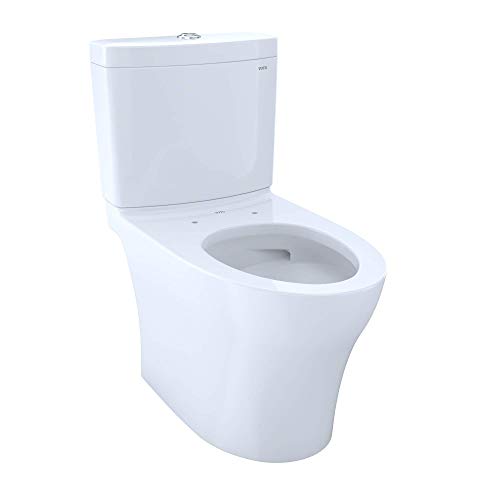
If you are installing a higher-end toilet like the TOTO Aquia IV (dual flush 0.8/1.28 GPF, MaP 1000g tested, EPA WaterSense certified), verify the rough-in before trim-out day. The Aquia IV has a 12-inch rough-in standard but confirm the model number matches your floor drain location. See the TOTO Aquia IV review for full spec details.
Install the toilet last, after all flooring and baseboards are complete. Trying to tile around a toilet that was set early is slower and results in visible grout gaps at the base. The 40 minutes it takes a plumber to set a toilet is far less disruptive when done at the end of the project.
Painting goes on after fixtures are installed so that cut-in lines are clean at fixture edges. Toilet paper holders, towel bars, mirror installation, and medicine cabinet mounting happen during this phase. Allow paint to dry fully (overnight minimum for oil-based paints, 4 to 6 hours for latex in a ventilated space) before installing accessories on freshly painted walls.
The final inspection confirms all permitted work is code-compliant: GFCI outlets are live and test correctly, ventilation fan exhausts to the exterior, plumbing has no active leaks, and any structural changes meet code. After inspector sign-off, the GC walks through with you on a punch list -- minor items like a caulk gap at the tub, a cabinet door that needs adjustment, or a switch plate that is not perfectly level.
A reasonable punch list gets addressed within 2 to 3 business days. Hold back your final contractor payment until the punch list is complete and signed off.
Powder rooms and half baths are the fastest remodels by square footage. The absence of a shower or tub eliminates waterproofing, backer board, and the heaviest tile areas. A typical scope includes:
A motivated handyperson could complete this in 2 to 3 weekends. Hiring licensed contractors adds scheduling overhead but produces work that passes inspection and carries a warranty. If your powder room needs only a toilet replacement, that is a same-day job -- most plumbers can swap a toilet in 1 to 2 hours including haul-away of the old unit.
Master bathroom remodels are the most complex and most expensive bathroom projects in a home. The scope typically includes more linear feet of tile, higher-specification fixtures, and at least two separate plumbing fixtures (toilet plus shower or tub) that each need their own rough-in work.
Key timeline considerations specific to master baths:
For toilet selection in a master bath, the TOTO UltraMax II (1.28 GPF, MaP 1000g, elongated ADA-height) or the Kohler Cimarron (1.28 GPF, elongated comfort height, AquaPiston flush) are consistent top performers for a higher-end primary bathroom. Both are EPA WaterSense certified and widely available through plumbing distributors with short lead times. See the best toilets for a master bathroom guide for a full comparison.
Master bathroom remodels almost always take longer than initial contractor estimates because the scope expands during demolition. Families routinely discover that the "simple" tile replacement requires re-waterproofing the entire shower pan, or that the planned double vanity requires moving a window. Set your personal deadline two weeks later than the contractor's target date and you will be disappointed far less often.
Contractors typically install dust barriers (ZipWall systems or poly sheeting taped over doorways) to contain demolition dust. Even so, fine drywall and tile dust migrates through a home's HVAC system. Consider running a portable air purifier in adjacent rooms, changing HVAC filters after demo is complete, and sealing HVAC vents in the work room during demo.
Noise is a factor. Demolition, tile cutting (angle grinder and wet saw), and some plumbing work (hammering copper, torch work) are legitimately loud. If you work from home, expect a 3 to 4 day period of disruptive noise during demo and tile cutting. Schedule important calls accordingly or plan to work off-site.
Water shutoffs are disruptive during rough plumbing phases. Your plumber will need to shut off water to the affected bathroom's supply lines for installation. In some older homes without individual fixture shutoffs, this means a whole-house water shutoff for a period of hours. A competent plumber minimizes this window, but plan around it.
| Week | Activity | Who | Notes |
|---|---|---|---|
| Week -6 to -4 | Design decisions finalized, material list locked | Homeowner | Tile, toilet model, vanity, faucets all chosen |
| Week -4 to -2 | Contractor selected, contract signed, materials ordered | Homeowner / GC | Long-lead items ordered immediately |
| Week -2 to 0 | Permit application submitted, materials arriving | GC | Permit approval pending |
| Day 1 | Demo day -- bathroom stripped | GC crew | Permit in hand before starting |
| Days 2-4 | Rough plumbing and electrical | Plumber + electrician | Hidden surprises discovered here |
| Day 5 | Rough inspection | Inspector | Schedule in advance -- do not wait for demo day |
| Days 6-7 | Backer board, waterproofing, cure | Tile sub | 24-hour cure minimum before tile |
| Days 8-12 | Tile set, grout, seal, cure | Tile sub | Do not rush -- cracked grout is expensive to fix |
| Days 13-14 | Vanity, countertop, faucets | GC / carpenter | Countertop template may need 3-4 day fabrication lead |
| Day 15 | Toilet, fixture trim-out, accessories | Plumber | Toilet goes in last, after flooring complete |
| Days 16-17 | Paint, mirror, lighting | Painter / GC | Allow overnight dry before punch list |
| Day 18 | Final inspection | Inspector | Pre-scheduled to avoid end-of-project delays |
| Days 19-20 | Punch list, final cleaning, payment | GC | Hold final payment until all items resolved |
The calendar above represents an optimistic-but-realistic 20-day build phase for a standard guest bathroom with no surprises. Add 2 to 5 days for each hidden problem discovered during demo, 1 to 3 days for each failed inspection, and 1 to 3 weeks if any material arrives damaged or incorrect.
When you are building a remodel timeline, the toilet is often the last fixture that gets thought through and one of the first that must be ordered. Here is a quick reference for the toilets that appear most often in remodel projects, with the spec details that matter for scheduling and rough-in planning.
All EPA WaterSense certified toilets use 1.28 GPF or less. The MaP flush test scores below are the maximum grams of solid waste cleared in a single flush (the industry standard benchmark). Higher MaP = better clog resistance. See the full best flushing toilets roundup for complete reviews.
| Model | Type | GPF | MaP Score | WaterSense | Rough-In | Typical Ship Time | Check Price |
|---|---|---|---|---|---|---|---|
| TOTO Drake II | Two-piece | 1.28 | 1000g | Yes | 12" | 3 to 7 days | Check price |
| TOTO UltraMax II | One-piece | 1.28 | 1000g | Yes | 12" | 3 to 10 days | Check price |
| TOTO Aquia IV | Two-piece dual flush | 0.8/1.28 | 1000g | Yes | 12" | 5 to 14 days | Check price |
| Kohler Highline | Two-piece | 1.28 | 800g | Yes | 12" | 1 to 5 days | Check price |
| Kohler Cimarron | Two-piece | 1.28 | 1000g | Yes | 12" | 3 to 7 days | Check price |
| American Standard Champion 4 | Two-piece | 1.6 | 1000g | No (1.6 GPF) | 12" | 1 to 5 days | Check price |
| American Standard Cadet 3 | Two-piece | 1.28 | 1000g | Yes | 10"/12"/14" | 3 to 7 days | Check price |
| Gerber Viper | Two-piece | 1.28 | 1000g | Yes | 12" | 5 to 10 days | Check price |
| Woodbridge T-0001 | One-piece dual flush | 1.0/1.6 | 800g | No | 12" | 3 to 7 days | Check price |
| Swiss Madison Sublime | One-piece | 1.28 | 600g | Yes | 12" | 5 to 14 days | Check price |
MaP scores are published by the Maximum Performance (MaP) testing program, an independent non-profit testing initiative. Scores of 800g and above indicate strong clog resistance for residential use. The American Standard Cadet 3's availability in 10-inch and 14-inch rough-in sizes makes it the go-to recommendation when the existing drain location does not match the standard 12-inch rough-in.
DIY bathroom remodels typically take 4 to 10 weekends (8 to 20 weekend days of actual work) for the same scope a contractor crew would complete in 15 to 20 business days. The difference is that professional crews work consecutive days and can schedule multiple trades simultaneously, while DIY work happens in discrete sessions with time for materials to cure between them. Permitting timelines are the same for DIY projects.
Like-for-like toilet replacement (same location, same drain rough-in, no plumbing changes) is permit-exempt in most U.S. jurisdictions. If you are moving the toilet to a new location, changing the drain rough-in, or adding a bidet water supply line that requires new plumbing, a permit is typically required. Always confirm with your local building department -- requirements vary by city and county.
The fastest path is to finalize all material selections before signing a contract, order everything immediately upon contract signing, and ensure your contractor pre-books all subcontractors (plumber, electrician, tile setter) for consecutive days before demo begins. A streamlined cosmetic remodel with no plumbing moves and no permit requirement can complete in 7 to 10 business days this way.
Tile work in a standard bathroom typically takes 4 to 6 calendar days including mandatory cure time: 1 to 2 days to set tile, 1 day cure before grouting, 0.5 days to grout, 1 to 2 days grout cure before sealing and traffic. Larger tile formats, complex patterns, or mud-bed shower floors add 1 to 3 additional days to this window.
A licensed plumber typically installs a new toilet in 45 minutes to 1.5 hours, including wax ring placement, bolting to the flange, connecting the supply line, and a flush test. Removing and hauling away the old toilet adds 15 to 30 minutes. DIY installation takes most first-timers 1.5 to 3 hours.
No -- work requiring a permit cannot legally begin until the permit is issued. Starting work before permit approval risks stop-work orders, fines, required demolition of completed work, and insurance claim denials. A reputable contractor will not start permitted work without the approved permit posted at the job site.
Master bathroom remodels typically take 2 to 4 weeks longer than comparable guest bathroom projects. The larger footprint means more tile, more plumbing connections, and longer material lead times for higher-specification fixtures. Custom shower enclosures with frameless glass doors add 1 to 2 weeks for fabrication and installation. Stone countertops require templating after the cabinet is set, adding 1 to 2 weeks for fabrication.
Wait a minimum of 72 hours after grout sealing before first use of a tiled shower. For full waterproofing integrity, many tile manufacturers and TCNA (Tile Council of North America) guidelines recommend 7 days before subjecting a new shower to full daily use. Using the shower too early can displace grout before it fully cures.
A punch list is a written list of minor items remaining after substantial completion of a remodel -- caulk touch-ups, cabinet adjustments, missing trim pieces, fixture alignment issues. The punch list walk-through happens after the final inspection is approved. A reasonable punch list with 5 to 10 items should be completed within 3 to 5 business days of the walk-through.
Plumbing and electrical rough-in typically alternate rather than happen simultaneously -- the two trades often cannot work side-by-side in a small bathroom. Your general contractor should schedule them on back-to-back days: plumber day 1 and 2, electrician day 2 and 3. Some overlap is possible in larger master bathrooms. Both must be complete before the rough inspection.
Cultured marble and prefab granite vanity tops are stock items that install same-day. Custom-cut natural stone (granite, quartz, marble) requires a template taken after the vanity cabinet is set, then fabrication of 7 to 14 business days, then a 1 to 2 hour installation. Schedule accordingly -- this is a common source of end-of-project delays.
A tile backorder after demolition is one of the most disruptive possible delays. The bathroom will remain a gutted shell until tile arrives. To avoid this, order all tile before demolition begins and request the distributor pull from available stock and hold it for your project. Pay for warehouse hold fees if necessary -- they cost far less than the disruption of living without a bathroom for 3 extra weeks.
The rough-in measurement is the distance from the finished wall to the center of the toilet drain. Standard modern homes use 12 inches, but many older homes (pre-1960s) have a 10-inch rough-in. The American Standard Cadet 3 and some Kohler models are available in 10-inch configurations. Confirm your existing rough-in before ordering any toilet to avoid a return trip from the plumber. The rough-in dimensions guide has measurement instructions.
Yes -- the trade sequence is critically important. The correct sequence is: demo, rough plumbing, rough electrical, inspection, waterproofing, tile, vanity/cabinetry, fixture trim-out, painting, accessories. Each phase depends on the prior phase being complete. Skipping steps (for example, painting before fixtures are set) causes rework and extra labor cost.
Ask the contractor to provide a written milestone schedule broken down by phase, with start and completion dates for each trade. A vague "it'll take 4 weeks" with no detail is a warning sign. A legitimate contractor can tell you which days the plumber is coming, when they plan to call for rough inspection, and what the tile setter's start date is. If they cannot answer those questions before demo, your project will almost certainly run long.
Make your fixture selections before hiring a contractor so that your bids reflect actual specs rather than allowances. However, do not purchase fixtures until after the contract is signed and you have confirmed the contractor's rough-in schedule. Buying too early risks items being discontinued or arriving before you have secure storage. The ideal window is immediately after contract signing, aiming for delivery 1 to 2 weeks before demo day.
Bathroom size directly affects tile labor time and fixture count, but has less effect on the fixed phases (permits, inspections, rough-in) that apply regardless of size. A 35-square-foot powder room and a 55-square-foot guest bath will have nearly identical permit and inspection timelines; the guest bath might add 2 to 3 extra tile days. A 120-square-foot master bath adds substantial tile time and typically adds another subcontractor coordination cycle.
Contractor availability and permit office backlogs peak from April through September in most U.S. markets. Scheduling a remodel start date in October through February typically yields faster permit turnaround (permit offices are less backlogged), better contractor availability (competing with fewer other projects), and sometimes better pricing. The trade-off is that natural light is shorter in winter, which some contractors say affects tile work pacing in north-facing bathrooms.
GFCI outlet placement is the most common final inspection failure for bathroom remodels -- inspectors frequently find that outlets are not properly protected, ventilation fans do not exhaust to the exterior (duct terminated in the attic void instead of through the roof or wall), or light fixture placement violates the NEC "wet zone" clearance rules. Rough inspection failures most commonly involve improper drain slope (less than 1/4 inch per foot) or missing vent pipe connections.
The MaP (Maximum Performance) testing program publishes a searchable database at map-testing.com listing tested toilets by brand, model, and score. You can search by minimum score -- a score of 800g or above is considered strong for residential use, while 1000g (the maximum) indicates exceptional clog resistance. EPA WaterSense's website (epa.gov/watersense) also lists certified products by manufacturer.
A standard guest bathroom remodel realistically takes 4 to 6 weeks total elapsed time -- including 2 to 4 weeks of pre-construction planning and ordering -- with 15 to 20 active build days on-site. The most effective way to stay on schedule is to finalize every material choice before signing a contract, order long-lead items immediately, and pre-book all trades before demolition begins. Permit timelines and hidden structural surprises are the two variables you cannot fully control; building a 2-week buffer into your personal target date is not pessimism, it is standard practice.
Thirty inches is the sweet spot between a cramped 24-inch vanity and a full 36-inch cabinet, giving a single-sink bathroom real drawer…
Read the guide
Cast iron is the material homeowners choose when heat retention and permanence matter more than installation weight, and Kohler remains the brand…
Read the guideStep-by-step fixes for the bathroom vanity problems that show up most often, from misaligned drawers and doors to water damage at the…
Read the guide