
Best Pfister Bathtub Faucets & Showerheads (2026)
Faucets & Sinks4.6
A brand-specific ranking of Pfister bathtub faucets and showerheads, from the value-driven Weller line to the design-forward Jaida and traditional Ashfield trims,…
Read the guideA detailed, spec-driven look at Delta and Pfister across valve technology, finish durability, EPA WaterSense compliance, warranty terms, and aggregated owner satisfaction -- so you can decide which mid-range faucet brand actually fits your bathroom remodel or replacement project.
Research updated June 2026.
Delta edges out Pfister on long-term valve durability thanks to its Diamond Seal ceramic disc cartridge and industry-leading parts availability. Pfister competes on style variety and price-per-finish in the $80--$180 range. Both carry EPA WaterSense certification and limited lifetime warranties, making Delta the safer buy for longevity and Pfister a solid pick for design flexibility on a tighter budget.
Delta and Pfister sit in overlapping territory inside the mid-range faucet market. Both are owned by major parent companies with deep manufacturing resources, both carry EPA WaterSense certification across their mainstream lines, and both offer a limited lifetime warranty to residential buyers. On paper, the two brands look nearly identical. In practice, the differences in valve construction, cartridge longevity, finish durability, replacement-part availability, and customer service responsiveness are significant enough to affect the total cost of ownership over a ten-year horizon.
This guide focuses on kitchen and bathroom faucets in the $75--$250 range, which is where most homeowners shop when replacing a builder-grade faucet or upgrading a second bathroom. It draws on published manufacturer specifications, EPA certification data, and aggregated owner review patterns across major retail platforms. If you are also evaluating the toilet in the same bathroom, see our best flushing toilets guide before finalizing your fixture budget. For a broader faucet brand perspective, our bathroom faucet brand comparison covers Moen and Kohler alongside both brands reviewed here.
| Category | Delta | Pfister |
|---|---|---|
| Parent company | Masco Corporation | Spectrum Brands |
| Valve / cartridge technology | Diamond Seal ceramic disc | Pforever Seal ceramic disc |
| EPA WaterSense certified | Yes (lavatory, kitchen core lines) | Yes (lavatory, kitchen core lines) |
| Standard flow rate (lavatory) | 1.2 GPM | 1.2 GPM |
| Standard flow rate (kitchen) | 1.8 GPM | 1.8 GPM |
| Residential warranty | Limited lifetime (parts + finish) | Pforever Warranty (lifetime, parts + finish) |
| Replacement cartridge availability | Excellent -- widespread retail stock | Good -- available, less universal |
| Typical finish options (mid-range) | Chrome, Champagne Bronze, Matte Black, Stainless, Venetian Bronze | Polished Chrome, Brushed Nickel, Matte Black, Tuscan Bronze, Brushed Gold |
| Touch-on / touchless models | Yes (Touch2O technology) | Limited (select kitchen lines) |
| Country of assembly (mid-range) | USA and overseas | Overseas primarily |
Delta uses its proprietary Diamond Seal Technology, a ceramic disc cartridge coated with a diamond-like carbon (DLC) layer that the brand claims reduces friction and wear versus standard ceramic. Pfister counters with its Pforever Seal ceramic disc, which is a standard high-quality ceramic cartridge without the DLC coating. Both designs are rated for drip-free performance, but independent plumber reviews and aggregated owner data suggest Delta cartridges show lower early-failure rates in hard-water environments, likely because the DLC coating resists mineral adhesion better than uncoated ceramic.
Ceramic disc cartridges became the industry standard in residential faucets during the 1990s because they outlast rubber washers by a wide margin and rarely require adjustment. The relevant question today is not ceramic versus rubber but rather how the specific cartridge design performs under real-world conditions -- mineral buildup, chlorinated municipal water, and sediment carried in older supply lines.
Delta's Diamond Seal cartridge is manufactured in-house at Masco-owned facilities, which gives the brand tighter quality control over tolerances. Pfister sources its Pforever Seal cartridges from contract manufacturers, which is a common practice at the mid-range price point and does not automatically indicate lower quality. The practical difference shows up most clearly in replacement scenarios: Delta's RP cartridges (such as the RP46074 and RP50587) are stocked at most major home improvement retailers and are available from third-party suppliers. Pfister cartridges are less universally stocked, which can mean a slightly longer sourcing delay for a repair.
Plumbers frequently note that the real cost of a faucet is not the purchase price but the total cost over a decade including cartridge replacements and service calls. Delta's parts ecosystem -- widespread availability, clear RP-number labeling, and strong how-to documentation -- makes DIY repair more accessible than with Pfister. For landlords and property managers who prioritize easy maintenance, that parts ecosystem matters more than finish variety.
Both Delta and Pfister achieve EPA WaterSense certification across their mainstream lavatory faucet lines, meaning they deliver at or below 1.2 GPM (gallons per minute) at 60 PSI while meeting the EPA's minimum performance standards for adequate rinsing and flow. At the kitchen faucet level, the EPA WaterSense benchmark is 1.8 GPM for most configurations, and both brands comply on their standard pull-down and single-handle kitchen models. Water efficiency is effectively a tie between the two brands at the mid-range price tier.
The EPA WaterSense program, managed by the U.S. Environmental Protection Agency, certifies faucets that use at least 30 percent less water than standard 2.2 GPM models without sacrificing measurable performance. A household replacing four standard 2.2 GPM faucets with 1.2 GPM WaterSense models saves approximately 700 gallons of water per year based on EPA estimates. Both Delta and Pfister display the WaterSense label on qualifying products, and both brands allow shoppers to filter by WaterSense certification on their product pages.
Where a small efficiency difference does emerge is in aerated versus non-aerated stream options. Delta offers aerator kits in 0.5 GPM and 0.35 GPM configurations for select models, useful in commercial or conservation-focused installations. Pfister's low-flow aerator accessories are available but less prominently marketed. For typical residential use, both brands meet WaterSense at 1.2 GPM and the difference is negligible. For broader bathroom water efficiency context, see our bathroom faucet buying guide.
EPA WaterSense certification is a meaningful baseline but should not be the deciding factor between Delta and Pfister since both brands meet it across comparable product lines. Pay closer attention to flow rate at your specific supply pressure, since homes with low water pressure (below 40 PSI) may experience noticeably weaker streams from 1.2 GPM aerators. Both brands publish maximum and minimum pressure specifications in their installation guides, and reviewing those numbers before purchase prevents post-install disappointment.
Delta's PVD (physical vapor deposition) finish on models marketed as "Champagne Bronze" and "Venetian Bronze" demonstrates strong resistance to tarnishing and everyday cleaning chemicals in aggregated owner reviews spanning five-plus years of use. Pfister's Brushed Gold and Matte Black finishes receive generally positive long-term reviews, but a subset of owners in hard-water regions report minor finish dulling on chrome models after two to three years. Neither brand's chrome finish is significantly more durable than the other, but Delta's PVD-coated specialty finishes show measurably better longevity in owner-reported data.
Finish durability in mid-range faucets is determined primarily by the coating process. Chrome electroplating is the standard baseline for both brands. PVD coatings -- applied as a vapor-deposited metal layer -- are harder, more chemically inert, and more resistant to tarnish than electroplated chrome. Delta applies PVD on finishes including Champagne Bronze, Matte Black, and Stainless across many of its mid-range bathroom lines. Pfister uses PVD on select premium finishes but not universally across the mid-range lineup.
Both brands warrant finish against defects under normal residential use for the lifetime of the original installation, which means finish-related warranty claims are theoretically covered. In practice, warranty claims for finish degradation require documentation that the issue is a manufacturing defect rather than wear from abrasive cleaners or unusually aggressive water chemistry. Reading both brands' warranty exclusions before purchase clarifies what "finish warranty" actually covers in your specific situation.
Delta offers a limited lifetime warranty covering defects in material and workmanship for the original purchaser in residential installations, including both function and finish. Pfister's Pforever Warranty makes the same promise under the same structure. The meaningful distinction is in claims execution: Delta's warranty service operates through Masco's well-resourced customer support infrastructure, and owner reports consistently note fast replacement part shipments. Pfister warranty claims are generally honored but some owners report longer resolution timelines and more documentation requirements before parts are shipped.
On paper, both warranties sound identical. Both cover parts and finish for the lifetime of the original purchaser in residential installations. Both exclude damage from improper installation, commercial use, or failure to follow maintenance guidelines. The real-world experience of making a warranty claim varies considerably between brands, and this is where aggregated owner feedback adds value that spec sheets cannot provide.
Delta's parent company Masco handles high claim volumes and has established logistics for shipping replacement cartridges and trim parts quickly, often within two to three business days to most U.S. addresses. Pfister's warranty support through Spectrum Brands is functional but reports in owner review aggregates suggest claim processing is slightly slower on average. For a homeowner making a single warranty claim over ten years, this difference is minor. For a property manager overseeing multiple units, the difference in turnaround time becomes a practical operational factor.
Warranty language is marketing until you actually need to use it. When evaluating two brands with nominally identical lifetime warranties, look at three things: how easy it is to identify the correct replacement part (Delta's RP-number system is exceptionally clear), how widely that part is stocked at retail (Delta wins this hands down), and how responsive customer service is when the part is not immediately available. Delta's parts infrastructure is one of its strongest competitive advantages over Pfister at the mid-range price point.
For a mid-range bathroom remodel with a faucet budget between $100 and $200, Delta's Linden, Windemere, and Lahara collections offer strong value, pairing proven Diamond Seal valves with WaterSense certification and PVD finishes in a wide enough style range to complement most design directions. Pfister's Kelen, Masey, and Ladera collections compete at similar price points with comparable EPA WaterSense performance and offer attractive finish options in brushed gold and matte black that appeal to contemporary and transitional bathroom styles. Delta is the lower-risk choice for longevity; Pfister is competitive on style-per-dollar.
A bathroom remodel budget involves more than just the faucet. If you are replacing the toilet as well, understanding toilet flush performance is equally important. Our guides to the bathroom fixture buying guide and bathroom faucet buying guide help structure the full project budget. Comparing Delta and Pfister side by side in a hardware store or showroom before purchasing is worthwhile because both brands use mounting hardware configurations that are compatible with standard U.S. sink drilling patterns (single hole, 4-inch centerset, and 8-inch widespread), but the physical feel of the handle movement and the visual weight of the spout vary more than spec sheets convey.
One area where Pfister holds a consistent advantage is design density at the lower end of the mid-range. In the $80--$120 range, Pfister offers more finish options and slightly more contemporary silhouettes than Delta, whose most affordable models tend toward traditional styling. If Brushed Gold or a statement Matte Black finish is the priority and the budget is tight, Pfister's entry-level offering is genuinely competitive. If the priority is proven valve durability and the easiest possible future repair path, spending slightly more for a Delta mid-range model is worthwhile.
Delta is widely considered the stronger long-term choice due to its Diamond Seal cartridge technology, superior parts availability, and faster warranty service. Pfister is not a bad brand -- it earns solid owner ratings across its lineup -- but Delta's infrastructure advantage in repairs and parts sourcing gives it the edge for buyers who prioritize total cost of ownership over five or more years.
Yes. Delta offers EPA WaterSense-certified models across its core lavatory and kitchen faucet collections. WaterSense lavatory faucets use 1.2 GPM or less, which is at least 30 percent more efficient than the 2.2 GPM standard. Look for the WaterSense label on Delta product pages or packaging to confirm certification on the specific model you are considering.
Yes. Pfister certifies its mainstream lavatory and kitchen faucet lines to EPA WaterSense standards, delivering 1.2 GPM at 60 PSI for lavatory models and 1.8 GPM for kitchen models. Pfister's WaterSense-certified products are identified on the brand's website and on product packaging at retail.
Diamond Seal Technology is Delta's proprietary ceramic disc cartridge construction that applies a diamond-like carbon (DLC) coating to the valve surfaces. The DLC coating is significantly harder than standard ceramic and reduces friction between valve components, which Delta claims extends the drip-free service life of the cartridge. Third-party plumber assessments and long-term owner reviews support this claim, particularly in hard-water regions.
Pfister's Pforever Warranty is a limited lifetime warranty covering defects in material and workmanship for the original purchaser in residential installations. It covers both functional components and finish. Like Delta's lifetime warranty, it excludes commercial installations, damage from improper installation, and deterioration from abrasive cleaning products. Claims are processed through Spectrum Brands' customer service team.
Delta's ceramic disc cartridges are rated by the brand for millions of on-off cycles, which in residential use translates to well over twenty years of normal operation. Aggregated owner reviews support long service lives in moderate-water-quality conditions. In very high-mineral-content water (above 200 mg/L TDS), cartridge lifespans can be shorter and periodic aerator cleaning becomes more important for maintaining flow quality.
Pfister cartridges are replaceable, and the brand provides model-specific installation documentation. Availability at retail is the main friction point compared to Delta -- Pfister cartridges are stocked at most home improvement chains but with less depth and variety than Delta's RP-numbered parts. For specialty Pfister models, online ordering direct from Pfister or through plumbing supply houses is often the most reliable sourcing path.
Delta offers finishes including Chrome, Stainless, Matte Black, Champagne Bronze, Venetian Bronze, Polished Nickel, and Aged Pewter across its residential lines, with PVD coatings on most specialty finishes. Pfister offers comparable options including Polished Chrome, Brushed Nickel, Matte Black, Tuscan Bronze, and Brushed Gold, with a slight lean toward contemporary colorways. At the mid-range price point, both brands provide enough finish variety for most bathroom design directions.
Neither brand requires professional installation for a standard faucet replacement. Both provide detailed installation guides and are compatible with standard U.S. sink configurations (single hole, centerset, and widespread). A homeowner comfortable with basic plumbing tasks -- shutting off supply valves, disconnecting drain linkages, and making supply line connections -- can install either brand without calling a plumber. Professional installation is recommended for under-mount configuration changes or when supply line condition is uncertain.
Yes. Pfister is owned by Spectrum Brands, a publicly traded U.S. company that also owns hardware and home improvement brands including Kwikset and Baldwin. Spectrum Brands acquired Pfister in 2012. The parent company's resources support Pfister's manufacturing quality and warranty service, though the brand operates with less direct plumbing market focus than Masco, which owns Delta and Moen.
Delta manufactures some faucet components and assembly in the United States, but the brand also sources components from overseas manufacturing partners for its mid-range and entry-level lines. The phrase "assembled in the USA" appears on select Delta products, indicating domestic final assembly from domestically and internationally sourced parts. Full country-of-origin information is available in Delta's product documentation for specific models.
Delta holds an advantage in hard-water environments due to the DLC coating on its Diamond Seal cartridges, which resists mineral adhesion better than standard uncoated ceramic. In both brands, regular aerator cleaning (every three to six months in high-mineral-content water) is the most effective maintenance practice. Whole-house water softening reduces the impact of hard water on any faucet brand significantly more than brand selection alone.
Yes. Delta is one of the largest kitchen faucet brands in North America. Its kitchen lineup includes pull-down, pull-out, and touchless models under collections including Leland, Essa, Trinsic, and Pivotal. Many Delta kitchen faucets incorporate Touch2O technology, which activates water flow with a light touch anywhere on the spout or handle. Pfister also produces kitchen faucets but with a narrower technology lineup at the mid-range tier.
No. Delta and Pfister cartridges, seats, and trim components are not interchangeable. Each brand uses proprietary cartridge dimensions and valve body configurations. Attempting to use Delta parts in a Pfister faucet or vice versa will result in improper fit and potential leaking. Always source replacement parts from the original manufacturer or a verified compatible supplier using the faucet's model number.
Delta is the more practical choice for rental properties and high-traffic bathrooms because of its superior parts availability, clearly labeled RP-number cartridge system, and faster warranty service. When a cartridge fails in a rental unit, sourcing a Delta replacement part from a local hardware store is typically possible within hours. For Pfister, the same repair may require online ordering and a longer wait, which means more time with a non-functional fixture.
EPA WaterSense-certified bathroom faucets flow at 1.2 GPM or less, which is the recommended target for water efficiency without meaningful performance sacrifice in normal hand-washing and face-washing use. Flow rates below 0.8 GPM can feel weak for rinsing in homes with moderate to low supply pressure. If your home has supply pressure consistently below 40 PSI, consider a 1.5 GPM aerator option rather than the minimum WaterSense-rated aerator.
Pfister offers limited touchless or motion-sensor options in its kitchen faucet lineup but does not have a branded touchless technology platform comparable to Delta's Touch2O system. For bathroom lavatory faucets specifically, Pfister's mid-range portfolio is focused on standard single-handle and widespread configurations rather than electronic activation. Delta holds a clear technology lead in this category for both kitchen and bath applications.
Delta, Moen, and Kohler are the three largest faucet brands in North America, all offering comparable quality at the mid-range price tier. Moen's Duralast cartridge is well-regarded and its Spot Resist finish technology is a genuine differentiator for brushed nickel finishes. Kohler wins on design breadth and premium finish variety. Delta leads on parts availability and repair ecosystem. See our bathroom faucet brand comparison for a full three-way breakdown.
Faucet and toilet brands are fully independent -- you are not locked into using matched brands across fixtures in the same bathroom. Many homeowners combine a Delta or Pfister faucet with toilets from TOTO, Kohler, American Standard, or Woodbridge without any functional or aesthetic issue. If toilet flushing performance is the priority, focus on MaP flush test scores and EPA WaterSense toilet ratings before worrying about matching faucet brand.
Both brands are stocked at major home improvement retailers including Home Depot and Lowe's as well as online through Amazon and brand direct websites. Delta's wider retail distribution means more in-store models are available for physical inspection before purchase. Pfister's online product range is often broader than in-store availability, so comparing the full product catalog online before visiting a store avoids narrowing your options unnecessarily.
Delta is the stronger mid-range faucet brand for buyers prioritizing long-term durability, easy repairs, and responsive warranty support. Its Diamond Seal cartridge technology, unmatched parts availability through the RP-number system, and PVD-coated specialty finishes give it a measurable edge over Pfister for five-plus-year ownership scenarios. Pfister remains a legitimate contender for design-forward buyers working in the $80--$150 range who want contemporary finishes like Brushed Gold or Matte Black without a premium price. Both brands carry EPA WaterSense certification and lifetime warranties, making either a responsible choice over builder-grade faucets. Choose Delta for peace of mind on repairs; choose Pfister when the finish selection better matches your design direction and the budget is firm.
How we rank & our data sources
We do not run physical lab tests. Rankings are built from published, verifiable data and real owner feedback, never paid placement.
Researched by Marcus Bell · Last updated July 2, 2026 · Our review method
A brand-specific ranking of Pfister bathtub faucets and showerheads, from the value-driven Weller line to the design-forward Jaida and traditional Ashfield trims,…
Read the guide
Kohler's bathroom faucet catalog spans the mainstream Fairfax and Forte lines, the more architectural Purist and Artifacts collections, giving American vanities a…
Read the guide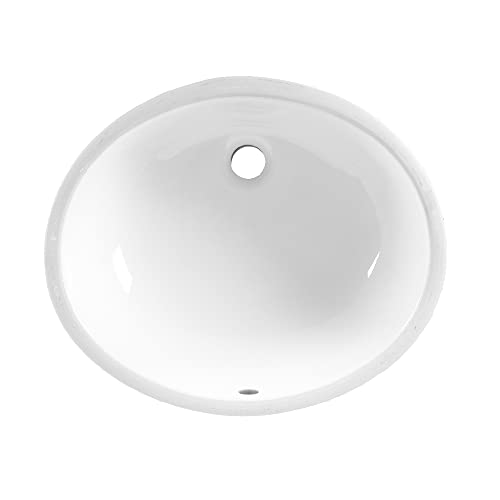
A brand-specific ranking of American Standard bathroom sinks, from the widely stocked Colony and Ovalyn lines to the compact Cadence and pedestal-ready…
Read the guide