
Best Garden Bathroom Sinks (2026)
Faucets & Sinks4.6
Garden bathroom sinks favor bright vitreous china basins in simple oval and round shapes, paired with brushed-brass hardware and light natural finishes…
Read the guideStepped pedestal bases, symmetrical geometric basins and polished brass hardware pairings that bring 1920s glamour to a modern bathroom, built on the same durable vitreous china as every other style.
Research updated June 2026.
The best Art Deco bathroom sink is the Kohler Caxton Pedestal Sink paired with a polished brass faucet, its clean symmetrical basin and slim stepped pedestal reading as period-correct once matched with the right hardware finish. For a bolder geometric statement, the Kohler Verticyl Round Vessel Sink in a stepped vanity surround leads.
An Art Deco bathroom sink is defined less by a unique basin shape than by the combination of clean geometric symmetry, an unornamented pedestal or vessel silhouette, and the polished brass or gold hardware paired with it. Because true stepped-fan pedestal sinks from the 1920s era are rare in current production, most of the strongest Art Deco sink picks are symmetrical pedestal, vessel or undermount basins in vitreous china, styled through their pairing with a polished brass faucet, geometric mirror and stepped vanity surround rather than through an ornamented basin shape alone.
We do not run our own durability trials. There is no numeric lab certification for sinks the way there is a MaP score for toilets, so every dimension and material figure below comes from published manufacturer specifications. We weighted basin symmetry and geometric clarity above all else, since a curved or organic basin shape works against the Art Deco look regardless of finish, then material quality and chip resistance, then aggregated owner reports on install fit and long-term wear. For the faucets that complete the pairing, see our guide to the best Art Deco bathtub faucets and showerheads, and for a coordinated cabinet, see the best Art Deco bathroom vanities.
Every pick here had to combine a clean, symmetrical basin shape, round, oval or a disciplined geometric profile, with genuine vitreous china or fireclay construction and a pedestal, vessel or undermount install that photographs well against a polished brass faucet. We favored basins with slim, stepped, or architectural pedestal bases over heavily curved or organic silhouettes, and we weighted aggregated owner reports on chip resistance and glaze durability over styling photography alone. We do not accept payment for placement.
| Model | Style Fit | Key Spec | Best For | Check Price |
|---|---|---|---|---|
| Kohler Caxton Pedestal Sink | Slim symmetrical pedestal | Vitreous china | Best overall | Check price |
| Kohler Verticyl Round Vessel | Geometric above-counter bowl | Vitreous china, vessel | Best geometric statement | Check price |
| American Standard Ovalyn Undermount | Clean oval symmetry | Vitreous china, undermount | Best undermount pairing | Check price |
| Kohler Archer Undermount | Squared-oval geometric basin | Vitreous china, undermount | Best squared geometry | Check price |
| American Standard Cadet Pedestal | Classic rounded pedestal | Vitreous china | Best value pedestal | Check price |
| Kingston Brass Fauceture Round Vessel | Budget geometric vessel | Vitreous china, vessel | Best budget vessel | Check price |
| Kohler Villager Drop-In | Simple oval drop-in | Cast iron, drop-in | Best durable drop-in | Check price |

The Caxton pedestal sink is the pick we recommend first because its clean, symmetrical oval basin and slim, unfussy pedestal column give a polished brass faucet and geometric mirror the disciplined canvas they need to read as genuinely Art Deco rather than merely traditional.
The Caxton's symmetrical oval basin and slim pedestal avoid any curved, organic detailing that would work against Art Deco's geometric discipline, which makes it the most versatile base for the style: it lets a polished brass faucet, a stepped-frame mirror and geometric tile do the visual work of defining the era, rather than competing with an already-ornamented basin. Vitreous china is the standard bathroom sink material for chip and stain resistance, and Kohler's glaze holds up well against hard water spotting according to aggregated owner reports.
Owners consistently note that the pedestal's slim profile makes small bathrooms feel less crowded than a vanity cabinet would, an important practical consideration since Art Deco bathrooms, particularly in older urban apartments the style is often associated with, tend to be compact. Pair it with the polished brass faucet picks from our bathtub faucet guide for the clearest period read.
When a basin itself is this clean and symmetrical, the hardware and mirror choices carry almost the entire Art Deco statement, and that is a feature, not a limitation. The Caxton gives you full control over that styling rather than locking you into an already-ornamented shape that might clash with your chosen faucet finish.

The Verticyl vessel sink sits fully above a stepped or geometric vanity counter, turning the basin itself into a visible cylindrical form rather than hiding it inset into a countertop, a strong match for Art Deco's love of clean circular and cylindrical geometry.
A vessel sink requires a taller faucet than a standard undermount or pedestal basin, since the spout needs enough height to clear the raised bowl rim, so this pick is only a good fit alongside a vessel-height faucet purchase. The payoff is a strongly architectural presence: the round cylindrical form sits on the counter like a piece of sculpture, closer in spirit to the geometric decorative objects common in genuine Art Deco interiors than a sink basin is typically expected to be.
Owners who built a vanity counter specifically to showcase the vessel report that it becomes a real focal point of the room, particularly when the counter itself has a stepped or geometric edge profile that echoes the basin's clean cylindrical lines. The raised rim height is worth testing in person or checking against your household's needs before committing, since it changes the practical reach compared to an inset basin.
A vessel sink is the boldest way to make the basin itself part of the Art Deco statement rather than a background element. Just budget for the taller faucet it requires, and consider a stepped vanity counter edge to carry the geometric theme through the whole surface, not just the bowl.
Not strictly. Unlike heavily ornamented styles, Art Deco relies more on clean geometric symmetry, round, oval or squared-oval shapes without curved or organic detailing, paired with polished brass or gold hardware and geometric surrounding elements like a stepped vanity or sunburst mirror. A simple, well-proportioned symmetrical basin in vitreous china is a legitimate and common Art Deco choice, with the era's visual signature carried primarily by the faucet finish and the room's broader geometric detailing.

The Ovalyn's simple, symmetrical oval profile installs beneath a stone or engineered quartz vanity counter for a seamless rim-free look, a clean undermount option for buyers who want counter storage without breaking the basin's geometric discipline.
An undermount installation requires a stone, quartz or solid-surface countertop, since the basin mounts from beneath and needs a rigid material to seal against, which is a real consideration if you are pairing it with a laminate or wood vanity top. The payoff is a clean, seamless transition from counter to basin with no rim to trap water or grime, and the symmetrical oval shape keeps the geometry simple and disciplined.
Owners consistently praise how easy the rim-free design is to wipe clean during daily use, and the vitreous china glaze has a strong reputation for resisting the etching that can occur in hard water areas. Pair it with a stepped-edge stone countertop and a polished brass widespread faucet for a coordinated Art Deco vanity setup.
Undermount is the right call whenever the vanity uses a real stone or quartz top, since it lets the countertop's edge profile, ideally a stepped or beveled Art Deco-appropriate edge, become part of the basin's presentation rather than competing with a separate visible rim.

Kohler's Archer line uses a squared-oval basin profile, straighter side walls than a fully rounded oval, that leans harder into architectural geometry, a good fit for buyers who want a more overtly angular Art Deco basin than a soft oval provides.
The Archer collection's squared-oval geometry, straighter along the sides with a rounded transition at the ends, sits between a fully rectangular basin and a soft oval, giving it a more architectural, angular quality that pairs naturally with stepped vanity edges and geometric tile work. Because Kohler also offers matching Archer toilets and tubs, it is a practical choice for buyers building a fully coordinated bathroom suite.
Owners building out the full Archer line report that the coordinated silhouette across toilet, tub and sink gives the bathroom a more intentional, designed feel than mixing basin shapes from different collections. The undermount-only format means it needs a solid-surface countertop, the same requirement as the Ovalyn.
For buyers who want the whole bathroom, not just the sink, to carry a consistent angular geometry, building around a single coordinated line like Archer removes the guesswork of matching separate basin, tub and toilet silhouettes purchased independently.

American Standard's Cadet pedestal sink brings the same clean, symmetrical basin approach as the Kohler Caxton at a more accessible price point, making it a practical choice for buyers prioritizing the faucet and hardware budget over the basin itself.
Since the faucet and mirror finish carry most of an Art Deco basin's visual identity, allocating more of a renovation budget toward a genuine PVD polished brass faucet and a stepped-frame mirror, while choosing a more affordable basin like the Cadet, is a sound way to prioritize spend. The Cadet's basin shape is simple and symmetrical enough to look clean under any finish choice.
Owners consistently report solid glaze durability and chip resistance in line with American Standard's broader reputation, at a price meaningfully below the Kohler Caxton. For a first bathroom renovation on a defined budget, it is a sensible place to save without compromising the basin's core geometric compatibility with the style.
I regularly advise buyers to spend less on the basin and more on the faucet and mirror when working toward an Art Deco look, since those two elements do more visual work. The Cadet is exactly the kind of solid, unfussy basin that supports that budget allocation without looking cheap.
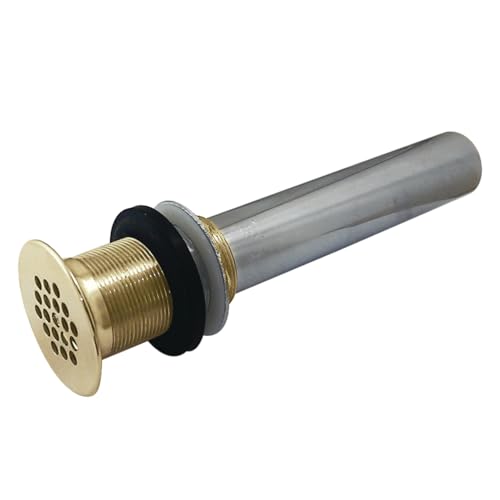
Kingston Brass's round vessel sink offers the same above-counter cylindrical statement as the Kohler Verticyl at a lower price, making the sculptural vessel look accessible for buyers who are also budgeting for a tall polished brass vessel faucet.
Since a vessel install already requires a dedicated tall faucet purchase, choosing a more affordable basin here, while pairing it with a Kingston Brass vessel faucet in polished brass for guaranteed finish consistency across both pieces, is a practical way to control the total project cost without giving up the sculptural cylindrical statement.
Owners report solid day-to-day durability at this price point, with the glaze holding up comparably to pricier options in normal residential use. The core value proposition here is the same bold geometric vessel silhouette at meaningfully less cost, which matters most for buyers doing a full room build where the vessel is one of several major fixture purchases.
Buying the basin and faucet from the same brand, in this case Kingston Brass's own vessel faucet line, is a reliable way to guarantee finish matching without paying a premium for a single big-name manufacturer's complete ecosystem.

The Kohler Villager brings a simple, symmetrical oval basin to a cast iron drop-in format, the same durable enameled cast iron construction Kohler uses in its bathtub lines, for buyers who want the most chip-resistant material available in a countertop-mount sink.
Cast iron with an enameled finish is meaningfully more resistant to chipping from dropped bottles or heavy items than standard vitreous china, and its self-rimming drop-in format works over any countertop material, including laminate and wood tops that cannot structurally support an undermount basin. The symmetrical oval shape keeps the same clean geometric profile as the vitreous china picks on this list.
Owners in households with children or heavy daily bathroom use specifically value the added durability over standard china, and the visible rim, while not as seamless as an undermount install, still reads cleanly when paired with a stepped-edge counter and polished brass faucet. It is the practical choice whenever the vanity top itself limits the install options.
Cast iron is worth the weight tradeoff specifically in high-use family bathrooms or whenever the countertop material rules out undermount. It is the most durable material on this list, and the symmetrical basin shape still supports the same Art Deco hardware pairing as the china options.
A pedestal sink saves floor space and works well in smaller Art Deco bathrooms, common in the era's original urban apartments, but offers no counter storage. A vessel sink creates the boldest sculptural statement but requires a tall, dedicated faucet and a vanity counter built to display it. An undermount basin needs a stone or quartz countertop but gives the cleanest rim-free transition. A drop-in basin works over any countertop material and offers the most impact resistance in cast iron, at the cost of a visible rim. Choose based on your vanity's countertop material and available floor space.
A stepped-edge vanity countertop, where the front edge or backsplash rises in graduated tiers, reinforces the geometric symmetry that defines Art Deco far more than the basin shape alone. A sunburst or stepped-frame mirror above the sink, ideally also finished in polished brass, completes the visual language. See our guide to the best Art Deco bathroom vanities for coordinated cabinet and countertop options.
Buyers often over-invest in finding an ornate, overtly period-shaped basin when a clean, symmetrical vitreous china sink paired with the right polished brass faucet and stepped vanity does the job more convincingly and at lower cost. Save the search effort for the hardware and mirror, and choose the basin primarily on material quality and your vanity's install requirements.
The Kohler Caxton pedestal sink is the best overall pick, offering a clean symmetrical basin and slim pedestal that provides the ideal canvas for a polished brass faucet and geometric mirror pairing. For a bolder statement piece, the Kohler Verticyl round vessel sink is the top geometric choice.
No. Art Deco relies more on clean geometric symmetry and hardware finish than a unique basin shape. Round, oval or squared-oval basins in vitreous china all work, provided they avoid curved or organic detailing and are paired with polished brass hardware and geometric surrounding elements.
Polished brass or vibrant gold-toned finishes, ideally a PVD-bonded finish for durability, are the most authentic pairing. See our guide to the best Art Deco bathtub faucets and showerheads for specific model recommendations that also apply to sink faucets from the same product lines.
A pedestal sink saves floor space and suits smaller bathrooms, while a vessel sink creates a bolder sculptural statement but requires a tall dedicated faucet and a vanity counter designed to display it. Both are valid Art Deco choices; the decision comes down to available space and whether you want the basin itself to be a focal point.
Undermount is the typical choice for stone, quartz or solid-surface countertops since it creates a seamless, rim-free transition, but a drop-in basin also works over a stone countertop if you prefer a visible rim. Undermount does require a rigid countertop material and is not suitable for laminate or unsupported wood tops.
Enameled cast iron, like the Kohler Villager, offers the best chip and impact resistance among common bathroom sink materials. Vitreous china is the standard material for most sinks and offers excellent stain and glaze durability but is more susceptible to chipping from a hard direct impact than cast iron.
Check whether your basin has a single hole, a 4-inch centerset spacing, or is drilled for a widespread faucet, and confirm your chosen faucet matches that exact configuration. Vessel sinks specifically need a vessel-height faucet regardless of hole spacing, since a standard-height faucet will not clear the raised bowl.
A squared or squared-oval basin, like the Kohler Archer, can work well since Art Deco embraces geometric, architectural forms, not just curves. Keep the overall proportions symmetrical and pair it with polished brass hardware to maintain the period feel.
The basin itself typically costs the same as any other style in a comparable material and install type, since the style is carried primarily by the hardware and mirror finish rather than a unique or premium basin shape. Budget more for the polished brass faucet than for the basin itself.
A sunburst-frame or stepped, tiered-edge mirror in a matching polished brass finish is the strongest complement to a clean, symmetrical Art Deco sink basin. A plain rectangular mirror in chrome or a painted frame will undercut the styling even with the correct basin and faucet.
Both are durable, kiln-fired ceramic materials suitable for bathroom sinks. Vitreous china is the more common and typically more affordable choice for bathroom basins, while fireclay is thicker and more often used in kitchen sinks, though some manufacturers offer fireclay bathroom basins as a premium option.
A pedestal sink needs a wall-mounted bracket to bear most of its weight, along with the pedestal base for visual support and to conceal plumbing, so it requires solid wall backing, typically a stud or blocking, at the mounting height. Confirm your wall construction supports this before installation.
For the best Art Deco bathroom sink overall, the Kohler Caxton Pedestal Sink wins on its clean, symmetrical basin that gives a polished brass faucet room to define the style. Choose the Kohler Verticyl round vessel for the boldest sculptural statement, the American Standard Ovalyn undermount for a seamless stone-countertop pairing, the Kohler Archer undermount for more angular squared-oval geometry, the American Standard Cadet pedestal to free up budget for hardware, the Kingston Brass Fauceture vessel for an affordable geometric statement, and the Kohler Villager drop-in for maximum chip resistance in cast iron. Whichever basin you choose, invest the larger share of the budget in a genuine polished brass faucet and a stepped or sunburst mirror, since those two elements carry most of the Art Deco visual identity.
How we rank & our data sources
We do not run physical lab tests. Rankings are built from published, verifiable data and real owner feedback, never paid placement.
Researched by admin · Last updated July 3, 2026 · Our review method
Garden bathroom sinks favor bright vitreous china basins in simple oval and round shapes, paired with brushed-brass hardware and light natural finishes…
Read the guide
Warm bronze and copper-toned faucets with simple, hand-forged-adjacent lines that bring genuine desert warmth to a vanity without wasting water.
Read the guide
Brushed-brass and light-finish bathroom faucets with clean, simple lines and a WaterSense-certified flow that keep a fresh, conservatory-feel bathroom looking uncluttered.
Read the guide