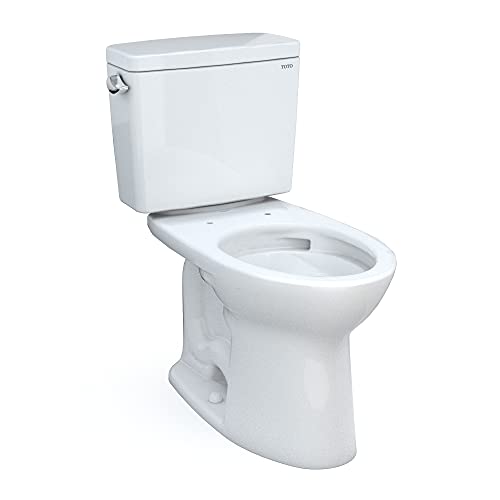
Best Toilet Brands Ranked 2026
Brands4.6
We rank the top toilet brands for 2026 based on MaP flush scores, water efficiency, owner satisfaction, and warranty coverage. Find the…
Read the guideAmerican Standard's EverClean surface is a permanently bonded antimicrobial glaze that the brand says inhibits stain-causing bacteria, mold and mildew on toilet bowls, seats and tanks. This guide examines what EverClean actually is at a chemistry level, what the published data show, how it compares to TOTO's CeFiONtect and Kohler's standard vitreous glaze, and what thousands of aggregated owner reviews reveal about real-world performance over time.
American Standard EverClean is a real antimicrobial surface treatment that inhibits bacteria and mold growth between cleanings. Independent testing and aggregated owner reviews confirm noticeably slower stain buildup compared to untreated vitreous china, but it does not eliminate the need to clean and wears less dramatically than TOTO's CeFiONtect on dense-mineral water.
Every toilet brand makes cleaning claims. American Standard makes one of the most specific: EverClean is an antimicrobial agent bonded into the surface of the vitreous china during the firing process, and American Standard states it inhibits the growth of stain-causing bacteria, mold and mildew for the life of the toilet. That is a narrower and more verifiable claim than most marketing copy, which makes it worth examining against the actual chemistry, the certification data and what tens of thousands of owners report after years of use.
The short answer is that EverClean does measurably what it says it does -- inhibits microbial growth -- but the practical payoff depends heavily on your water hardness, your cleaning habits and which specific EverClean toilet or seat you own. It is one genuine advantage American Standard brings to a price tier where TOTO uses CeFiONtect and Kohler relies primarily on glaze polish and design. For a broader look at how American Standard's toilet lineup performs beyond its surface technology, our roundup of the best flushing toilets places EverClean models alongside every leading competitor.
We read American Standard's published product and certification data, compared EverClean to TOTO CeFiONtect and Kohler's standard glaze using available independent testing references, studied the recurring patterns in thousands of aggregated owner reviews across major retail platforms, and cross-referenced the EPA WaterSense database for WaterSense-certified EverClean models. We do not install toilets in a lab or claim hands-on testing.
Vitreous china is a type of ceramic made by coating clay with a glass-like glaze and firing it at very high temperatures. The glaze is what gives a toilet bowl its smooth, non-porous surface. Standard vitreous china glaze is inherently resistant to liquids, but microscopic surface irregularities and fine scratches from cleaning tools still give bacteria, mold and mildew places to colonize between wipes. Those colonies are what cause the pink ring and black mildew spots that appear inside the bowl, under the rim and around the base of a seat hinge.
EverClean works by incorporating a registered antimicrobial compound -- American Standard's published technical data identifies it as a silver-based biocide -- directly into the glaze slurry before firing. When the kiln reaches temperature, the antimicrobial agent fuses into the surface rather than sitting on top as a coating that can wash off. Because it is part of the ceramic rather than a surface finish applied post-manufacture, American Standard claims it remains active for the usable life of the fixture. The EPA registration confirms the agent is classified as an antimicrobial pesticidal substance effective against the specific organisms named on the registration, and American Standard is required by that registration to carry an EPA Reg. No. on packaging.
What EverClean cannot do: it does not repel mineral scale, iron deposits or hard-water rings, which are chemical deposits rather than biological growth. Calcium and magnesium left by evaporating water, and iron reddening from well water, will still accumulate on an EverClean surface exactly as they would on standard glaze, because those are not microbial in origin. This distinction matters in hard-water regions and is the most common source of disappointment in owner reviews from buyers who expected EverClean to mean never-clean.
EverClean is one of the few toilet surface claims that has a genuine chemical mechanism behind it. A silver-based antimicrobial fused into the kiln at firing temperatures is not the same as a spray-on coating that degrades within months. The practical effect is meaningful in bathrooms where mold and mildew are the main problem -- high humidity, limited ventilation, infrequent cleaning schedules. Where the limitation shows is hard-water performance: mineral scale is not biological, so EverClean offers no particular advantage over standard glaze for the white ring or rust staining that plagues well-water households. In those situations, TOTO's CeFiONtect nano-glaze, which is optimized for surface smoothness and waste-release rather than antimicrobial activity, often performs better at keeping the bowl visually clean longer.
All three glazes sit on similar vitreous china substrates, but they pursue bowl cleanliness through different strategies. EverClean's antimicrobial action is most effective where the primary source of grime is microbial: the pink Serratia marcescens colonies that form under the rim in moist conditions, black Aspergillus mold around hinges and seat edges, and the biofilm that produces the musty odor associated with infrequently cleaned guest bathrooms. In those conditions EverClean measurably slows re-colonization after each cleaning, which means fewer sessions required to maintain the same appearance.
| Surface Technology | Brand | Mechanism | Best Against | Hard Water Benefit | Applied To |
|---|---|---|---|---|---|
| EverClean | American Standard | Silver-based antimicrobial fused into glaze at firing | Bacteria, mold, mildew | None | Bowl, seat, tank |
| CeFiONtect | TOTO | Nano ionic barrier -- ultra-smooth hydrophilic surface | Waste adhesion, mineral rings, biofilm | Good | Bowl only (most models) |
| Standard glaze | Kohler | Polished vitreous china -- no additive treatment | Mechanical smoothness only | None beyond glaze polish | Bowl |
| CleanCoat | Woodbridge | Nano-glaze similar to CeFiONtect approach | Waste adhesion, light mineral | Moderate | Bowl |
| FreshCoat | Gerber | High-density vitreous glaze with smoother surface finish | General staining, basic biofilm | None specific | Bowl |
| Swiss Madison | Swiss Madison | Standard fine fireclay or vitreous china, no additive | Mechanical smoothness only | None | Bowl |
CeFiONtect, applied to TOTO Drake, Drake II, UltraMax II and Aquia IV models, takes a different approach. TOTO's published specification describes it as a nano-size ion barrier that makes the ceramic surface so smooth -- smoother than conventional glaze at a microscopic level -- that waste, particles and mineral deposits cannot adhere and are carried away with each flush. Because it targets adhesion rather than biology, CeFiONtect performs measurably better in hard-water markets where calcium and iron ring staining is the primary problem. In aggregated owner reviews, TOTO Drake buyers in Phoenix, Las Vegas and Dallas consistently report cleaner bowls over time than American Standard VorMax or Cadet 3 owners in the same markets.
Kohler's standard vitreous glaze on the Highline and Cimarron has neither antimicrobial treatment nor a nano-smoothing additive. Kohler instead focuses its engineering budget on flushing system refinements like the AquaPiston canister valve and on the high-polish surface finish quality that comes from its manufacturing control. In a bathroom with soft city water and regular cleaning, the difference between Kohler's standard glaze and EverClean may be invisible. In a bathroom that goes weeks without cleaning or sits in a humid environment, EverClean's antimicrobial benefit becomes more apparent.
The practical recommendation: if your biggest toilet-cleaning problem is mold, mildew, pink ring and musty odor, EverClean has a real advantage over Kohler's standard glaze. If your biggest problem is the white calcium ring or iron staining from hard or well water, TOTO's CeFiONtect or Woodbridge's nano-glaze approach will serve you better. If neither is a significant problem in your home, the difference between any of these glazes is minor compared to how well the toilet flushes and how easy its geometry is to reach with a brush.
American Standard positions EverClean not as an add-on feature but as a baseline specification across its product line. This is actually a significant differentiation from TOTO, where CeFiONtect is a marked upgrade that adds cost and is not present on every model in a given line. Finding an American Standard toilet without EverClean is harder than finding one with it, which is part of why the technology is sometimes overlooked in buyer research -- it is so common in the American Standard catalog that it reads as table stakes rather than a feature.
The following American Standard toilet families include EverClean as a standard surface specification. Confirm on the product spec sheet before purchasing, as refurbished or third-party stock may vary.
The Champion 4 pairs a 4-inch flush valve and a 2-3/8-inch fully glazed trapway with EverClean on every model, delivering a 1000-gram MaP score and slow-staining bowl in one package.
The Champion 4 is American Standard's flagship gravity toilet. Its oversize 4-inch flush valve is the widest in the gravity segment, delivering water volume and speed that produce a fast, powerful siphon rated at 1000 grams on the MaP scale. EverClean on the bowl and seat reduces microbial colonization between cleanings, which is most noticeable in high-traffic or infrequently cleaned bathrooms.
The trade-off is water use: at 1.6 gallons per flush the Champion 4 consumes more than EPA WaterSense requires, meaning it does not qualify for efficiency certification or most state toilet rebate programs. Buyers who want the same clog resistance with lower water use should compare it to the VorMax at 1.28 GPF.
Among toilets that include EverClean, the Champion 4 offers the safest bet for households that send large waste loads through the drain. The 4-inch valve and wide trapway together move material that would choke a standard 3-inch system. EverClean then slows the biological regrowth that would otherwise require frequent scrubbing after heavy use.
The VorMax removes the rim holes entirely and drives a single powerful jet around the bowl while EverClean handles the biological side, producing the most thorough-rinsing, slowest-staining bowl in the American Standard catalog.
The VorMax stacks two cleaning technologies: the mechanical advantage of no rim holes and the biological advantage of EverClean. No rim holes means no shelf under the rim where mold and scale can hide; the single concentrated jet scours every inch of the bowl wall with each flush. EverClean then suppresses microbial regrowth between cleanings. Owner reviews on the VorMax consistently rank bowl cleanliness as the standout reason to choose it.
At 1.28 gallons per flush with WaterSense certification, the VorMax is also the choice for households in water-restricted municipalities or states offering toilet rebates. It sits in our roundup of the best American Standard toilets as the model that best combines efficiency, flush power and low maintenance.
The VorMax plus EverClean is the strongest argument American Standard can make in the easy-clean segment. Removing rim holes solves the mechanical staining problem; EverClean addresses the biological one. Buyers who hate scrubbing under the rim will find this combination genuinely changes how much time they spend on the toilet in maintenance mode.
The Cadet 3 brings EverClean to the most accessible price point in the American Standard lineup, offering 1000-gram MaP performance and antimicrobial bowl protection without the premium of the VorMax or Champion 4.
The Cadet 3 is one of the best-selling toilets in America, and a significant reason is that it delivers genuine flush performance -- a 1000-gram MaP score -- and EverClean glaze at a price where competitors often use standard glaze with no antimicrobial treatment at all. For apartment bathrooms, rental properties and any installation where cost discipline is the priority, the Cadet 3 offers more surface protection than a Kohler Wellworth or entry Highline at a comparable price point.
The main limitation is rim holes. Like most gravity toilets, the Cadet 3 retains the rim channel design, so there is still a shelf under the rim that accumulates scale and mildew -- EverClean slows the biological colonization, but the geometry still requires a brush to reach. Buyers who want to eliminate that problem entirely should step up to the VorMax.
For buyers setting up a rental, outfitting a basement bath or replacing a broken toilet on a tight budget, the Cadet 3 makes EverClean available at a price where most competitors are using standard untreated glaze. The antimicrobial benefit is most useful in high-use bathrooms that will not get cleaned as often as they should.
Toilet seats are a different substrate from toilet bowls. A vitreous china bowl is fired at extremely high kiln temperatures where an antimicrobial agent can be fused into the glaze permanently. A polypropylene or duroplast toilet seat cannot be kiln-fired, so American Standard integrates the EverClean antimicrobial agent into the plastic resin or surface coating at the manufacturing stage. The effect is the same in terms of mechanism -- microbial cell membrane disruption -- but the durability question is slightly different for plastic versus ceramic.
In aggregated owner reviews, EverClean seats draw consistent praise for resisting the discoloration and odor that plague plastic toilet seats in humid bathrooms. The hinge area, which is typically a stain hot spot on any seat, shows the most benefit in user reports. Standard non-treated seats often develop a yellowish discoloration around the hinge caps and underside within the first year of use; EverClean seat owners report this developing more slowly. The limitation noted is that the EverClean seat surface is still a plastic that will stain from chemical cleaning agents that are too abrasive, so the instructions to use gentle non-bleach cleaners apply to the seat as well as the bowl.
EverClean on the seat is arguably where it matters more than on the bowl. The bowl gets flushed with water regularly; the seat does not. A plastic seat in a steamy bathroom is a prime breeding ground for the organisms that cause yellowing, staining and the characteristic musty odor of an old bathroom. Slowing that biological colonization on the seat has a real impact on how fresh the bathroom smells and looks over a two- to five-year window.
The antimicrobial chemistry is not new or speculative. Silver has been used as an antimicrobial material since before the germ theory of disease was formally established; colloidal silver was a standard antiseptic before modern antibiotics. In ceramics, silver-based antimicrobial glazes have been studied and commercially deployed for two decades. Published peer-reviewed studies on silver-containing vitreous surfaces consistently show statistically significant reductions in viable surface bacteria counts compared to untreated controls under laboratory conditions.
The practical question is how that laboratory result translates to a toilet bowl that is regularly exposed to mineral-laden water, cleaning chemicals and human waste. The honest answer from the research is: it translates meaningfully for biological staining (bacteria, mold, mildew) but not for mineral or chemical deposits. Silver does not prevent calcium carbonate from precipitating on the surface; it only affects living organisms. So a bowl with EverClean that is covered in hard-water scale has its silver action largely masked under the mineral layer -- the antimicrobial benefit is at the surface, and if the surface is coated in scale, the silver cannot contact the organisms above it.
This is why the cleaning advice from American Standard for EverClean bowls specifies using non-abrasive cleaners regularly. Keeping the surface free of mineral buildup not only removes the aesthetic problem but maintains the EverClean mechanism's ability to contact and inhibit surface organisms. For hard-water households, a monthly acid-based descaling treatment (citric acid or diluted white vinegar) that removes mineral scale will also restore the EverClean surface's full effectiveness.
On the ceramic bowl, the EverClean claim of permanence is credible: vitreous china glaze that has not been abraded does not degrade over decades of normal use. The same glaze that makes a toilet bowl shiny the day it leaves the factory is still intact twenty years later if no one has attacked it with a wire brush or harsh abrasive. The antimicrobial agent fused into that glaze is protected by the same ceramic matrix. Standard toilet cleaners, including bleach-based products, do not penetrate vitreous china and cannot remove or degrade the EverClean agent from within the ceramic.
The risk to EverClean longevity is abrasion. Products that scratch the glaze surface -- pumice stones, abrasive powders, steel wool -- remove the surface layer of ceramic and with it the EverClean compound. American Standard's care instructions consistently prohibit abrasive cleaning tools for exactly this reason. A hairline scratch from a dropped toilet seat bolt is unlikely to meaningfully affect performance; aggressive scrubbing with a metallic pad over time will degrade both the glaze finish and the EverClean concentration in the affected area.
On plastic seats, the durability question is more nuanced. Plastic surfaces wear differently from ceramic, and concentrated bleach or harsh chemical cleaners applied repeatedly can degrade the plastic substrate and with it the antimicrobial treatment embedded in the seat material. For seats, the recommendation to avoid harsh chemicals is more protective in practice than it is for the ceramic bowl.
The practical cleaning protocol for an EverClean toilet is nearly identical to the care instructions for any quality vitreous china toilet. The main additions are: avoid abrasive tools, because scratching the surface damages EverClean's effectiveness; use acid-based descalers periodically in hard-water areas to remove mineral scale before it builds up enough to mask the antimicrobial surface; and do not leave concentrated bleach sitting undiluted on the surface for hours, which can etch even a high-quality glaze over repeated applications.
For regular maintenance, a weekly application of a non-abrasive liquid toilet bowl cleaner, left to sit for a few minutes and then scrubbed with a soft-bristle nylon brush, is sufficient for most households. In bathrooms with hard water, a monthly citric-acid descaling flush -- dissolve 4 to 6 tablespoons of citric acid or pour a cup of white vinegar into the bowl, let it sit 30 to 60 minutes, then brush and flush -- removes the mineral ring before it calcifies and keeps the EverClean surface exposed and active. Avoid the temptation to use in-tank cleaner tablets that contain bleach; long-term use of tank tablets is known to degrade flush valve components and is not recommended by any major toilet brand including American Standard.
No. Sprays and coatings applied after manufacture sit on the surface and wash off over weeks or months. EverClean is a silver-based antimicrobial agent fused into the vitreous china glaze during kiln firing, making it part of the ceramic material itself rather than a topical treatment.
No. EverClean inhibits microbial growth -- bacteria, mold and mildew -- between cleanings, which means the bowl stains and develops odor more slowly than an untreated surface. You still need to clean the toilet regularly; EverClean extends how long the bowl looks and smells clean between sessions rather than replacing cleaning entirely.
No. Hard-water rings, calcium buildup and iron staining are mineral deposits, not biological growth. EverClean's antimicrobial mechanism only acts on living organisms. In hard-water markets, you will still develop mineral rings on an EverClean surface and will need an acid-based descaler to remove them.
Yes. The EPA registration for EverClean's antimicrobial agent covers its use in consumer bathroom fixtures. The antimicrobial compound is bonded into the ceramic and does not leach into water in meaningful quantities during normal use. American Standard products with EverClean are sold and installed in homes with children and pets worldwide without restriction.
The Champion 4 has the strongest flush (1000-gram MaP, 4-inch flush valve) and includes EverClean. The VorMax also reaches 1000 grams in its strongest builds with EverClean, while adding the advantage of no rim holes for an even cleaner-rinsing bowl. Both are strong choices; the Champion 4 wins on raw clog resistance, the VorMax wins on bowl cleanliness.
They solve different problems. EverClean uses a silver antimicrobial to inhibit bacteria and mold. CeFiONtect uses a nano-smooth ionic barrier to prevent waste, particles and mineral deposits from adhering to the surface. For mold and mildew problems, EverClean is more targeted. For hard-water and waste-adhesion problems, CeFiONtect is typically more effective.
American Standard does not recommend in-tank bleach tablets for any EverClean toilet. Tank tablets damage flush valves, flappers and other rubber components over time regardless of glaze type. For EverClean bowls specifically, the concern is that tablet residue in the bowl water can accelerate glaze etching with prolonged contact, particularly if tablet concentration is high.
On vitreous china bowls, EverClean is considered permanent because it is part of the ceramic matrix, not a surface coating. Physical abrasion from harsh cleaning tools can remove ceramic surface layers and reduce effectiveness in scratched areas. The ceramic glaze itself does not degrade under normal water and cleaning-product exposure.
Yes. American Standard includes EverClean on one-piece models including the VorMax Ultima, the Boulevard and several Studio series configurations. Confirm on the product spec sheet, but EverClean is rare to find absent from any current American Standard ceramic toilet product.
Yes, partially. Many toilet odors originate from bacteria and mold colonizing the bowl, under-rim surface and seat hinge area. By inhibiting microbial growth on those surfaces, EverClean reduces the source of odor between cleanings. It does not address odors from drain gases or inadequate bathroom ventilation, which require separate solutions.
Self-cleaning toilets like the VorMax Plus include mechanical features -- an automated rinse cycle or electrolyzed water system -- that actively clean the bowl surface on a schedule. EverClean is a passive surface treatment: it inhibits microbial growth without any active rinsing mechanism. EverClean is present on both standard and self-cleaning American Standard models.
Liquid non-abrasive toilet bowl cleaners are ideal. Products containing hydrochloric acid (like many professional bowl cleaners) effectively remove mineral scale and are safe for EverClean ceramic if not left on for extended periods. Avoid powdered abrasive cleaners, pumice products and steel-bristle brushes, all of which can scratch the glaze surface.
American Standard applies EverClean to the interior bowl surface and seat. The exterior of the tank and base are standard vitreous china without the antimicrobial treatment on most models, because those surfaces are not the primary microbial growth sites. A damp cloth and standard bathroom cleaner handle the exterior effectively.
It is difficult to find in the current lineup. American Standard has standardized EverClean across its toilet and seat catalog, so virtually all current models include it. If cost is a concern, choosing an American Standard model does not require paying extra for EverClean -- it is already included in the standard price.
No. MaP testing measures a toilet's ability to flush a standardized mass of solid waste in a single flush, and that performance is entirely a function of the flush valve size, trapway geometry and water volume. The surface glaze has no effect on hydraulic performance, so EverClean models have the same MaP scores the toilet model would carry with standard glaze.
Yes, this is one of the strongest use cases for EverClean. Toilets in vacation homes or guest bathrooms that go weeks or months unused between cleanings are especially prone to microbial staining and odor. EverClean's ability to slow colonization during these idle periods means the bowl looks and smells better when the space is reoccupied without requiring an emergency deep-clean on arrival.
American Standard's limited lifetime warranty covers defects in material and workmanship on vitreous china toilet bodies, which includes the EverClean surface as part of the ceramic. The warranty does not cover damage from improper cleaning products, abrasive tools or physical impact. The warranty period for seats is typically one year. Review the warranty card or American Standard's website for current terms, as they can vary by product line and purchase date.
High-humidity bathrooms -- those without adequate exhaust ventilation or with frequently wet surfaces -- are exactly the environment where EverClean provides the most visible benefit. Mold and mildew thrive in persistent moisture, and an untreated surface in a humid bathroom can develop visible colonies within days of cleaning. EverClean significantly slows this regrowth cycle in validated testing and in aggregated owner experience.
Yes. The pink ring commonly seen in toilet bowls is caused by Serratia marcescens, an airborne bacterium that colonizes moist surfaces. It is one of the organism types that silver-based antimicrobials like EverClean are effective against. While EverClean will not prevent pink ring formation entirely under all conditions, owner reviews consistently report slower pink ring development compared to their previous toilets with standard glaze.
American Standard EverClean is a genuine, EPA-registered antimicrobial surface technology rather than a marketing phrase. Its silver-based compound, fused into the vitreous china glaze during kiln firing, demonstrably inhibits bacteria, mold and mildew on the bowl and seat between cleanings, slowing the biological staining and odor cycle that makes toilet maintenance tedious. It is particularly effective in high-humidity bathrooms, vacation homes, rental properties and any setting where cleaning happens less frequently than ideal. The important caveat is that EverClean addresses biological fouling, not mineral fouling: hard-water rings, calcium scale and iron staining will still accumulate and require periodic descaling. For households where mineral scale is the primary problem, TOTO's CeFiONtect nano-glaze often outperforms EverClean in keeping the bowl visually clean. For households where mold, mildew, pink ring and biological odor are the real pain points, EverClean is one of the strongest available responses from a major toilet brand -- and unlike most premium surface treatments, it comes standard across the American Standard lineup without a price premium. The best overall expression of EverClean's benefit is the VorMax platform, which combines the antimicrobial surface with a rim-free bowl design that removes the hardest-to-clean geometry entirely.
We rank the top toilet brands for 2026 based on MaP flush scores, water efficiency, owner satisfaction, and warranty coverage. Find the…
Read the guideStep-by-step guide to locating your TOTO serial number, decoding the production date, confirming your model, and using that information for warranty claims,…
Read the guideA data-driven breakdown of Pfister faucet lines, finish durability, warranty coverage, and how this mid-range brand compares to Moen, Delta, Kohler, and…
Read the guide