Toilet Drainline Carry Explained
Toilets4.6
Drainline carry measures how far solid waste travels in a pipe after one flush. Learn what the MaP test measures and why…
Read the guideIf you keep a plunger within arm's reach, the toilet itself is usually the problem, not your plumbing. A clog-prone bowl almost always pairs a narrow trapway with a weak flush, and the fix is a fixture engineered to pass bulk waste in one pass. We ranked the most clog-resistant toilets by independent MaP flush-test grams, trapway diameter, flush-valve size, EPA WaterSense water use and the patterns across thousands of aggregated owner reviews, so you can stop plunging for good.
The American Standard Champion 4 is the best toilet for frequent clogs. Its huge 2.375-inch fully glazed trapway and 4-inch flush valve physically pass bulk that narrower bowls choke on, earning a perfect 1,000-gram MaP score. For a quieter clog-proof flush, the TOTO Drake II with its glazed Double Cyclone siphon is the standout.
A toilet that clogs again and again is not a maintenance mystery. It is a design that cannot move waste fast enough through a passage that is too small. Inside every bowl, two numbers decide whether you ever touch a plunger: the diameter of the trapway, which is the S-shaped channel waste travels through on its way to the drain, and the strength of the flush that drives waste into it. A trapway under 2 inches wide will snag bulk, while a flush that produces only a gentle rinse cannot build the siphon needed to carry that bulk away. When a toilet pairs both weaknesses, you plunge constantly. When a toilet fixes both, you almost never do.
The good news is that clog resistance is measurable before you buy. We do not install or flush-test these toilets ourselves. Instead we compare published manufacturer specifications, independent MaP (Maximum Performance) flush-test grams, trapway diameter and glaze, flush-valve size, EPA WaterSense certification and the patterns across thousands of verified owner reviews. Every toilet below is chosen specifically because its engineering attacks clogs at the source: a wide, glazed trapway fed by a strong, decisive flush. If you want the broader performance-first ranking across every flush type, start with our guide to the best flushing toilets. And if you are not sure your old toilet is the culprit, read Why Does My Toilet Keep Clogging? Causes and Fixes before you replace anything.
When you keep clogging, the instinct is to blame the drain line, and sometimes that is right. But in most homes the trapway inside the toilet is narrower than the drain pipe behind the wall, which means the toilet is the bottleneck. A 1.5-inch or 1.75-inch trapway, common in budget and older fixtures, simply cannot pass a normal household load without help. Add a weak flush that produces a slow swirl instead of a forceful siphon, and waste sits in the trap instead of being swept through. The result is a toilet that needs two flushes or a plunger on a regular basis.
Every toilet here had to prove, on the numbers that actually predict clogs, that it clears the bowl in a single flush. We ranked first on trapway diameter and glaze, because a wide, fully glazed passage is the single biggest factor in clog resistance, then on independent MaP flush-test grams, since that is the only figure that measures real waste clearance rather than marketing claims. We then weighed flush-valve size, EPA WaterSense water use and the patterns across thousands of aggregated owner reviews, paying special attention to reports of recurring clogs and second flushes. We favored models with widely available parts, because a clog-proof toilet should also be cheap to keep running for decades. Most picks rate 800 to 1,000 grams on MaP against the 350-gram residential pass threshold, and carry trapways of 2.125 inches or more. We weighted verifiable specs and owner feedback over brand reputation, and we do not take payment for placement. The table below summarizes how the picks compare on the numbers that decide whether you ever plunge again.
| Toilet | Best For | MaP | GPF | Rating | Check Price |
|---|---|---|---|---|---|
| American Standard Champion 4 | Worst clog problems | 1000 g | 1.6 | 4.6 | Check price |
| TOTO Drake II | Quiet clog resistance | 1000 g | 1.28 | 4.8 | Check price |
| TOTO Drake | Proven low clog rate | 1000 g | 1.28 | 4.8 | Check price |
| TOTO UltraMax II | One-piece clog-proof | 1000 g | 1.28 | 4.7 | Check price |
| Kohler Highline | Best value power | 1000 g | 1.28 | 4.7 | Check price |
| Kohler Cimarron | Wide-valve canister flush | 1000 g | 1.28 | 4.6 | Check price |
| Woodbridge T-0019 | Skirted, easy to clean | 1000 g | 1.28 | 4.5 | Check price |
| American Standard Cadet 3 | Budget anti-clog swap | 1000 g | 1.28 | 4.5 | Check price |
| Gerber Avalanche | Trade-grade value | 800 g | 1.28 | 4.4 | Check price |
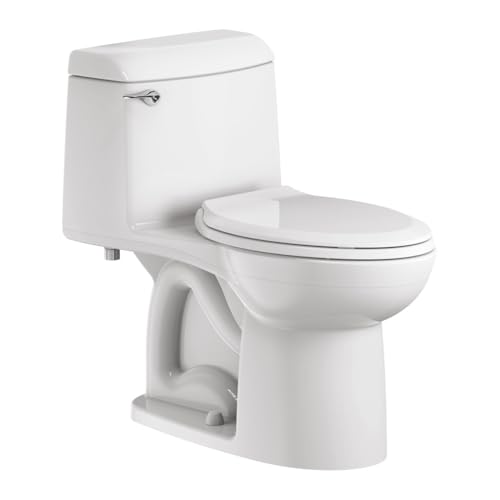
The Champion 4 is the toilet we recommend when clogging is your actual problem, because it is built around the widest trapway in this guide. Its 2.375-inch fully glazed passage swallows bulk that narrower bowls choke on, and a 4-inch flush valve dumps the tank fast enough to drive it all through in one pass.
The combination of an oversized 4-inch flush valve and a 2.375-inch trapway is why the Champion 4 earns a 1,000-gram MaP score and a long reputation for never backing up. Most toilets use a 2-inch or 3-inch valve, so the Champion's larger opening releases water faster and harder, which is exactly what clears bulk that defeats lesser bowls.
The tradeoff is water use: the standard Champion 4 flushes at 1.6 gallons rather than the 1.28 of WaterSense models, so it uses a little more each time. Owner reviews are unusually consistent that the toilet simply does not clog under heavy household use, which for plunger-weary buyers is worth the extra water. Parts are widely available and the flush tower carries a long warranty.
If you are replacing a toilet that clogged constantly, this is the model that most reliably ends the problem. Accept the higher 1.6-gallon flush as the price of that 2.375-inch trapway and 4-inch valve, and you get a fixture that physically cannot get blocked the way a narrow bowl does. It is the closest thing to a clog-proof guarantee on this list.
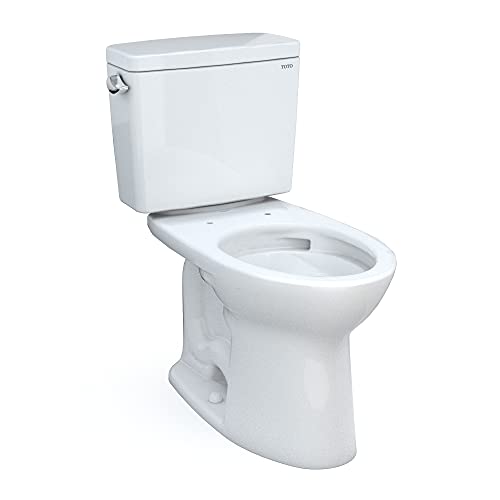
The Drake II is the clog-resistant toilet to buy if you also want a quiet flush. It hits the full 1,000-gram MaP score on only 1.28 gallons, and its fully glazed CeFiONtect trapway is the detail that keeps waste sliding cleanly through year after year instead of catching and building up.
The Drake II uses TOTO's Double Cyclone flush, which fires water through two large nozzles instead of small rim holes to create a centrifugal rinse that scours the bowl and drives a strong siphon. That siphon, combined with the slick CeFiONtect glaze on the trapway, is why owners report so few clogs even though the toilet runs near silent compared with a pressure-assisted unit.
Its 2.125-inch glazed trapway is narrower than the Champion 4's, so for the absolute worst clog cases the American Standard still has the edge on raw bulk capacity. But for most households the Drake II is the smarter buy: it ends the plunging while saving water and staying quiet. Aggregated reviews show one of the lowest clog-complaint rates of any toilet we track.
For the majority of clog-prone homes, the Drake II is the toilet we point to first. The glazed trapway and Double Cyclone siphon stop the constant plunging without the 1.6-gallon water penalty of the Champion 4, and it does it quietly. Only step up to the wider Champion trapway if your clogs are genuinely extreme.
The original Drake is the toilet plumbers reach for when a customer wants one fixture that simply stops clogging and keeps working. It pairs TOTO's G-Max siphon with a wide, fully glazed 2.125-inch trapway, reaching the full 1,000-gram MaP score on 1.28 gallons.
The G-Max siphon moves a large volume of water through the wide glazed trapway quickly, which is what produces both the strong clearance and the very low clog complaint rate the Drake is known for. The fully glazed passage resists the buildup that turns a marginal toilet into a chronic clogger, and the design has been refined over many years rather than recently changed.
Its strength here is consistency: across thousands of reviews, recurring clogs are rare and parts supply never runs dry. The Drake II edges it slightly on glaze technology and bowl shape, but on the metrics that prevent clogs the two are nearly identical, and the standard Drake usually costs less. It is a two-piece and not skirted, so there is a little extra wiping around the base.
When someone wants a toilet that will not clog and will last 15 years, the Drake is the safe answer. It gives up almost nothing to the Drake II on the anti-clog numbers while usually costing less, and its parts will sit on a hardware-store shelf long after newer models are gone.

The UltraMax II is essentially a Drake II in a seamless one-piece body, so you keep the glazed trapway and 1,000-gram flush that prevent clogs while gaining a sleeker, easier-to-clean shell. It uses the same Double Cyclone siphon and CeFiONtect glaze, flushing on 1.28 gallons.
Because it shares the Drake II's flush engine and glazed trapway, the UltraMax II delivers the same low clog rate, just in a body with no seam to catch grime. The one-piece shell also means there is no tank-to-bowl gasket to leak, one fewer failure point over the toilet's life.
It is heavier and costs more than a two-piece, and like the Drake II its 2.125-inch trapway is narrower than the Champion 4's, so extreme clog cases are better served by the American Standard. But for buyers who want clean lines and a wipe-down body without giving up clog resistance, the UltraMax II is the natural pick.
If you have decided on a one-piece for the styling and easy cleaning, the UltraMax II is the obvious anti-clog choice. You keep the Drake II's glazed trapway and 1,000-gram flush and only pay extra for the seamless body, which is a fair trade for a toilet that both looks clean and stays clear.

The Highline reaches the full 1,000-gram MaP score using Kohler's Class Five flush, which pairs a large 3.25-inch canister valve with a wide 2.125-inch trapway. The canister opens fully and releases the whole tank at once, producing a hard, decisive flush that clears clogs for less money than the top TOTO models.
The Class Five canister valve is larger than a typical flapper and exposes the whole tank to the bowl at once, which is what drives the strong rinse that keeps the trapway clear. The 2.125-inch trapway is on par with the TOTO Drake models, so the Highline resists clogs about as well while usually costing less.
The tradeoff is that the canister flush is slightly louder than a pure TOTO siphon, though still far quieter than a pressure-assisted unit, and the stock trip lever and seat feel basic. Owners consistently praise the flush strength and the value, with few recurring-clog complaints. For the same 1,000-gram clog-clearing power at a lower price, the Highline is the value standout.
The Highline is the toilet we recommend when budget is the deciding factor but clogs are still the problem. You get genuine 1,000-gram flush power and a wide glazed trapway for noticeably less than the premium TOTO models, and the only real compromise is a flush a touch louder than a siphon, not weaker.

The Cimarron pairs the same Class Five canister flush as the Highline with a more finished, deliberate bowl shape, so it resists clogs just as well while looking better in a remodeled bathroom. It earns the full 1,000-gram MaP score on 1.28 gallons through a wide 2.125-inch trapway.
The Class Five canister releases the whole tank quickly through the wide trapway, the same mechanism that gives the Highline its clog-clearing strength. The Cimarron simply wraps it in a more refined bowl and tank, which is why it is a common choice for finished bathrooms rather than utility rooms.
Owner reviews show the same low clog rate as the Highline, with the main difference being styling and a slightly higher price. The canister can be marginally louder than a TOTO siphon, but the clearing power is identical. For a clog-resistant toilet that also looks the part, the Cimarron is a strong middle-ground pick.
The Cimarron is the Kohler we steer remodel customers toward when clogs have been an issue. It clears exactly as strongly as the Highline thanks to the same canister valve and wide trapway, but looks more deliberate in a finished space, and the comfort height suits households with older adults.

The Woodbridge T-0019 gives you a clog-resistant flush in a modern skirted one-piece body for less than the major brands charge. It uses a siphon-jet gravity flush rated at 1,000 grams on MaP and includes a soft-close seat, making it a value-focused way to stop frequent clogs.
The siphon-jet flush and concealed skirted trapway clear the bowl strongly while leaving a smooth outer surface with no exposed channel to wipe around. For a clog-prone bathroom where cleaning is also a chore, the skirted design solves two problems at once.
Woodbridge does not have the parts network of TOTO or Kohler, so if something fails years from now you may order online rather than walk into a hardware store. But the included seat and skirted styling offset that for value buyers, and owner reviews report a strong flush with few clogs. It is a sensible budget pick when looks and clog resistance both matter.
If you want the clean skirted look and a clog-resistant flush without spending what a TOTO costs, the T-0019 is the smart buy. Go in knowing you are trading the deepest parts network for the styling and the included soft-close seat, which is a fair deal for a toilet that flushes this strongly.

The Cadet 3 is the budget toilet to grab when an old fixture clogs constantly and you need an affordable fix. It uses American Standard's PowerWash rim and a fully glazed 2.125-inch EverClean trapway to reach a 1,000-gram MaP score on 1.28 gallons, far above the bowl it replaces.
The PowerWash rim scrubs the bowl as it flushes and the fully glazed EverClean trapway resists the buildup that turns a cheap toilet into a chronic clogger. That glazing is the key spec here: many budget toilets skip it, which is exactly why they clog, and the Cadet 3 includes it.
It flushes at the same 1,000-gram level as toilets costing far more, and the main thing you give up is the premium look, which rarely matters in a rental or utility bathroom. Owner reviews report a strong, reliable flush with few clogs and a long warranty. For the money, it is the most cost-effective way to end frequent clogs.
When a rental or secondary bathroom keeps clogging and budget is tight, the Cadet 3 is our go-to swap. It flushes at the same 1,000-gram level as toilets costing far more and includes the glazed trapway that prevents clogs, so the only real compromise is the plainer look.
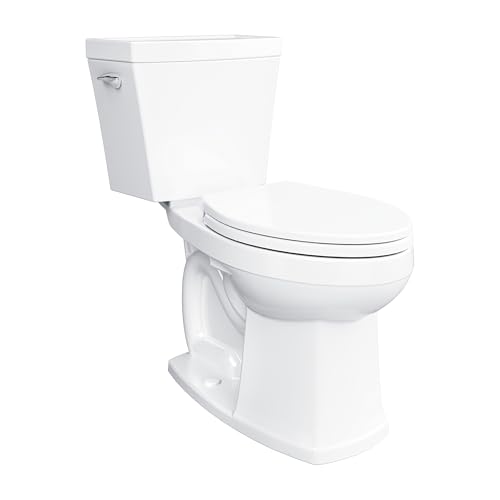
The Gerber Avalanche is a contractor-favorite toilet that delivers solid clog resistance at a value price. It uses a large 3-inch flush valve and a glazed trapway to move waste quickly, rating around 800 grams on MaP, well above the 350-gram residential pass mark.
The 3-inch flush valve is larger than the 2-inch valve on many budget toilets, so the Avalanche releases water faster and produces a stronger flush that clears the trapway cleanly. Gerber is a respected plumbing-trade brand, which is why contractors install it where reliable clog resistance matters more than a recognizable badge.
Its 800-gram MaP score is a step below the 1,000-gram leaders, so for the most extreme clog cases the Champion 4 or Drake II is the safer choice. But for a strong, dependable flush at a lower price, the Avalanche delivers, and owner reviews are positive on clearing power. You may need to source it outside the big-box aisles.
The Avalanche is the toilet we mention to buyers who want to save money without buying something cheap. It is a trade brand with a real 800-gram flush and a 3-inch valve, so you get pro-grade clog resistance at a lower price, as long as you are comfortable ordering it outside the big-box stores.
Across this whole list, the two numbers that actually predict clogs are trapway diameter and MaP score, not brand or price. Any toilet here with a 2.125-inch-or-wider glazed trapway and a 1,000-gram flush will clear a typical household in one pass for years. If your clogs are extreme, jump straight to the wide-trapway Champion 4; if you want quiet and water savings, the Drake II ends the plunging just as reliably for most homes.
Flush strength comes down to how fast and how forcefully water enters the bowl. A larger flush valve, like the Champion 4's 4-inch tower or the Kohler canister, releases the tank faster than a standard 2-inch flapper, building a stronger siphon. Pair that fast release with a wide glazed trapway and you get a flush that drives bulk all the way through instead of leaving it to settle and clog. If your current toilet flushes weakly, our guide on how to improve toilet flush power covers the fixes worth trying before you replace it.
The MaP test was developed to give buyers a real, independent measure of flush power instead of marketing claims. A toilet rated at 1,000 grams cleared the heaviest test load the protocol uses, while a toilet near the 350-gram pass line clears far less and is much more likely to need a second flush. For a clog-prone household, aiming for 800 to 1,000 grams is the simplest way to ensure the new toilet ends the problem. You can verify any model's score directly at map-testing.com before you buy.
Trapway glaze matters almost as much as width. An unglazed porcelain trapway has a slightly rough surface that grabs waste and builds up over time, gradually narrowing the effective passage until clogs become routine. A fully glazed trapway, like TOTO's CeFiONtect or American Standard's EverClean, stays slick so waste slides straight through. When you shop, look for both a trapway of 2.125 inches or wider and a glazed (not just standard) finish, and pair them with a 1,000-gram MaP score for the best clog resistance.
Buyers often assume a one-piece toilet flushes better because it looks more premium, but the flush system inside is what counts. The UltraMax II and Drake II prove the point: they use the same Double Cyclone siphon and CeFiONtect trapway, so they clog at the same low rate despite the different bodies. Choose one-piece for easy cleaning and no seam, or two-piece for lower cost and easier solo installation, and judge clog resistance by the trapway and MaP score instead.
Picking a toilet that ends frequent clogs is mostly about matching three specs, in order of importance. First, the trapway: aim for 2.125 inches or wider, and confirm it is fully glazed rather than standard porcelain. Second, the MaP score: target 800 to 1,000 grams, which you can verify independently at map-testing.com. Third, the flush valve and water use: a larger valve releases the tank faster for a stronger flush, while EPA WaterSense certification confirms it does so on 1.28 gallons or less without sacrificing power.
Before ordering, measure the rough-in, the distance from the finished wall to the center of the floor bolts. Most toilets are built for a standard 12-inch rough-in, but older homes sometimes have 10-inch or 14-inch, and the toilet must match or it will not seat against the wall. Also decide on bowl height: comfort or universal height (around 16.5 to 17.25 inches) is easier for most adults and seniors, while standard height sits lower.
If your clogs are occasional, any 1,000-gram toilet with a glazed 2.125-inch trapway, like the Drake II, Highline or Cadet 3, will likely fix the problem while saving water at 1.28 gallons. If your clogs are severe and frequent, step up to the widest trapway available, the Champion 4's 2.375-inch passage, and accept the slightly higher 1.6-gallon flush as the cost of never plunging again. Matching the fixture to your actual clog severity is the difference between a toilet that helps and one that solves it for good.
The mistake we see most often is treating recurring clogs as a drain problem and snaking the line over and over when the toilet itself is the bottleneck. Measure your rough-in, then buy the widest glazed trapway you can in that size with a 1,000-gram MaP score. Do those two things and almost any toilet on this list will end the plunging for well over a decade. If clogs persist after a strong new toilet, only then look at the drain line, and our guide on a toilet not flushing properly walks through what to check next. For weak-flush fixes short of replacement, see our weak toilet flush fix guide.
The American Standard Champion 4 is the best toilet for frequent clogs, thanks to a 2.375-inch fully glazed trapway and a 4-inch flush valve that pass bulk waste in one pass for a 1,000-gram MaP score. For a quieter option that resists clogs nearly as well while saving water, the TOTO Drake II is the top alternative.
If a toilet clogs repeatedly, the bowl itself is usually the bottleneck, not the drain line. A narrow trapway under 2 inches, an unglazed trapway, a weak flush with a low MaP score, or a low tank water level all cause chronic clogs. A toilet engineered with a wide glazed trapway and a 1,000-gram flush ends the cycle.
Aim for a trapway of at least 2.125 inches, and ideally a fully glazed one. The TOTO Drake series uses 2.125 inches, while the American Standard Champion 4 uses an extra-wide 2.375-inch trapway. Trapways under 2 inches, common in budget and older toilets, are the most frequent cause of recurring clogs.
A MaP score of 600 grams or higher strongly resists clogs, and 1,000 grams is the maximum on the residential scale. The MaP test measures grams of waste cleared per flush, with 350 grams as the pass threshold. For a chronic clogging problem, choose a toilet rated 800 to 1,000 grams to be safe.
A pressure-assisted toilet can clear waste forcefully, but a well-designed gravity toilet with a wide glazed trapway and a 1,000-gram MaP score resists clogs just as effectively while being quieter and cheaper to repair. The Champion 4 and Drake II show that gravity, done right, matches pressure-assisted clog resistance for most homes.
Yes, in most cases. If the drain line is clear and your toilet still clogs, the trapway inside the toilet is almost always the restriction, since it is usually narrower than the pipe behind the wall. Replacing a narrow-trapway toilet with a wide glazed one like the Champion 4 or Drake II typically ends the clogs.
The Champion 4 has the wider 2.375-inch trapway and is the safer choice for severe, frequent clogs, while the Drake II resists clogs nearly as well with a quieter flush and lower 1.28-gallon water use. Choose the Champion 4 for extreme cases and the Drake II for most clog-prone homes that also want quiet and efficiency.
Yes. A fully glazed trapway, such as TOTO's CeFiONtect or American Standard's EverClean, has a slick surface that lets waste slide straight through, while an unglazed trapway grabs waste and builds up over time, narrowing the passage and causing clogs. Always look for a glazed trapway on a clog-resistant toilet.
Older first-generation low-flow toilets clogged often because their bowls were not engineered for strong clearance on less water. Modern WaterSense models like the Drake II and Highline reach the full 1,000-gram MaP score on just 1.28 gallons, so a current low-flow toilet resists clogs as well as any while saving water.
The American Standard Cadet 3 is the best budget toilet for frequent clogs. It uses a glazed EverClean trapway and PowerWash rim to reach a 1,000-gram MaP score on 1.28 gallons at a low price, making it an affordable swap for an old toilet that clogs constantly in a rental or secondary bathroom.
Yes. A larger flush valve releases the tank faster, building a stronger siphon that drives waste through the trapway. The Champion 4's 4-inch valve and Kohler's 3.25-inch canister flush both produce more forceful flushes than a standard 2-inch flapper, which is part of why they clog less than budget toilets.
A one-piece toilet resists clogs only because of its trapway and flush, not its body style. The TOTO UltraMax II, a one-piece, shares the Drake II's glazed trapway and 1,000-gram flush, so it clogs just as rarely while being easier to clean with no tank-to-bowl seam.
Most clog-resistant toilets, including the Drake II, Highline, Cimarron and Cadet 3, use 1.28 gallons per flush and carry EPA WaterSense certification. A few high-clearance models like the American Standard Champion 4 use 1.6 gallons to maximize clog resistance, trading a little extra water for the widest trapway.
TOTO is among the most clog-resistant brands thanks to its glazed CeFiONtect trapways and strong siphon flushes, but American Standard, with the Champion 4's extra-wide trapway, and Kohler, with its Class Five canister, are equally capable. For the lowest clog rates, focus on trapway width and MaP score across these three brands.
A worn flapper that closes too early can weaken a flush and cause clogs, so replacing it is worth trying first. But if the toilet has a narrow or unglazed trapway by design, a new flapper will not solve chronic clogging, and only a toilet engineered with a wide glazed trapway and strong flush will fix it permanently.
Yes, both offer good clog resistance at a value price. The Woodbridge T-0019 reaches a 1,000-gram MaP score with a skirted siphon-jet flush, and the trade-favorite Gerber Avalanche rates around 800 grams with a 3-inch valve. Both clear well above the 350-gram pass mark, though their parts networks are smaller than TOTO, Kohler and American Standard.
Most clog-resistant toilets are built for a standard 12-inch rough-in, the distance from the finished wall to the center of the floor bolts. Older homes sometimes have 10-inch or 14-inch rough-ins, and brands like TOTO and Kohler offer popular models in those sizes. Always measure before buying to ensure a clean fit.
Not necessarily. A 1.6-gallon flush can help with extreme clog cases, like the Champion 4, but modern 1.28-gallon WaterSense toilets reach the same 1,000-gram MaP score through better bowl and trapway engineering. Flush design and trapway width matter more than raw water volume for everyday clog resistance.
Sometimes. Cleaning the rim jets, replacing a worn flapper, and setting the tank water to the marked fill line can restore a flush weakened by maintenance issues. But if the toilet has a narrow or unglazed trapway by design, those steps only help so much, and a clog-resistant replacement is the lasting fix.
If frequent clogs are your problem, the American Standard Champion 4 is the pick that most reliably ends them, with a 2.375-inch fully glazed trapway, a 4-inch flush valve and a 1,000-gram MaP score that simply passes bulk other toilets choke on. Choose the TOTO Drake II if you want nearly the same clog resistance with a quieter flush and lower 1.28-gallon water use, the Kohler Highline for the same 1,000-gram power at a lower price, or the American Standard Cadet 3 as an affordable swap for an old clogging toilet. Confirm your rough-in and trapway width, then check the current price on Amazon.
Drainline carry measures how far solid waste travels in a pipe after one flush. Learn what the MaP test measures and why…
Read the guideToilet floor bolts spinning instead of tightening usually means a broken flange or stripped nut. Here is how to diagnose it and…
Read the guideShould tile run under the toilet or stop at the flange? Learn the right order, why it matters for leaks, and how…
Read the guide