Why Toilet Trapways Are Curved Like an S
Toilets4.6
Learn why toilet trapways curve like an S, how each bend blocks sewer gas, and what the shape means for clogs and…
Read the guideA data-driven breakdown of repair costs, replacement costs, water savings, and the decision framework plumbers actually use to help you decide whether to fix or swap your toilet.
Repair a toilet if the fix costs under 50% of a new unit and the toilet is under 15 years old with no cracks. Replace when repair costs stack up repeatedly, the toilet predates 1994 low-flow mandates (using 3.5+ GPF), or a visible porcelain crack makes the unit a liability. Replacing a 3.5 GPF toilet with a 1.28 GPF WaterSense model typically saves 16,000 gallons per household annually.
The most common toilet repairs are flapper replacement ($10-$30 DIY, $75-$150 with a plumber), fill valve replacement ($15-$50 DIY, $100-$200 with labor), and flush valve replacement ($20-$60 DIY, $120-$250 with labor). Handle replacement and supply line swaps run even less, usually $5-$25 in parts. These are all straightforward fixes that rarely justify a full replacement on their own.
Understanding where your repair dollars go is the first step in making a rational repair-vs-replace decision. Toilet components have predictable lifespans, and most failures are isolated to the same handful of rubber and plastic parts inside the tank.
| Repair Type | DIY Part Cost | Plumber Labor (est.) | Total (Pro) | Difficulty | Worth Repairing? |
|---|---|---|---|---|---|
| Flapper replacement | $5-$15 | $75-$120 | $80-$135 | Beginner | Always |
| Fill valve replacement | $15-$50 | $85-$150 | $100-$200 | Beginner | Always |
| Flush valve / flushometer | $20-$60 | $100-$200 | $120-$260 | Intermediate | Usually |
| Toilet handle | $5-$25 | $60-$100 | $65-$125 | Beginner | Always |
| Wax ring / base leak | $5-$15 | $150-$300 | $155-$315 | Intermediate | Usually |
| Supply line | $8-$25 | $60-$100 | $68-$125 | Beginner | Always |
| Tank-to-bowl gasket / bolts | $10-$30 | $100-$175 | $110-$205 | Beginner | Usually |
| Complete tank rebuild kit | $20-$60 | $100-$200 | $120-$260 | Intermediate | Often |
| Toilet flange repair | $15-$40 | $150-$350 | $165-$390 | Intermediate-Advanced | Depends on age |
| Bowl crack (hairline) | Epoxy $10-$20 | $150-$300 | $160-$320 | Advanced | Rarely |
| Tank crack | Epoxy $10-$20 | $200-$400 | $210-$420 | Advanced | No — replace |
Plumbers use a straightforward rule of thumb: if a single repair exceeds 40 to 50 percent of a comparable replacement toilet's cost (parts + basic installation), the math strongly favors replacement. A flapper at $10 on a 20-year-old toilet is always worth it. A $350 flange repair on a 25-year-old 3.5 GPF toilet that has already had two other fixes this year is a different calculation entirely.
Full toilet replacement in 2026 typically runs $350 to $900 for a mid-range toilet plus professional installation, or $700 to $1,500+ for a comfort-height or one-piece model with a plumber. The toilet unit itself accounts for $100 to $800 of that total depending on brand and features; labor for a standard swap averages $150 to $300 in most U.S. markets. Premium toilets from TOTO or Kohler can push the installed cost above $1,000.
Replacement cost is not a single number; it depends on the toilet model you choose and your local labor market. Here is a realistic cost breakdown by category.
| Toilet Category | Unit Cost Range | Install Labor (est.) | Total Installed | Example Models | Check Price |
|---|---|---|---|---|---|
| Budget two-piece | $80-$180 | $150-$250 | $230-$430 | American Standard Cadet 3, Gerber Viper | Check price |
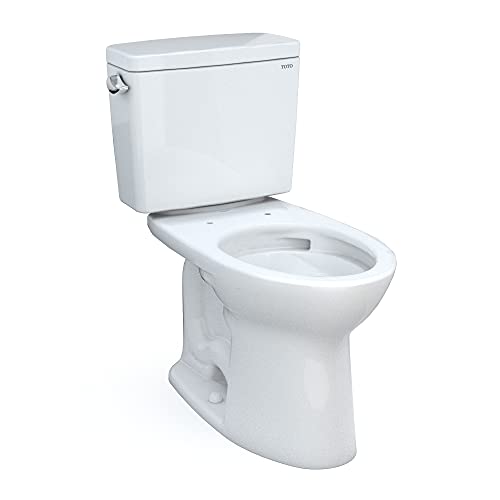
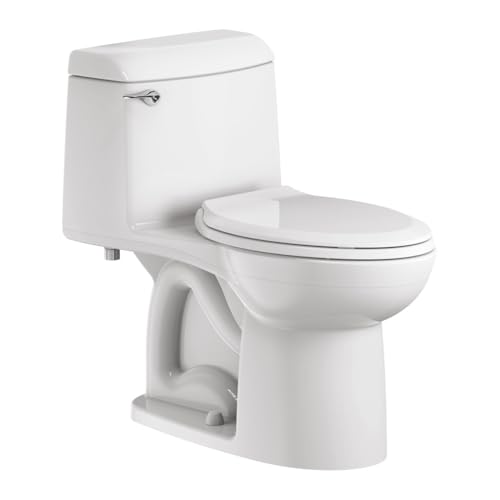
| Mid-range two-piece | $180-$350 | $150-$300 | $330-$650 | Kohler Highline, American Standard Champion 4, TOTO Drake | Check price |
| Mid-range one-piece | $250-$500 | $175-$325 | $425-$825 | Woodbridge T-0001, Swiss Madison Clarence, TOTO Drake II | Check price |
| Premium two-piece | $350-$600 | $175-$350 | $525-$950 | Kohler Cimarron, TOTO Aquia IV, American Standard VorMax | Check price |
| Premium one-piece / comfort | $450-$900 | $200-$400 | $650-$1,300 | TOTO UltraMax II, Kohler Corbelle, Gerber Avalanche | Check price |
| Smart / bidet combo | $700-$2,000+ | $250-$500 | $950-$2,500+ | TOTO Neorest, Kohler Veil Intelligent | Check price |
Labor costs vary significantly by region. Major metros (New York, San Francisco, Chicago) typically run 30 to 50 percent higher than the national averages shown above. A standard same-brand, same-configuration swap takes most plumbers 1 to 2 hours. If the rough-in distance changes or the floor needs work, add $100 to $200.
Many homeowners are surprised to learn that the toilet itself is often a minority of the total replacement cost. For a budget two-piece install, labor frequently exceeds the hardware cost. Getting two or three plumber quotes and doing your own supply-line and seat removal beforehand can meaningfully reduce the final bill. Models like the American Standard Champion 4 or TOTO Drake are popular DIY-friendly replacements because their rough-in dimensions match most existing North American installations at 12 inches.
Repair makes financial sense when the toilet is under 15 years old, has no structural cracks, the repair cost is under 40 to 50 percent of a comparable replacement (installed), and this is the first or second repair event. Replace when repair costs are recurring, the toilet is over 20 years old and using 3.5 GPF or more, or there is a crack in the bowl or tank. A porcelain crack is not a "repair" situation; it is a liability.
The decision tree below covers the most common scenarios homeowners and landlords face.
If any single repair or the combined cost of repairs in a 12-month window exceeds 50% of what a comparable replacement toilet would cost installed, replace. A toilet that needed a fill valve last year, a flapper this spring, and now needs a wax ring and flange repair is telling you something: it is at end of service life.
Toilets manufactured before 1994 use 3.5 to 5.0 gallons per flush (GPF). The 1992 Energy Policy Act capped new toilets at 1.6 GPF; modern EPA WaterSense certified models flush at 1.28 GPF or less. A pre-1994 toilet using 3.5 GPF versus a WaterSense 1.28 GPF replacement wastes 2.22 gallons per flush. At 5 flushes per person per day in a four-person household, that is 44.4 gallons per day or 16,206 gallons per year. At national average water rates near $0.004 per gallon (combined water and sewer), that is roughly $65 per year in savings, per toilet, plus reduced sewer charges in metered systems.
Toilets manufactured between 1994 and 2005 typically use 1.6 GPF. Replacing them with a 1.28 GPF WaterSense model saves 0.32 GPF, or about 2,336 gallons per year for a 4-person household. Smaller savings, but still real.
A hairline crack in the tank can sometimes be sealed temporarily with waterproof epoxy. A crack in the bowl or at the base cannot be reliably repaired and poses both water damage and sanitation risk. Replace immediately if you see a crack in the porcelain bowl, regardless of the toilet's age.
MaP (Maximum Performance) flush testing evaluates toilets by how many grams of solid waste they can flush reliably. Scores range from 250 to 1,000 grams. Toilets scoring below 500 grams on MaP tests are considered marginal performers for household use; scores of 800 grams or higher are considered excellent. If your current toilet consistently clogs with normal household use and is not structurally damaged, a higher-scoring replacement will provide lasting improvement. The TOTO Drake, TOTO UltraMax II, and American Standard Champion 4 all achieve MaP scores at or near 1,000 grams.
For rental property owners, the calculus shifts slightly. A toilet that generates service calls is a management cost beyond the repair invoice. Most experienced landlords replace toilets proactively at 15 to 20 years rather than waiting for emergency failures. The TOTO Drake II and Kohler Highline are popular rental-property choices: they are robust, parts are universally available, and their WaterSense 1.28 GPF rating reduces utility bills in situations where water is landlord-paid.
Replacing a pre-1994 toilet (3.5 GPF) with an EPA WaterSense 1.28 GPF model saves approximately 16,000 to 20,000 gallons per year for a 4-person household per toilet, translating to $50 to $110 in annual water and sewer savings depending on local rates. Replacing a 1.6 GPF toilet with 1.28 GPF saves roughly 2,300 to 3,000 gallons per year per toilet. Many utilities offer rebates of $50 to $200 for WaterSense toilet upgrades that further offset installation costs.
| Old Toilet GPF | New Toilet GPF | Savings Per Flush | Annual Gallons Saved (4 people, 5 flushes/day) | Est. Annual $ Savings |
|---|---|---|---|---|
| 5.0 GPF (pre-1980) | 1.28 GPF WaterSense | 3.72 gallons | 27,156 gallons | $100-$150 |
| 3.5 GPF (pre-1994) | 1.28 GPF WaterSense | 2.22 gallons | 16,206 gallons | $60-$110 |
| 1.6 GPF (1994-present) | 1.28 GPF WaterSense | 0.32 gallons | 2,336 gallons | $8-$20 |
| 1.6 GPF (1994-present) | 0.8 GPF (HET dual-flush half) | 0.8 gallons (liquid cycle) | ~5,840 gallons (mixed use) | $20-$40 |
Several utilities, including those serving Los Angeles, Phoenix, Denver, and Austin, offer WaterSense toilet rebates. Check the EPA WaterSense rebate finder at epa.gov/watersense before purchasing to reduce your net replacement cost. Some rebates bring the effective out-of-pocket cost of a WaterSense toilet to under $100.
The hidden costs of delaying toilet replacement include ongoing wasted water (a running toilet can waste 200 gallons per day), the risk of a catastrophic floor or subfloor failure from a slow base leak, repeated emergency plumber visits, and lost utility rebates that expire or decrease over time. A toilet leaking at the wax ring for months can cause $1,000 to $10,000+ in subfloor and flooring damage that no toilet repair budget covers.
A toilet with a worn flapper or improperly adjusted fill valve can run continuously. The EPA estimates a running toilet wastes 200 gallons per day, or 73,000 gallons per year. At average combined water and sewer rates, that is $270 to $350 per year of silent waste for a single toilet. Replacing the flapper ($5 to $15 in parts) is the obvious fix. But if the toilet has already had multiple flappers and still runs, the flush valve seat may be pitted or cracked, at which point a full flush valve replacement or toilet replacement deserves comparison.
A toilet that rocks even slightly is working the wax ring seal with every flush. A failed or improperly installed wax ring allows sewer water to seep slowly under the toilet base. This water saturates the subfloor over weeks or months. By the time visible damage appears, you may be looking at not just a toilet replacement but subfloor repair, tile or vinyl floor replacement, and potentially mold remediation. The repair bill in this scenario routinely exceeds $2,000 to $5,000 and in severe cases reaches $10,000+.
Any toilet that rocks, wobbles, or shows soft floor material around the base needs immediate attention. See our guide on how to fix a rocking toilet for the diagnostic steps.
If you are calling a plumber for toilet issues more than once per year, track the cumulative cost. A plumber visit typically starts at $75 to $125 for a service call alone, before any parts. Three plumber visits in a year on the same toilet equals $225 to $375 in labor alone, not counting parts. That sum alone covers a mid-range replacement toilet like the TOTO Drake or Kohler Cimarron, and a significant portion of installation labor.
A useful mental model: think of toilet repair as renting time from an aging asset. You are paying to extend the useful life of something that has a finite lifespan. At some point, the rent exceeds the buy. That crossover happens earlier than most homeowners expect, typically between ages 15 and 20 for a toilet that has had multiple component failures. At that inflection point, investing in a high-MaP, WaterSense-certified replacement from TOTO, Kohler, or American Standard produces a better 10-year total cost of ownership than continued patching.
Homeowners with basic tool comfort can replace flappers, fill valves, toilet handles, supply lines, and complete tank rebuild kits without a plumber. Wax ring replacement requires disconnecting and lifting the toilet, which is manageable for most adults but requires care to avoid cracking the porcelain. Flange repair, auger-clearing deep clogs, and anything involving the drain stack should be left to a licensed plumber to avoid creating larger problems.
The tank interior is where almost all functional toilet failures originate, and every component inside the tank is designed for non-specialist replacement. The Fluidmaster 400A fill valve (under $15) and its variants fit virtually every residential gravity-flush toilet. Korky flappers are available by brand for specific toilet models including Kohler and TOTO, which use non-standard flapper designs. A complete tank rebuild kit from Fluidmaster costs $20 to $40 and replaces everything inside the tank at once, making a systematic refresh of an aging toilet practical and economical.
Supply line replacement requires only an adjustable wrench and a bucket. The toilet handle requires no tools beyond optional pliers. These repairs genuinely take 15 to 30 minutes for most adults following manufacturer instructions.
Call a licensed plumber for: any crack in the porcelain (bowl or tank), a failed toilet flange or broken closet bolts, a wax ring that has failed more than once in the same location (suggesting a flange or floor problem), slow-draining issues that persist after plunging and augering, and any suspected damage to the drain line or vent stack. See our full guide on toilet flange repair for what that diagnostic process looks like.
For those considering doing their own toilet replacement, our complete how to replace a toilet guide walks through every step. Most standard swaps take 2 to 3 hours with basic tools.
Full toilet replacement is DIY-appropriate for most homeowners comfortable with basic plumbing. You need an adjustable wrench, a utility knife, a putty knife, a bucket and sponge, and 2 to 3 hours. The hardest part is lifting the toilet (40 to 120 lbs depending on whether it is a one-piece or two-piece model). Two-piece toilets are significantly easier to manage since tank and bowl can be separated. If you are capable of the repair, doing the installation yourself can save $150 to $350 in labor and significantly changes the repair-vs-replace math in favor of replacement.
When the repair-vs-replace math comes out in favor of replacement, here are the models most consistently validated by MaP testing, EPA WaterSense certification, and aggregated owner reviews.
For most households, the TOTO Drake (1.6 GPF) or TOTO Drake II (1.28 GPF WaterSense, MaP 1000g) deliver best-in-class performance at a mid-range price. The American Standard Champion 4 achieves a MaP score of 1000g and is one of the most clog-resistant toilets at any price point. For those wanting a one-piece design, the TOTO UltraMax II combines CEFIONTECT glaze, TORNADO FLUSH technology, and a 1.28 GPF WaterSense rating with a MaP score of 1000g. For a complete breakdown, see our best flushing toilets guide.
Budget-conscious buyers who need a reliable performer should consider the Kohler Highline or American Standard Cadet 3, both of which score 800g or better on MaP and carry WaterSense certification at 1.28 GPF. The Woodbridge T-0001 offers a one-piece skirted design with strong owner review aggregates at a competitive price point.
For dual-flush buyers who want maximum water savings, the TOTO Aquia IV (1.28/0.8 GPF) and Swiss Madison dual-flush options are well-reviewed for flush reliability. See our best dual flush toilets roundup for specifics.
One underappreciated factor in the repair-vs-replace decision is parts availability. Well-supported brands like TOTO, Kohler, and American Standard maintain consistent part availability for models going back 15 to 20 years. Generic or private-label toilets purchased from discount importers may lack replacement parts within 5 to 7 years, making repair impossible regardless of the dollar value of the fix. If you own a toilet and cannot identify the brand or model number, a plumber's ability to source correct parts drops significantly.
If you are genuinely unsure whether repair or replacement is the right call, a diagnostic service call from a licensed plumber typically runs $75 to $125 and should include a written recommendation with cost estimates for both paths. For a toilet approaching or over 20 years old showing multiple symptoms, most plumbers will recommend replacement, and that assessment from a professional can also help justify a warranty claim if the toilet is relatively recent. For anything related to the wax ring, flange, or subfloor, a professional assessment before committing to either path is money well spent.
For help understanding what a full plumber assessment might cost in your area, see our detailed toilet installation cost guide.
For toilets under 15 years old with a single failing component, repair is almost always the right call economically. For toilets over 20 years old, using 1.6 GPF or more, with recurring failures or any structural crack, replacement pays for itself through water savings, reduced service calls, and the MaP-verified flush reliability of modern designs from TOTO, Kohler, and American Standard. Use the 50% rule: if your repair quote exceeds half the installed cost of a comparable new toilet, buy the new toilet. The water savings, rebates, and reduced maintenance costs of a WaterSense-certified replacement make the math work faster than most homeowners expect.
The porcelain shell of a toilet can last 50 years or more without degrading. The internal tank components -- flappers, fill valves, and flush valves -- typically last 5 to 10 years under normal use before needing replacement. The practical end-of-life for a toilet as a complete system is generally 20 to 30 years, when recurring component failures make continued repair economically irrational compared to a modern WaterSense replacement.
Outside of structural porcelain cracks, the most common driver for replacement is accumulated repair costs on older high-water-use models (3.5 GPF or more) where the running savings of a new 1.28 GPF toilet quickly offset replacement costs. The second most common reason is a failed toilet flange combined with subfloor damage, where the repair scope expands beyond the toilet itself.
A cracked toilet bowl cannot be reliably or safely repaired for long-term use. Waterproof epoxy may slow a hairline crack temporarily, but porcelain under the stress of repeated use will continue to propagate the crack. A bowl crack is a replace-immediately situation regardless of the toilet's age. The risk of sudden failure and flooding outweighs any cost savings from delay.
Some manufacturers sell replacement tanks as separate parts, and in theory you can replace just the tank. In practice, the labor cost often approaches half the cost of a complete toilet replacement, the color match may be imperfect due to glaze aging, and if the toilet is already 15-plus years old, you are investing significant money in only the tank while the bowl and internal components continue to age. Unless the toilet is rare, expensive, or recently installed, full replacement is usually more economical.
Many water utilities and municipal governments offer rebates for upgrading to EPA WaterSense certified toilets (1.28 GPF or less). Rebates typically range from $50 to $200 per toilet, with some programs covering up to 4 toilets per household per year. To find rebates in your area, use the EPA WaterSense rebate finder at epa.gov/watersense or contact your local water utility directly before purchasing. Rebates are often first-come, first-served and require purchase of a WaterSense-labeled model.
Look inside the tank. Most toilets manufactured after 1994 have the GPF rating stamped into the porcelain on the back wall of the tank or on the underside of the tank lid. If no GPF marking is visible and the toilet was installed before 1994, assume 3.5 GPF as a conservative estimate. Pre-1980 toilets are often 5.0 GPF or more.
MaP (Maximum Performance) testing is an independent third-party protocol that measures how many grams of solid waste a toilet can flush reliably in a single flush. Scores range from 250 to 1,000 grams; 1,000g is the highest achievable. Toilets scoring 800g or above are considered excellent performers. A MaP score gives you objective flush performance data independent of manufacturer claims. Models like the TOTO Drake II, TOTO UltraMax II, and American Standard Champion 4 all achieve 1,000g MaP scores.
In most U.S. jurisdictions, replacing a toilet with a same-configuration model (same rough-in, same drain location) does not require a permit and is classified as a like-for-like replacement. Permits are typically required only when the drain location or rough-in changes, or when a new rough-in is being added. Always check your local building department requirements before starting work.
The 50% rule is a plumber's heuristic: if the cost of a repair (parts plus labor) exceeds 50% of the installed cost of a comparable new toilet, replacement is the more economical choice. The rule accounts for the fact that a repair on an aging system reduces future reliability risk less than a new toilet does, and that multiple repairs often follow the first in quick succession on worn units.
A diagnostic service call from a licensed plumber typically ranges from $75 to $125 for the visit itself, before any repair work begins. Most plumbers apply the service call fee toward the repair if you proceed. Getting a diagnosis before committing to either repair or replacement on an older or repeatedly problematic toilet is money well spent.
TOTO, Kohler, and American Standard consistently appear at the top of reliability surveys and have the broadest parts availability networks in North America. TOTO's CEFIONTECT glaze and TORNADO FLUSH technology reduce bowl buildup and maintenance over time. Kohler's AquaPiston flush valve design is a durable departure from traditional flappers. American Standard's Champion 4 trapway design is one of the largest in residential toilets, contributing to clog resistance. All three brands support their models with replacement parts for 15 or more years after production.
Yes, provided the rough-in dimension matches (usually 12 inches in North American homes, with some 10-inch and 14-inch variations). A 1.28 GPF WaterSense toilet installs identically to a 1.6 GPF model -- same supply line connection, same wax ring, same bolt pattern. Many models like the TOTO Drake II and Kohler Cimarron are direct drop-in replacements for 12-inch rough-in installations.
The rough-in is the distance from the wall behind the toilet to the center of the drain flange. The most common residential rough-in in North America is 12 inches. Older homes may have 10-inch or 14-inch rough-ins. Buying a toilet with the wrong rough-in means it will not fit in the space correctly. Measure your existing rough-in before purchasing a replacement. See our rough-in measurement guide for step-by-step instructions.
Pressure-assist toilets deliver more powerful flushes using compressed air from a sealed tank bladder, and they tend to maintain bowl cleanliness well. However, they are louder, cost more to purchase, and parts are less universally available than for gravity-flush models. For most households, a high-MaP gravity-flush toilet (1,000g rated) is a better total-value proposition. Pressure-assist makes sense for basement bathrooms, high-traffic commercial settings, or homes with a chronic clogging history that persists with standard gravity models.
EPA WaterSense is a voluntary certification program for water-efficient products. Certified toilets use 1.28 GPF or less (versus the 1.6 GPF federal maximum) and must pass independent flush performance testing that includes a 350g MaP-equivalent test. Certification does not guarantee a 1,000g MaP score -- that requires checking the manufacturer's published MaP test result separately. A WaterSense label means the toilet meets minimum performance standards while using 20% less water than the federal maximum.
Most municipalities accept old porcelain toilets at household hazardous waste (HHW) or bulky waste collection events. Some plumbers will haul away the old unit as part of installation. Habitat for Humanity ReStores and similar organizations accept working toilets in good condition. Porcelain is not accepted in standard curbside recycling. Contact your local waste authority for accepted disposal methods in your area.
Most major toilet brands offer limited warranties that cover porcelain defects for 1 year to lifetime, depending on the brand. TOTO offers a 1-year warranty on all components and a separate limited lifetime warranty on the toilet itself. Kohler offers a 1-year warranty on flushing mechanism components and a limited lifetime warranty on the toilet body for original purchasers. American Standard offers similar tiered coverage. Warranties generally do not cover labor costs if a defect requires a plumber visit.
A running toilet that persists after flapper replacement usually has a flush valve seat issue (the valve seat may be pitted, warped, or corroded, preventing a clean seal) or a fill valve problem (fill valve not shutting off properly at the correct water level). Check the fill valve float adjustment first: if the water level is above the overflow tube, the fill valve is overfilling and water runs into the bowl via the overflow. If the water level is correct but the toilet still runs, the flush valve seat likely needs replacement or the complete flush valve assembly should be swapped. Both are DIY repairs if you can identify the correct flush valve for your model.
Assuming a 4-person household flushing 5 times per person per day, replacing a 3.5 GPF toilet with a 1.28 GPF WaterSense model saves approximately 16,206 gallons per year. At an average combined water and sewer rate of $0.004 per gallon, annual savings are approximately $65 per toilet. With a utility rebate of $100 and a DIY installation, the net cost of a $200 replacement toilet is $100, yielding a payback period of under 2 years. Without a rebate and with professional installation (total installed cost $450 to $600), payback runs 7 to 9 years purely on water savings, but this does not account for avoided repair costs on the aging unit.
Flappers typically last 3 to 7 years. Rubber degrades from chlorine in municipal water, hard water mineral deposits, and cleaning products dropped into the tank. Fill valves last 7 to 12 years on average. Flush valve seats last 15 to 25 years but can develop pitting or corrosion earlier in hard water environments. Tank-to-bowl bolts and gaskets last 10 to 20 years. Understanding these individual component lifespans helps you recognize when a toilet is reaching the point where multiple components are simultaneously aging out.
Learn why toilet trapways curve like an S, how each bend blocks sewer gas, and what the shape means for clogs and…
Read the guideAlmost every US toilet has a left-side handle. Learn the plumbing and mechanical reasons behind the layout and when it actually changes.
Read the guideHome toilets rely on tanks because household water lines lack the pressure that public flushometer systems use to flush straight from the…
Read the guide