


Best Black Toilets (2026)
Toilets4.6
Black has moved from a rare custom-order finish to a real stocked color across several major toilet brands, giving buyers a bold,…
Read the guideTexas law sets hard limits on toilet water use. This guide explains every GPF threshold, which toilets comply, how EPA WaterSense certification fits in, and what happens if a plumber installs a non-compliant fixture in your home.
Research updated June 2026.
Texas state law caps toilet water use at 1.28 gallons per flush (GPF) for all new construction and replacement installs statewide, aligning with the EPA WaterSense standard. Older 1.6 GPF toilets installed before the law took effect remain legal to operate but cannot be reinstalled if removed.
Texas adopted a mandatory 1.28 GPF maximum for toilets through the Texas Water Code and rules promulgated by the Texas Commission on Environmental Quality (TCEQ). The 1.28 GPF ceiling applies to any toilet sold, installed, or replaced in a Texas building after September 1, 2014, affecting both residential and commercial construction statewide. Pre-existing 1.6 GPF toilets in place before that date were grandfathered and may remain in service, but they cannot legally be reinstalled once pulled from their mounting.
Texas sits in one of the most water-stressed regions of North America. The state's population has grown by more than 4 million people since 2015, and the Edwards Aquifer, the Trinity Aquifer, and the Ogallala Aquifer face well-documented depletion pressures. Against that backdrop, the legislature acted decisively: toilets are the single largest indoor water user in a typical home, accounting for roughly 24 to 30 percent of total indoor water consumption according to EPA estimates. Cutting per-flush volume from 1.6 to 1.28 GPF represents a 20 percent reduction per flush -- significant at household scale and enormous when multiplied across 11 million Texas homes.
The law is codified in Texas Water Code, Chapter 372, originally enacted as House Bill 3169 (2011 session) and phased in over subsequent years. By the 2014 effective date for residential installations, retailers were also prohibited from selling non-compliant toilets for use in Texas. The TCEQ enforces the rule primarily through plumbing inspectors during the permit and inspection process.
Texas was among the first states to push below 1.6 GPF statewide rather than limiting the requirement to drought-prone municipalities. The 1.28 GPF floor lines up precisely with the EPA WaterSense threshold, which means any WaterSense-labeled toilet sold anywhere in the country is automatically compliant for Texas installation -- a practical convenience for plumbers and homeowners sourcing fixtures from national retailers.
For dual-flush toilets, Texas regulators apply an average flush volume test rather than requiring both flush modes to fall at or below 1.28 GPF individually. The effective flush volume (EFV) is calculated as one-third full flushes plus two-thirds reduced flushes, a formula consistent with the EPA WaterSense dual-flush protocol. A toilet like the TOTO Aquia IV, rated at 1.0 GPF full / 0.8 GPF reduced, produces an EFV well under 1.28 GPF and complies with ease.
The EFV formula matters because some early dual-flush designs used a 1.6 GPF full flush paired with a 0.8 GPF reduced flush, yielding an EFV of approximately 1.07 GPF. Those units can still comply mathematically under the EFV calculation, but Texas code inspectors generally expect the toilet to carry an EPA WaterSense label to speed approval without further verification. Models without that label may face additional scrutiny or a manual EFV calculation by the inspector.
If you are comparing dual-flush toilets for a Texas project, look for the WaterSense label first. Units from TOTO, Kohler, American Standard, Swiss Madison, and Woodbridge routinely carry this certification across their core product lines. Gerber's dual-flush Avalanche series and Niagara's Stealth also qualify. Avoid grey-market imports that carry unverifiable GPF claims; inspectors have the authority to fail an install if documentation is absent.
| Model | Flush Type | GPF | MaP Score | WaterSense | Texas Compliant | Check Price |
|---|---|---|---|---|---|---|
| TOTO Drake II (CST454CEFG) | Single | 1.28 | 1,000 g | Yes | Yes | Check price |
| TOTO Aquia IV (CWT447247MFG) | Dual (1.0 / 0.8) | EFV ~0.87 | 800 g (full) | Yes | Yes | Check price |
| TOTO UltraMax II (MS604114CEFG) | Single | 1.28 | 1,000 g | Yes | Yes | Check price |
| Kohler Cimarron (K-6418) | Single | 1.28 | 1,000 g | Yes | Yes | Check price |
| Kohler Highline (K-3998) | Single | 1.28 | 1,000 g | Yes | Yes | Check price |
| American Standard Champion 4 (2034.014) | Single | 1.6 | 1,000 g | No | No (new install) | Check price |
| American Standard Cadet 3 (2383.128) | Single | 1.28 | 1,000 g | Yes | Yes | Check price |
| Woodbridge T-0001 | Dual (1.0 / 1.6) | EFV ~1.13 | 800 g (full) | Yes | Yes | Check price |
| Swiss Madison Ivy (SM-1T254) | Dual (1.0 / 1.6) | EFV ~1.13 | 700 g | Yes | Yes | Check price |
| Gerber Viper (GHE-21-318) | Single | 1.28 | 1,000 g | Yes | Yes | Check price |
One important nuance in the table above: the American Standard Champion 4 in its classic 1.6 GPF configuration cannot be newly installed in Texas, yet it remains one of the most powerful gravity-flush toilets ever tested, with a MaP score of 1,000 grams. American Standard addressed this by introducing the Champion 4 Max, which drops to 1.28 GPF while maintaining an oversized 4-inch flush valve and 2-3/8-inch trapway. If you want Champion-level flush power with Texas compliance, the Champion 4 Max is the correct SKU to specify.
Several Texas municipalities have adopted toilet rebate programs and conservation ordinances that incentivize going below 1.28 GPF, but no major Texas city currently mandates a GPF limit lower than the state 1.28 GPF floor for standard gravity-flush toilets. Austin, San Antonio, Dallas, Fort Worth, Houston, and El Paso all operate tiered rebate programs through their utility providers that reward homeowners who voluntarily install 1.0 GPF or sub-1.0 GPF toilets. San Antonio Water System (SAWS) has historically offered among the most generous rebates in the state.
Understanding the difference between a mandate and a rebate incentive is important when planning a renovation. The state 1.28 GPF rule is a hard floor enforced at inspection. City rebate programs are voluntary programs that offset purchase costs when you exceed the state standard. Here is a summary of the major city programs as of June 2026:
In drought years, some Texas water authorities have proposed emergency ordinances requiring stricter GPF limits for commercial buildings, but these have historically applied to temporary use bans rather than permanent fixture upgrades. Homeowners renovating in drought-prone regions should budget for 1.0 GPF or better regardless of the legal floor, both to qualify for rebates and to future-proof against tightening restrictions.
MaP (Maximum Performance) testing is an independent third-party protocol that measures how many grams of simulated solid waste a toilet can flush in a single flush, expressed in grams from 250 g to 1,000 g. Texas water law does not require a specific MaP score; it only mandates GPF compliance. However, MaP testing is the most reliable way for consumers and plumbers to verify that a low-GPF toilet actually removes waste effectively without multiple flushes, which would negate the water savings the regulation is designed to achieve.
The central concern with low-GPF mandates is flush performance. A toilet that uses 1.28 GPF but requires two flushes to clear waste uses 2.56 GPF per event -- worse than the 1.6 GPF toilets it replaced. MaP testing addresses this directly. The highest MaP rating, 1,000 grams, means the toilet cleared 1,000 grams of simulated waste in a single flush. For Texas households, a MaP score of 800 grams or higher is a widely accepted threshold for adequate performance; many plumbers and building engineers recommend 1,000 grams for primary bathrooms.
Texas-compliant toilets that also achieve 1,000-gram MaP scores include the TOTO Drake (MS776CSMFG), the TOTO UltraMax II (MS604114CEFG), the Kohler Cimarron (K-6418), the Kohler Highline (K-3998), the American Standard Cadet 3 (2383.128), and the Gerber Viper (GHE-21-318). All of these models flush at 1.28 GPF and have been independently verified to handle 1,000 grams in a single flush. For a broader comparison of high-performance options, see the guide to the best flushing toilets covering MaP scores, flush technology, and user-verified reliability.
Dual-flush models present a nuance: MaP scores are typically reported for the full-flush mode only, not the reduced flush. A toilet rated 800 grams on full flush and 0.8 GPF reduced flush may not reliably clear solid waste on the reduced mode. For Texas homeowners who want genuine water savings, selecting a dual-flush toilet where the full-flush mode still achieves 800 g or higher MaP is important -- the reduced flush is best reserved for liquid waste only.
The primary enforcement mechanism in Texas is the plumbing inspection system. A non-compliant toilet -- meaning any new or replacement installation above 1.28 GPF -- will fail inspection, requiring removal and re-installation at the contractor's expense. Licensed plumbers who knowingly install non-compliant fixtures face disciplinary action from the Texas State Board of Plumbing Examiners (TSBPE), including fines and license suspension. Homeowners who perform their own plumbing work without pulling a permit can face municipal code-violation fines that vary by city.
Enforcement varies significantly by jurisdiction. In large Texas cities, building departments have active inspection programs and non-compliant installs rarely survive undetected during permitted renovations. In smaller municipalities or rural areas, enforcement can be lighter, but a non-compliant fixture will likely become an issue during a real estate transaction, since home inspectors and buyers' agents routinely check toilet GPF ratings against local code. Replacing a 1.6 GPF toilet before sale is increasingly a standard disclosure and negotiation item in Texas real estate transactions.
The practical consequence for homeowners is straightforward: always verify GPF before purchasing a toilet for any Texas installation. The product packaging, the EPA WaterSense label, and the manufacturer's specification sheet all display GPF clearly. If a deal on a toilet seems too good, check whether it is a 1.6 GPF model being cleared out of inventory -- those units are not legal for new installation in Texas regardless of price.
The TSBPE has periodically published guidance reminding licensed plumbers that the 1.28 GPF rule applies not only to new construction but also to toilet replacements performed under a service call. A plumber replacing a failed toilet with a 1.6 GPF unit -- even in an older home -- is installing a non-compliant fixture and accepts liability for that decision. Responsible plumbers stock only 1.28 GPF or lower models for Texas service calls.
Homeowners who want to understand GPF compliance in a broader context, including how Texas rules compare to federal plumbing standards and other state laws, can review the detailed toilet GPF explained guide and the overview of high-efficiency toilet technology.
The best Texas-compliant toilets combine a verified 1.28 GPF or lower rating with a MaP score of 1,000 grams, an EPA WaterSense label, and a proven history of clog-free performance in real household use. The TOTO Drake II, TOTO UltraMax II, Kohler Cimarron, American Standard Cadet 3, and Gerber Viper consistently appear at the top of independent performance rankings for this combination of compliance and flush power. Each uses a distinct flush system -- TOTO's Double Cyclone, Kohler's AquaPiston, and American Standard's EverClean surface with piston-action flushing -- so the choice often comes down to bowl shape, height preference, and rough-in size.
Below is a closer look at top-performing models that meet every Texas water law requirement:
The TOTO Drake II is the workhorse of the TOTO lineup and one of the most installed toilets in Texas for both residential and light commercial use. It flushes at 1.28 GPF using TOTO's Double Cyclone flushing technology, which generates two nozzle jets for full rim-and-bowl coverage rather than relying on traditional rim holes. The result is a MaP score of 1,000 grams verified through independent testing. The elongated bowl sits at comfort height (17 to 19 inches). The toilet carries EPA WaterSense certification and is among the most frequently specified models by Texas plumbers. The SoftClose seat can be added separately. Available as a two-piece unit, it ships in cartons that are easier to handle on job sites compared to one-piece alternatives.
For comparison between TOTO's key models, see the TOTO Drake vs Drake II comparison.
The UltraMax II is TOTO's flagship one-piece toilet, offering the same 1.28 GPF Double Cyclone flush system as the Drake II in a seamless skirted-bottom design that simplifies cleaning. The one-piece construction eliminates the joint between tank and bowl that can be a leak point on two-piece units. MaP score is 1,000 grams. The elongated comfort-height bowl and CEFIONTECT glaze (which reduces waste adhesion to the porcelain surface) make this a top choice for primary bathrooms in Texas homes where water savings and low-maintenance cleaning are both priorities.
The Aquia IV uses a dual-flush system (1.0 GPF full / 0.8 GPF reduced) and is WaterSense certified with an EFV well below 1.28 GPF. Its wall-hung configuration allows for adjustable bowl height and makes floor cleaning easy. For homeowners in Austin or San Antonio looking to maximize utility rebates while exceeding the state standard, the Aquia IV is a strong candidate. The 800-gram MaP score on full flush is adequate for most households, though not the 1,000-gram ceiling reached by the Drake II or UltraMax II.
The Kohler Cimarron uses Kohler's AquaPiston flush technology, which delivers water from a 360-degree angle into the bowl rather than from a single direction, reducing the risk of waste not clearing on the first flush. At 1.28 GPF with a 1,000-gram MaP score and EPA WaterSense certification, the Cimarron is fully Texas-compliant. The elongated comfort-height bowl and two-piece construction at a relatively accessible price point make it a popular choice for Texas builders managing budget constraints on large residential projects.
American Standard's Cadet 3 at 1.28 GPF is the entry point for homeowners who want the reliability of a legacy brand without the premium of TOTO or Kohler's upper-tier models. The Cadet 3 uses a large 3-inch flush valve and EverClean surface treatment to inhibit mold and bacteria growth on the bowl surface. MaP testing confirms 1,000-gram performance, and WaterSense certification is on the label. At 1.28 GPF, it is fully Texas-compliant. Note that the original Cadet 3 was sold in a 1.6 GPF configuration for many years -- always confirm the model number ends in ".128" to ensure GPF compliance.
The Kohler Highline is one of the longest-running toilet designs in American residential plumbing, and its 1.28 GPF variant (K-3998 or K-3999) continues to be a standard specification for Texas builders and remodelers. The AquaPiston canister valve provides strong flush performance, and the elongated comfort-height configuration is familiar to installers. A 1,000-gram MaP score and WaterSense label confirm both performance and compliance. For Texas rental properties where durability and parts availability matter, the Highline's long production history means replacement parts are universally stocked.
Gerber does not receive as much consumer attention as TOTO or Kohler, but among Texas plumbers the Viper is respected for its reliability and 1,000-gram MaP score at 1.28 GPF. The Viper uses a 3-inch flush valve and a fully glazed trapway with a 2-1/8-inch minimum passageway. WaterSense certified. Gerber's commercial-grade build quality translates well to high-traffic residential bathrooms. The Viper is typically priced competitively, making it a practical choice for projects where multiple toilets need replacing simultaneously.
The Woodbridge T-0001 has gained a following for its sleek modern appearance at an accessible price point. It is a dual-flush one-piece toilet (1.6 GPF full / 1.0 GPF reduced) with an EFV that qualifies under WaterSense and, therefore, Texas code. The full-flush volume at 1.6 GPF is above the state limit individually, but the WaterSense-certified EFV brings it into compliance. Homeowners should be aware that the full-flush mode exceeds 1.28 GPF individually; inspectors who are not familiar with the EFV rule occasionally flag this model. Carrying the WaterSense certificate documentation to the inspection resolves this quickly.
For more detailed specifications and owner feedback on the models above, see the separate reviews for the TOTO Drake II and Kohler Cimarron.
A household replacing three 3.5 GPF toilets (pre-1994 standard) with 1.28 GPF models can save approximately 19,000 gallons of water per year based on EPA estimates of 5 flushes per person per day in a four-person home. At average Texas residential water rates around $5 to $7 per 1,000 gallons, that translates to roughly $95 to $135 in annual water cost savings per household. Replacing 1.6 GPF toilets with 1.28 GPF models saves a smaller but still meaningful 6,000 to 8,000 gallons per year in a similarly sized household.
The EPA's WaterSense program publishes a household water savings calculator that accepts local water rates and flush frequency to produce personalized estimates. Texas homeowners can access this through the EPA WaterSense website (epa.gov/watersense) or through individual city utility sites that have embedded the calculator into their rebate application pages.
Payback period on a toilet upgrade depends heavily on water rates and whether a utility rebate applies. In San Antonio, where SAWS offers rebates and water rates are among the higher in Texas, a homeowner replacing two toilets can often recover the out-of-pocket cost within two to three years through combined rebate value and reduced water bills. In areas with lower water rates and no rebate program, the payback period can stretch to five to seven years, though the reduced risk of clogs and lower maintenance costs on modern low-flow designs add qualitative value that does not show up in a simple GPF calculation.
Homeowners interested in quantifying their specific savings can use the toilet water savings calculator to model different replacement scenarios based on household size, current GPF, and local water rates.
Yes. Texas law requires all toilets sold or installed in the state after September 1, 2014, to use no more than 1.28 gallons per flush. This applies to residential and commercial construction statewide. Pre-existing toilets that predate the law may remain in service but cannot be reinstalled after removal.
Some retailers continue to stock 1.6 GPF toilets for shipment to states where they remain legal. However, purchasing and installing a 1.6 GPF toilet for new or replacement use in Texas is a violation of state law. The sale of non-compliant toilets for Texas installation is also prohibited. Always verify the GPF on the product label before purchasing.
Commercial buildings in Texas are subject to the same 1.28 GPF maximum for toilets under the Texas Water Code. Commercial projects are also required to comply with Chapter 17 of the Texas Energy Code, which references WaterSense standards for plumbing fixtures. Some Class A office and hospitality projects voluntarily exceed the standard to qualify for LEED credits or utility rebates.
The 1.28 GPF floor is a state mandate that applies uniformly across all Texas counties and cities. Some municipalities have adopted supplemental conservation programs that offer rebates for exceeding the state standard, but no Texas municipality has imposed a GPF limit lower than 1.28 GPF as a hard legal requirement for all installations.
Yes, in practice. The EPA WaterSense program certifies toilets at 1.28 GPF or lower (with dual-flush EFV at or below 1.28 GPF), which matches the Texas legal threshold exactly. Any toilet bearing the WaterSense label is Texas-compliant for installation. WaterSense also requires independent performance testing, so labeled toilets have verified flush performance, not just a declared GPF figure.
The installation will fail the plumbing inspection if a permit was pulled. The plumber is responsible for removing the non-compliant toilet and installing a compliant replacement, typically at no additional cost to you. If no permit was pulled and the issue is discovered later, the homeowner may face a notice of violation from the local building authority and will be required to correct the installation.
Yes. The 1.28 GPF maximum applies regardless of flush technology. Pressure-assist models from Sloan, American Standard, and other manufacturers must meet the same GPF threshold as gravity-flush toilets. Pressure-assist toilets actually benefit from being able to deliver a very powerful flush at low volumes, so most modern pressure-assist designs comfortably meet the 1.28 GPF requirement while achieving high MaP scores.
Texas law sets a maximum GPF (1.28 GPF) but no minimum. Toilets rated at 0.8 GPF, 1.0 GPF, or any lower volume are fully legal. The only practical constraint is that the toilet must adequately remove waste, which is why MaP testing -- though not legally mandated -- is an important independent verification tool.
Rebate availability depends on your city or utility provider. San Antonio Water System (SAWS), Austin Water, Dallas Water Utilities, and El Paso Water all operate rebate programs as of 2026. Rebate amounts and eligibility criteria change annually; check your utility provider's website or call their conservation department for current program details before purchasing.
TOTO's current U.S. lineup is broadly Texas-compliant. The Drake (1.28 GPF), Drake II (1.28 GPF), UltraMax II (1.28 GPF), Eco Drake (1.28 GPF), and Aquia IV (dual-flush EFV well under 1.28 GPF) all meet the standard. TOTO's WASHLET+ integrated smart toilet systems also comply. Confirm the GPF on any TOTO model spec sheet, particularly older dealer stock that may include discontinued 1.6 GPF configurations.
Kohler's Cimarron, Highline, Santa Rosa, Memoirs, San Raphael, Corbelle, and Veil are all available in WaterSense-certified 1.28 GPF configurations that are Texas-compliant. Always confirm the GPF designation in the model number. Kohler uses "HE" (High Efficiency) suffixes in some model strings and explicitly notes 1.28 GPF on the product page and carton.
Texas does not have a separate fixture GPF category for drought-designated areas beyond the 1.28 GPF statewide standard. During declared water emergencies, local water utilities can impose temporary use restrictions (such as limiting watering days or prohibiting outdoor water use), but these do not change the plumbing fixture code for toilet GPF. Some drought-prone municipalities have explored requiring 1.0 GPF or lower for new commercial construction, but no such mandate was in statewide effect as of June 2026.
No. Smart toilets -- including integrated bidet seats, self-cleaning models, and sensor-flush commercial units -- must comply with the same 1.28 GPF maximum. Most current smart toilets from TOTO, Kohler, and Swiss Madison are designed to meet or exceed this standard. When evaluating smart toilets, always check the flush mechanism GPF separately from the electronic seat/bidet features.
For a household averaging 20 flushes per day (four people at five flushes each), the difference between 1.28 GPF and 1.0 GPF is 5.6 gallons per day, or approximately 2,044 gallons per year. At a water rate of $6 per 1,000 gallons, that is roughly $12 per year in direct savings -- meaningful across multiple toilets and multiple years, and significantly amplified in high-flush commercial settings.
Texas plumbing law generally requires licensed plumbers to perform plumbing work on structures that require permits. However, homeowners replacing an existing toilet with a like-for-like fixture may in some jurisdictions perform the work themselves without a permit. Rules vary by municipality. Dallas, Houston, San Antonio, and Austin all have specific ordinances governing homeowner self-install. Check with your local building authority before proceeding without a permit, and ensure the replacement toilet is 1.28 GPF regardless of whether a permit is required.
RV toilets are governed by federal regulations under HUD and DOT standards rather than state plumbing codes, so the Texas 1.28 GPF rule does not directly apply to portable RV toilet units. Manufactured homes installed on permanent foundations and connected to municipal water systems are generally subject to the same state plumbing code as site-built homes, including the 1.28 GPF toilet requirement.
Check the product label on the carton, the spec sheet on the manufacturer's website, and the EPA WaterSense product list at epa.gov/watersense. The GPF figure is a required disclosure. If you are purchasing from a retailer's open box or floor model sale, look for the GPF stamp on the toilet itself, typically molded into the porcelain at the back of the tank or beneath the tank lid.
Federal law under the Energy Policy Act of 1992 set a national maximum of 1.6 GPF for toilets sold in the United States. Texas has adopted a stricter 1.28 GPF state standard, which supersedes the federal floor for Texas installations. States may set standards stricter than the federal baseline but not looser. Texas is one of several states (along with California, Georgia, and others) that have moved below 1.6 GPF at the state level.
Yes. Texas Water Code limits urinals to 0.5 GPF for commercial installations. This is consistent with the federal WaterSense urinal standard. High-efficiency urinals rated at 0.125 GPF and waterless urinals with no flush at all are both legally compliant and eligible for rebates in cities with conservation programs.
A genuine WaterSense label includes the EPA WaterSense logo (a stylized water drop with a checkmark), the product category (flushing toilets), and confirmation that the product meets EPA's water efficiency and performance criteria. The label also means the product was independently certified by a recognized third-party laboratory, not just self-declared by the manufacturer. Counterfeit or misused WaterSense branding is rare but possible; verify a specific model's certification through the EPA's searchable WaterSense product database at epa.gov/watersense.
Texas enforces a hard 1.28 GPF ceiling on all toilet installations statewide, and the EPA WaterSense label is the fastest way to confirm compliance. Homeowners who prioritize both legal compliance and genuine flush performance should focus on models with a 1,000-gram MaP score -- the TOTO Drake II, TOTO UltraMax II, Kohler Cimarron, American Standard Cadet 3, and Gerber Viper all hit this combination. City rebate programs in San Antonio, Austin, and Dallas create additional financial incentive to go below 1.28 GPF by choosing 1.0 GPF or lower models. Verify GPF on the carton before purchase, pull the required permit, and confirm the toilet carries a WaterSense label: those three steps cover virtually every compliance risk for a Texas toilet installation in 2026.
How we rank & our data sources
We do not run physical lab tests. Rankings are built from published, verifiable data and real owner feedback, never paid placement.
Researched by Marcus Bell · Last updated June 28, 2026 · Our review method
Black has moved from a rare custom-order finish to a real stocked color across several major toilet brands, giving buyers a bold,…
Read the guide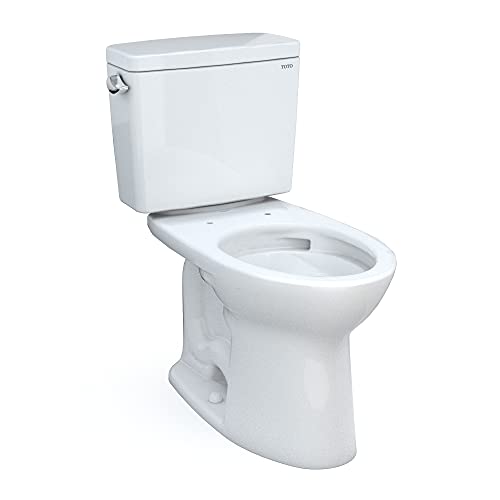
White is still the finish nearly every toilet on the market ships in first, which means it is also the finish with…
Read the guide
Almond was one of the most common toilet colors installed in American homes from the late 1980s through the early 2000s, and…
Read the guide